

Kicking off 2020 Somewhere Familiar
In the blog this week I head to Dawlish Warren for my first shoot of 2020 and to get some much need practice!
Where Did the Time Go?
Prior to taking the photographs in this blog post the last time I went out with the camera was the 15th of December. I went to Hound Tor on Dartmoor, I took four frames and frankly it was a bit of a disaster. Not the way I wanted to finish 2019 but hey, that’s the way it goes sometimes.
A few days after that I went on a family holiday, then it was Christmas, then New Year, then I got a cold and the weather was pretty miserable for an extended period of time. The result of all this was that I didn’t take another landscape photograph until the 17th of January (when I took the photos in this post). Where did all the time go!
Keeping Sharp
You may not think a month is a long time between sessions with the camera and for some people it might well not be. For me though that month represents a reduction in the sharpness of my skills. You may well ask what sharpness has to do with landscape photography? It’s not as if I’m shooting fast-moving cars, sprinting athletes or birds in flight. What I mean by sharpness is my “photographic eye”. My ability to pick out and fine-tune compositions.
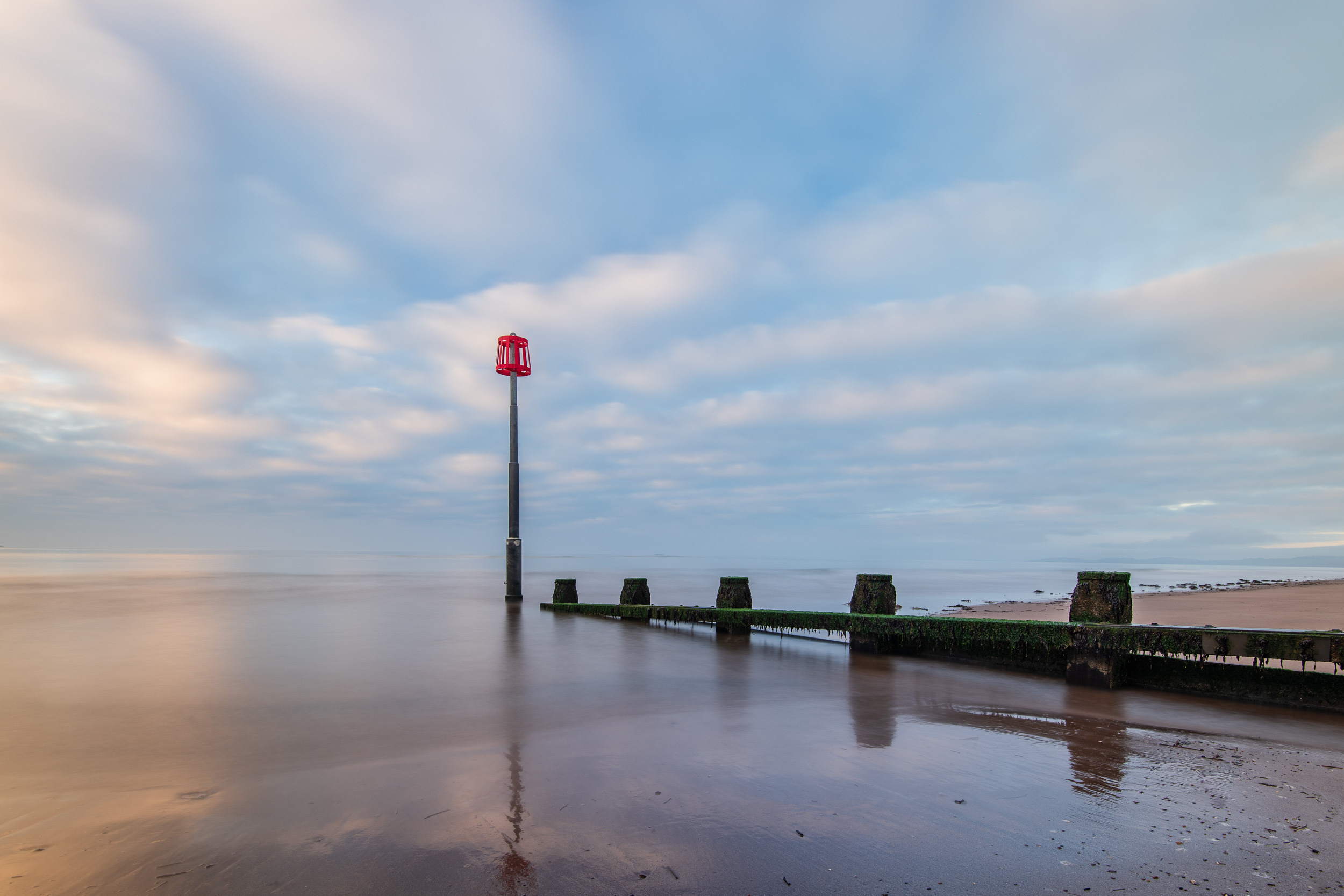
Dawlish Warren #1, Devon - Nikon Z7, Nikkor 14-30mm f/4 at 16mm, f/11, 218 sec at ISO 64, Kase Filters CPL, ND Grad and 6 Stop ND.
Photography is a skill and one that needs to be practised. This is one of the reasons why I go out with my camera when the conditions aren’t exactly great. I’d rather practise my photography skills in poor conditions than find myself stumbling when I’m presented with some stunning conditions. In other words I like to keep my composition muscles fit and flexed!
Down to Dawlish
My choice to photograph Dawlish Warren as my first location of 2020 was driven by two factors. The first factor was time. I was really short of time that day and I didn’t want to potentially wait another week to get my first photo of 2020 just so I could go somewhere further away. The other factor was my familiarity with the location. As I was short of time going to a location that I was familiar with would allow me to spend more time taking photographs. However, as I wrote in a recent blog post “Does Familiarity Breed Complacency?”, being familiar with a location doesn’t necessarily make it easy to shoot.
Dawlish Warren #3, Devon - Nikon Z7, Nikkor 14-30mm f/4 at 16mm, f/13, 1.3 sec at ISO 64, Kase Filters CPL, and ND Grad.
I knew before I got to Dawlish Warren that the weather was unlikely to give me brilliant conditions and I wouldn’t get photographs that were better than some of my previous efforts from there, but that’s not the point. The point is that I would be out with my camera and I’d be exercising those photography muscles making sure they are fit for when I do get one of those very special days.
Dawlish Warren #4, Devon - Nikon Z7, Nikkor 14-30mm f/4 at 18mm, f/13, 1 sec at ISO 64, Kase Filters CPL, and ND Grad.
As I look at my images from that morning I already know that it’s not my best work. However, there are qualities that I do like and I can take these ideas with me on my next shoot where ever that might be. The most important thing is that I feel more prepared and confident for the next shoot.
Dawlish Warren #5, Devon - Nikon Z7, Nikkor 14-30mm f/4 at 19mm, f/13, 1 sec at ISO 64, Kase Filters CPL, and ND Grad.

GREAT Landscape Photography Locations on Harris and Lewis
Looking for a new bucket list location for your landscape photography? In the blog this week, I share with you some of the amazing locations I discovered while photographing two of the Outer Hebrides most famous locations, Harris and Lewis.
Harris and Lewis - Photography Bucket List Locations
I can’t remember when the Isle of Harris and the Isle of Lewis made it onto my bucket list of landscape photography locations. I’m not entirely sure what inspired me to want to go there. Maybe it was a Thomas Heaton video from Harris or seeing some holiday photographs from my sister.
Maybe it wasn’t just one thing, but rather it came through a gradual consumption of media and photographs from this most stunning Scottish location. No matter how it made it on to my list, I had decided that early on in 2018 that I was committed to making the long journey back into my homeland and onwards to the Outer Hebrides.
Immersing Myself in Photography
Time is precious and the amount of time I can normally commit to just doing landscape photography is limited. Things would be different on this trip though. Where my longest landscape photography adventures had normally been limited to a long weekend, this trip would see me commit 9 days. Nine whole days of landscape photography!
Actually, it was going to be nearer to 5 days. From Devon, it’s a two-day drive there and a two day drive back. It is over 650 miles one way, and you also need to get a ferry for part of the journey. That aside, 5 days is way more than I normally get to allocate to my passion. Besides, the journey wouldn’t be so long as I had a mate coming long with me. Plenty of time to catch up and chat.
I also set myself some clear priorities. This trip was going to be all about my photography. The weather gods hadn’t been kind to me in 2018 and I felt I wasn’t taking the images I knew I could. This trip was going to change that and I was going immerse myself in landscape photography.
With the decision to immerse myself in stills photography, I also made the decision not to make creating content for my YouTube channel a priority. The stills photography would be the top priority. My goal for the trip was to capture great landscape images. However, I do love creating content for my YouTube channel so I wasn’t going to go all the way to Harris and Lewis and not film anything.
The Journey Up
Our plan was to get as far as Glencoe on the first day. With a bit of luck, we’d get there before sunset and grab some shots. Fortunately for us, we did and you can see the results in the blog post Glencoe - One Location, 3 Compositions.
Our luck the next day soon ran out though. Not only was the weather not suitable for any sort of landscape photography, but the winds had picked up to gale force and it looked like the ferry crossing would be cancelled. Well, it appeared as if the captain of the boat wasn’t going to let a thing like the wind stop him from sailing, so we eventually left Uig at 9 pm. There wasn’t going to be a sunset shoot on Harris that day, but we were at least going to be making the crossing that evening.
Now the Story Really Starts
It was dark when we arrived in Tarbert, and it was dark when the alarm went off the next day for the first of our sunrise shoots. Having seen nothing of Harris so far we set off in the dark and headed to Luskentyre beach. This is the point where I move the storytelling from the blog to the vlog.
Photographs, Locations and Information
You will have noticed in the video that I didn’t talk about some of the locations we visited. I only showed the photographs. As I said earlier though, I really wanted this trip to be about immersing myself in my photography and not having to worry about talking to the camera.
So you have a more complete picture (excuse the pun) of my trip to Harris and Lewis, the next few sections of this blog post will feature all the images you saw in the video, along with the camera settings, and where they were taken. I hope you will find this information useful and the photographs inspiring.
If you are looking for a bit more inspiration, and more details on some of the locations I visited, be sure to check out Dougie Cunningham's excellent book Photographing Scotland.
Luskentyre Beach #1
No visit to Harris would be complete without going to Luskentyre. I found the photography here so inspiring that I photographed it almost every day.
North Harris from Luskentyre Beach, Isle of Harris - Nikon D850, Nikkor 16-35 mm f/4 at 19 mm, f/13, 3 seconds at ISO 200, Lee Filters Circular Polariser and ND Grad.
Pull of the Tide at Luskentyre Beach, Isle of Harris - Nikon D850, Nikkor 16-35 mm f/4 at 19 mm, f/13, 2 seconds at ISO 64, Lee Filters Circular Polariser and ND Grad.
Dunes of Luskentyre Beach #2, Isle of Harris - Nikon D850, Nikkor 16-35 mm f/4 at 20 mm, f/13, 1/5th second at ISO 64, Lee Filters Circular Polariser and ND Grad.
Northton Saltings
This interesting location is easy to access as it is right beside the road. Take some wellies though!
Stormy Saltings, Isle of Harris - Nikon D850, Nikkor 16-35 mm f/4 at 16 mm, f/13, 15 seconds at ISO 64, Lee Filters Circular Polariser, IRND and ND Grad.
The S in Saltings, Isle of Harris - Nikon D850, Nikkor 16-35 mm f/4 at 35 mm, f/13, 15 seconds at ISO 64, Lee Filters Circular Polariser, IRND and ND Grad.
Northon Saltings from Above, Isle of Harris - DJI Mavic Pro, 1/100th second at ISO 126, 26 mm at f/2.2.
Traigh Mheilein
Not the easiest beach to get to, but worth the walk.
Traigh Mheilein, Isle of Harris - Nikon D850, Nikkor 24-70 mm f/2.8 VR at 32 mm, f/13, 62 seconds at ISO 64, Lee Filters Circular Polariser, IRND and ND Grad.
Stac a' Phris
A spectacular coastline made even more impressive with the Stac a' Phris sea arch.
Turbulent Water at Stac a' Phris, Isle of Lewis - Nikon D850, Nikkor 16-35 mm f/4 at 18 mm, f/11, 1 seconds at ISO 64, Lee Filters Circular Polariser and ND Grad.
Stac a' Phris, Isle of Lewis - Nikon D850, Nikkor 16-35 mm f/4 at 20 mm, f/11, 2 seconds at ISO 64, Lee Filters Circular Polariser and ND Grad.
Sunset at Stac a' Phris, Isle of Lewis - Nikon D850, Nikkor 16-35 mm f/4 at 21 mm, f/11, 5 seconds at ISO 64, Lee Filters Circular Polariser and ND Grad.
Luskentyre Beach #2
The 2nd visit proved even more amazing than the first!
Sunrise at Luskentyre Dunes, Isle of Harris - Nikon D850, Nikkor 16-35 mm f/4 at 18 mm, f/13, 1 second at ISO 100, Lee Filters Circular ND Grad.
Sky Fire at Luskentyre, Isle of Harris - Nikon D850, Nikkor 16-35 mm f/4 at 18 mm, f/13, 0.6 seconds at ISO 100, Lee Filters Circular ND Grad, single image crop at 6:17.
Mangurstadh Stacks
Another dramatic coastal location on the Isle of Lewis.
Mangurstadh Stacks, Isle of Lewis - Nikon D850, Nikkor 24-70 mm f/2.8 VR at 52 mm, f/11, 119 seconds at ISO 64, Lee Filters Circular Polariser, IRND and ND Grad.
Tràigh Scarasta
There are so many beaches to photograph on Harris, but if you like patterns in your sand this one is well worth a visit.
Tràigh Scarasta, Isle of Harris - Nikon D850, Nikkor 16-35 mm f/4 at 19 mm, f/13, 69 seconds at ISO 64, Lee Filters Circular Polariser and ND Grad.
Tràigh Scarasta (ICM), Isle of Harris - Nikon D850, Nikkor 16-35 mm f/4 at 24 mm, f/22, 1/4 second at ISO 64, Lee Filters Circular Polariser and ND Grad.
Tràigh Sheileboist
I know it’s another beach, but even in the wildest of conditions it’s possible to get an image at one of the many golden beaches on Harris.
Tràigh Sheileboist, Isle of Harris - Nikon D850, Nikkor 16-35 mm f/4 at 26 mm, f/13, 30 seconds at ISO 64, Lee Filters Circular Polariser and ND Grad. Single image crop at 6:17
Luskentyre Beach #3
Last of the Luskentyre images…promise! (It was such an amazing location!)
Tranquility at Luskentyre, Isle of Harris - Nikon D850, Nikkor 16-35 mm f/4 at 19 mm, f/13, 3 seconds at ISO 64, Lee Filters Circular Polariser, ND and ND Grad.
Sand, Wind and Time, Luskentyre, Isle of Harris - Nikon D850, Nikkor 16-35 mm f/4 at 25 mm, f/13, 25 seconds at ISO 64, Lee Filters Circular Polariser, ND and ND Grad.
The Pastel Shades of Luskentyre, Luskentyre, Isle of Harris - Nikon D850, Nikkor 16-35 mm f/4 at 18 mm, f/13, 144 seconds at ISO 400, Lee Filters Circular Polariser, ND and ND Grad.
Luskentyre Beach Panorama, Isle of Harris - DJI Mavic Pro, 1/50th second at ISO 161, 26 mm at f/2.2, 9 image stitch cropped at 6:17.
A Tearful Goodbye
After 5 whole days of photography, it was sadly time to go home. We were really rather lucky with the conditions we got. The Outer Hebrides aren’t exactly known for settled weather but we managed to make it out every day with the camera. Some days were definitely more challenging than others, but even in wild conditions this magical place had something to offer.
As for the trip home ,that was similar to the trip up. The ferry was delayed due to bad weather so no chance of a sunset shoot back on the mainland, and the conditions the following morning were flat grey and overcast. As we headed down the M6 past the Lake District I didn’t even feel bad for passing it by as I had memory cards full of amazing images and video.
I do hope this blog post and video has given you a sense of not only what my adventure was like, but also what it is like to photograph Harris and Lewis. It truly is one of the most amazing landscapes I’ve ever photographed. From its dramatic coastal locations, grand mountains and open moorland, it never failed to surprise me. There was a real sense of awe. I grew up in the highlands of Scotland and now live in Devon so I know a good landscape, but Harris and Lewis were something special.
Are you planning a trip to the Outer Hebrides? Which photograph or locations was your favourite? What locations are on your bucket list? Let me know in the comments.

Sandymouth Beach
Does bad weather inspire your landscape photography? In the blog this week I head out to Sandymouth beach in Cornwall to discover that inspiration can be found even in the dullest of evenings.
Friendship over Photography
When it comes to weather forecasts I tend air on the side of optimism. I often find myself looking at different forecasts to find one that gives me the best outlook. Sometimes those risks can really pay off. However, there are some weather forecasts that are just so poor that you'd have to be mad to go out.
In the world of landscape photography there aren't many more things that are a depressing as going to a location that has a forecast of 100% low cloud coverage and heavy showers. But that's exactly what I did recently.
So why would I drive all the way to Cornwall when the weather forecast was so rubbish? To see a mate of course! It had been a couple of months since I'd see my friend and as he is a photographer also, we are always looking for an excuse to head out with the cameras. The trouble was the weather forecast was rubbish.
Though we were both keen to do some photography, the lure of chips, chat and the chance to finalise our plans for an upcoming photography trip won the day and we decide to meet up anyway. We would of course both turn up with cameras, just in case the weather wasn't that bad.
Beach Life, Cornwall
Even with a hefty sense of optimism there was no way we were going to commit to a big drive given the weather conditions, so we decided to settle for a local location. I had never visited Sandymouth beach before so when it was suggested we go there I jumped at the chance.
When we arrived at the beach we were surprised to see the car park completely empty. Even on the worst of evenings you normally see a dog walker or two on the beach. It soon became apparent why no one was here as a heavy rain shower came overhead. There was nothing else to do but to sit in the car, eat chips and discuss all the latest mirrorless camera news from Canon and Nikon.
Once the chips were done and the rain shower passed we thought we might as well take a walk along the beach and see if anything catches our eye. It soon became obvious why my friend comes to this location. Miles of sandy beach, sea pools, and rocks could all be used to make some very interesting compositions. Despite the poor weather I felt really inspired and decided to get my camera out!
Tidal Pools at Sandymouth Beach, Cornwall - Nikon D850, Nikkor 16-35 mm f/4 at 20 mm, 1.6 secs at ISO 64, f/11, Lee Filters ND Grad.
Out to Sea, Sandymouth Beach, Cornwall - Nikon D850, Nikkor 16-35 mm f/4 at 20 mm, 5 secs at ISO 64, f/11, Lee Filters ND Grad.
As you can see the weather had cleared just enough to make the sky a bit more interesting, but it was those pools of water that really caught my eye. It's not that I think those images are amazing, it's more that I think how great the future possibilities of this location might be. With some evening light and the sky being reflected in one of those pools, I think it could make for a great image. As the beach is a constantly changing thing, I could end up with a unique image on every visit.
I had been searching for a interesting beach location for a while, and one that wasn't too far away. Despite the poor weather, I was really inspired by this location and I will definitely be heading back there again soon. Just shows how you get can inspired even in the dullest of conditions.
Do you get inspired in sorts of weather? What is your favourite beach location? Let me know in the comments below

Dawn with Danks - A Mini Adventure with Gareth Danks
In the blog this week I share with you vlog I made when fellow photographer and YouTuber, Gareth Danks paid me a visit. We headed down to the south Devon coast for a bit a coastal photography and a chat.
Meeting Gareth Danks
I've been following Gareth Danks on YouTube for a while and we briefly met up at The Photography Show earlier this year. At the show, we discussed the idea of meeting up to do some photography but finding a date we could both do proved a little tricky.
As spring came around and the days got longer, the number of opportunities to get out with the camera also increased. So when Gareth announced he was going to be making a visit to Devon we thought it would be a great time to meet up. We agreed to shoot sunset on Thursday evening and then shoot sunrise the following day.
Our Adventures
The plan was set and the day soon came around. In the following videos, you can see exactly what we got up to.
The first and only video I made was of the Friday morning shoot at Dawlish Warren and Dawlish. You can see it here:
For an alternative take on the morning, check out Gareth's video from Friday morning:
And finally, if you want to see what we got up to on Thursday evening on Dartmoor, you can see Gareth's video here:
I hope you enjoyed all those videos. I think we both have a similar style when it comes to our vlogs so it was really easy to mix up the photography, shooting my video and appearing in his vlog. Though it was only a short meetup, it was a mini adventure to remember!
My Photographs
You will have seen my photographs from the Friday morning in the video, but as always I like to share them here on the blog as well.

Nikon D850, Nikkor 16-35 mm f/4 at 16mm, f/13, 240 secs at ISO 64, Lee Filters circular polariser and 10 stop ProGlass IRND.
Nikon D850, Nikkor 16-35 mm f/4 at 20mm, f/11, 80 secs at ISO 64, Lee Filters circular polariser, 2 stop hard edge grad and 10 stop ProGlass IRND.
I do hope you also watched Gareth's video. It's really interesting to see how another photographer shoots the same scene at the same time. It was beneficial for me as watching Gareth setup his compositions got me to think about my own compositions.
Do you meet up with other photographers? Do you find yourself learning from them or trying something new out? Let me know in the comments below.

Shoot, Print, Surprise!
In this blog I head to Dawlish Warren to shoot a video I'm calling Shoot, Print, Surprise! But what is the surprise? Well, you'll just have the watch the video to find out!
Back at Dawlish Warren
In my latest video, I headed to Dawlish Warren to shoot some dawn seascapes. For those of you who have been following my blog for a while now, you may well be wondering if that is the only location I've ever photographed! I admit it though, I do like going there to capture images.
There are two good reasons for this. Firstly, it's close to home for me. This means that during the winter months when my time is particularly short, it's nice and easy for me to get to. It also offers a variety of different compositions to suit different conditions. With 15 or so groynes of different styles, and long beach it works well with both high and low tides. So, you can virtually go there in any conditions and get an interesting image.
I've mapped out the 15 groynes in a custom google map. It's still a work in progress, but the custom map also has recent images of each groyne so you can see what they look like before you get there. You can view the map here, and you can see how to make your own map here.
Shoot, Print, Surprise!
So back to the topic of the video. Well, the title should give you a good idea of what the video is about. In the video, I head out to Dawlish Warren to capture some dawn seascape images and then I head home to print some of them off. But what is the surprise? Well, you'll just have to watch the video to find out!
Well, I do hope you enjoyed that video, and of course the surprise element. Did you enjoy the surprise? What are your thoughts on the surprise topic? Let me know in the comments below.
The Photographs
As always here are the photographs that were featured in the video.
Nikkor 16-35 mm f/4 @ 34 mm, f/11, 57 seconds at ISO 100, Lee Filters Circular Polariser, ND grad and 3 stop IRND.
Nikkor 16-35 mm f/4 @ 24 mm, f/11, 1.3 seconds at ISO 100, Lee Filters Circular Polariser, and ND grad.

Getting to Know Dawlish Warren Again
In the blog this week I tell you about a frustrating couple of weeks with my photography and I return to Dawlish Warren to see how the beach looks now the works have been completed.
Why Dawlish Warren Again?
Over the years I have photographed the beach a Dawlish Warren numerous times. I've written about it my blog a few times and it's featured on my YouTube channel a couple of times. So why do I keep going back here? The simple fact is that I love shooting there. Every time I go there the conditions are slightly different and so I get a slightly different shot.
It is also one of the closest photography locations I have to home. I'm no stranger to driving for over 90 minutes to get a shot in Cornwall, but Dawlish Warren is less 30 mins from home making it nice and easy to get to. It also works well as a sunrise location pretty well throughout the year. It doesn't seem to matter if it's a grey overcast morning or an epic sunrise, there always seems to be a shot to be had. So it's close to home, works well throughout the year and in varying weather conditions. What's not to like!
Desperation and Frustration
For those of you who have read my blog over the last couple of weeks, you'll know that I've recently moved from the Nikon D750 to the Nikon D850. This change in camera represents a step up in camera technology for me and when I made the decision to buy one (not a hard decision I might add), I made a commitment to make the most of my purchase.
So when the D850 arrived on my doorstep on the day of release I was very keen to get out with my latest bit of gear. However, the photography gods have not been kind to me since the arrival of the D850. Photography is a bit of an all-consuming passion for me but I still have to balance my desire to go out with the camera, work a full-time job and being a family man.
Over the last couple of weeks, the weather in Devon has been fairly unsettled. It's not that there hasn't been great weather for photography, it's just that it never seems to have been on the days when I'm free to go out and take pictures. It's not been a total disaster. I managed to create a D850 video and head out to Trebarwith Strand, but I've been desperate to get out way more than that!
That's it! I'm going out!
As my working week progressed and the days came and went without out any camera action I decided that I would go out at the weekend instead. When I checked the weather forecast for the weekend it was generally overcast with light showers. I was damned if I was going to let another weekend pass me by, so I was going to go out regardless of the weather.
I considered some woodland locations, but I thought I might leave those locations for a couple more weeks until the autumn colours really kick in. Then while I was scanning through my custom locations map <insert link> I remembered about good old Dawlish Warren! (If you haven't seen my video on creating a custom Google Map for you photo locations you really should - my map is always a great source of inspiration!).
Not only is Dawlish Warren a great location to shoot but I was also keen to see how the beach had changed since the end of the Beach Management Scheme works. When I visited there for my Summer Solstice video the beach was having a significant amount of work being done on it. Some of the groynes had been replaced and repaired, and more sand was being introduced to the beach areas.
Now the works have been completed I felt it was time to go and reacquaint myself with Dawlish Warren. I was fairly also sure I could get an image despite the forecasted cloud cover.
A New Dawlish Warren
So has there been a significant change in the beach? Here is the image I took so you can see for yourself.
Nikon D850, Nikkor 16-35mm f/4 @ 22mm, f/13, 90 seconds, ISO 64, Lee Filters Circular Polariser and ND Grad.
For those who know Dawlish Warren beach, it may look just the same but most of the groynes have been repaired and strengthened giving them a slightly different look when viewed up close. The woodwork looks fresher and the supporting poles are thicker. To casual beach walker they may look the same but having photographed them for so many years I think they could make for some interesting new photos.
With that in mind, I will be heading back to Dawlish Warren again to shoot one of my 5 Minute Photo Adventure videos there. Though I have featured Dawlish Warren in this video and this video I think it's time to make a dedicated video now that the beach works have been completed. Now that I can automatically GPS tag my images on the D850 I hope to also start logging some accurate location data so I know which groynes I have photographed and which groynes I haven't.
So have you photographed the groynes at Dawlish Warren beach before? Have you been there since the beach works have been completed? What are your thoughts on the updated groynes? Let me know in the comment below.

My New Winter Friends
In this blog post I discuss the importance of having a close by location that you can shoot so that you can scratch that photography itch during the winter months and why it's still important to do a bit of discovery.
Winter Restrictions
Landscape photography in winter has a few advantages. Sunrise is later, sunset is earlier, and it might just snow. (Oh please let it snow on Dartmoor this year, please, please, please!). However, while sunrise and sunset are at much more sociable hours the days are very short and so are my windows of opportunity for photography. During the summer months I can spend all day at work, casually jump into my car, drive to Lands' End and still be there in plenty of time for sunset. I can go out photographing virtually any day of the week.
With winter things are very different. I still have to work and I still have a family life, but now I can't just pop out in the evening to go out and take photographs. The shorter days that come with winter are no different from any other year but this year I'm feeling the restriction more than any other year. I think this is largely due to the level of commitment I have given my landscape photography this year. This year I have committed more time than any other year to improving my art. Now all of a sudden I can't get out as much and if the weather is very bad I sometimes don't get out all in a week. I'm starting to find it frustrating!
My Old Friend
It's not all doom and gloom tough. It's not as if I can't get out with a camera, it’s just I can't get out as much. As with most working parents I have the school run to do. My responsibility is to get the kids to school every morning, except Friday. So if I'm organised and the weather is looking favourable I can just about get out for a dawn shoot on a Friday and still be back in time for work. This means that I have to go somewhere local and this is where my trusty old friend Dawlish Warren beach comes in.
Dawlish Warren is only about 25 minutes' drive from my house and as I said in my video My Top 5 Locations to Shoot in Devon, it's also one of my favourites. I've photographed the beach and the groynes many times but each visit offers something different. With variable weather conditions, changing direction of sunrise and tidal waters, each time I go I need to think how I'm going photograph it that morning.
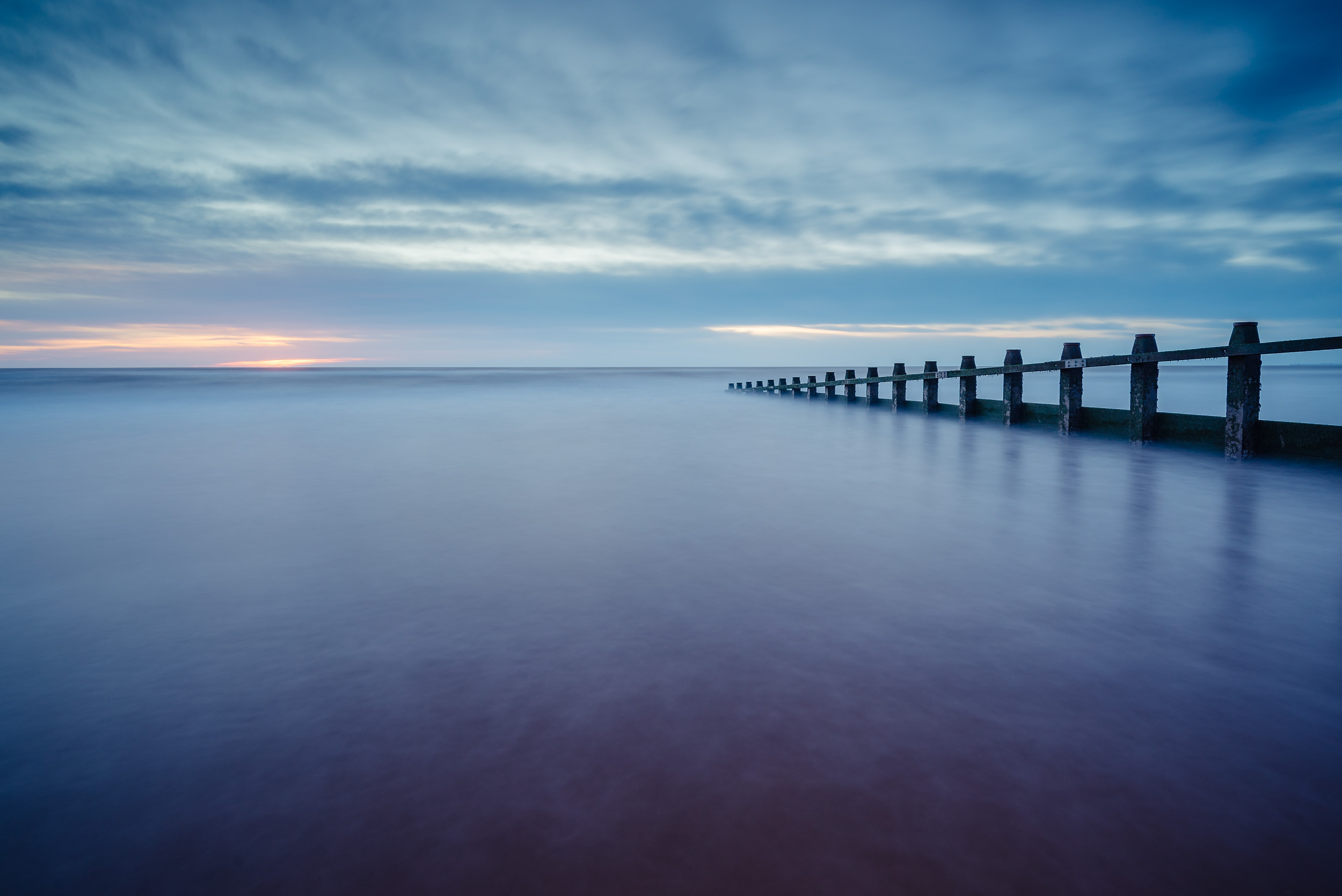
When I visited Dawlish Warren last week it was probably at the lowest tide I had seen so I had access to shoot some of the groynes I've never been able to access before.
Given the proximity of Dawlish Warren and my desire to still practice my photography as much as possible during the winter, I expect to be visiting my old friend a lot this winter.
My New Friend
While visiting on old friend is all very good, particularly when I'm really short of time, I also need to stretch my photographic wings a little. Though time at the weekends is really family time there are windows of opportunity and they need to be put to good use. There is the temptation to visit locations I've been before but winter is also a good time to go out and do a bit of discovery.
Last weekend I got up early and went to North Tor and Bench Tor on Dartmoor. These two tors are very close together and offer all round views of Dartmoor. I actually discovered this location by accident. I was looking through some old issues of Outdoor Photography and came across Bench Tor in the Locations Guide section (which is a great source of inspiration and ideas). I knew roughly knew the area as it's very close to one of my other favourite Devon locations to photography, Venford Falls.
Arriving at the car park in the dark I put on my head torch and began the relatively short walk up to Bench Tor. As with most dawn shoots in the cold I questioned my sanity but a blast of hot black coffee soon put me in the correct frame of mind. As most landscape photographers know it actually starts to get light around an hour before official sunrise so as I wondered about Bench Tor and nearby North Tor I could start to see lots of possibilities for compositions.
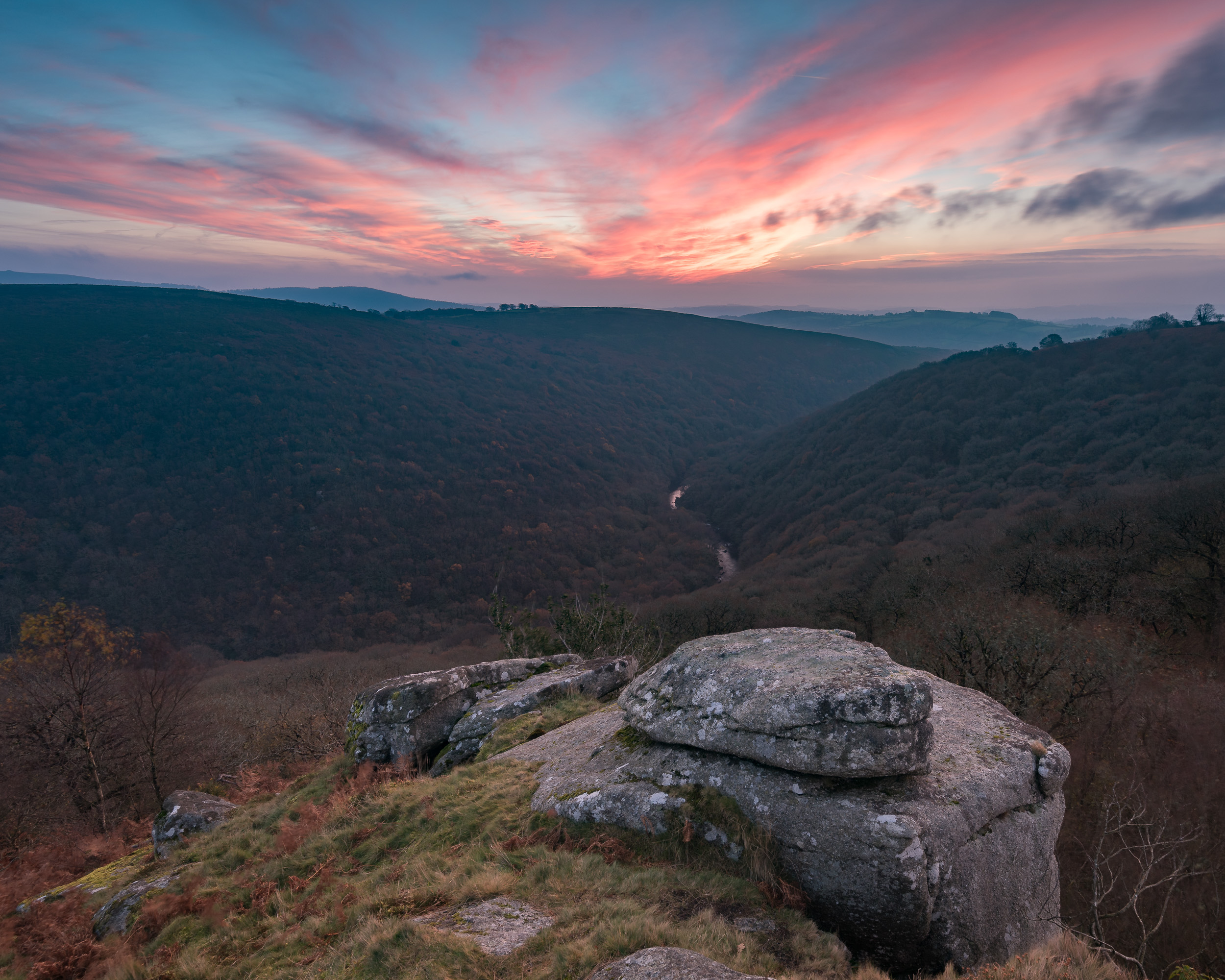
Very much an exploratory shot but as this was a new location for me I wanted to try and get a few shots for reference.
With so many possibilities, including options for sunrise and sunset shoots I think I have found a new friend for winter. Though I expect the best photographs will be had during spring and autumn months I think I will spend a bit of time up there working out how to make the most of it when winter finishes. That is unless it snows in which case the big views up there will be amazing.
So do you struggle to find time during the winter to get out with the camera? Do you have a go-to location that is nearby? Do you use the winter months to get out and discover new locations? Let me know in the comments below.
Not All Shoots Are Successful Shoots
In this blog I discuss the challenges of shooting on a beach and I give my own image a critique.
The Best Laid Plans
As a photographer you always want to put your best images out there. If you practice enough your technique will improve and your style develop, hopefully resulting in a gradual but noticeable improvement to your images. While this is generally true, it doesn't necessarily mean that every trip out with the camera will result in an image that was better than the last one. When I started this blog one of my key goals was to discuss my success and my failures. As I said in my first blog post, landscape photography isn't all about 5 star images captured on epic international trips.
In this blog post I'm going to take you through one of my less successful trips out with the camera. I had it all planned out. I would finish work bang on time, drive to West Bay in Dorset, and photograph the sea and evening light as it gloriously reflected off sea and cliffs. Well, that was my vision anyway. I went through all my normal planning steps, weather, cloud, tide, bearing of sunset and it all looked good.
Challenging Conditions
I've visited West Bay a couple of times, but never to photograph it. The east beach there, recently made more famous by the TV series Broadchurch, is long and sandy with dramatic cliffs running as far as the eye can see. However, when I arrived the reality of actually shooting there became apparent.
Firstly was the tide. After checking the tide tables I knew it was coming in, but what you can't tell from the tables is how long of a reach those waves have. The waves weren't tall, but their reach up the beach was long. Now I don't mind getting my feet wet, but it becomes really difficult to frame your shot if your camera sinks a little with each wave. If I moved further away from the waves I lost a lot of the sea in the frame. Normally this would be less of an issue if the beach has a natural curve.
The other challenge was the weather. While it wasn't raining nor the wind as strong as I expected it to be, the light was very flat. The forecast had indicated lots of high cloud and no low cloud. This I hoped would give me a spectacular evening sky to add to my composition. However, there was a lot of low cloud and the chances of there being any evening light bouncing off the cliff seemed very unlikely.
Change of Plan
Spare time to do photography is at a premium for me. While I like to do some location scouting when I can, it's not always possible, and so sometimes I just have to wing it. So with the very real sense that I might have just wasted a 2 hour round trip in the car, I put my thinking hat on and tried to think of a different composition. This approach of looking around and not getting focused on one thing had worked well on a recent trip to Dartmoor, so I picked up my tripod and got walking.
It wasn't long before I had the idea of doing a long exposure of the beach, looking straight out to see, and including a few well-placed rocks or stones in the foreground. This composition would probably deliver better results. I would have better visibility of the waves and the quality of the light was less of a dependency.
An Ever Changing Beach
Though I had a new vision on what my photograph would be my challenges weren't over. I would find an interesting composition, setup, grab a frame, maybe two at the most, and then a wave would come in wash my composition away! Even some of the larger stones in my composition weren't big enough to resist the pull of the waves. So this left me with very little time to grab a frame for each composition I found along the beach. I had to make sure the camera was level, focused, and correctly exposed in very short time or I might not get another go at it.
After only a few compositions the light had faded and I decided to take my very sandy tripod and wet feet back home for a nice meal and glass of wine.
Critiquing My Own Image
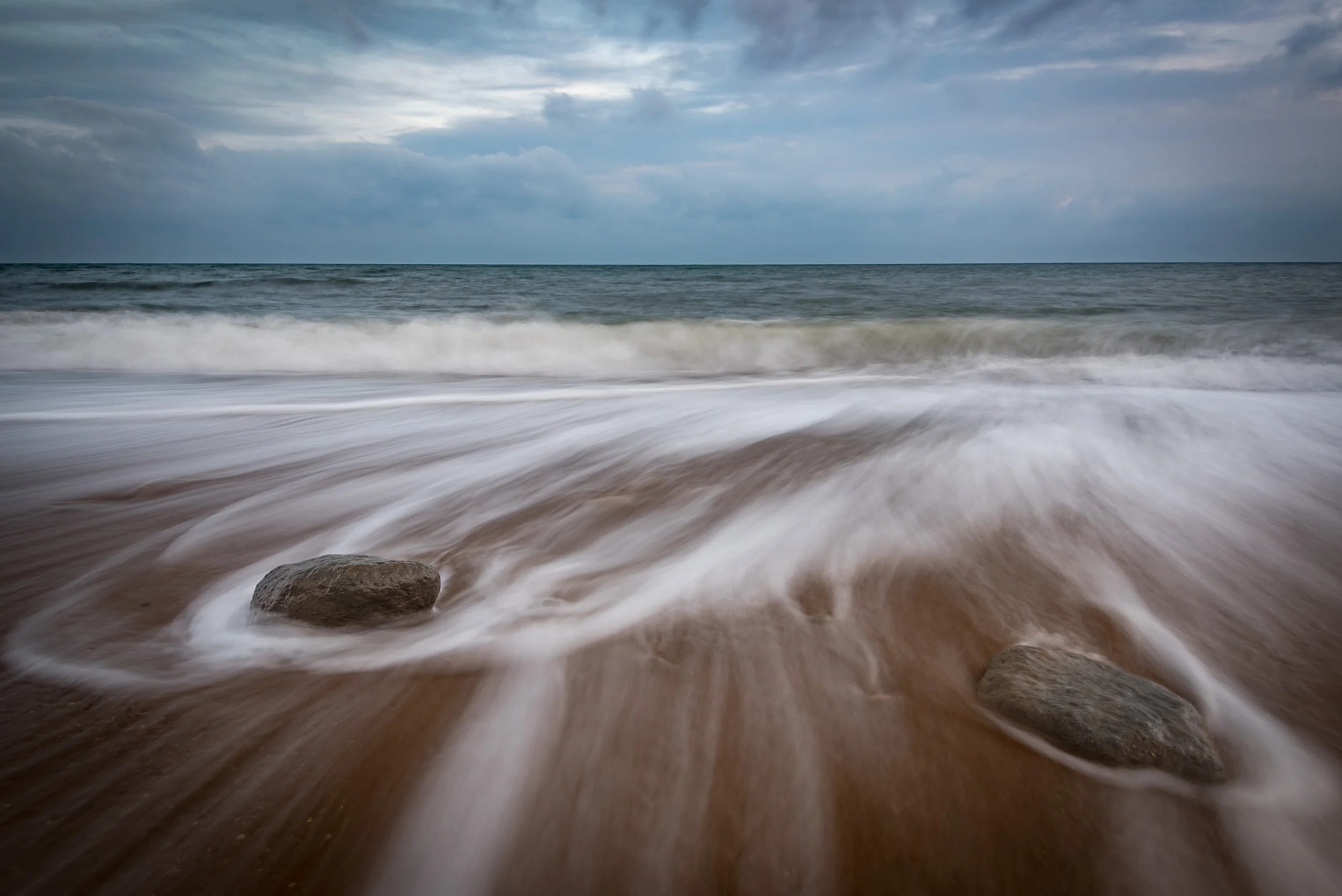
I only took a handful of frames that evening but here is the image that I think turned out the best.
Nikon D750 with Nikon 16-35mm f/4, 1.3 secs, f11 at 20mm, Lee Filters Polariser and 3 Stop ND
Now I'll be the first to admit this isn't an image for my portfolio. Though I like the mood and style of the image it does have a number of issues. If I'd had more time at the location I might have worked out these issues but as I said at the start of the blog, not all shoots are successful shoots.
The main issues I have with the image are around the rocks I have used in the foreground. The rock in the lower right of the frame for me is just a little too close to the edge of frame. I would like to have had just a little bit more space as there is with the rock on the left.. Given a bit more time between waves, I might have setup my tripod in a slightly different location to give me that space.
While the image roughly follows the rule of thirds, it doesn't follow the rule of odds. Now, I know that these rules are more like guidelines, but quite often they do make sense and I do think following the rule of odds in this scene would have helped with the overall composition.
Rocks at Porth Nanven - Nikon D750, Nikon 16-34 f/4 at f/16, 1.6 secs at 20mm.
I learnt about the rule of odds in the book, The Art of Landscape Photography by Mark Bauer and Ross Hoddinott (it's a fantastic book and well worth picking up). In the book Ross and Mark discuss how having an odd number of objects helps create visual stability or symmetry.
In this image I took of Porth Naven a couple of years ago you can see how I've composed with three rocks in the foreground. The balance and implied triangle in this image is something I would have liked to have seen in my West Bay image.
Always Good to Be Out With The Camera
Despite the fact that my shoes are still drying off and I had to strip down my tripod to get rid of the sand, I still felt it was time well spent with the camera. I'm also not going to win any awards for the image, but that really isn't the point. I was outdoors with my camera on a beautiful beach taking images and for a person that spends most his time sitting at a desk it's just nice be outside. Yes, conditions were challenging but it's through these challenges that you learn to progress as a photographer.
Actually I'm going to change my mind, it was a successful shoot. Just successful in a different way.
So what do you think of the image? How would you have shot the scene? Have you got any tips for photographing beach scenes? Please let me know in the comments.