

A Trip to Trevose
I learnt a valuable lesson last week when I visited one of my favourite Cornish coastal locations!
Not a Guarantee of Success
I often find myself being lured back to locations where I’ve created photographs that I’m pleased with. This lure is often intensified if I’ve not only captured one great image there but several them. I will hear the voice in my head telling to return to the location rather than go somewhere new because “you always get a good shot there!”. The simple fact is that this isn’t true. While I may well have a higher number of keepers from certain locations, there is always a whole stack of failures from that location as well
Last week I decided that I would make a trip to the north Cornish coast for a spot of seascape photography. I decided to wait until I got to Cornwall before making a final decision on where to go. The weather forecast wasn’t offering up the answers I was looking for so I decided that I would assess the situation when I got there.
Sitting in a park near Camelford, eating some nice chips, I pondered where to go. Looking up at the sky it was looking a bit overcast and grey. I had a few locations I was considering but they would all require some good light to make the most of them. I therefore, decided it was a good time to embrace the grey!
As I wasn’t too far from Trevose Head I decided that would be a good place to go. I’ve photographed that location many times before and I’ve captured some of my favourite images there. Some of those favourite images have been in grey overcast conditions. Given all my previous success at Trevose, I was confident I’d be able to capture something I’d be happy with.
There are a couple of spots worth photographing at Trevose Head. There is, of course the lighthouse itself but if you wander just around the headland it is well worth taking the time to photograph the lifeboat station as well. If you are interested in seeing these locations in a bit more detail then why not check out the 5 Minute Photo Adventure, I filmed there a couple of years ago.
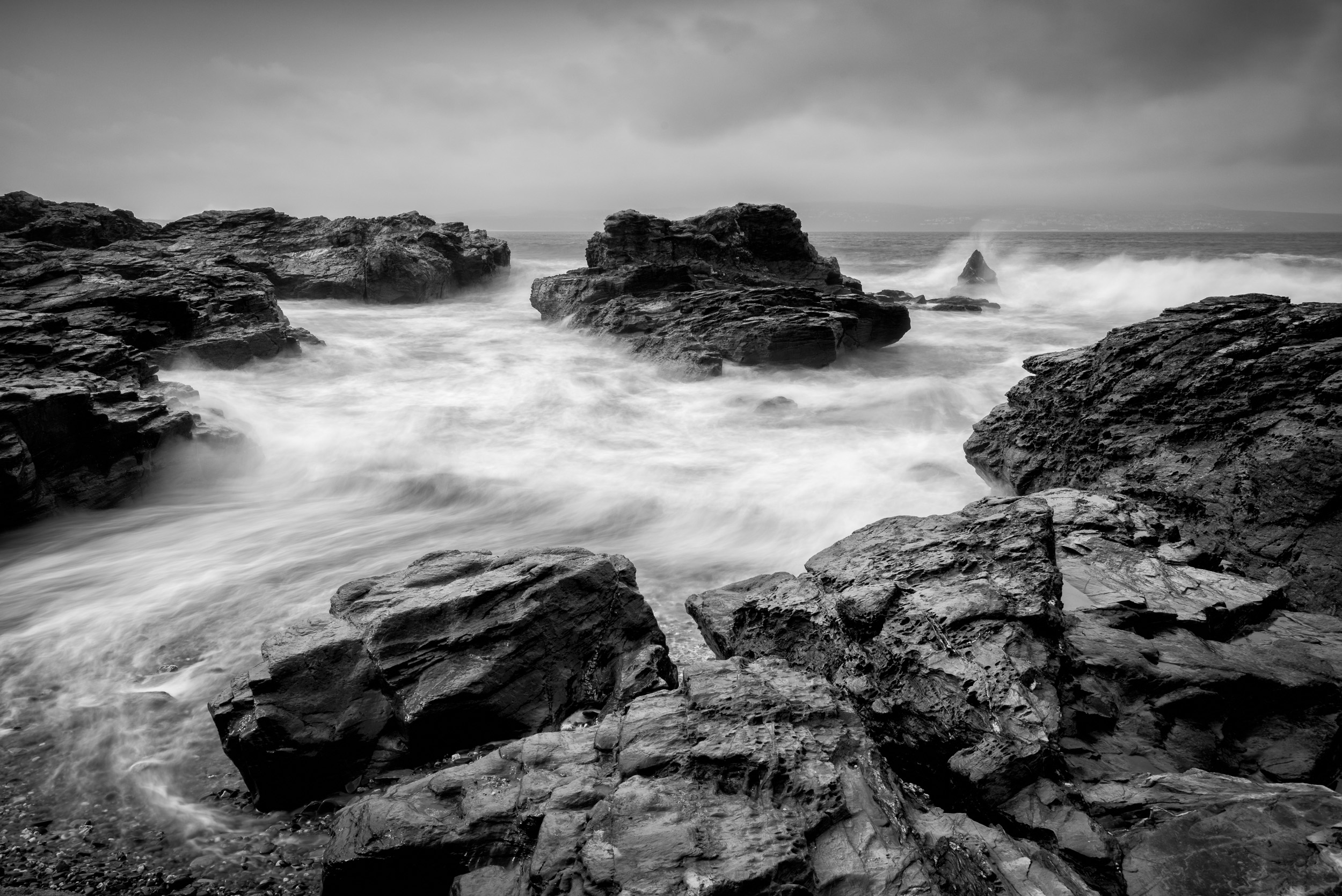
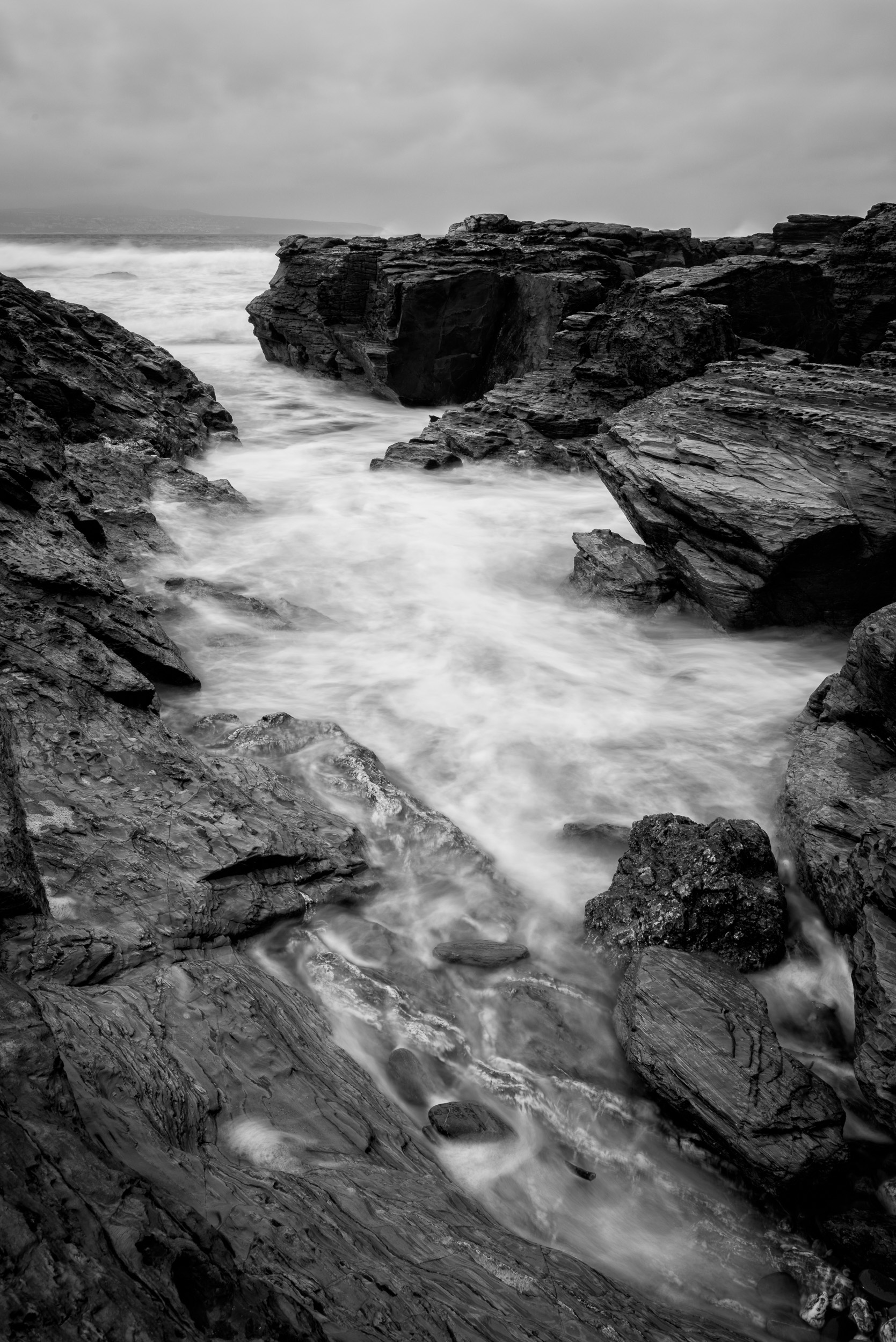
Back to my most recent trip and things weren’t exactly going as I hoped. I started at the lifeboat station and while I managed to find a different composition from my previous visit, the photographs weren’t any better than some of my previous efforts. I can’t decide if I like the vertical or horizontal composition best. Perhaps you can let me know in the comments which one you prefer.
Padstow Lifeboat Station #1, Cornwall - Nikon Z7, Nikkor 24-70mm f/4 @ 27mm, f/11, 240 seconds at ISO 64, Kase Filters circular polariser and 10 stop ND.
Padstow Lifeboat Station #2, Cornwall - Nikon Z7, Nikkor 24-70mm f/4 @ 27mm, f/11, 201 seconds at ISO 64, Kase Filters circular polariser and 10 stop ND.
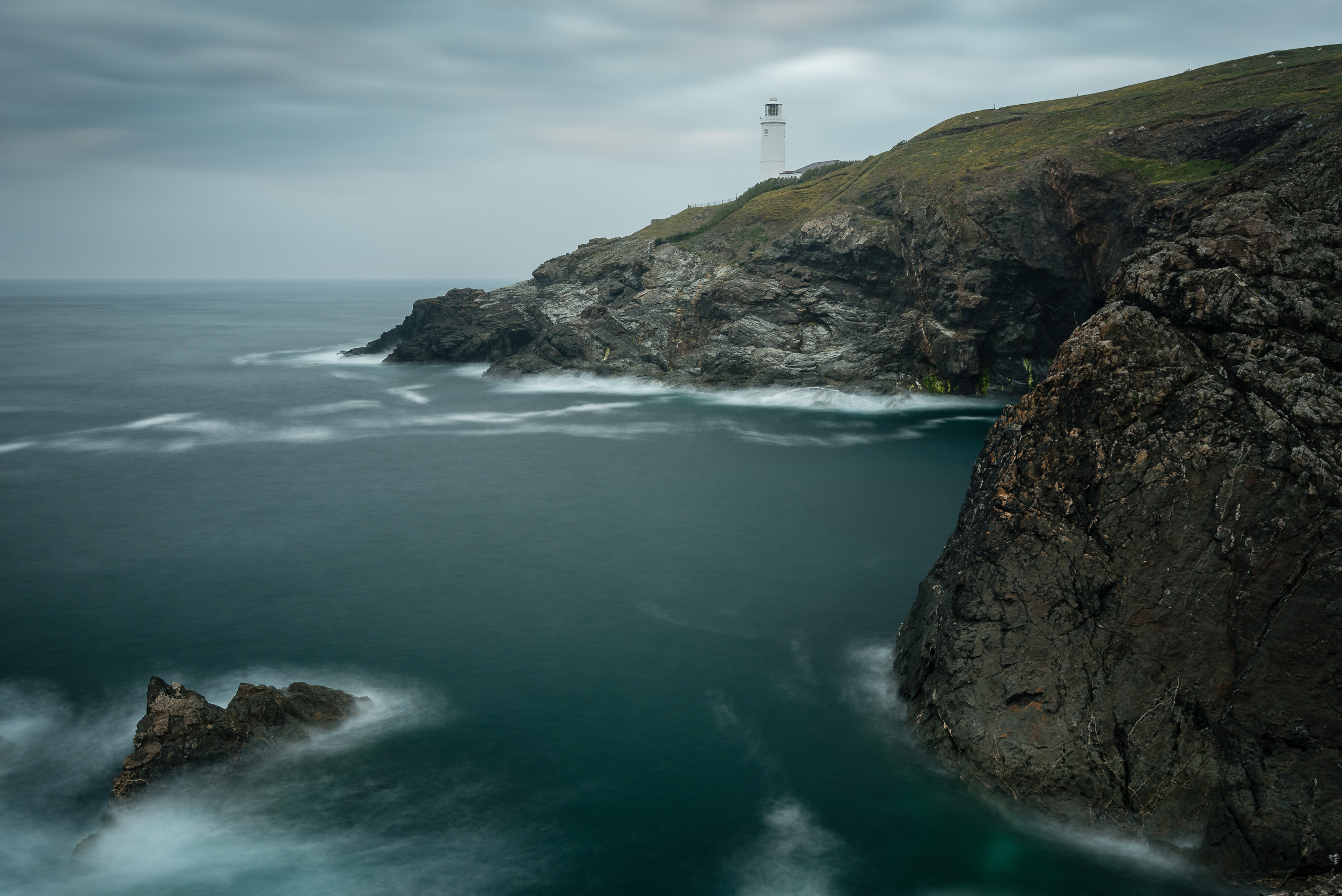
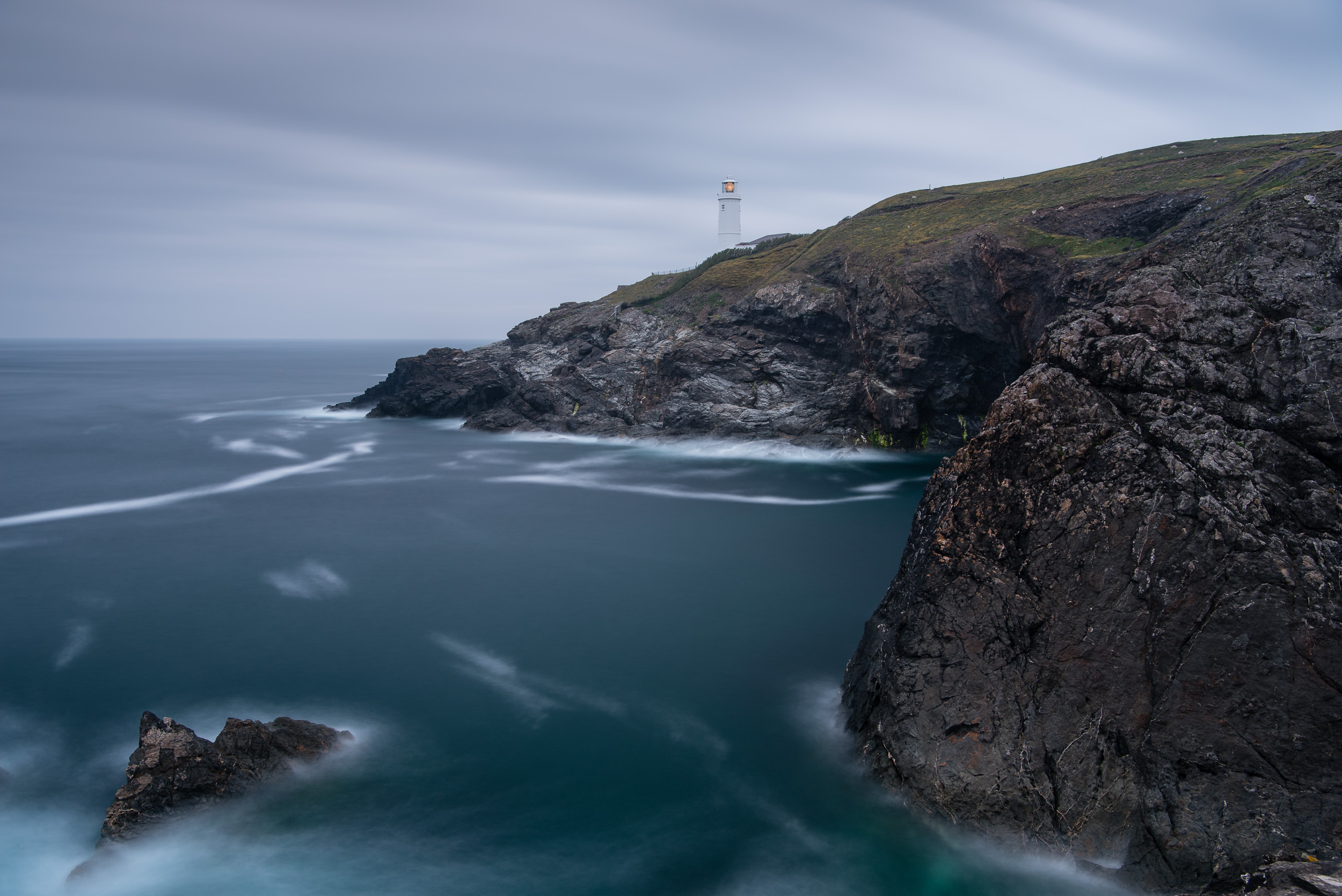
I then moved back along the path to my favourite viewpoint featuring the lighthouse. My first instinct was to go for an exposure of several minutes. This would not only smooth out the water, but it was also smooth out the sky. This is an approach I’ve used a few times when dealing with poor weather on the coast, but in this instance, it simply didn’t work (from a creative point of view). There was enough white water to create interesting lines in the composition and the grey sky just went even more flat and grey.
Trevose Head Lighthouse #1, Cornwall - Nikon Z7, Nikkor 14-30mm f/4 @ 19mm, f/11, 316 seconds at ISO 64, Kase Filters circular polariser and 10 stop ND.
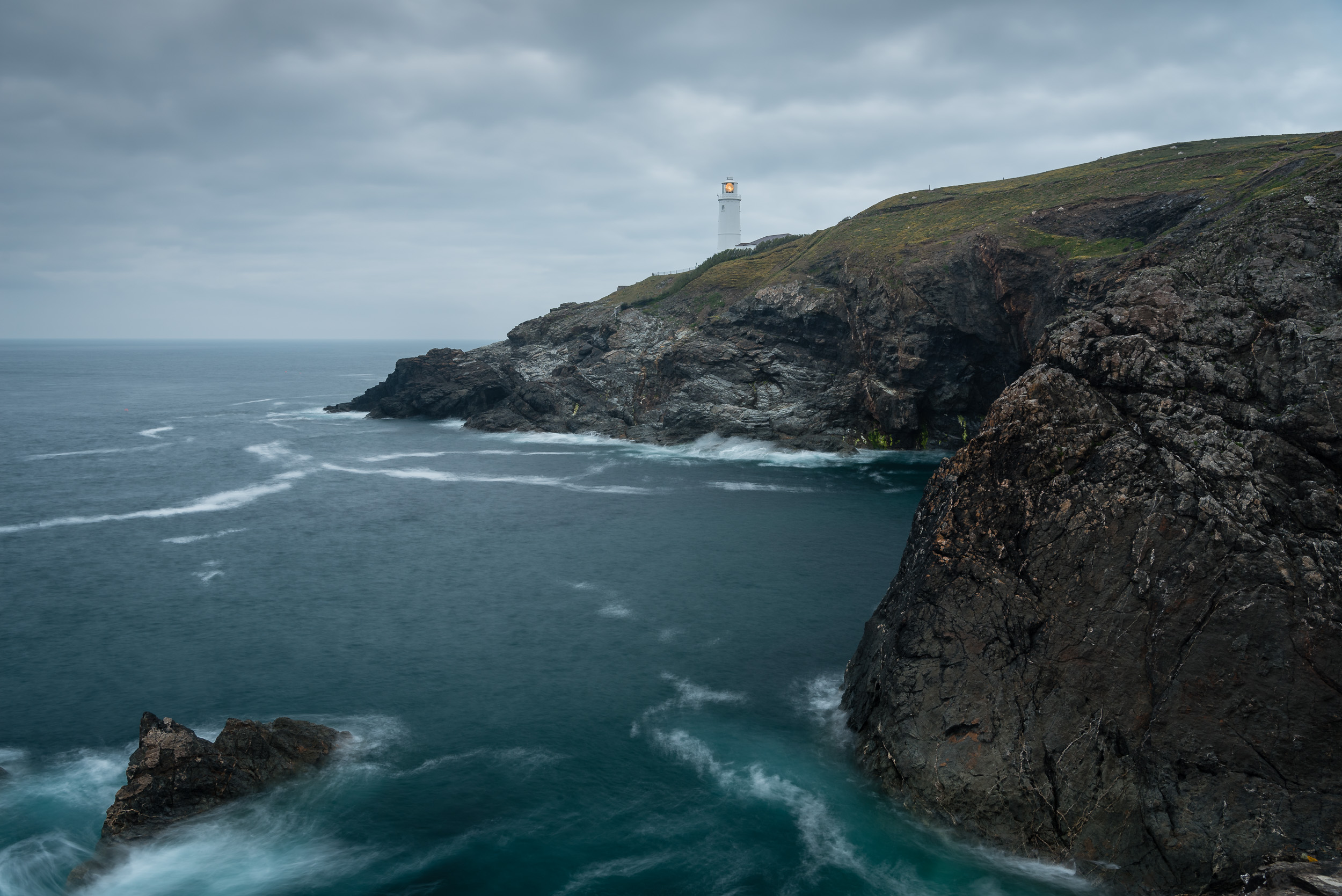
Some of the clouds in the sky that had definition so I decided that I should try and capture the detail of those by going for a much shorter shutter speed. This did work a lot better, but the photograph still didn’t excite me in the way that some of my previous efforts did.
Trevose Head Lighthouse #2, Cornwall - Nikon Z7, Nikkor 14-30mm f/4 @ 22mm, f/11, 1 seconds at ISO 64, Kase Filters circular polariser.
While I very much enjoyed my visit to Trevose Head, I learnt an important lesson. Previous success at a location does not guarantee future success. While I probably wouldn’t have done any better anywhere else that evening, perhaps I should have used the time to explore somewhere new. Hindsight is a wonderful thing, isn’t it!

Exploring More of the Cornish Coast
In the blog this week I share with you some of the photographs I took over a couple of evenings exploring the Cornish coast looking for coastal thrift.
Trevose Head
Trevose Head on the north Cornish coast is one of my favourite coastal locations to photograph. I’ve created a couple of videos for my YouTube channel there and published a few blog articles on the location as well. There is something about that location that keeps me coming back.
I doubt I will ever get bored of photographing the view of Trevose Head lighthouse from Stinking Cove, but I know there is so much more to explore to the east and the south. I just needed to find the motivation to do it. It’s all too easy to keep going back to the spots you love and therefore missing something new and exciting.
With the thrift season ending soon I was eager to get out and to photograph some of it before it all disappeared. The obvious choice would be to visit Bedruthan Steps, but I wanted to go somewhere new. Fortunately, coastal thrift is common along the north Cornish Coast so I felt that if I explored the area around Trevose I could get lucky.
Clear Blue Skies
Sometimes the best time to explore a new location is when you know the weather isn’t going to be great for landscape photography. There is always a risk that a new location might not be any good for photography but if the weather isn’t any good any way you will at least not be kicking yourself for not going somewhere else!
With a weather forecast of clear blue skies, I set off to have a wander along the coast to look for thrift. I never get bored of walking along the coast. It felt fantastic to be out and breathing in lots of fresh sea air. I hadn’t even got the camera out and I was having a wonderful time.
Spring Thrift #1, Cornwall - Nikon Z7, Nikkor 14-30mm f/4 at 15mm, f/13, 5 seconds at ISO 64, Kase circular polariser.
I soon came across an area where the thrift was looking pink and plentiful. I already knew I wasn’t going to get any spectacular shots but that wasn’t the point of the trip. I was looking for new locations where I could photograph the thrift and I could see that in the right light this spot would make an excellent location.
Spring Thrift #2, Cornwall - Nikon Z7, Nikkor 14-30mm f/4 at 15mm, f/13, 10 seconds at ISO 64, Kase circular polariser.
After taking a few pleasant enough shots I decided that I wasn’t going to get anything better that evening. The sun was disappearing behind some distant sea haze so I packed my bag up and vowed to return as soon as I could.
Unexpected Weather
The amount of time that the thrift looks its best is short, so I knew I needed to return to my new location quickly. Unfortunately, the weather continued to be warm, sunny, and clear blue skies. Eventually, I decided that if I didn’t pick a day soon it would be too late. Despite the forecast for another clear evening I decided to head back and take my chances.
As I set off from home and entered Cornwall all the indications were that it was going to be a clear night. There were hints of some high-level cloud that might catch the light, so I was optimistic about getting some good conditions. As I got closer to the coast though I noticed a blanket of low-level cloud coming in. By the time I got to my location, it was the opposite of clear blue skies. It was grey and misty!
Spring Thrift #3, Cornwall - Nikon Z7, Nikkor 14-30mm f/4 at 14mm, f/13, 25 seconds at ISO 64, Kase circular polariser.
Though I couldn’t find anything other than a cloudless sky forecast there I was surrounded by a blanket of sea mist. Well, I wasn’t going to let the conditions put me off. While I knew I wasn’t going to get any photographs better than my previous visit, I could at least explore some different compositions and still make it a valuable trip.
Maybe Next Year
I consider both my trips a good use of time despite the photographs being nothing special. Through exploring these locations and taking some test compositions I can visualise how the light and tide could be used to create some strong coastal images. The only thing is that with the thrift now being passed its best I will have to wait to next spring to turn my vision into reality. I can’t wait!

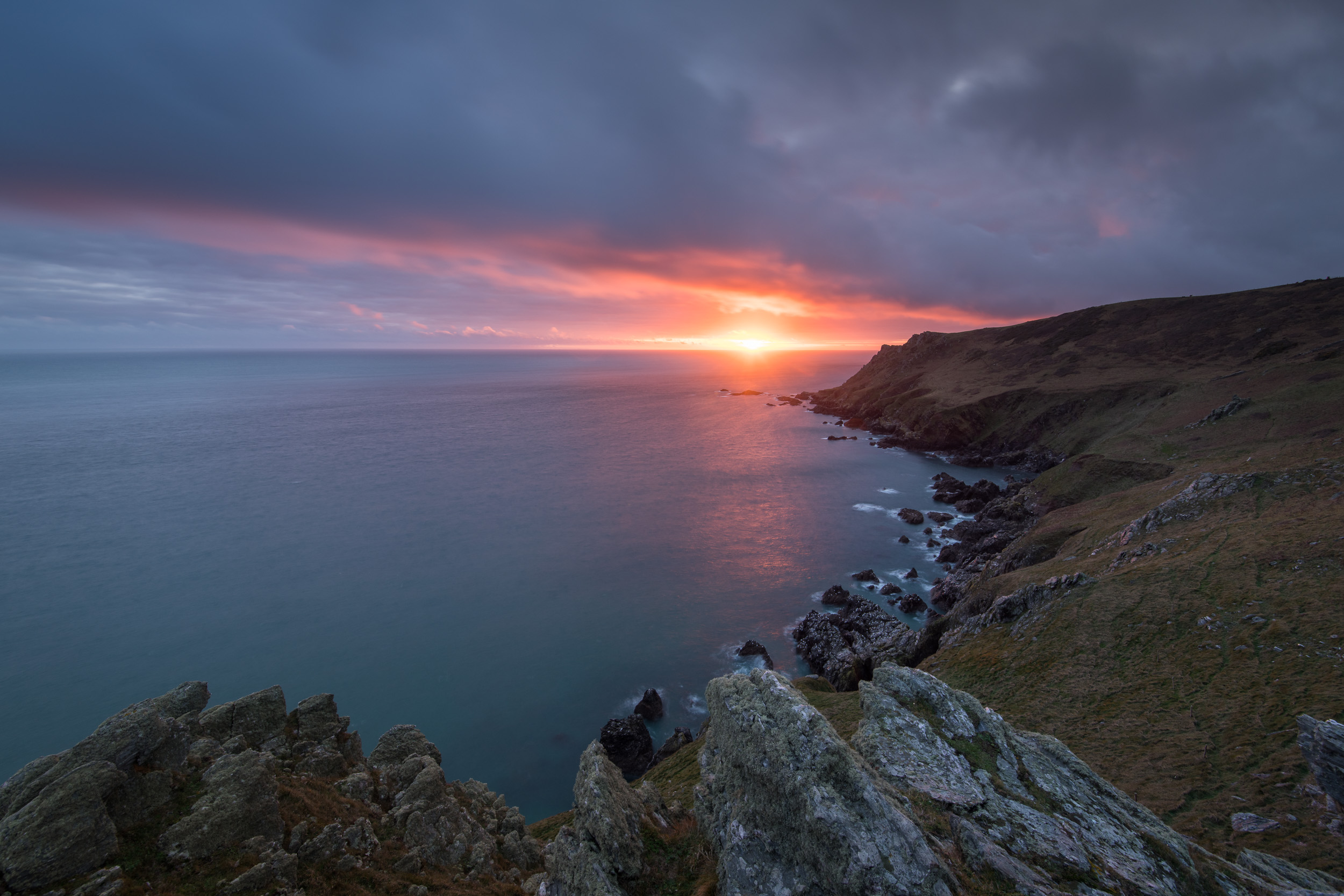
A Stormy Sunday at Start Point
In this blog post I head to Start Point on the south Devon coast to capture some landscape photographs during some stormy weather.
Risk vs Reward
As the crow flies, Start Point in Devon isn’t that far from home. Thanks to some narrow, twisty Devon roads though, the journey there can take up to an hour and a half each way. For that reason, I tend to only visit the location if I think I’m going to get a good photo.
Spectacular sunrises work well at Start Point so I’m always looking at which direction the sun is rising from and what the cloud cover will be before I commit to a trip to one of my favourite lighthouses on the South West Coast Path. The weather forecast for my most recent trip was a little different though. Heavy rain showers and thick cloud were forecast, but it was also forecast to start clearing around sunrise.
This could lead to some spectacular and dramatic weather conditions if everything happens at the right time. Would the risk of travelling all that way reward me with some spectacular landscape photographs?
Stormy Weather Landscape Photography
Despite the 5 am alarm calling causing my brain to become a little muddled when talking to the camera, I did manage to record my South West Coast Path adventure at Start Point. So sit back, relax, keep warm, and join me at Start Point for a spot of landscape photography!
I hope you enjoyed watching my little adventure to Start Point. Which image was your favourite? Have you been to Start Point before? Do you like capturing landscape images during stormy weather? Let me in the comments below.
My Landscape Photographs from Start Point
If you’d like to see the photographs from the video in a bit more detail, here they are.
Breaking Light at Start Point, Devon - Nikon D850, Nikkor 16-35 mm f/4 at 18 mm, f/13, 2 seconds at ISO 64, polariser, ND grad.
Calm in the Storm at Start Point, Devon - Nikon D850, Nikkor 16-35 mm f/4 at 18 mm, f/13, 81 seconds at ISO 64, polariser, ND grad, 6 stop ND.
Start Point Swirls, Devon - Nikon D850, Nikkor 16-35 mm f/4 at 22 mm, f/13, 60 seconds at ISO 64, polariser, ND grad, 6 stop ND.
A Stormy Dawn at Start Point Lighthouse, Devon - Nikon D850, Nikkor 16-35 mm f/4 at 22 mm, f/13, 1.3 seconds at ISO 64, polariser, ND grad.

Landscape Photography at Godrevy Point and Lighthouse
In the blog this week I head to Godrevy Point in Cornwall to capture some seascape photographs. As I discovered, there is more to photograph than just lighthouse.
Cornwall's Spectacular Coastline
The coastline of Cornwall is without a doubt one of Britain's best natural features. The seemingly endless coastline features everything from golden sandy beaches to rugged cliffs that get battered by the never-ending power of the sea.
As a landscape photographer, Cornwall has to be one of the top locations in Britain for seascape photography. I'm lucky enough to live near Cornwall, so during the summer months when the days are longer I will often find myself crossing the border from Devon for a spot of photography.
Discovering to Godrevy
One of my favourite locations in Cornwall is Trevose Head. It's a cracking location with rugged cliffs, big crashing waves and a lighthouse. However, further down the coast is Godrevy Point, a very similar bit of coastline that also has a lighthouse.
I first discovered Godrevy Point when I was taken there by professional photographer Ross Hoddinott. I was there with my father-in-law to do a feature called "Photo Challenge" for the magazine Digital SLR Photography. Ross had us "competing" against each other in a series of challenges. We visited St Michael's Mount in the morning (somewhere else I must return to), and then later in the day we went to Godrevy point.
It was a fantastic day and a lot of fun. If you want to see the article, it was in the December 2014 issue of Digital SLR Photography, so if you have a copy kicking about check it out! I captured some images that even today I'm very happy with (see below).
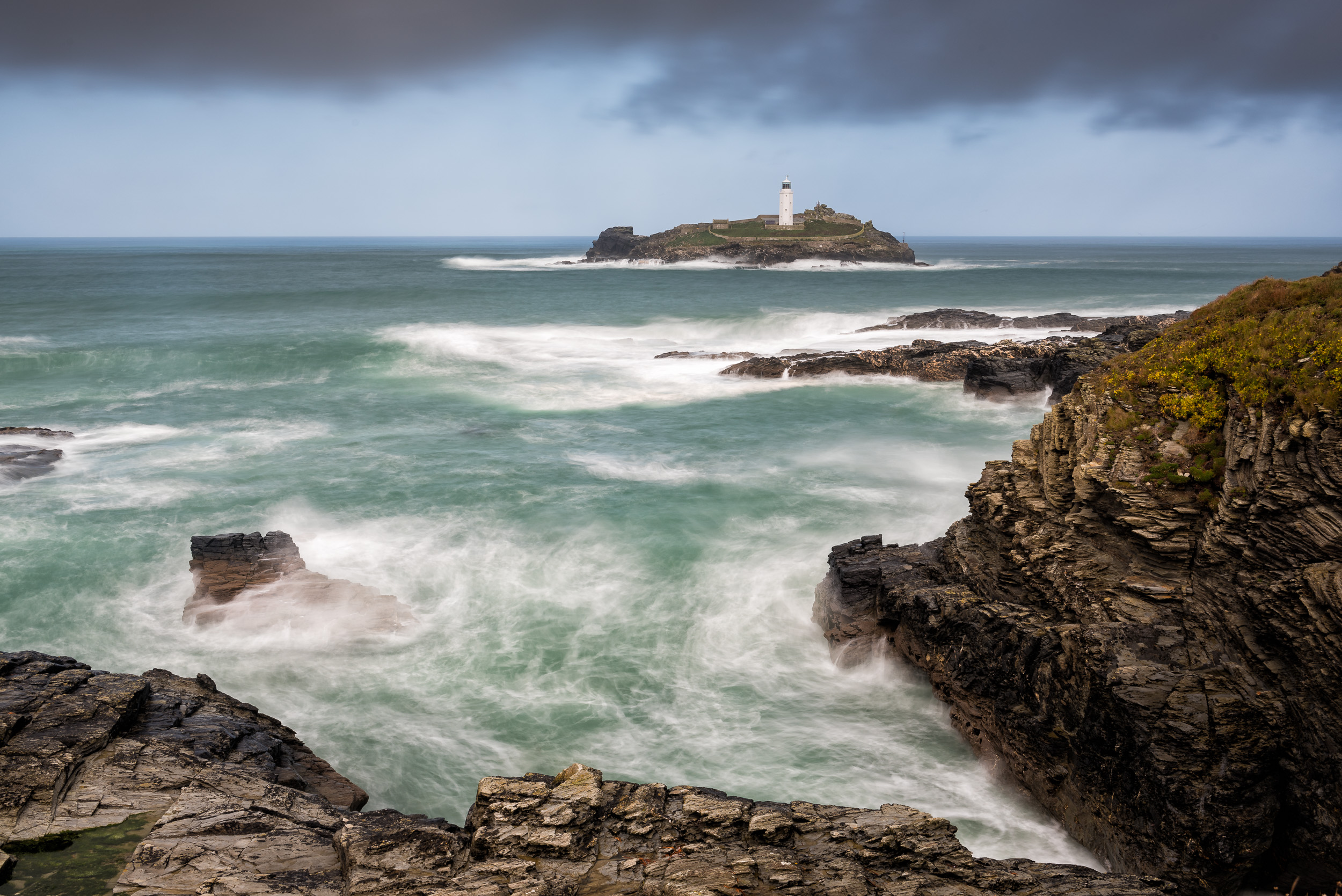
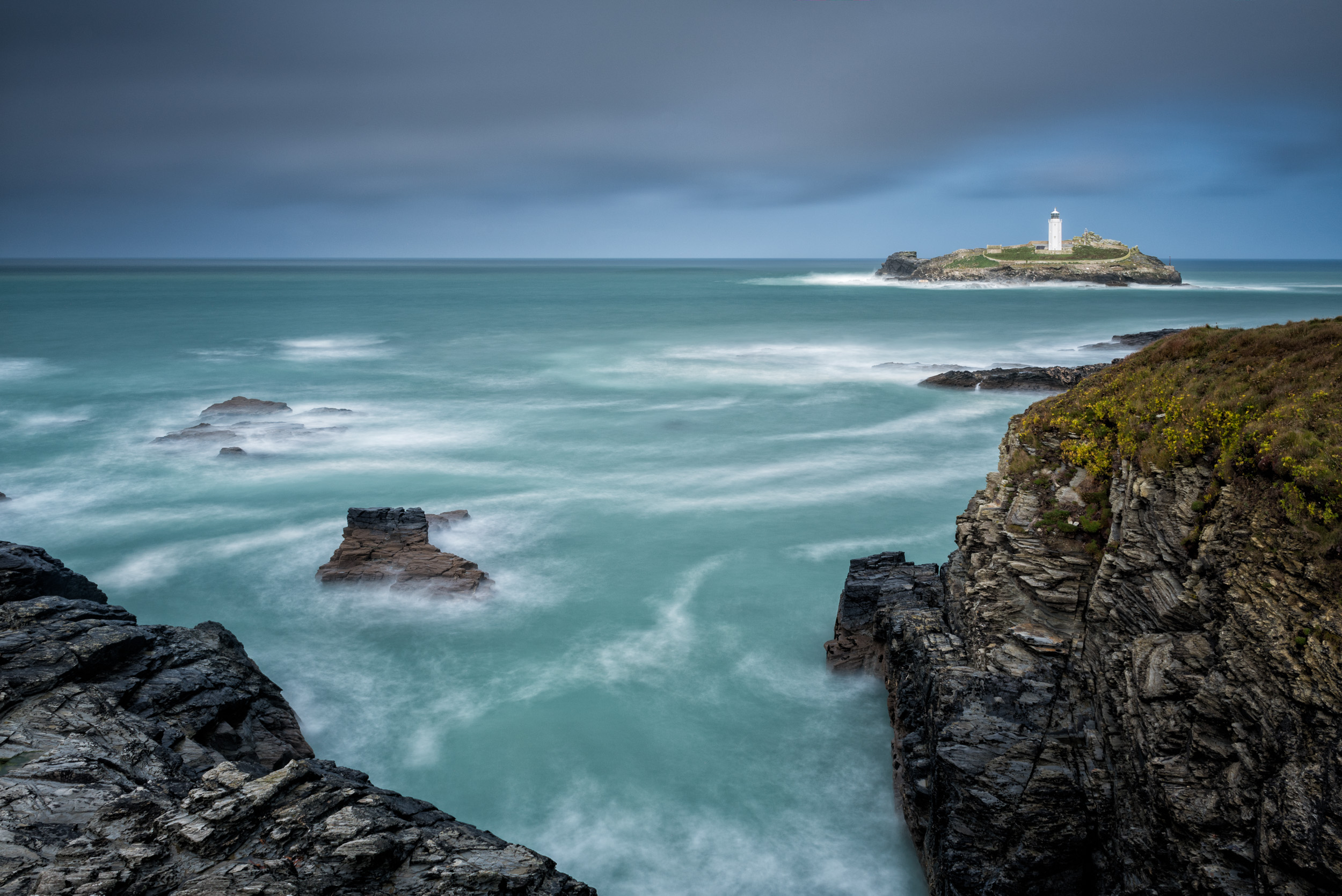
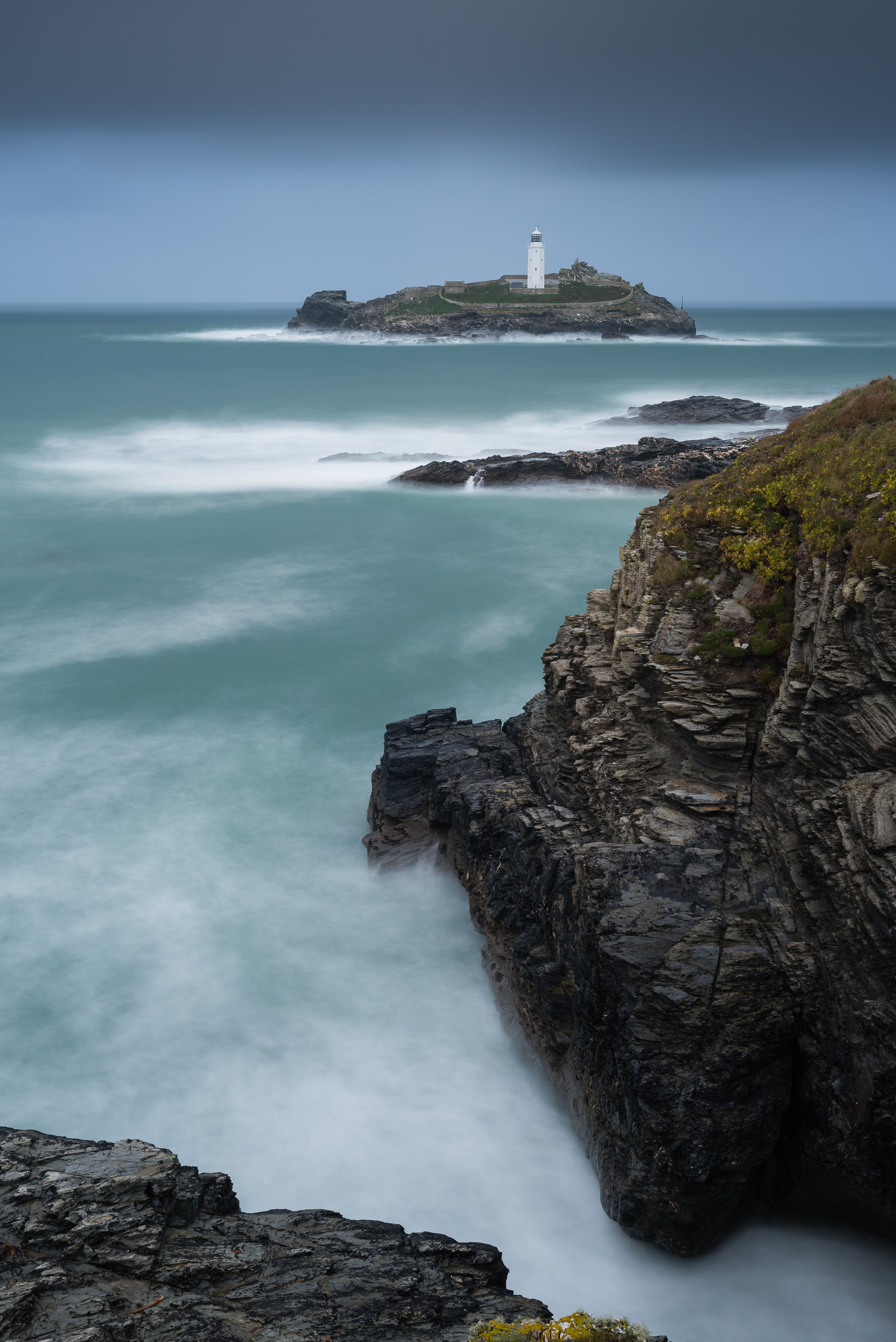
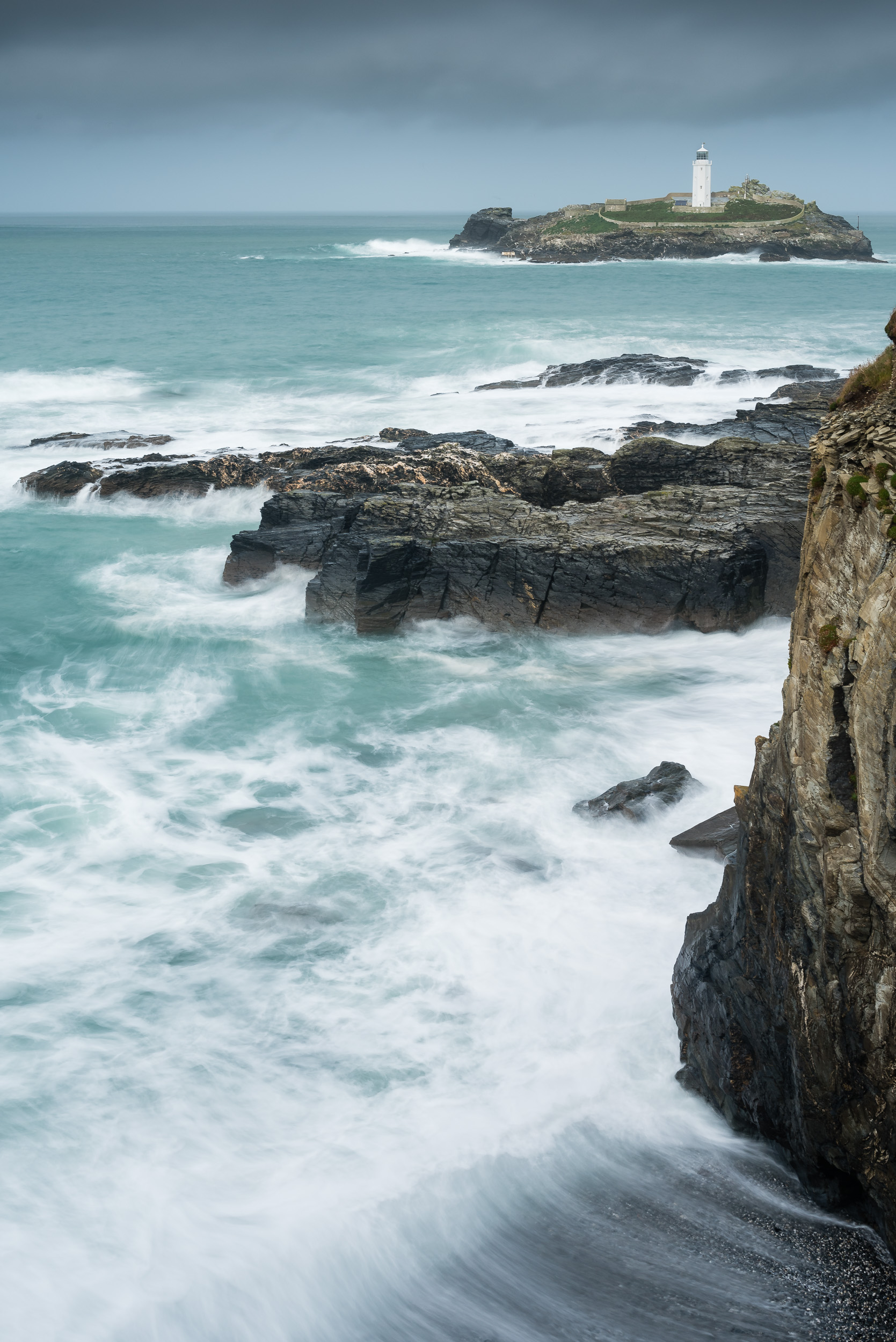
Since that initial visit, Godrevy Point has been on my locations map. However, as it's 2 hours from home, I've always favoured going to Trevose Head which is a little closer.
Returning to Godrevy
This week I finally decided to return to Godrevy Point. The weather forecast and tides were favourable, and I had enough time to drive there and still have time to take photographs before the sun would set.
As it had been nearly fours years since my last visit the first thing I did was have a little walkabout. There are all the cliff top locations to look at, as well as locations down on the beach and the rocky ledges. As I knew the tide was going out, I felt OK about going down onto the ledges. I still had to keep a very close eye on the waves though. It's always best to watch the water for a few minutes before moving onto your next spot as the strength and reach of waves can vary.
My first image from my visit, shown below, was taken up on the cliffs along the South West Coast Path. It's a pleasing enough image but it lacks dramatic light. Some light on the island or cliff face to the side would have really lifted the image. Normally I would have also gone for a long exposure here, but I wanted to capture the movement of the waves so went for the shorter exposure time.
Godrevy Lighthouse from the South West Coast Path, Cornwall - Nikon D850, Nikkor 16-35 mm f/4 at 25 mm, f/11, 1/10th sec @ ISO 64, Lee Filters Landscape Polariser and 2 stop ND Grad.
For my next spot, I decided to leave the South West Coast Path and head down onto the beach and Godrevy Cove. While the lighthouse is a prominent feature of coastline at Godrevy, not all photographs need to include it. The photograph below is actually my favourite of the evening, so it pays to explore an area before digging in your tripod legs.
Again for this image, I really wanted to capture the movement of the waves. Using a polariser not only enhanced the colours, and reduced glare, but it also reduced the amount of light entering the camera, allowing me to get a slightly longer exposure without the need for an ND filter.
Godrevy Point Waves (Godrevy Cove), Cornwall - Nikon D850, Nikkor 24-70 mm f/2.8 VR at 24 mm, f/13, 1/8th sec @ ISO 64, Lee Filters Landscape Polariser and 2 stop ND Grad.
It's important to try new things every now and again, and it's OK to experiment with your photography. While the photograph of the beach stones below might not win any awards, it was still fun to take and provides a welcome break from photographs of waves!
Godrevy Point Beach Stones (Godrevy Cove), Cornwall - Nikon D850, Nikkor 24-70 mm f/2.8 VR at 70 mm, f/8, 1/4th sec @ ISO 64, Lee Filters Landscape Polariser.
As the sun started to set, I headed down to the rocky ledges to get ready for my final shots of the day. I was hoping for better light, either to illuminate parts of the scene, or for it to go dark and stormy, but I ended up with something in the middle. So while I like the composition of both of the images below, they just lack something to make them special. Maybe I'm just getting fussier with my photogrpahy these days!
Dusk at Godrevy Lighthouse, Cornwall - Nikon D850, Nikkor 24-70 mm f/2.8 VR at 27 mm, f/13, 1.3 sec @ ISO 64, Lee Filters Landscape Polariser.
Just a little note on the photography below. Unfortunately, both my main tripod and cable release were away for repair making capturing this photograph tricky. I needed to use the self-timer so there wasn't any camera shake from pressing the shutter button. Normally 2 seconds would be enough, but because the tripod wasn't as stable as my normal tripod, it needed to be 5 seconds. This makes timing really difficult as waves aren't as predictable as you might hope!
Godrevy Lighthouse from Godrevy Point, Cornwall - Nikon D850, Nikkor 24-70 mm f/2.8 VR at 38 mm, f/13, 0.5 sec @ ISO 400, Lee Filters Landscape Polariser.
More Godrevy
I really enjoyed my visit to Godrevy. It was great to be back and I really must make the extra effort to return there again. Looking back at my images from 2014 and those I captured this week, I'm not sure that I don't prefer the images from 4 years ago. I think it probably has something to do with the moodier skies of the images back then. Still, I was very happy that I undertook the 4 hour round trip to Godrevy.
I also have some exciting news. While I was there, I actually did a little filming for my YouTube channel. I'm producing a video on photographing Cornwall's coastline and Godrevy is one of the featured locations. I'm not sure when the video will be ready, but be sure to head over to my YouTube channel and subscribe. Remember to click on the bell icon as well so you'll receive a notification as soon as I post up a new video.
So have you photographed Godrevy Point before? Did you photograph the lighthouse or exclude it? Did you prefer my 2018 or 2014 photographs? Let me know in the comments below.

Friends, Fun and Landscape Photography
In the blog this week I share with you my latest video where I head out with a couple of landscape photography friends to capture sunrise photographs of Start Point lighthouse on the south Devon coast. Those 3am alarm calls don't seem so bad when you are having fun with friends!
A Solitary Pastime
For me, some of the things I love about landscape photography are the early starts and the solitude. This may sound like an odd thing to say but those unsociable hours mean that my photography generally doesn't interfere with my other commitments. Though I'm a very sociable person, there aren't many better things than watching the start of a new day with nothing but the sound of the breeze and the birds singing.
Don't get me wrong, if you see me one morning out taking photographs, come over and say hello. Many a trip out with the camera has been enhanced with a good old chat.
Photography Friends
One of the unexpected benefits of publishing videos on my YouTube channel is that I've made a few friends along the way. People that not only share my passion for landscape photography but people I can have a bit of a laugh with.
When two of my photography friends Gareth Danks and Chris Sale decided to visit me on my home turf I was delighted. I knew that even if the photography turned out to be challenging, the spirit of friendship and general attitude towards fun would make the whole experience more enjoyable.
You can see how we got on in my latest video:
We did a lot more larking about than was showed in the video, but hopefully, I've shown some of the collective spirit we had that morning. I'm not sure I would have driven all the way to Start Point at that time in the morning if it had been for Chris and Gareth!
If you have time, you should really check out their videos from our little adventure as well:
Is landscape photography something you prefer to do on your own? Do you have any friends that also share your passion? Let me know in the comment below.
Those Photographs
Here are the photographs that you saw in the video.
Sunset at The Daymark - Devon: Nikon D850, Nikkor 16-35 mm f/4 @ 20mm, 1/5th sec @ ISO 64, f/13, Lee Filters Circular Polariser.
Dawn Light on Start Point Lighthouse - Devon: Nikon D850, Nikkor 16-35 mm f/4 @ 19 mm, 10 secs @ ISO 64, f/13, Lee Filters 6 Stop IRND.

I Missed Spring but Hello Summer!
In the blog this week, I share with you my disappointing experience of photographing spring this year. However, I remain in a positive mood as the first shoot of summer goes a little better.
Spring, My Favourite Season
As a landscape photographer and general fan of the outdoors, I like all of the seasons. Each one has its own unique characteristics and they can transform how you view and photograph locations. For me though, there is something special about spring. It could be the improving weather, the changing colour of the landscape, or simply the longer hours of daylight.
Spring officially started on the 20th of March this year and I was determined to make the most of it. The short days of winter were at an end and it would soon be possible to start heading out weekday evenings. I was hoping to spend a few months being busy with the camera.
Now that the spring season has officially ended (21st June), I'm looking back on the photographs I have taken and I can't help but feel a little disappointed. It's not that I didn't get out with the camera, it's just that I can't really pick out a photo and say "I nailed it". Somehow, it seems that spring has passed me by this year.
The problem doesn't appear to be lack of commitment on my part, it's just I haven't been out when the conditions have been at their best. As a photographer with a full-time job and a young family, time is very much at a premium. The times I get to go out with the camera aren't dictated by the weather conditions, but when I have spare time between my other commitments. So if Tuesday evening is the time I am able to go out with the camera, but the conditions will be better on Wednesday, I either go out on Tuesday or not all.
It's not been all bad. Spring at Venford Falls (Dartmoor, Devon) is always worth a visit.
Don't get me wrong, spring hasn't been a total disaster. I managed to create a bunch of videos for my YouTube channel:
I have been busy but I just haven't created an image that has captured the essence of spring. One of the key shots I wanted to get was of the coastal thrift in Cornwall. While I did capture an image of the thrift, the conditions were far from ideal. Unfortunately, the thrift is only at its best for a couple of weeks, and I simply didn't get a chance to get back and try again.
I created this image for my Focus Stacking with the D850 video. If only the light had been better. (Bedruthan Steps, Cornwall)
However, I need to put things into perspective. While I didn't get my "spring" image, I did get out with the camera. For me, anytime out with the camera is a good time, and being able to practice will mean my camera skills will be sharp the next time to conditions are better.
Summer is Here!
Anyway, spring has gone, and summer is here so time to start capturing the delights of a new season. For one of my first shoots of summer, I decided to head to The Rumps in Cornwall with my friend (who is also a photographer and a bit of a lucky charm!).
It was a tricky decision to head out that evening or not. I was already very, very tired after a 3 am start that morning for a dawn shoot, but even though the forecast was for clear skies, we could see enough clouds in the sky to justify giving it a punt. To help us on our way we had some fish and chips, and a coke, and we instantly felt more optimistic.
It was a really nice evening at The Rumps. Unfortunately, there was only a little cloud in the sky, and what cloud there was, was difficult to frame effectively. It was however, a good start to a summer of photography and I captured this image:
Summer at The Rumps #3 - Nikon D850, Nikkor 16-35 mm f/4 at 18mm, 0.8 seconds at ISO 64, f/13, Lee Filters Circular Polariser. (The Rumps, Cornwall)


As the sun dipped below the horizon a band of deep orange appeared along the horizon. It was spectacular to look at but it was one of those views that was best looked at than photographed. Sometimes you just need to sit there and soak up mother natures show with your own eyes.
Did you manage to capture any good photos from spring? Are you looking forward to photographing summer? Let me know in the comments below.

Shoot, Print, Surprise!
In this blog I head to Dawlish Warren to shoot a video I'm calling Shoot, Print, Surprise! But what is the surprise? Well, you'll just have the watch the video to find out!
Back at Dawlish Warren
In my latest video, I headed to Dawlish Warren to shoot some dawn seascapes. For those of you who have been following my blog for a while now, you may well be wondering if that is the only location I've ever photographed! I admit it though, I do like going there to capture images.
There are two good reasons for this. Firstly, it's close to home for me. This means that during the winter months when my time is particularly short, it's nice and easy for me to get to. It also offers a variety of different compositions to suit different conditions. With 15 or so groynes of different styles, and long beach it works well with both high and low tides. So, you can virtually go there in any conditions and get an interesting image.
I've mapped out the 15 groynes in a custom google map. It's still a work in progress, but the custom map also has recent images of each groyne so you can see what they look like before you get there. You can view the map here, and you can see how to make your own map here.
Shoot, Print, Surprise!
So back to the topic of the video. Well, the title should give you a good idea of what the video is about. In the video, I head out to Dawlish Warren to capture some dawn seascape images and then I head home to print some of them off. But what is the surprise? Well, you'll just have to watch the video to find out!
Well, I do hope you enjoyed that video, and of course the surprise element. Did you enjoy the surprise? What are your thoughts on the surprise topic? Let me know in the comments below.
The Photographs
As always here are the photographs that were featured in the video.
Nikkor 16-35 mm f/4 @ 34 mm, f/11, 57 seconds at ISO 100, Lee Filters Circular Polariser, ND grad and 3 stop IRND.
Nikkor 16-35 mm f/4 @ 24 mm, f/11, 1.3 seconds at ISO 100, Lee Filters Circular Polariser, and ND grad.

Photographing The Cobb in Dorset: A 5 Minute Photo Adventure
In the blog this week I head to Lyme Regis in Dorset to photograph The Cobb. You can also watch one of my 5 Minute Photo Adventure videos so you can see how I captured the images featured in this blog.
Finally...A Break in the Weather
After what feels like an age, the weather forecasts finally started to show some better weather. January had been a challenging month for my photography. It was the normal combination of lack of time and poor weather, that resulted in not a lot of photography. For anyone who has read my blog for long enough, you'll know that January has historically always been a challenge for me.
It's not just the photography I've been missing, but also going out there and creating new videos for my YouTube channel.
Off to The Cobb
One of the locations that I've always wanted to make a video from is The Cobb in Lyme Regis. It's one of my favourite locations to shoot coastal images. I did actually try and make a video there last year, but I failed to prepare my gear properly. You can read all about that trip here.
So when the weather, and importantly the tide looked good for a dawn shoot at The Cobb I was super excited to finally make one of my 5 Minute Photo Adventure videos there. Here is the result:
I do hope you enjoyed that video and it has inspired you to photograph The Cobb. It's such a great location to photograph if you like shooting seascapes. Just remember to get there early in the morning (it can get busy with photographers), and watch out for those crashing waves!
Have you photographed The Cobb before? What is your favourite coastal location? Let me know in the comments below.
The Photographs
Here are the photographs you saw in the video, plus a couple of extras.
Nikon D850, Nikkor 16-35mm f/4 @ 19mm, f/13, 2.5 seconds at ISO 64, Lee Filters Circular Polariser and ND Grad.
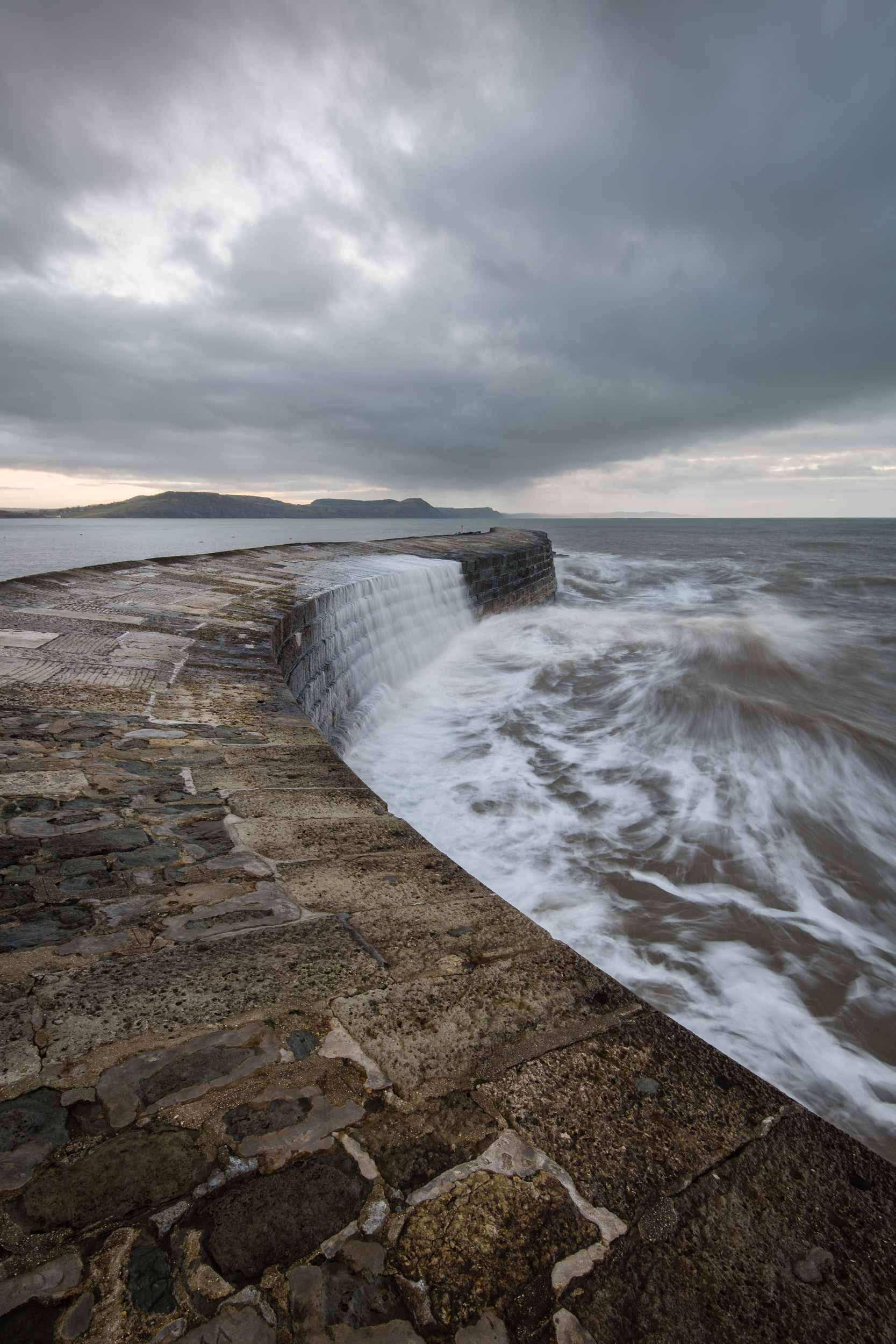
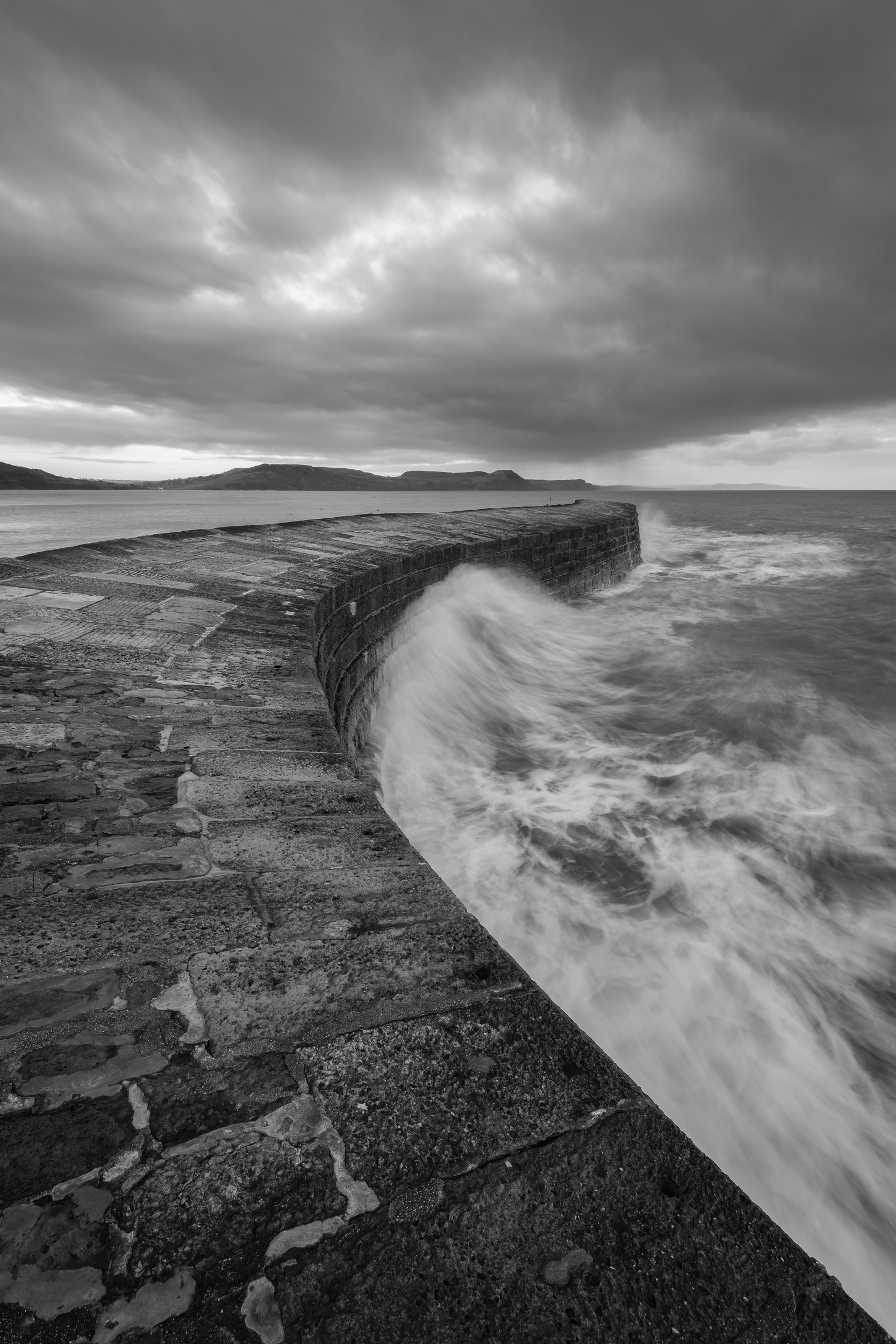
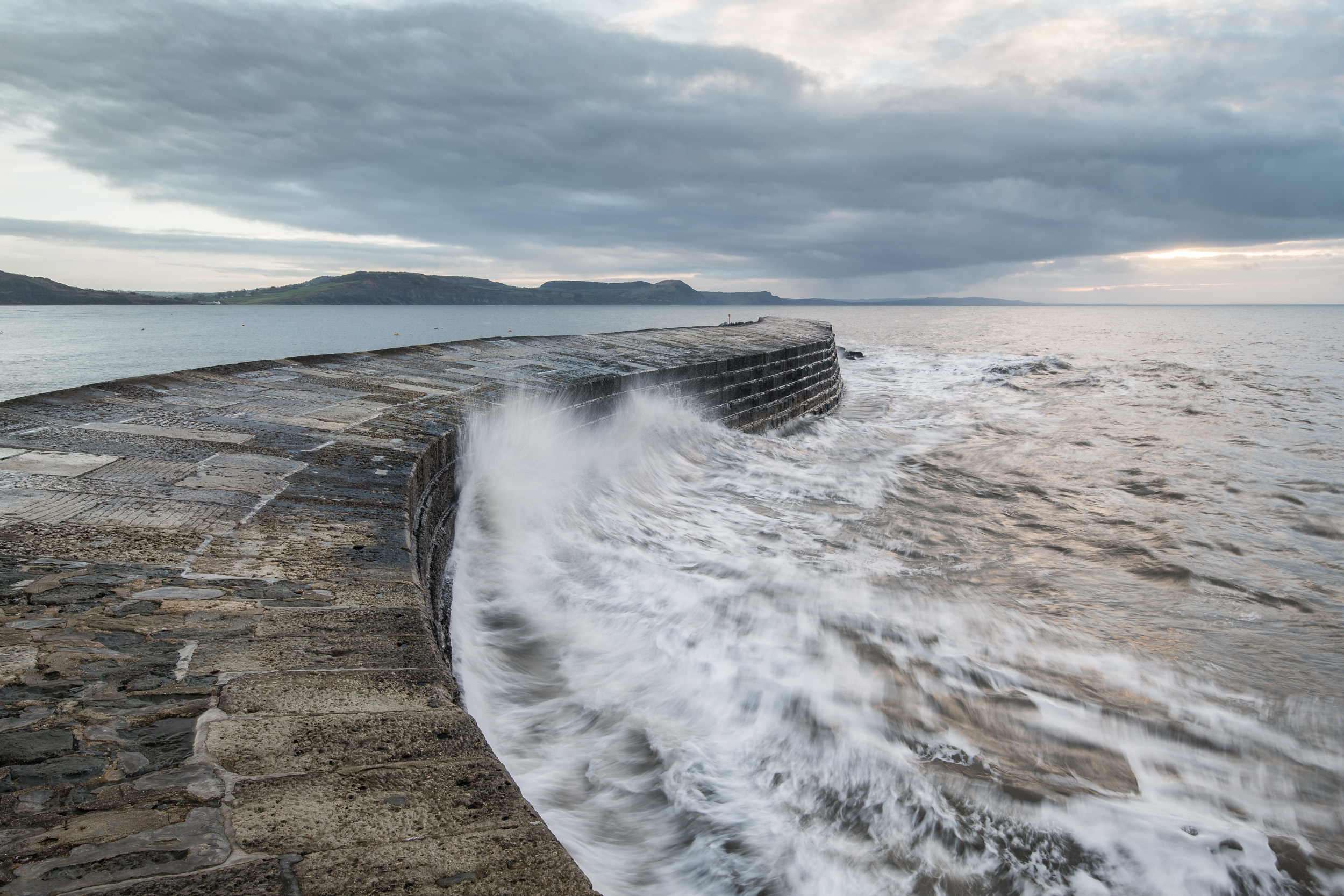
Nikon D850, Nikkor 16-35mm f/4 @ 22mm, f/11, 1/8th second at ISO 64, Lee Filters Circular Polariser and ND Grad.
Nikon D850, Nikkor 24-70mm f/2.8 VR @ 65mm, f/8, 60 seconds at ISO 64, Lee Filters Circular Polariser.
And finally...
Just a word of caution when visiting The Cobb...

Long Lens Landscape Photography
In the blog this week I share with you my long lens landscape photography video. It was all inspired by my fellow landscape photographer Chris Sale who set me the challenge of capturing three long lens landscapes.
The Wide View
If I take a look at my Lightroom catalogue the most commonly used lens I have is without a doubt the Nikkor 16-35 mm f/4 VR. This is hardly surprising given that it was the first full frame lens I bought and that I love shooting my landscapes wide.
About 18 months ago I bought a used Nikkor 70-200 mm f/2.8 VR. I purchased it after renting one a few times to help with my live music photography when I was shooting at bigger events. I soon discovered though that I could use it for my landscape work as well.
Since then, I have shot landscape images with the 70-200 mm but I probably don't use it as much as I should have. So when fellow landscape photographer and YouTuber Chris Sale set me the challenge of shooting 3 images with my 70-200 mm I really had to get my creative brain into gear.
As we are both YouTubers I also set Chris the challenge of creating some wide angle landscape images. You can see how we both got on in the video below:
Well, I hoped you enjoyed watching that video. For me, it was a really good experience. It actually got me to think a little differently! It's opened my eyes a little more to creating landscape images with a longer lens, and I'm sure the 70-200 mm will be making a more regular appearance in my camera back.
Do you have a favourite lens? Do you prefer to shoot wide or tight? Or do you mix it up depending on the scene? Let me know in the comments below.
The Long Lens Images
In case you want to have a closer look at the images featured in the video here they are:
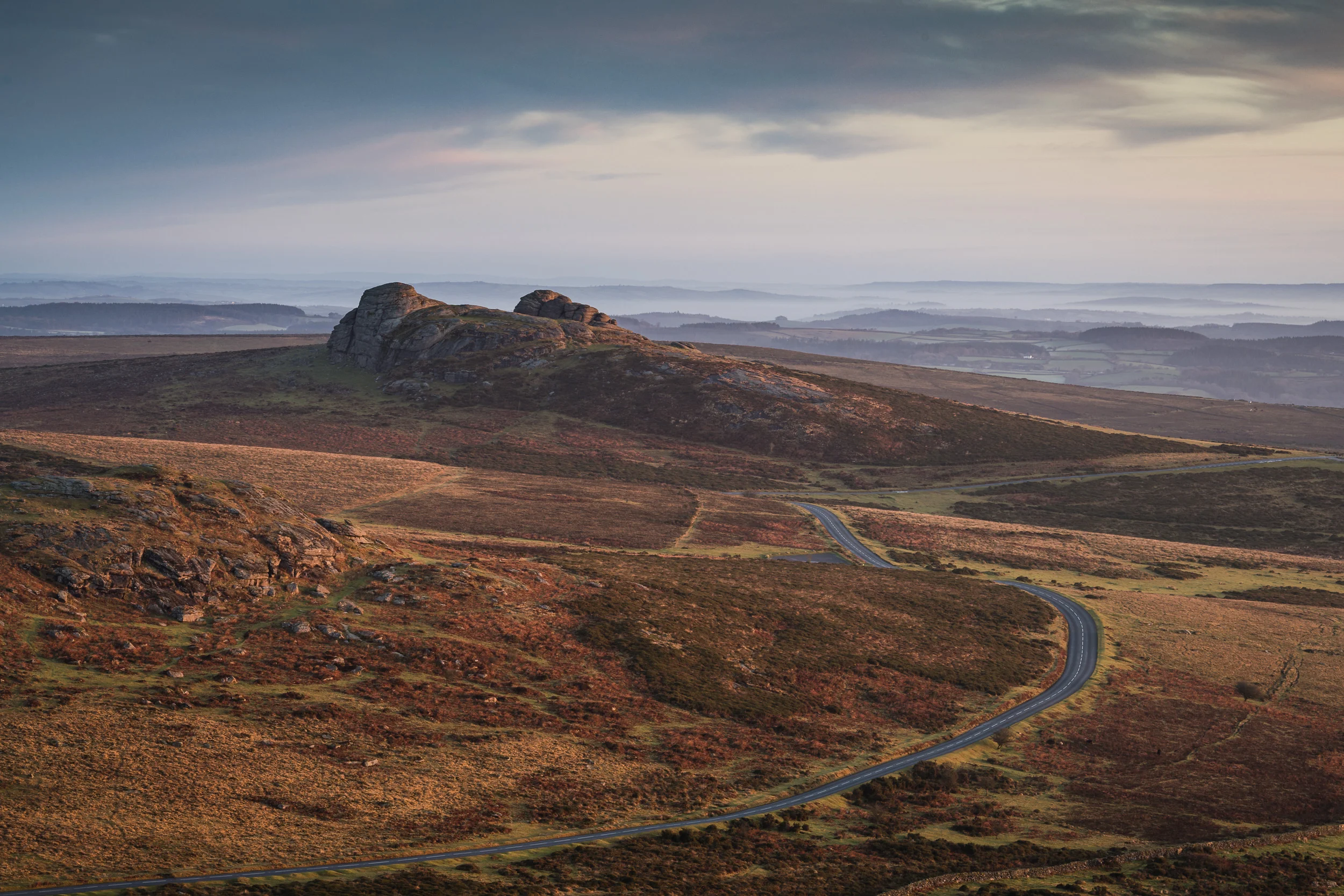
Nikon D850, Nikkor 70-200 mm f/2.8 at 112 mm, 0.6 seconds at ISO 64, f/11.

Nikon D850, Nikkor 70-200 mm f/2.8 at 100 mm, 0.6 seconds at ISO 64, f/11. This didn't actually make it to the video, but I do really like it!

Nikon D850, Nikkor 70-200 mm f/2.8 at 70 mm, 1/6th second at ISO 64, f/11.
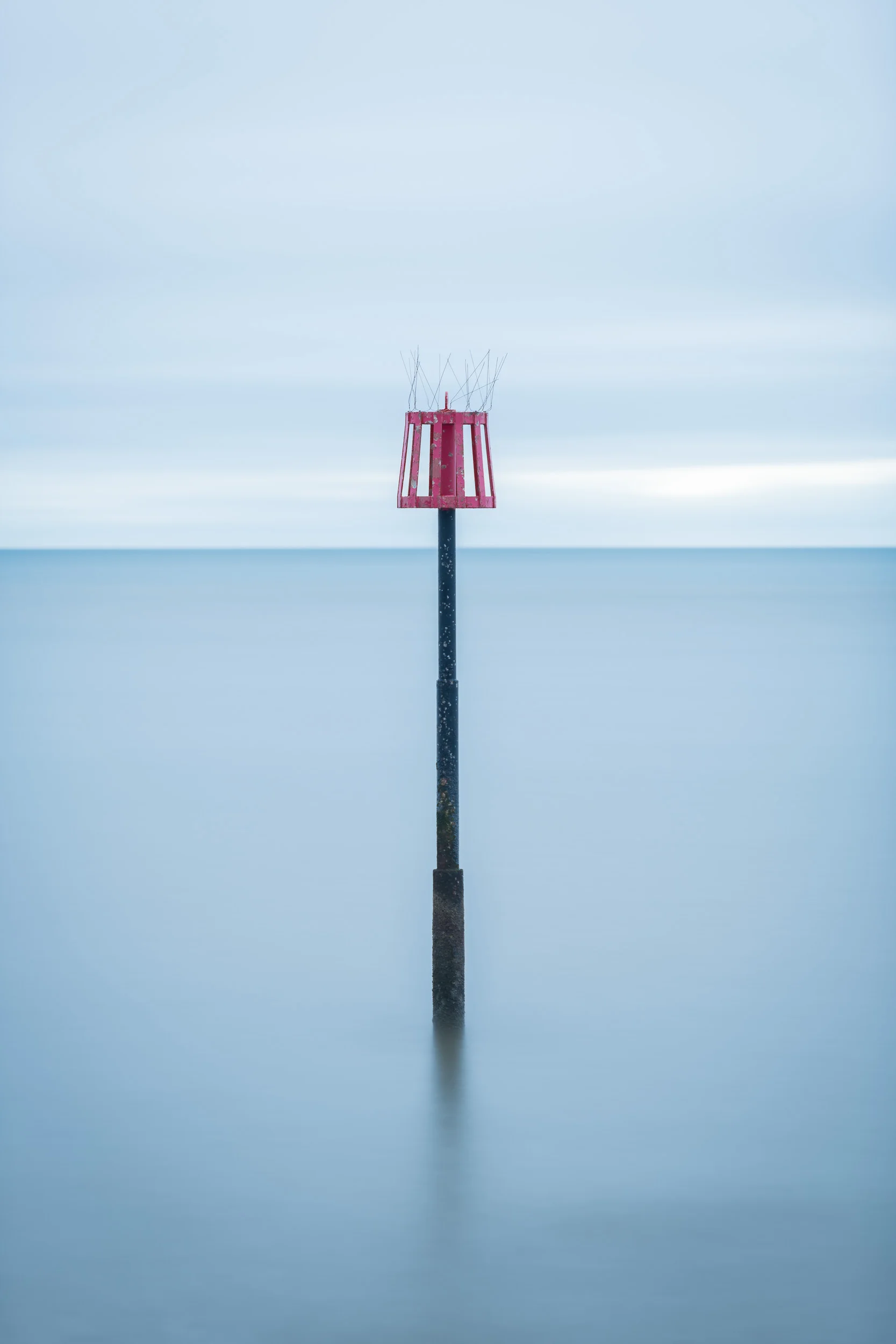
Nikon D850, Nikkor 70-200 mm f/2.8 at 135 mm, 75 seconds at ISO 64, f/2.8, Lee Filters Big Stopper and 3 stop ND.

Winter Solstice Adventure
In the blog this week I share with you the highs and lows of landscape photography as I head out on winter solstice to capture some images.
The Longest Shortest Day
Back in June of 2017, I headed out with the camera to create some landscape images on the summer solstice. You can see the images I created that day along with the video I made by clicking here.
I really enjoyed that day so I knew that when winter solstice came along in December I was going to spend the day out with the camera. Being the shortest day of the year it shouldn't have been nearly as tiring as the summer solstice.
Unfortunately when winter solstice did come around the weather was grey and overcast. I had checked the weather forecast the night before and had planned my locations to suit the weather. I'm all for "embracing the grey", but a full day might well be a challenge too far even for me!
As with summer solstice, I spent the day capturing images and filming my experiences. It was definitely a tough day. Maybe I was tired, maybe I was feeling challenged, but one thing is for sure, it sure did feel like a long day. However, saying all that I did have some great experiences, and if you watch all the video you'll see something special happen right at the end.
Enjoy!
A Winter Solstice Gallery
As always I do hope you enjoyed watching my adventures. I tried to make the most of the weather conditions and the images I took that day both reflect my varying moods and the conditions I had to work with.
You'll have seen these images in the video, but here they are again in case you want a closer look.

Nikon D850, Nikkor 16-35 mm f/4 VR at 19 mm, 180 seconds at ISO 64, f/11, Lee Filters circular polariser and Big Stopper.
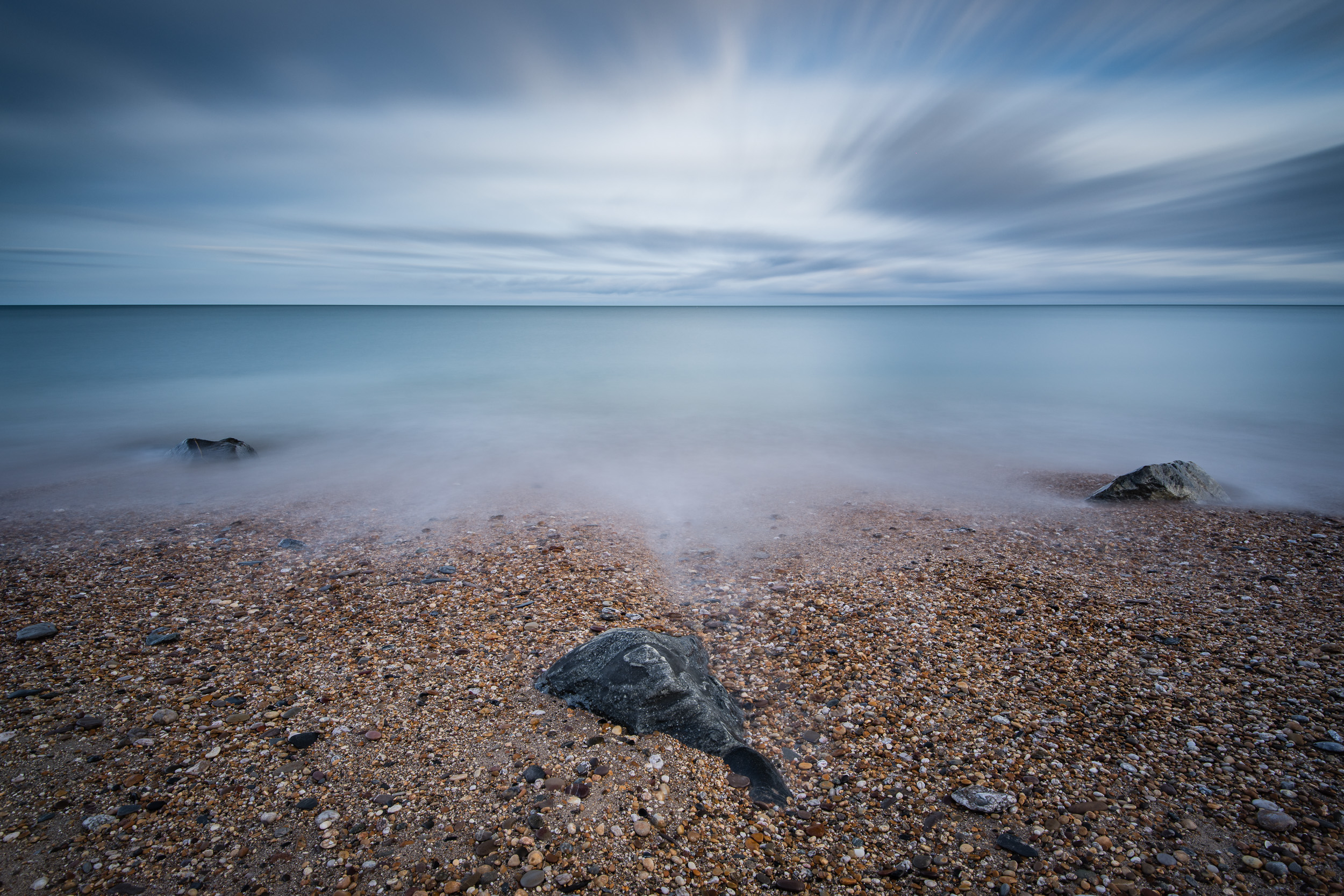
Nikon D850, Nikkor 16-35 mm f/4 VR at 19 mm, 180 seconds at ISO 64, f/11, Lee Filters circular polariser, ND grad and Big Stopper.

Nikon D850, Nikkor 16-35 mm f/4 VR at 18 mm, 180 seconds at ISO 64, f/13, Lee Filters circular polariser, ND grad and Big Stopper.

Nikon D850, Nikkor 16-35 mm f/4 VR at 18 mm, 8 seconds at ISO 64, f/13, Lee Filters circular polariser, ND grad and Little Stopper.
Nikon D850, Nikkor 16-35 mm f/4 VR at 17 mm, 4.8 seconds at ISO 64, f/13, Lee Filters circular polariser, ND grad and Little Stopper.
Well, I do hope you enjoyed those images and my winter solstice video. Did you head out for winter solstice? Have you had days where landscape photography has been both a joy and a drag? Let me know in the comments below.

A Day Out in Dorset
In this blog post, I tell you about the day I spent photographing some of Dorset's finest coastal locations.
Dorset
Though Dorset is the county next door to where I live, I really don't spend enough time there photographing it. I do love to shoot The Cobb in Lyme Regis, and I have been known to photograph Colmer's Hill on the odd occasion, but I really should spend more time in Dorset exploring further afield.
So when my friends over at Dawn 2 Dusk Photography announced that they were running a special long exposure one day workshop in Dorset, I signed up immediately. It sounded so good that I even convinced my father-in-law to dust off his camera and join me.
I've written about the advantages of attending workshops before when I attended another Dawn 2 Dusk workshop in Glencoe earlier this year. This one would be no different. There would be some excellent tuition on hand, it would be well organised, there's always a great bunch of photographers to get to know, and we would, of course, visit some of Dorset's most iconic coastal locations.
West Lulworth
As the workshop wouldn't start until 9 am in Swanage, I thought I would try and make the most of the day by fitting in a nearby dawn shoot. As sunrise was relatively late on I couldn't be too far away from Swanage, so I decided to go West Lulworth and try my hand at shooting Lulworth Cove.

I will need to explore the cove in more detail if I'm to get the shot I'm looking for.
Upon arriving at West Lulworth it soon became apparent that shooting the cove in its entirety wasn't going to be as easy as I thought it might be. From my shooting location along the western edge of the cove, even with a 16mm lens, I wasn't able to find a spot from where I could get everything in that I wanted. Obviously, this would be a location that I would need to revisit when I had more time to explore.
I did find a nice composition down at the shoreline of the cove though. While I like the composition of the photo below, I think it lacks good light and a bit of colour from the rising sun. The sky was very clear that morning except the point where the sun was rising where there was a blanket of cloud. By the time the sun was rising above the cloud I really had to make a move to Swanage or I'd be late for the start of the workshop!
Nikon D850, Nikkor 16-35mm f/4 at 22mm, f/11, 25 secs at ISO 64, Lee Filters circular polariser.
Swanage
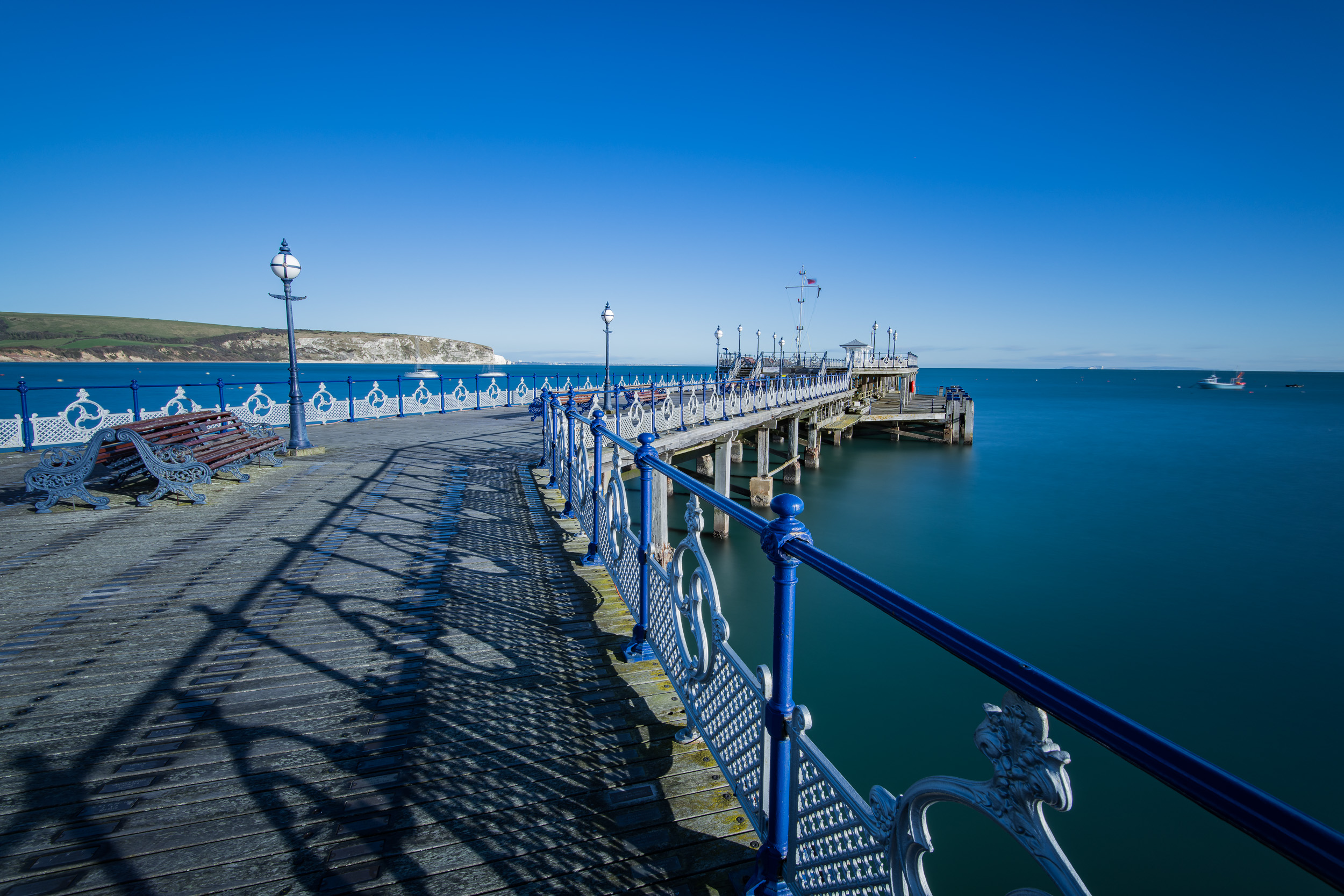
After the workshop briefing at 9 am, some witty banter, and some much-needed coffee, the workshop group headed out to photograph both the new pier and old pier at Swanage. Unfortunately, I was unable to make the most out of these locations. Though I got some excellent advice on how to shoot the old pier, I found the clear blue skies not to my taste and I didn't really get any images that I was happy with.
However, getting great images from every location isn't my goal, nor is it ever realistic. I did, however, leave happy knowing that I'd learnt something about composition (there's always something to learn about composition) and that I'd enjoyed meeting some new people.
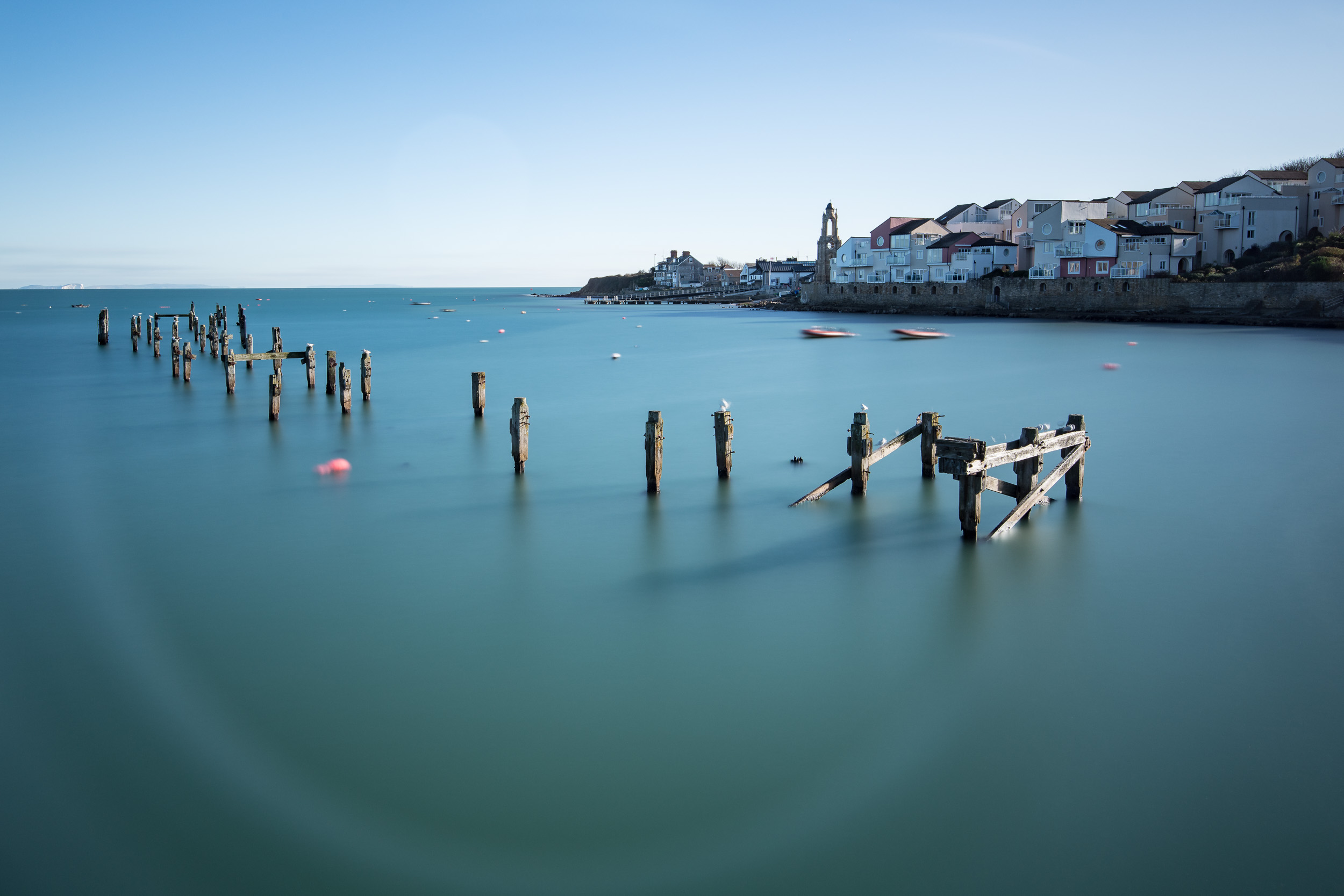
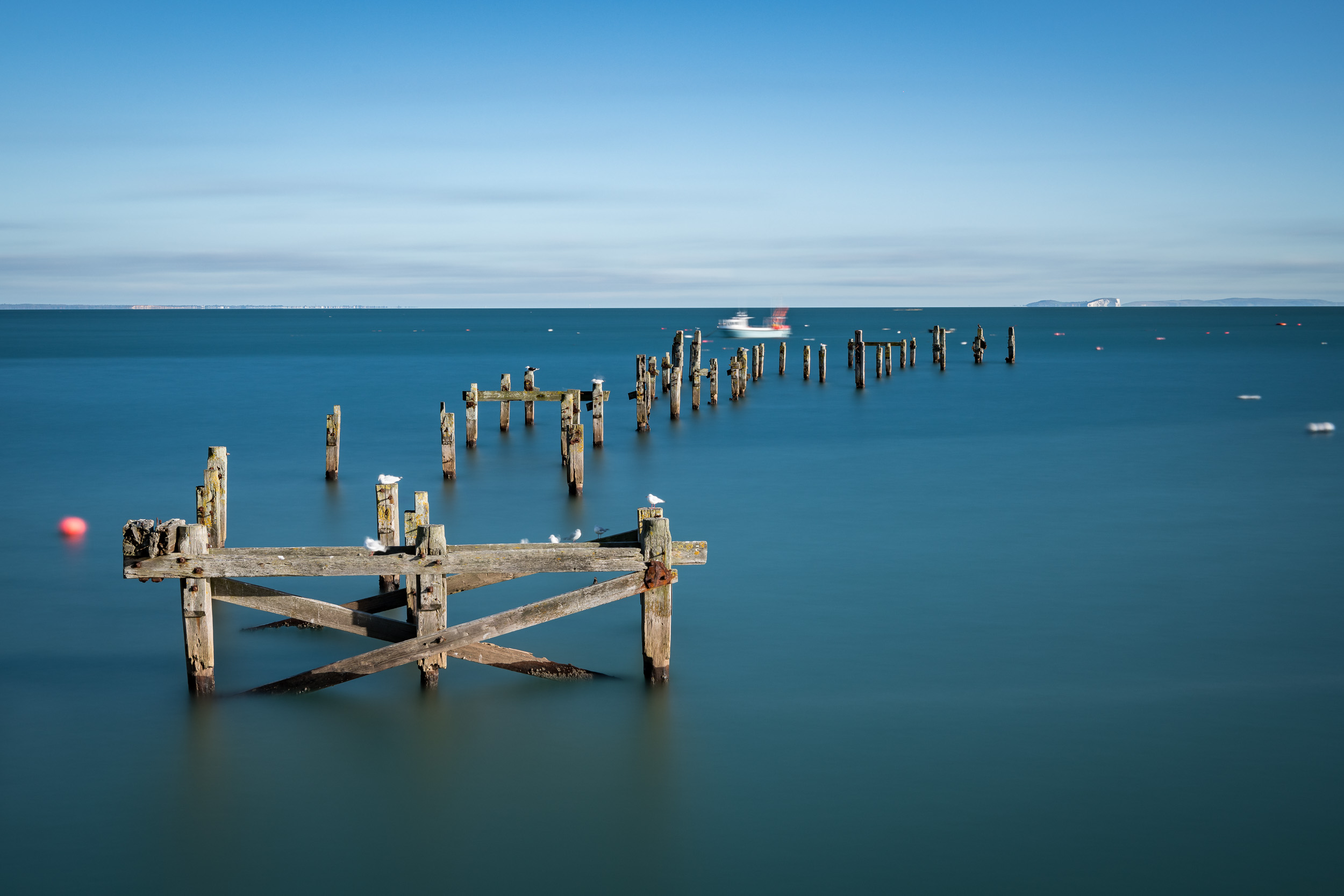
We then moved down onto the beach where we had the opportunity to shoot some groynes, and banjo jetty (which I have shot before). On the advice of one of the instructors, I headed further down the beach to photograph one of the groyne markers beside a small river that fed into the sea. This was a good shout as I managed to get my first good image of the day. It would have been unlikely that I would have found this spot myself so this was another bonus of being on the workshop.
Nikon D850, Nikkor 16-35mm f/4 at 17mm, f/11, 390 secs at ISO 64, Lee Filters Super Stopper.
Kimmeridge
We then all moved onto Kimmeridge where we had a quick picnic lunch and a bit more chat. I had visited Kimmeridge before on a workshop but it was the middle of the day with clear skies so I was really hoping that this visit would be different. There was some cloud in the distant sky and with sunset only a couple of hours away, I was hoping my luck would be in.
As it turned out we didn't get much in the way of action in the sky, but we did get some really nice spots of light on the rocky shore. I've always thought the rocky shore at Kimmeridge was interesting, but the addition of some interesting lighting really got me thinking about the possibilities at this location.
These are two of my favourite shots of the afternoon. I really like the composition, the textures and patterns on the rock, and just a hint of light from the setting sun. These could have been amazing shots if there had been some more interest in the sky. But let's face it, us landscape photographers are rarely completely happy with the conditions!
Nikon D850, Nikkor 16-35mm f/4 at 26mm, f/11, 90 secs at ISO 64, Lee Filters circular polariser and Big Stopper.
Nikon D850, Nikkor 16-35mm f/4 at 21mm, f/13, 30 secs at ISO 64, Lee Filters circular polariser and Little Stopper.

Afterwards, we walked back along the beach to another really interesting spot. In this image you'll see how the rocky ledge creates a nice leading line through the image. It was late on when I took this image so there was very little in the way of light. However, I think with a good sky those pools of water could provide some really interesting reflections.
Overall both myself and my father-in-law had a great time. Though I struggled to create images that I was satisfied within the morning, the two images I created at Kimmeridge more than made up for it. I also picked up some useful compositional tips and, as always, I really enjoyed the social element of the workshop.
Anytime anyone asks me about workshops I always recommend Dawn 2 Dusk Photography, and attending their Dorset long exposure one day workshop is yet another reason why that recommendation remains.
So what are your favourite Dorset locations? Have you been on any workshops recently? Let me know in the comments below.

Trebarwith Strand
In this blog post, I tell you about my recent visit to Trebarwith Strand, how it paid off to get there early and my experience with the Nikon D850.
Trebarwith Strand
I've photographed many different locations in Cornwall. It truly is a wonderful part of the UK and has so much to offer the landscape photographer. Some of my favourite spots include Boscastle and Trevose Head which are amazing coastal locations.
Opportunities to get out and take photographs seem to be rare at the moment, so when the weather looked good for the north Cornish coast I went looking for a spot that I hadn't shot before or hadn't been there for a while. Checking my trusty custom Google map I remembered that I hadn't been to Trebarwith Strand for over 3 years. I checked the tides and my luck was going to be in! What a great location to put my new Nikon D850 to the test.
Getting There Early
On my last visit to Trebarwith Strand, I noticed how busy the location can get, especially at high tide. For me, the best composition is standing on the rocky ledge and using it as a leading line out to Gull Rock. Problem is that the ledge doesn't fit many photographers so if I wanted to get the shot I was after I would need to get there early. (It was just as well I did because by the time sunset came there were at least 6 other photographers there!)
It's not a long drive so I managed to get there with plenty of time to spare. So I set up and waited. And waited. There wasn't much to do but enjoy the Cornish coast. With no mobile phone signal, I had nothing else to entertain me apart from my own thoughts.
It was actually a rather relaxing time. I stood there and listened to the waves crash around me. I made subtle changes to my tripod position, checked my composition and made sure I had the camera setup. There would be no excuses for not being prepared when all the action started!
Getting to Know the D850
Having said goodbye to the D750 the week before I was now trying to get know the D850. Most of the controls were familiar but there were some subtle differences and some new features that I was still learning how to use. Most of these changes I talk about in my recent D850 video and blog post. Overall the camera was living up to my expectations and I was having fun using it.
As sunset approached I started taking some test shots. I was shooting into the sun but my foreground was some very dark, wet rock. I thought this would be a good test of the dynamic range of the camera.
Sunset Action
As the sun started getting close to the horizon I could see a bank of cloud out to sea that would surely kill the sunset early. So rather than waiting right to the end, I started shooting while the sun was still quite strong in the sky. It was a balance between an overpowering sun and loosing the reflected light from the rocks.
Nikon D850, Nikkor 16-35mm f/4 @ 26mm, f/13, ISO 64, 20 seconds, Lee Filters Big Stopper and ND Grad.
As you can see the camera did an admirable job of balancing the highlights and the shadows. The level of detail that was recorded in the shadows was impressive and post-processing was relatively straightforward.
Though I didn't get the sunset I was after I was still very happy to get out with the camera and to spend some time outdoors. I may have been standing on that rocky ledge for a long time but I enjoyed the experience, and for me, that is half the fun of photography. Just being outside and enjoying the outdoors.
Do you have a favourite location that requires you to get there early? Do you enjoy the experience of being outside almost as much as the photography? Let me know in the comments below.

Same Spot, Different Photo
In this blog post I discuss why I was back photographing Trevose Head again and how despite putting my tripod legs in almost exactly the same spot as before I ended up with a unique image.
The Perfect Location?
I like shooting at Trevose Head on the north Cornish coast. I never seem to leave that location without having taken a decent photograph. Sometimes I even leave there with a great photograph. I also just enjoy being there. It's an amazing bit of coastline with its lighthouse, rocky cliffs and crashing waves. It can get very windy, and salt spray on your equipment can be a challenge, but just being there and watching the sunset over the coast is a pleasure.
If you want to see what I'm talking about then you should check out my 5 Minute Photo Adventure video from Trevose Head.
But what makes Trevose Head so special? Why do I keep putting my tripod legs in the same spot? I think one of the great appeals with Trevose Head is that it works in a variety of weather conditions. It doesn't seem to matter if the weather is good or bad, overcast, windy, or even what season it is. Don't get me wrong. It's not the perfect location. No location is. However, if you can vary your technique and adjust your style to the conditions then it's one of those locations where you stand a good chance of making a decent image.
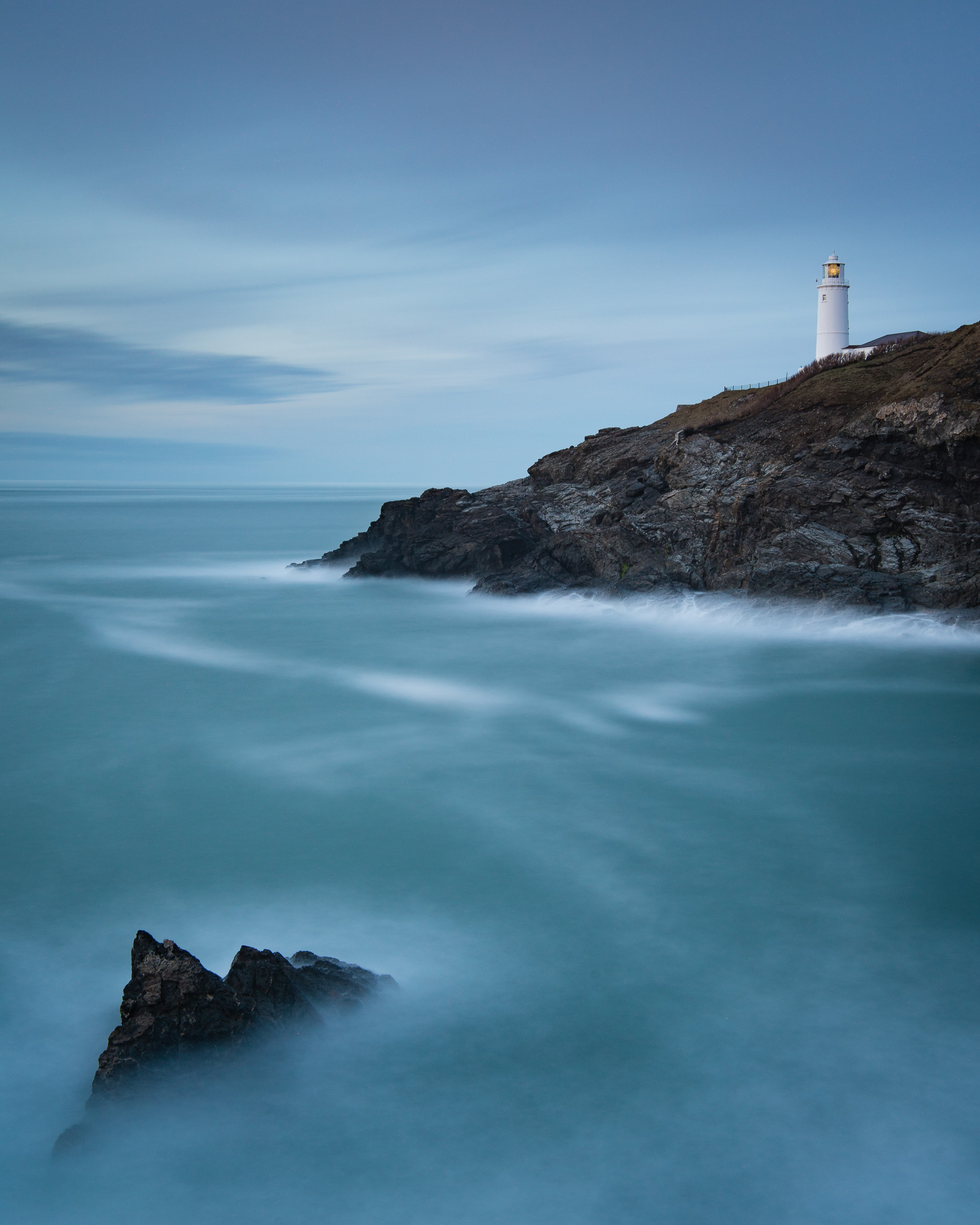
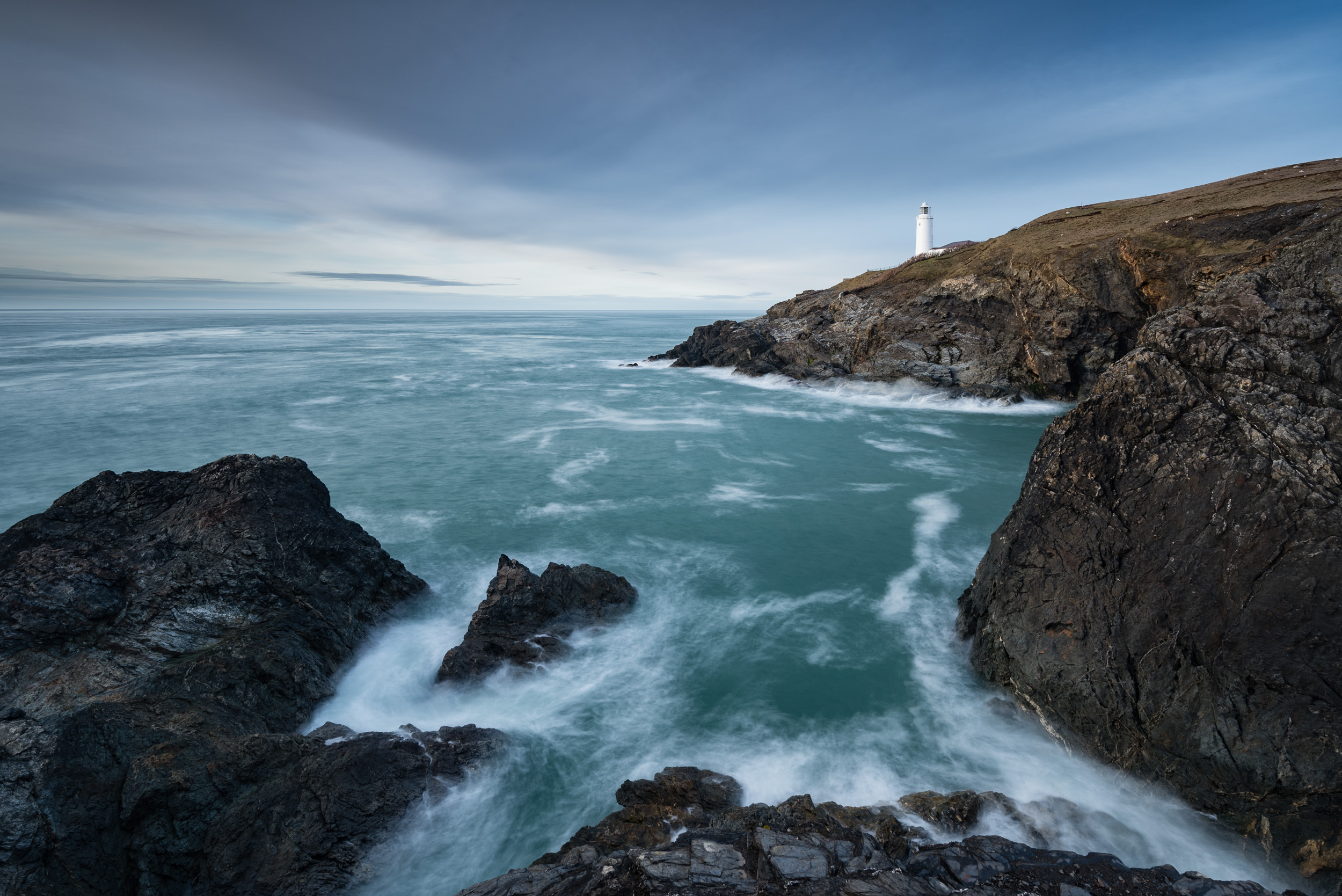
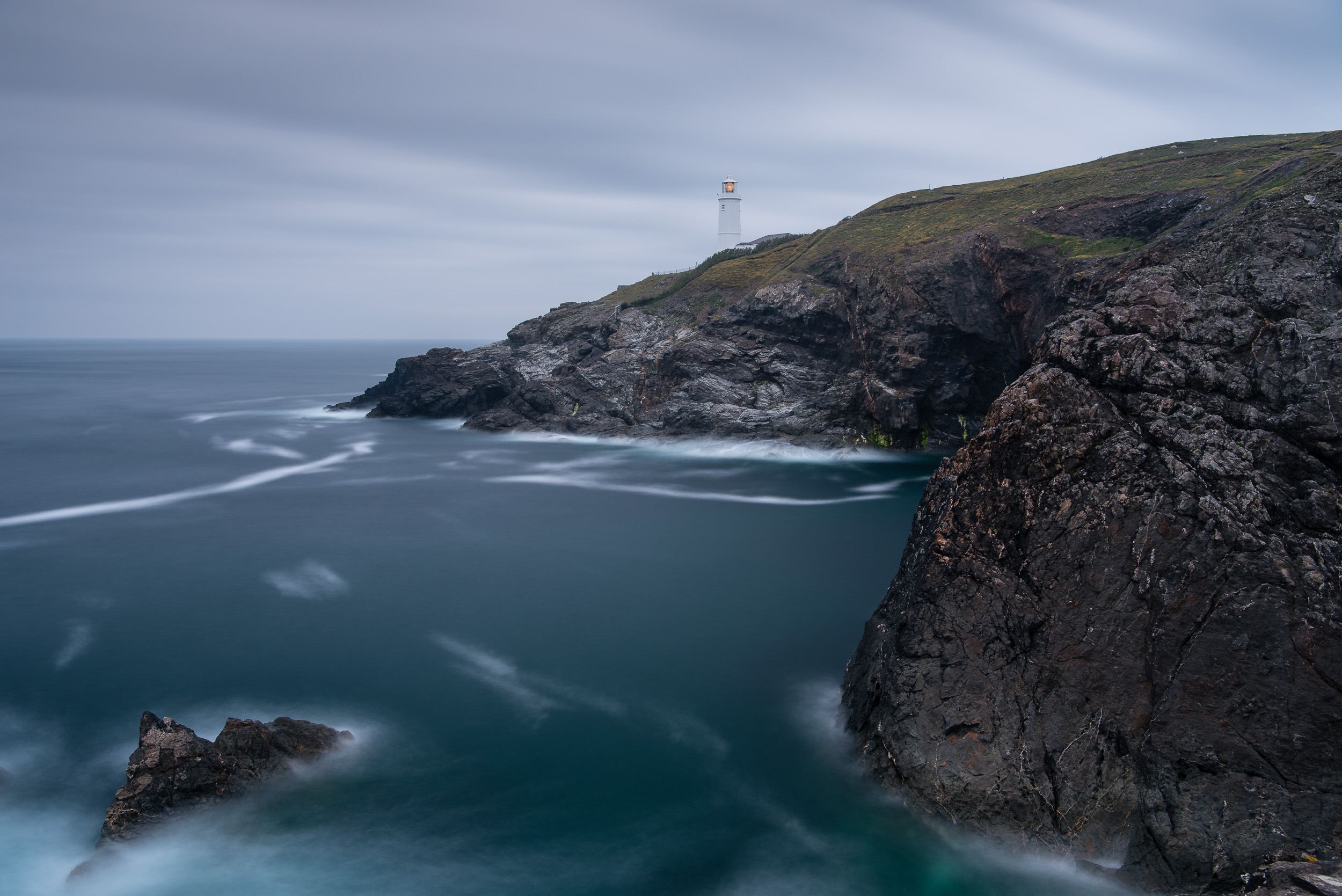
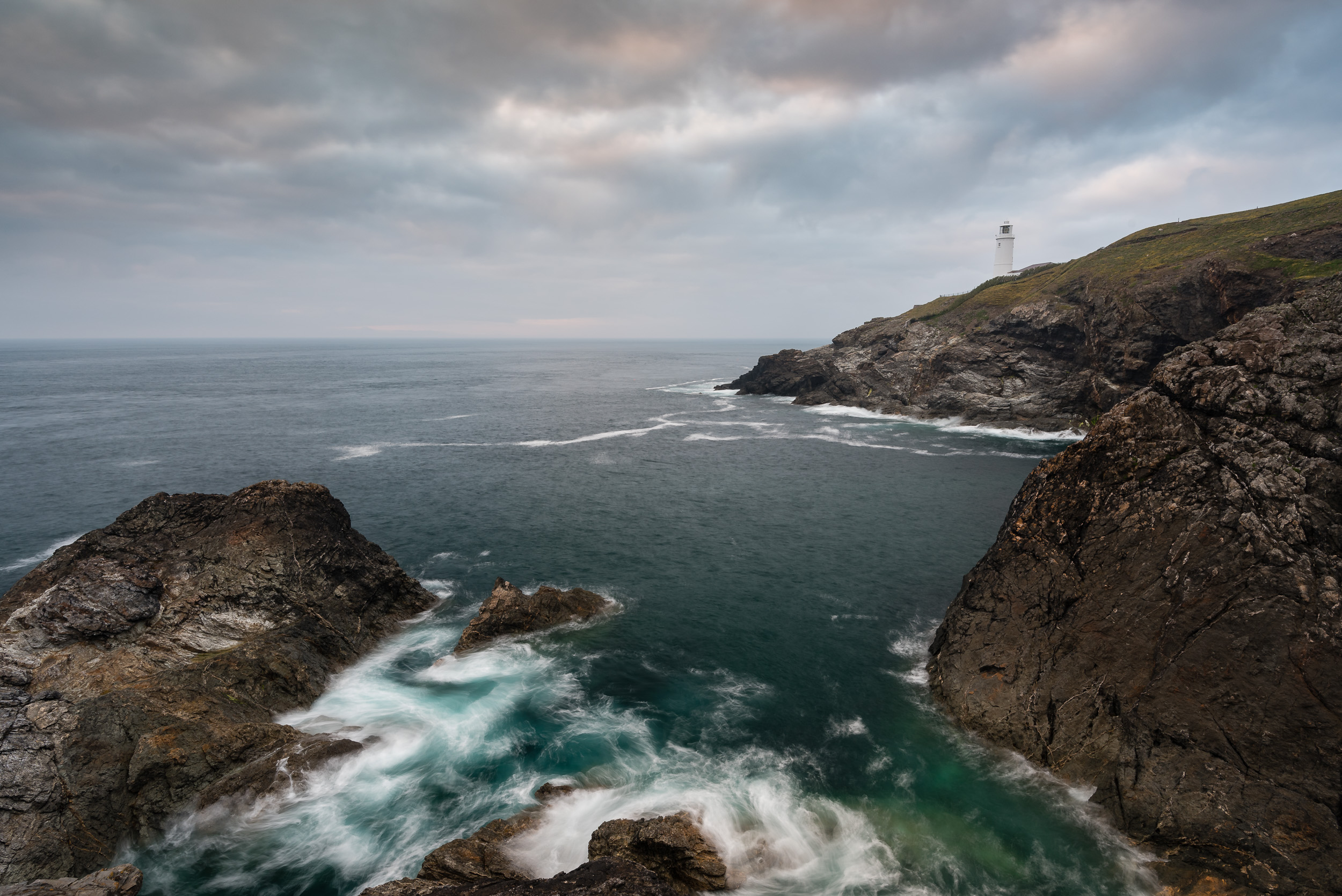
Here are some of my previous images from Trevose Head.
Whose Tripod Holes Are They?
I've just returned from another visit to Trevose Head and the image I captured there inspired me to write this blog post. Though I've previously captured some images that I'm really happy with from Trevose Head, I still thought I could capture something new. So when my friend asked me if I wanted to join him for an evening's shoot at Trevose Head there was only one answer.
It was going to be tough to get there before sunset though. The earliest I could leave home was 7 pm, and given that it is around a 90-minute drive that would only leave me about 40 minutes to jump out the car, make the short walk, setup, and capture something. But the weather forecast looked good and based on my previous experience from that location, I knew the journey would probably be worth it.
When I got there my friend had been shooting for a while and after a quick catch up, I got to work. For me, the best location to shoot Trevose Head is from Stincking Cove looking north east towards the lighthouse. Being a cliff top location there isn't a huge amount of room to move about, so my tripod legs were probably placed in the same spot as they usually are. However, even with my inability to move around a lot there is still plenty of variation to be had by shooting different focal lengths and exposure times.
What made my image different this night was the light. Photographers, including myself, do talk about the "light" an awful lot, but hopefully in this image you can see what a difference the light can make:
Nikon D750, Nikkor 16-35mm f/4 @ 22mm, 0.5 sec, ISO 100, f/16, Lee Filters circular polariser, ND grad.
I'm not saying this image is necessarily any better than some of my other images taken from the same spot, but it is a very different image from my darker, moodier images that I've taken there previously. The light was only there for a few minutes but I love the way it reflects off the sea, the cliffs and the lighthouse. It just shows you that every visit to a location can be unique and therefore produce a unique image.
To ND or Not To ND
I'm a big fan of the ND filter. I use them a lot and you can see how I use them in this video. That doesn't mean I will use them in all my images though. I try to use them creatively if I think the image will benefit from a slightly longer exposure. I do tend to go for longer exposures for my seascapes as I like the resulting smooth water or the patterns that are painted by the moving water. You'll maybe have noticed though that the image I've just shared above isn't a long exposure. At the time I felt that smoothing out the water wouldn't be the right thing to do for the image I wanted to create. I liked the choppy water and the way the light reflected off the tops of the waves.
I did take a long exposure and while I am of course very happy with it, I still very much prefer the shorter exposure.
Nikon D750, Nikkor 16-35mm f/4 @ 22mm, 30 secs, ISO 100, f/16, Lee Filters circular polariser, ND grad.
Ignore Those Who Say...
All this talk of returning to a location to take the "same" picture reminds me of a Twitter post that I saw recently. I can't remember what it said exactly but it seemed to involve a number of photographers talking about a photograph of a few sets of tripod legs all crammed into the same spot. The general gist of the conversation was that these photographers lacked any original thought and were just copying each other or those that were there before them.
Though I didn't reply to the Twitter post, I couldn't have disagreed more for two reasons. Firstly, who's to say that just because a photograph has been taken from a spot before that another photographer can't take a similar image. If you are just starting out in photography I would actively encourage you to visit locations that you've seen in other peoples images. I even don't see any problem with trying to replicate the composition. It's often a good way of learning. If you have been inspired by an image you have seen then why not try your hand at that location.
I bring this topic up now because even though I have visited Trevose Head a few times and taken photos from the same spot, I get different results each time. So I would encourage you to put your tripod legs where my legs were and take the same photo. Your image will be unique and hopefully special to you.
The other reason I disagree with that Twitter post is that if you put two photographers in the same location at the same time you'll likely end up with two different images. An example of this was when I met a very nice photographer called Johnny Baird during a trip up to Scotland to photograph Glencoe. We both stood in the middle of the River Coupall, photographing Buachaille Etive Mor at sunset and despite the close proximity of our tripod legs, we shot very different images. Just because we were in the same location at the same time, how we choose to interpret the scene, choice of equipment and setup all meant we ended up with different images.
Don't let anyone tell you that a location has been overshot or that you must find a unique location for your photograph to be worth anything. So next time you're in Dorset, go to some of its most iconic locations such a Durdle Door and join the dozen other photographers that will be there and get your very own image.
Do you have a location that always delivers results for you? Did you prefer the long or short exposure that I took? What are your thoughts on visiting well shot or iconic locations? Let me know in the comments below.

The Rumps - 5 Minute Photo Adventure
In this blog post I take you on another 5 Minute Photo Adventure. This time I'm back in Cornwall to photography the twin headland known as the Rumps. This is a great coastal sunset location and offers fantastic views of the surrounding coast. Read the blog and watch the video to see why.
Seeing More
The more 5 Minute Photo Adventure videos that I make the more I realise how amazing the coastline around the south west of England is. Over the last few years of photographing my local coastline, I've discovered many wonderful and dramatic locations. I am indeed very lucky to live in a place where I can access a wide range of beautiful photographic locations.
By shooting these videos I have started to discover more about the locations I photograph. For each video, I try to shoot lots of B-Roll so that I have additional footage to help tell the story of the location. This could be me walking around the location or using the drone to capture some aerial footage. It's from this aerial footage that I have seen some amazing coastal sights and views. It could be the elevated view or the view that would otherwise be inaccessible that provides me with a new way of looking at a location. A great example of this would be my previous 5 Minute Photography Adventure video from the Valley of the Rocks (insert link).
When I get home from shooting a video and I look at the B-Roll I often see how much more that location has to offer. Sometimes I get very focused on making an image that I forget to look around me and see what else there is. The B-Roll not only adds the video itself but also reminds me to keep my eyes open when I'm on location and not to just look through the viewfinder.
The Rumps
With so many great locations to pick from in the South West, it was hard to decide where to shoot my next video from. So, as I often do I checked out my custom Google Map and spotted the location known as The Rumps. The weather forecast was looking OK, but I thought it would be worth the risk so I packed my gear and headed out in the car. Here is what happened:
The Images
In the video, I showed you just one of the three images that I took that evening. Here are all three for you to look at:


While these images are pleasing enough, I don't feel any of them stand out. When shooting one of my 5 Minute Photo Adventure videos it's always nice to get a standout image to finish the video with, but the video is more about my desire to share the location with the viewer, tell them about my process of shooting the image, and hopefully inspire them to visit the location. So I don't necessarily consider it too much of an issue not to have a portfolio class image at the end of each video. It would be nice if every trip out with the camera did produce a portfolio class image but this simply isn't the case. For me, any time out with the camera is time well spent. Getting an awesome image is a bit of a bonus.
Looking at the images now I don't think the compositions work particularly well. Sure, not having great light didn't help, but I'm not entirely sure nice side lighting or a pink sky would have helped. The images lack balance and in some cases, they need more negative space in the lower part of the foreground.
So while these images might not necessarily be my best work, they are still important. Every image I take, good or bad, I will personally critique to see how I might improve next time. Photography is a journey of constant learning and improvement, but one that I still very much enjoy.
Looking back at my previous visits though, I think I prefer this viewpoint. This image was taken south of the viewpoint in the video and shows a bit more of landscape around The Rumps.
Have you been to The Rumps before? How much do you critique your own images? Are there any locations you like to me make a 5 Minute Photo Adventure video on? Let me know in the comments below.

Valley of the Rocks - 5 Minute Photo Adventure
In the blog this week I head off to the Valley of the Rocks in north Devon to shoot another 5 Minute Photo Adventure video. See the images I took at this dramatic coastal location and be inspired to visit yourself as I show you grandeur of this location from the air.
Drama!
Photographers will often use the word dramatic to describe the coastline of the south west of England. I've even been know to use the word once or twice in my own videos! While it is true that much of the coastline in the area is indeed dramatic, there are few such locations as the Valley of the Rocks in North Devon that have really earned that title.
No matter if you are a photographer or not, walking along the South West Coast Path as it cuts through the valley is a sight to behold. On a good day you can see out over the channel and onto Wales, or just appreciate the steep and rocky cliffs as you stroll along the path at what appears to be a dizzying height.
But enough of me waxing lyrical about the location, take a look at my latest 5 Minute Photo Adventure video to see what I'm talking about.
On Location
I hope you feel inspired to visit the Valley of the Rocks. I shot a little more drone footage than I probably would have for one of these videos, but sometimes you need more than 15 to 30 seconds of video footage to help tell the story of a location.
I opted to shoot from an elevated position so that I could get a long view down the valley and hopefully get some nice evening light across the rock faces. These are two of the images I took, just taken a little time apart.
Nikon D750, Nikkor 16-35mm f/4 @ 22mm, ISO 100, 1 second, f/16, Lee Filters circular polariser and ND grad.
Nikon D750, Nikkor 16-35mm f/4 @ 22mm, ISO 100, 1.3 seconds, f/16, Lee Filters circular polariser and ND grad.
I'm reasonably happy with both images. They are probably the best images I've captured there. However, being the picky photographer that I am, there are a couple of things I would like to have been a little different. Firstly it would have been nice for the golden light to be a little stronger and more widespread. You can just about see the golden light coming through on the foreground rocks, but having more it along the valley would have been nice. However, it did light up the sky very nicely.
While things like the light are sometimes out with my control, the composition is my job. It's not that I'm unhappy with the composition of both photos, but for the first image, I should have shot just a little wider. Perhaps around 17 or 18 mm. The setting sun in that image is very close to the edge of the frame. I should have either excluded it all together or given it more room. I was probably concentrating on other elements around the frame or just waiting for the sun to go from the frame. It might have been that this was a test shot while I was waiting for the sun to leave my composition. It's strange how sometimes that an image you never intended to be the "one" can end up being the favourite from a shoot.
Go Explore
Though I only photographed from one location that evening, there are numerous spots along that part of the South West Coast Path to shoot from. It's well worth getting there a little early just to have a wander and take in the location. No matter what you shoot with or what you like to photograph you should find something inspiring. It might even be the wondering goats or the cricketers playing a match on the valley cricket field!
So have you been to the Valley of the Rocks? Did the video and images give you the inspiration to visit this stunning location? Let me know in the comments below.
And before you go....

Oh, and one last thing. I'm very happy to be in Feedspots Top 75 Landscape Photography blogs. Why not check out out the other 74! There are some top names in there so it's well worth checking out.

Trevose Head - 5 Minute Photo Adventure
In this blog post I take you on another 5 Minute Photo Adventure. This time I'm off to Trevose Head on the north Cornish coast. This amazing location has a lot to offer the landscape photographer. Read the blog and watch the video to see why.
As a landscape photographer I'm extremely lucky to live in the south west of the UK. Even if I didn't have Exmoor and Dartmoor, I would still have over 630 miles of the South West Coast Path to photograph. With so much to choose from I couldn't possibly pick a favourite location, but when it comes to Trevose Head, I'd have to say it's up there in my top 10 Cornish coastal locations to photograph.
So what makes Trevose Head so special? Well, for me it's the drama of the location. It's got the lighthouse perched on a cliff edge, the rocky inlet where the waves come crashing in and it makes for a great sunset location just about all year round. And did I mention you can drive within 200m of the best spot to shoot from?
On the downside it is very exposed and getting blasted by rain, wind and sea spray isn't to be unexpected, so sometimes it's nice to have the car nearby after you've been battered by the elements!
If this sounds like the kind of location you might want to photograph, why not check out my 5 Minute Photo Adventure video below:
Padstow Lifeboat Station
As I showed in the video, the lighthouse isn't the only spot to photograph at Trevose Head. Located not farm from the lighthouse is Padstow Lifeboat station. As you can see on the map below both locations are close together and so if you have time it's worth visiting.
This was my first time visiting the lifeboat station. I remembered it after looking at the area on my custom Google Map while I was wondering about. It's not that easy to photograph if you want to include the surrounding elements such as the stairs down to the entrance, but with the right lens and a bit of moving about, a good image can be made.
Nikon D750, Nikkor 16-35mm f/4 at 22mm, ISO 100, 30 seconds, f/13, Lee Filters circular polariser, Little Stopper and ND grad.
Trevose Head Lighthouse
Though the forecast for Trevose Head was to be for relatively clear skies, as you can see from my first image this wasn't exactly the case.
Nikon D750, Nikkor 16-35 f/4 at 19mm, ISO 100, 2 seconds, f/11, Lee Filters circular polariser, 3 stop ND and ND grad.
While I do like this image what I was really hoping for was for some golden light from the setting sun (off to the left) to illuminate the rock faces. This would have really lifted the tone of the image. However, sometimes you just have to work with the light you have so I decided to adopt a slightly different style.
By embracing the grey and opting for longer exposures I was able to create a set of darker and moodier images. I also varied the exposure times by choosing different ND filters. The longer exposures allowed the crashing waves to paint white lines and create shapes on the image.
I'll be back...
Though I didn't manage to create the image I had planned for I still came away with some images that I'm very happy with. I also got a chance to to photograph Padstow Lifeboat station, so it was good to get two locations for the price of one! One thing is for sure, I'll be heading back to Trevose Head again in the near future.
So have you been inspired to visit Trevose Head? Have you photographed this location before? Let me know in the comments below.

Plan B Photography
In my blog this week I talk about the importance of having a plan B. On recent visits to Hartland Quay and Trevose Head I ended up shooting something different from what I had originally planned. I might have come away with nothing if I hadn't had a plan B!
Always Have a Plan B
My recent trip to Porth Nanven in Corwnall was a very successful one and I managed to capture a new image for my portfolio. The weather gods had been kind to me that evening and the conditions were ideal for that location. With the weather looking reasonably settled for the next couple of weeks I hoped I could build on that success and get a few more portfolio shots at some locations I had been itching to get back to.
As is always the way with landscape photography though, things didn't go exactly to plan.
Trevose Head
My first and until recently, my only visit to Trevose Head, was a very successful one. On my previous visit had managed to get a number of great images of the the lighthouse in a variety of different lighting conditions using varying exposure lengths. It was one of those trips out with the camera where things just seem to go right for you.
However, even though I had some quality images from that trip, I still wanted to go back and try and get an even better image of the lighthouse and cliffs in even better, more dramatic light.
When I arrive at Trevose Head on my most recent visit things were looking good except that the wind was howling! This is hardly a surprise as Stincking Cove (where I was going to shoot from) isn't exactly sheltered so a bit of wind is to be expected. Not to be deterred though I got setup and got shooting.
It soon became obvious though that the wind was much stronger than my last visit. Even with my heavy duty tripod, and a relatively short exposure time, the camera was getting a battering from the wind. It was looking unlikely that I would get a stable image. There was no chance that I would be getting the Little Stopper out! This was a shame as the light was looking good. Time for plan B!
On my walk over to Stincking Cove I had noticed there was some thrift flowering on the cliff edge. It was a lot more sheltered over there so I decided to head back and shoot something different. I hadn't planned to go to Trevose Head and shoot the thrift but persevering with wind wasn't going to get me anywhere.
While the shot below might not be one for the portfolio, it's a pleasing image and I'm glad that I took it rather than I just went home feeling glum that I hadn't taken any decent photographs.
Nikon D750, Nikkor 16-35mm f/4 @ 19mm, f/16, 1/13 sec., ISO 100, Lee Filters Circular Polariser and ND Grad.
Hartland Quay
A very similar thing happened to me when I went to Hartland Quay about a week later. This time it was almost the reverse though. I had gone to Hartland Quay to photograph the thrift only to change my mind and shoot Screda Point. Unlike my trip to Trevose Head though, I was at least able to capture an image of the scene that I had originally thought about.
The image below of thrift and the bay at Screda Point is pleasing enough but forecasted cloud coverage wasn't there and so I feel the sky lacks interest. The colour and light are there, but it's just missing that something extra in the sky. Realising that things weren't going to improve, I decided to go for plan B!
Nikon D750, Nikkor 16-35 f/4 @ 18mm, f/14, 0.5 sec, ISO 100, Lee Filters Circular Polariser and ND Grad.
For my plan B image, I decided to put on my 24-70mm f/2.8 lens and go in tighter to focus more on the dramatic rocks of Screda Point. Though the sky still lacks the cloud coverage I would have ideally liked, I do prefer this image over my image of the thrift. I like shooting long exposures on the coast so maybe I'm slightly biased towards this image, but I like the lines of the rocks on the beach, the pastel colours of the sky and the simplicity of the image.
Unlike my trip to Trevose Head though, I probably would have left Hartland Quay happy with the photo of the thrift. However, I'm still glad I had a plan B!
So do you always have a plan B? Do you decide before you go somehwere or wing when you get there? Let me know in the comments below.

Bedruthan Steps Photo Adventure
In the blog this week I share with you the story of my latest trip to Bedruthan Steps to photograph the coastal thrift. Not only will you see the images from that trip, but I also share with you my top tips for photographing Bedruthan Steps. And if that wasn't enough for you, I also share with you my latest 5 minute photo adventure video!
Why Shoot Bedruthan Steps
I have a great many locations on my custom Google map, many of which can be shot at any time of year. There are a few however that are best shot at particular times of the year. Bedruthan Steps on the north Cornish coast is one such location. It has plenty to offer the photographer with golden sand beaches (at low tide) and miles of dramatic Cornish coastline.
It's spring time though when Bedruthan Steps comes to life. Like many areas along the coast, springtime brings on the flowering of the thrift, a beautiful pink flower that likes to cling to the side of the coastal cliffs. If you can find a nice clump of thrift and you are lucky enough to get some great morning or evening light, you'll have everything you need to produce an amazing image.
While there a number of locations to shoot the thrift in Cornwall, my favourite place to shoot them is at Bedruthan Steps. There is nothing quite like seeing the thrift flowering all along those stunning coastal cliffs.
The Clock is Ticking
The thrift flowers in spring but it may only be in its prime for a couple of weeks. This unfortunately isn't exactly the same time every year so knowing when to go isn't easy. Bedruthan Steps is a 1 hr 40 minute drive so I want to be reasonably assured of good conditions if I go. I would also need to the good conditions to match up with a free evening for photography!
However, time was ticking for me. I had started to see some spectacular shots of the thrift at Bedruthan Steps on Instagram so I was starting to panic that I was going to miss the best of the thrift this year. Luck had not been with me. When I had a free evening the weather was rubbish, and when the weather was forecast was good I didn't have free time. I was getting frustrated!
As mid May rolled round I came to the conclusion that I would have to go now or forget about for this year. So with a dubious Sunday evening forecast I decided to put caution to the wind and go for it regardless of the conditions.
A 5 Minute Photo Adventure
As I announced in my recent blog post for Daymark Tower, I've started a new series of videos that aim to give the viewer an introduction to a location and inspire them to photograph it. So for the 2nd of my 5 Minute Photo Adventure videos I've created this video of Bedruthan Steps which I filmed on my recent trip there:
I hope you enjoyed that video and that it has indeed inspired you to visit Bedruthan Steps. If you want to see the images from the video in a bit more detail you'll find them below.
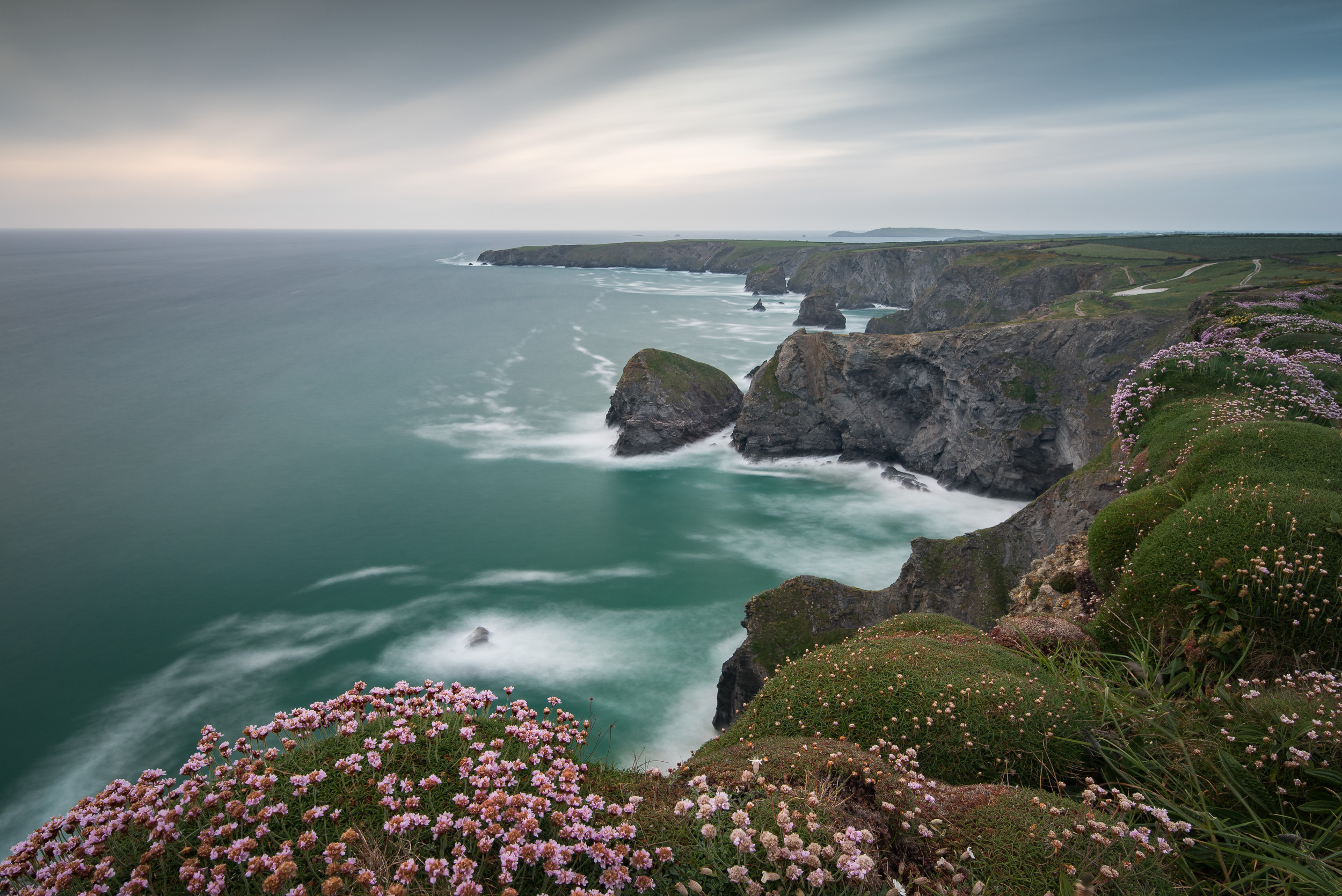
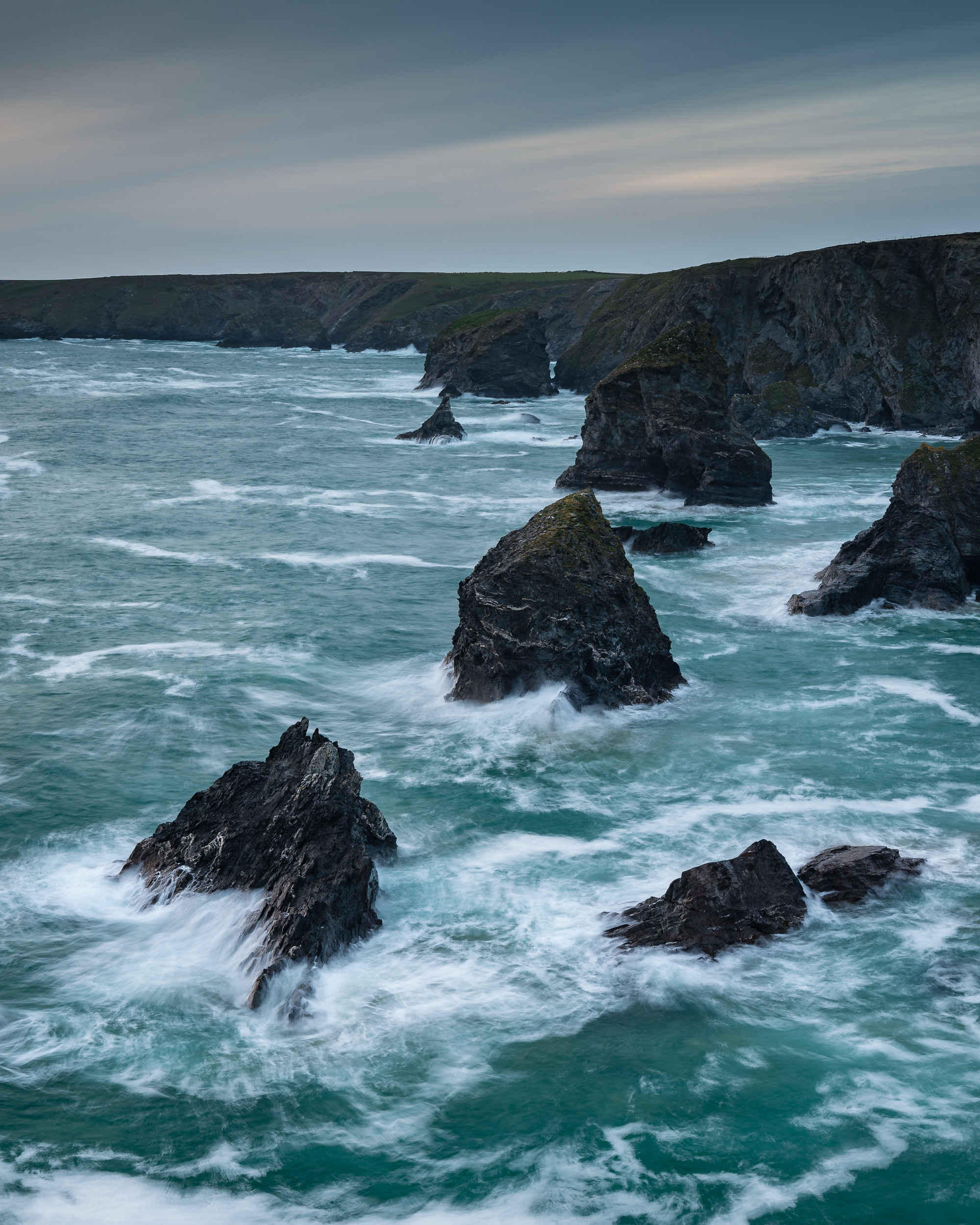
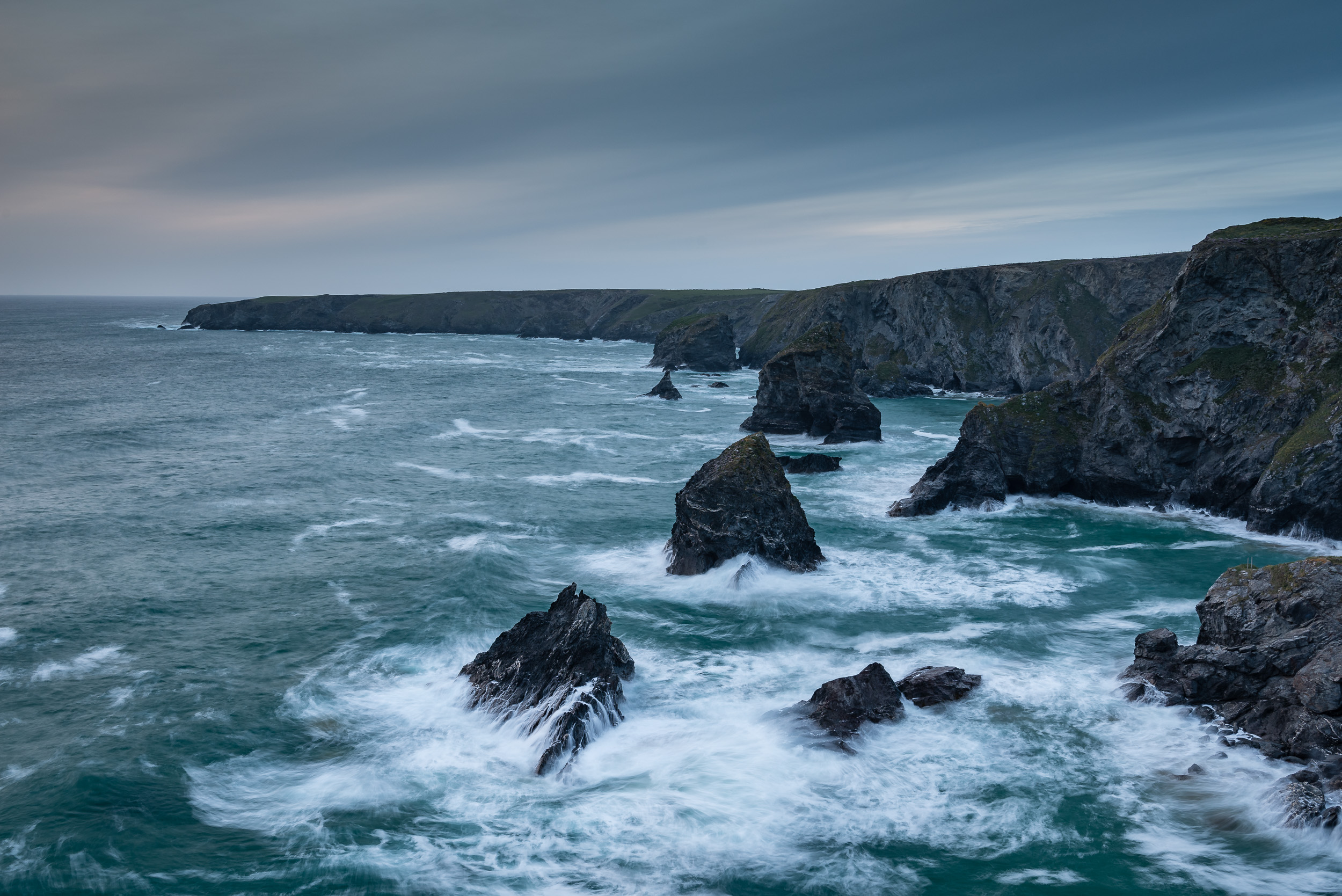
So if that has inspired you to visit Bedruthan Steps, here are my 3 top tips to help you make the most of your visit:
Lenses - Take a wide angle lens for shooting the thrift, but also take a medium telephoto (like a 24-70mm) and shoot and isolate some of those rocky sea stacks.
Walk the Walk - Though there are a couple of great viewpoints just a short walk from the National Trust car park, you'll find so much more by walking along the coast path. So give yourself sometime to explore the area. The beach at Bedruthan Steps is also worth checking out, but only at low tide and you don't mind the steep descent.
Be Careful - It should go without saying, but do be careful on the cliffs, especially when photographing the thrift. It's all too easy to get very close to the edge in search of some nice thrift, and if it's windy up there you don't want to loose your balance.
Though I was keen to get to Bedruthan Steps to photograph the thrift, it is a location I will visit at anytime of year. The coast line is beautiful and spectacular there and given the right like it can make for some epic photographs.
So have you visit Bedruthan Steps? Have you photographed thrift before? Let me know in the comments below.

Beautiful Boscastle
In the blog this week I tell you about my most recent trip to Boscastle, show you the images I took, and share a few tips should you decide to visit this picturesque Cornish coastal village.In the blog this week I tell you about my most recent trip to Boscastle, show you the images I took, and share a few tips should you decide to visit this picturesque Cornish coastal village.
Classic Cornwall
Even if you aren't a photographer there is a lot to love about Boscastle. This picturesque little village in Cornwall is always busy with tourists enjoying the village, wondering along the harbour and ascending the surrounding hills for some fantastic views of the coastline. It has everything you would typically look for in a Cornish fishing village.
The things that make this village a popular tourist spot also make it popular for photographers. From happy mobile phone shooters to those who take their photography a little more seriously there is something for everyone to shoot.
The Photographers View
For me though, I go to shoot the harbour. The entrance of the harbour has dramatic cliffs on either side and the beautiful turquoise water snakes its way into the village to meet the River Valency. There are paths on both sides allowing you to walk the length of the harbour, but for those who have a little more puff in their lungs, there are paths leading up the hills. This is where I like to shoot from.
On this visit to Boscastle, I decided to take the path on the north side of the harbour. The view up there really allows the photographer to make the most of the S-shaped harbour entrance. With the sun setting in a westerly direction I was hoping that the last of the light would illuminate the hillside on the opposite bank with nice evening light. The weather forecast was looking good and with an incoming tide, I was optimistic.
Subtle Changes
After a short ascent to the top of Penally Hill, I just had to stop for a little while and admire the view. It's all too easy to get to your location, unpack your gear, and get shooting, but sometimes you need to pause and take in the scene. Though I have photographed this scene a couple of times now, each visit has been unique and I wanted to walk about a little to see how I might shoot it differently this time. I was hoping to see some Thrift flowering but unfortunately, there wasn't any. Well, you can have everything, can you?
After taking in the view I decided on two compositions, one vertical, one landscape. Both would include the S-shaped harbour entrance and the foreground rocky ledges, but I would shoot the landscape picture closer to sunset and include Meachard island in the composition.
Nikon D750, Nikkor 16-35mm f/4 @ 20mm, f/13, 30 secs, ISO 100, Lee Filters Circular Polariser, Lee Filters 0.6 ND Grad, 4:5 crop.
Though the light isn't fantastic in the above image I do like the composition. To get it right I had to make a number of minor adjustments. If I was too low down, the flow of the harbour water is cut off at the bottom of the frame and if I went too far to the left the curvy pier gets lost behind the foreground rocks. Too far to the right and the headland (Penally Point) on the north side is cut out of the frame and you lose the S shape of the harbour.
I also had a to take into account the foreground rocks which play an important part of leading the viewer out into the rest of the image. Overall, I had to make a lot of small tripod changes to get things just right.
Nikon D750, Nikkor 16-35mm f/4 @ 19mm, f/13, 56 secs, ISO 100, Lee Filters Circular Polariser, Lee Filters 0.0 ND Grad, 4:5 crop.
It was a similar story for the landscape orientation image above but as you can see I then had to take into account the placement of Meachard island. These aren't necessarily difficult compositions to get but you do need to pay attention to where everything is in the frame in order to get the most out this view.
Unfortunately, as you can see by the images, I didn't get the light I was looking for but I never come away from Boscastle feeling like it was a wasted trip. It's a lovely location and even in less than optimal weather conditions you can still get good images. It also makes you work at your composition skills as you try to get all the most interesting elements into your frame.
So if this blog has inspired you to visit Boscastle, here are my three top tips for shooting the view from Penally Hill.
Take a Polariser - The waters of the harbour are a beautiful turquoise colour and using a polariser will help you take the glare of the water and emphasise those colours.
Explore the Hill - There are a number of compositions to be had up on Penally Hill. Try shooting up into the harbour and village as well.
Thrift - If you can time your visit, try and go there when the Thrift is flowering. There isn't a lot of it up there, but adding it when it is can really add something to a composition.
If you want to see how I went about shooting these images, check out my latest 5 Minute Photo Adventure video on Boscastle.
I'm going to try and get back to Boscastle again soon. I've been a few times but never managed to truly capture in the way that I would like. I have a number of compositions I like from Penally Hill but so far I have always missed out on some great light. As with Colmer's Hill and Bowerman's Nose, I will just have to persevere until I get an image that meets my vision!
So have you photographed Boscastle before? What viewpoints do you shoot there? Let me know in the comments below.

Prawle Point with a Point and Shoot
Can you shoot good seascape images with a compact camera? In my latest blog post and video I go out to explore the coastline around Prawle Point in south Devon to capture some seascape images. I also leave all my DSLR gear at home and decide to shoot only with a compact camera. Read more to see how I got on!
Packing Light and Exploration
I've photographed Start Point <insert link to previous blog post> on the south Devon coast a few times but I've never really ventured further west towards Prawle and Salcombe. My father-in-law had suggested a few times that this area of the coastline was worthy of investigation, so when a free Sunday morning came up I decided to do just that.
Summerleaze beach in Bude. The manual controls on the Sony RX100 M4 allowed me to create this long exposure.
After deciding that I would go to Prawle Point I also considered if I should pack all my DSLR gear and go for a sunrise shoot. I have to admit that going somewhere new and trying to find a composition for sunrise was exciting, but my head overruled my heart. The weather forecast was for high winds and 100% cloud coverage so I decided I would take a more leisurely approach and have breakfast first and go out after sunrise.
I already knew the conditions weren't going to be ideal for seascape photography but I didn't want to go out with no camera at all so I decided to go out with my light weight setup of my Sony RX100 M4 and Manfrotto BeFree carbon fibre tripod. The Sony RX100 M4 looks like a point & shoot camera, but this little compact camera can be a real powerhouse. It has lots of manual controls, and while it does have it's limitations, it is capable of capturing some wonderful images.
So with a new area to explore, and very lightweight setup, I decided to make a video to see if I could capture a good seascape image while out exploring Prawle Point. I was going to test the theory The Best Camera is the One That's with You. Check out the video below to see how I got on.
Results and Conclusions
As I said in the video I'm certainly not about to give up all my Nikon gear but that's not to say that I can't capture good images with a compact camera. Yes, I was off to a little bit of a head start with advanced capabilities of the Sony RX100 M4 but it is more about understanding your gear and having a good technique that allows you to get results.
Sony RX100 M4, 8.8mm (24mm @ 35mm equiv), 1/4 sec @ f/11, ISO 80, in-camera ND filter on. Processed and converted to black & white in Lightroom CC.
Sony RX100 M4, 8.8mm (24mm @ 35mm equiv), 1/4 sec @ f/11, ISO 80, in-camera ND filter on. Processed in Lightroom CC.
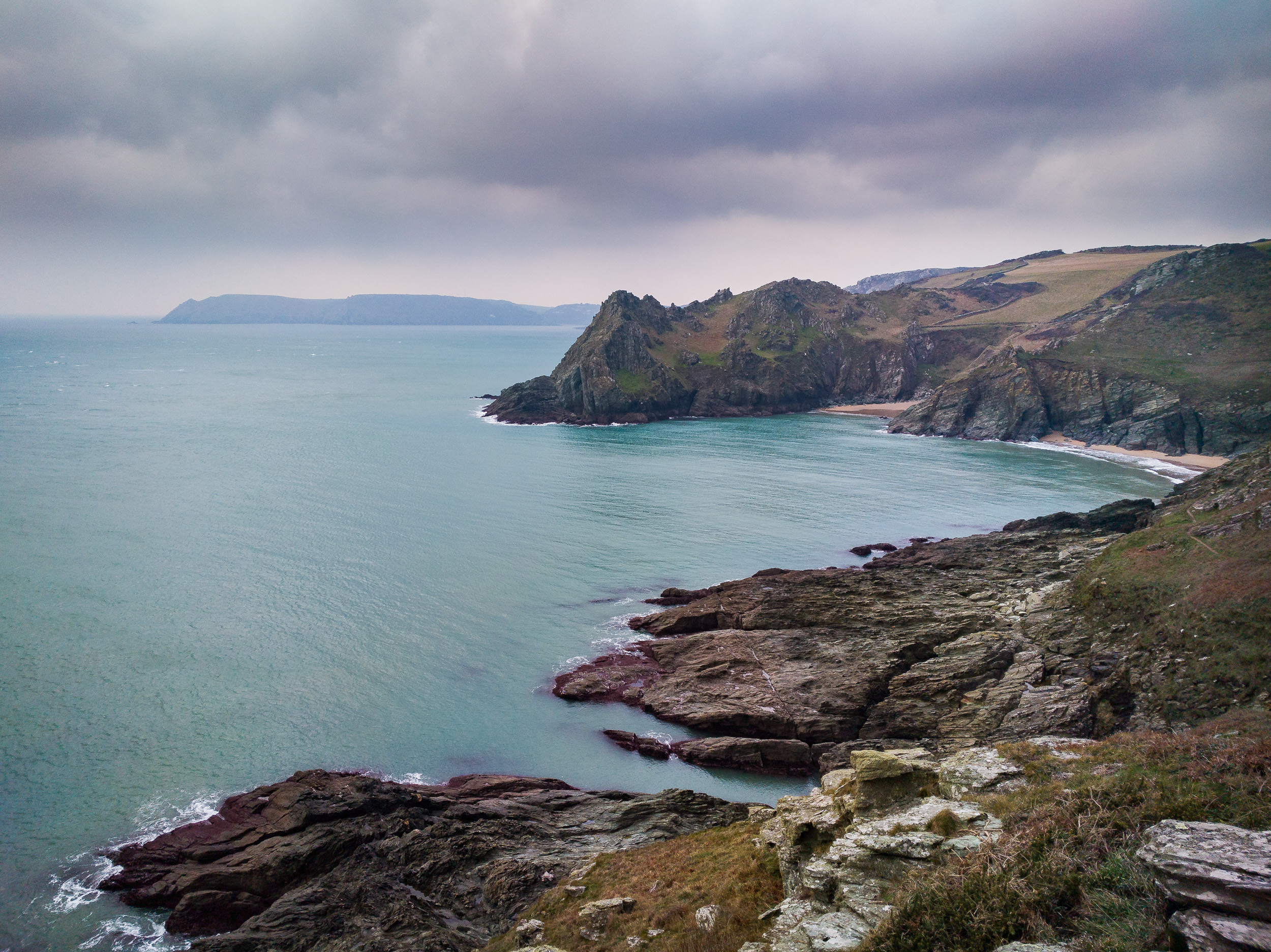
A reference shot facing east from Prawle Point lookout. Taken with my Nexus 6p phone.
While I'm not considering these images for my portfolio, given the weather conditions and the fact it was a new location for me I'm relatively happy with the results. While there is no doubt that my Nikon camera, lenses and Lee Filters provide me with a superior level of control and quality, I'm still confident I could capture good images with my Sony RX100 M4 if I needed to. It's also nice to travel light every now and again!
I'm also very much looking forward to exploring to the east of Prawle Point. The coastline seems more dramatic and there are a couple of very nice looking beaches. Once I've got some locations marked out I'll return with my Nikon and also shoot some video there with the drone.
So, do you prefer to go out with a light weight setup? How important is gear? Is good photography technique just as important as the camera? Let me know in the comments below.
A Technical Footnote
The video I shot at Prawle Point was also an opportunity to test out my new audio/video rig. Audio is a critical component of good video, and I've struggled to get good audio for my videos. The Sony RX100 M4 captures wonderful 4K video, but without a mic input, I've had to depend on onboard audio which isn't great. Now that I'm using an external audio recorder and a lavalier mic I can consistently capture high-quality audio. In fact, I wouldn't have been able to capture good audio at Prawle Point without my new rig as the wind was so strong.
If anyone is interested in the setup let me know in the comments and I'll either do a blog post of video on my personal setup. However, I do have to thank Ted Forbes and his YouTube channel The Art of Photography which originally showed me how I could use a Sony RX100 M4 and an external audio recorder in a single rig setup.
And thanks to Ted, I also learnt how to sync the audio as well.
Please do subscribe to The Art of Photography. It's a wonderful photography channel that discusses so many aspects of photography from technical side of things (as above), to the artistic side of photography.
And of course, don't forget to subscribe to my YouTube channel.