
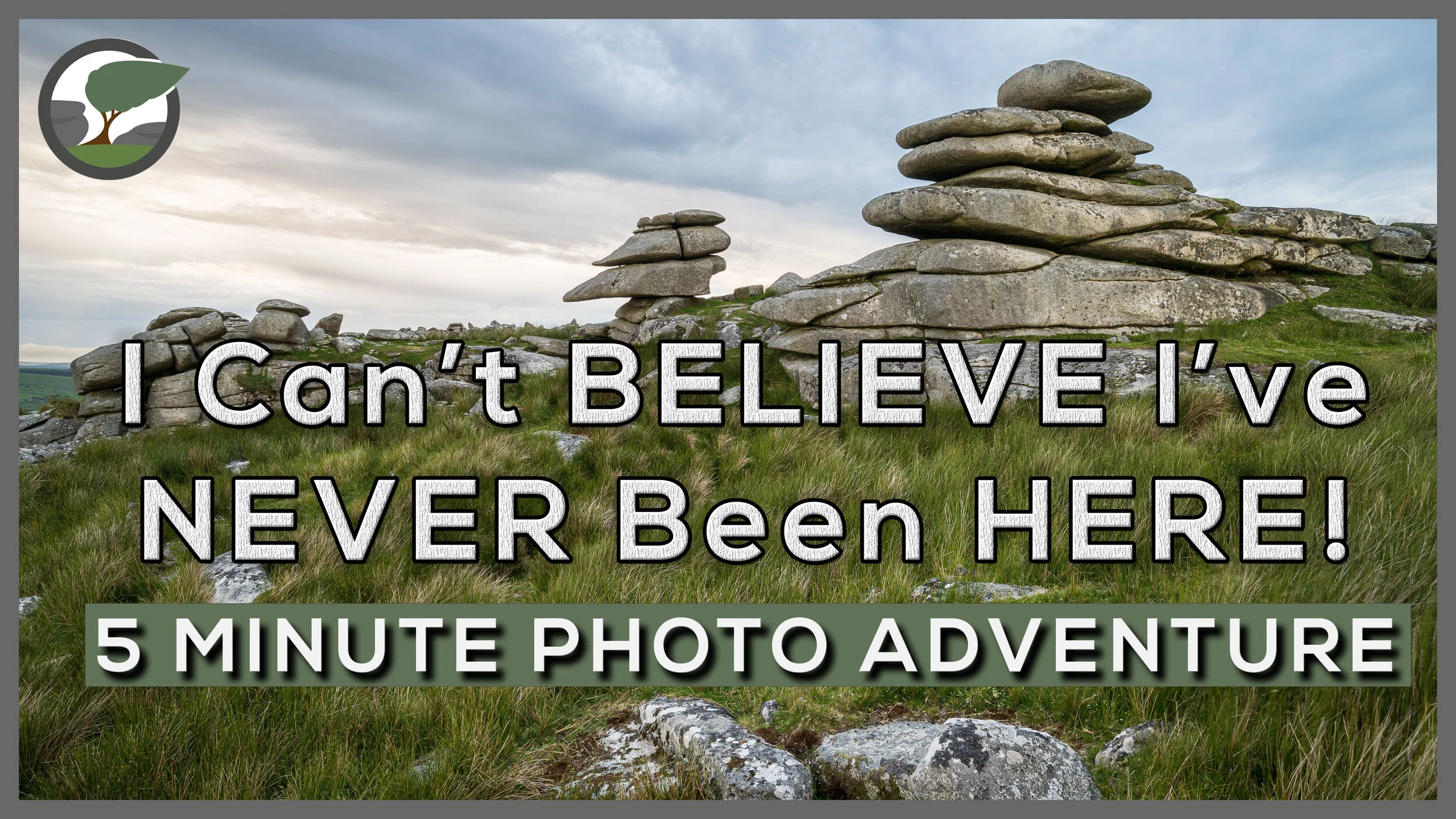
Stowe's Hill - Bodmin Moor - A 5 Minute Photo Adventure
Sit back and grab a cup of coffee because it's time for another 5 Minute Photo Adventure! In this episode I head to Stowe's Hill on the edge of Bodmin Moor in Cornwall for a spot of landscape photography. With some of the most unique rock formations and tors I've ever seen, I wonder why I've never been there before.
The Photographers Guide to Cornwall
I first read about Stowe’s Hill when I got a book called The Photographers Guide to Cornwall. In fact, I picked up the entire series of The Photographers Guide books and filmed a special episode of On My Bookshelf all about them. You can see that episode right here.
From the Cornwall book, I selected to go to Rough Tor for the episode of On My Bookshelf, but I made a note that I must try and photograph Stowe’s Hill at some point. Unfortunately, Stowe’s Hill fell down the priority list and I eventually forgot about it. That was until I got my copy of The Photographers Guide to The Norfolk Coast and Broads.
As well as being inspired to go to Norfolk, I remembered the Cornwall book and that I had yet to visit Stowe’s Hill. Given that the long summer days were giving me plenty of opportunities to travel a little further afield I decided to jump in the car and make (the very pleasant) journey to Bodmin Moor to film one of my 5 Minute Photo Adventures!
You can see how I got on below.
Stowe’s Hill Landscape Photographs
It was a bit of a shame that the light was a bit flat. I can see how this location might come to life in the right light. I want to return to Stowe’s Hill soon and I hope these photographs will inspire you to visit Bodmin Moor. I think I’ve been missing out!
I hope you enjoyed the video and photographs. Let me know in the comments below what your favourite Bodmin Moor locations.
Stowe's Hill #1, Bodmin, Cornwall - Nikon Z7, Nikkor 14-30mm f/4 at 18mm, f/11, 0.6 secs at ISO 64.
Stowe's Hill #2, Bodmin, Cornwall - Nikon Z7, Nikkor 14-30mm f/4 at 14mm, f/11, 1 sec at ISO 64.
Cheesewring - Stowe's Hill, Bodmin, Cornwall - Nikon Z7, Nikkor 14-30mm f/4 at 19mm, f/11, 0.6 secs at ISO 64.
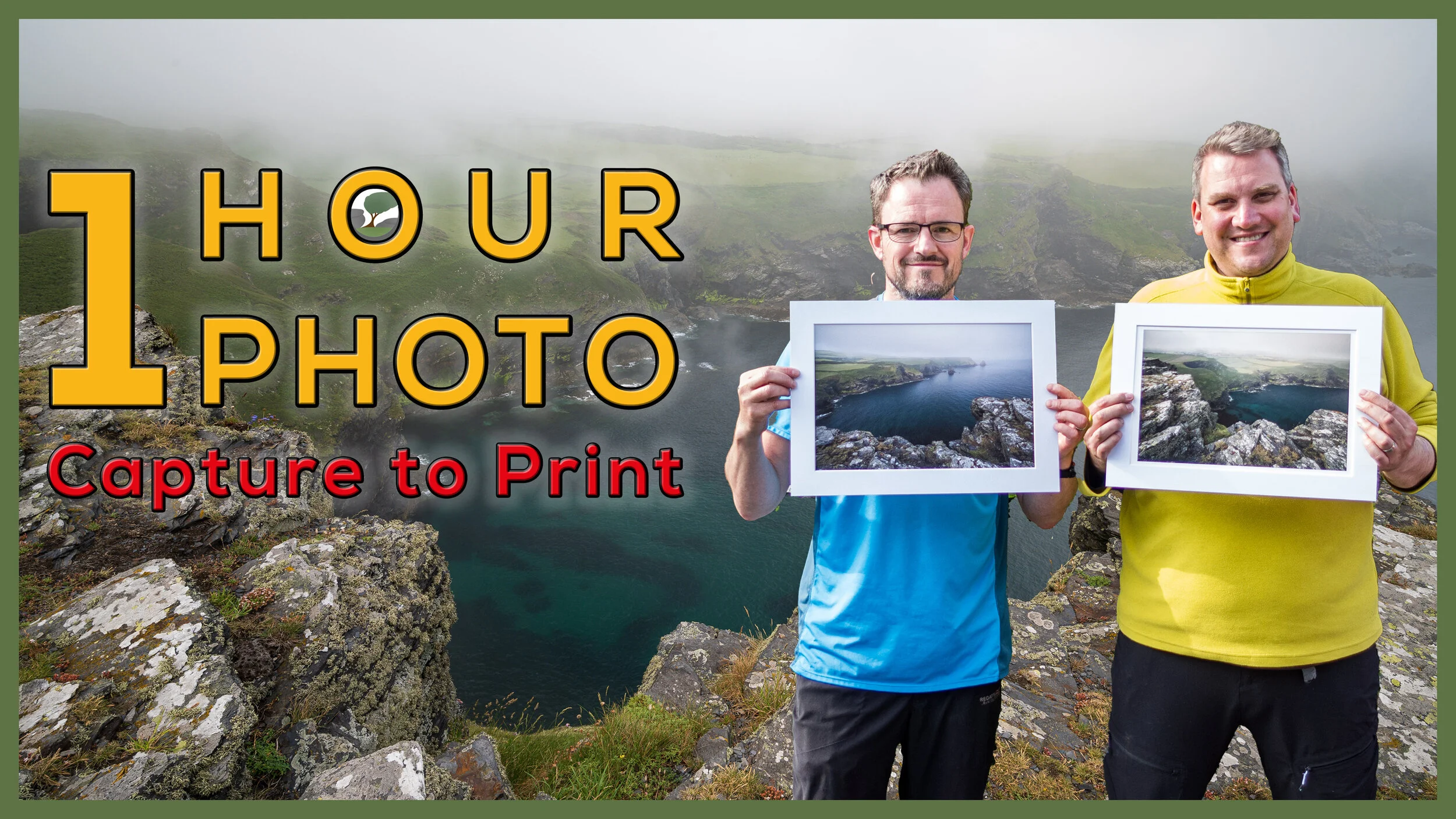
Sharing the Joy of Printing
What's the best way to show someone the benefits of printing their landscape photographs? Simple. Take your Canon imagePROGRAF Pro-300 and some Fotospeed papers to Boscastle in Cornwall, meet a friend, take some photos, and then print them from your car!
From Discovery to Sharing
I first started printing my landscape photographs back in 2017. Since discovering the joy of printing, I have been sharing my passion for printing photographs at home on my blog, YouTube channel, and by talking about it at The Photography Show. I’ve even got this handy “playlist” of blog posts of my printing-related content here.
Over the years, I have been rather evangelical about printing but sometimes the only way to really get the message across is with a practical demonstration. Even better than that, why not take a printer on location with you, capture some photographs, and then print them! What could be more satisfying and exciting than capturing a photograph and then making a print all before breakfast?
This is exactly what I do in the video below. I’m joined by friend and fellow photographer Chris Sale as we both attempt to battle the thick fog of Boscastle harbour to capture a photograph that we can take back to the car and print.
<insert video>
I hope you enjoyed this video. Chris might not be rushing out to buy his own printer, but he certainly appreciated the quality of the print and the experience of making one. It was a real pleasure being able to share my passion for printing in such a beautiful location and with such a good mate. It’s mornings like that one that makes photography such a rewarding thing to do.
Boscastle Coastline Photographs
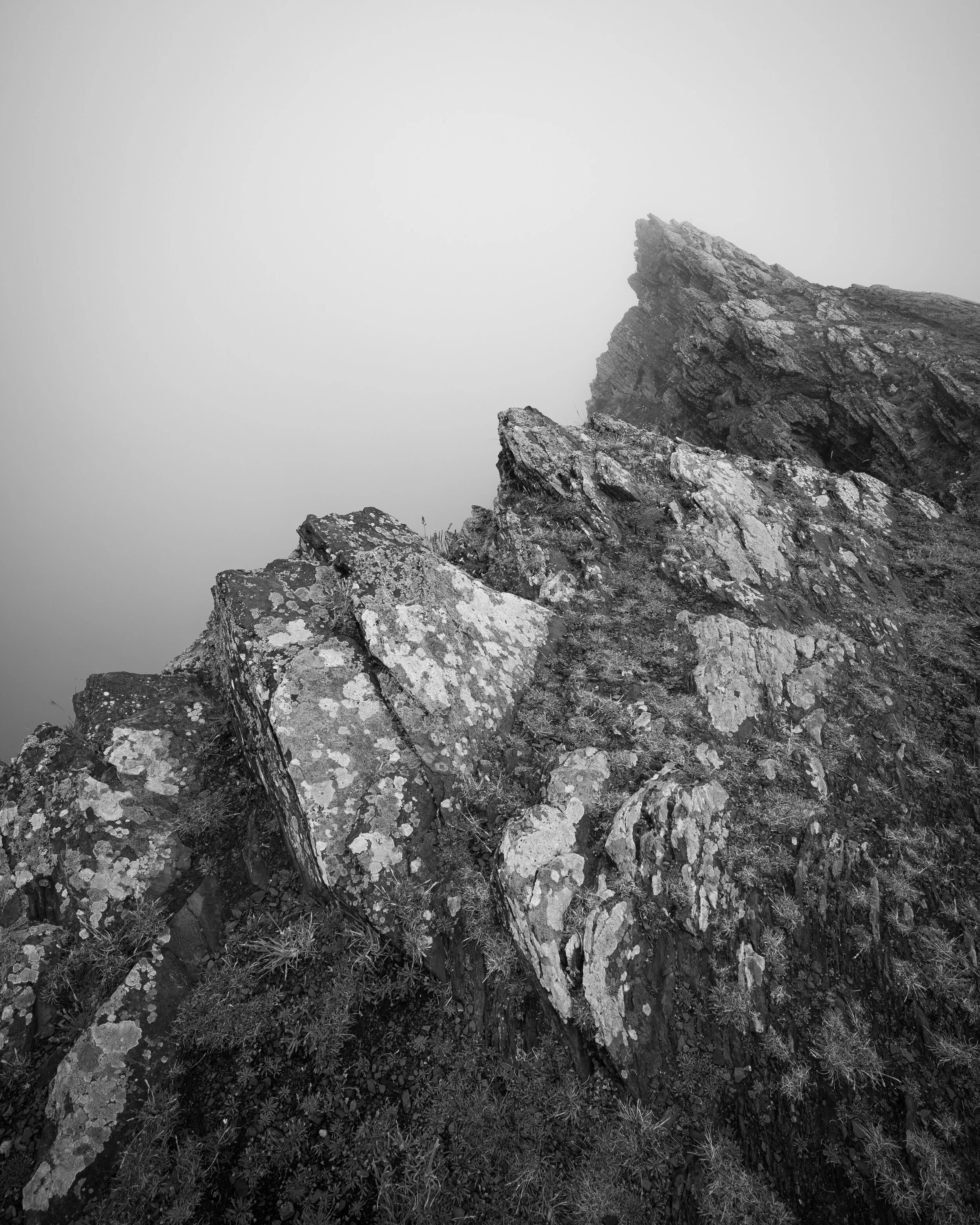


Bite-Size Blog Post #11 - No More Sandymouth
For the last time this year (probably), I head to Sandymouth to see if I can finally kick start a project I’m working on.
What Is It About Sandymouth Anyway?
It’s not unusual for me to write about a location I’ve visited before but what makes this post about Sandymouth different is that it is the 3rd one in a relatively brief period of time. While I was happy with the images I shared in blog posts Bite-Size Blog Post #3 - Sandymouth and Bite-Size Blog Post #10 - More Sandymouth I still had the need to return.
My return to Sandymouth for a 3rd time was nothing to do with a lack of inspiration or imagination but the desire to start a new photography project. I’ve had the idea for the project for a long time now but have failed to find a location that will give me what I’m looking for. Though I had visited Sandymouth a couple of years before it was the 1st of my recent visits that potentially gave me what I was looking for.
Charged and inspired I returned for a 2nd visit only to find I had completely misjudged the tides. I still managed to capture images I was happy with but not what I needed. I, therefore, planned for a 3rd and final visit. I say final because sunset times were getting earlier and soon I wouldn’t have time to make the 90-minute drive to Sandymouth before I lost the light.
I was full of optimism for my 3rd visit but I already knew it was going to be very tight with the tide height for the shots I wanted. Unfortunately for me, I had pushed my luck too far and the tide was still a little too high to allow me to capture the shots I needed before it was dark.
I’m not saying the trip was a right off. Far from it! I got some images I was pretty happy with. They just weren’t what I needed for my project. You might be wondering what the project is? Well, I’ll tell you all about it very soon….hopefully.
Into the Blue #1. Sandymouth Beach, Cornwall - Nikon Z7, Nikkor 14-30mm f/4 at 15mm, f/13, 1 second at ISO 64, Kase Filters circular polariser and ND grad.
Into the Blue #2. Sandymouth Beach, Cornwall - Nikon Z7, Nikkor 14-30mm f/4 at 18mm, f/13, 6 seconds at ISO 64, Kase Filters circular polariser and ND grad.
Into the Blue #3. Sandymouth Beach, Cornwall - Nikon Z7, Nikkor 14-30mm f/4 at 17mm, f/13, 13 seconds at ISO 64, Kase Filters circular polariser and ND grad.

Bite-Size Blog Post #10 - More Sandymouth
Eager to return to Sandymouth to start a photography project I get another difficult lesson on understanding tides.
A Tide Table Is Not Enough
Back in August, I wrote about my experience of not appreciating how high a high tide was at Sandymouth Beach. With most of the beach cut off because of the high tide, I was lucky to get the photographs I did. When I recently decided to return to Sandymouth beach to start a photography project I was keen not to repeat my previous mistakes.
While I captured images of the rocks on that last visit, I was eager to get images of the sandy part of the beach this time. I have shot this part of the beach before and the images I captured of the sand patterns and pools had inspired me to return.
I already knew that to get photographs of the sand it would need to be a low tide. What I hadn’t appreciated was how low it needed to be. If I’d done a simple check of the historical tide data from my last shoot of the sand, I would have noticed how low the tide needed to be.
When I arrived at Sandymouth I was surprised to see that the sandy part of the beach was already covered in water! The low tide I had looked up wasn’t that low for Sandymouth. As the tide was coming in the situation wasn’t going to change in my favour either. I was going to have to switch tactics. I decided that I would instead shoot the rocks that I’d shot previously. However, the tide was a bit far out for that!
So, it was back to square one for me and I had to do a little bit of exploring to see what else I could find. You can see the photographs I did manage to capture below. More important than the photographs was the lesson I learnt.
Tide tables only tell half the story. The tide at beaches like Sandymouth has a huge reach. When they are out, they are miles out and when they are in it can be up to the cliffs. From all my experiences of shooting at Sandymouth I have learnt that I need specific tide heights for specific subjects. Knowing if the tide is going in or out isn’t enough.
Next time I visit, I will pick a time where the tide is going to support my creative vision!
Sandymouth Rock Channels #1, Cornwall - Nikon Z7, Nikkor 14-30mm f/4 at 17mm, f/11, 0.5 seconds at ISO 64, Kase K9 CPL and ND Grad.
Sandymouth Rock Channels #2, Cornwall - Nikon Z7, Nikkor 14-30mm f/4 at 14mm, f/11, 3.0 seconds at ISO 64, Kase K9 CPL and ND Grad.
Sandymouth Rock Channels #3, Cornwall - Nikon Z7, Nikkor 14-30mm f/4 at 17mm, f/9, 1 seconds at ISO 200, Kase K9 CPL and ND Grad.
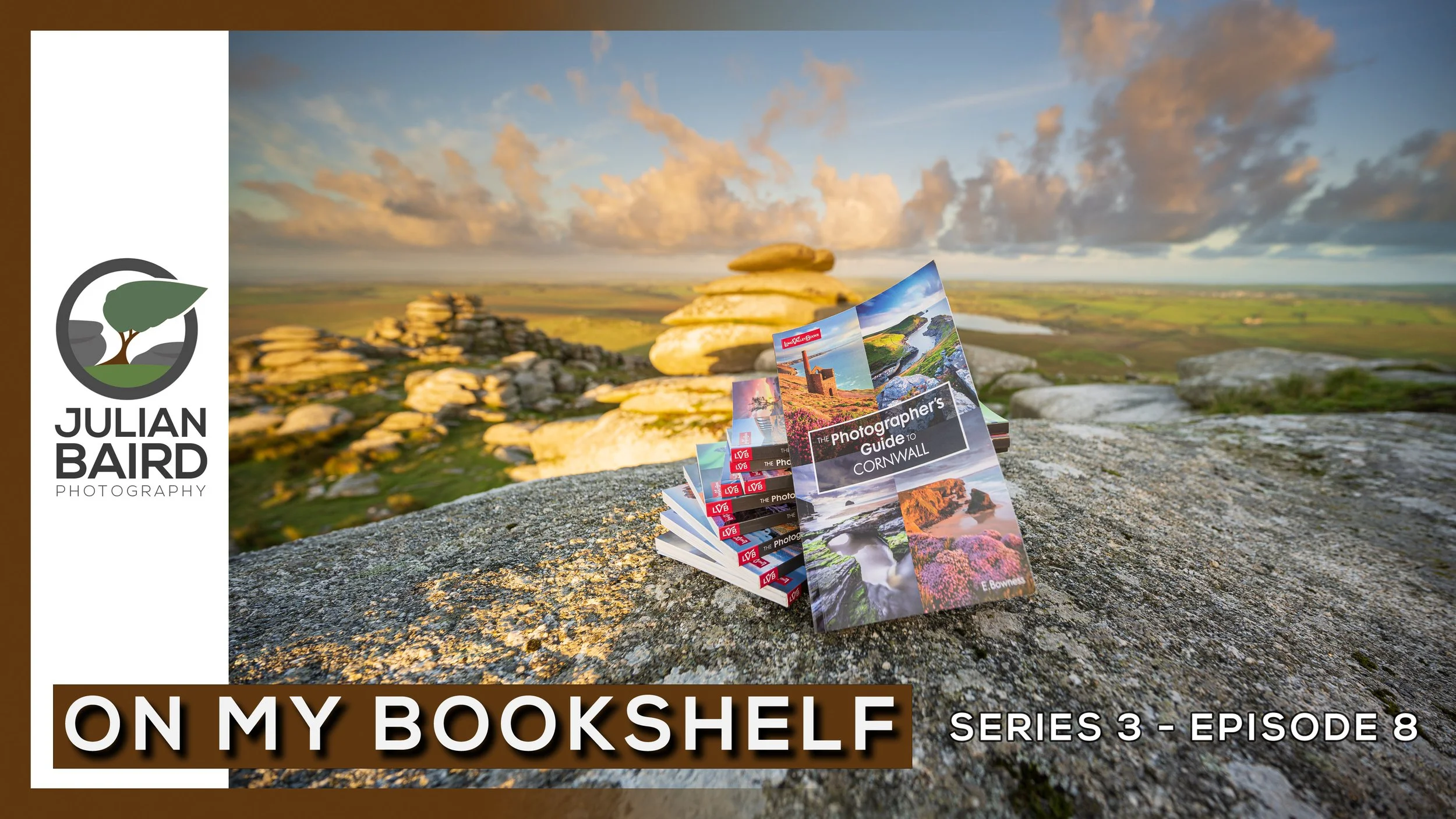
The Photographer's Guide Series by Ellen Bowness (Long Valley Books) - On My Bookshelf S03E08
Looking for new locations to inspire your landscape photography? Visiting a new area? Want to get the most out your photography trip? Location guidebooks can help answer these questions. In this episode of On My Bookshelf, I'm looking at The Photographer's Guide series of books.
On My Bookshelf on Location in Cornwall
Over the three years that I’ve been producing episodes of On My Bookshelf (OMBS) I’ve covered a wide range of photography books. While I shoot most episodes in the comfort of my home with a nice cup of coffee, there are some books that require a slightly different approach. One such category of book is the photography location guidebook.
When I decided to look at The Photographer’s Guide series of books, I knew that the video would need to include a segment filmed on location. Fortunately for me one of the titles in the series is called The Photographers Guide to Cornwall and the book had several locations I’d never been to. As much as I’d like to have visited one of the locations in the Iceland book, I’m afraid the OMBS budget doesn’t stretch that far!
In this episode of OMBS not only do I talk about the series of books, but I also visit one of the locations in the Cornwall book. There is no better way to test the quality of the information in a location guidebook than to visit the location!
I hope you enjoyed this on location episode of OMBS. I’ve included the photographs I captured on my visit to Rough Tor below, and if you want to pick any of the books in The Photographer’s Guide series of books then just click here.
Rough Tor Sunrise #1, Bodmin Moor, Cornwall - Nikon Z7, Nikkor 14-30mm f/4 at 22mm, f/11, 1/3rd sec at ISO 64, Kase Filters ND Grad.
Rough Tor Sunrise #2, Bodmin Moor, Cornwall - Nikon Z7, Nikkor 14-30mm f/4 at 14mm, f/16, 1/13th sec at ISO 64, Kase Filters ND Grad, two image exposure blend, custom crop ratio.
Rough Tor Sunrise #3, Bodmin Moor, Cornwall - Nikon Z7, Nikkor 14-30mm f/4 at 17mm, f/11, 1/3rd sec at ISO 64, Kase Filters ND Grad.

Bude Sea Pool
I always like to try different things with my photography so I set my alarm for 4am and headed to blustery Bude to capture some images of the sea pool
OMG, Sunrise is Early
I love sunrises. It’s my favourite time of day to shoot. I love the excitement of driving to a location not knowing exactly what is going to happen. With sunsets, I will have spent the day reading updated forecasts and looking at the sky. With sunrises, I just wake up, get in the car and go!
As much as I like sunrise though, getting up early is not always that easy. Often it’s less about the actual sunrise time and more to do with the additional time you need to get to a location and still be there well before sunrise itself. I think the earliest I’ve ever been up for sunrise is 03:30 and at the time of year when these images were taken a 05:00 alarm call can be classified as sleeping in!
When a friend and fellow photographer asked if I fancied joining him one morning (13th March) to shoot the sea pool at Bude I knew the answer was yes, but I also knew this would be a 04:00 alarm call. I needed time to get up, make a cup of coffee, drive to Bude and still be there before the sun rose. This wasn’t going to easy but with the lure of photographing something different and the chance to catch up with a friend I was happy to miss out on a few hours sleep.
Blustery Bude
My friend was looking to capture some seascape images of the sea pool at Summerleaze Beach in Bude. With a high tide and strong winds forecast the conditions were ideal for the type of images he wanted to create. The type of images that I would be able to capture that morning would be very different from the wide-open vistas and landscapes that I usually take but it’s always fun to try something a little different.
I had most of the gear that I needed for this type of shoot but the one thing I’m currently missing at the moment is a long lens. I no longer have my 70-200mm f/2.8 F mount lens, and I’m waiting for delivery of my 24-200 Z mount lens so the longest focal length I have is from my 24-70 f/4 Z mount lens. I knew that not having a longer lens would limit my compositions and getting closer to the action would not be possible.
Bude Sea Pool #1, Cornwall - Nikon Z7, Nikkor 24-70mm f/4 at 70mm, f/8, 0.5 secs at ISO 160, Kase Filters K9 CPL.
Lack of gear is rarely an excuse for not giving things a go and that is exactly when I did when I arrived at Bude. Conditions were as expected and the waves were crashing around and over the sea pool. It didn’t take long for me to realise why a long lens would have been useful as some of the interesting compositions that included the pool steps were out of reach for me. Not to worry though, there were still compositions to be had closer to where I was standing.
To mix things up a little I tried stepping down to the pool edge but this proved to be a little risky. Before getting too close I watched for a little while to see how big the waves were and if there was a chance of getting soaked. Getting wet wasn’t the issue though. As I know from experience, it’s less about getting wet from the waves as it is more about what is in the waves in terms of debris. I noticed that pebbles were being washed up by the waves and I didn’t fancy myself or my camera getting hit by one.
Bude Sea Pool #2, Cornwall - Nikon Z7, Nikkor 24-70mm f/4 at 70mm, f/8, 0.5 secs at ISO 160, Kase Filters K9 CPL.
Work With What You’ve Got
All that aside I enjoyed the experience of trying to capture something different and working within tighter constraints than normal. While my shots aren’t necessarily original and won’t win any awards I am none the less pleased with them. They have at least given me a taste for this type of photography and are a good basis from which to build up my creative skills in this area.
Bude Sea Pool #3, Cornwall - Nikon Z7, Nikkor 24-70mm f/4 at 45mm, f/8, 0.5 secs at ISO 160, Kase Filters K9 CPL.
Looking at the images with a slightly critical eye I would have liked some of the compositions to have been a bit tighter and contained fewer subjects. Perhaps a little more minimalist. The wind and waves were also a little strong which meant there was a little bit too much white water. I think the shutter speed is about right giving me some nice texture in the water, but there are too many areas where it is just white water.
Bude Sea Pool #4, Cornwall - Nikon Z7, Nikkor 24-70mm f/4 at 45mm, f/8, 0.5 secs at ISO 160, Kase Filters K9 CPL.
As I said though, I’m pleased enough with the images. It was a great way to spend the morning and it was made even better as I got to spend it catching up with a mate. The only downside was that there is nowhere in Bude to go and get breakfast at 7 am!

7 AMAZING Devon and Cornwall Landscape Photography Locations
In this blog post I’m going tell you about 7 AMAZING locations in Devon and Cornwall for landscape photography. This post is PACKED full of photographs and videos to inspire your landscape photography!
Vignettes of Landscape Photography
Over the last week I’ve been publishing videos from my new series Vignettes of Landscape Photography. It’s a series of short videos on the locations that have inspired my landscape photography. Each episode is a mix of still photography and video clips that will hopefully not only show you the natural beauty and variety of the location but also inspire you to visit that location to capture your own photographs.
Now that all 7 episodes from series 1 have been published on YouTube, I thought I would bring them all together in a big blog post. Not only can you choose to play them all from the playlist I have created below, but if you scroll down you will find each individual episode along with a map and the images I captured from that location. I hope you’ll agree that these are indeed 7 AMAZING locations in Devon and Cornwall for landscape photography!
I really hope you enjoy this first series of Vignettes of Landscape Photography. Please leave me a comment below and let me know what you think. Did you have a favourite episode or a favourite image? What would you like to see from series 2? Have you been to any of these locations? Have you been inspired to visit any of the locations featured? Let me know in the comments below.
Bedruthan Steps
A Bedruthan Spring, Bedruthan Steps, Cornwall - Nikon D850, Nikkor 16-35 mm f/4 at 26 mm, f/11, 1/4 sec at ISO 64, Kase CPL and ND grad.
Spring Cliffs at Bedruthan, Bedruthan Steps, Cornwall - Nikon D850, Nikkor 16-35 mm f/4 at 22 mm, f/11, 1/2 sec at ISO 64, Kase CPL and ND grad.
Last Light at Bedruthan, Bedruthan Steps, Cornwall - Nikon D850, Nikkor 24-70 mm f/2.8 at 42 mm, f/8, 136 sec at ISO 64, Kase CPL, ND and ND grad.
Venford Falls
The Twin Falls of Venford, Dartmoor, Devon - Nikon D850, Nikkor 16-35 mm f/4 at 28 mm, f/11, 4 sec at ISO 64, Kase CPL.
The Fall, Dartmoor, Devon - Nikon D850, Nikkor 16-35 mm f/4 at 35 mm, f/11, 2.5 sec at ISO 64, Kase CPL.
The Flow, Dartmoor, Devon - Nikon D850, Nikkor 16-35 mm f/4 at 16 mm, f/11, 2.5 sec at ISO 64, Kase CPL.
Belstone Common
Stormy Belstone #1, Dartmoor, Devon - Nikon D850, Nikkor 16-35 mm f/4 at 16 mm, f/13, 1/3rd sec at ISO 64, Kase CPL and ND grad.
Stormy Belstone #2, Dartmoor, Devon - Nikon D850, Nikkor 16-35 mm f/4 at 16 mm, f/13, 1/3rd sec at ISO 64, Kase CPL and ND grad.
Daymark Tower
The Daymark Tower, Devon - Nikon D850, Nikkor 16-35 mm f/4 at 16 mm, f/13, 1/5th sec at ISO 64, Kase CPL and ND grad.
Tower in the Field, Devon - DJI Mavic Pro, 23 mm, 1/290th sec at f/2.2, ISO 100.
Stormy Belstone #1, Dartmoor, Devon - Nikon D850, Nikkor 24-70 mm f/2.8 at 70 mm, f/2.8, 1/125th sec at ISO 64, Kase CPL.
Trevose Head
Trevose Head #2, Cornwall - Nikon D850, Nikkor 24-70 mm f/2.8 at 26 mm, f/13, 2.5 sec at ISO 64, Kase CPL.
A Long Night Ahead - Trevose Head, Cornwall - Nikon D850, Nikkor 16-35 mm f/4 at 20 mm, f/13, 13 sec at ISO 64, Kase CPL and 6 stop ND.
Botallack
Botallack #1, Cornwall - Nikon D850, Nikkor 16-35 mm f/4 at 16 mm, f/11, 1.6 sec at ISO 64, Kase CPL and 6 stop ND.
Botallack #3, Cornwall - Nikon D850, Nikkor 16-35 mm f/4 at 30 mm, f/13, 90 sec at ISO 64, Kase CPL and 6 stop ND.
Brent Tor
Brent Tor, Dartmoor, Devon - Nikon D850, Nikkor 16-35 mm f/4 at 16 mm, f/14, 1/13th sec at ISO 64, Kase CPL.
Brentor Church Sunset #2, Dartmoor, Devon - Nikon D850, Nikkor 16-35 mm f/4 at 19 mm, f/8, 1/6th sec at ISO 64, Kase CPL. Focus stacked image.

Photographing Boscastle and Using Kase Filters
I'm back with a new video! This week I head to the picturesque village of Boscastle in Cornwall to capture some images of the distinctive S shape harbour. I also talk a little bit about filters and what I like about the Kase Filter system which I'm now using.
Back to Boscastle
Boscastle has a special place in my photographic heart. It was about 5 years ago that I decided I really wanted to start learning the craft of photography so I spent the day with local photographer Ross Hoddinott for a bit of 1-2-1 tuition. The first location we visited was Boscastle and from that viewpoint on Penally Hill I probably learnt more about composition than I'd done in the previous 5 years.
Since that day I've been returning to that viewpoint every year to capture images the harbour. Some years have been more successful than others but I've always enjoyed looking down onto that distinctive S-shaped harbour and the hills that run along with it. There's more than just the harbour to shoot as well. There are a couple of great viewpoints closer to the coastline that are worth checking out. Read my blog post Sunrise at Boscastle to see them.
A Slight Break in the Weather
While the lovely summer weather we've been having here in the south-west is fantastic, it's not exactly been optimal for landscape photography. I love the extended hours of light that allow me to travel further and get out more, but those pesky blue skies don't always translate well into good landscape photographs.
After a few weeks of "great" summer weather there was finally a break from the blue skies and the weather forecast was predicting some decent cloud cover that would hopefully make things a bit more interesting. Fortunately for me it was also going to be high tide around sunset as I was keen to shoot some long exposure seascapes. All I had to do was pick a location. Boscastle immediately sprung to mind!
Kase Filters
Even though I'd already made one of my 5 Minute Photo Adventure videos from Boscastle I was so optimistic about the conditions that I thought it would be worth making another vlog from there. As I was going to be shooting long exposures seascapes I thought it would also be an excellent opportunity to talk about Kase Filters. A few months ago I needed to purchase a new filter system and after recommendations from some fellow photographers I know I decided to go with the Kase Filter system. You can hear what I think about them in the video and watch me put them to use.
If you'd like to see how I got on with my latest photography adventure to Boscastle and hear my brief thoughts on the Kase Filter system, then check out the video below.
A Summers Evening in Boscastle
So was my evening in Boscastle a successful one? Let’s find out.
As you will have seen in the video I actually got the better light early on in the evening. Normally the light gets better the closer you get to sunset but due to atmospheric conditions the light fizzled out a bit as the evening progressed. The following image is my favourite because it has the golden light on the foreground rocks as well as the hills surrounding the harbour.
Last Light at Boscastle Harbour, Cornwall - Nikon D850, Nikkor 16-35mm f/4 at 20mm, f/13, 100 seconds at ISO 64, Kase Filters CPL, 6 Stop ND and ND Grad.
The other two images I took are pleasing enough but compared with the first I think they lack some depth and colour.
Boscastle Harbour at Sunset, Cornwall - Nikon D850, Nikkor 16-35mm f/4 at 19mm, f/13, 100 seconds at ISO 64, Kase Filters CPL, 6 Stop ND and ND Grad.
Out to Sea, Boscastle, Cornwall - Nikon D850, Nikkor 16-35mm f/4 at 18mm, f/13, 160 seconds at ISO 64, Kase Filters CPL, 6 Stop ND and ND Grad.
Overall though I was very happy with my adventure to Boscastle and the photographs I took. Does that mean I won't go back? Of course not! There will always be new compositions to found and different conditions and lighting to work with.
I do hope you enjoyed the video and photographs and that it has inspired you to visit Boscastle. If you are looking for more Cornwall locations to inspire your photography then check out some of my other posts from Cornwall. If you've got a favourite Cornish location that you want to share then let me know in the comments below. See you next time!

Tricky Trevose
In my blog this week I head out to Trevose Head where I discover that previous success at a location doesn’t guarantee future success.
High Hopes
It’s been a while since I captured an image that I really connected with. Or it at least feels that way. Sometimes when the last few shoots don’t go as planned and you come away with a few OK images it’s all too easy to become negative about your own photography. I was starting to feel that way and what I needed was a really productive session out with the camera.
To get some inspiration I opened up Lightroom and looked through my catalogue of images. I was immediately drawn to my photographs of Trevose Head. It appeared that every visit had resulted in a decent image. In fact, some of my favourite images were taken from this location. With such an apparent high success rate at this location how could I go wrong?
I checked the weather forecast and tide times and decided that conditions were favourable enough to make the 1 hour 45-minute drive there. I had high hopes for this trip and I had visions of me capturing an image like this one I took back in 2016:
Last Light at Trevose Head, Cornwall - Nikon D750, Nikkor 16-35mm f/4 at 22mm, f/11, 97 seconds at ISO 100.
Challenges
When I arrived at Trevose Head, conditions looked as predicted. The majority of the cloud was starting to clear revealing a lovely blue sky. Not great for photography I admit, but if the forecast was right, more cloud would arrive around sunset so I wasn’t too worried. At the car park it was very windy and I thought this might make long exposures a bit tricky, but as I descended to my favourite spot on the rocks it was a lot more sheltered.
I had arrived a couple of hours before sunset so I had plenty of time to work out my compositions. I already had a couple in mind. These were either based on existing shots I had taken or some new ones that I thought might prove interesting. Taking test shots this early on was tricky though due to the contrast of the scene. The sky was very bright and the rocks dark making getting a balanced exposure difficult. It’s a hard scene to grad as well as the horizon is broken by the lighthouse.
As the evening progressed and it got closer to sunset some cloud started to roll in. It was some of that nice high-level cloud you sometimes get so I was feeling optimistic. That feeling didn’t last long though. Though I was happy enough with the compositions I had I was finding it a difficult scene to photograph. The problem was that between the cloud and the horizon there was a very bright band of sky where there was no cloud cover. Even when the sun (which was at 90 degrees to me) was behind the cloud, the band of cloudless sky was very bright.
Tricky Trevose Head, Cornwall - Nikon D850, Nikkor 16-35mm f/4 at 22mm, f/11, 90 seconds at ISO 64.
Unfortunately I couldn’t use an ND grad effectively. The band of bright sky was close the horizon and given that the lighthouse breaks the line of the horizon, I couldn’t get the grad close enough without cutting through the lighthouse. I guess I could have bracketed some exposures, but my post-processing skills in that area aren’t that good, and I wasn’t convinced it would have delivered a natural looking result anyway.
Out to sea I could see a very impressive storm cloud approaching (see image below). This would have really added some drama to my coastal scene but it wasn’t going to get to my location before I lost the light so I decided that I’d had enough and packed my bag.
Isolated, Trevose Head, Cornwall - Nikon D850, Nikkor 24-70mm f/2.8 VR at 50mm, f/8, 1/3rd second at ISO 64.
I was really optimistic and excited about my trip to Trevose Head, but it turned out to be a bit of a disappointment. I don’t think I ever really got into my stride. Yes, the photography was challenging, but I also suspect I was hungry. I hadn’t eaten properly for a few hours and I know from past experience that being hungry really can ruin your creativity!
This hasn’t put me off from shooting Trevose Head again. Far from it. It still remains one of my favourite Cornish coastal locations to photography. If I ever want to be reminded though I’ll just watch the video I made from there.

Discovering the Joy of Macro Photography
I’ve been talking about trying my hand at macro photography for years now and now that I’ve finally tried it I really wish I’d tried it out earlier!
Springing into Macro Photography
Earlier on this year I tried my hand a street photography. This was a genre of photography very much outside of my normal photography comfort zone. There is also another genre of photography that I've wanted to try for a while and that's macro. It's arguably a little more aligned with my landscape photography work but as I was to find out, still very challenging.
Every spring I promise myself that I will allocate some time to explore the world of macro photography. I've long been inspired by the work of some photographers I know who produce stunning macro photographs of flowers and insects. As spring started to draw to a close though it was looking like I was going to miss out again and I would have to be satisfied with looking at the work of others.
Fortunately for me though I had to meet up with a friend to finish a photography related project we were are working on and he suggested we do some photography beforehand. The weather forecast wasn't looking suitable for landscape work so he asked if I fancied giving macro photography a go. He even had a 105mm macro lens he could lend me. Well, I jumped at the chance!
The only downside to this great opportunity was how early I would have to get up. Though I wouldn't need to be at the location for sunrise, I still needed to be there early before the insects warm up and get active. As I needed to drive to Cornwall as well I had to set my alarm for 4 am. Nothing a cup of coffee wouldn't sort out though.
I arrived to meet my friend in plenty of time, a little bleary-eyed but very excited. Thanks to my friend's local knowledge we were quickly able to identify a number of damselflies that would make for good subjects and we got to work.
The Challenges of Macro Photography
As I soon found out though, picking out a subject is just the first of the problems I would need to deal with. I'd heard that focusing can be challenging with a macro lens but I really didn't appreciate how shallow the depth of field can be. Even at modest apertures you can have your subjects eye in focus but the rest of the body not. Very minor adjustments to camera position in relation to the subject can have a dramatic impact on what is in focus and what isn't.
Changing the aperture to help increase the depth of field also came with challenges as well. Wide open on a macro lens is normally enough to throw even the messiest background out into a nice blur of colour, but at f/5.6 and beyond keeping an eye on how your background looks becomes more critical. Rather than enhancing the photograph the background starts to become a distraction. When you've got a damselfly perched on a blade of grass with a plane of focus that is already tiny, just moving the camera to get a less distracting background puts you all back to square one.
Banded Demoiselle (Calopteryx Splendens), Female - Nikon D850, Nikkor 105mm Macro @ f/4.0, 1/160th second at ISO 800.
Don't get me wrong though, I loved working through these challenges. Careful positioning of the camera, selecting the right aperture, shutter speed and ISO were all part of the fun. Though I didn't get everything right in one shot I was still immensely satisfied with the images I captured. The amount of detail you see in the images is staggering. I've seen damselflies before but to see them in such close-up details make you realise how beautiful and colourful these insects are.
Banded Demoiselle (Calopteryx Splendens), Male - Nikon D850, Nikkor 105mm Macro @ f/5.6, 1/125th second at ISO 1600.
So would I give macro photography another go? Absolutely I would. I can even see myself buying a macro lens. There is a lot to learn though. Not just the technical side, but also understanding your subjects. Luckily on this trip out with the camera I had someone very knowledgeable with me to make life easier, but knowing what, where and how to find a subject is a skill in itself. It's a challenge I welcome though.
Are you a macro photographer? Got any tips for someone starting out in macro? What's your favourite thing to shoot with a macro lens? Let me know in the comments below.

Sunrise at Boscastle
The blog this week I head to Boscastle. Though I've visited this location many times before for some landscape photography, this is my visit at dawn.
Dawn at Boscastle
Boscastle has been one of my favourite locations in Cornwall for landscape photography for some time now. Perhaps my favourite Boscastle spot is to be up on Penally Hill around sunset. You get the perfect view up there of the harbour inlet as it snakes its way out to sea. If you are lucky the light from the setting sun lights up the sky and surrounding hills and islands. I have, however, never really considered shooting Boscastle at dawn.
This all changed when I recently visited Boscastle to finish off my video 3 GREAT Landscape Photography Locations in Cornwall. I just needed to film the video intro and outro sections but as autumn approached and the number of daylight hours got smaller, it was becoming increasingly difficult to get to Cornwall before the sun set.
While autumn months make sunset photography more challenging for me, it does, however, mean that sunrises are a bit easier to get up for. So I decided that I would give sunrise at Boscastle a go. The priority was to shoot the video, but that didn't need great light, and if I got some photographs, that would just be a bonus.
Wind, Clouds and Running
As usual, I arrived about one hour before sunrise to give myself plenty of time to get to my favourite spot up on Penally Hill. When I got there though I soon decided that this was the perfect time to explore a few other spots. So I descended down Penally Hill towards the sea giving me a much better view of the ocean and the island of Meachard.
The view down there was obviously very different from that up on Penally Hill. Gone was any view of the harbour inlet and of Boscastle itself. I did, however, have excellent views of the ocean, the coastline and surrounding islands. I could also see all the turbulent weather out at sea including some low-level rain clouds, and some towering but beautiful cumulonimbus cloud. I was though getting battered by some very strong winds but the views were worth it.
The first composition that caught my eye was this view of Meachard island. Normally this island appears a lot smaller in compositions from Penally Hill, but down here I could make it my main focus. I really like the mood of the image as it rains just above the island. The image isn't as sharp as it should be because I had a real job keeping the camera stable in the wind, but I think it's worth sharing.
Meachard Rock Standing Strong - Boscastle, Cornwall. Nikon D850, Nikkor 24-70 mm f/2.8 at 56 mm, 5 seconds at ISO 64, f/11, Lee Filters Circular Polariser and ND Grad.
As I mentioned earlier, from the location where I was taking this photograph I couldn't see Boscastle or the harbour. As it was getting near to sunrise at this point I was worried that I might be missing some good light so I packed up and moved on. As the harbour came into view it soon became apparent that there was nothing exciting about the view on this morning. I decided that I would maybe start doing the filming I had planned on doing.
As I set up the shot I could see behind that a big cumulonimbus cloud out at sea was turning orange from the morning light. It looked spectacular, but was it worth packing up all the gear again and running back to get the shot?
Storm Rising over Meachard Rock - Boscastle, Cornwall. Nikon D850, Nikkor 24-70 mm f/2.8 at 27 mm, 0.5 seconds at ISO 64, f/13, Lee Filters Circular Polariser and ND Grad.
Looking at the image above, I believe that it was indeed worth running back to the coastline. I had to move a little further north along the pathway to get this shot. This is so I could position the cumulonimbus cloud more effectively in the frame. I wish I'd been there a minute or two earlier as the light was slightly better, but I at least still managed to capture some of that orange glow reflected in the water. It was still a tricky shot to get as the path is very narrow where I was and the wind was still strong enough to make getting a sharp image tricky.
Pleased, and somewhat surprised by the photographs I managed to capture I happily returned to my harbour location and shoot the video I needed. I've been doing more exploring recently and I've been finding inspiration in unusual circumstances, but my dawn shoot at Boscastle on further affirmed that this type of exploration is well worth the effort.
So have you photographed Boscastle before? Have you ever tried shooting a favourite location at a new time of day? Let me know in the comments below.

3 GREAT Landscape Photography Locations in Cornwall
What are the best locations in Cornwall for landscape photography? In this blog article, I'm going to show you 3 GREAT landscape photography locations in Cornwall that I think will inspire you to photograph Cornwall.
Landscape Photography in Cornwall
When it comes to landscape photography in Cornwall, where do you start? With so many amazing and inspiring locations to pick from it can be a challenge selecting locations to visit. So a few months ago I decided to put together a video of 3 locations that I think you should visit. It's not a top 3 or best 3, but just 3 great locations that I think will inspire your landscape photography.
After driving hundreds of miles, dealing with challenging weather, and hours of editing I'm delighted to be able to share with you my video, 3 GREAT Landscape Photography Locations in Cornwall.
A Bonus 4th Location
Gurnard's Head was probably one of the most challenging locations I visited while creating this video. It was so windy that it made shooting video and taking images very difficult. However, I thought it was a great location and worth sharing as your bonus 4th location.
More Information on Those Locations
If you want a bit more information on these amazing locations or the images from the video, then I've already published blog posts on the featured locations:
Sandymouth Beach - this blog post was written before I shot the video, but it still has location information in it plus a couple of photographs to inspire you to visit.
All Those Landscape Photographs
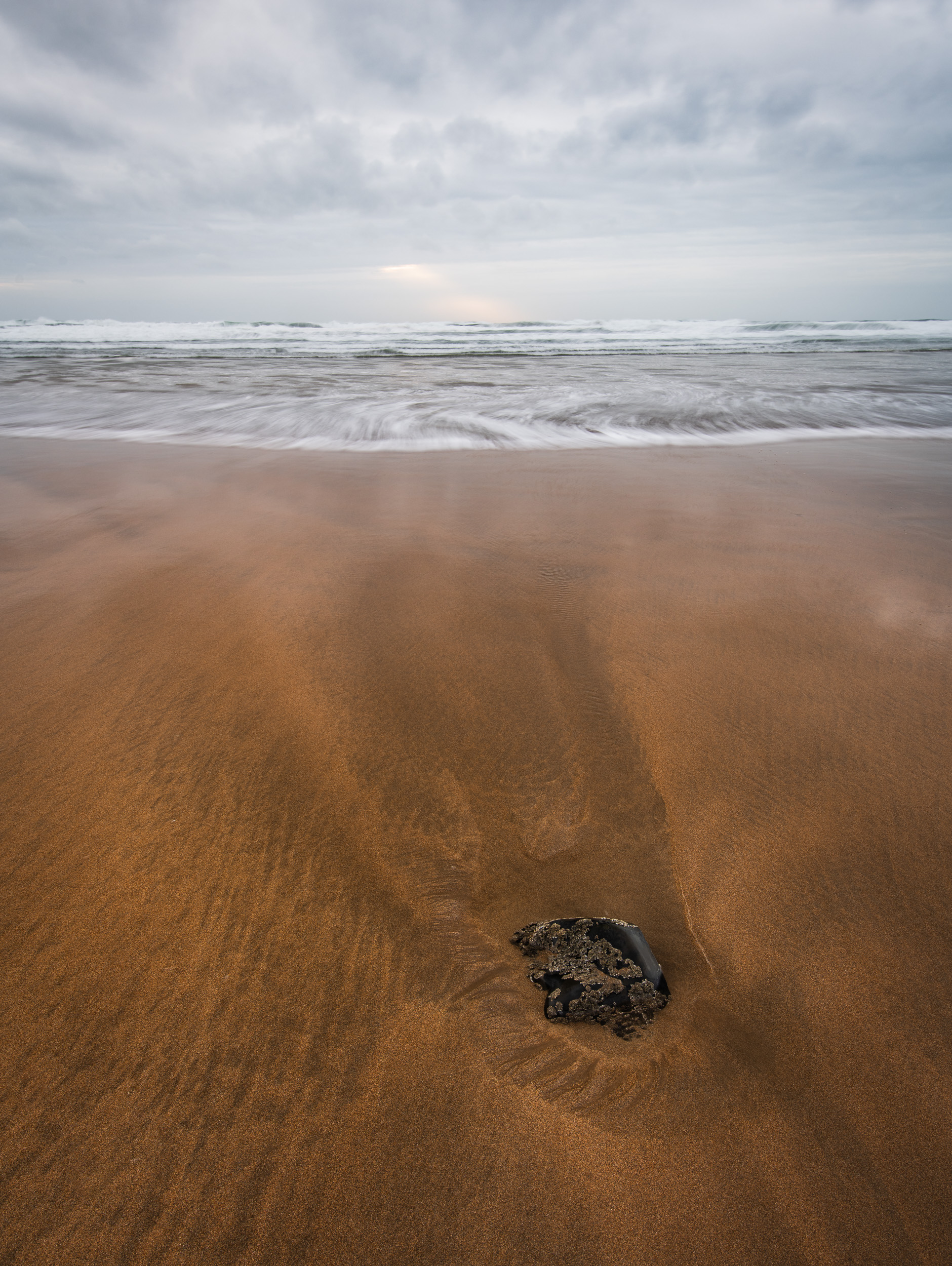
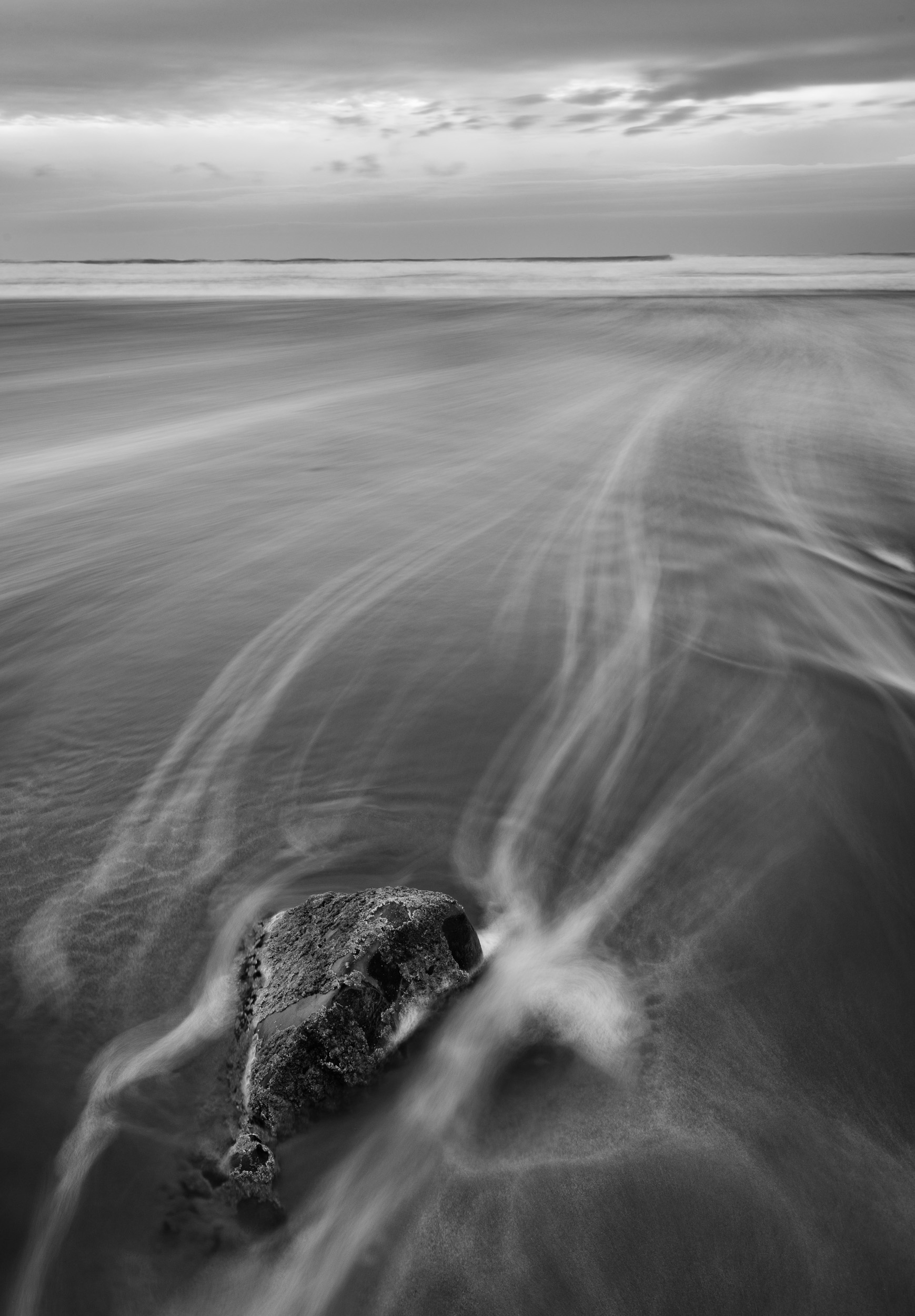
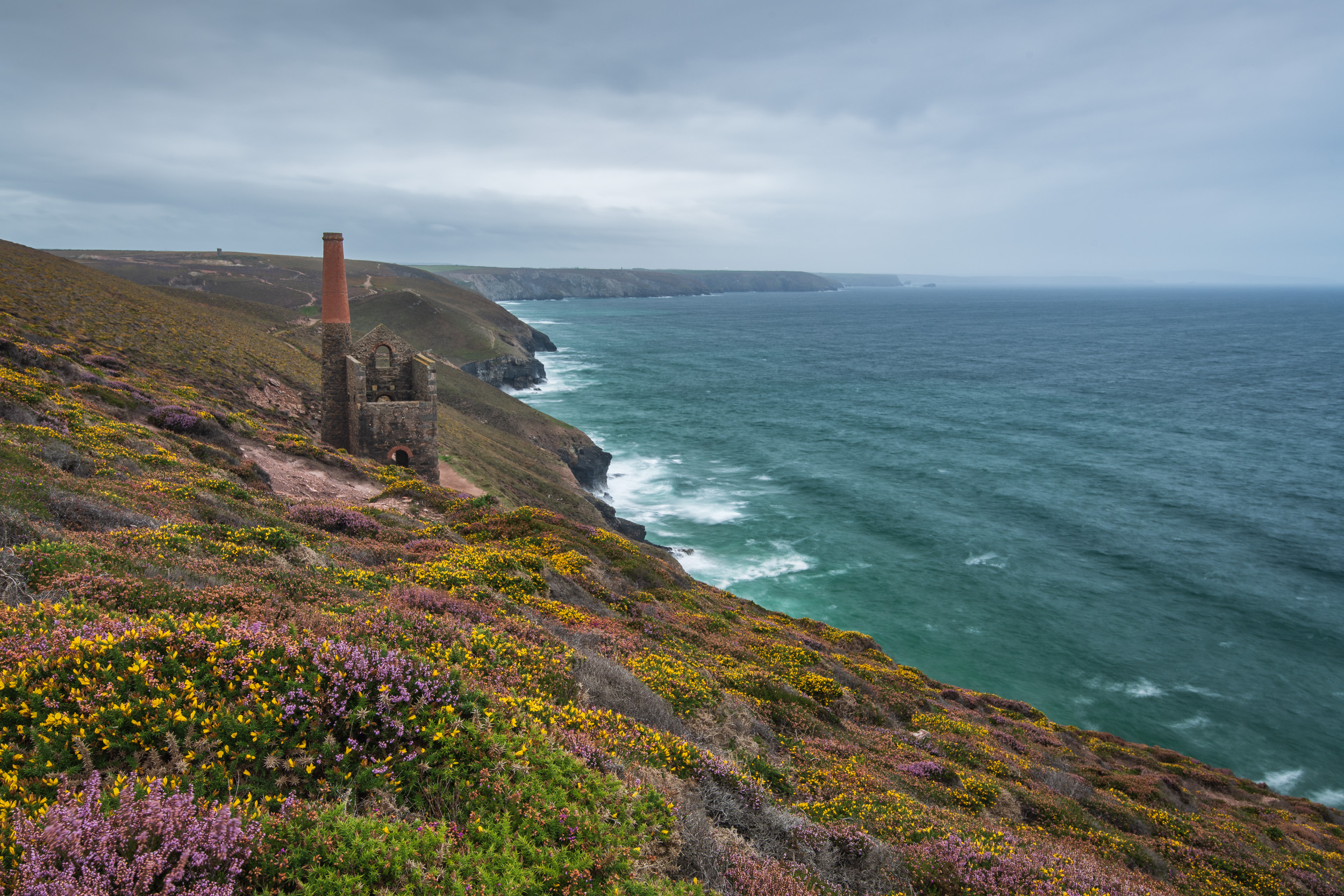
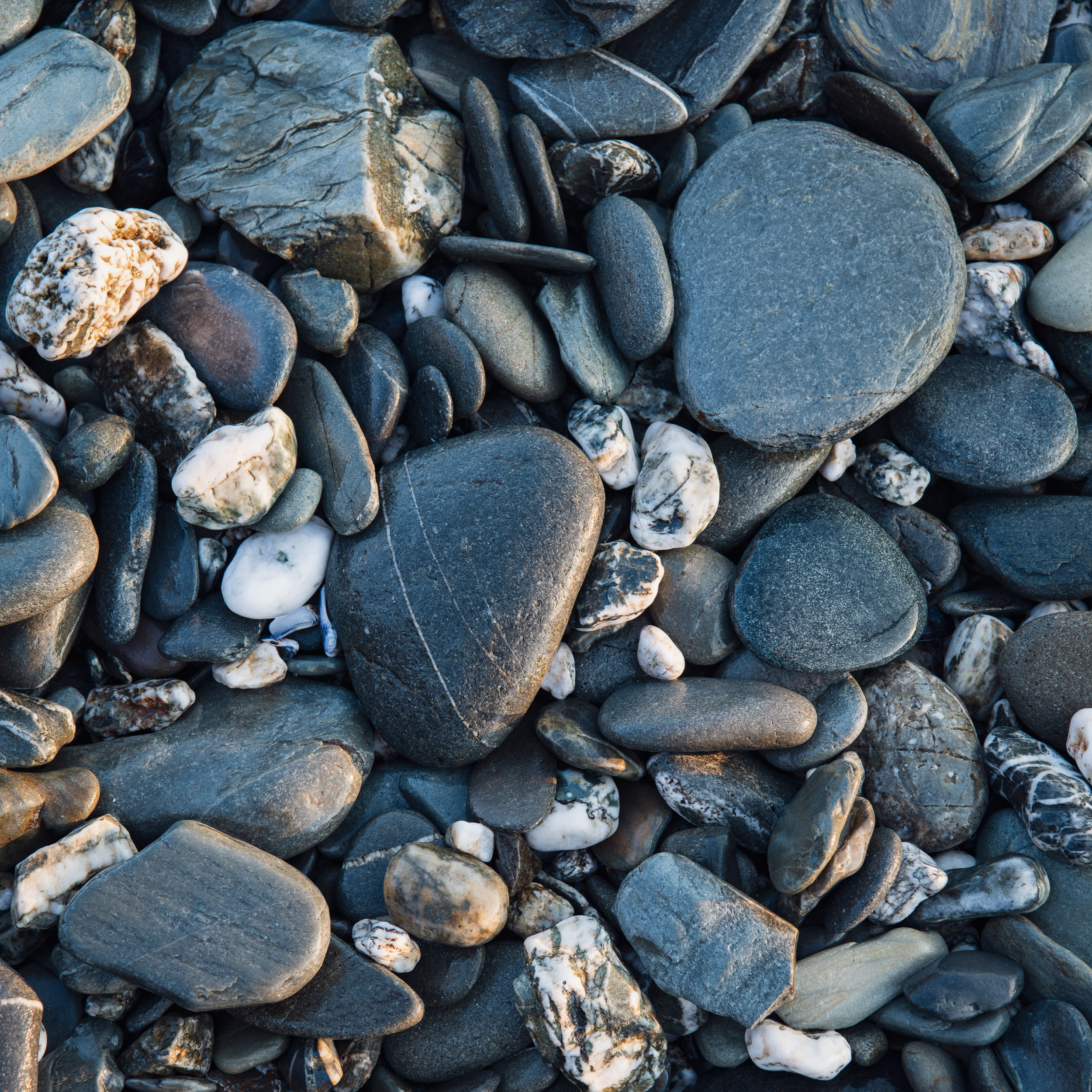
For your viewing pleasure here are all the photographs from all 4 locations:







Even More Landscape Photography Locations in Cornwall
If those 4 great Cornish locations weren't enough for you, I've also compiled a playlist of all my other videos that I've made from locations in Cornwall. Enjoy!
What Next?
Though the creation of this video was quite the effort I would like to do more videos like this. I'm already planning one for Dartmoor, but are there any other others in the south-west you would like me to do a similar video on? Or where there any locations in Cornwall that you think I should visit? Let me know in the comments below.

Sandymouth Beach
Does bad weather inspire your landscape photography? In the blog this week I head out to Sandymouth beach in Cornwall to discover that inspiration can be found even in the dullest of evenings.
Friendship over Photography
When it comes to weather forecasts I tend air on the side of optimism. I often find myself looking at different forecasts to find one that gives me the best outlook. Sometimes those risks can really pay off. However, there are some weather forecasts that are just so poor that you'd have to be mad to go out.
In the world of landscape photography there aren't many more things that are a depressing as going to a location that has a forecast of 100% low cloud coverage and heavy showers. But that's exactly what I did recently.
So why would I drive all the way to Cornwall when the weather forecast was so rubbish? To see a mate of course! It had been a couple of months since I'd see my friend and as he is a photographer also, we are always looking for an excuse to head out with the cameras. The trouble was the weather forecast was rubbish.
Though we were both keen to do some photography, the lure of chips, chat and the chance to finalise our plans for an upcoming photography trip won the day and we decide to meet up anyway. We would of course both turn up with cameras, just in case the weather wasn't that bad.
Beach Life, Cornwall
Even with a hefty sense of optimism there was no way we were going to commit to a big drive given the weather conditions, so we decided to settle for a local location. I had never visited Sandymouth beach before so when it was suggested we go there I jumped at the chance.
When we arrived at the beach we were surprised to see the car park completely empty. Even on the worst of evenings you normally see a dog walker or two on the beach. It soon became apparent why no one was here as a heavy rain shower came overhead. There was nothing else to do but to sit in the car, eat chips and discuss all the latest mirrorless camera news from Canon and Nikon.
Once the chips were done and the rain shower passed we thought we might as well take a walk along the beach and see if anything catches our eye. It soon became obvious why my friend comes to this location. Miles of sandy beach, sea pools, and rocks could all be used to make some very interesting compositions. Despite the poor weather I felt really inspired and decided to get my camera out!
Tidal Pools at Sandymouth Beach, Cornwall - Nikon D850, Nikkor 16-35 mm f/4 at 20 mm, 1.6 secs at ISO 64, f/11, Lee Filters ND Grad.
Out to Sea, Sandymouth Beach, Cornwall - Nikon D850, Nikkor 16-35 mm f/4 at 20 mm, 5 secs at ISO 64, f/11, Lee Filters ND Grad.
As you can see the weather had cleared just enough to make the sky a bit more interesting, but it was those pools of water that really caught my eye. It's not that I think those images are amazing, it's more that I think how great the future possibilities of this location might be. With some evening light and the sky being reflected in one of those pools, I think it could make for a great image. As the beach is a constantly changing thing, I could end up with a unique image on every visit.
I had been searching for a interesting beach location for a while, and one that wasn't too far away. Despite the poor weather, I was really inspired by this location and I will definitely be heading back there again soon. Just shows how you get can inspired even in the dullest of conditions.
Do you get inspired in sorts of weather? What is your favourite beach location? Let me know in the comments below

Gurnard's Head
In the blog this week I head down to Cornwall again to check out a new location, Gurnard's Head.
Back to Cornwall
For me, the spring and summer months are the time to visit and photograph Cornwall. It's not that I think these are the best seasons to photograph Cornwall, it's just that the longer days means it's more practical to get there for sunset.
Now that the autumn season is upon us I can already sense a chill in the air and the days are getting noticeably shorter. Soon the clocks will change and the opportunities to get to Cornwall will be very much reduced. So while it is still reasonably practical for me, I'm trying to get to Cornwall as much as I can.
Gurnard's Head
One of the great things about my custom Google map is that I should never be short of locations to visit. My map contains a huge number of pins, and a lot of them I haven't even visited. Many of these unvisited pins are locations that I discovered from magazines or social media channels.
For this trip out with the camera, I was looking for somewhere new to photograph down on the north-west coast. A quick look at my custom Google map revealed a location that I had pinned some time ago, Gurnard's Head.
From the text I had added to the pin I could see that I had discovered this location in an issue of Outdoor Photography magazine. Fortunately, I have been buying digital copies of this excellent magazine for a number of years now so it was an easy task to bring up the issue on my computer and get a feel for this location again.
Windy Cornwall
One of the reasons I was heading to the north-east coast of Cornwall was it was one of the few areas of Cornwall that had a forecast that could help yield a good photograph. As with a few of my recent trips to Cornwall though, it was still going to be a bit of a punt if it would work out or not.
After a 2 hour drive to get to my location I made the short walk down to Gurnard's Head. It soon struck me how windy it was. While the sky was relatively clear, and the sun was out, the wind was very strong. Even stronger than my recent visit to Wheal Coates tin mine.
Normally the wind isn't too much of a problem, but it was almost certainly going to be too strong for any long exposure. The wind was coming straight in from the sea so I wouldn't be able to shield the camera either. However, I could at least stand up so no excuses for not taking a couple of pictures!
Gurnard's Head Sunset #1, Cornwall - Nikon D850, Nikkor 16-35 mm f/4 at 32 mm, 0.4 secs at ISO 64, f/13, Lee Filters ND Grad.
Gurnard's Head Sunset #2, Cornwall - Nikon D850, Nikkor 16-35 mm f/4 at 16 mm, 0.4 secs at ISO 64, f/13, Lee Filters ND Grad.
I really enjoyed my time at Gurnard's Head (despite the wind). One observation I did make is that the area around the headland is covered in heather and if I visit there again I'll do so at the start of August. I can imagine Gurnard's Head is a sea of purple at the right time of year.
Despite the strong winds, I was happy to have explored this new location (something I'm trying to do more of). Unfortunately, the predicted cloud cover never transpired that evening (it was painfully beautiful a few miles further east), but sometimes it's the experience of being outdoors that's important.
So have you been to Gurnard's Head before? Which of my two images did you prefer? Let me know in the comments below.

Windy Wheal Coates
In the blog this week I head to a windy Wheal Coates tin mine on the coast of Cornwall. With the weather forecast being less than favourable, would I be able to capture an image? Read on to find out if my creativity beat the windy conditions.
A Return to Wheal Coates in Cornwall
It doesn't seem that long ago that I last photographed Wheal Coates tin mine on the coast of Cornwall. When I looked in my Lightroom catalogue to find my last photograph from Wheal Coates I was shocked to see that it had been nearly two years to the day since I had last visited this great Cornish coastal location. Where does all the time go?
It's not as if I had forgotten about it. There's a pin for it on my custom Google map but for some reason, I just haven't been back. It was time to go back that was for sure.
If you read my blog on a regular basis you may remember reading my recent post on Dartmoor. In that post, I tell you why I headed up onto the moor when the weather forecast said I should really be at home. My most recent visit to Wheal Coates was in a similar situation. Any sane photographer wouldn't have even considered the 4-hour round trip if they'd looked at the weather forecast. But there was a small gap in the clouds predicated and given that I had the evening free, I thought it was worth a punt.
Typically Cornish Weather
As I drove along the A30 from Devon to Cornwall, I really started to question if I had done the right thing. Unlike my trip to Dartmoor the previous week which only involved a small drive, the drive to Wheal Coates was significantly longer. The further I drove into Cornwall the worst the weather got. At one point my windscreen wipers were on full and I was driving through a low-level cloud.
However, I was still clinging onto that predicated break in the cloud. It is well known that you can get some amazing light from cloud breaks after a storm passes by, so I just kept thinking about how pleased I would be with myself if I got a really nice shot.
As I pulled into the National Trust car park for Wheal Coates I looked out to the sea where I could see broken cloud, bits of blue sky and even the sun. I though that maybe this could turn out to be an amazing evening of photography.
Windy Wheal Coates
As I wandered down from the car park and onto the slopes, I was pleased to see that there was still a lot of heather about. Unfortunately, I was probably about two weeks too late to get it at its best, but it was still a wonderful sight to see.
You would, of course, think that with so much heather on the slopes that picking a composition is easy. It can however be a little more tricky than just sticking your tripod on the ground and snapping away. The slopes are a complex mesh of paths, gorse, heather and unsightly dead vegetation. So it's worth taking a little time to wander about and finding a nice clump of heather that also doesn't have too many unwanted distractions around it.
While I was wandering about looking for my composition I noticed the wind was picking up. I looked out to sea to see a very large bank of cloud heading my way. Well, there goes my sunset I thought! So I quickly got set up and took my first composition of the evening:
A Splash of Colour on a Grey Day at Wheal Coates #2, Cornwall - Nikon D850, Nikkor 16-35 mm f/4 at 26 mm, 3 seconds at ISO 64, f/13, Lee Filters Circular Polariser and ND Grad.
As you see in the image above I had already lost much of the light and clear sky. The cloud appeared very quickly and anyone who photographs Cornwall a lot will tell you that even in the summer the weather can change rapidly.
While I would have loved some light from the setting sun on the slopes I decided that I would #EmbraceTheGrey and make the most of the moody skies. For the next shot, I headed a little further down the slopes and closer to one of the old mine buildings.
A Splash of Colour on a Grey Day at Wheal Coates #1, Cornwall - Nikon D850, Nikkor 16-35 mm f/4 at 20 mm, 2 seconds at ISO 64, f/13, Lee Filters Circular Polariser and ND Grad.
As I looked back out to sea all I could see was cloud and the light was fading fast. I decided that I'd probably had the best of the conditions and it was time to head home, happy that I'd managed to capture a couple of images.
I mentioned in my post from Godrevy a few weeks back that I was producing a video on photographing Cornwall for my YouTube channel. I'm pleased to say that I also did some filming for that video on my visit to Wheal Coates. So be sure to say tuned to the blog and make sure you are subscribed to my YouTube channel.
I do hope you enjoyed this blog. Which of the two images was your favourite? Have you photographed Wheal Coates before? Let me know in the comments below.

Landscape Photography at Godrevy Point and Lighthouse
In the blog this week I head to Godrevy Point in Cornwall to capture some seascape photographs. As I discovered, there is more to photograph than just lighthouse.
Cornwall's Spectacular Coastline
The coastline of Cornwall is without a doubt one of Britain's best natural features. The seemingly endless coastline features everything from golden sandy beaches to rugged cliffs that get battered by the never-ending power of the sea.
As a landscape photographer, Cornwall has to be one of the top locations in Britain for seascape photography. I'm lucky enough to live near Cornwall, so during the summer months when the days are longer I will often find myself crossing the border from Devon for a spot of photography.
Discovering to Godrevy
One of my favourite locations in Cornwall is Trevose Head. It's a cracking location with rugged cliffs, big crashing waves and a lighthouse. However, further down the coast is Godrevy Point, a very similar bit of coastline that also has a lighthouse.
I first discovered Godrevy Point when I was taken there by professional photographer Ross Hoddinott. I was there with my father-in-law to do a feature called "Photo Challenge" for the magazine Digital SLR Photography. Ross had us "competing" against each other in a series of challenges. We visited St Michael's Mount in the morning (somewhere else I must return to), and then later in the day we went to Godrevy point.
It was a fantastic day and a lot of fun. If you want to see the article, it was in the December 2014 issue of Digital SLR Photography, so if you have a copy kicking about check it out! I captured some images that even today I'm very happy with (see below).
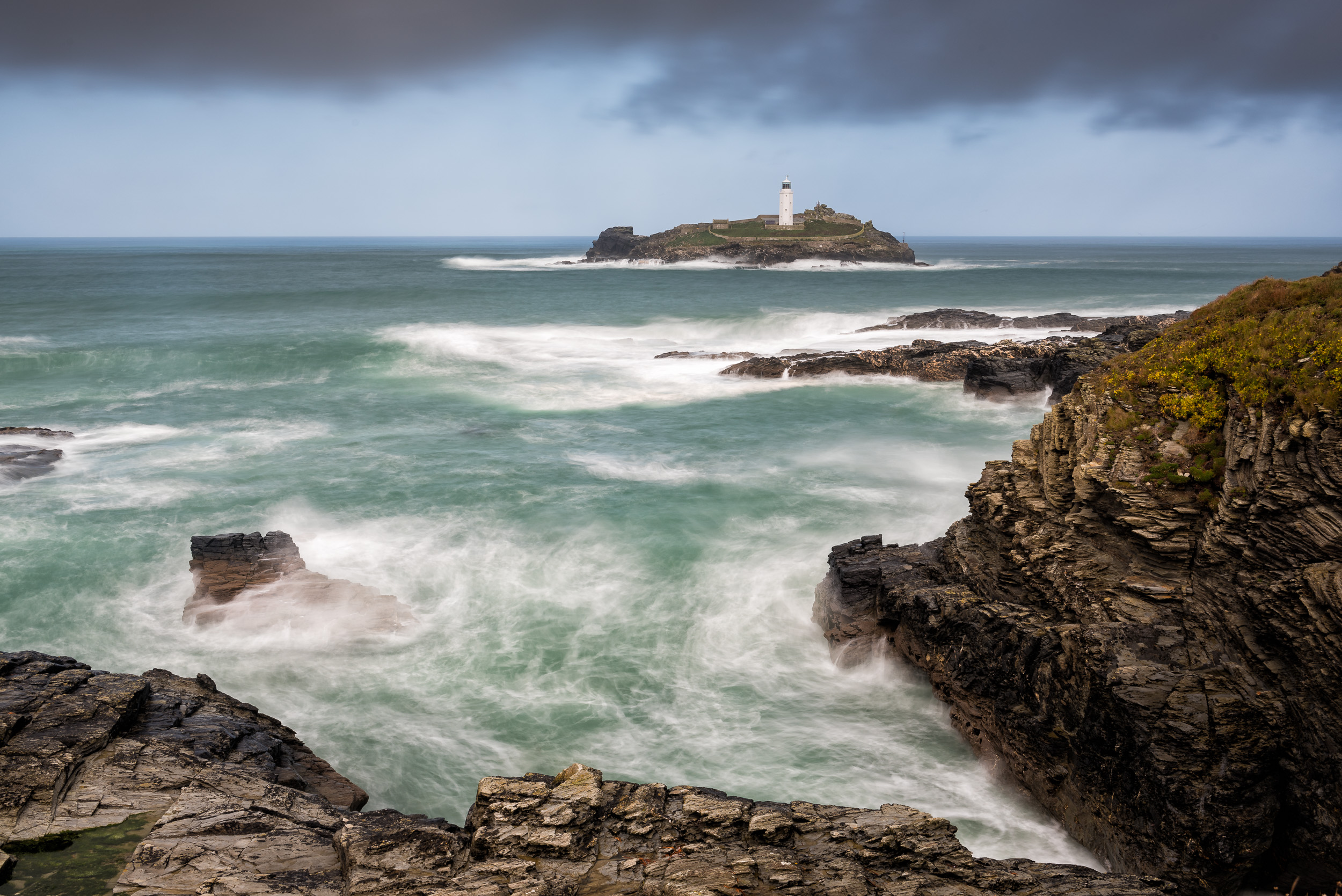
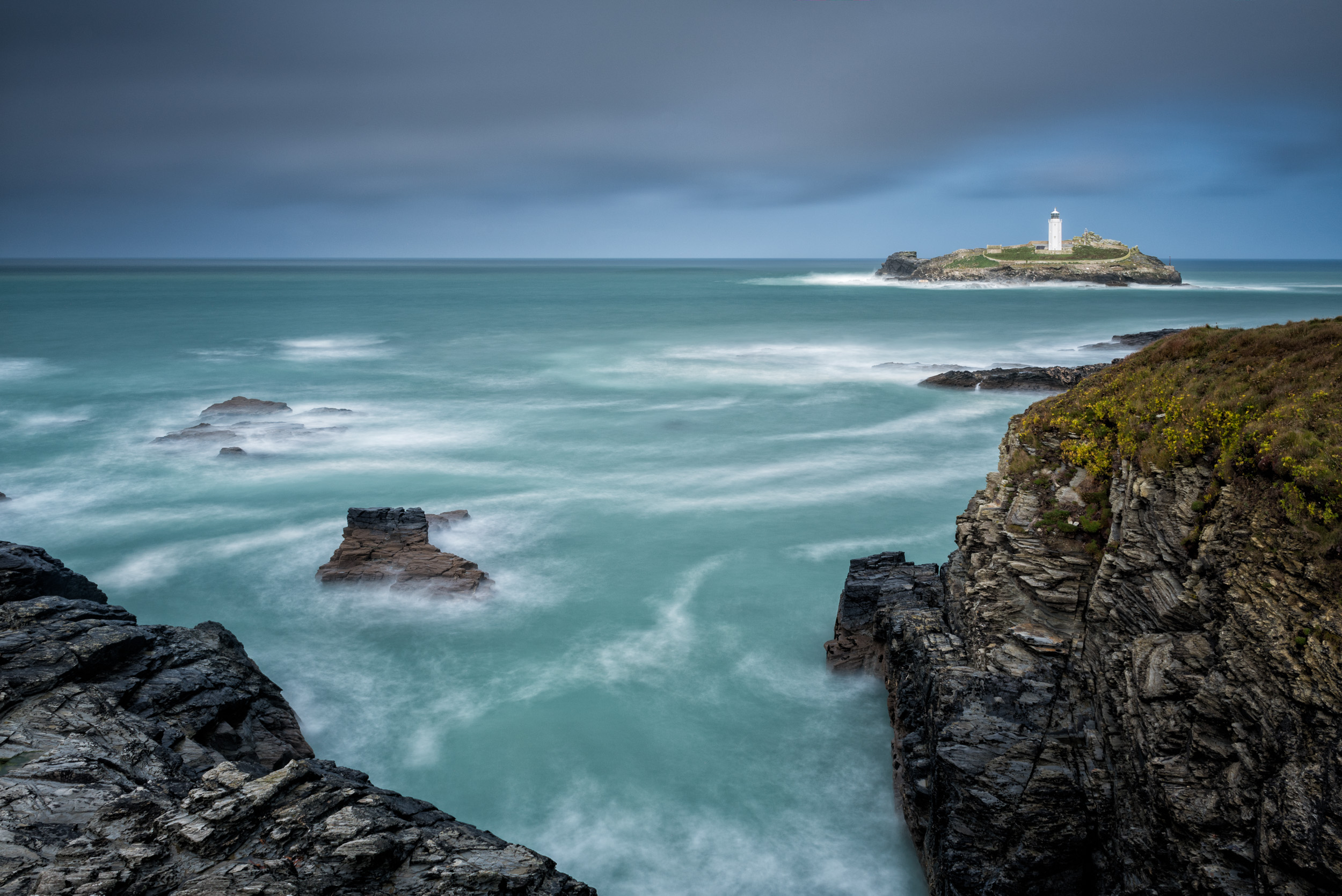
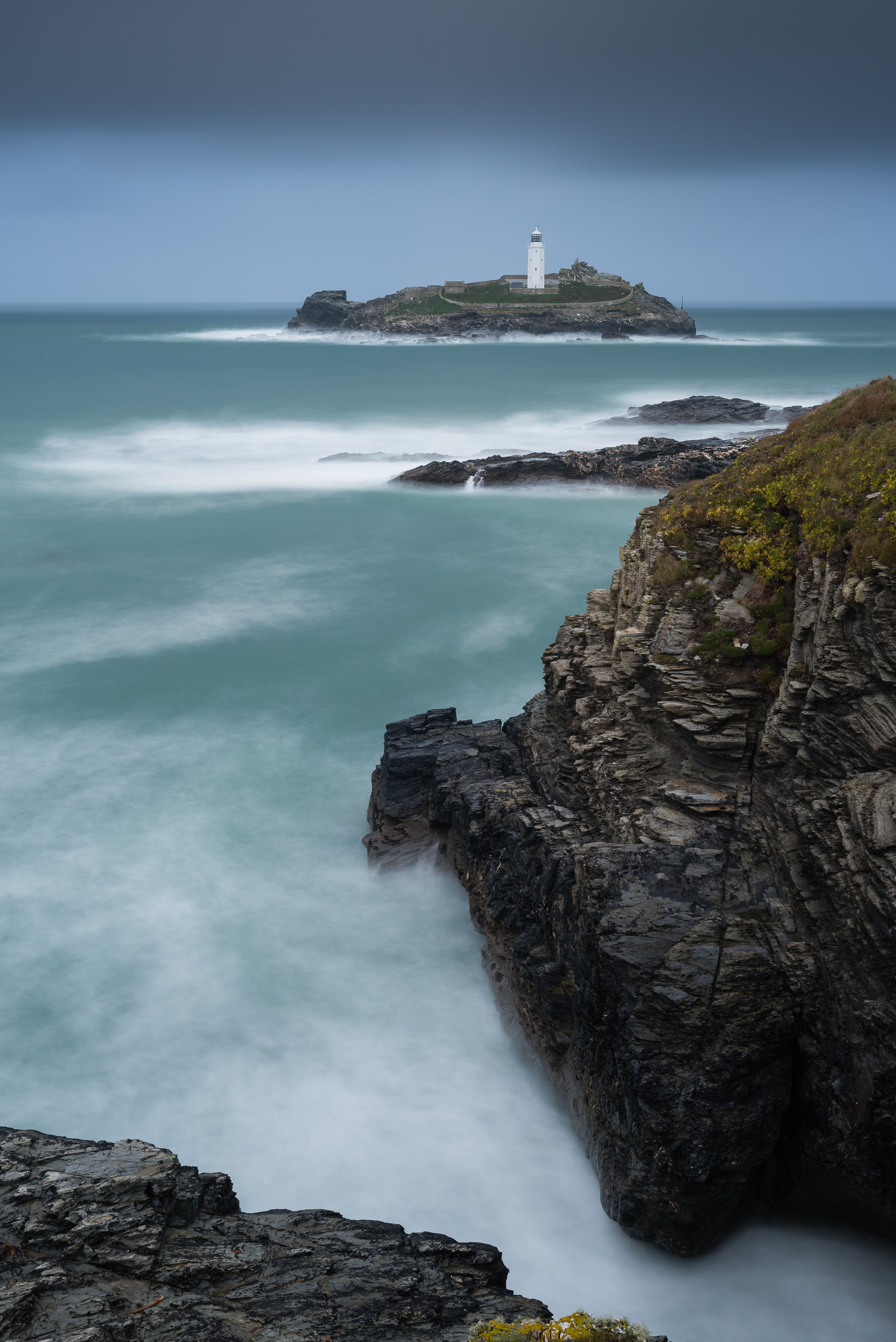
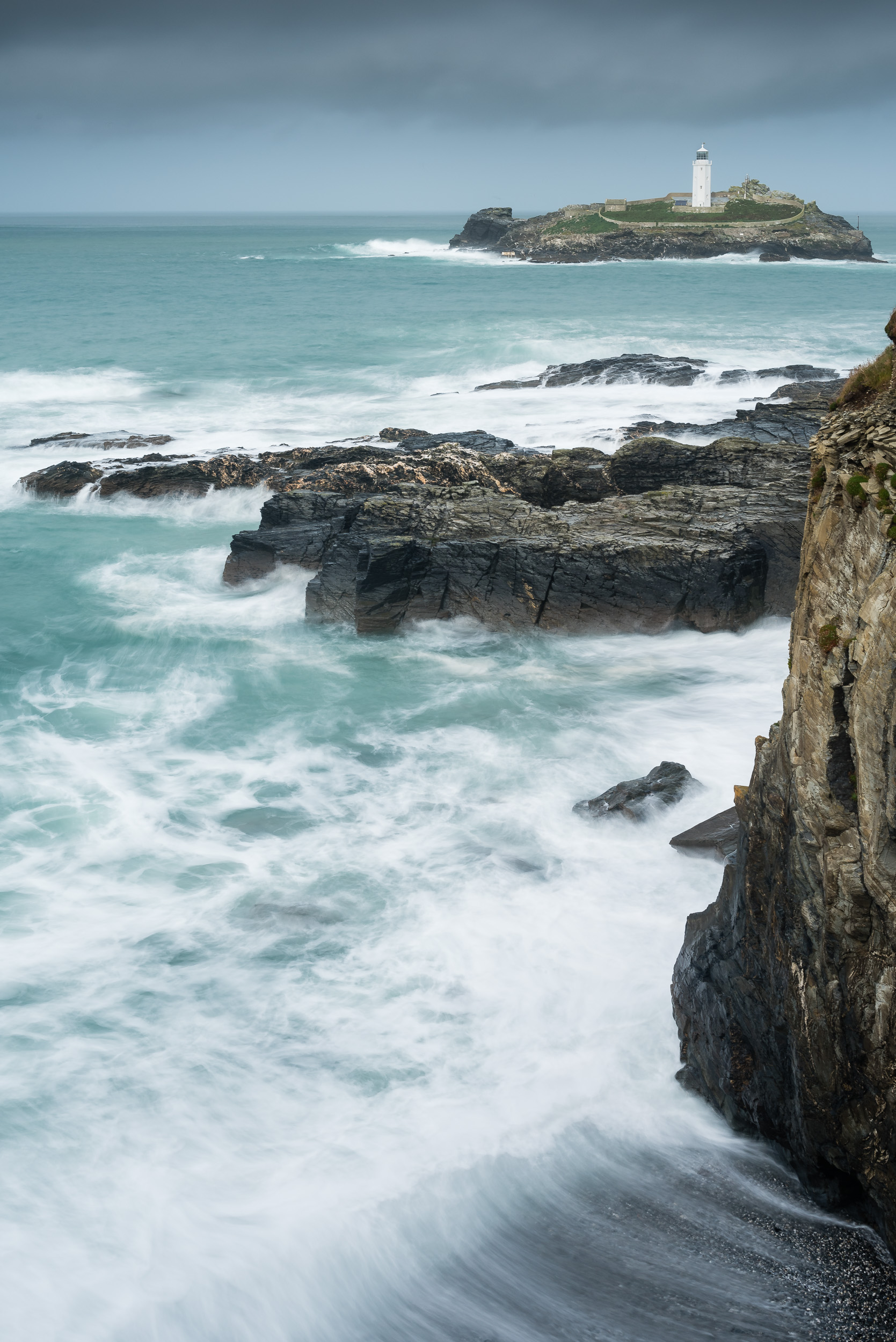
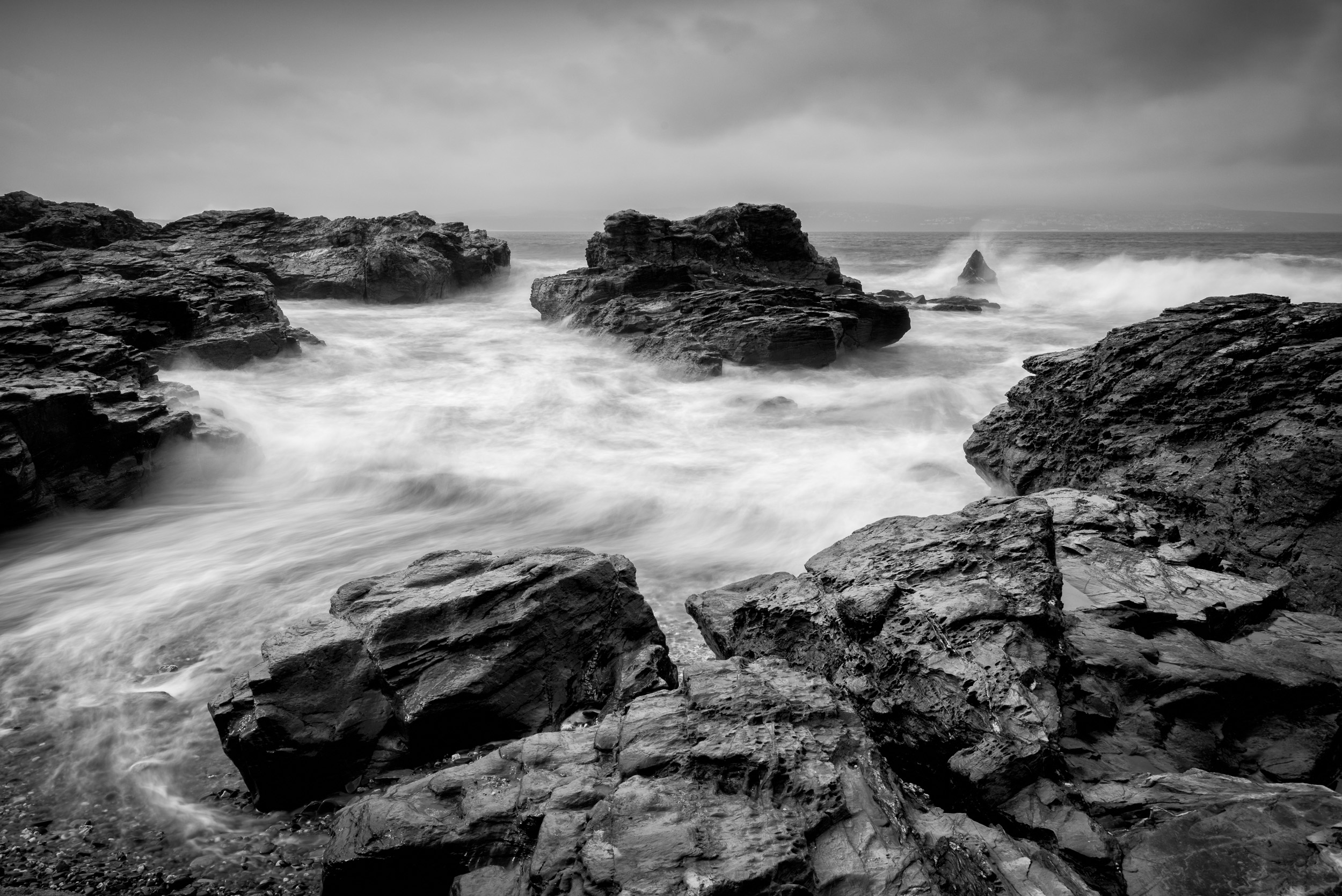
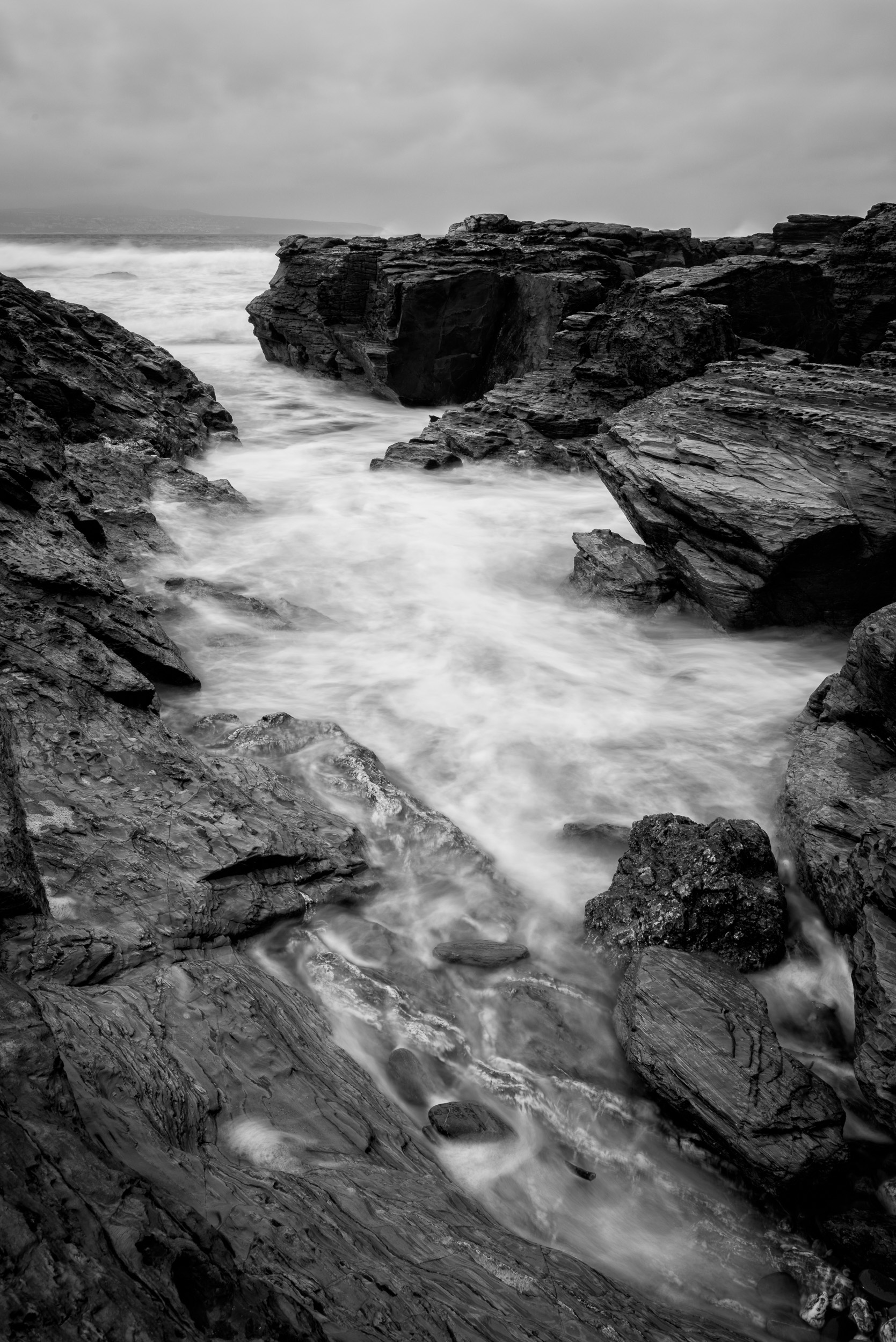
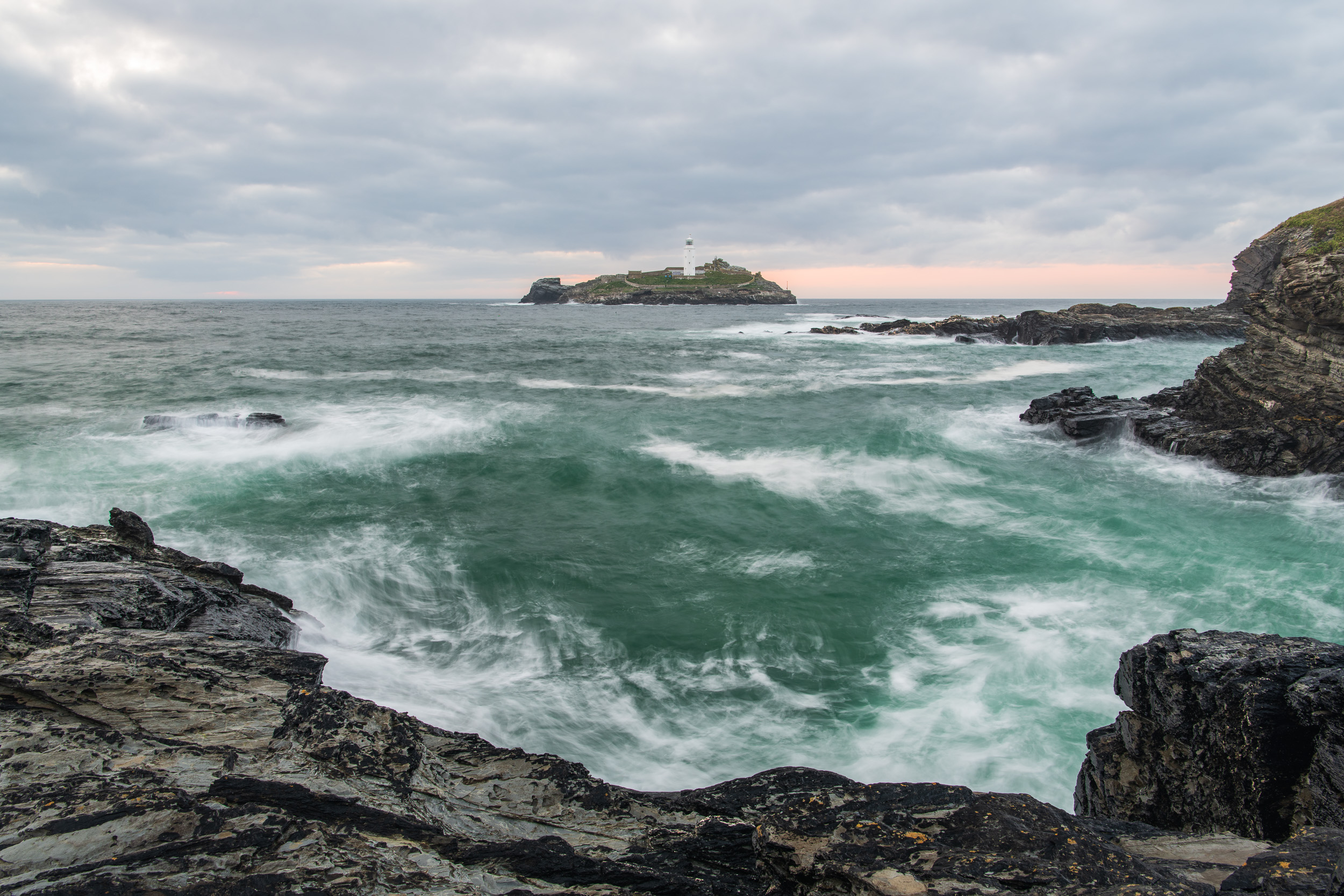
Since that initial visit, Godrevy Point has been on my locations map. However, as it's 2 hours from home, I've always favoured going to Trevose Head which is a little closer.
Returning to Godrevy
This week I finally decided to return to Godrevy Point. The weather forecast and tides were favourable, and I had enough time to drive there and still have time to take photographs before the sun would set.
As it had been nearly fours years since my last visit the first thing I did was have a little walkabout. There are all the cliff top locations to look at, as well as locations down on the beach and the rocky ledges. As I knew the tide was going out, I felt OK about going down onto the ledges. I still had to keep a very close eye on the waves though. It's always best to watch the water for a few minutes before moving onto your next spot as the strength and reach of waves can vary.
My first image from my visit, shown below, was taken up on the cliffs along the South West Coast Path. It's a pleasing enough image but it lacks dramatic light. Some light on the island or cliff face to the side would have really lifted the image. Normally I would have also gone for a long exposure here, but I wanted to capture the movement of the waves so went for the shorter exposure time.
Godrevy Lighthouse from the South West Coast Path, Cornwall - Nikon D850, Nikkor 16-35 mm f/4 at 25 mm, f/11, 1/10th sec @ ISO 64, Lee Filters Landscape Polariser and 2 stop ND Grad.
For my next spot, I decided to leave the South West Coast Path and head down onto the beach and Godrevy Cove. While the lighthouse is a prominent feature of coastline at Godrevy, not all photographs need to include it. The photograph below is actually my favourite of the evening, so it pays to explore an area before digging in your tripod legs.
Again for this image, I really wanted to capture the movement of the waves. Using a polariser not only enhanced the colours, and reduced glare, but it also reduced the amount of light entering the camera, allowing me to get a slightly longer exposure without the need for an ND filter.
Godrevy Point Waves (Godrevy Cove), Cornwall - Nikon D850, Nikkor 24-70 mm f/2.8 VR at 24 mm, f/13, 1/8th sec @ ISO 64, Lee Filters Landscape Polariser and 2 stop ND Grad.
It's important to try new things every now and again, and it's OK to experiment with your photography. While the photograph of the beach stones below might not win any awards, it was still fun to take and provides a welcome break from photographs of waves!
Godrevy Point Beach Stones (Godrevy Cove), Cornwall - Nikon D850, Nikkor 24-70 mm f/2.8 VR at 70 mm, f/8, 1/4th sec @ ISO 64, Lee Filters Landscape Polariser.
As the sun started to set, I headed down to the rocky ledges to get ready for my final shots of the day. I was hoping for better light, either to illuminate parts of the scene, or for it to go dark and stormy, but I ended up with something in the middle. So while I like the composition of both of the images below, they just lack something to make them special. Maybe I'm just getting fussier with my photogrpahy these days!
Dusk at Godrevy Lighthouse, Cornwall - Nikon D850, Nikkor 24-70 mm f/2.8 VR at 27 mm, f/13, 1.3 sec @ ISO 64, Lee Filters Landscape Polariser.
Just a little note on the photography below. Unfortunately, both my main tripod and cable release were away for repair making capturing this photograph tricky. I needed to use the self-timer so there wasn't any camera shake from pressing the shutter button. Normally 2 seconds would be enough, but because the tripod wasn't as stable as my normal tripod, it needed to be 5 seconds. This makes timing really difficult as waves aren't as predictable as you might hope!
Godrevy Lighthouse from Godrevy Point, Cornwall - Nikon D850, Nikkor 24-70 mm f/2.8 VR at 38 mm, f/13, 0.5 sec @ ISO 400, Lee Filters Landscape Polariser.
More Godrevy
I really enjoyed my visit to Godrevy. It was great to be back and I really must make the extra effort to return there again. Looking back at my images from 2014 and those I captured this week, I'm not sure that I don't prefer the images from 4 years ago. I think it probably has something to do with the moodier skies of the images back then. Still, I was very happy that I undertook the 4 hour round trip to Godrevy.
I also have some exciting news. While I was there, I actually did a little filming for my YouTube channel. I'm producing a video on photographing Cornwall's coastline and Godrevy is one of the featured locations. I'm not sure when the video will be ready, but be sure to head over to my YouTube channel and subscribe. Remember to click on the bell icon as well so you'll receive a notification as soon as I post up a new video.
So have you photographed Godrevy Point before? Did you photograph the lighthouse or exclude it? Did you prefer my 2018 or 2014 photographs? Let me know in the comments below.

I Missed Spring but Hello Summer!
In the blog this week, I share with you my disappointing experience of photographing spring this year. However, I remain in a positive mood as the first shoot of summer goes a little better.
Spring, My Favourite Season
As a landscape photographer and general fan of the outdoors, I like all of the seasons. Each one has its own unique characteristics and they can transform how you view and photograph locations. For me though, there is something special about spring. It could be the improving weather, the changing colour of the landscape, or simply the longer hours of daylight.
Spring officially started on the 20th of March this year and I was determined to make the most of it. The short days of winter were at an end and it would soon be possible to start heading out weekday evenings. I was hoping to spend a few months being busy with the camera.
Now that the spring season has officially ended (21st June), I'm looking back on the photographs I have taken and I can't help but feel a little disappointed. It's not that I didn't get out with the camera, it's just that I can't really pick out a photo and say "I nailed it". Somehow, it seems that spring has passed me by this year.
The problem doesn't appear to be lack of commitment on my part, it's just I haven't been out when the conditions have been at their best. As a photographer with a full-time job and a young family, time is very much at a premium. The times I get to go out with the camera aren't dictated by the weather conditions, but when I have spare time between my other commitments. So if Tuesday evening is the time I am able to go out with the camera, but the conditions will be better on Wednesday, I either go out on Tuesday or not all.
It's not been all bad. Spring at Venford Falls (Dartmoor, Devon) is always worth a visit.
Don't get me wrong, spring hasn't been a total disaster. I managed to create a bunch of videos for my YouTube channel:
I have been busy but I just haven't created an image that has captured the essence of spring. One of the key shots I wanted to get was of the coastal thrift in Cornwall. While I did capture an image of the thrift, the conditions were far from ideal. Unfortunately, the thrift is only at its best for a couple of weeks, and I simply didn't get a chance to get back and try again.
I created this image for my Focus Stacking with the D850 video. If only the light had been better. (Bedruthan Steps, Cornwall)
However, I need to put things into perspective. While I didn't get my "spring" image, I did get out with the camera. For me, anytime out with the camera is a good time, and being able to practice will mean my camera skills will be sharp the next time to conditions are better.
Summer is Here!
Anyway, spring has gone, and summer is here so time to start capturing the delights of a new season. For one of my first shoots of summer, I decided to head to The Rumps in Cornwall with my friend (who is also a photographer and a bit of a lucky charm!).
It was a tricky decision to head out that evening or not. I was already very, very tired after a 3 am start that morning for a dawn shoot, but even though the forecast was for clear skies, we could see enough clouds in the sky to justify giving it a punt. To help us on our way we had some fish and chips, and a coke, and we instantly felt more optimistic.
It was a really nice evening at The Rumps. Unfortunately, there was only a little cloud in the sky, and what cloud there was, was difficult to frame effectively. It was however, a good start to a summer of photography and I captured this image:
Summer at The Rumps #3 - Nikon D850, Nikkor 16-35 mm f/4 at 18mm, 0.8 seconds at ISO 64, f/13, Lee Filters Circular Polariser. (The Rumps, Cornwall)


As the sun dipped below the horizon a band of deep orange appeared along the horizon. It was spectacular to look at but it was one of those views that was best looked at than photographed. Sometimes you just need to sit there and soak up mother natures show with your own eyes.
Did you manage to capture any good photos from spring? Are you looking forward to photographing summer? Let me know in the comments below.
A Landscape Photographers Basic Guide to Calibration and Profiling
How do I calibrate my monitor? How do I profile my printer? How do I improve the quality of the photographs I print? You don't need to be a colour expert to improve the way your images look on screen and in print. In the blog this week I show you how.
The Science of Colour
A quick search of the internet on the topics of colour management, monitor calibration and printer profiling, and one would be excused in deciding it was all too much effort. However, like many things in photography you can decide to get your head into the science of it, or you can take a more measured approach and make some small changes to your workflow.
Calibration and Profiling
Even though I don't print high volumes of my landscape photographs, I've always strived to make my workflow is as colour accurate as possible. But why? Most people probably won't even view my images on a calibrated monitor. There are a couple of reasons, Firstly, just for my own personal satisfaction. I like to know what I'm looking at is an accurate representation of the colours in my photographs.
The other reason is that when I print one of my images on my Canon Pixma Pro-10s, I want to be confident that what I print matches what I see on screen.
Perhaps the best way to tell you about my workflow is to show you:
In the video, I mentioned a few links that you might want to look at. In case you missed them in the YouTube video description, here they are again:
For me, those extra little steps I take to calibrate and profile my monitor and to also profile my printer are worth a little extra effort in my workflow. I love the satisfaction of watching an image come to life on the screen as I post process it and then watching it turn into something physical when I print it. knowing that the colours remain accurate along each step is an extra bonus.
So does your workflow include calibration and profiling? If not, does this video encourage you to try and implement new workflow? Let me know in the comments below.
That Image of Trevose Head
In case you wanted to see that image of Trevose Head that you saw in the video in a bit more detail, here it is below:
Trevose Head, Cornwall.
If you want a little more information on Trevose Head, then check out my blog post on this fantastic Cornish location.
PS - The product links used in this article are Amazon affiliate links. By buying through the links I may receive a commission for the sale. This has no effect on the price for you.
Trebarwith Strand
In this blog post, I tell you about my recent visit to Trebarwith Strand, how it paid off to get there early and my experience with the Nikon D850.
Trebarwith Strand
I've photographed many different locations in Cornwall. It truly is a wonderful part of the UK and has so much to offer the landscape photographer. Some of my favourite spots include Boscastle and Trevose Head which are amazing coastal locations.
Opportunities to get out and take photographs seem to be rare at the moment, so when the weather looked good for the north Cornish coast I went looking for a spot that I hadn't shot before or hadn't been there for a while. Checking my trusty custom Google map I remembered that I hadn't been to Trebarwith Strand for over 3 years. I checked the tides and my luck was going to be in! What a great location to put my new Nikon D850 to the test.
Getting There Early
On my last visit to Trebarwith Strand, I noticed how busy the location can get, especially at high tide. For me, the best composition is standing on the rocky ledge and using it as a leading line out to Gull Rock. Problem is that the ledge doesn't fit many photographers so if I wanted to get the shot I was after I would need to get there early. (It was just as well I did because by the time sunset came there were at least 6 other photographers there!)
It's not a long drive so I managed to get there with plenty of time to spare. So I set up and waited. And waited. There wasn't much to do but enjoy the Cornish coast. With no mobile phone signal, I had nothing else to entertain me apart from my own thoughts.
It was actually a rather relaxing time. I stood there and listened to the waves crash around me. I made subtle changes to my tripod position, checked my composition and made sure I had the camera setup. There would be no excuses for not being prepared when all the action started!
Getting to Know the D850
Having said goodbye to the D750 the week before I was now trying to get know the D850. Most of the controls were familiar but there were some subtle differences and some new features that I was still learning how to use. Most of these changes I talk about in my recent D850 video and blog post. Overall the camera was living up to my expectations and I was having fun using it.
As sunset approached I started taking some test shots. I was shooting into the sun but my foreground was some very dark, wet rock. I thought this would be a good test of the dynamic range of the camera.
Sunset Action
As the sun started getting close to the horizon I could see a bank of cloud out to sea that would surely kill the sunset early. So rather than waiting right to the end, I started shooting while the sun was still quite strong in the sky. It was a balance between an overpowering sun and loosing the reflected light from the rocks.
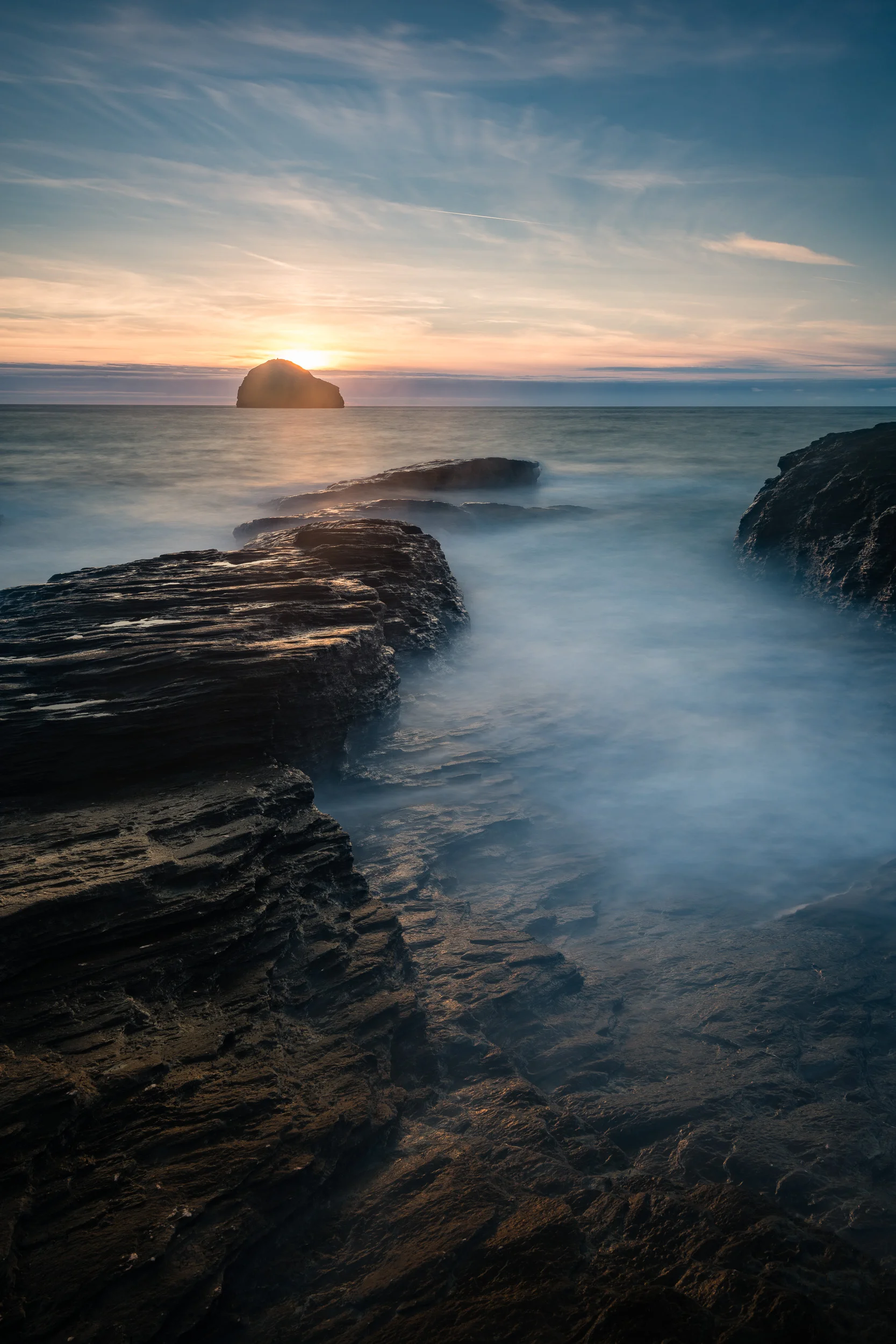
Nikon D850, Nikkor 16-35mm f/4 @ 26mm, f/13, ISO 64, 20 seconds, Lee Filters Big Stopper and ND Grad.
As you can see the camera did an admirable job of balancing the highlights and the shadows. The level of detail that was recorded in the shadows was impressive and post-processing was relatively straightforward.
Though I didn't get the sunset I was after I was still very happy to get out with the camera and to spend some time outdoors. I may have been standing on that rocky ledge for a long time but I enjoyed the experience, and for me, that is half the fun of photography. Just being outside and enjoying the outdoors.
Do you have a favourite location that requires you to get there early? Do you enjoy the experience of being outside almost as much as the photography? Let me know in the comments below.

Same Spot, Different Photo
In this blog post I discuss why I was back photographing Trevose Head again and how despite putting my tripod legs in almost exactly the same spot as before I ended up with a unique image.
The Perfect Location?
I like shooting at Trevose Head on the north Cornish coast. I never seem to leave that location without having taken a decent photograph. Sometimes I even leave there with a great photograph. I also just enjoy being there. It's an amazing bit of coastline with its lighthouse, rocky cliffs and crashing waves. It can get very windy, and salt spray on your equipment can be a challenge, but just being there and watching the sunset over the coast is a pleasure.
If you want to see what I'm talking about then you should check out my 5 Minute Photo Adventure video from Trevose Head.
But what makes Trevose Head so special? Why do I keep putting my tripod legs in the same spot? I think one of the great appeals with Trevose Head is that it works in a variety of weather conditions. It doesn't seem to matter if the weather is good or bad, overcast, windy, or even what season it is. Don't get me wrong. It's not the perfect location. No location is. However, if you can vary your technique and adjust your style to the conditions then it's one of those locations where you stand a good chance of making a decent image.
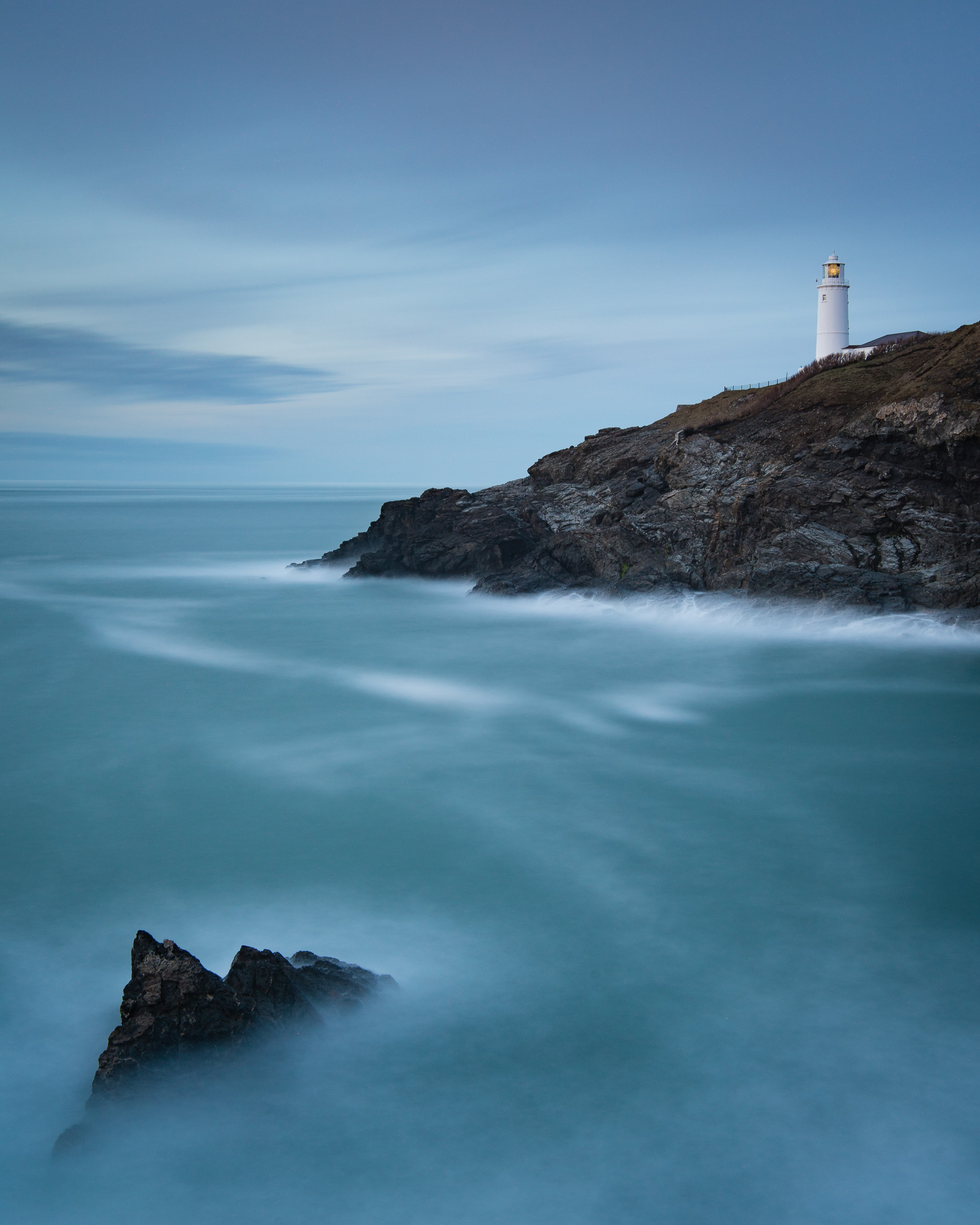
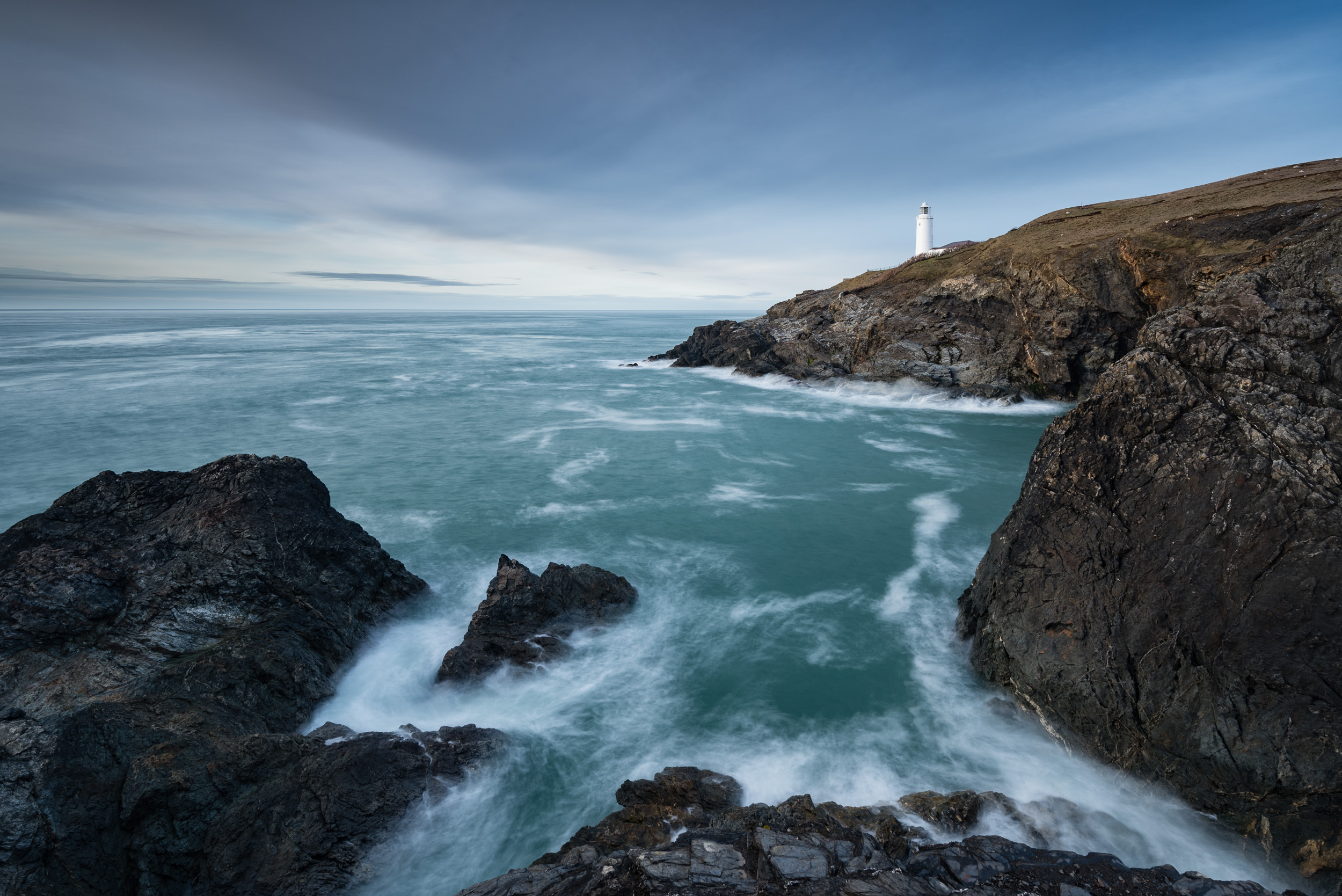
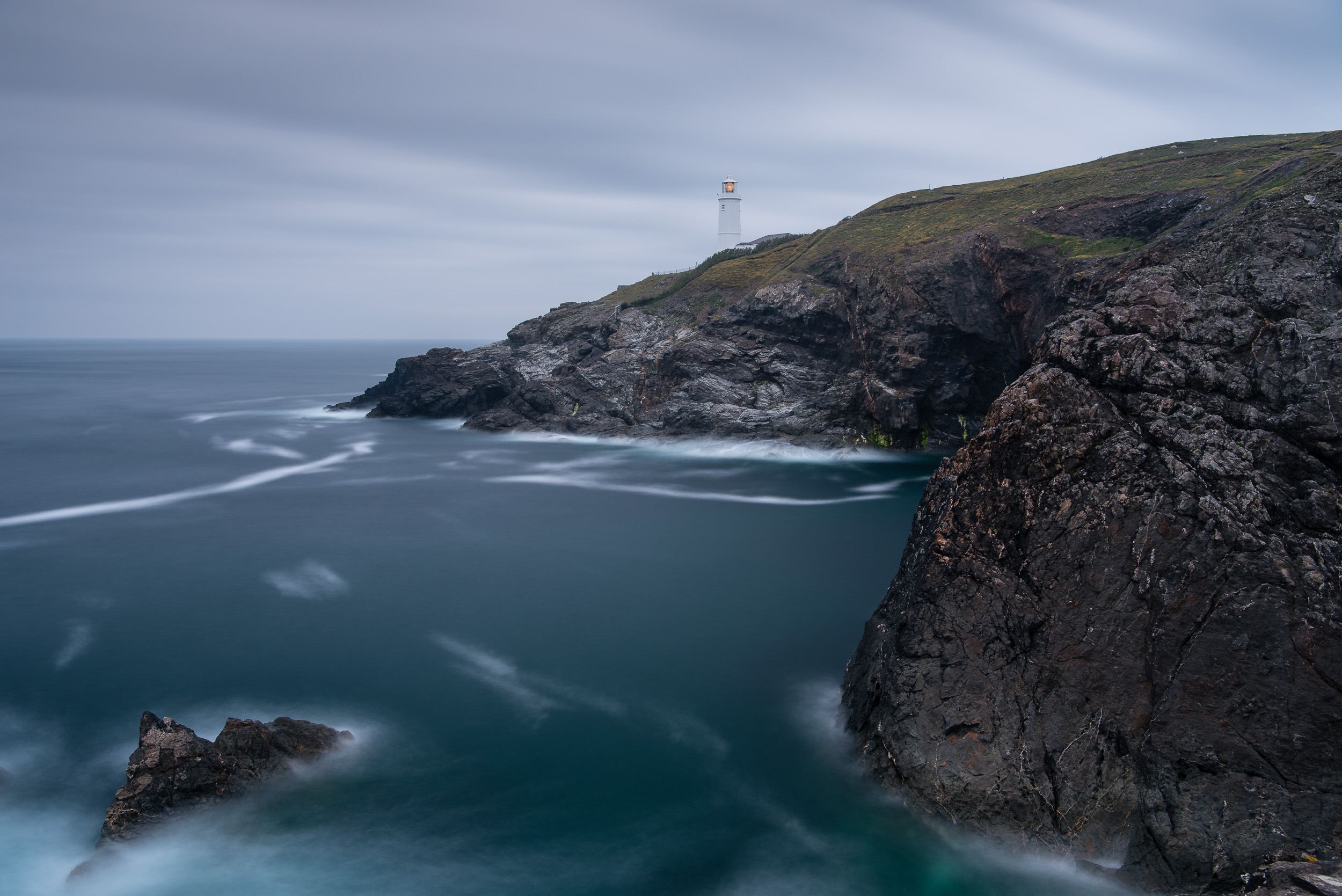
Here are some of my previous images from Trevose Head.
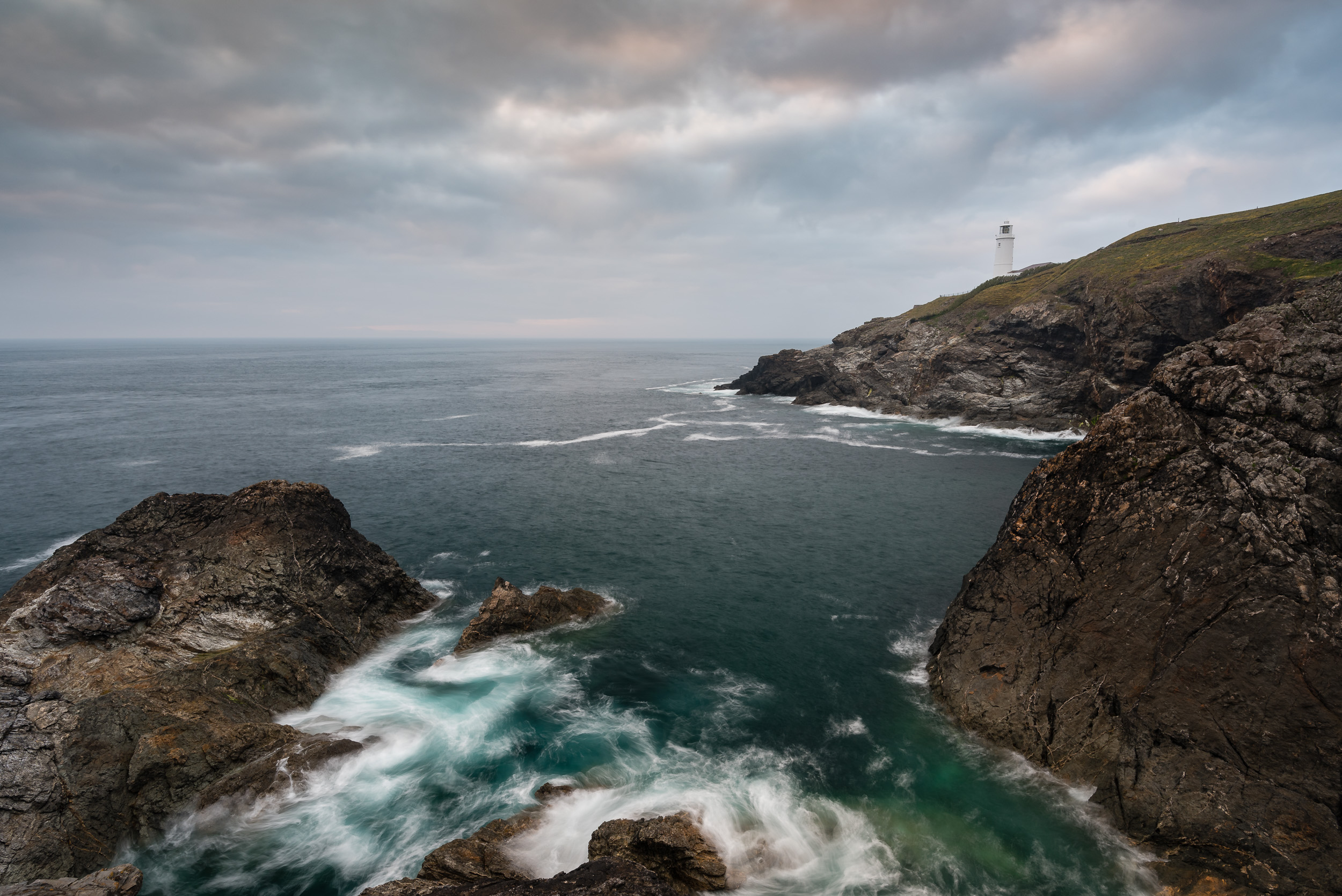
Whose Tripod Holes Are They?
I've just returned from another visit to Trevose Head and the image I captured there inspired me to write this blog post. Though I've previously captured some images that I'm really happy with from Trevose Head, I still thought I could capture something new. So when my friend asked me if I wanted to join him for an evening's shoot at Trevose Head there was only one answer.
It was going to be tough to get there before sunset though. The earliest I could leave home was 7 pm, and given that it is around a 90-minute drive that would only leave me about 40 minutes to jump out the car, make the short walk, setup, and capture something. But the weather forecast looked good and based on my previous experience from that location, I knew the journey would probably be worth it.
When I got there my friend had been shooting for a while and after a quick catch up, I got to work. For me, the best location to shoot Trevose Head is from Stincking Cove looking north east towards the lighthouse. Being a cliff top location there isn't a huge amount of room to move about, so my tripod legs were probably placed in the same spot as they usually are. However, even with my inability to move around a lot there is still plenty of variation to be had by shooting different focal lengths and exposure times.
What made my image different this night was the light. Photographers, including myself, do talk about the "light" an awful lot, but hopefully in this image you can see what a difference the light can make:
Nikon D750, Nikkor 16-35mm f/4 @ 22mm, 0.5 sec, ISO 100, f/16, Lee Filters circular polariser, ND grad.
I'm not saying this image is necessarily any better than some of my other images taken from the same spot, but it is a very different image from my darker, moodier images that I've taken there previously. The light was only there for a few minutes but I love the way it reflects off the sea, the cliffs and the lighthouse. It just shows you that every visit to a location can be unique and therefore produce a unique image.
To ND or Not To ND
I'm a big fan of the ND filter. I use them a lot and you can see how I use them in this video. That doesn't mean I will use them in all my images though. I try to use them creatively if I think the image will benefit from a slightly longer exposure. I do tend to go for longer exposures for my seascapes as I like the resulting smooth water or the patterns that are painted by the moving water. You'll maybe have noticed though that the image I've just shared above isn't a long exposure. At the time I felt that smoothing out the water wouldn't be the right thing to do for the image I wanted to create. I liked the choppy water and the way the light reflected off the tops of the waves.
I did take a long exposure and while I am of course very happy with it, I still very much prefer the shorter exposure.
Nikon D750, Nikkor 16-35mm f/4 @ 22mm, 30 secs, ISO 100, f/16, Lee Filters circular polariser, ND grad.
Ignore Those Who Say...
All this talk of returning to a location to take the "same" picture reminds me of a Twitter post that I saw recently. I can't remember what it said exactly but it seemed to involve a number of photographers talking about a photograph of a few sets of tripod legs all crammed into the same spot. The general gist of the conversation was that these photographers lacked any original thought and were just copying each other or those that were there before them.
Though I didn't reply to the Twitter post, I couldn't have disagreed more for two reasons. Firstly, who's to say that just because a photograph has been taken from a spot before that another photographer can't take a similar image. If you are just starting out in photography I would actively encourage you to visit locations that you've seen in other peoples images. I even don't see any problem with trying to replicate the composition. It's often a good way of learning. If you have been inspired by an image you have seen then why not try your hand at that location.
I bring this topic up now because even though I have visited Trevose Head a few times and taken photos from the same spot, I get different results each time. So I would encourage you to put your tripod legs where my legs were and take the same photo. Your image will be unique and hopefully special to you.
The other reason I disagree with that Twitter post is that if you put two photographers in the same location at the same time you'll likely end up with two different images. An example of this was when I met a very nice photographer called Johnny Baird during a trip up to Scotland to photograph Glencoe. We both stood in the middle of the River Coupall, photographing Buachaille Etive Mor at sunset and despite the close proximity of our tripod legs, we shot very different images. Just because we were in the same location at the same time, how we choose to interpret the scene, choice of equipment and setup all meant we ended up with different images.
Don't let anyone tell you that a location has been overshot or that you must find a unique location for your photograph to be worth anything. So next time you're in Dorset, go to some of its most iconic locations such a Durdle Door and join the dozen other photographers that will be there and get your very own image.
Do you have a location that always delivers results for you? Did you prefer the long or short exposure that I took? What are your thoughts on visiting well shot or iconic locations? Let me know in the comments below.