
GREAT Landscape Photography Locations on Harris and Lewis
Looking for a new bucket list location for your landscape photography? In the blog this week, I share with you some of the amazing locations I discovered while photographing two of the Outer Hebrides most famous locations, Harris and Lewis.
Harris and Lewis - Photography Bucket List Locations
I can’t remember when the Isle of Harris and the Isle of Lewis made it onto my bucket list of landscape photography locations. I’m not entirely sure what inspired me to want to go there. Maybe it was a Thomas Heaton video from Harris or seeing some holiday photographs from my sister.
Maybe it wasn’t just one thing, but rather it came through a gradual consumption of media and photographs from this most stunning Scottish location. No matter how it made it on to my list, I had decided that early on in 2018 that I was committed to making the long journey back into my homeland and onwards to the Outer Hebrides.
Immersing Myself in Photography
Time is precious and the amount of time I can normally commit to just doing landscape photography is limited. Things would be different on this trip though. Where my longest landscape photography adventures had normally been limited to a long weekend, this trip would see me commit 9 days. Nine whole days of landscape photography!
Actually, it was going to be nearer to 5 days. From Devon, it’s a two-day drive there and a two day drive back. It is over 650 miles one way, and you also need to get a ferry for part of the journey. That aside, 5 days is way more than I normally get to allocate to my passion. Besides, the journey wouldn’t be so long as I had a mate coming long with me. Plenty of time to catch up and chat.
I also set myself some clear priorities. This trip was going to be all about my photography. The weather gods hadn’t been kind to me in 2018 and I felt I wasn’t taking the images I knew I could. This trip was going to change that and I was going immerse myself in landscape photography.
With the decision to immerse myself in stills photography, I also made the decision not to make creating content for my YouTube channel a priority. The stills photography would be the top priority. My goal for the trip was to capture great landscape images. However, I do love creating content for my YouTube channel so I wasn’t going to go all the way to Harris and Lewis and not film anything.
The Journey Up
Our plan was to get as far as Glencoe on the first day. With a bit of luck, we’d get there before sunset and grab some shots. Fortunately for us, we did and you can see the results in the blog post Glencoe - One Location, 3 Compositions.
Our luck the next day soon ran out though. Not only was the weather not suitable for any sort of landscape photography, but the winds had picked up to gale force and it looked like the ferry crossing would be cancelled. Well, it appeared as if the captain of the boat wasn’t going to let a thing like the wind stop him from sailing, so we eventually left Uig at 9 pm. There wasn’t going to be a sunset shoot on Harris that day, but we were at least going to be making the crossing that evening.
Now the Story Really Starts
It was dark when we arrived in Tarbert, and it was dark when the alarm went off the next day for the first of our sunrise shoots. Having seen nothing of Harris so far we set off in the dark and headed to Luskentyre beach. This is the point where I move the storytelling from the blog to the vlog.
Photographs, Locations and Information
You will have noticed in the video that I didn’t talk about some of the locations we visited. I only showed the photographs. As I said earlier though, I really wanted this trip to be about immersing myself in my photography and not having to worry about talking to the camera.
So you have a more complete picture (excuse the pun) of my trip to Harris and Lewis, the next few sections of this blog post will feature all the images you saw in the video, along with the camera settings, and where they were taken. I hope you will find this information useful and the photographs inspiring.
If you are looking for a bit more inspiration, and more details on some of the locations I visited, be sure to check out Dougie Cunningham's excellent book Photographing Scotland.
Luskentyre Beach #1
No visit to Harris would be complete without going to Luskentyre. I found the photography here so inspiring that I photographed it almost every day.
North Harris from Luskentyre Beach, Isle of Harris - Nikon D850, Nikkor 16-35 mm f/4 at 19 mm, f/13, 3 seconds at ISO 200, Lee Filters Circular Polariser and ND Grad.
Pull of the Tide at Luskentyre Beach, Isle of Harris - Nikon D850, Nikkor 16-35 mm f/4 at 19 mm, f/13, 2 seconds at ISO 64, Lee Filters Circular Polariser and ND Grad.
Dunes of Luskentyre Beach #2, Isle of Harris - Nikon D850, Nikkor 16-35 mm f/4 at 20 mm, f/13, 1/5th second at ISO 64, Lee Filters Circular Polariser and ND Grad.
Northton Saltings
This interesting location is easy to access as it is right beside the road. Take some wellies though!
Stormy Saltings, Isle of Harris - Nikon D850, Nikkor 16-35 mm f/4 at 16 mm, f/13, 15 seconds at ISO 64, Lee Filters Circular Polariser, IRND and ND Grad.
The S in Saltings, Isle of Harris - Nikon D850, Nikkor 16-35 mm f/4 at 35 mm, f/13, 15 seconds at ISO 64, Lee Filters Circular Polariser, IRND and ND Grad.
Northon Saltings from Above, Isle of Harris - DJI Mavic Pro, 1/100th second at ISO 126, 26 mm at f/2.2.
Traigh Mheilein
Not the easiest beach to get to, but worth the walk.
Traigh Mheilein, Isle of Harris - Nikon D850, Nikkor 24-70 mm f/2.8 VR at 32 mm, f/13, 62 seconds at ISO 64, Lee Filters Circular Polariser, IRND and ND Grad.
Stac a' Phris
A spectacular coastline made even more impressive with the Stac a' Phris sea arch.
Turbulent Water at Stac a' Phris, Isle of Lewis - Nikon D850, Nikkor 16-35 mm f/4 at 18 mm, f/11, 1 seconds at ISO 64, Lee Filters Circular Polariser and ND Grad.
Stac a' Phris, Isle of Lewis - Nikon D850, Nikkor 16-35 mm f/4 at 20 mm, f/11, 2 seconds at ISO 64, Lee Filters Circular Polariser and ND Grad.
Sunset at Stac a' Phris, Isle of Lewis - Nikon D850, Nikkor 16-35 mm f/4 at 21 mm, f/11, 5 seconds at ISO 64, Lee Filters Circular Polariser and ND Grad.
Luskentyre Beach #2
The 2nd visit proved even more amazing than the first!
Sunrise at Luskentyre Dunes, Isle of Harris - Nikon D850, Nikkor 16-35 mm f/4 at 18 mm, f/13, 1 second at ISO 100, Lee Filters Circular ND Grad.
Sky Fire at Luskentyre, Isle of Harris - Nikon D850, Nikkor 16-35 mm f/4 at 18 mm, f/13, 0.6 seconds at ISO 100, Lee Filters Circular ND Grad, single image crop at 6:17.
Mangurstadh Stacks
Another dramatic coastal location on the Isle of Lewis.
Mangurstadh Stacks, Isle of Lewis - Nikon D850, Nikkor 24-70 mm f/2.8 VR at 52 mm, f/11, 119 seconds at ISO 64, Lee Filters Circular Polariser, IRND and ND Grad.
Tràigh Scarasta
There are so many beaches to photograph on Harris, but if you like patterns in your sand this one is well worth a visit.
Tràigh Scarasta, Isle of Harris - Nikon D850, Nikkor 16-35 mm f/4 at 19 mm, f/13, 69 seconds at ISO 64, Lee Filters Circular Polariser and ND Grad.
Tràigh Scarasta (ICM), Isle of Harris - Nikon D850, Nikkor 16-35 mm f/4 at 24 mm, f/22, 1/4 second at ISO 64, Lee Filters Circular Polariser and ND Grad.
Tràigh Sheileboist
I know it’s another beach, but even in the wildest of conditions it’s possible to get an image at one of the many golden beaches on Harris.
Tràigh Sheileboist, Isle of Harris - Nikon D850, Nikkor 16-35 mm f/4 at 26 mm, f/13, 30 seconds at ISO 64, Lee Filters Circular Polariser and ND Grad. Single image crop at 6:17
Luskentyre Beach #3
Last of the Luskentyre images…promise! (It was such an amazing location!)
Tranquility at Luskentyre, Isle of Harris - Nikon D850, Nikkor 16-35 mm f/4 at 19 mm, f/13, 3 seconds at ISO 64, Lee Filters Circular Polariser, ND and ND Grad.
Sand, Wind and Time, Luskentyre, Isle of Harris - Nikon D850, Nikkor 16-35 mm f/4 at 25 mm, f/13, 25 seconds at ISO 64, Lee Filters Circular Polariser, ND and ND Grad.
The Pastel Shades of Luskentyre, Luskentyre, Isle of Harris - Nikon D850, Nikkor 16-35 mm f/4 at 18 mm, f/13, 144 seconds at ISO 400, Lee Filters Circular Polariser, ND and ND Grad.
Luskentyre Beach Panorama, Isle of Harris - DJI Mavic Pro, 1/50th second at ISO 161, 26 mm at f/2.2, 9 image stitch cropped at 6:17.
A Tearful Goodbye
After 5 whole days of photography, it was sadly time to go home. We were really rather lucky with the conditions we got. The Outer Hebrides aren’t exactly known for settled weather but we managed to make it out every day with the camera. Some days were definitely more challenging than others, but even in wild conditions this magical place had something to offer.
As for the trip home ,that was similar to the trip up. The ferry was delayed due to bad weather so no chance of a sunset shoot back on the mainland, and the conditions the following morning were flat grey and overcast. As we headed down the M6 past the Lake District I didn’t even feel bad for passing it by as I had memory cards full of amazing images and video.
I do hope this blog post and video has given you a sense of not only what my adventure was like, but also what it is like to photograph Harris and Lewis. It truly is one of the most amazing landscapes I’ve ever photographed. From its dramatic coastal locations, grand mountains and open moorland, it never failed to surprise me. There was a real sense of awe. I grew up in the highlands of Scotland and now live in Devon so I know a good landscape, but Harris and Lewis were something special.
Are you planning a trip to the Outer Hebrides? Which photograph or locations was your favourite? What locations are on your bucket list? Let me know in the comments.

Drones, Landscape Photography, and Holidays
Is the drone the perfect camera for the landscape photographer on holiday? I think so and in the blog this week I tell you why.
Relax, I’m on Holiday
When I go on holiday with my family, I really try and forget about landscape photography for a bit. But, the trouble with being a landscape photographer is that your brain is wired a particular way. For example, it is literally impossible for me to watch a nice sunset without a part of me wishing I was photographing it.
Fortunately for me, my desire to get up really in the morning diminishes when I'm on holiday, and a cheeky glass of wine in the afternoon means that I can't just jump into the car and head out to take pictures. But this does mean that I do actually enjoy my holiday, relax and have fun with my family.
Talking about balancing photography and family, there is a very good article on Nature TTL’s website called The Delicate Balance of Photography and Family Life, which is well worth a read.
Always Have One Eye on the Weather
Another odd by-product of being a landscape photographer is that I like to check the weather forecast. A lot. And in detail. Even though I was on holiday, and I had no plans to take any landscape photographs, I couldn’t help but to check the weather forecast on my favourite website yr.no. As I drank a glass one evening I checked the weather forecast for the next day and noticed something interesting.
The weather that caught my interest was the possibility of mist or fog. How did I know that there was a chance of mist? After reading the excellent book From Dawn to Dusk - Mastering the Light in Landscape Photography I had learned that mist can occur when the outside air temperature is close to the dew point, and wind speed is very low. These were the very conditions that were forecast for the next day.
However, even with such interesting conditions forecast, I didn't really have the motivation to get up, go out and find something to shoot early the next morning. I was in full holiday mode.
Misty Mornings
When I woke up the next morning and looked out the window, all I could see was mist. This was all very exciting but it was all a bit late to go anywhere. I was just about to get the coffee on the go when I had a bright idea. What did the landscape look like from above? Well, that's an easy question to answer when you have a drone.
With the coffee brewing away I sent the drone up into the air, just a few feet from my door. Though forward visibility wasn't great, vertical visibility was a lot better and I could clearly see the drone just above me. After a short ascent, I could see mist covering the landscape. It looked amazing! I just knew there was a photograph to be had from my elevated viewpoint. There was just a little too much mist at this point to make an interesting photography, so I brought the drone down and had a coffee.
A short while later I sent the drone back up and captured this image:
Trees in the Dawn Mist - DJI Mavic Pro, 1/1000th sec at f/2.2, ISO 100, 6 image stich cropped at 6:17.
The Perfect Camera for the Landscape Photographer on Holiday
I don't capture a lot of still images with the drone but that's twice now that I've used it to capture a landscape image on holiday (you can see the first one here). I've now come to two conclusions. Firstly, the drone really is a great addition to my landscape photography kit bag. There is no practical way I could have captured that image without the drone. That little bit of elevation the drone gave me opened up a whole new view on the landscape allowing me to capture an image which showed how the mist was covering the landscape.
The other conclusion I came to was that I think the drone may be the perfect camera for the landscape photographer on holiday. Why? Well, it allows you to take photographs without even leaving the comfort of your holiday home! I don't need to sneak off early in the morning or stay sober past 4 pm. Even the kids find it interesting. As long as I'm in a location where it's possible to fly and there is a composition to be made, I can scratch that landscape photography itch.
I know some photographers do manage to indulge their passion for landscape photography while on holiday, but I find it rather tricky, and would actually prefer not to spend large amounts of my holiday time out taking photos. This is why the drone is so useful. It's fun, accessible, doesn't require me to go out for hours, and I can do it from wherever I'm staying.
Do you separate yourself from photography while on holiday? Do you take landscape photographs with a drone? Let me know in the comments below.
Bonus Video
I also captured a 360-degree video of the misty landscape. Enjoy!

Can You Print Images Captured from a Drone?
In the blog this week I look at printing images that were captured using a drone. Is there sufficient resolution and quality to justify making a print?
Capturing a Panoramic Image with a Drone
I'm a big fan of drones. I think they are an amazing bit of technology. Though I've taken still photos with my drone before, it is the video features that I use the most. The aerial footage you can insert into a vlog really helps tell the story of the location.
A few weeks ago though I published a video called Creating Panoramic Images of Glen Etive with a Drone. In the video, I used the drone to capture a big panoramic image of the Loch Etive area where I was staying on holiday. It was an image that I couldn't have captured if it wasn't for the drone.
Can You Print an Image Captured from a Drone
When the video was published a few people asked the question about how the image looked in print. After all, the camera sensor in a drone like the DJI Mavic Pro is nowhere as advanced as the sensor in my D850. However, does that mean that the images from a drone aren't worth printing?
As I'd never printed an image captured on one of my drones before I thought it would be a good time to find out. So, can you print an image captured from a drone? Let's find out.
As you saw in the video, it was more of a question of is their sufficient quality from a drone image to justify making a print. I think the answer is definitely yes. As long as the image is well composed and has good light, there is more than enough detail in the DNG files captured on a DJI Mavic Pro to justify making a print.
In the video, you also saw me try out a paper that I haven't used before. It was the Fotospeed Smooth Cotton 300. I really like this paper and this was my first time making a large print on a matt paper. You can really feel the weight of the paper and the surface has a real feel of quality about it. I think I'll need to try a few more prints using some of the matt papers I have in my Fotospeed Matt Smooth Test Pack.
So do you own a drone? Do you take still images with it? Have you ever printed a drone image? Let me know in the comments below.
Loch Etive Panorama - Taynuilt, Argyll: DJI Mavic Pro, 1/125th sec at f/2.2, ISO 100, 26mm (35mm equiv'), stitched from 9 DNG files
Some of the links used in this article are Amazon affiliate links. By buying through the links I may receive a commission for the sale. This has no effect on the price for you.

The Power of Failure
In this blog post, I tell you why I had to ditch a mornings work because I failed to check the setup of one of my cameras. It was a tough lesson but one I will learn from.
Not What I Had Planned
In this blog post, I was originally going to tell you about a new video I was making for my YouTube channel and how I got on when I visited my first location for the video. However, not only did the photography not go exactly how I hoped, but I also made some mistakes with shooting the video.
With my planned blog post not looking worthwhile, I was going to bring forward next week's planned blog post to this week. Then this morning I accidentally deleted a folder full of video and it got me thinking about mistakes and failures. We all make them but what is important is that we learn from them. So in this blog post, I'm going to tell you about my mistakes and what I've learnt this week.
Check Your Camera Settings
So this week I was going to tell you about a new exciting video project I was working on. It involved visiting a number of great locations where I would shoot some video, take some photographs and hopefully inspire you to visit these locations. As you'll read though, the shoot at my first location, The Cobb in Lyme Regis didn't exactly go to plan.
Let's start with the photography. The forecast and tide had looked promising, but as most landscape photographers will tell you, that doesn't necessarily mean that's what you'll get or that you'll get a good image.
At The Cobb I generally prefer the morning sun to come from the side, but on this morning it was rising directly in front of me. However, the forecast said there would be a bit of cloud about and I hoped the rising sun and clouds would mix to give me a beautiful sky.
Unfortunately, it didn't quite happen that way as you can see from the image below, which was probably the best of the morning.
So while the image itself isn't one for the portfolio, together with the video I was shooting it still would have told the story that I needed it to.
As I started to edit the video from The Cobb, something quickly became apparent. It's wasn't the shots from the DSLR, or the video from the Sony RX100M4, or even the audio from Zoom H1. What I had failed to do was to check the settings on my DJI Mavic Pro. All the video I had shot with the drone was low resolution and at the wrong frame rate. The drone footage was very important in showing the viewer more about the location. Unfortunately, the drone footage would not work well with the other video I had captured.
I'm not entirely sure why the drone camera was configured incorrectly, but that isn't really the point. I should have checked the settings before I started shooting. I always check the camera settings on my DSLR and Sony RX100M4 so why on earth wouldn't I do the same for my other cameras!
I like to put out quality work, and while the still image I captured was suitable, when I had realised I had made a mistake with the video I decided I would rather go back and shoot the whole thing again. I've been working hard to increase the overall production quality of my videos so I wasn't willing to let this pass quality control.
So what have I learnt? I need to check each and every camera I use, each and every time I use it! I put a lot effort in my content, and the time I have to do it is very limited, so I need to make sure I don't waste time by not checking all my cameras on each shoot.
I will of course not let this little setback deter me from making the planned video!
I Just Deleted All My Video Content
This morning, while cotemplating this particular blog post, I decided I would "tidy up" some of my unused, but still potentially useful, video clips I have. Trouble was that I deleted all my current video content, including some highly valued footage!
Here I have some good news though. I run a rigorous and regular backup process so while the deletion of the data was a drag I knew I could restore it quickly enough. Sure enough, I just inserted the hard disk with my last backup and restored the data with one click. My backup routine is far more extensive than a single hard disk so if you are interested in hearing more about it let me know in the comments below.
So do you check your settings before each shot? Have you taken a bunch of photos with camera incorrectly setup? Let me know in the comments.

Glencoe Adventure - Part 2, The Vlog
In this 2nd of two special Glencoe blog posts, I'll share with you my vlog of the 24hrs I spent in Glencoe before the workshop. It was a busy and tiring time but the effort I put in resulted in some special images!
Maximising your Time
Last week, in part 1 of my Glencoe Adventure blog, I shared with you the images and stories from my time at the Dawn 2 Dusk Glencoe photography workshop. This week, in part 2, I will be showing you what I got up to with the 24hrs I had between arriving in Glencoe and the start of the workshop.
I had booked the workshop more than 12 months in advance so I had plenty of time to organise and plan my trip. Though the workshop started at 1 pm, the risk of being delayed if I decided to travel up on the day was just too great. So the only option was to travel up the day before. Rather than opt for a mid-morning departure from Devon and arrive early evening in Glencoe, I decided that a very early start was in order.
If I left at 5 am and undertook the 520-mile journey, I could feasibly make Glencoe for about 3:30 pm, just in time to get some sunset pictures! I then also had the morning to do a dawn shoot, with perhaps some post-breakfast shooting and all before the start of the workshop. My plan had been hatched!
Rather than write about the 24 or so hours I had in Glencoe, I've documented my adventure in my latest vlog. Check out the video below, and if you haven't subscribed to my YouTube channel then what are you waiting for!
Needless to say, I did not regret that 4:30 am alarm call!
Image Gallery
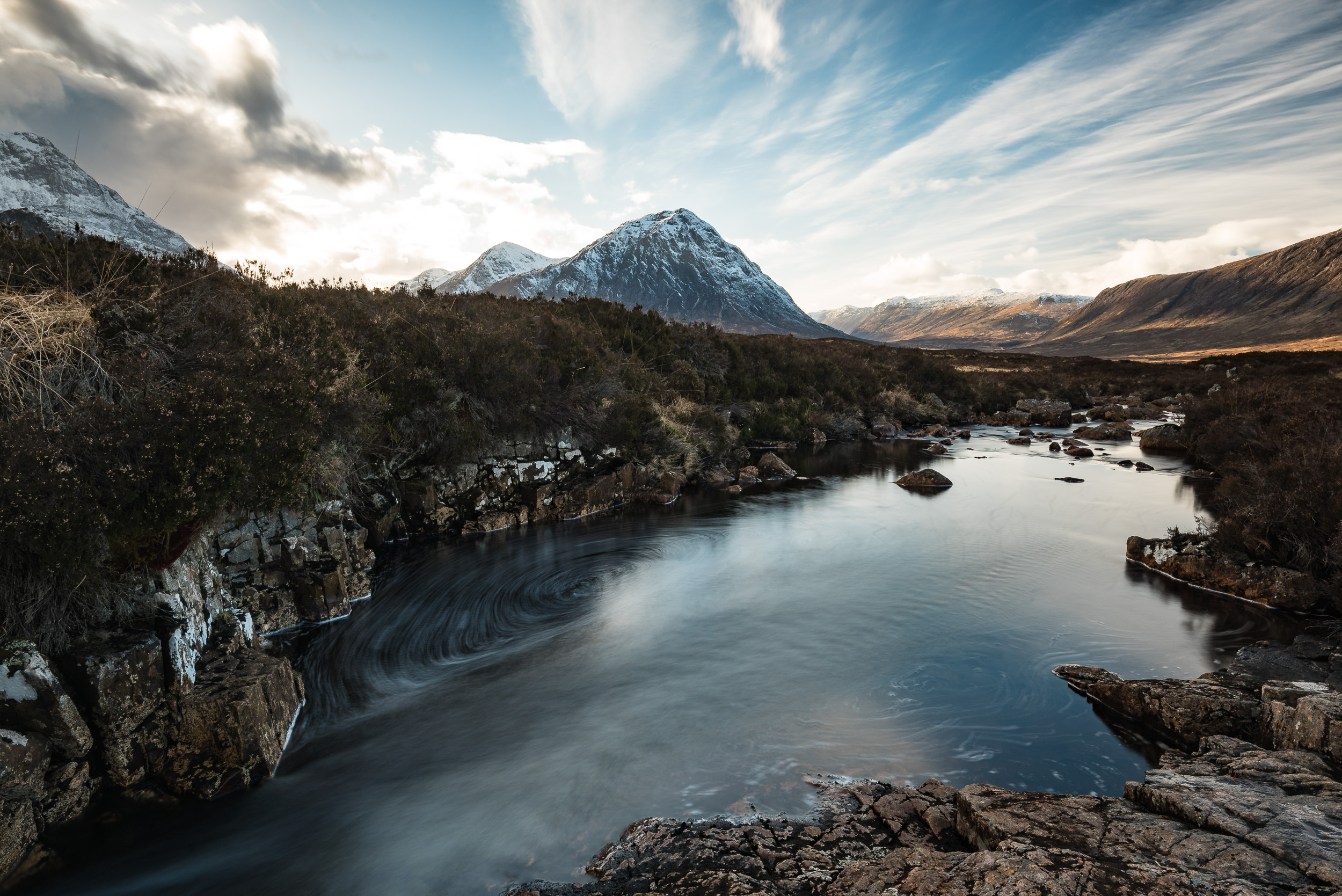
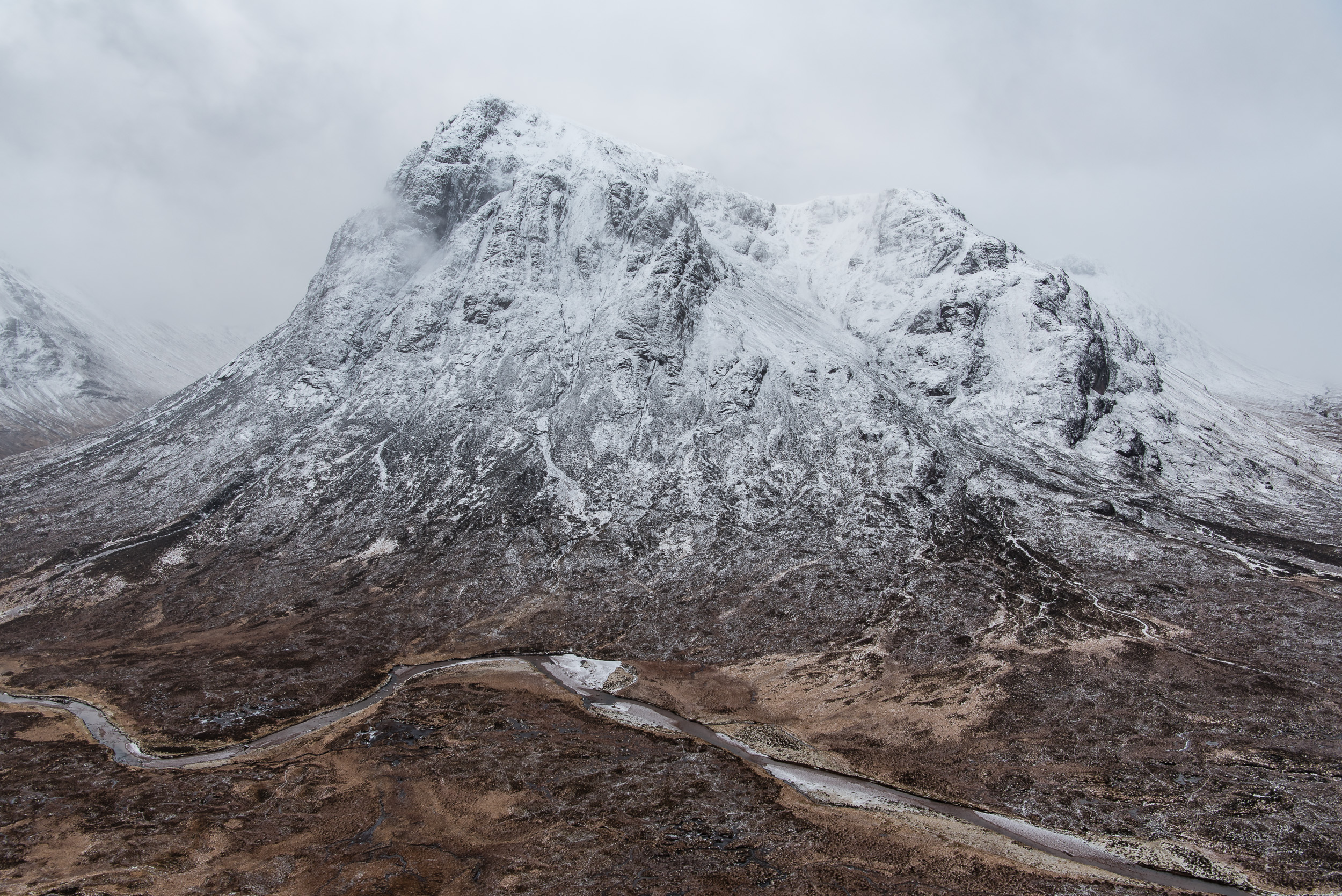
The gallery below is a collection of the images that I took during my 24hr adventure in Glencoe. They are in the video but sometimes it's nice to see them in a bit more detail so click on an image to bring them up in a lightbox.




A Good Book to Pass the Time
The video is just a snapshot of my 24 hours before the workshop so here is a few stories that weren't in the video.
Firstly, while the journey from home to Glencoe took around 10 hours, it didn't feel like a very long drive. The principle reason for this is entertainment. I've been a long time subscriber to Audible and listening to a good audiobook is a great way to pass the time on those long car journeys. For the journey, I started a new book called Fear the Sky by Stephen Moss and read by R. C. Bray (who also read the other excellent sci-fi book The Martian). I had a feeling it was going to be good (as it was recommended by the same person that recommend The Martian to me), but I was engrossed from the moment the story started. Let's just say that I almost didn't want the journey to end!
Most landscape photographers drive a lot and if reading any of the Game of Thrones novels seems like an impossible task then why not pass the time with a good audio book.
Waders and Being Social
One of the shots that I wanted to get while I was there was a sunset shot of Stob Dearg (Buachaille Etive Mor) from the River Etive. To get the shot that I wanted I would need to wear a pair of waders (as inspired by this Thomas Heaton video). I borrowed my father-in-law's waders and put them in the boot of the car, unsure whether I would actually need them or not. When I arrived in the layby near my planned shooting location I felt a bit silly putting on waders to go out and take images. No one was about though so I set off on the short walk to the location where I would shoot.
However, as I approached the spot I could see another photographer there. This is generally not an issue and I'm always up for a bit of a chat but what would this person think if they saw me wearing waders to take photographs! Well, imagine my surprise when he also was wearing waders! All of a sudden it didn't feel that odd to be wearing a pair of waders to take photos.
The chap in question was Johnny Baird and we joked about what the odds would be that there would be two photographers named Baird, wearing waders, taking landscape photographs from the middle of the river that evening! Landscape photography can be a solitary pastime so it's nice sometimes when you meet a like-minded individual and you can chew the fat over photography while standing in the middle of a river!
Johnny has a wonderful portfolio of landscape images and I strongly suggest you check out his Facebook page.
A Missed Opportunity
After my epic early morning of photography shooting Stob Dearg from Beinn a'Chrulaiste I was hugely satisfied with my morning's work. After breakfast though I thought I go and see if there was anything else I could shoot before the workshop started in the afternoon. I also thought it would be a good chance to properly test out my latest addition to my kit bag, the DJI Mavic Pro.
One of the locations I visited was the spot where you can photograph Stob Dearg and the River Coupall. As this is such a hugely popular spot for landscape photographers I was not surprised to see another couple of photographers there already. I didn't want to spoil these photographers experience of the location so I did ask if they didn't mind if I flew the drone around the area. It wasn't a problem and as the drone is often a talking point we also got chatting about drones and photography in general.
The conditions at the location were also ideal for stills photography. The snowy peak of Stob Dearg was clearly visible, there was some cloud in the sky and plenty of water in the river. All I had to do was walk the very short distance back to the car and get my DSLR. Except I didn't. I already knew that we would be visiting this very location in a couple of days during the workshop so why would I bother shooting it now. After all, I'll get the same shot when I return.
Having grown up in Scotland I really should have known better. After all, Scotland is well known for having weather that produces all four seasons in one day. Sure enough, when I did return with the workshop group the conditions were totally different. One of the main focal points of that spot is the visibility of Stob Dearg but when I returned it was covered in cloud. Though I waited and waited for the cloud to clear it never completely cleared, leaving me regretting my rather silly decision of not shooting the scene when I was there earlier! Lesson learnt.
An Epic Adventure
Even if I'd only had those 24 hrs in Glencoe it would have been a worthwhile trip. As I said in the intro of the video it's important to go on an adventure every now again and push the boundaries of your landscape photography.
It took time and effort to get up Beinn a'Chrulaiste at dawn to get those shots of Stob Dearg but it was worth every step to have the pleasure and simplicity of shooting up there. The previous few weeks shooting in my local area hadn't been hugely successful and this trip to Glencoe gave my passion for landscape photography a well-needed boost.
So if you are struggling with what to do next with your landscape photography take a few days off work, grab your camera and go somewhere where you've never been before. It will be time and money well spent!
So when was the last time you went on an adventure with your photography? What's the furthest you've driven to get a photograph? Let me know in the comments below.

Glencoe Adventure - Part 1, The Workshop
In this first of two special Glencoe blog posts I'll share with you my images and stories from the Dawn 2 Dusk Glencoe workshop that I attended recently. It was a fantastic few days of photography. Though the weather was typically Scottish at times, the variable conditions resulted in some awesome images.
The Importance of Adventure
I have talked about the importance of practising the art of photography on this blog a number of times. For me, and I expect this is the same for many photographers, most of this practice will take place in your own back yard. Not literally of course, but most of the time you are out with a camera it will be in your local area. For me, this is Devon with the occasional visit across the border to Cornwall or Dorset.
While there are many benefits to shooting locally, such as time and familiarity, there is nothing quite like the challenge of pushing the boundaries of your photography by going on an adventure! Adventure means different things to different people, but for me, it's the excitement of travel, of meeting new people and of course photographing something new. All these elements can really push your photography in a way that you sometimes just can't get locally.
Though I have visited Glencoe a number of times and even grew up not far away, this will be my first time in the area as a dedicated photographer. So while the area might be familiar, the prospect of photographing it was exciting, to say the least. Well worth the 3 days off work (plus the weekend) and the 10 hours drive each way!
This week, in the first of two Glencoe blog posts, I will be sharing my memories, thoughts and photographs of the Dawn 2 Dusk Photography Glencoe photography workshop that I attended. Next week, in part 2, I will be sharing the images and video that I took with some of the extra time I had in Glencoe.
Why Workshops are Important
So why didn't I just spend all the time I had in Glencoe doing my own thing? Well, for me at least, workshops provide a number of unique benefits that I can't get by shooting on my own:
Practical and Artistic Development - Tuition is still a big part of my development as a landscape photographer and for the Glencoe workshop, I had access to two of the UK's leading landscape photographers, Ross Hoddinott and Adam Burton. Having access to this level of photographer not only helps with the artistic side of my photography but also with some of the more practical aspects of photography (read how later in the blog post).
Being Social - The life of a landscape photographer can be a solitary existence, especially if you favour early mornings like me. However, every now and again it's just good to be around like-minded individuals. Just by chatting during the day you can not only learn about how your photography looks to others, but also learn from their photography. At night, normally around the bar, it is a great chance to share those funny, odd, or disastrous trips out with the camera.
Local Knowledge - There is only so much planning and preparation you can do on the computer. In order to maximise time with the camera when you arrive at a new location, it's sometimes useful to have access to some local knowledge. For me, workshops provide me with an introduction to the photographic possibilities of an area and while I could do this myself I don't always have the extra time.
So now that we've talked about the importance of adventure and the value in workshops, let's get into the most important aspects of this adventure, the photographs!
Day 1: Castle Stalker
The 2.5-day workshop started with a briefing at our base of the Clachaig Inn just outside Glencoe village. Adam and Ross managed to suitably embarrass me by remembering my birthday with a chocolate cake and singing happy birthday! After the very sociable start of coffee and cake, we all headed down for a sunset shoot at Castle Stalker on Loch Linnhe.
Nikon D750, Nikkor 70-200mm f/2.8, @ 200mm, f/8, 1/60th second, ISO 100, Lee Filters ND Grad, 16:9 crop.
As you can see from the shot above, the descending sun illuminates the side of the castle rather nicely. I was hoping to get a similar shot to this with water surrounding the island, but as the tide came in the light became flat thanks to some heavy cloud where the sun was setting.
It was still a good start to the workshop and we all headed back to the hotel for some well-earned food and drinks.
Day 2: Lochan na Fola and Stob nan Cabar
As you might expect with a landscape photography workshop it was an early start to the 2nd day. Fortunately, the drive to our next location of Lochan na Fola wasn't far from our hotel so the alarm call wasn't too early.
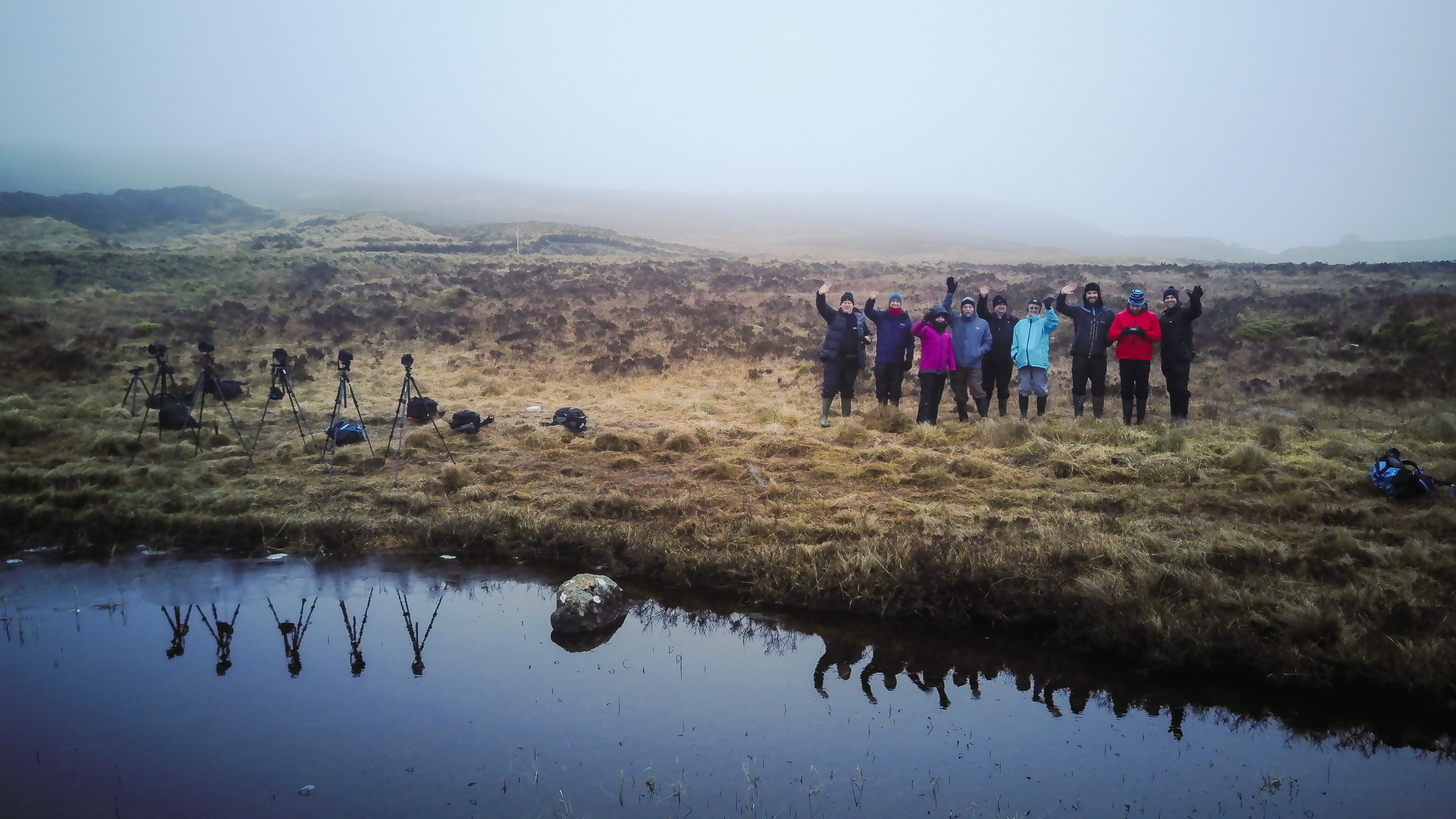
When we arrived at Lochan na Fola the water was beautifully still giving us some wonderful reflections of Stob nan Cabar. Just as we setup though some cloud rolled in blocking the view of the mountain. As we waited I decided to try out my new drone the DJI Mavic Pro. The arrival of the drone caused a bit of excitement amongst the group as I demonstrated some of its capabilities. While I couldn't get find a gap in the cloud to fly a little higher, I did get the chance to grab a quick group shot.
We didn't have to wait to long for the cloud to clear though and all of sudden it was battle stations as we were presented with some truly epic scenes!
Nikon D750, Nikkor 16-35mm f/4 @ 18mm, f/11, 1/20th second, ISO 100, Lee Filters Circular Polariser.
Nikon D750, Nikkor 16-35mm f/4 @ 26mm, f/11, 1/20th second, ISO 100, Lee Filters Circular Polariser.
I can't decide which of the two images above I like the most. Both of them greatly appeal to me with their near perfect reflections and frosty reeds in the chilly lochan. It would have been so easy just to go back to the hotel and have an early breakfast when the cloud came in, but everyone was glad they stuck it out.
Day 2: Lochan na h-Achlaise and Loch Ba
After a very successful morning and a big Scottish breakfast, we headed up to Lochan na h-Achlaise. Shooting around midday is always challenging though and coupled with the bright blue sky I did struggle a little bit to get some images.
However, by exploring along the shore line of Lochan na h-Achlaise I did find this interesting composition.
Nikon D750, Nikkor 24-70 f/2.8 @ 34mm, f/13, 30 seconds, ISO 100, Lee Filters Circular Polariser and Big Stopper.
Exploring just a little further I found this scene just off the road at Loch Ba. This is a more pleasing image thanks to the horseshoe arrangement of the foreground rocks and the reflection of the mountain in the water.
Nikon D750, Nikkor 24-70 f/2.8 @ 40mm, f/13, 2.5 seconds, ISO 100, Lee Filters Circular Polariser and Little Stopper.
I also had just enough time to try and capture a panorama of the area using my DJI Mavic Pro.
DJI Mavic Pro - 7 images stitched and processed in Lightroom.
Day 2: Blackrock Cottage
Blackrock Cottage is probably one of the most photographed locations on Glencoe, but it would have somehow seemed rude not to photograph it. After all, we were passing it on our way to get coffee from the cafe at the ski centre.
I rarely convert to black and white but in this case, the image seemed to work better without colour. The texture on the mountain (Buachaille Etive Mor) really stands out.
Nikon D750, Nikkor 24-70mm f/2.8 @ 62mm, f/11, 1/25th second, ISO 100.
Day 2: Glen Etive
Towards the end of day 2, we headed down the long and windy road of Glen Etive towards the head of Loch Etive. Here the stunning mountains reach right down into the sea loch and it's an ideal location for capturing the last light as it touches the tops of the mountains.
As I waited for the light I was still able to capture some striking images of the north east shore of Loch Etive.
Nikon D750, Nikkor 24-70mm f/2.8 @ 26mm, f/11, 198 seconds, ISO 100, Lee Filters Big Stopper, ND Grad and Circular Polariser.
As I've written on this blog before it's always important to see what is going on behind you. It appeared that the sun was shining on the mountains diretly behind me!
Nikon D750, Nikkor 70-200mm f/2.8 @ 150mm, f/8, 1/5th second, ISO 100, Lee Filters Big ND Grad.
In my hurry to get to the head of the loch to capture last night on the mountains I completely missed another great composition. It wasn't until I was heading back to the car that I found a few of my fellow photographers shooting this interesting scene.
Nikon D750, Nikkor 16-35mm f/4 @ 19mm, f/11, 20 seconds, ISO 100, Lee Filters Circular Polariser and ND Grad.
I had actually walked by this location in my hurry to get to the head of the loch. Perhaps I should have taken just a little more time to explore this area before settling into my chosen location.
Day 2 was certainly a busy one. Would day 3 be just as good?
Day 3: The Study
After the successes of day 2, the weather had a change of heart and went typically Scottish. Lots of low clouds, and lots of rain. Our initial plan was to do a pre-breakfast shoot of Buachaille Etive Mor. We would go down to the river Coupall to shoot the waterfalls with the mountain in the background. Only trouble was you couldn't see the mountain or anything really. Reluctantly we headed back for an early breakfast and discuss our next move.
With the weather forecast predicting a stop to the rain, our tutors suggested we shoot from The Study, a slightly elevated viewpoint with excellent views of the mountains (The Three Sisters). Sure enough, the rain stopped and we were back in business.
I don't often shoot panoramas but this viewpoint seemed like the ideal location to do so. Fortunately, Adam Burton was on hand to give me some excellent tuition on how to setup the tripod correctly and the best way to rotate the camera. Taking my new found knowledge I managed to capture this image of The Three Sisters.
Nikon D750, Nikkor 24-70mm f/2.8 @ 24mm, f/11, 1/100th second, 10 vertical images stiched and processed in Lightroom CC.
I then decided to opt for a much tighter composition giving me one of my favourite images from the workshop.
Nikon D750, Nikkor 70-200mm f/2.8 @ 90mm, f/11, 1/40th second, ISO 100, Lee Filters ND Grad.
Day 3: Stob Dearg and the River Coupall
There is no doubt that this location has been photographed a lot. However, that doesn't make it any less worth shooting. There are always new compositions to be had, different weather conditions to manage and personal style to put into an image.
The key element for this location is a visible Stob Dearg (Buachaille Etive Mor), something that was missing that afternoon. This made my decision a couple of days earlier not to photograph this very scene because "I'll be back in a couple of days", even more heartbreaking.
However, with probably an unjustified amount of optimism, I put on my wellington boots, got into the river and set up my shot. All I needed was for the cloud to clear from the mountain. So I waited, and waited, and waited. It came so very close to being completely clear, but as the sky darkened I knew it wasn't going to happen.
Though you can't see the whole of the mountain in this image, I still like the end result.
Nikon D750, Nikkor 16-35mm f/4 @ 19mm, f/13, 0.8 seconds, ISO 100, Lee Filters Circular Polariser and 0.3 ND Grad.
Though it had been a challenging day with the weather, it was still a successful day out with the camera.
Workshop Summary
At the start of this blog post, I mentioned the three things that I look for on a workshop; personal development as a photographer, social interaction, and local knowledge.
There is no doubt that my artistic eye has developed a little bit more and that I'm now better prepared to shoot panoramas. I also got to spend a couple of days with a great group of people who shared my passion for landscape photography. We all shared some great stories in the bar! And finally, thanks to some excellent planning and local knowledge, the weather and conditions rarely caused a problem with the flexible itinerary.
I've come away with some great images and some even better memories, so it was definitely worth a few days off work and a very long drive!
In Part 2...
In part 2 of my Glencoe Adventure blog post, I will tell you about the images I took during the spare 24 hrs I had before the workshop started, including a video of my very early and snowy ascent of Beinn a'Chrulaiste!

Saying Goodbye to 2016 in Dorset
For my last shoot and blog post of 2016 I head out to Dorset to shoot some new locations with a couple of different cameras.
Wishful Thinking
For my last shoot of 2016 I was hoping it was going to be a special one. However, hope and reality are rarely the same thing. Inspired by the images I had seen in Mark Bauer's new book Photographing Dorset, I thought I might try and capture a misty Colmer's Hill. It's a location which I've visited but never photographed and given that there was a lot of fog about and it was close to home it seemed like an ideal location.
The weather forecast was predicting some fog but also a lot of cloud. My concern was that though I might have the fog or mist, without some decent light from the rising sun the image might be a little flat. Filled with optimism and eagerness I decided it would be worth a punt though!
Colmer's Hill
Arriving at Colmer's Hill around 07:15 I had arrived in plenty of time. Sunrise wasn't for another hour, but there was still just enough light to walk up the hill opposite Colmer's Hill without the need for a head torch.

Plenty of mist but with flat light and invading sheep it's not the image I was hoping for.
At the top I got all my gear setup and tried a few compositions. Though there was plenty of fog around the surrounding hills, it soon became apparent that the low level cloud was going to block the light from the rising sun. So while I was happy with the compositions I was finding the flat light wasn't giving me results I craved and no amount of post processing was going to fix that.
Still feeling slightly optimistic I stayed around a bit longer. I've left a location too early before and regretted it so I didn't want to be too keen to depart. In this case things didn't get any better. In fact a herd of sheep decided they were going to play Pacman on Colmer's Hill putting an end to my hopes of a good image.
However, as I knew the risks of coming to Colmer's Hill based on the previous nights weather forecast, I had a plan B!
Golden Cap
While researching Colmer's Hill in Mark's book I also took note of a nearby location called Golden Cap. I thought this might make a good backup location should things not pan out at Colmer's Hill. It was only a short drive from my previous location so I had little to loose.
For this location though I was going for a change of camera. I switched from my trusty Nikon D750 to my DJI Phantom 3 4K with a view of taking some aerial shots of the coastline. I've shot coastal images with the drone before and I've really enjoyed the experience. You can see my first video on drone photography below.

A brief appearance from the sun provided some nice light on the land.
It was another hill climb up to Golden Cap, but given all the luxuries of Christmas, it was one I welcomed! After catching my breath at the top of the hill I soon got to work with capturing some images of the coastline.
One of the benefits of shooting the coastline with a drone is the ability to point the camera straight down. This often provides a unique and interesting perspective. However, for a brief time the sun did produce some interesting light on the land so I had to change the position of the camera and drone the get the shot.
I had a lot of fun flying the drone along the coastline looking for compositions but this is my favourite of the day:
The coastline around Golden Cap
Goodbye 2016, Hello 2017
So while my morning out in Dorset wasn't the big success I was looking to end 2016 with, it's always good to get out with the camera and practice. One thing is for sure I will be visiting Colmer's Hill again in 2017. Maybe it will be my new Bowerman's Nose!
So how was your 2016? Did you get out for one last shoot? What are your photography plans for 2017? Let me know in the comments below. Happy New Year to you all!

1 Location, 2 Cameras, 3 Photographers and Force 4 Wind
In this blog post I write about a recent trip to The Valley of the Rocks where I nervously flew my drone in strong winds and shared a cliff top perch with two other photographers to photograph Ragged Jack.
Last of the Midweek Shoots
Autumn is open us and though the amazing autumnal colours haven't reached their peak yet in Devon, the nights are closing in rapidly. During the spring and summer months my photography benefits greatly from the long evenings. Photography during the week becomes practical as I can grab my camera and head out straight after work and travel all over Devon and Cornwall and still make sunset.
Over the last few weeks though that window of opportunity has been shrinking and my ability to travel long distances before sunset reduced. So when I was looking at my location map and decided to go to The Valley of the Rocks, I knew this could be one of the last of my longer mid-week trips for a while.
1 Location, 2 Cameras
With my one location locked in for the evening I got to checking out the conditions and planning my shoot locations (see my blog post on Planning). On my last visit to The Valley of the Rocks I took some time to have a walk about to see if I was missing anything. (Check out my blog post on Location Scouting to read why I do this). Well, I was glad I did as I discovered a whole new aspect to The Valley of the Rocks and was inspired with some new ideas!
My plan was to not only take out the big guns (Nikon D750) but to also take out my DJI Phantom 3 4K so that I could get some aerial shots of the dramatic coastline and rock formations. I've recently been discovering the joys of drone photography and I thought this would be an ideal opportunity to do some more work in that area (see blog post on Drone Photography). My plan was to shoot with the drone while the light was good, and then switch to the DSLR for last night. So with my one location locked in and my two camera's packed I set of for the north coast of Devon.
Force 4 Wind


The drive to my location wasn't exactly inspiring as the rain continued to come down and as I reached some of the higher parts of the route the fast moving cloud got lower and lower. However, I had checked the weather forecast and it had promised to clear up around sunset so I was remaining optimistic. By the time I had got there things had much improved so with a sense of excitement I got to my first spot and got the drone out.
It was at this point that I did get a little nervous. If anyone has been to the north Devon coast will testify it can get a little windy. I've had to extend my planning routine recently to take into account flying the drone, particularly along the coast. I now check the coastal weather forecast to see how strong the wind will be. The drone does have a maximum horizontal speed and flying in wind speeds that exceed that could see my drone drift out to sea!
I had done a number of calculations and worked out that I could safely fly it in the predicated conditions of a force 4 wind. However, what is OK on paper may not actually be OK in real life. So while perched on a cliff side with a very long drop I cautiously started up the drone. Hovering at 1.5m I could see the drone working hard to stay in one place. Putting caution to the wind (excuse the pun), I decided to fly it away from the cliff side as I thought it might be a bit less blustery. Though the drone was still working hard, it had settled down a bit and my confidence grew. I still had a worry that it was going to get caught by a gust of wind and go out to see or crash into a cliff, but I was feeling bold (or daft) and managed to capture some dramatic images.


3 Photographers
After about 45 minutes with the drone I had got the images I had come for. Well, most of them anyway. There were a few shots of some rock arches that I wanted but I really wasn't brave enough to get them given the conditions! So with sunset approaching rapidly I headed off to a spot that I had noticed earlier with the plan of shooting Ragged Jack with my DSLR. As it was a Tuesday evening in late September I thought I might have the place to myself but as I turned the corner I found another photographer setting up on the cliff side.
The spot we had both picked to shot was relatively small but Steve (the other photographer), kindly let me share it and we got chatting. It was the normal stuff, gear, technique, processing, but all very enjoyable! Just as we got shooting another photographer turned up. So two became three and we all waited for that magical sunset moment….which to be honest never actually happened. I took a handful of frames trying different combinations of filters but sometimes the conditions just aren't quite right. The third photographer soon walked on and I continued to enjoy my chat with Steve. We both continued to take a few frames but soon we were packing up also.
Time Well Spent
Though my final image taken with my DSLR isn't one for the portfolio I still count my trip to The Valley of the Rocks as a success. Firstly I managed to capture some nice images of the location with the drone. I really like the extra dimension that the drone has brought to my photography. I try and take the same approach to composition with the drone as I do with the DSLR, but this doesn't always work so I'm still learning how to compose when shooting at 200 ft!
It's also good to just get out and practice the art of photography (see my blog post on Practicing). Sure the conditions didn't turn out to be perfect but just getting out with the camera is always a pleasure.
It is the unexpected that can also make these trips worthwhile. It was great to meet and chat to a fellow photographer. Landscape photography can be a solitary pastime, and while I greatly value the solitude, it's also great to meet people, especially other photographers.
So overall it was time well spent. Any time with the camera is time well spent! I might still squeeze in a couple of mid-week evening shoots but I'm already starting to plan out my dawn shoot locations for the next few months. During autumn and winter my opportunities for photography are limited to weekends and sunrise shoots minimise any impact to my family commitments. But do you know what, I kind of like those cold mornings perched on top of a tor on Dartmoor, freezing cold, drinking coffee, waiting for the sun to rise and bath the world in light.

Starting Out With Drone Photography
In this video blog post I decide to leave my Nikon D750 behind and spend the evening shooting photographs with my DJI Phantom 3 4K. You'll see me head out to the south Devon coast to Peak Hill near Sidmouth on the South West Coast Path where I will experiment with using a drone for landscape photography. The results are rather interesting!
A Evening with DJI
Since buying a DJI Phantom 3 4K a couple of months ago I've been really interested in the photography capabilities and opportunities this amazing bit of kit delivers. In my first video / vlog I leave my DSLR at home and head out to spend the evening shooting with the drone.
Check it out below.
The Results
If you watched the video you would have seen the final images, but just in case you missed them or you want to see them a little larger (by clicking on them), here they are again.


Let Me Know
Did you enjoy this video? Do you have a drone? Has it expanded your photography horizons? Let me know in the comments below.