

Bite-Size Blog Post #12 - Dartmoor Mini Adventures
In this bite-size blog post, I share with you some of the photographs I have captured on my recent ramblings around Dartmoor.
Exploring Dartmoor Locations New and Old
When autumn arrives and the number of daylight hours shrinks, I’m forced to focus my photography on local locations like Dartmoor. Well, I say “forced” but let’s face it, photographing Dartmoor isn’t exactly a hardship!
Now that autumn is over I thought it would be a good opportunity to look back on the Dartmoor locations I have photographed recently. I tried to balance my time between locations I know well and those that I know less well.
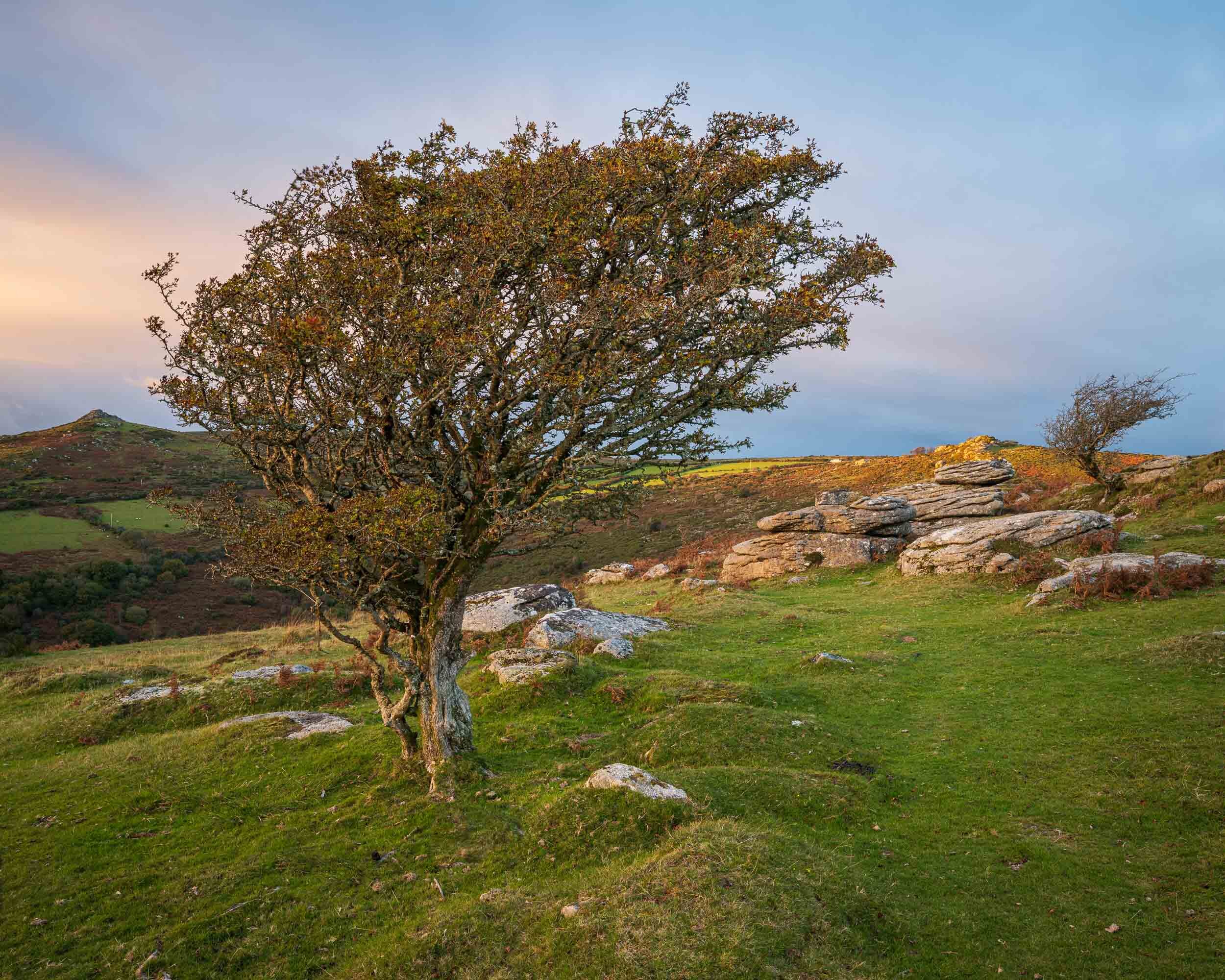
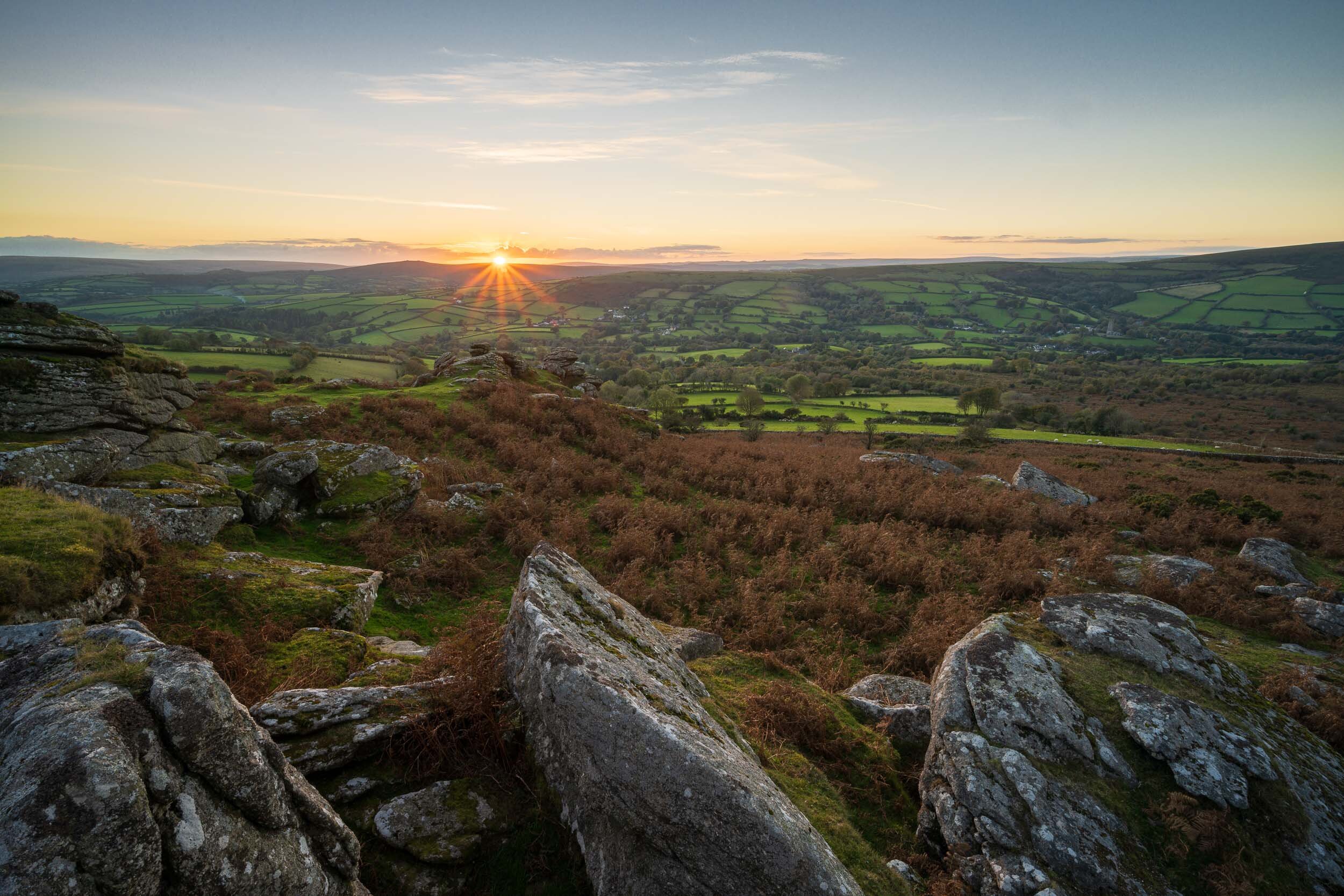
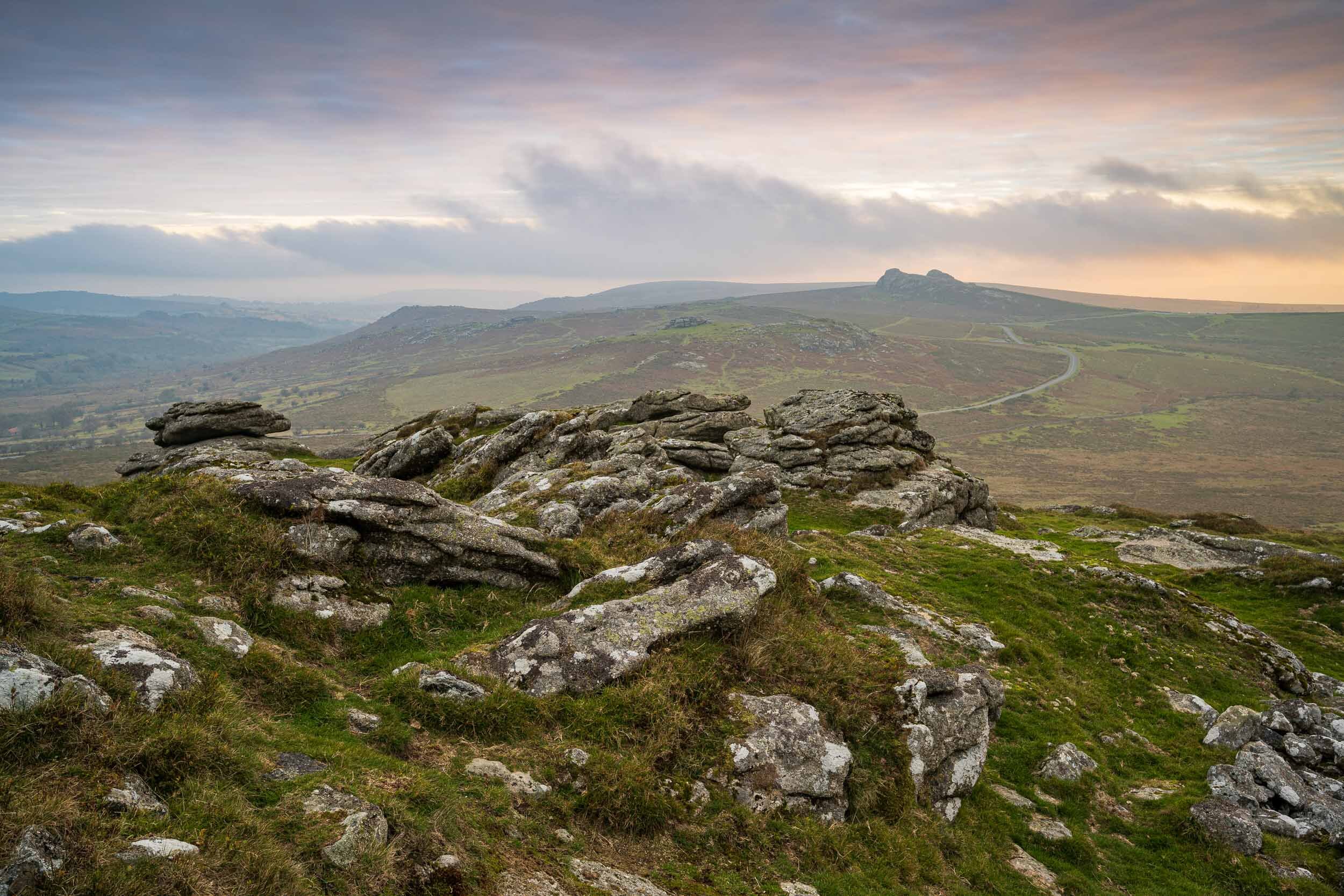
Of the locations I know, I’ve featured photographs from Rippon Tor and Holne Bridge. I haven’t captured anything spectacular or new from these locations, but they are firm favourites for me so I can’t resist the temptation to photograph them. Especially Holne Bridge. It’s such a nice location during autumn!
There are also some photographs from locations that I haven’t previously explored. Tunhill Rocks look like it could be a location worth exploring again. I think in the right conditions and light it could yield several good compositions. Bench Tor and Honeybag Tor are like Tunhill Rocks in that they will be worth visiting again.
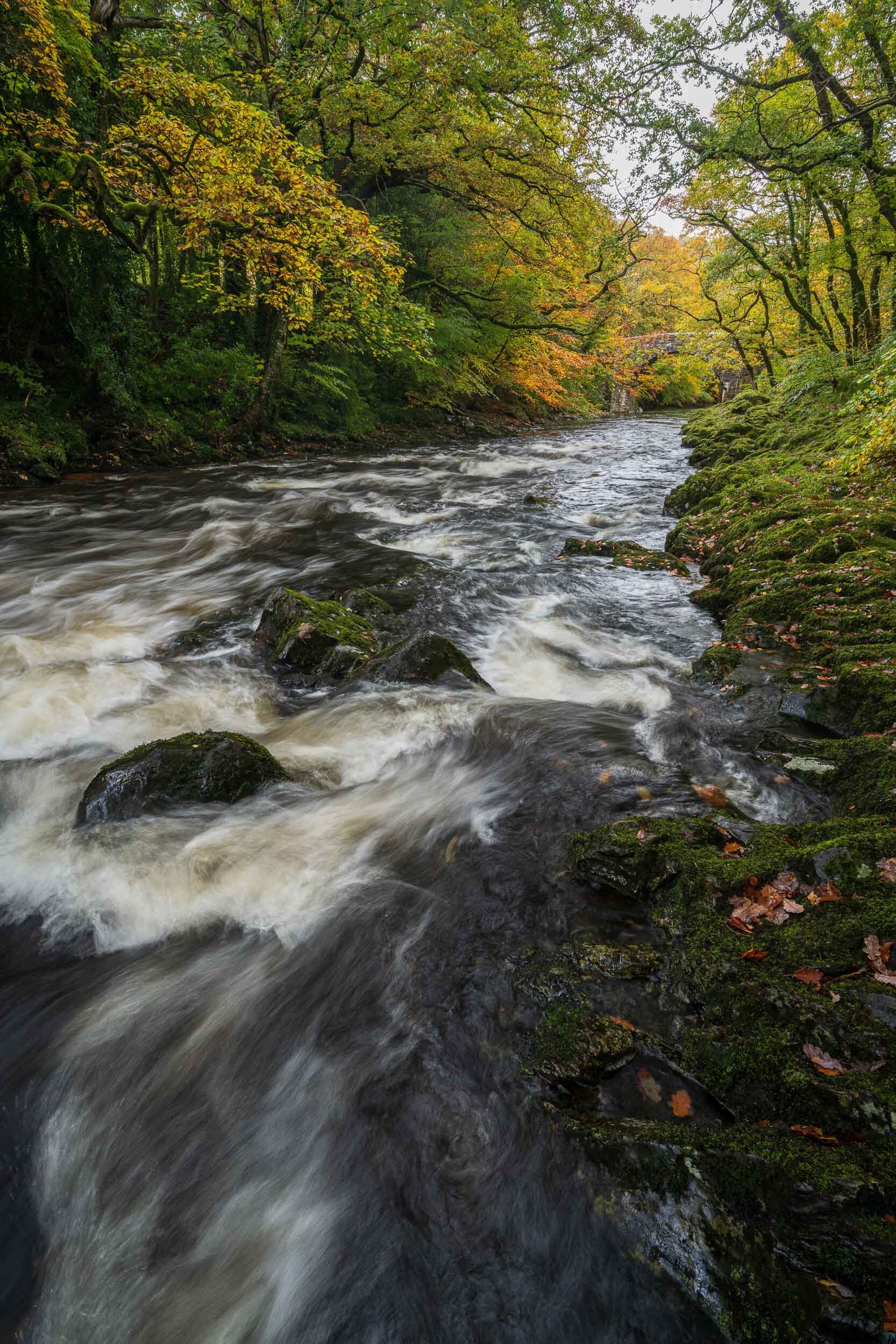
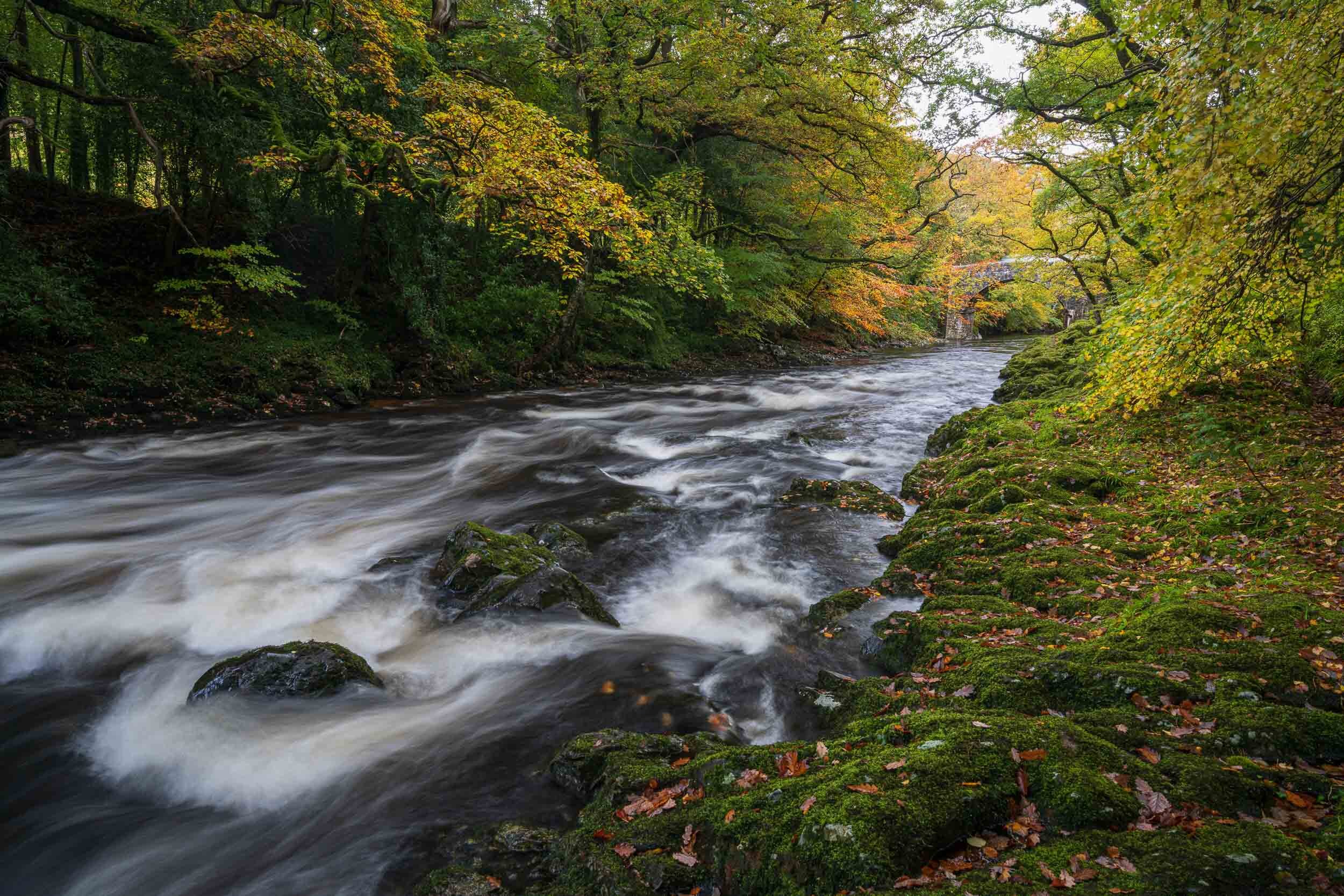
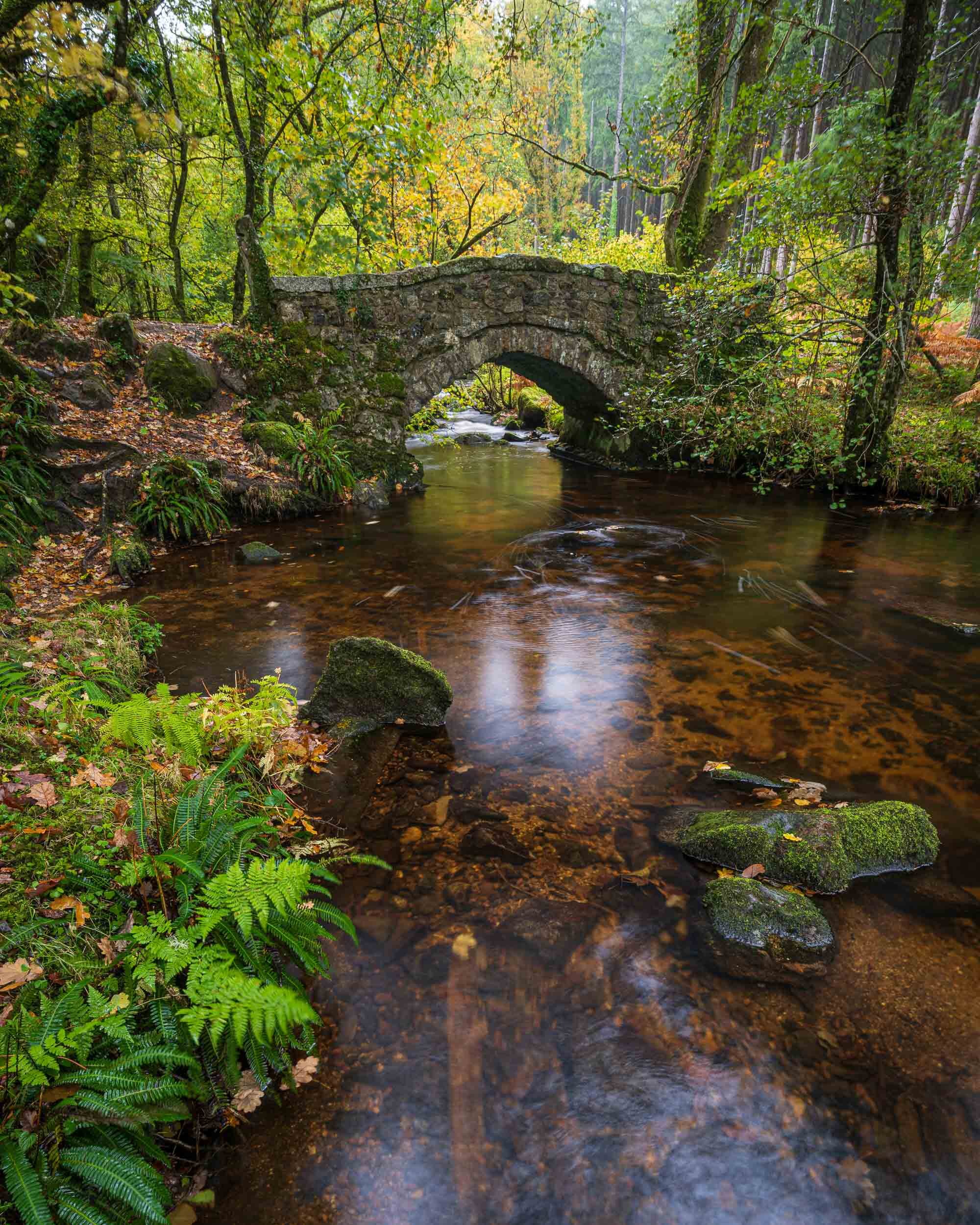
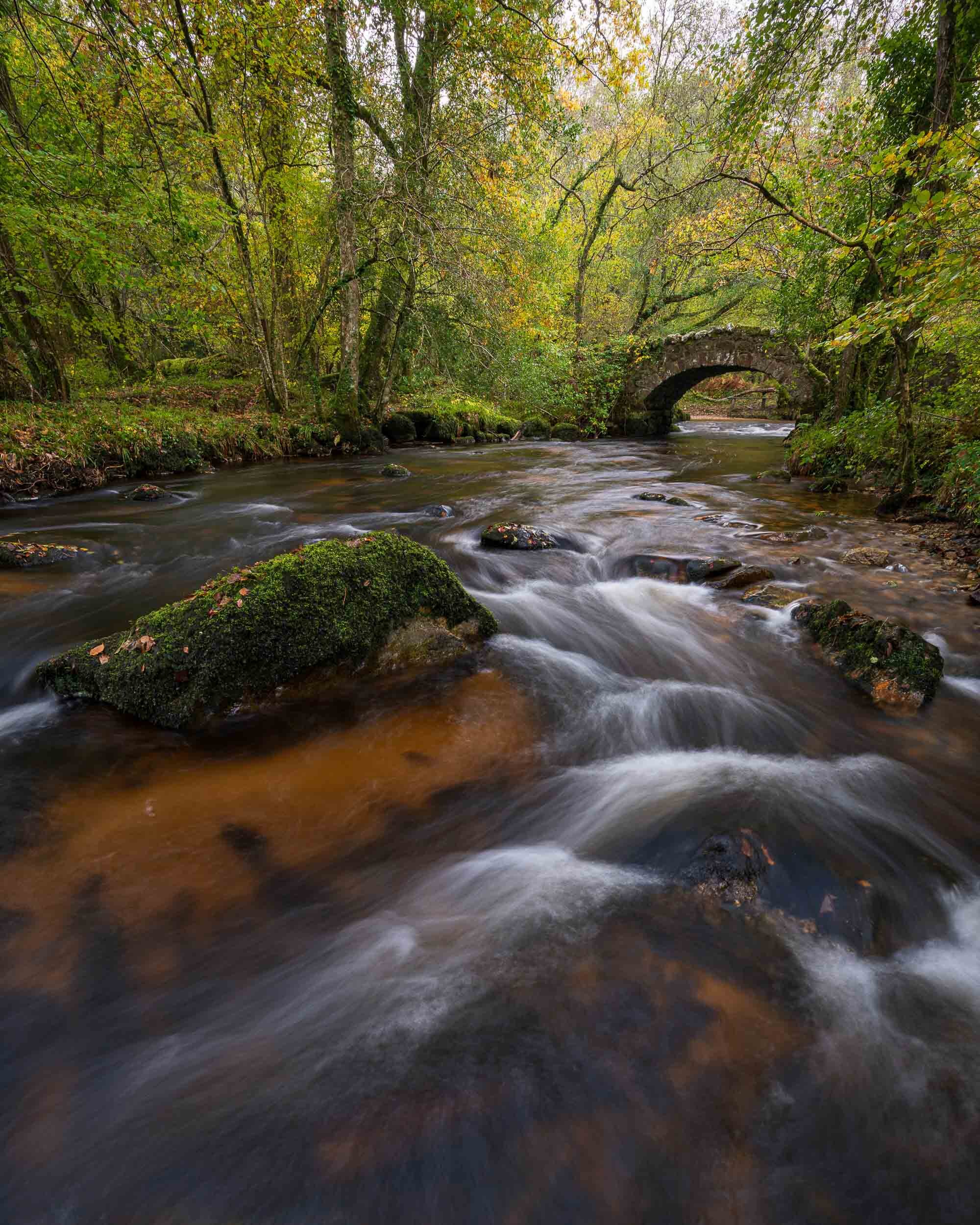
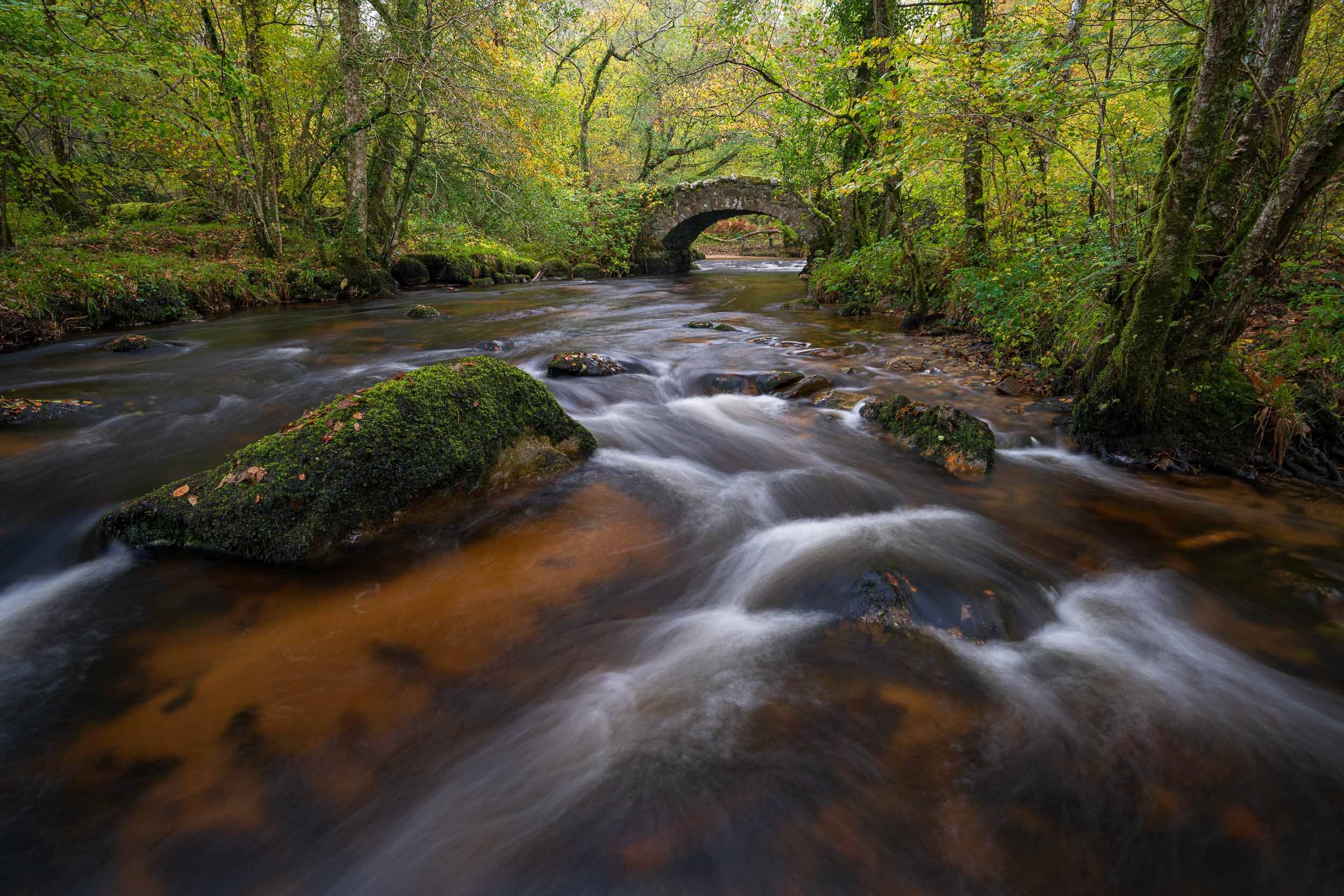
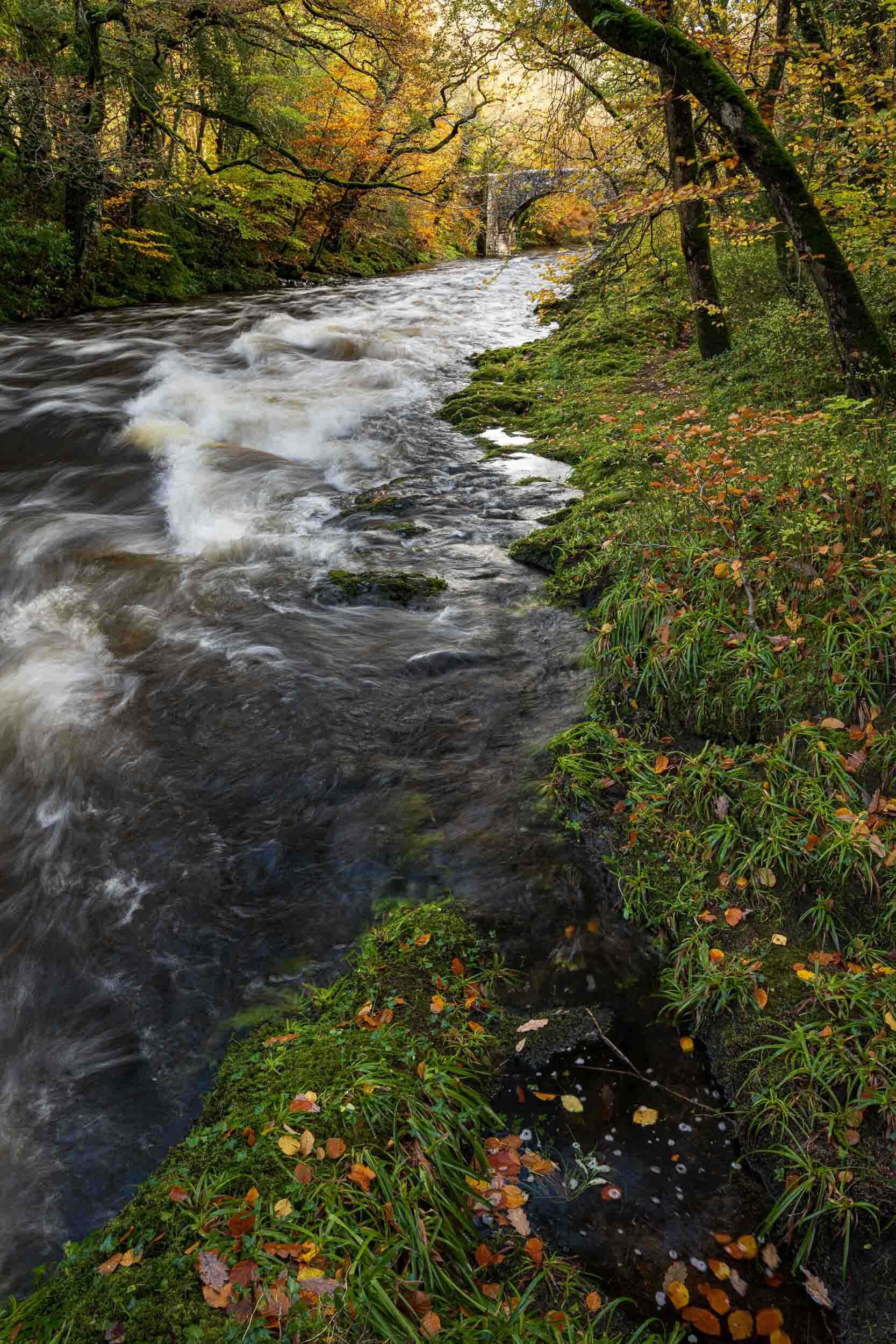
Perhaps one of the most exciting locations I have visited recently is a new one for me and that is the area around Trendlebere Down. My first visit to the area was to walk the dog and it wasn’t my intention to check it out for photography. That visit coincided with the autumnal colours coming through and as I wandered about it soon became apparent that could be an excellent location for a spot of photography. The photographs below feature the stone bridges I found but the view higher up looking down on the woodland has plenty to offer as well.
Through my mini adventures around Dartmoor I’ve visited both old and new locations, but it’s the area around Trendlebere Down that I’m most looking forward to photographing next autumn.
East Dartmoor - A 5 Minute Photo Adventure
In this 5 Minute Photo Adventure I head out to east Dartmoor to capture some autumnal landscape photographs.
Discovering Dartmoor
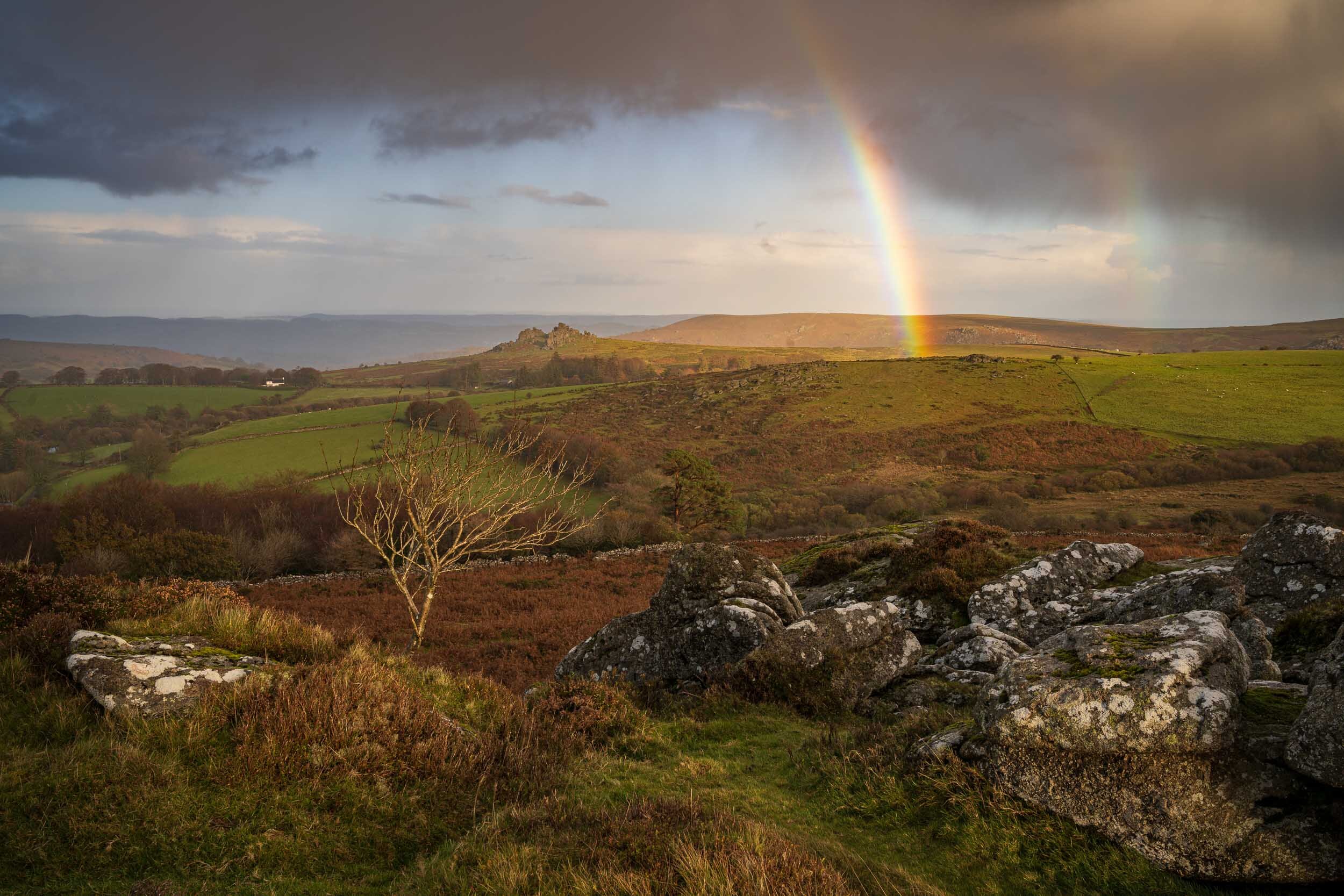
I’ve been photographing Dartmoor for many years and yet I’ve barely scratched the surface when it comes to exploring this amazing national park. There are some areas that I have yet to visit and some that I have explored and photographed numerous times. One of the locations that falls into the latter category is Haytor. There are many locations around the Haytor area worth photographing including Emsworthy Tor where I undertook a project to photograph it every month for a year (click here to see how I got on).
Just a short distance from Haytor is an area known as Trendlebere Down. I discovered this area of east Dartmoor while looking for some new locations to walk my dog. On my first visit, I was instantly captivated by this beautiful location and it was made even more stunning by the vibrant autumn colours. How did I not know about this place before? I knew I would have to return with the camera.
Over the autumn period, I visited this location numerous times and I was also inspired to create one of my 5 Minute Photo Adventure videos. While filming the overcast and windy conditions made the photography challenging but I still wanted to share a small portion of what this location has to offer.
I hope you enjoy this 5 Minute Photo Adventure video and it will inspire you to look more closely at an area you know well. You never know what you might discover.
Autumn on Dartmoor Photographs
Here are the photographs you saw in the video. Enjoy!
Bridge Over the Bovey #1, Dartmoor, Devon - Nikon Z7, Nikkor 14-30mm f/4 at 17mm, f/8, 2.5 seconds at ISO 64.
Bridge Over the Bovey #, Dartmoor, Devon - Nikon Z7, Nikkor 14-30mm f/4 at 17mm, f/8, 0.5 seconds at ISO 400.
Autumn on Trendlebere #2, Dartmoor, Devon - Nikon Z7, Nikkor 14-30mm f/4 at 20mm, f/6.3, 1/4 seconds at ISO 800.
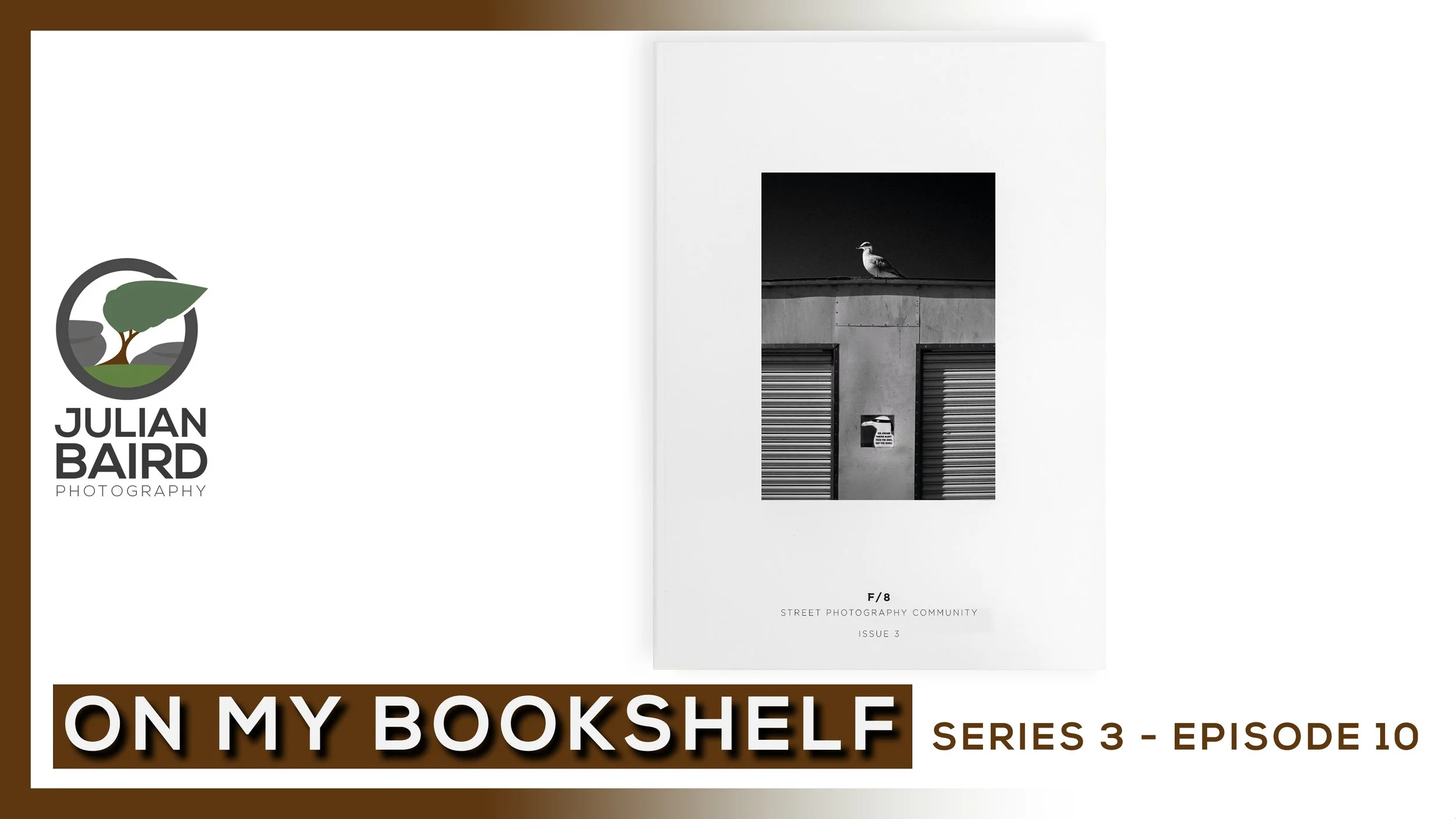
F/8 Street Photography Magazine by Gareth Danks - On My Bookshelf S03E10
My bookshelf has always had more than just landscape photography books on it but this is the first time I'm looking at something from the street photography genre.
Not Just Landscapes
Over the years I’ve bought lots of books on photography. They are a great source of inspiration and education. If you were to look at my bookshelf you would of course see a lot of books on landscape photography, but you would also see books from different genres of photography. Though landscape photography is my passion, I’m a firm believer that I can still develop my own photography by looking at photographs from all genres.
Saying that though there is one genre of photography that has been missing from my bookshelf and that’s street photography. There’s no particular reason for that but when I heard Gareth Danks was self-publishing a new magazine on street photography, I knew I should take a look and dip my toe into street photography publications.
Street Photography
In this episode of On My Bookshelf, I’m looking at issues one and two of F/8 Street Photography magazine. A magazine isn’t something I’d normally consider making an episode of On My Bookshelf for but what makes this magazine interesting is that it features a lot of community content. Plus, unlike many of the magazines that you might see in a newsagent the print quality is a noticeable step above the rest. Let’s take a look.
I hope you enjoyed this episode of On My Bookshelf. Regardless of your level of interest in street photography, F/8 Street Photography magazine is well worth checking out.
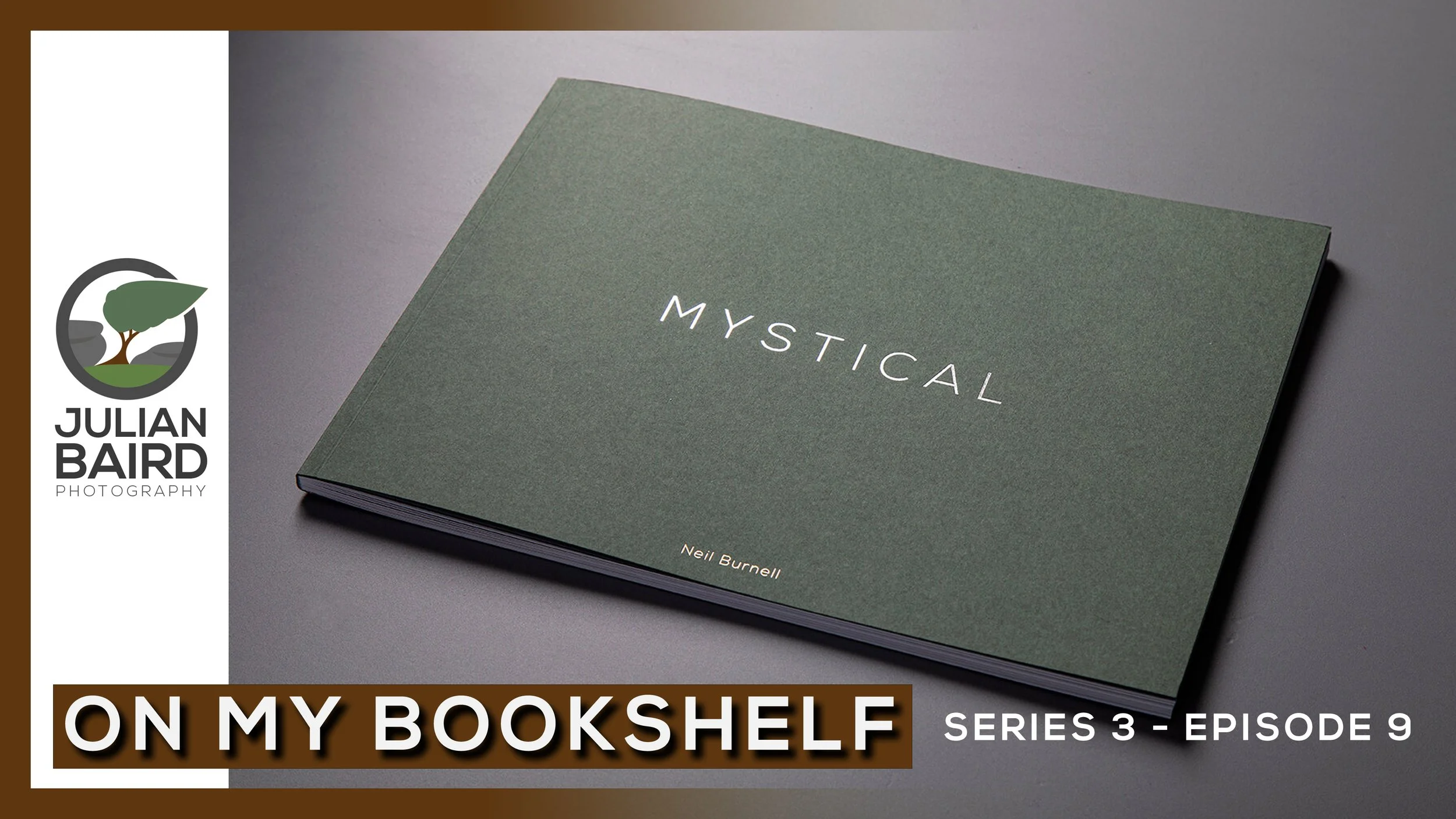
Mystical by Neil Burnell - On My Bookshelf S03E09
In this the 20th episode of On My Bookshelf I look at Mystical by Neil Burnell.
A Mystical Journey
It’s always nice to see a local photographer do well, particularly one you know. In Neil Burnell’s case, he’s been doing very well. He’s already had one book published and his list of awards continues to grow, including a category win in LPOTY this year. The recognition of his work is completely justified though. Just look at his website and you’ll understand why. His work stands out in a crowded Instagram feed as I’ve often found myself scrolling through the feed only to be stopped in my tracks by an image that I already know is Neil’s, such is the strength of his style.
I first found out about the Mystical collection of photographs when Neil gave me a sneaky look at the video below.
I was impressed by not only the quality of the images but also the style and consistency. I’ve tried (and failed) to create a series or collection of images before and it’s REALLY hard. To create such an extensive body of quality work takes lots of dedication and time.
Neil had already started selling prints from the Mystical collection, so it was only a matter of time before he was going to produce a book. As soon as he said he was doing so I knew I wanted a copy! So just like everyone else I ordered and paid for my copy. (I think it’s important to support your fellow photographers whenever you can, even if you know them).
I’m pleased to say that I now have my copy of the book and I’m also one of the lucky ones who managed to get hold a first edition (which is now sold out). Don’t worry though, you can order the 2nd edition here, but I suggest you order one soon as these will sell out quickly. If you need a little more convincing, then why not check out the episode of On My Bookshelf below.
Celebrating 20 Episodes of On My Bookshelf
Finally, I just want to highlight that this episode of On My Bookshelf is the 20th episode! When I filmed the very first episode of On My Bookshelf, I never thought that I’d get to twenty episodes. While the episodes are a bit of niche market in the content that I produce I still love making them. There are few things better than sitting down to read a good photography book on a cold and wet Sunday afternoon. Judging by the comments these videos get I appear to not be the only one.
Thanks to everyone who has watched an episode and left a comment. Just for fun, here is the first episode I made.

A Day in the Life of Chris Sale, Professional Landscape Photographer - Documentary and Interview
Many photographers dream of turning professional, but what is it REALLY like to be a modern-day professional landscape photographer? Is it a dream job or a NIGHTMARE? To find out, I spent the day with Chris Sale and filmed a typical day in his life.
What’s It Really Like to Be a Pro Photographer?
Chris Sale and I used to lead similar lives. We both had senior jobs in corporate IT and our spare time was dominated by our passion for photography. In fact, it was that love for landscape photography and for producing YouTube videos that we became good friends. Over the years since we’ve been friends, we’ve met up for numerous shoots and even produced a few videos together.
Twelve months ago, Chris made to decision to leave his job in IT to become a full time, professional landscape photographer. Without a doubt, this was a major decision by Chris and a risky one at that. However, as risky as it was, Chris didn’t just wake up one morning and decide to turn pro (as you’ll find out in the film). I thought it was an incredibly exciting decision and I was keen to try and support Chris where I could.
Chris’ transition to professional photographer follows a path that might be quite different from a lot of other photographers, particularly those who have a more established presence in the industry. It’s those key differences in both Chris’ journey and the way he runs his business that gave me the idea of producing this documentary.
As I try to be as supportive of Chris, so he is supportive of me. When I proposed the idea of creating this documentary, he was more than willing to support me and most importantly offer me his trust. The trust element was particularly important as he was going to let me film him for a day, and then edit that down to a short film.
We were hoping to make the film earlier this year, but a certain pandemic put an end to that plan. We still thought it was a great idea, so as soon as it was safe to travel and meet up again, we put a new date in our plan.
I am now absolutely delighted to share the film we have made. I hope that by viewing it you not only get a good idea of what it is like to be a professional landscape photographer, but you also learn about Chris’ interesting journey. Most of all I hope you enjoy it!
Do you have an interesting or compelling photography story that could make for a good film? Let me know in the comments below.

Bite-Size Blog Post #11 - No More Sandymouth
For the last time this year (probably), I head to Sandymouth to see if I can finally kick start a project I’m working on.
What Is It About Sandymouth Anyway?
It’s not unusual for me to write about a location I’ve visited before but what makes this post about Sandymouth different is that it is the 3rd one in a relatively brief period of time. While I was happy with the images I shared in blog posts Bite-Size Blog Post #3 - Sandymouth and Bite-Size Blog Post #10 - More Sandymouth I still had the need to return.
My return to Sandymouth for a 3rd time was nothing to do with a lack of inspiration or imagination but the desire to start a new photography project. I’ve had the idea for the project for a long time now but have failed to find a location that will give me what I’m looking for. Though I had visited Sandymouth a couple of years before it was the 1st of my recent visits that potentially gave me what I was looking for.
Charged and inspired I returned for a 2nd visit only to find I had completely misjudged the tides. I still managed to capture images I was happy with but not what I needed. I, therefore, planned for a 3rd and final visit. I say final because sunset times were getting earlier and soon I wouldn’t have time to make the 90-minute drive to Sandymouth before I lost the light.
I was full of optimism for my 3rd visit but I already knew it was going to be very tight with the tide height for the shots I wanted. Unfortunately for me, I had pushed my luck too far and the tide was still a little too high to allow me to capture the shots I needed before it was dark.
I’m not saying the trip was a right off. Far from it! I got some images I was pretty happy with. They just weren’t what I needed for my project. You might be wondering what the project is? Well, I’ll tell you all about it very soon….hopefully.
Into the Blue #1. Sandymouth Beach, Cornwall - Nikon Z7, Nikkor 14-30mm f/4 at 15mm, f/13, 1 second at ISO 64, Kase Filters circular polariser and ND grad.
Into the Blue #2. Sandymouth Beach, Cornwall - Nikon Z7, Nikkor 14-30mm f/4 at 18mm, f/13, 6 seconds at ISO 64, Kase Filters circular polariser and ND grad.
Into the Blue #3. Sandymouth Beach, Cornwall - Nikon Z7, Nikkor 14-30mm f/4 at 17mm, f/13, 13 seconds at ISO 64, Kase Filters circular polariser and ND grad.
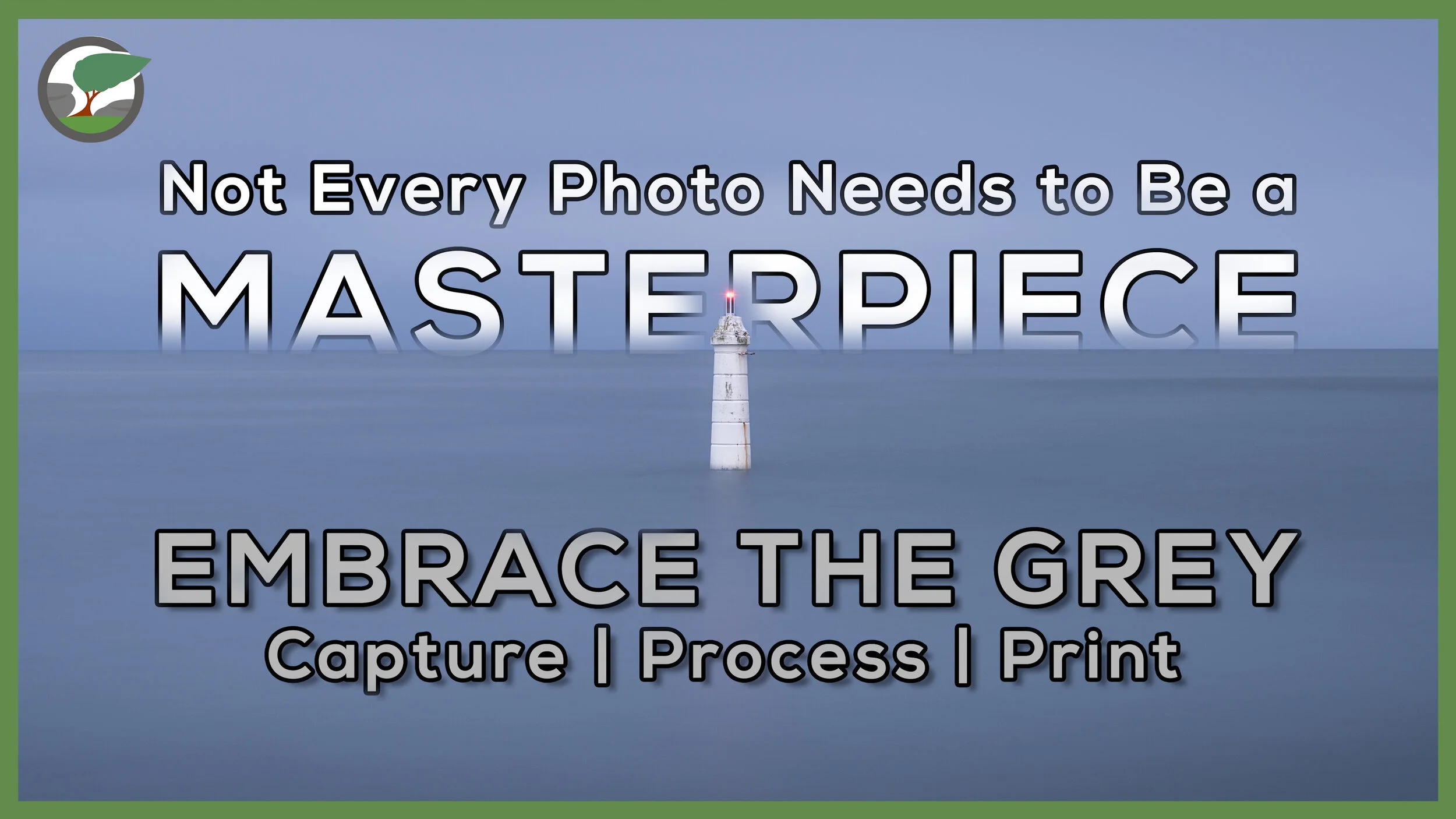
Not Every Photograph Needs to be a Masterpiece
As a landscape photographer I'd like every shoot to result in a portfolio class image, but this is an unrealistic expectation. Sometimes you just need to take joy in the experience of capturing an image and learning from it.
Embrace the Grey Once Again!
I’ve made several videos on the theme on embracing the grey and because I live in an area where overcast days aren’t exactly unheard of it might not surprise you that I’ve decided to do another one. For me, the key to a successful shoot in grey and overcast conditions is to find the right subject (as I discussed in this video).
There’s been a location near to home that I’ve been wanting to photograph for a while and that’s the Philip Lucette Light near Teignmouth. I found out about this interesting location from an image I saw from Neil Burnell and a video from Lynne Luxon-Jones. It looked like an interesting subject to photograph and I thought it would make for a great #EmbracetheGrey subject.
In the video below you can follow me along as I photograph this location for the very first time. I also show you how I edit the image to give me a specific look and feel, and I of course make a print of the image. I also discuss in the video the importance of just going out to take pictures, and not to worry about every shot being a masterpiece. After all, we should love the art of taking a picture first and foremost.
Enjoy!
Philip Lucette Light #2, Shaldon, Devon - Nikon Z7, Nikkor 24-200mm f/4-6.3 at 48mm, f/8, 214 seconds at ISO 64, Kase Filters CPL and 10 Stop ND

The Nick Livesey Experience
How can you possibly make the experience of walking the mountains of Snowdonia National Park any better? Easy! You engage in the professional services of Mr Nick Livesey.
Discovery
I’ve discovered the work of other photographers in all sorts of ways from books, videos, personal recommendations and even by meeting them in person. However, after a few months, I rarely remember how I discovered them. This of course rarely matters and all that matters is that you do now know about them.
There is one photographer that is different. I still clearly remember watching My Mountain Healing by Nick Livesey and saying to myself this is a guy I need to meet. Rarely has a story of one man’s journey captivated and entertained me so much. With his passion for both the mountains and photography clearly apparent in the video I felt an instant connection with the man who had followed a dream and moved to the mountains.
A Book and an Opportunity
One of the many advantages of having a YouTube channel is that it can open doors for you. Soon after discovering Nick’s work he announced that he was publishing a book called Photographing The Snowdonia Mountains. My first thought was that I wanted to talk about the book in an episode of On My Bookshelf on my YouTube channel. However, I didn’t want to just sit in my office and record something like I normally do. I thought this would be the perfect opportunity to go out on location in Snowdonia and talk about the book there. I then thought to myself how good it would be to do that with the author himself.
So, I boldly sent Nick an email and to my delight, he replied saying he thought it was a great idea! After a little bit of planning and working of schedules, we got a date in the diary and I drove off to Wales to spend the day with My Livesey. It truly was a fantastic day.
Full Time Mountain Guide and Photographer
My time with Nick had left me eager for more adventure in Snowdonia, but as is often the way, life has a habit of getting in the way of the fun stuff. Fast forward to summer 2020 and Nick announces that he is going full time as a photographer and as a mountain guide. This announcement renews my desire to get back to Snowdonia and to engage Nick’s professional services as a guide.
With most of the world still suffering from the effects of the global pandemic organising such a trip wasn’t without its challenges though. We were both determined to make it work and we booked in a provisional date for a day in the mountains in October.
As October approached and I got more excited about my mini photography and walking holiday, parts of the UK started going into local lockdown and Wales looked like it might close.
One of the reasons I hire an expert like Nick is for the breadth of their local knowledge. When the Welsh government announced the Conwy (the part of Snowdonia where Nick lives) was in local lockdown I was sure that Nick would have a plan B. Worried that I wouldn’t be able to visit Snowdonia I dropped Nick a message and he quickly reassured me that he had plenty of routes he could guide me on in Gwynedd (which wasn’t in local lockdown but still part of Snowdonia).
That was all I needed to hear, and I jumped in the car and made my way up into north Wales, passing through Conwy (not stopping) and finally on to the beautiful village of Beddgelert in Gwynedd. I couldn’t wait to start my Snowdonia adventure the next day.
Snowdonia and The Nick Livesey Experience
The following day I met up with Nick and we drove (in separate cars) to Rhyd Ddu where we would start our ascent of Yr Wyddfa (Snowdon). Walking with Nick was like taking a stroll with an old mate. We’d barely got out of the car and we were chatting away like two mates who hadn’t seen each other in while. The time quickly passed as we ascended the Rhyd Ddy path and onto the Llechog ridge.
We were having so a good craic that we almost forget to get our cameras out to photograph the view. While I am certainly the first to bang on about the magical light of golden hour, I couldn’t help but be captivated by the rugged ridgeline that lay behind us. Despite the grey skies, I thought it was a fantastic view.
Llechog Ridge, Snowdon, Wales - Nikon Z7, Nikkor 14-30 f/4 at 17mm, f/11, 1/8th sec at ISO 64.
Our ascent carried on up the Llechog ridge and on towards the summit. As you might expect on any ascent to the summit of Snowdon there were a fair few walkers about. There was even some talk of queues forming to “touch” the summit. I’ve ascended Ben Lomond a number of times, and despite it being a very popular Munro I’ve never had to queue to get the top.
As I took in the view, Nick had started a conversation with a walker on his way down from the summit. At first, I thought they were just talking about the names of various mountain peaks, but it soon occurred to me that they were talking away in Welsh! I’ve always been impressed by how much Nick has not only embraced the area but also how he appreciates the local language and how important it is to the local community. For Nick, the language and culture of Wales are as important as the hills and mountains he enjoys.
Allt Maenderyn Ridge #1, Snowdon, Wales - Nikon Z7, Nikkor 14-30 f/4 at 16mm, f/11, 1/4th sec at ISO 64.
Though the final ascent involved a walk along a narrow ridge it was nothing to get worried about and we were soon on the summit. A few people were hanging around the summit visitors centre but there wasn’t a queue to get to the cairn at the top. I could have walked those last few meters of ascent to touch the cairn but to be honest, the walk for me wasn’t about getting to the very top to get a cheesy Instagram shot. I was quite happy to have a break, a sandwich and chat away to Nick. At this point, I would normally share a photograph of the magnificent view from the top, but given we were in complete cloud it would have been a very boring shot!
View from Allt Maenderyn Ridge, Snowdon, Wales - Nikon Z7, Nikkor 24-200mm f/4-6.3 at 34mm, f/8, 1/15th sec at ISO 64.
One of the benefits of having a knowledgeable and experienced guide with you is that you can change your plans at short notice or take a less well-trodden route. For our decent Nick suggested we descend via the Allt Maenderyn ridge instead of retracing our steps. We were soon below the cloud line again and as I took in the view, I had a moment that can only be described as complete relaxation. It wasn’t a big vista view, and it wasn’t a view that had me reaching for my camera but there is more to walking in the mountains that just have a great place to take photographs. It’s hard to describe how wonderful it is to stand on a high ridgeline looking far down into the valley below, but it is an experience I recommend to everyone.
Allt Maenderyn Ridge #2, Snowdon, Wales - Nikon Z7, Nikkor 24-200mm f/4-6.3 at 28mm, f/11, 1/6th sec at ISO 64.
We descended a little further down Allt Maenderyn ridge until we came to a small plateau which offered a little shelter from the westerly winds. As we enjoyed our break and a few refreshments, Nick spotted that the cloud cover was changing rapidly, and spots of light were racing across the ground. We needed no further encouragement and got our cameras out.
The light would come and then go again. As is the way in the mountains, the conditions were changing rapidly. One minute were were chatting away and the next we were shouting “look, over there” and running with our cameras to get a shot.
Nick had originally planned to descend further and then ascend Yr Aran but Nick suggested that staying where we were would likely yield the best results if we wanted to carry on shooting. Well, I wasn’t about to start disagreeing with a man of Nick’s experience!
Mynydd Mawr from Allt Maenderyn Ridge, Snowdon, Wales - Nikon Z7, Nikkor 24-200mm f/4-6.3 at 24mm, f/8, 1/4th sec at ISO 64.
Of course, he was completely right. Yr Aran remained in the cloud for the rest of the day and we enjoyed watching the ever-changing conditions of the mountains around us. Despite the cold, I was having a fantastic time, but so was Nick. As I had witnessed on my first meet up you can just tell by looking a Nick that he is completely at one with his surroundings. He is a man that absolutely loves what he does and by being in his company you can’t help but feel a just a little bit of what he feels.
As the sun dipped behind a distant mountain, we decided to start heading back to the car park. Soon our head torches were on and it got dark. It’s times like this that I was glad to have engaged the services of a mountain guide. If I’d been on my own, I would have had to have left that spot a lot earlier to get back to the car safely. With Nick there, all I had to do was follow the head torch in front and I would be back at the car!
Returning to the car, I reflected on what a cracking day I had. The day was always about more than just photography. It was about the walking, the experience of being in Snowdonia and of course the company of local legend Nick Livesey. It was a day not to be forgotten.
If you ever find yourself in Snowdonia National Park and are looking for a local, knowledgeable mountain guide who has a real passion for the area or for someone who will help you make the most of your photography (or a bit of both like me), then you won’t do any better than the services of Nick Livesey.
Personally, I can’t wait to go back and catch up with me old mate Nick.

Bite-Size Blog Post #10 - More Sandymouth
Eager to return to Sandymouth to start a photography project I get another difficult lesson on understanding tides.
A Tide Table Is Not Enough
Back in August, I wrote about my experience of not appreciating how high a high tide was at Sandymouth Beach. With most of the beach cut off because of the high tide, I was lucky to get the photographs I did. When I recently decided to return to Sandymouth beach to start a photography project I was keen not to repeat my previous mistakes.
While I captured images of the rocks on that last visit, I was eager to get images of the sandy part of the beach this time. I have shot this part of the beach before and the images I captured of the sand patterns and pools had inspired me to return.
I already knew that to get photographs of the sand it would need to be a low tide. What I hadn’t appreciated was how low it needed to be. If I’d done a simple check of the historical tide data from my last shoot of the sand, I would have noticed how low the tide needed to be.
When I arrived at Sandymouth I was surprised to see that the sandy part of the beach was already covered in water! The low tide I had looked up wasn’t that low for Sandymouth. As the tide was coming in the situation wasn’t going to change in my favour either. I was going to have to switch tactics. I decided that I would instead shoot the rocks that I’d shot previously. However, the tide was a bit far out for that!
So, it was back to square one for me and I had to do a little bit of exploring to see what else I could find. You can see the photographs I did manage to capture below. More important than the photographs was the lesson I learnt.
Tide tables only tell half the story. The tide at beaches like Sandymouth has a huge reach. When they are out, they are miles out and when they are in it can be up to the cliffs. From all my experiences of shooting at Sandymouth I have learnt that I need specific tide heights for specific subjects. Knowing if the tide is going in or out isn’t enough.
Next time I visit, I will pick a time where the tide is going to support my creative vision!
Sandymouth Rock Channels #1, Cornwall - Nikon Z7, Nikkor 14-30mm f/4 at 17mm, f/11, 0.5 seconds at ISO 64, Kase K9 CPL and ND Grad.
Sandymouth Rock Channels #2, Cornwall - Nikon Z7, Nikkor 14-30mm f/4 at 14mm, f/11, 3.0 seconds at ISO 64, Kase K9 CPL and ND Grad.
Sandymouth Rock Channels #3, Cornwall - Nikon Z7, Nikkor 14-30mm f/4 at 17mm, f/9, 1 seconds at ISO 200, Kase K9 CPL and ND Grad.
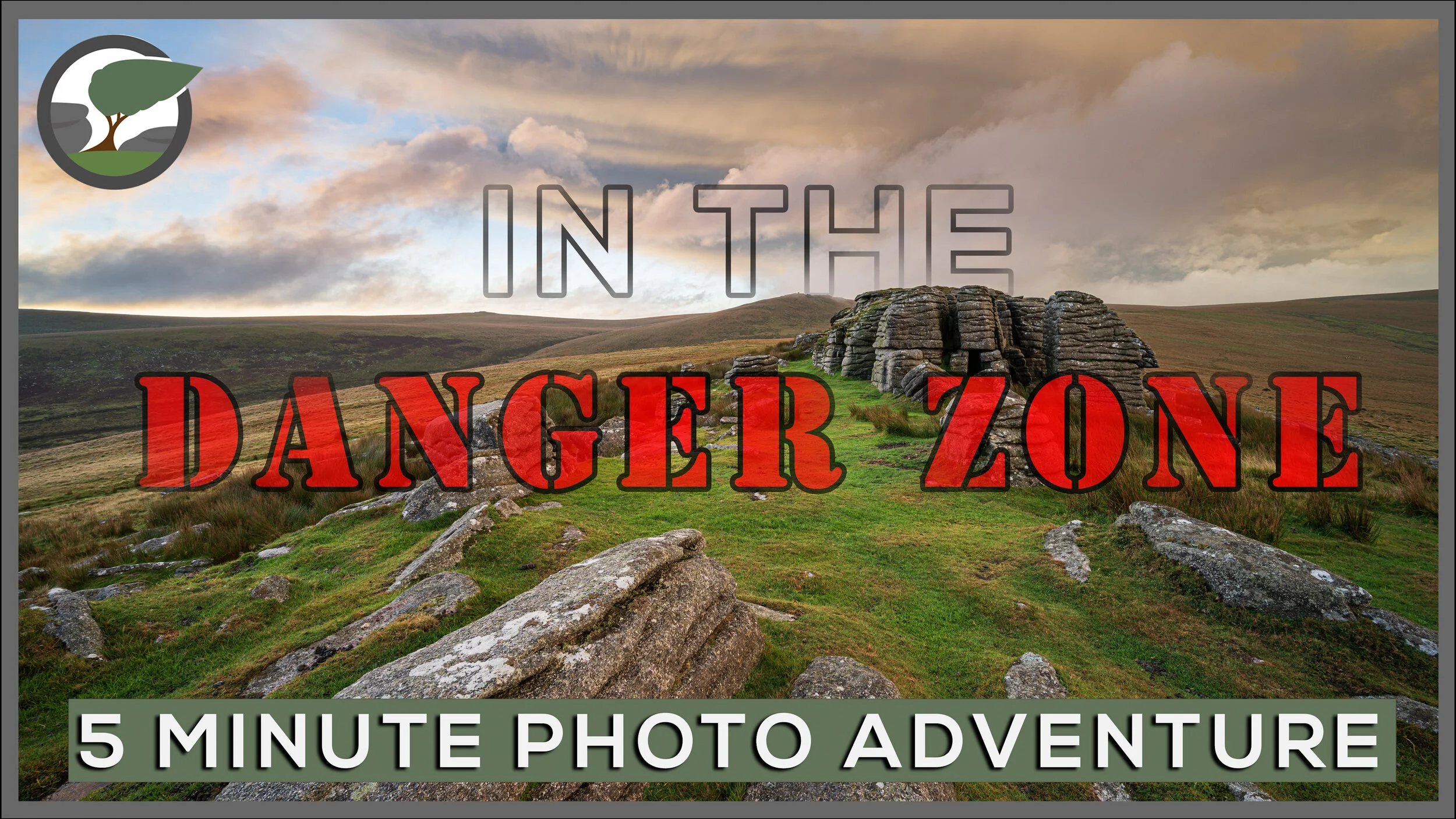
In the Danger Zone
In this 5 Minute Photo Adventure, I head further and deeper into Dartmoor National Park than I've ever been before. I leave civilisation and walk along open moorland for an hour until I reach the Danger Zone! There I find a new location to photograph and I experience some wild Dartmoor weather.
That Looks Interesting
Some days I have a clear plan of where and what I’m going to shoot. I go out with conviction and even though it might not turn out how I had hoped, I know I gave it my best shot. There are also days where I just sit in front of my computer scratching my head on what to do. This indecision is often caused by a weather forecast that doesn’t favour any particular location or scene.
It’s these times that I often look to try and go somewhere new. I’m taking a risk with the weather so I might as well take a risk on a new location. Though I’ve got plenty of locations on my custom Google Map that I haven’t visited, this time I decided to check through my back catalogue of Outdoor Photography magazines instead.
As I browsed my collection of magazines with a cup of coffee, a location called Oke Tor on Dartmoor caught my eye. I looked it up on OS Maps and saw that it was just a little bit further on from one of my favourite locations, Belstone Tor. I also noticed that Oke Tor was just inside the Okehampton military danger zone so I made sure to check if the zone would be inactive before making any further plans. Fortunately, no firing was planned so I made plans to enter the danger zone!
With plans made to visit a new location and with the weather forecast predicting anything from clear blue skies to heavy rain showers I thought it might be an adventure worth filming. While it is always nice to show a polished video with great images, I’ve always said that I wanted to show a realistic side of landscape photography on this blog as well.
While the video below is a bit rough and ready, and the photographs are not my best work, I wanted to share with you the adventure of going somewhere new for the first time, battling the weather and grabbing those early compositions. I hope you enjoy it!
Oke Tor (Dartmoor) Photographs
Oke Tor #1, Dartmoor, Devon - Nikon Z7, Nikkor 14-30mm f/4 at 14mm, f/11, 0.4 sec at ISO 64, Kase Filters K9 CPL and ND Grad.
Oke Tor #2, Dartmoor, Devon - Nikon Z7, Nikkor 14-30mm f/4 at 18mm, f/11, 1/4 sec at ISO 64, Kase Filters K9 CPL and ND Grad.
Oke Tor #3, Dartmoor, Devon - Nikon Z7, Nikkor 14-30mm f/4 at 15mm, f/11, 1/4 sec at ISO 64, Kase Filters K9 CPL and ND Grad.
Oke Tor #4, Dartmoor, Devon - Nikon Z7, Nikkor 14-30mm f/4 at 14mm, f/14, 1/3 sec at ISO 64, Kase Filters K9 CPL and ND Grad.
Oke Tor #5, Dartmoor, Devon - Nikon Z7, Nikkor 14-30mm f/4 at 14mm, f/11, 1/3 sec at ISO 64, Kase Filters K9 CPL and ND Grad.
Oke Tor #6, Dartmoor, Devon - Nikon Z7, Nikkor 14-30mm f/4 at 14mm, f/11, 1/3 sec at ISO 64, Kase Filters K9 CPL and ND Grad.

Bite-Size Blog Post #9 - Combestone Tor
Some locations require you to put in a bit more time than usual before you start to get the most from them. For me, Combestone Tor is one of them.
A Slow Burner
For a long time, I had ignored Combestone Tor. I’m not entirely sure why. Maybe it was because the couple of casual visits that I gave it previously hadn’t been that successful and I wrote it off. However, when I visited Combestone a few months ago I captured some images that I was unexpectedly pleased with. It could have been the weather conditions, the light, the colour, but whatever it was it had sparked my interest in this location again.
A few weeks ago, I decided to make another visit. The conditions were quite different from my last visit, but I still felt that there were photographs to be captured. I wanted to capture some different images this time and despite the variety of views at this location I still found it hard to pick out compositions.
Looking back at the images I captured on this most recent of visits I’ve concluded that this location is a bit of a slow burner. It’s one of these locations where you really must put in the time to get the most out of it. While I’m happy enough with the images I captured I feel I have still to find the very best that Combestone has to offer.
This is not a bad thing though. With autumn just around the corner, I’ve got a feeling Combstone is going to come alive over the next couple of months and I’m looking forward to returning already.
Combestone Tor #1, Dartmoor, Devon - Nikon Z7, Nikkor 14-30mm f/4 at 14mm, f/8, 0.6 secs at ISO 64, Kase Filters K9 CPL and ND Grad.
Combestone Tor #2, Dartmoor, Devon - Nikon Z7, Nikkor 14-30mm f/4 at 14mm, f/11, 1.6 secs at ISO 64, Kase Filters K9 CPL and ND Grad.
Combestone Tor #3, Dartmoor, Devon - Nikon Z7, Nikkor 14-30mm f/4 at 30mm, f/11, 1 sec at ISO 64, Kase Filters ND grad, 5 image panorama cropped to 6:17.
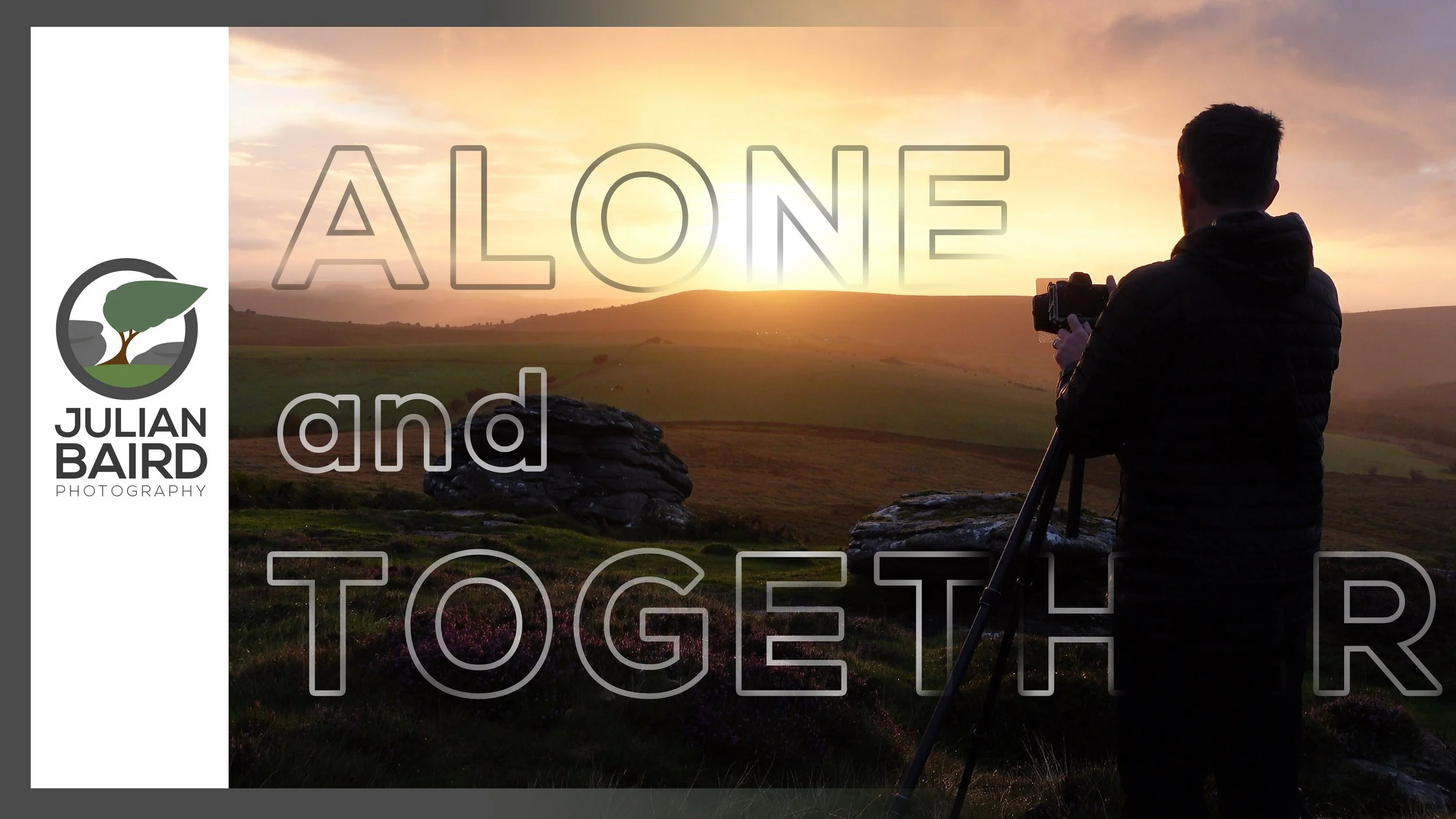
Alone and Together
Landscape photography can be a solitary endeavour and while I truly do appreciate that alone time, it is in the sharing of those images that brings me the greatest satisfaction. Like many photographers, I share my images online, but after reading an article in Outdoor Photography magazine I was inspired to create a new image and print, then give it to someone in my audience. I wanted to create a moment of togetherness.
Landscape Photography on Dartmoor
I have a bit of a love-hate relationship with photographing Dartmoor. The conditions up on the moor can be miserable, sometimes even a little cruel for the landscape photographer. If it’s not clear blue skies it’s grey, overcast, and wet. It’s rare for that perfect mix of weather conditions to be present at the right time. Well, it doesn’t happen very often when I’m there.
All that said, when the conditions are magical it is a proper treat to be photographing Dartmoor. It’s exciting, demanding and most of all enjoyable. I don’t always have the video camera along with me when things do go well on Dartmoor but in a rare moment of luck, I had it with me when I got some great conditions up on Chinkwell Tor recently.
In the video below, I share with you the experience of capturing the photographs in this blog post and I select one of those images to create a print. I also tell you that I want to do something special with that print. Want to know what that is? Well, it is all to do with the theme of Alone and Together, but you’ll have to watch the video to find out more.
Chinkwell Tor Photographs
Here are the photographs you saw in the video in a bit more detail. Enjoy!
A Chink in the Sky, Chinkwell Tor, Dartmoor, Devon - Nikon Z7, Nikkor 14-30mm f/4 at 15mm, f/13, 1.3 seconds at ISO 64, Kase Filters ND grad.
Chinkwell Tor Sunrise #2, Dartmoor, Devon - Nikon Z7, Nikkor 14-30mm f/4 at 26mm, f/11, 0.8 seconds at ISO 64, Kase Filters ND grad and CPL.
Chinkwell and Honeybag Tor #1, Dartmoor, Devon - Nikon Z7, Nikkor 14-30mm f/4 at 20mm, f/11, 0.6 seconds at ISO 64, Kase Filters ND grad and CPL.
Chinkwell and Honeybag Tor #3, Dartmoor, Devon - Nikon Z7, Nikkor 14-30mm f/4 at 16mm, f/13, 1/5th second at ISO 64, Kase Filters ND grad and CPL.
Widecombe Rainbow #2, Dartmoor, Devon - Nikon Z7, Nikkor 14-30mm f/4 at 14mm, f/13, 1/3rd second at ISO 64, Kase Filters ND grad and CPL.

Bite-Size Blog Post #8 - Friends, Dartmoor and Breakfast
In a rare treat I get to show my friend and fellow photographer Chris Sale one of my favourite Dartmoor locations.
Friends
It’s not often that I get to catch up in person with my good friend and fellow photographer Chris Sale. I live in Devon and he lives in the Lake District, so we aren’t exactly on each other’s doorsteps. When Chris mentioned he was making a trip to Cornwall he suggested we meet up. I was expecting Chris to select a nice coastal location in Cornwall but when he asked if I would take him somewhere on Dartmoor, I knew exactly where to go.
Dartmoor
Of all the locations I’ve photographed on Dartmoor, I think Belstone Common must be one of my favourites. I’ve taken a ton of photos here, published many blog articles and filmed a few videos from this location. Unless the weather is truly awful there is normally something to shoot. The 360-degree views provide lots of opportunity for shooting anything from wide-angle landscapes to telephoto landscapes.
That doesn’t mean its necessarily an easy place to shoot but it can be rewarding. Chris must have had luck on his side when we went up though. The weather forecast was looking a bit stormy but these are exactly the conditions that can work well up on Belstone.
We were treated to some excellent conditions. We had to work hard though as the light came and went very quickly, but it’s mornings like this that I live for as a landscape photographer.
Belstone Cloudy Sunrise #1, Dartmoor, Devon - Nikon Z7, Nikkor Z 14-30mm f4 at 14mm, f/11, 1.3 seconds at ISO 64.
Belstone Cloudy Sunrise #2, Dartmoor, Devon - Nikon Z7, Nikkor Z 14-30mm f4 at 14mm, f/11, 1 second at ISO 64.
Belstone Cloudy Sunrise #3, Dartmoor, Devon - Nikon Z7, Nikkor Z 14-30mm f4 at 14mm, f/11, 1/4th seconds at ISO 64.
Belstone Cloudy Sunrise #4, Dartmoor, Devon - Nikon Z7, Nikkor Z 14-30mm f4 at 14mm, f/11, 1/4th seconds at ISO 64.
Belstone Cloudy Sunrise #5, Dartmoor, Devon - Nikon Z7, Nikkor Z 14-30mm f4 at 18mm, f/11, 1/6th seconds at ISO 64.
Breakfast
It was a fantastic morning. Great photographs and great company. The other thing that makes Belstone one of my favourite locations to go to is a visit to the Whitehouse Restaurant on the way back. They do a great breakfast and both Chris and I felt it was well deserved treat!
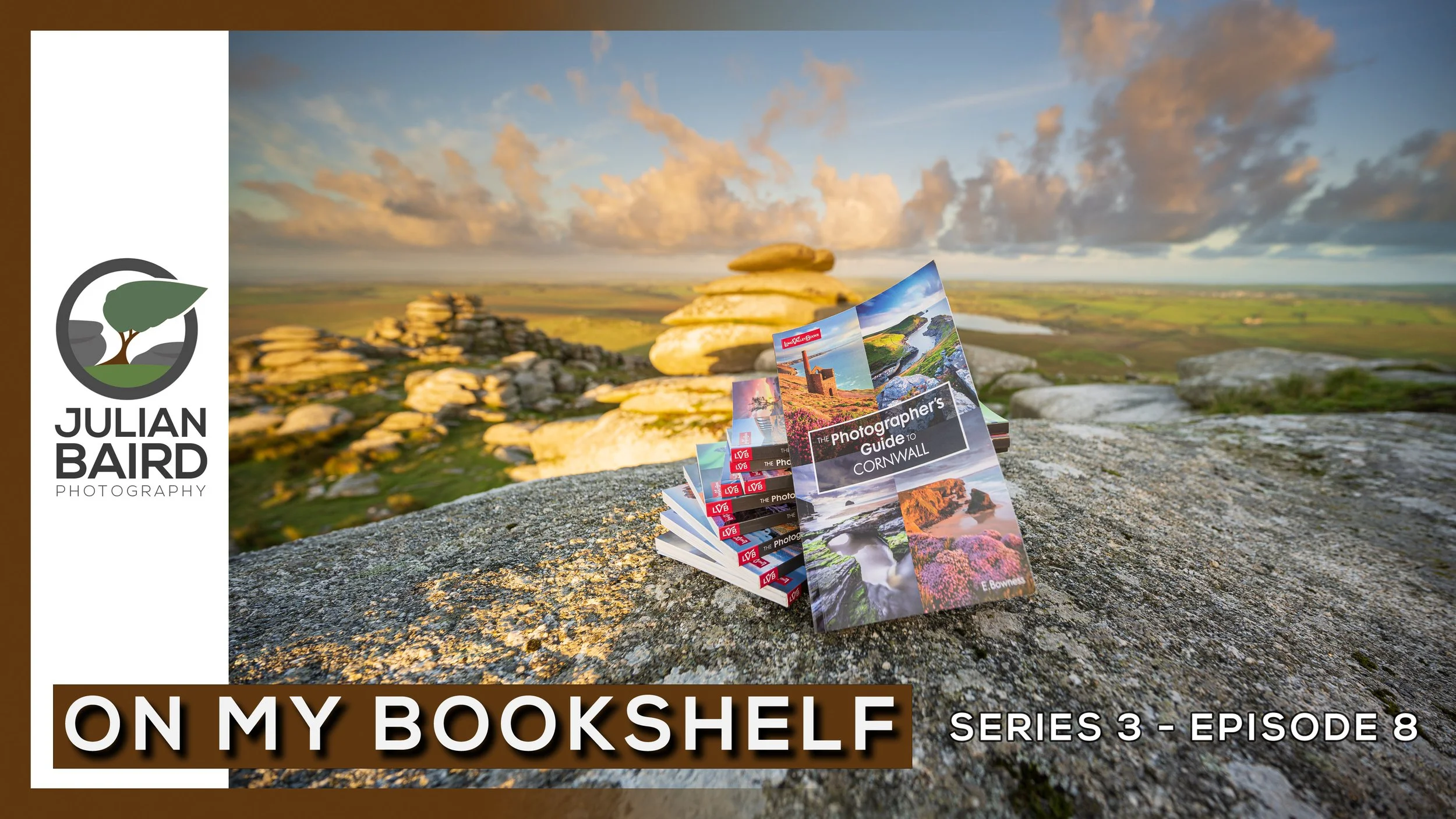
The Photographer's Guide Series by Ellen Bowness (Long Valley Books) - On My Bookshelf S03E08
Looking for new locations to inspire your landscape photography? Visiting a new area? Want to get the most out your photography trip? Location guidebooks can help answer these questions. In this episode of On My Bookshelf, I'm looking at The Photographer's Guide series of books.
On My Bookshelf on Location in Cornwall
Over the three years that I’ve been producing episodes of On My Bookshelf (OMBS) I’ve covered a wide range of photography books. While I shoot most episodes in the comfort of my home with a nice cup of coffee, there are some books that require a slightly different approach. One such category of book is the photography location guidebook.
When I decided to look at The Photographer’s Guide series of books, I knew that the video would need to include a segment filmed on location. Fortunately for me one of the titles in the series is called The Photographers Guide to Cornwall and the book had several locations I’d never been to. As much as I’d like to have visited one of the locations in the Iceland book, I’m afraid the OMBS budget doesn’t stretch that far!
In this episode of OMBS not only do I talk about the series of books, but I also visit one of the locations in the Cornwall book. There is no better way to test the quality of the information in a location guidebook than to visit the location!
I hope you enjoyed this on location episode of OMBS. I’ve included the photographs I captured on my visit to Rough Tor below, and if you want to pick any of the books in The Photographer’s Guide series of books then just click here.
Rough Tor Sunrise #1, Bodmin Moor, Cornwall - Nikon Z7, Nikkor 14-30mm f/4 at 22mm, f/11, 1/3rd sec at ISO 64, Kase Filters ND Grad.
Rough Tor Sunrise #2, Bodmin Moor, Cornwall - Nikon Z7, Nikkor 14-30mm f/4 at 14mm, f/16, 1/13th sec at ISO 64, Kase Filters ND Grad, two image exposure blend, custom crop ratio.
Rough Tor Sunrise #3, Bodmin Moor, Cornwall - Nikon Z7, Nikkor 14-30mm f/4 at 17mm, f/11, 1/3rd sec at ISO 64, Kase Filters ND Grad.

Bite-Size Blog Post #7 - A Journey into Macro Photography
In this bite-size blog post I take a journey into the world of macro photography!
Learning Macro Skills
As you might have guessed this blog post is not going to contain landscape photographs but is instead going to be focused on the wonderful world of macro photography. Regular readers of this blog will know that I’ve been dabbling in macro photography for a while now. It started last year when I went out with a friend to photograph some butterflies and continued when I bought my macro lens a few months ago.
I promised myself that when I purchased a macro lens, I would also spend some money on getting myself some 1-2-1 tuition as well. You can learn a lot from fellow photographers, books and YouTube videos, but it’s hard to beat the value you can get from a 1-2-1 session with a professional.
For 1-2-1 tuition I’ve always valued the services of Ross Hoddinott. Ross has been paramount in my development as a landscape photographer and fortunately for me, he is also a highly-skilled, award-winning, close-up photographer as well. I had no hesitation in booking a 1-2-1 session with him.
Though I had some basic skills already, there was much for me to learn. Not only were there specific camera techniques to learn, but I also needed to learn how to find and identify insect species. And then when I found them, not scare them off with sudden movements!
It was a wonderful day, and even though I know my camera well, learning a whole new set of camera skills with was demanding. I managed to capture some images that I was happy with. They aren’t particularly unique or outstanding, but that wasn’t the point of the day. The point was that I learnt loads, got some images I was happy with, and I had a great day out.
I now feel I at least have the fundamental knowledge to head out into the wilderness myself and capture macro photographs.
Nikon Z7, Laowa 100mm f/2.8 2x Ultra Macro
Nikon Z7, Laowa 100mm f/2.8 2x Ultra Macro
Nikon Z7, Laowa 100mm f/2.8 2x Ultra Macro
Nikon Z7, Laowa 100mm f/2.8 2x Ultra Macro
Nikon Z7, Laowa 100mm f/2.8 2x Ultra Macro
Nikon Z7, Laowa 100mm f/2.8 2x Ultra Macro - shame about the distracting background on this one!
Nikon Z7, Laowa 100mm f/2.8 2x Ultra Macro - and this one!
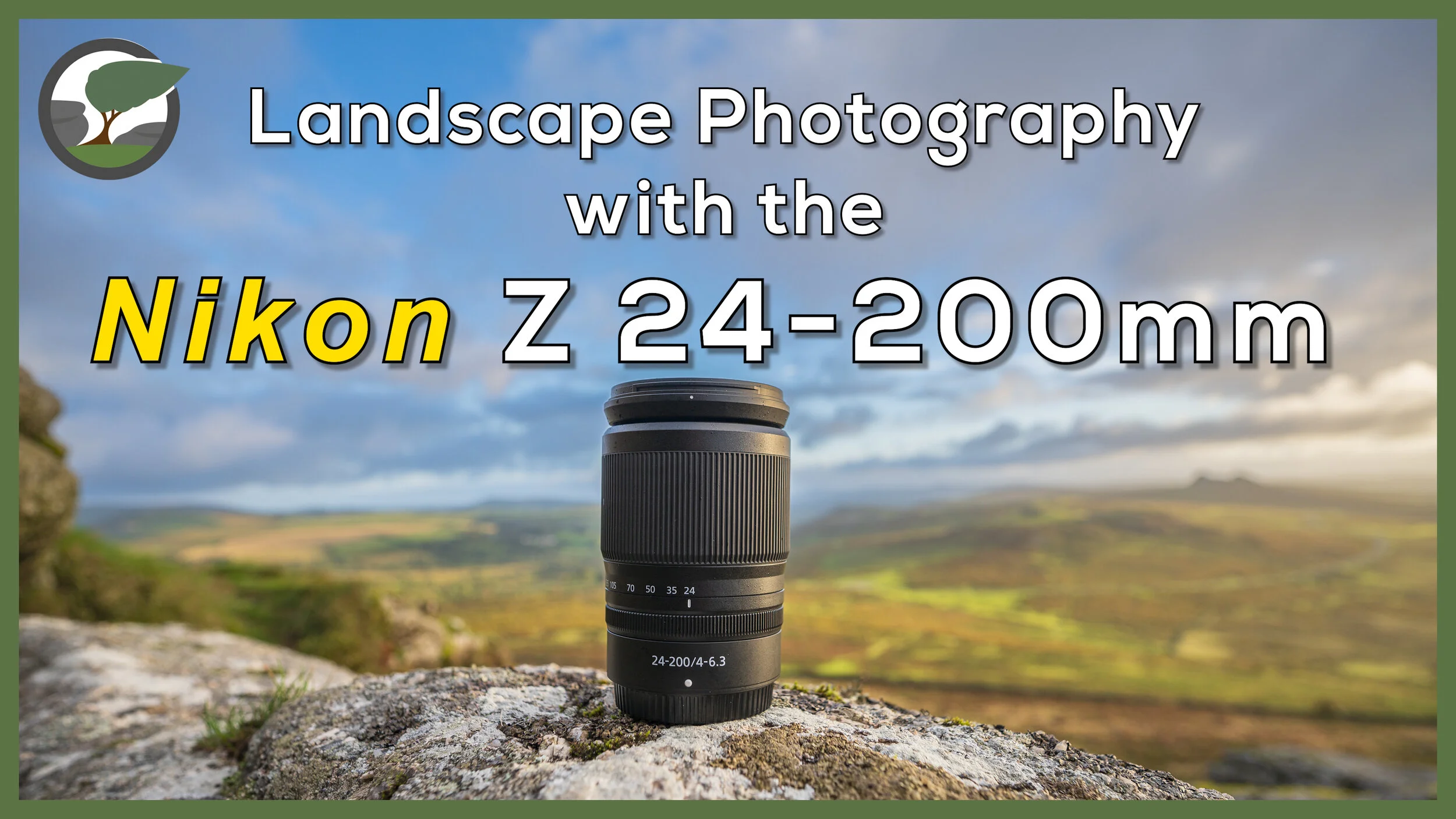
Landscape Photography with the Nikkor Z 24-200mm
I’ve purchased the Nikkor Z 24-200mm f/4-6.3 for landscape photography and this blog post you can watch a video of me putting it to good use and see some sample images.
A Good Choice for Landscape Photography
I try not to create too many videos on gear. There are lots of channels out there that are dedicated to such things and they can often provide a much more comprehensive review and set of tests. I tend to only make videos about gear if it’s for an item that I have personally paid for and will be in my kit bag. Even then, my videos tend not to be reviews but more about sharing my experience with a bit of gear.
The latest bit of gear I’ve purchased is the Nikkor Z 24-200mm f/4-6.3 and in the video below I tell you why I purchased it and most importantly I go out on location to take some photographs with it. I then also return home to show you the images and to make some prints with them. So, it’s not so much a review but more a video on my personal experiences with the lens.
Even though I wouldn’t class this video as a review, I do help you found it useful if you are considering purchasing this lens. If you have any questions, please let me know in the comments below.
Nikkor Z 24-200mm f/4-6.3 Sample Images
Rising Sun over Rippon Tor #2, Dartmoor, Devon - Nikon Z7, Nikkor Z 24-200mm f/4-6.3 at 32mm, f/13, 1/5th sec at ISO 64. Kase Filters ND grad.
Rising Sun over Rippon Tor #1, Dartmoor, Devon - Nikon Z7, Nikkor Z 24-200mm f/4-6.3 at 24mm, f/13, 1/6th sec at ISO 64. Kase Filters ND grad.


Chinkwell Tor Sunrise #1, Dartmoor, Devon - Nikon Z7, Nikkor Z 24-200mm f/4-6.3 at 24mm, f/11, 1/100th sec at ISO 400. Kase Filters ND grad.
Widecombe Panorama, Dartmoor, Devon - Nikon Z7, Nikkor Z 24-200mm f/4-6.3 at 83mm, f/8, 1/40th sec at ISO 64, panoramic stitch with 6:17 crop.
Widecombe from Chinkwell Tor, Dartmoor, Devon - Nikon Z7, Nikkor Z 24-200mm f/4-6.3 at 145mm, f/8, 1/20th sec at ISO 64. Kase Filters ND grad.

Bite-Size Blog Post #6 - Dartmouth Sea Stacks
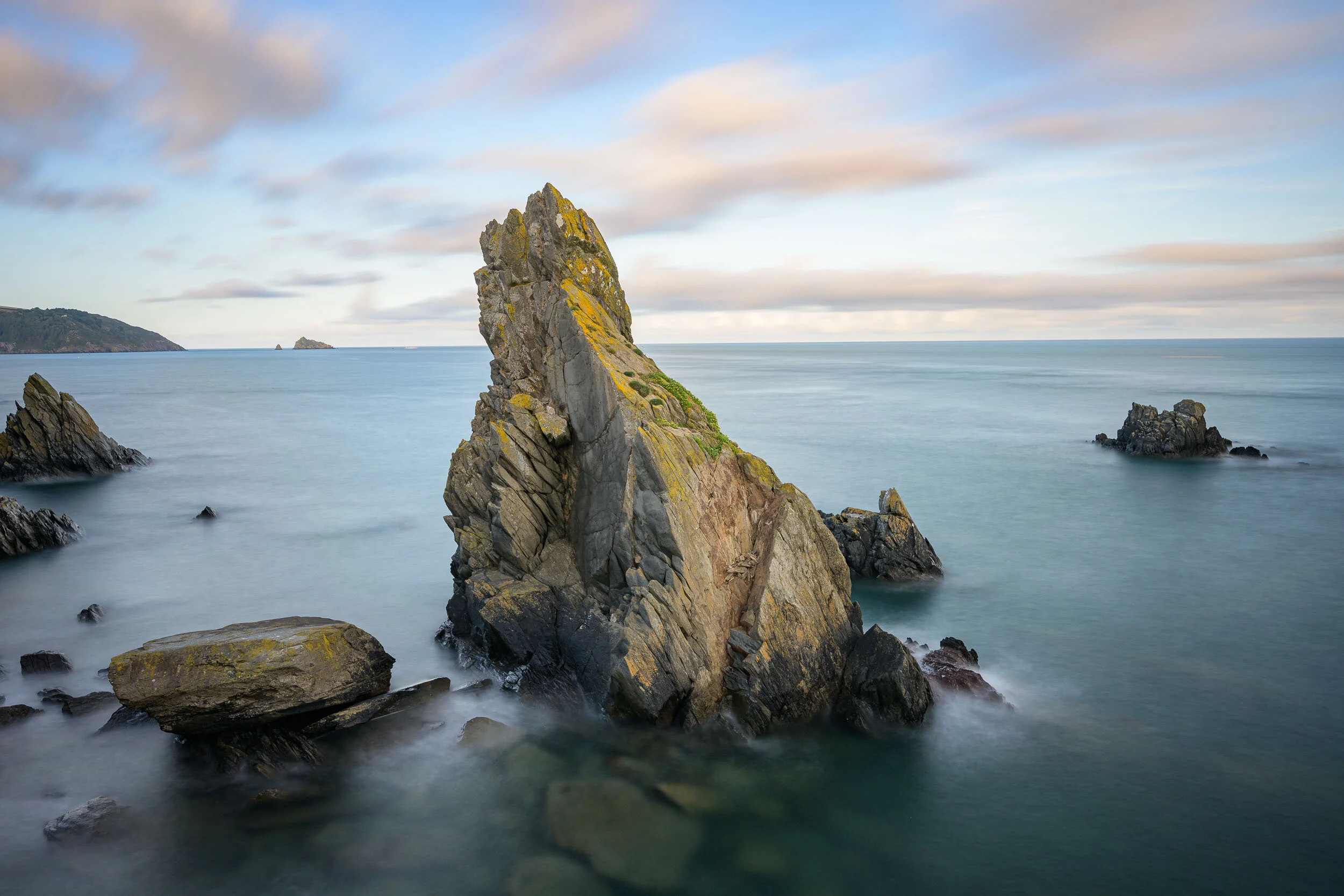
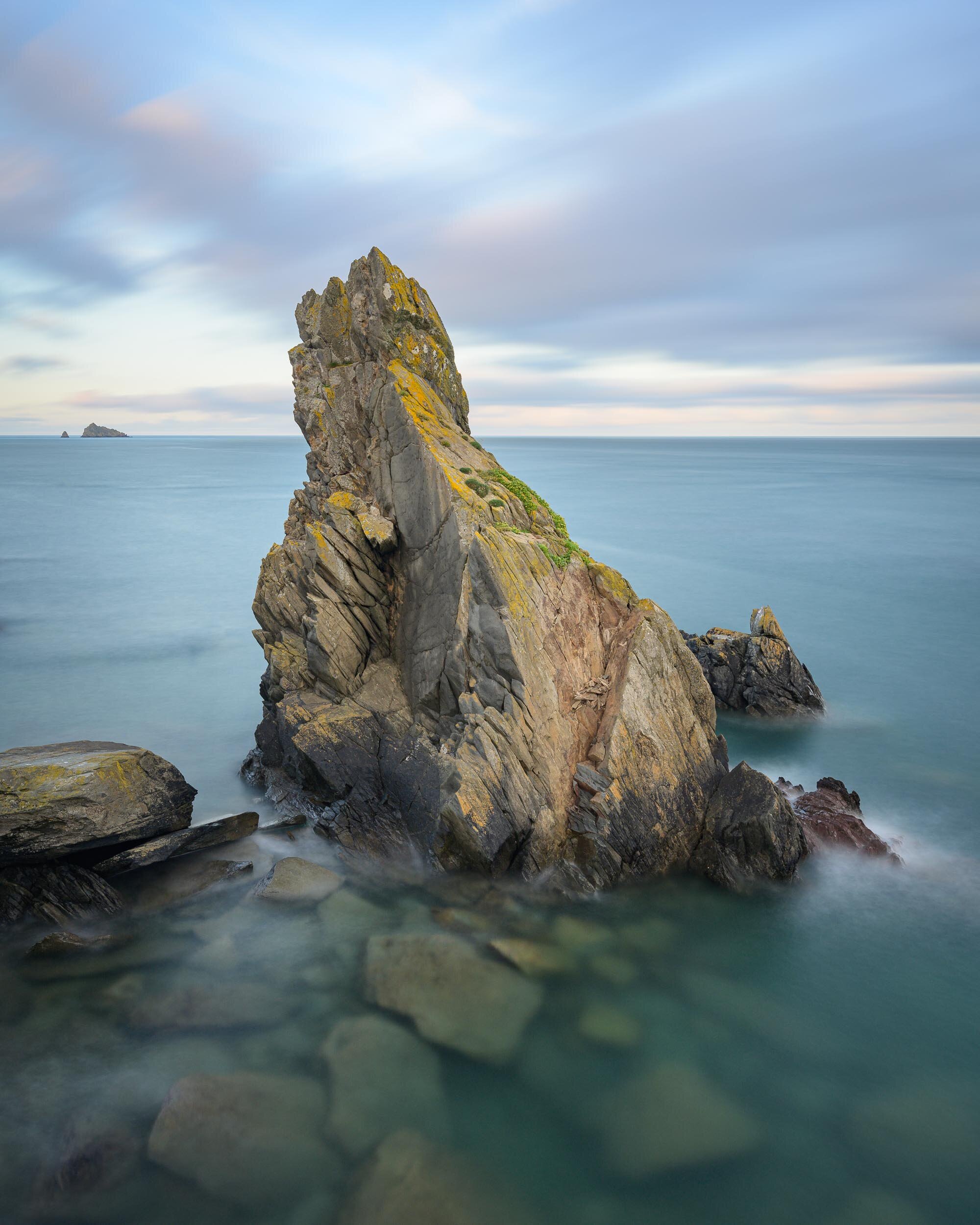
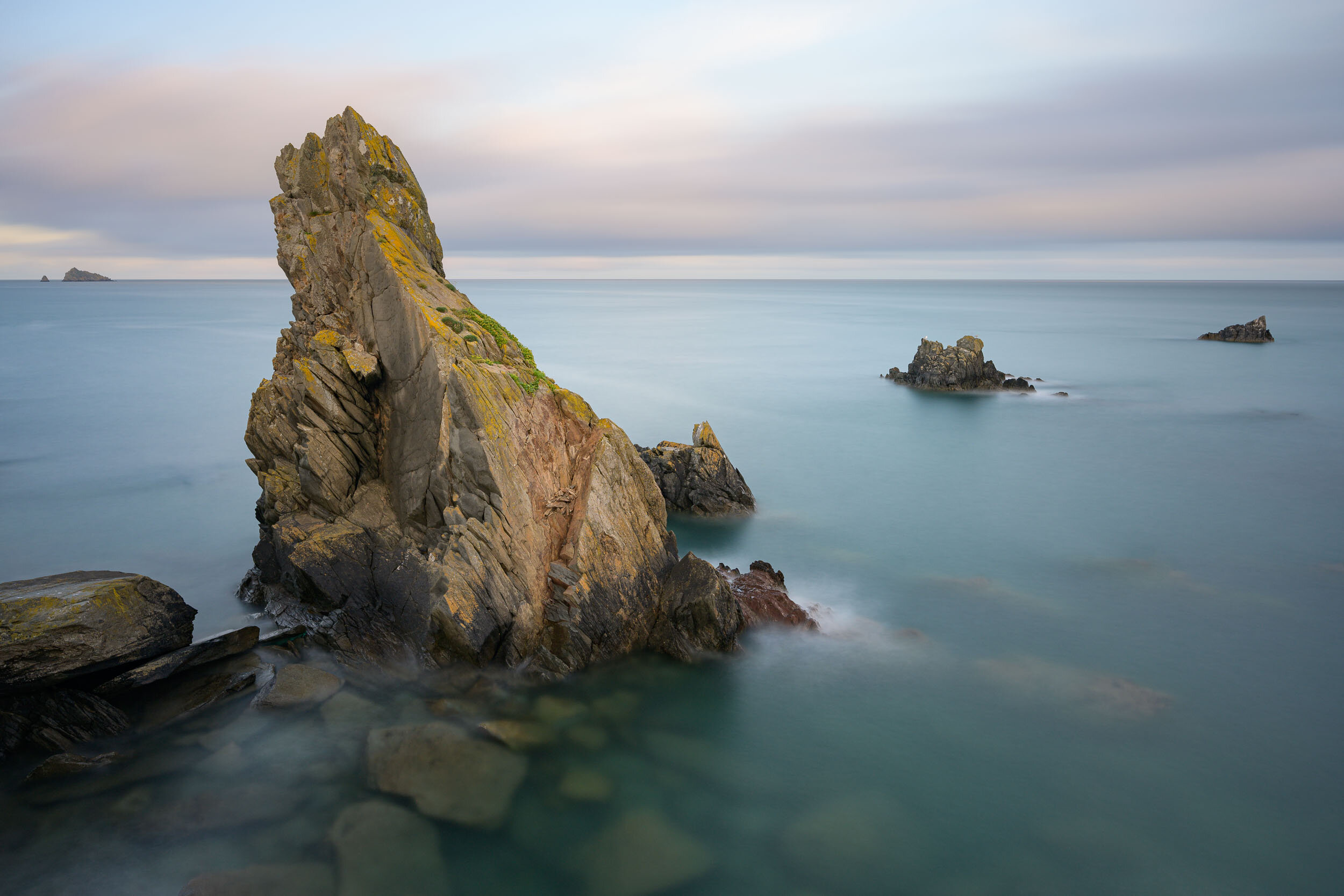
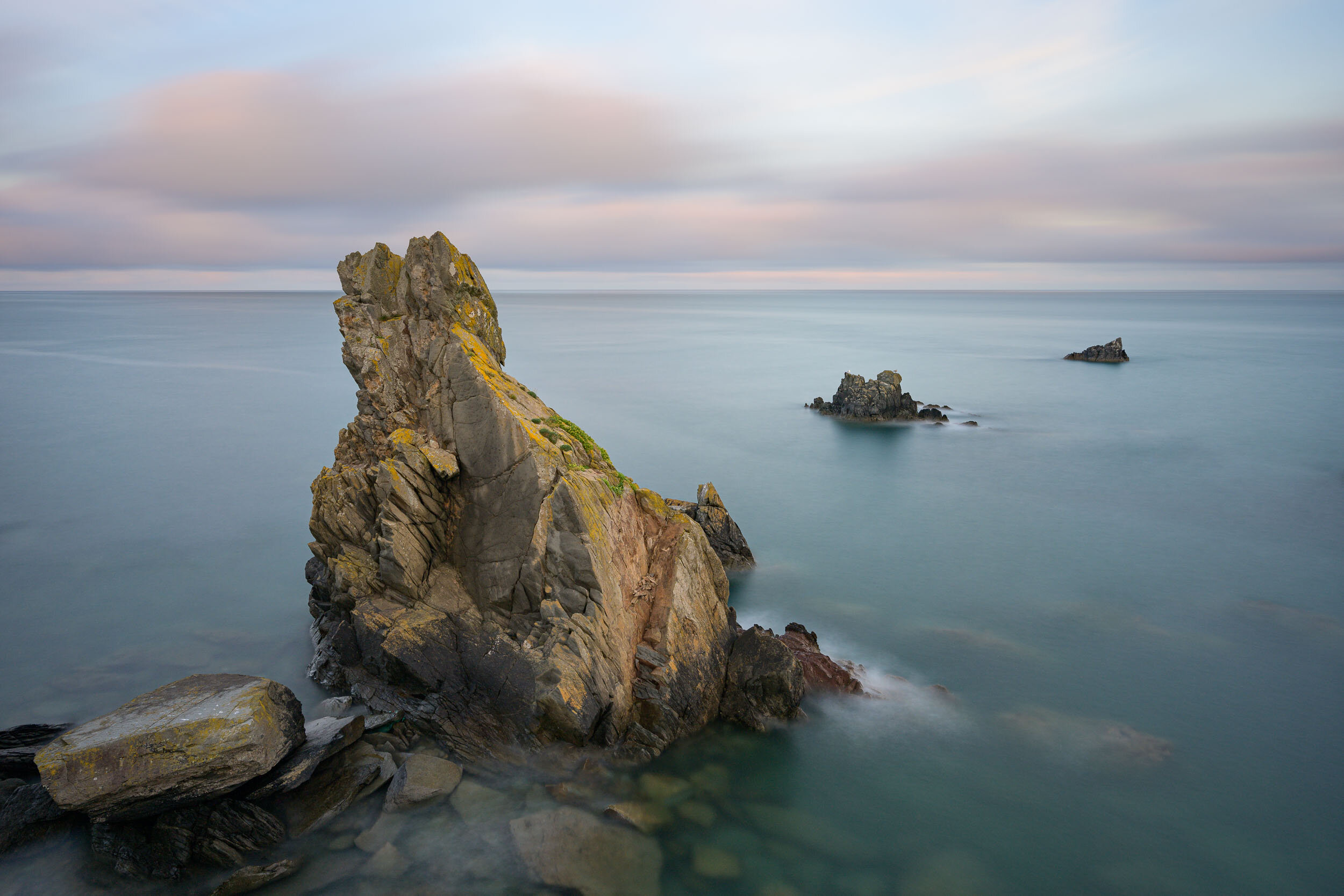
In this bite-sized blog post, I head to the coast near Dartmouth in Devon to check out a sea stack.
Long Exposure Seascapes
Unusually this summer I’ve spent a lot more time photographing Dartmoor than the coast. The summer month not only brings better conditions, but the extended hours of daylight allow me to travel further afield to places like Cornwall. I just love photographing the Cornish coast as you can see from all these blog posts.
I think lockdown knocked me out of my normal yearly routine and so I’ve spent more time closer to home which in turn means I’ve been spending more time up on Dartmoor. However, the coast is never far from my thoughts, so I decided that a visit to my local coastline was long overdue.
There is a sea stack near Dartmouth that I’ve been eager to revisit for some time now. I believe it needs a specific set of conditions to make the most of it. A high tide is one of them and while on this visit the tide was high, the weather was calm and the skies blue.
I knew I wasn’t going to come away with any photographs that I was going to get excited about so this trip was very much another reconnaissance mission to check out compositions. Despite this being my 2nd or 3rd visit, I still struggled to find a composition I am happy with. Maybe the calm conditions weren’t helping, or I simply need to work harder at getting the composition right.
So, while these photographs aren’t anything amazing, I’m happy to share them with you. After all, not every trip out with the camera results in a portfolio image. Some trips out with the camera are all about preparation for the next trip.
Focus Stack a Landscape Photograph in 5 Minutes
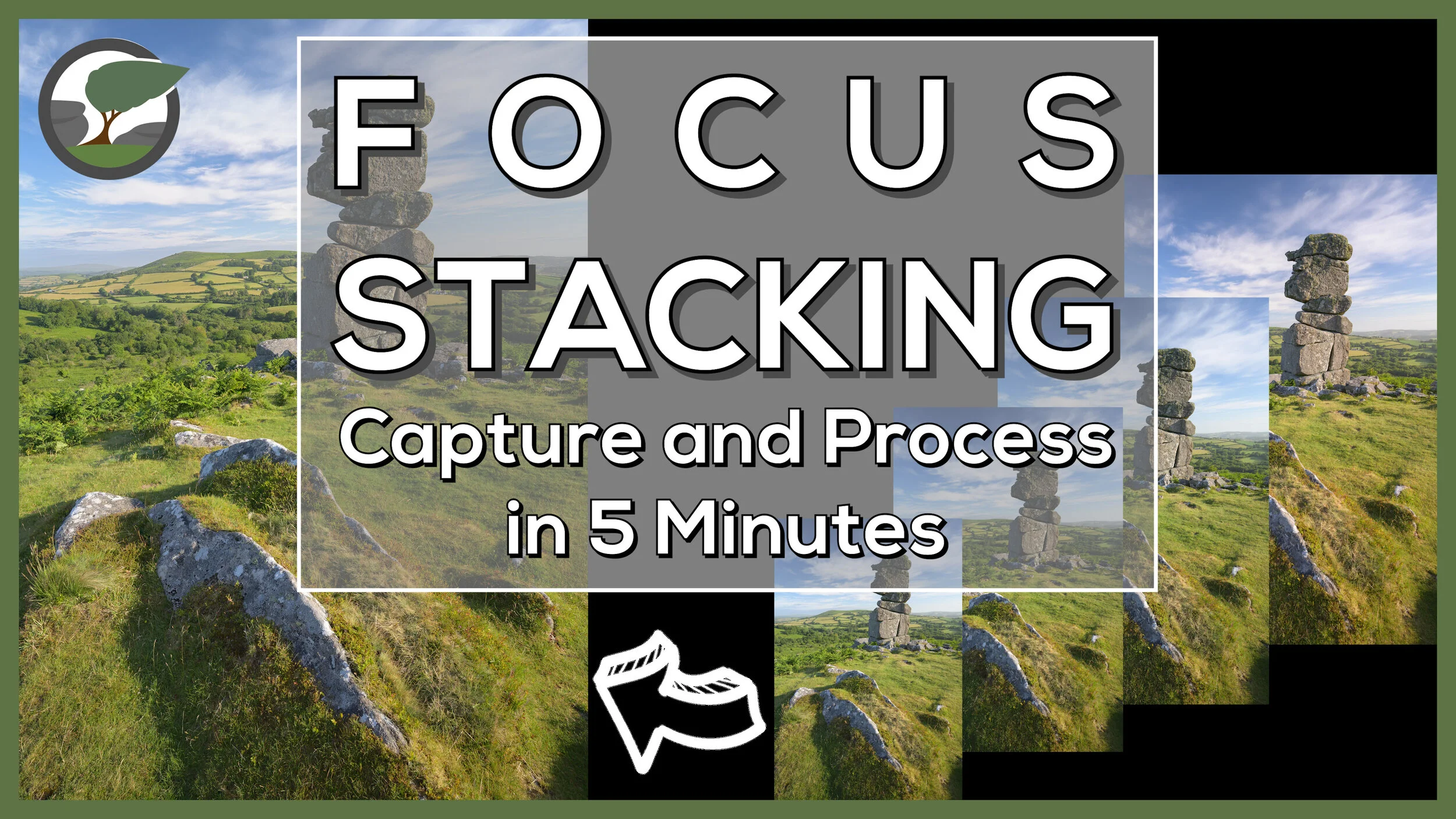
Focus stacking a landscape photograph needn’t take a long time. In this video, I’ll show you how to capture and process a focus stacked landscape photography in 5 minutes.
Focus Stacking - Capture and Process
When you first start to learn how to focus stack it can seem a bit overwhelming. It seems to be a bit complicated and not worth the effort. However, the complexity of the focus stack is very much dependent on the subject being photographed. Macro subjects are trickier to focus stack correctly.
What if you want to focus stack a landscape photograph though? I’m pleased to say the process is much easier and quicker. Despite the relative simplicity of the focus stacking process for landscape photographs, it’s not something I do that often. Sometimes it’s just not needed, and a single shot will yield sufficient sharpness, but when you do need it, you'll be glad you have the skills in your toolbox.
In the video below I aim to show you how straightforward to process can be to capture and process a focus stacked landscape photograph. You will rarely need more than four frames, but if you do the process remains the same. Once you can do it with a small number of frames, you have all the principle skills to allow you to do it with a larger number of frames.
Bonus Tips
To keep the content in the video concise and short I decided to only cover topics that were related to the process of creating the focus stack. For the readers of the blog though I’ve decided to give you a little extra value add by giving you a few extra tips.
The image with the finger - you will have seen in the video an image in the Lightroom film strip with my finger pointing up. What is this for? This image reminds me that the following images are part of a sequence. I use “finger up” for a focus stack sequence and “finger right” for a panoramic sequence. If you’ve captured lots of images, having these “finger” shots allows you to quickly pick out sequences of images in Lightroom.
Edit images before or after merging? - Should you apply your edits before you import the images to Photoshop, or after you have saved the stacked image? Personally, I make some very basic global edits before I load the images into Photoshop. Remember, if you change one image you will need to sync the changes to all the images you are going to use in the focus stack. After the photo merge in Photoshop, I will apply some local adjustments and any local/global sharpening.
Large files - depending on the number of images in the stack and size of the source files you may get a warning message from Photoshop when you save the file telling you that it is bigger than 2 TB. While you can save the file as a PSB I recommend selecting all the layers and flattening the image. This will make the resulting file much smaller but you won’t be able to modify the masking areas later without doing the focus stack again). It’s rare that I ever want to edit those masking areas again.
To Photoshop or Not - There are a number of dedicated focus stacking tools such as the excellent Helicon Focus but for most landscape focus stacks Photoshop does a good job. There’s no doubt that Helicon Focus is much faster and accurate, but this tends to only be a benefit with complex focus stacks (such as macro subjects).
Lightroom catalogue management and image editing - If you are interested on how I manage and edit my images in Lightroom, then check out my video on Lightroom Catalogue Management and Lightroom Image Editing.
That Focus Stacked Image
Here is the final image from the video so you can take a closer look.
Bowerman’s Nose Sunrise #7, Dartmoor, Devon - Nikon Z7, Nikkor Z 14-30mm f/4 at 17mm, 1/25th sec at ISO 64, f/8, Kase Filters K9 Polariser, 4 image focus stack.
Want a More Detailed Tutorial?
If you'd like to watch a more detailed video on focus stacking, and how to use the focus shift feature found in recent Nikon cameras, and deal with more complicated post processing scenarios, then check out my other video on focus stacking which you can see here.

Bite-Size Blog Post #5 - Two Tors
In the blog this week I visit Dartmoor to photograph one of my regular locations and to photograph somewhere new.
Two Tors
Thanks to the weather, the long days and the company of a good friend I managed to make a few trips to photograph Cornwall. I love shooting the Cornish coast. There’s just so much variety and there always seems to be somewhere new to discover and photograph.
As much as I love Cornwall, I don’t want to completely ignore my local area. In this bite-size blog post, I’m going to share with you some of the photographs I’ve been capturing from Dartmoor. There is a panoramic image from a new location, Bell Tor, and a couple of images from an old favourite, Belstone Tor.
My eyes have been opened to Bell Tor, and the surrounding area and I hope to make a video from this location soon. It has a lot of potential and I’m excited about the possibility of sharing it with you in a bit more detail. In the meantime, though please enjoy the photographs I captured.
Bell Tor
Bell Tor Panorama, Dartmoor, Devon - Nikon Z7, Nikkor Z 14-30mm f/4 at 19mm, f/8, 1/20th sec at ISO 64, 8 image panorama cropped at 6:17.
Belstone Tor
Belstone Tor Sunset #4, Dartmoor, Devon - Nikon Z7, Nikkor Z 14-30mm f/4 at 14mm, f/13, 0.6 sec at ISO 64.
Belstone Tor Sunset #2, Dartmoor, Devon - Nikon Z7, Nikkor Z 14-30mm f/4 at 18mm, f/13, 1.3 sec at ISO 64.
Belstone Tor Sunset #3, Dartmoor, Devon - Nikon Z7, Nikkor Z 14-30mm f/4 at 22mm, f/13, 1.6 sec at ISO 64.
Essential Guide to Filters for Landscape Photography by Hoddinott & Bauer - On My Bookshelf S03E07
What are filters? Do I need filters? Which filters should I buy? How do I use filters? If you need answers to any of these questions, then the latest book to hit my virtual bookshelf could be the answer.
What Filters Should I Use for Landscape Photography?
Questions about filters is the one topic I get asked about more than any other. What filter kit should I buy? What filters do I need? All good questions and I do try and take the time to provide answers. However, I only use the Kase Filter system (which is very good by the way!) and a handful of filters so my experience of other brands and other types of filters is somewhat limited.
Up until now, there hasn’t really been a single, up to date, and comprehensive resource on filters for landscape photography. It would be nice to send people to a single resource where they can get all the information they need on which filters to buy and how to use them.
When Nature TTL announced that they were publishing a book by established photographers and renowned authors Mark Bauer and Ross Hoddinott, I knew I wanted to get a copy. After reading the book and seeing how comprehensive it was I knew I needed to feature it in an episode of On My Bookshelf so you could see for yourself if it might be a title for your bookshelf.
I hope you enjoyed this episode of On My Bookshelf. I thought it was an excellent book on filters for landscape photography and it will be a book that I will now recommend to anyone that has questions about filters. You can get a copy of the book right here.