
Start Point - A 5 Minute Photo Adventure from the South West Coast Path
Grab yourself a cup of coffee because it's time for another 5 Minute Photo Adventure! In this episode, I head to one of my favourite South West Coast Path locations, Start Point Lighthouse in south Devon.
The Challenge of Getting There
There’s only one problem with going to photograph Start Point on the south Devon coast and that’s the effort required to get there. It’s not so much the 50-mile driving distance (37 miles as the crow flies), but more with the time it takes to get there. The journey time for me takes around 90 minutes and while I’m no stranger to making such journeys for the benefit of my landscape photography, it’s the roads that make the journey more challenging.
Once I leave the A38 and start driving towards Kingsbridge the quality and width of the roads start to reduce. Nothing to bad (for Devon standards) but after Kingsbridge things get dull. Lots of small villages with low-speed limits and that last five miles just seems to take an age. It’s not so bad when you are shooting sunrise as there is a lot less traffic, but during the day when you can get caught behind a tractor or a broken-down cement truck and it all becomes very boring.
However, all those complaints about the roads all disappear when you park your car and step out to one of the finest views along the South West Coast Path. Once I’m there, breathing in that glorious sea air I couldn’t care less about how long it took me to get there.
Risk vs Reward
With the apparent extra effort it seems to take to get to Start Point, I don’t go there as much as I might like to. Unlike some other coastal locations where I’ll just take a punt, I’m always looking for favourable conditions before I commit to the drive. Even with a good forecast, there is no guarantee of interesting conditions. There is always an element of risk vs reward. This is especially true when the conditions are a bit stormy or unsettled. In terms of capturing photographs, heading out in these types of conditions is risky, but the rewards can be amazing.
Back in December, I decided that I wanted to return to Start Point and capture some photographs looking at the peninsula from the west. I had checked out this viewpoint a couple of times, but the forecast was predicting some unsettled weather and the opportunity to capture this location with setting sun and some big clouds were too tempting to ignore.
Knowing very well that I could spend 3 hours in the car to end up with not a lot to show for it at the end, I packed my camera bag and set off regardless. Here is how I got on.
I hope you enjoyed my 5 Minute Photo Adventure to Start Point. While the conditions weren’t as dramatic as I might have hoped, I still came away with some images that made the trip worthwhile.
Do you have any locations that seem to be “harder” than others to get to? Let me know in the comments below.
Start Point Photographs
As always here are the photographs you saw me capture in the video. Enjoy!
Sunset at Start Point #1, South West Coast Path, Devon - Nikon Z7, Nikkor 24-200mm f/4-6.3 at 44mm, f/11, 1.6 secs at ISO 64, Kase Filters K9 CPL and ND.
Sunset at Start Point #2, South West Coast Path, Devon - Nikon Z7, Nikkor 24-200mm f/4-6.3 at 39mm, f/11, 2 secs at ISO 64, Kase Filters K9 CPL and ND.
Sunset at Start Point #3, South West Coast Path, Devon - Nikon Z7, Nikkor 24-200mm f/4-6.3 at 44mm, f/11, 13 secs at ISO 64, Kase Filters K9 CPL.

A Trip to Trevose
I learnt a valuable lesson last week when I visited one of my favourite Cornish coastal locations!
Not a Guarantee of Success
I often find myself being lured back to locations where I’ve created photographs that I’m pleased with. This lure is often intensified if I’ve not only captured one great image there but several them. I will hear the voice in my head telling to return to the location rather than go somewhere new because “you always get a good shot there!”. The simple fact is that this isn’t true. While I may well have a higher number of keepers from certain locations, there is always a whole stack of failures from that location as well
Last week I decided that I would make a trip to the north Cornish coast for a spot of seascape photography. I decided to wait until I got to Cornwall before making a final decision on where to go. The weather forecast wasn’t offering up the answers I was looking for so I decided that I would assess the situation when I got there.
Sitting in a park near Camelford, eating some nice chips, I pondered where to go. Looking up at the sky it was looking a bit overcast and grey. I had a few locations I was considering but they would all require some good light to make the most of them. I therefore, decided it was a good time to embrace the grey!
As I wasn’t too far from Trevose Head I decided that would be a good place to go. I’ve photographed that location many times before and I’ve captured some of my favourite images there. Some of those favourite images have been in grey overcast conditions. Given all my previous success at Trevose, I was confident I’d be able to capture something I’d be happy with.
There are a couple of spots worth photographing at Trevose Head. There is, of course the lighthouse itself but if you wander just around the headland it is well worth taking the time to photograph the lifeboat station as well. If you are interested in seeing these locations in a bit more detail then why not check out the 5 Minute Photo Adventure, I filmed there a couple of years ago.
Back to my most recent trip and things weren’t exactly going as I hoped. I started at the lifeboat station and while I managed to find a different composition from my previous visit, the photographs weren’t any better than some of my previous efforts. I can’t decide if I like the vertical or horizontal composition best. Perhaps you can let me know in the comments which one you prefer.
Padstow Lifeboat Station #1, Cornwall - Nikon Z7, Nikkor 24-70mm f/4 @ 27mm, f/11, 240 seconds at ISO 64, Kase Filters circular polariser and 10 stop ND.
Padstow Lifeboat Station #2, Cornwall - Nikon Z7, Nikkor 24-70mm f/4 @ 27mm, f/11, 201 seconds at ISO 64, Kase Filters circular polariser and 10 stop ND.
I then moved back along the path to my favourite viewpoint featuring the lighthouse. My first instinct was to go for an exposure of several minutes. This would not only smooth out the water, but it was also smooth out the sky. This is an approach I’ve used a few times when dealing with poor weather on the coast, but in this instance, it simply didn’t work (from a creative point of view). There was enough white water to create interesting lines in the composition and the grey sky just went even more flat and grey.
Trevose Head Lighthouse #1, Cornwall - Nikon Z7, Nikkor 14-30mm f/4 @ 19mm, f/11, 316 seconds at ISO 64, Kase Filters circular polariser and 10 stop ND.
Some of the clouds in the sky that had definition so I decided that I should try and capture the detail of those by going for a much shorter shutter speed. This did work a lot better, but the photograph still didn’t excite me in the way that some of my previous efforts did.
Trevose Head Lighthouse #2, Cornwall - Nikon Z7, Nikkor 14-30mm f/4 @ 22mm, f/11, 1 seconds at ISO 64, Kase Filters circular polariser.
While I very much enjoyed my visit to Trevose Head, I learnt an important lesson. Previous success at a location does not guarantee future success. While I probably wouldn’t have done any better anywhere else that evening, perhaps I should have used the time to explore somewhere new. Hindsight is a wonderful thing, isn’t it!

Exploring More of Start Point
I'm no stranger to Start Point but I thought it was about time to explore the area to see if I could find some new compositions.
Discovering More
I'm spoilt for choice when it comes to locations on the south Devon coast to watch and photograph the sunrise. One of my favourites is Start Point and I've captured numerous photographs from this distinctive coastal location. While the photographs I've captured feature a variety of different weather conditions, most of them all have one thing in common. They've all be taken from roughly the same spot.
The view that I normally capture at Start Point. Read the blog post for this image here.
The spot I like is high up on the peninsula looking down towards the lighthouse and out to sea. This is a great view, but I've always believed that there are other compositions to be found. I did make one brief trip further south-west along the coast one evening and I really liked the side-on view of the peninsula and the lighthouse. I've been meaning to go back for some time.
I would go to Start Point more often but it is a bit of a trek to get there. As the crow flies it's not far but by car, it's about an 80-minute drive from home and not always on the greatest of roads. As part of my personal commitment to do more exploring in 2020, I decided that I would make the effort to not only explore the views further down the coast but to also check out Mattiscombe Sands (which is only a short walk from Start Point).
At this time of year, the sunrise time isn't too late in the morning but also not too early that you need to get up at 3 am. With the weather conditions looking OK I decided that it was time to head back to Start Point. I contacted with my friend and super talented photographer Andy Campbell who was more than happy to join me on my latest adventure.
Old Location, New Views
Arriving at Start Point on the 21st of February, I was tempted to head straight to my favourite viewpoint and bag a safety shot but I managed to pull myself away and move further down the coast. I soon found a viewpoint I liked and started taking some photographs. The view gave me a side-on look at the peninsula and lighthouse and it looked dramatic. Unfortunately, I don’t have any photographs to share with you from that viewpoint as the light was pretty dull and none of the resulting images processed particularly well. It is a viewpoint I will be back to though so expect to see an image from there soon!
I then took a walk a little further down the coast again and though it is a similar view to the previous one I just described, this view has the addition of some jaggy foreground rocks which I like. I am happy to share a couple of those photographs but for me, that viewpoint will come alive as a sunset location when the light hits that peninsula and the rocks. I will be coming back to photograph that spot again as well.
Start Point Sunrise #1, Devon - Nikon Z7, Nikkor 24-70mm f/4 S at 36mm, f/13, 0.6 secs at ISO 64, Kase Filters K9 CPL and ND Grad.
With my recce mission of Start Point complete, me and Andy took a walk along to Mattiscombe Sands. The sunrise had been long gone by then so we weren't going to be taking any photos but from what we could see there is a lot of potential at that location given the right tide. Another location marked for a future visit!
Start Point Sunrise #2, Devon - Nikon Z7, Nikkor 24-70mm f/4 S at 28mm, f/13, 0.8 secs at ISO 64, Kase Filters K9 CPL and ND Grad.
Though my visit to Start Point was a short one it was a successful one. I wasn't expecting to get great images that morning, but I did want to check out some new viewpoints of Start Point and Mattiscombe Sands for future visits. So, in that sense, it was time well spent. Plus, I got to catch up with my friend Andi. Even when the conditions aren't great, if you've got a friend along with you it can still be a lot of fun.
I'll be heading back to Start Point again as soon as I can so stay tuned to my blog for more photos, blog posts and even a video!
Are there any locations you are planning to photograph this year that you haven't before? Let me know what is on your hit list in the comments below.

Do Spectacular Conditions Make Landscape Photography Easier?
On a recent trip to photograph the sunrise at Start Point, I discover than amazing conditions doesn’t always mean that the photography is going to be easy.
Into the Sun at Start Point
One of the reasons yr.no is my favourite weather forecast website is the fact that it splits cloud coverage into low, medium and high levels. I’m always on the lookout for a bit of high-level cloud combined with little medium and low-level cloud. It’s generally the high-level cloud that catches the light from the rising or setting sun giving us those lovely pink skies that we sometimes crave.
Start Point in all its glory.
It was those very conditions that were predicted for Start Point on the South Devon coast one morning recently. I was not only looking to do a little coastal photography, but I was also keen to return to Start Point, so with a positive forecast for the morning I was (for once) sure that it would be the place to be.
My only slight concern was the position of the rising sun. At this time of year I would almost certainly be shooting straight into the sun. There’s nothing wrong with shooting into the sun, and plenty of people make an excellent job of it, but I’ve never really got to grips with it. A quick scan through my Lightroom catalogue of my previous images from Start Point reminded me that I could also shoot the lighthouse further down the coast towards the west. This would not only give me something a bit different from the normal shots that I take there, but it would also mean the sun would rise from the side instead of straight on.
Decisions, Decisions!
My regular viewpoint of Start Point, Feb 2019.
It’s at least a 75-minute drive to Start Point for me, and given that I like to be on location at least 1 hour before sunrise, I had to get up really early. As I got into the car and it was still 2 hours before sunrise, I could see a bit of high-level cloud in the sky. Those big long patches of cloud that catch the light. I was beginning to get really excited about the morning.
My alternative viewpoint further along the coast, Feb 2017.
When I arrived at Start Point things were still looking positive. A little too much blue sky, but there were some great patches of high-level cloud. I grabbed my bag and started walking. I did however have a bit of a dilemma on my hands. If I were to locate myself further down the coast to get the peninsula from the side, there wouldn’t be any of the high-level clouds in the shot. If I went to my regular position I would be shooting into the sun but I could include the high-level cloud in the shot (which was already pinking up nicely).
I decided to head down the coast and just check what the side shot would look like. When I got there I was correct with my assessment in that I just had a clear sky. The question was should I wait there to see if the cloud would move, and move in the right direction, or should I head back to my normal viewpoint. That high-level cloud really had some nice colour to it so I decided to head to my normal spot.
Sunrise
As I stood in my favourite spot I watched the sky and clouds change colour as sunrise approached and passed. While it wasn’t the most amazing sunrise I’d ever seen it was still really nice. Having experienced so many dull mornings recently this was a most welcome change and photography aside, I couldn’t think of a better way to experience the start of a new day.
Despite the very favourable conditions, I have to admit I struggled a little with my photography. I’m not sure if it was the thought that I should have been at the other spot (as the cloud had indeed moved into a good position) or that I was feeling a little uninspired, or even that I was finding it tricky shooting into the sun. Sometimes things just don’t click. Despite the good conditions I wasn’t finding the photography easy.
A Glorious Morning at Start Point, South Devon - Nikon Z7, Nikkor 14-30mm f/4 at 14mm, f/16, 15 secs at ISO 64, Kase Filters K9, CPL, ND Grad and 6 Stop ND.
Image Review
This was the best image of the morning, and despite it being better than I thought it would turn out, there is something that I don’t like about it. I’m not sure if it’s the composition, the tones or some combination of factors. Some times it's difficult to put your finger on these things so I’ve decided to do the best thing you can do when you want to learn from your own photography and that is to make a print.

Learn from your photography by making a print.
If I make a print of the image and leave it sitting around my desk I will spend more time looking at it. Hopefully by spending more time with the image, and in a printed form, I will learn what I don’t like about the image, what I need to change (in the composition or post-processing) or even that I do indeed like the image. For me, making the print is one of the best ways to improve your photography.
Whatever I ultimately end up feeling about this image, one thing I have learned is that spectacular conditions don’t always make landscape photography easier!

Burnham-on-Sea
This week I head to Burnhan-on-Sea to shoot the lighthouse. I's a location that I've been meaning to photograph for a long time!
I’ll Get There One Day
I have over 400 pins in my custom Google Map but most of them I have never visited. Some of them are in far-flung locations like Iceland and the Faroe Islands, while some of them are just up the road. One such location is Burnham-on-Sea but despite its close proximity to home I've never really photographed it before. I did go a few years ago to check out the location to see if it had potential, but I've never made it back.
From that initial visit I knew the type of conditions I wanted to shoot my image in. Sunrise, high (outgoing) tide, and broken cloud. The trouble with setting yourself specific conditions like that is that they rarely all come together at the same time. When you have limited opportunities to be out with the camera like me, then having very specific conditions really does limit you. So for well over a year I never actually made it back to Burnham-on-Sea.
Fortunately for me fellow photographer Andi Campbell-Jones is a bit of an expert on shooting the lighthouse at Burnham-on-Sea, so when he asked me if I wanted to join him one evening I couldn't say no. If it was going to be good enough for Andi, it would be good enough for me!
It was good to finally get out with Andi to do a spot of landscape photography. I'd got to know Andi through my use of Kase Filters and even though we'd managed to meet each other in person a couple of times we'd never quite managed to get out with our cameras. This is despite both of us living in the same town!
I Made It!
Arriving at Burnham-on-Sea the conditions were looking very favourable, particularly the tide height. I always knew a high tide would work best, but as Andi informed me it needed to be of a certain height before it would surround the feet of the lighthouse. This was very useful information for future shoots so as soon as I got home I added it as a note (along with some other handy hints) in the pin for Burnham-on-Sea location in my custom Google Map.
Burnham-on-Sea Lighthouse #1, Somerset - Nikon Z7, Nikkor Z 14-30 mm at 30 mm, f/13, 106 seconds at ISO 64, Kase Filters K8 filter holder, CPL and 10 stop ND.
With the tide now around the legs of the lighthouse I soon got to work on getting some compositions. This wasn't proving as easy as I first thought it might be. Andi's knowledge of the location was apparent as he seemed to know exactly what he was doing (which was later proved in the images he published. I think the main challenge for me was finding a balanced composition. There was some wonderfully heavy cloud in the sky which when shot at wine angles looked very impressive. However, shooting at the wide angles also revealed the much clearer patch of sky to the left. For me, this left the image feeling a little unbalanced, and this light patch was reflected in the water as well.
Burnham-on-Sea Lighthouse #2, Somerset - Nikon Z7, Nikkor Z 14-30 mm at 14 mm, f/13, 13 seconds at ISO 64, Kase Filters K8 filter holder, CPL and 6 stop ND.
One of the other challenges I had was exposure time. The lighthouse and beach is a scene that suits a long exposure. By smoothing out the sea the scene takes on a different tone reducing the distractions of the waves allowing the viewer to focus on other elements such as the lighthouse itself. I struggled to find an exposure duration that would flatten the water but not add to much blur to the clouds. I don't mind blurring the clouds, but if I do I want to make sure it looks intentional and not as a by-product of another decision I've made. I could have gone with a really long exposure but with the fading light and a lack in confidence of a single composition I didn't want to commit 4 minutes of my limited time.
Burnham-on-Sea Lighthouse #3, Somerset - Nikon Z7, Nikkor Z 24-70 mm at 24 mm, f/11, 2 seconds at ISO 64, Kase Filters K8 filter holder and CPL
While I did get some pleasing images from the shoot, my inexperience of the location was clear. This doesn't trouble me. After all, this is all part of the photographic experience. Going to new locations, trying out new things and learning. I gained a lot of knowledge of this location both from Andi and from actually shooting it! One thing is for sure I will be returning and armed with some local knowledge of my own now I'm sure it won't be long before I'm back.
Burnham-on-Sea Lighthouse #4, Somerset - Nikon Z7, Nikkor Z 14-30 mm at 14 mm, f/11, 30 seconds at ISO 64, Kase Filters K8 filter holder, CPL and 6 stop ND.

A Stormy Sunday at Start Point
In this blog post I head to Start Point on the south Devon coast to capture some landscape photographs during some stormy weather.
Risk vs Reward
As the crow flies, Start Point in Devon isn’t that far from home. Thanks to some narrow, twisty Devon roads though, the journey there can take up to an hour and a half each way. For that reason, I tend to only visit the location if I think I’m going to get a good photo.
Spectacular sunrises work well at Start Point so I’m always looking at which direction the sun is rising from and what the cloud cover will be before I commit to a trip to one of my favourite lighthouses on the South West Coast Path. The weather forecast for my most recent trip was a little different though. Heavy rain showers and thick cloud were forecast, but it was also forecast to start clearing around sunrise.
This could lead to some spectacular and dramatic weather conditions if everything happens at the right time. Would the risk of travelling all that way reward me with some spectacular landscape photographs?
Stormy Weather Landscape Photography
Despite the 5 am alarm calling causing my brain to become a little muddled when talking to the camera, I did manage to record my South West Coast Path adventure at Start Point. So sit back, relax, keep warm, and join me at Start Point for a spot of landscape photography!
I hope you enjoyed watching my little adventure to Start Point. Which image was your favourite? Have you been to Start Point before? Do you like capturing landscape images during stormy weather? Let me in the comments below.
My Landscape Photographs from Start Point
If you’d like to see the photographs from the video in a bit more detail, here they are.
Breaking Light at Start Point, Devon - Nikon D850, Nikkor 16-35 mm f/4 at 18 mm, f/13, 2 seconds at ISO 64, polariser, ND grad.
Calm in the Storm at Start Point, Devon - Nikon D850, Nikkor 16-35 mm f/4 at 18 mm, f/13, 81 seconds at ISO 64, polariser, ND grad, 6 stop ND.
Start Point Swirls, Devon - Nikon D850, Nikkor 16-35 mm f/4 at 22 mm, f/13, 60 seconds at ISO 64, polariser, ND grad, 6 stop ND.
A Stormy Dawn at Start Point Lighthouse, Devon - Nikon D850, Nikkor 16-35 mm f/4 at 22 mm, f/13, 1.3 seconds at ISO 64, polariser, ND grad.

Landscape Photography at Godrevy Point and Lighthouse
In the blog this week I head to Godrevy Point in Cornwall to capture some seascape photographs. As I discovered, there is more to photograph than just lighthouse.
Cornwall's Spectacular Coastline
The coastline of Cornwall is without a doubt one of Britain's best natural features. The seemingly endless coastline features everything from golden sandy beaches to rugged cliffs that get battered by the never-ending power of the sea.
As a landscape photographer, Cornwall has to be one of the top locations in Britain for seascape photography. I'm lucky enough to live near Cornwall, so during the summer months when the days are longer I will often find myself crossing the border from Devon for a spot of photography.
Discovering to Godrevy
One of my favourite locations in Cornwall is Trevose Head. It's a cracking location with rugged cliffs, big crashing waves and a lighthouse. However, further down the coast is Godrevy Point, a very similar bit of coastline that also has a lighthouse.
I first discovered Godrevy Point when I was taken there by professional photographer Ross Hoddinott. I was there with my father-in-law to do a feature called "Photo Challenge" for the magazine Digital SLR Photography. Ross had us "competing" against each other in a series of challenges. We visited St Michael's Mount in the morning (somewhere else I must return to), and then later in the day we went to Godrevy point.
It was a fantastic day and a lot of fun. If you want to see the article, it was in the December 2014 issue of Digital SLR Photography, so if you have a copy kicking about check it out! I captured some images that even today I'm very happy with (see below).
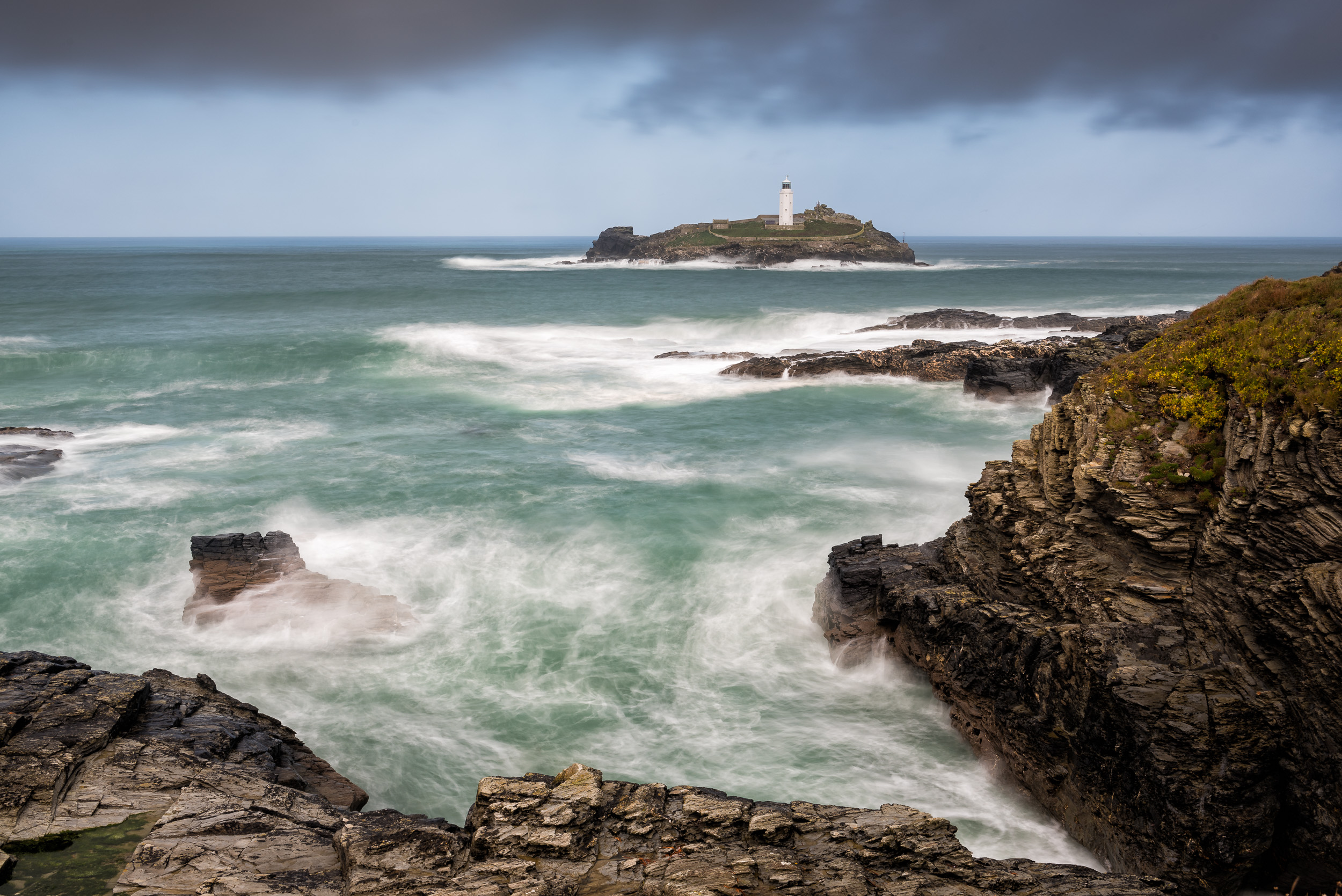
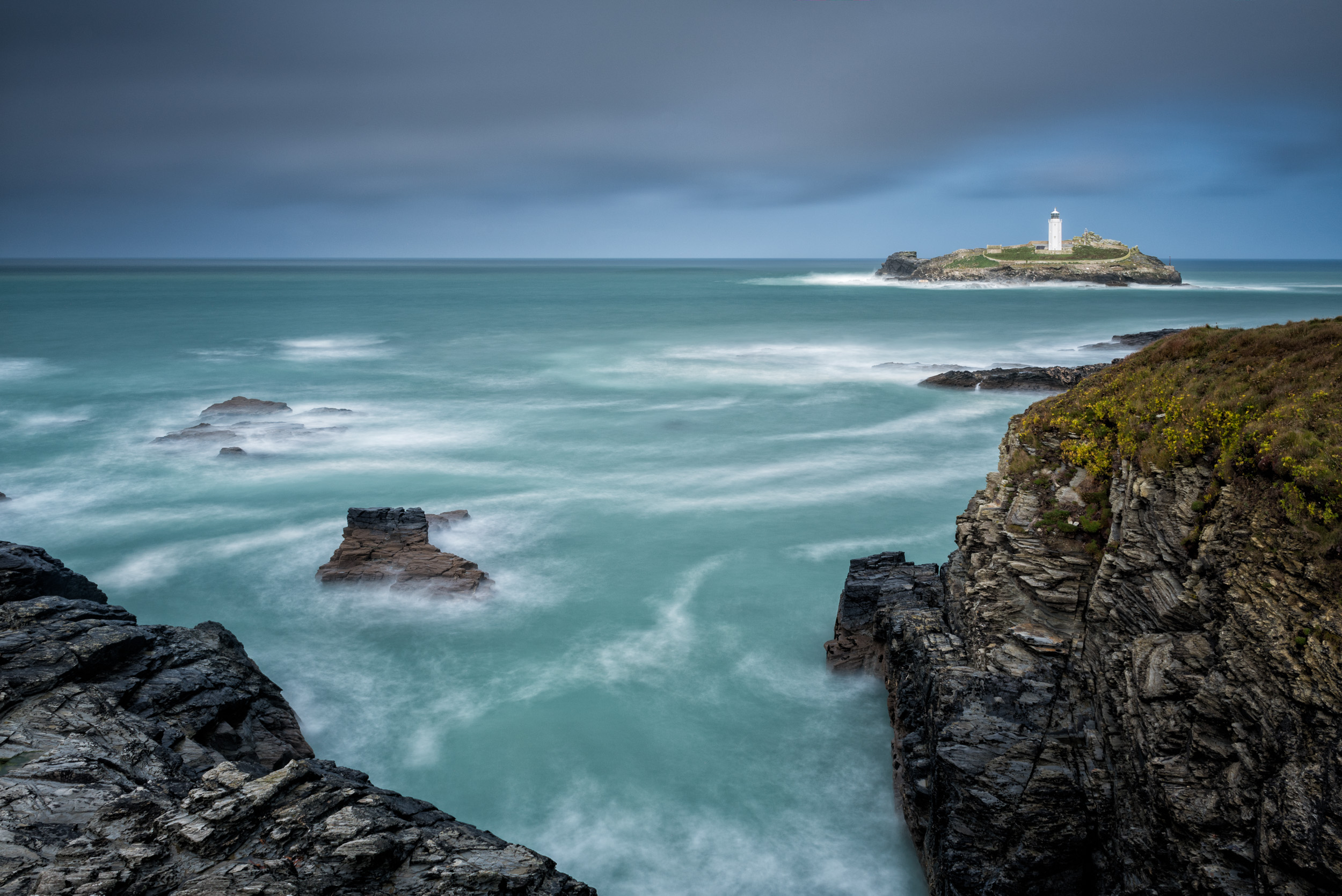
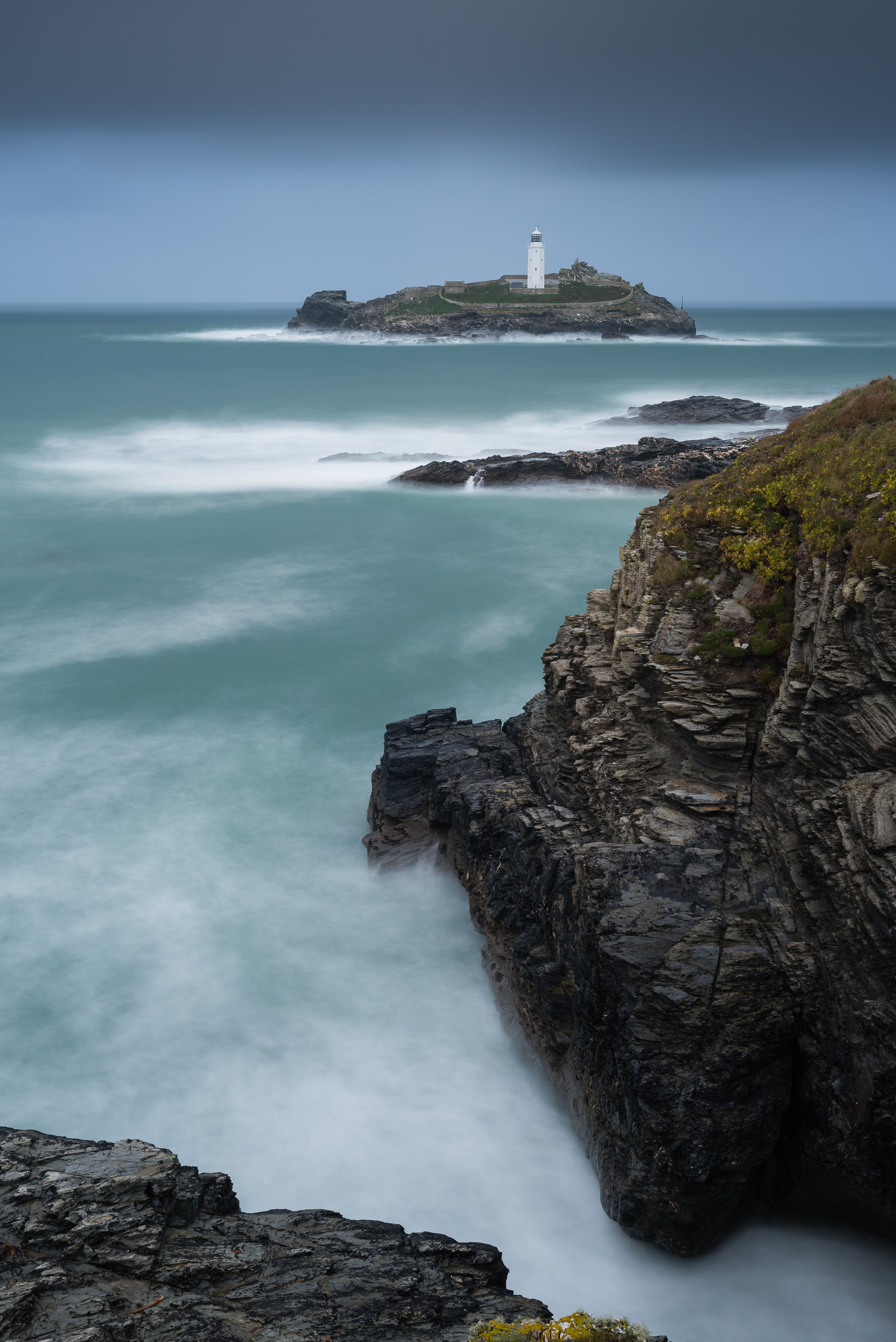
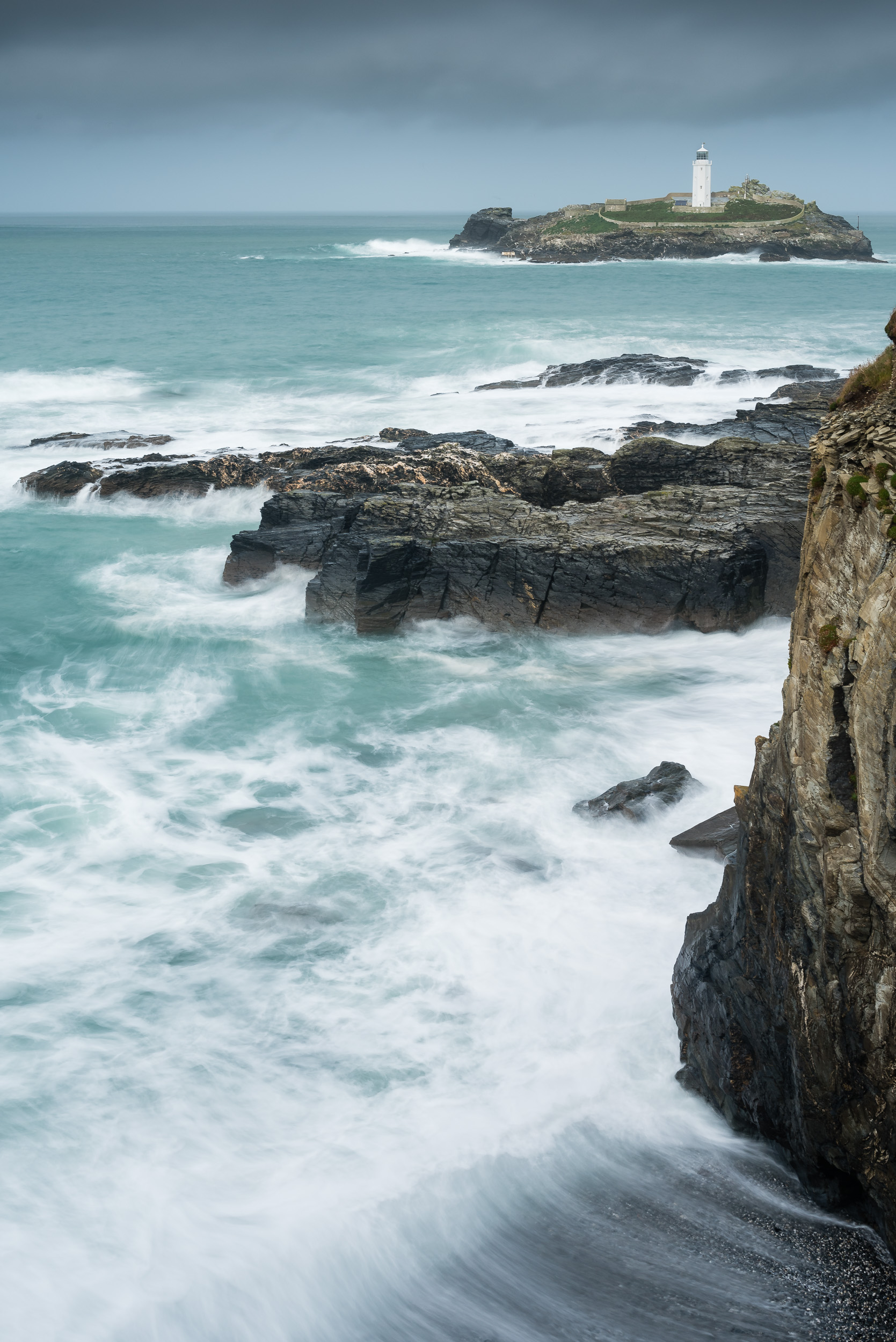
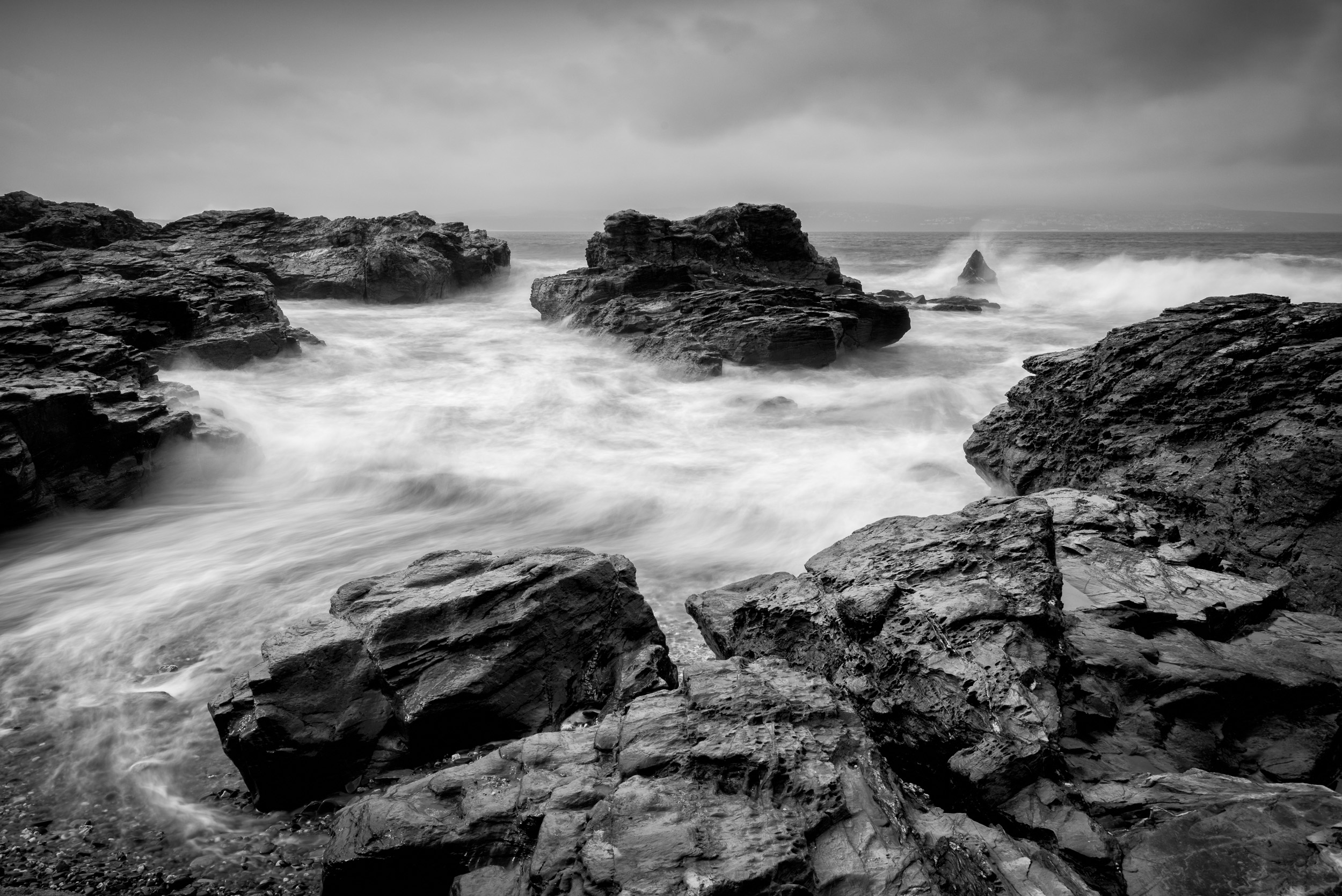
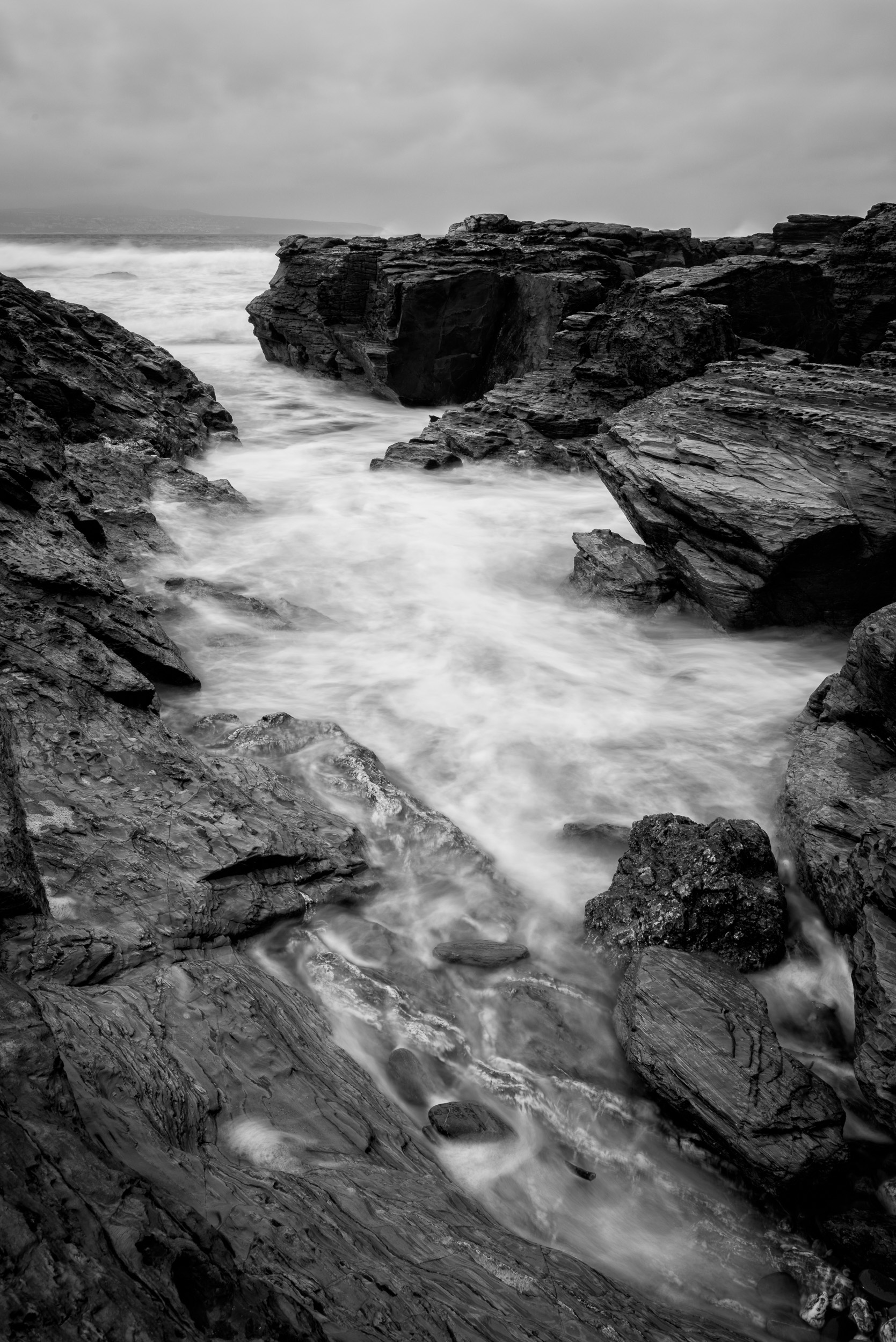
Since that initial visit, Godrevy Point has been on my locations map. However, as it's 2 hours from home, I've always favoured going to Trevose Head which is a little closer.
Returning to Godrevy
This week I finally decided to return to Godrevy Point. The weather forecast and tides were favourable, and I had enough time to drive there and still have time to take photographs before the sun would set.
As it had been nearly fours years since my last visit the first thing I did was have a little walkabout. There are all the cliff top locations to look at, as well as locations down on the beach and the rocky ledges. As I knew the tide was going out, I felt OK about going down onto the ledges. I still had to keep a very close eye on the waves though. It's always best to watch the water for a few minutes before moving onto your next spot as the strength and reach of waves can vary.
My first image from my visit, shown below, was taken up on the cliffs along the South West Coast Path. It's a pleasing enough image but it lacks dramatic light. Some light on the island or cliff face to the side would have really lifted the image. Normally I would have also gone for a long exposure here, but I wanted to capture the movement of the waves so went for the shorter exposure time.
Godrevy Lighthouse from the South West Coast Path, Cornwall - Nikon D850, Nikkor 16-35 mm f/4 at 25 mm, f/11, 1/10th sec @ ISO 64, Lee Filters Landscape Polariser and 2 stop ND Grad.
For my next spot, I decided to leave the South West Coast Path and head down onto the beach and Godrevy Cove. While the lighthouse is a prominent feature of coastline at Godrevy, not all photographs need to include it. The photograph below is actually my favourite of the evening, so it pays to explore an area before digging in your tripod legs.
Again for this image, I really wanted to capture the movement of the waves. Using a polariser not only enhanced the colours, and reduced glare, but it also reduced the amount of light entering the camera, allowing me to get a slightly longer exposure without the need for an ND filter.
Godrevy Point Waves (Godrevy Cove), Cornwall - Nikon D850, Nikkor 24-70 mm f/2.8 VR at 24 mm, f/13, 1/8th sec @ ISO 64, Lee Filters Landscape Polariser and 2 stop ND Grad.
It's important to try new things every now and again, and it's OK to experiment with your photography. While the photograph of the beach stones below might not win any awards, it was still fun to take and provides a welcome break from photographs of waves!
Godrevy Point Beach Stones (Godrevy Cove), Cornwall - Nikon D850, Nikkor 24-70 mm f/2.8 VR at 70 mm, f/8, 1/4th sec @ ISO 64, Lee Filters Landscape Polariser.
As the sun started to set, I headed down to the rocky ledges to get ready for my final shots of the day. I was hoping for better light, either to illuminate parts of the scene, or for it to go dark and stormy, but I ended up with something in the middle. So while I like the composition of both of the images below, they just lack something to make them special. Maybe I'm just getting fussier with my photogrpahy these days!
Dusk at Godrevy Lighthouse, Cornwall - Nikon D850, Nikkor 24-70 mm f/2.8 VR at 27 mm, f/13, 1.3 sec @ ISO 64, Lee Filters Landscape Polariser.
Just a little note on the photography below. Unfortunately, both my main tripod and cable release were away for repair making capturing this photograph tricky. I needed to use the self-timer so there wasn't any camera shake from pressing the shutter button. Normally 2 seconds would be enough, but because the tripod wasn't as stable as my normal tripod, it needed to be 5 seconds. This makes timing really difficult as waves aren't as predictable as you might hope!
Godrevy Lighthouse from Godrevy Point, Cornwall - Nikon D850, Nikkor 24-70 mm f/2.8 VR at 38 mm, f/13, 0.5 sec @ ISO 400, Lee Filters Landscape Polariser.
More Godrevy
I really enjoyed my visit to Godrevy. It was great to be back and I really must make the extra effort to return there again. Looking back at my images from 2014 and those I captured this week, I'm not sure that I don't prefer the images from 4 years ago. I think it probably has something to do with the moodier skies of the images back then. Still, I was very happy that I undertook the 4 hour round trip to Godrevy.
I also have some exciting news. While I was there, I actually did a little filming for my YouTube channel. I'm producing a video on photographing Cornwall's coastline and Godrevy is one of the featured locations. I'm not sure when the video will be ready, but be sure to head over to my YouTube channel and subscribe. Remember to click on the bell icon as well so you'll receive a notification as soon as I post up a new video.
So have you photographed Godrevy Point before? Did you photograph the lighthouse or exclude it? Did you prefer my 2018 or 2014 photographs? Let me know in the comments below.
Friends, Fun and Landscape Photography
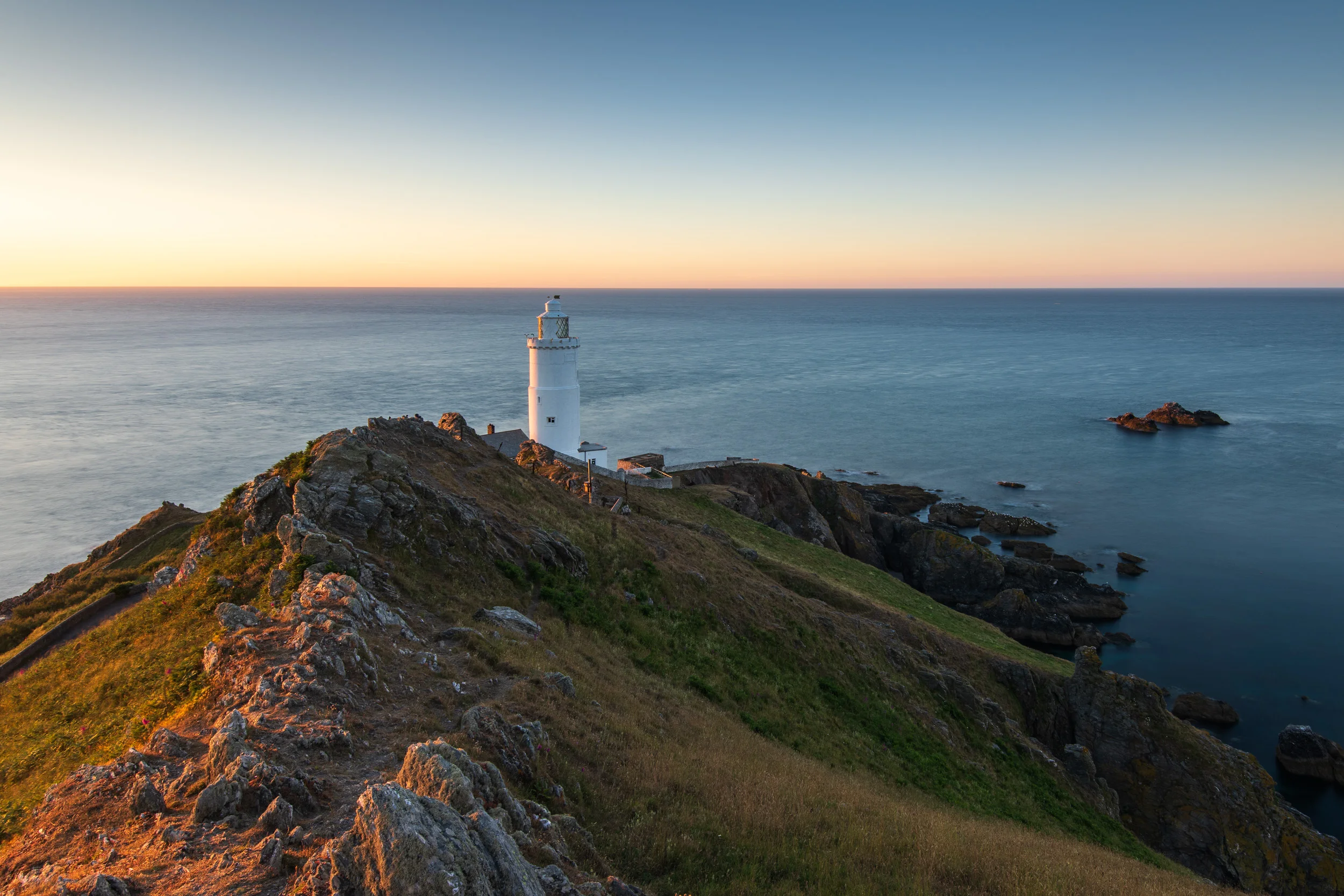
In the blog this week I share with you my latest video where I head out with a couple of landscape photography friends to capture sunrise photographs of Start Point lighthouse on the south Devon coast. Those 3am alarm calls don't seem so bad when you are having fun with friends!
A Solitary Pastime
For me, some of the things I love about landscape photography are the early starts and the solitude. This may sound like an odd thing to say but those unsociable hours mean that my photography generally doesn't interfere with my other commitments. Though I'm a very sociable person, there aren't many better things than watching the start of a new day with nothing but the sound of the breeze and the birds singing.
Don't get me wrong, if you see me one morning out taking photographs, come over and say hello. Many a trip out with the camera has been enhanced with a good old chat.
Photography Friends
One of the unexpected benefits of publishing videos on my YouTube channel is that I've made a few friends along the way. People that not only share my passion for landscape photography but people I can have a bit of a laugh with.
When two of my photography friends Gareth Danks and Chris Sale decided to visit me on my home turf I was delighted. I knew that even if the photography turned out to be challenging, the spirit of friendship and general attitude towards fun would make the whole experience more enjoyable.
You can see how we got on in my latest video:
We did a lot more larking about than was showed in the video, but hopefully, I've shown some of the collective spirit we had that morning. I'm not sure I would have driven all the way to Start Point at that time in the morning if it had been for Chris and Gareth!
If you have time, you should really check out their videos from our little adventure as well:
Is landscape photography something you prefer to do on your own? Do you have any friends that also share your passion? Let me know in the comment below.
Those Photographs
Here are the photographs that you saw in the video.
Sunset at The Daymark - Devon: Nikon D850, Nikkor 16-35 mm f/4 @ 20mm, 1/5th sec @ ISO 64, f/13, Lee Filters Circular Polariser.
Dawn Light on Start Point Lighthouse - Devon: Nikon D850, Nikkor 16-35 mm f/4 @ 19 mm, 10 secs @ ISO 64, f/13, Lee Filters 6 Stop IRND.
A Landscape Photographers Basic Guide to Calibration and Profiling
How do I calibrate my monitor? How do I profile my printer? How do I improve the quality of the photographs I print? You don't need to be a colour expert to improve the way your images look on screen and in print. In the blog this week I show you how.
The Science of Colour
A quick search of the internet on the topics of colour management, monitor calibration and printer profiling, and one would be excused in deciding it was all too much effort. However, like many things in photography you can decide to get your head into the science of it, or you can take a more measured approach and make some small changes to your workflow.
Calibration and Profiling
Even though I don't print high volumes of my landscape photographs, I've always strived to make my workflow is as colour accurate as possible. But why? Most people probably won't even view my images on a calibrated monitor. There are a couple of reasons, Firstly, just for my own personal satisfaction. I like to know what I'm looking at is an accurate representation of the colours in my photographs.
The other reason is that when I print one of my images on my Canon Pixma Pro-10s, I want to be confident that what I print matches what I see on screen.
Perhaps the best way to tell you about my workflow is to show you:
In the video, I mentioned a few links that you might want to look at. In case you missed them in the YouTube video description, here they are again:
For me, those extra little steps I take to calibrate and profile my monitor and to also profile my printer are worth a little extra effort in my workflow. I love the satisfaction of watching an image come to life on the screen as I post process it and then watching it turn into something physical when I print it. knowing that the colours remain accurate along each step is an extra bonus.
So does your workflow include calibration and profiling? If not, does this video encourage you to try and implement new workflow? Let me know in the comments below.
That Image of Trevose Head
In case you wanted to see that image of Trevose Head that you saw in the video in a bit more detail, here it is below:
Trevose Head, Cornwall.
If you want a little more information on Trevose Head, then check out my blog post on this fantastic Cornish location.
PS - The product links used in this article are Amazon affiliate links. By buying through the links I may receive a commission for the sale. This has no effect on the price for you.

Winter Solstice Adventure
In the blog this week I share with you the highs and lows of landscape photography as I head out on winter solstice to capture some images.
The Longest Shortest Day
Back in June of 2017, I headed out with the camera to create some landscape images on the summer solstice. You can see the images I created that day along with the video I made by clicking here.
I really enjoyed that day so I knew that when winter solstice came along in December I was going to spend the day out with the camera. Being the shortest day of the year it shouldn't have been nearly as tiring as the summer solstice.
Unfortunately when winter solstice did come around the weather was grey and overcast. I had checked the weather forecast the night before and had planned my locations to suit the weather. I'm all for "embracing the grey", but a full day might well be a challenge too far even for me!
As with summer solstice, I spent the day capturing images and filming my experiences. It was definitely a tough day. Maybe I was tired, maybe I was feeling challenged, but one thing is for sure, it sure did feel like a long day. However, saying all that I did have some great experiences, and if you watch all the video you'll see something special happen right at the end.
Enjoy!
A Winter Solstice Gallery
As always I do hope you enjoyed watching my adventures. I tried to make the most of the weather conditions and the images I took that day both reflect my varying moods and the conditions I had to work with.
You'll have seen these images in the video, but here they are again in case you want a closer look.

Nikon D850, Nikkor 16-35 mm f/4 VR at 19 mm, 180 seconds at ISO 64, f/11, Lee Filters circular polariser and Big Stopper.
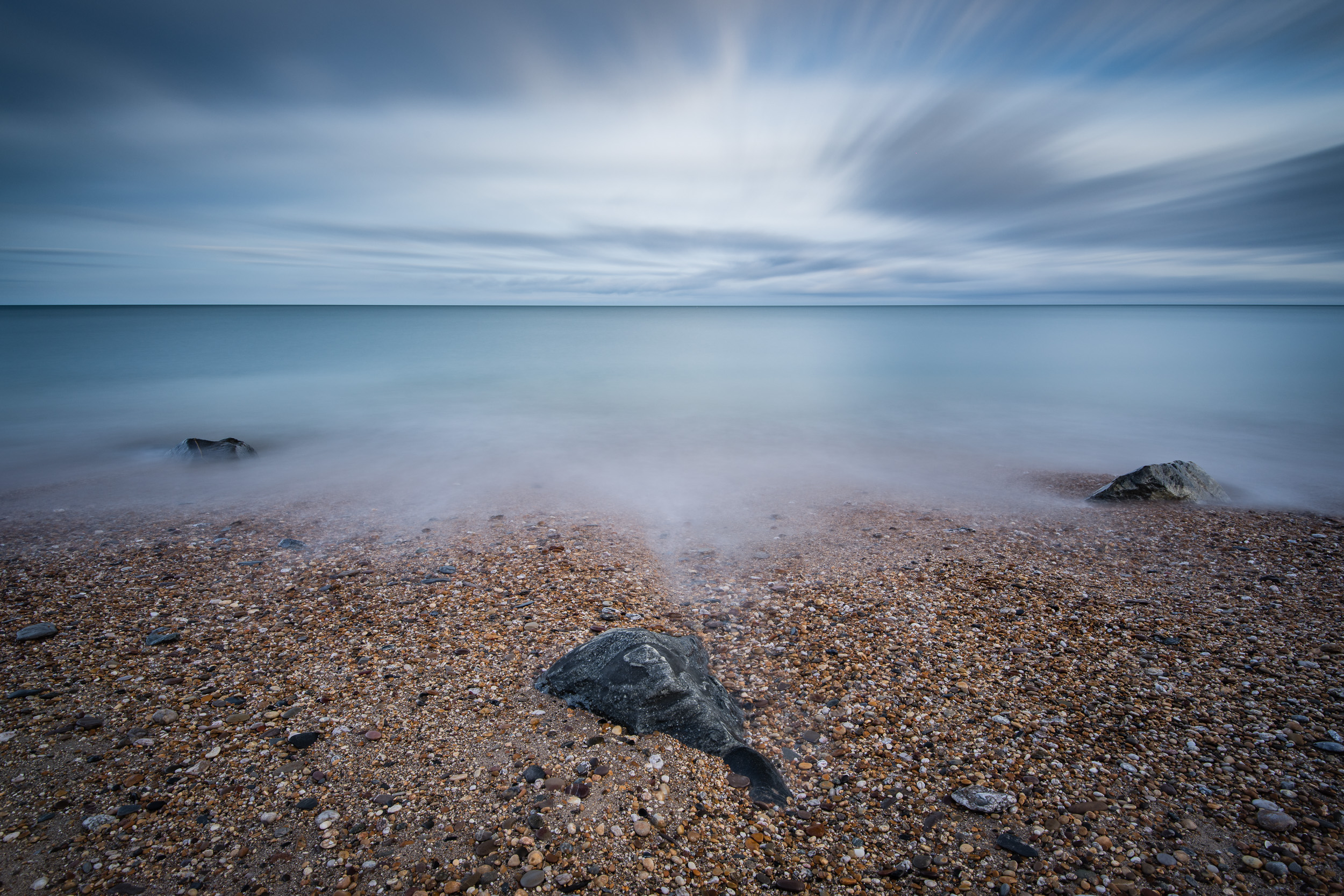
Nikon D850, Nikkor 16-35 mm f/4 VR at 19 mm, 180 seconds at ISO 64, f/11, Lee Filters circular polariser, ND grad and Big Stopper.

Nikon D850, Nikkor 16-35 mm f/4 VR at 18 mm, 180 seconds at ISO 64, f/13, Lee Filters circular polariser, ND grad and Big Stopper.

Nikon D850, Nikkor 16-35 mm f/4 VR at 18 mm, 8 seconds at ISO 64, f/13, Lee Filters circular polariser, ND grad and Little Stopper.
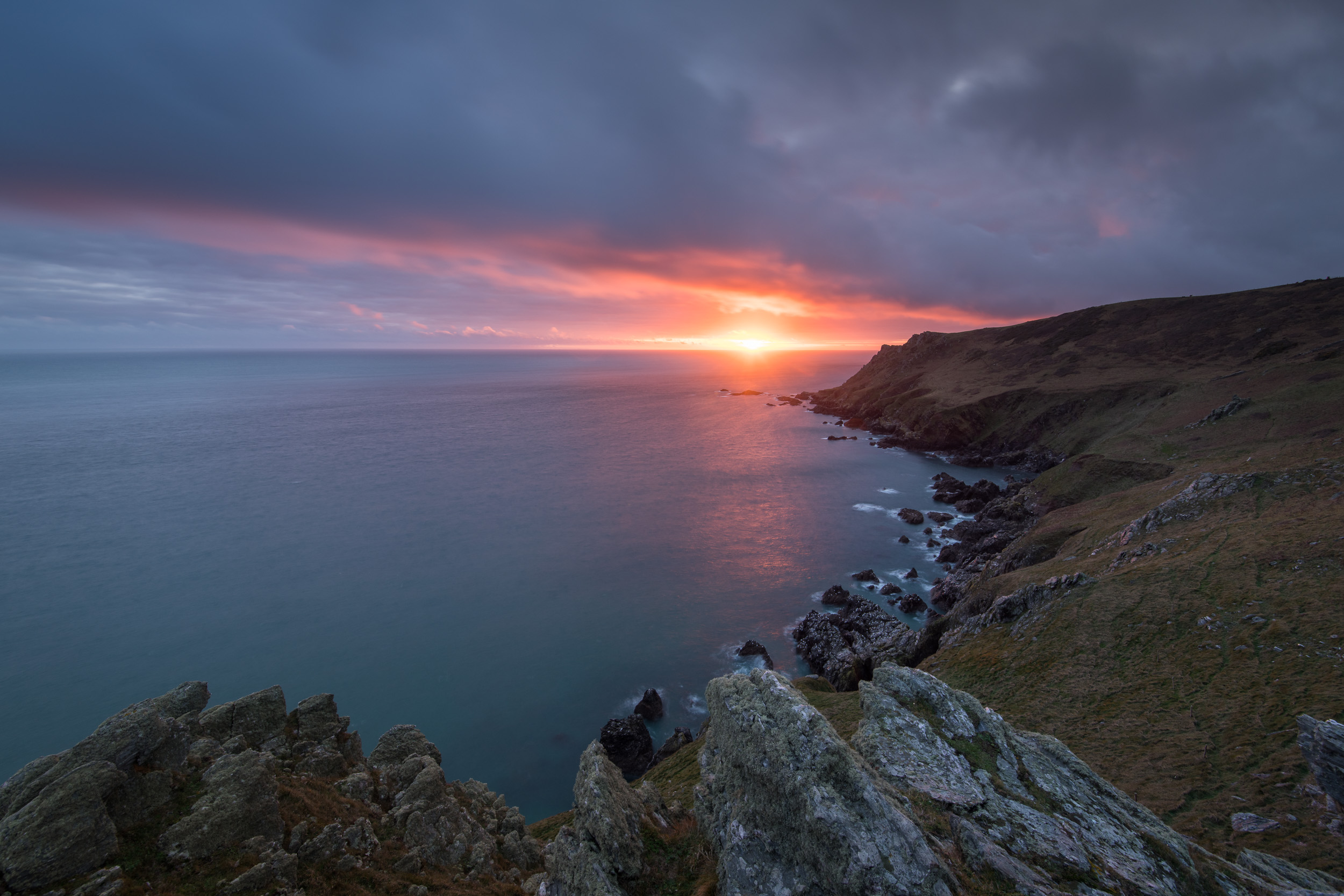
Nikon D850, Nikkor 16-35 mm f/4 VR at 17 mm, 4.8 seconds at ISO 64, f/13, Lee Filters circular polariser, ND grad and Little Stopper.
Well, I do hope you enjoyed those images and my winter solstice video. Did you head out for winter solstice? Have you had days where landscape photography has been both a joy and a drag? Let me know in the comments below.

Same Spot, Different Photo
In this blog post I discuss why I was back photographing Trevose Head again and how despite putting my tripod legs in almost exactly the same spot as before I ended up with a unique image.
The Perfect Location?
I like shooting at Trevose Head on the north Cornish coast. I never seem to leave that location without having taken a decent photograph. Sometimes I even leave there with a great photograph. I also just enjoy being there. It's an amazing bit of coastline with its lighthouse, rocky cliffs and crashing waves. It can get very windy, and salt spray on your equipment can be a challenge, but just being there and watching the sunset over the coast is a pleasure.
If you want to see what I'm talking about then you should check out my 5 Minute Photo Adventure video from Trevose Head.
But what makes Trevose Head so special? Why do I keep putting my tripod legs in the same spot? I think one of the great appeals with Trevose Head is that it works in a variety of weather conditions. It doesn't seem to matter if the weather is good or bad, overcast, windy, or even what season it is. Don't get me wrong. It's not the perfect location. No location is. However, if you can vary your technique and adjust your style to the conditions then it's one of those locations where you stand a good chance of making a decent image.
Here are some of my previous images from Trevose Head.
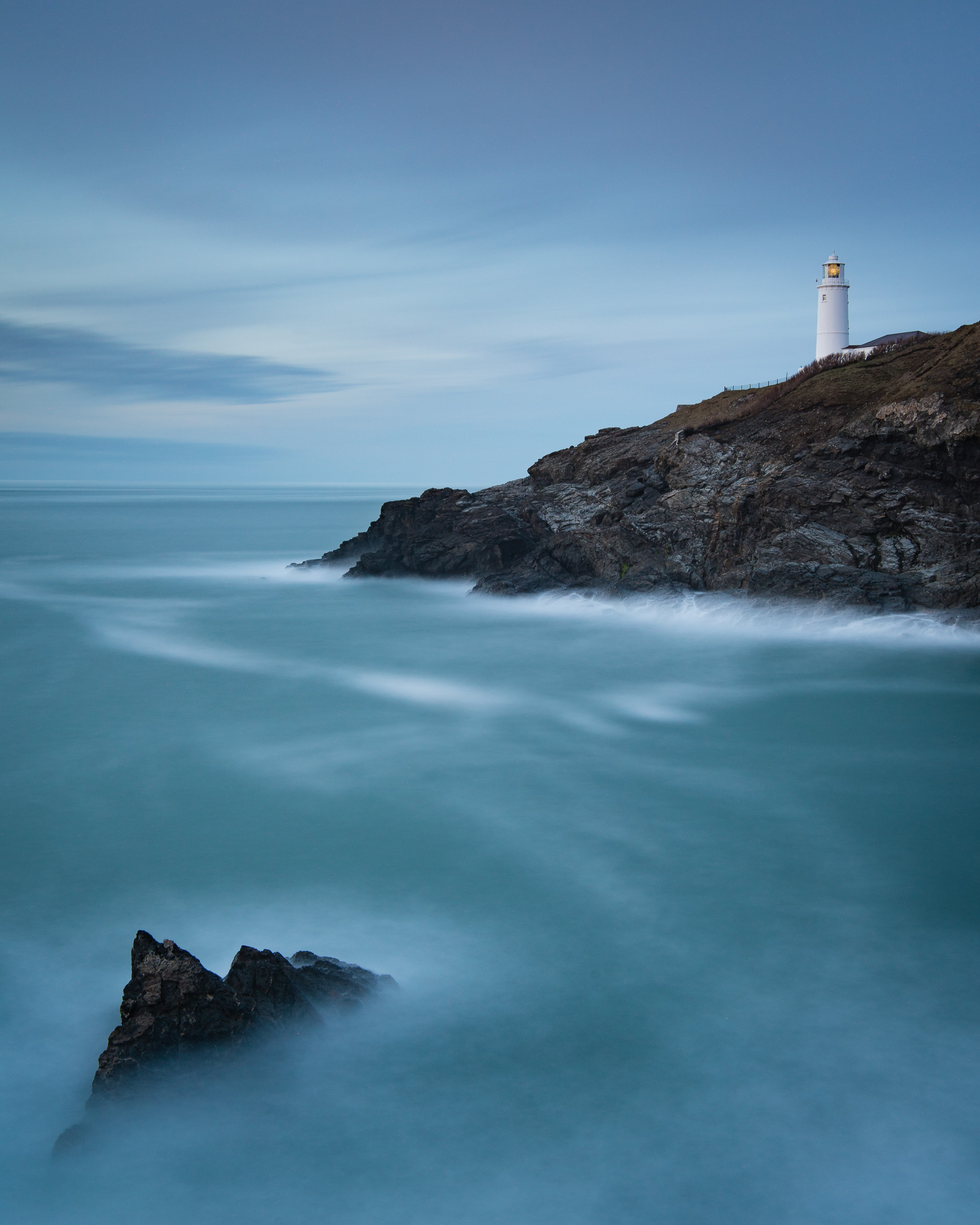
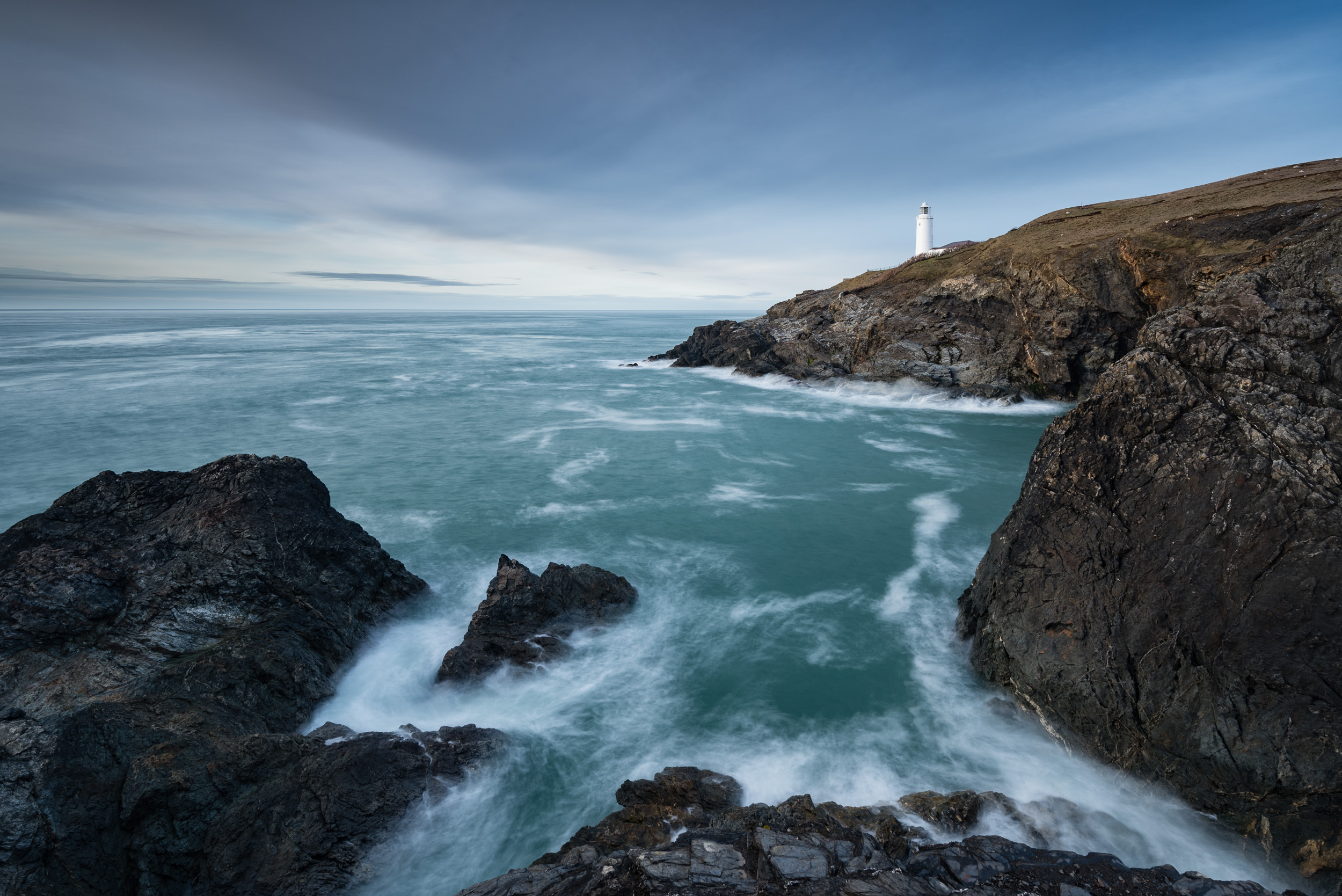
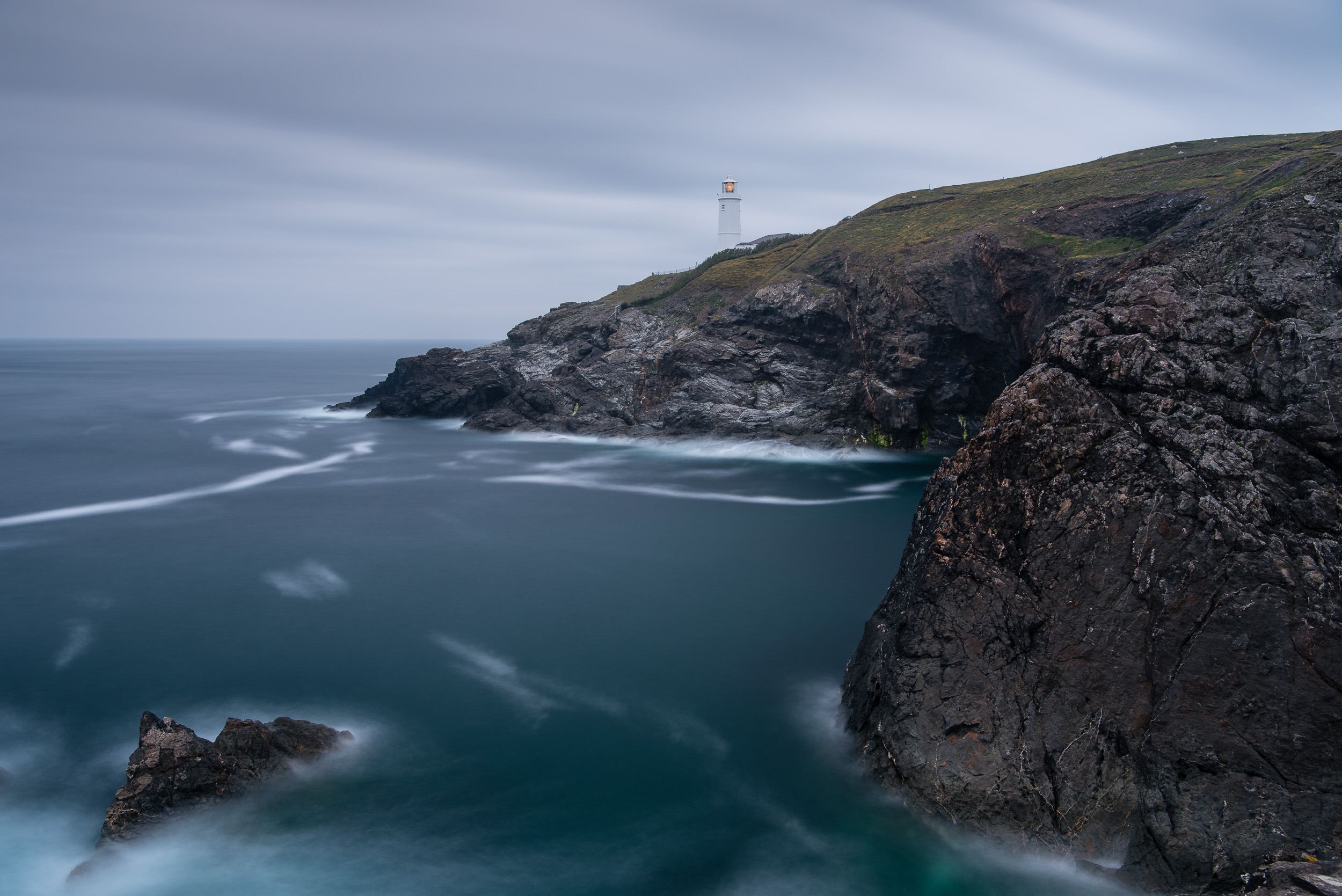
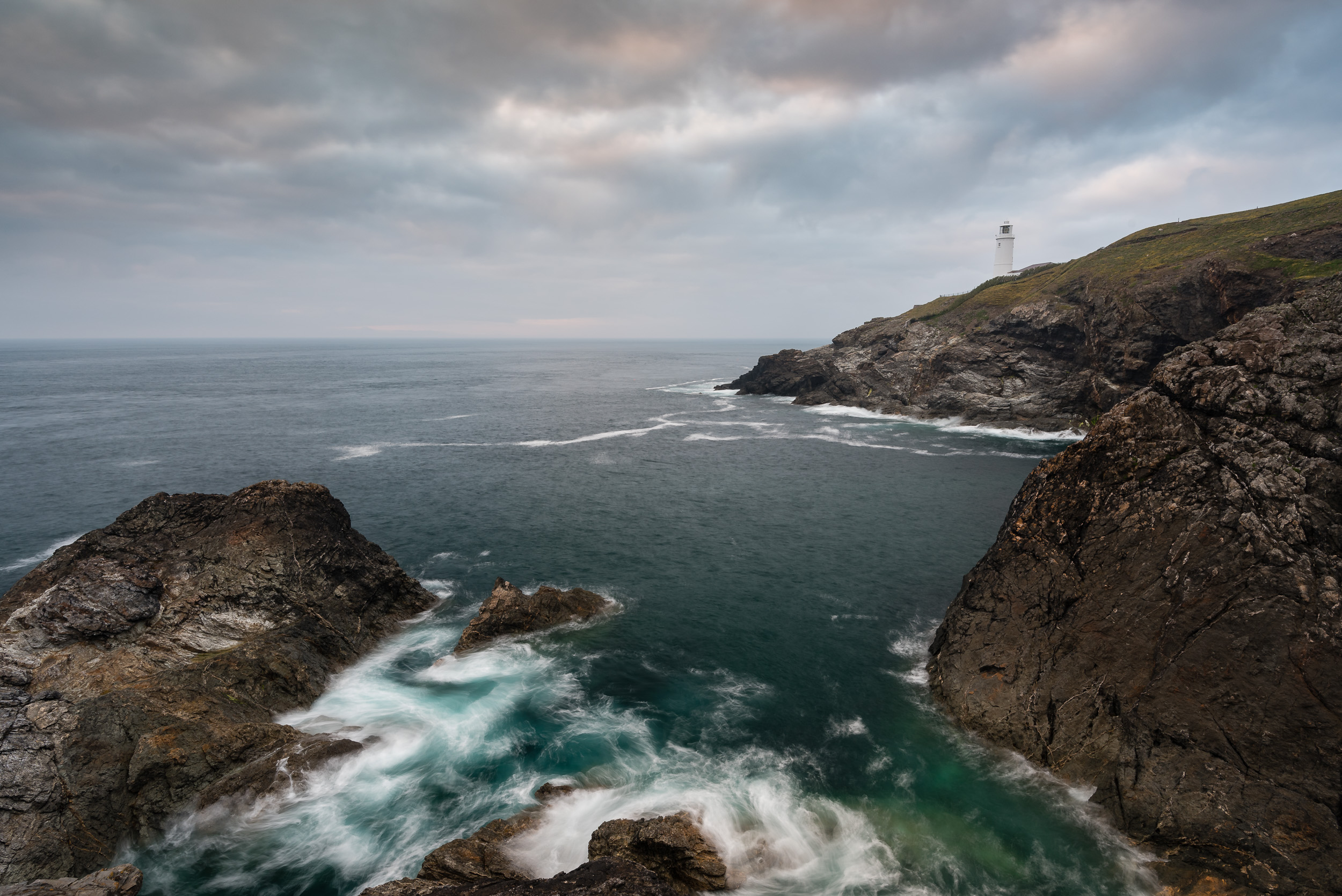
Whose Tripod Holes Are They?
I've just returned from another visit to Trevose Head and the image I captured there inspired me to write this blog post. Though I've previously captured some images that I'm really happy with from Trevose Head, I still thought I could capture something new. So when my friend asked me if I wanted to join him for an evening's shoot at Trevose Head there was only one answer.
It was going to be tough to get there before sunset though. The earliest I could leave home was 7 pm, and given that it is around a 90-minute drive that would only leave me about 40 minutes to jump out the car, make the short walk, setup, and capture something. But the weather forecast looked good and based on my previous experience from that location, I knew the journey would probably be worth it.
When I got there my friend had been shooting for a while and after a quick catch up, I got to work. For me, the best location to shoot Trevose Head is from Stincking Cove looking north east towards the lighthouse. Being a cliff top location there isn't a huge amount of room to move about, so my tripod legs were probably placed in the same spot as they usually are. However, even with my inability to move around a lot there is still plenty of variation to be had by shooting different focal lengths and exposure times.
What made my image different this night was the light. Photographers, including myself, do talk about the "light" an awful lot, but hopefully in this image you can see what a difference the light can make:
Nikon D750, Nikkor 16-35mm f/4 @ 22mm, 0.5 sec, ISO 100, f/16, Lee Filters circular polariser, ND grad.
I'm not saying this image is necessarily any better than some of my other images taken from the same spot, but it is a very different image from my darker, moodier images that I've taken there previously. The light was only there for a few minutes but I love the way it reflects off the sea, the cliffs and the lighthouse. It just shows you that every visit to a location can be unique and therefore produce a unique image.
To ND or Not To ND
I'm a big fan of the ND filter. I use them a lot and you can see how I use them in this video. That doesn't mean I will use them in all my images though. I try to use them creatively if I think the image will benefit from a slightly longer exposure. I do tend to go for longer exposures for my seascapes as I like the resulting smooth water or the patterns that are painted by the moving water. You'll maybe have noticed though that the image I've just shared above isn't a long exposure. At the time I felt that smoothing out the water wouldn't be the right thing to do for the image I wanted to create. I liked the choppy water and the way the light reflected off the tops of the waves.
I did take a long exposure and while I am of course very happy with it, I still very much prefer the shorter exposure.
Nikon D750, Nikkor 16-35mm f/4 @ 22mm, 30 secs, ISO 100, f/16, Lee Filters circular polariser, ND grad.
Ignore Those Who Say...
All this talk of returning to a location to take the "same" picture reminds me of a Twitter post that I saw recently. I can't remember what it said exactly but it seemed to involve a number of photographers talking about a photograph of a few sets of tripod legs all crammed into the same spot. The general gist of the conversation was that these photographers lacked any original thought and were just copying each other or those that were there before them.
Though I didn't reply to the Twitter post, I couldn't have disagreed more for two reasons. Firstly, who's to say that just because a photograph has been taken from a spot before that another photographer can't take a similar image. If you are just starting out in photography I would actively encourage you to visit locations that you've seen in other peoples images. I even don't see any problem with trying to replicate the composition. It's often a good way of learning. If you have been inspired by an image you have seen then why not try your hand at that location.
I bring this topic up now because even though I have visited Trevose Head a few times and taken photos from the same spot, I get different results each time. So I would encourage you to put your tripod legs where my legs were and take the same photo. Your image will be unique and hopefully special to you.
The other reason I disagree with that Twitter post is that if you put two photographers in the same location at the same time you'll likely end up with two different images. An example of this was when I met a very nice photographer called Johnny Baird during a trip up to Scotland to photograph Glencoe. We both stood in the middle of the River Coupall, photographing Buachaille Etive Mor at sunset and despite the close proximity of our tripod legs, we shot very different images. Just because we were in the same location at the same time, how we choose to interpret the scene, choice of equipment and setup all meant we ended up with different images.
Don't let anyone tell you that a location has been overshot or that you must find a unique location for your photograph to be worth anything. So next time you're in Dorset, go to some of its most iconic locations such a Durdle Door and join the dozen other photographers that will be there and get your very own image.
Do you have a location that always delivers results for you? Did you prefer the long or short exposure that I took? What are your thoughts on visiting well shot or iconic locations? Let me know in the comments below.

Trevose Head - 5 Minute Photo Adventure
In this blog post I take you on another 5 Minute Photo Adventure. This time I'm off to Trevose Head on the north Cornish coast. This amazing location has a lot to offer the landscape photographer. Read the blog and watch the video to see why.
As a landscape photographer I'm extremely lucky to live in the south west of the UK. Even if I didn't have Exmoor and Dartmoor, I would still have over 630 miles of the South West Coast Path to photograph. With so much to choose from I couldn't possibly pick a favourite location, but when it comes to Trevose Head, I'd have to say it's up there in my top 10 Cornish coastal locations to photograph.
So what makes Trevose Head so special? Well, for me it's the drama of the location. It's got the lighthouse perched on a cliff edge, the rocky inlet where the waves come crashing in and it makes for a great sunset location just about all year round. And did I mention you can drive within 200m of the best spot to shoot from?
On the downside it is very exposed and getting blasted by rain, wind and sea spray isn't to be unexpected, so sometimes it's nice to have the car nearby after you've been battered by the elements!
If this sounds like the kind of location you might want to photograph, why not check out my 5 Minute Photo Adventure video below:
Padstow Lifeboat Station
As I showed in the video, the lighthouse isn't the only spot to photograph at Trevose Head. Located not farm from the lighthouse is Padstow Lifeboat station. As you can see on the map below both locations are close together and so if you have time it's worth visiting.
This was my first time visiting the lifeboat station. I remembered it after looking at the area on my custom Google Map while I was wondering about. It's not that easy to photograph if you want to include the surrounding elements such as the stairs down to the entrance, but with the right lens and a bit of moving about, a good image can be made.
Nikon D750, Nikkor 16-35mm f/4 at 22mm, ISO 100, 30 seconds, f/13, Lee Filters circular polariser, Little Stopper and ND grad.
Trevose Head Lighthouse
Though the forecast for Trevose Head was to be for relatively clear skies, as you can see from my first image this wasn't exactly the case.
Nikon D750, Nikkor 16-35 f/4 at 19mm, ISO 100, 2 seconds, f/11, Lee Filters circular polariser, 3 stop ND and ND grad.
While I do like this image what I was really hoping for was for some golden light from the setting sun (off to the left) to illuminate the rock faces. This would have really lifted the tone of the image. However, sometimes you just have to work with the light you have so I decided to adopt a slightly different style.
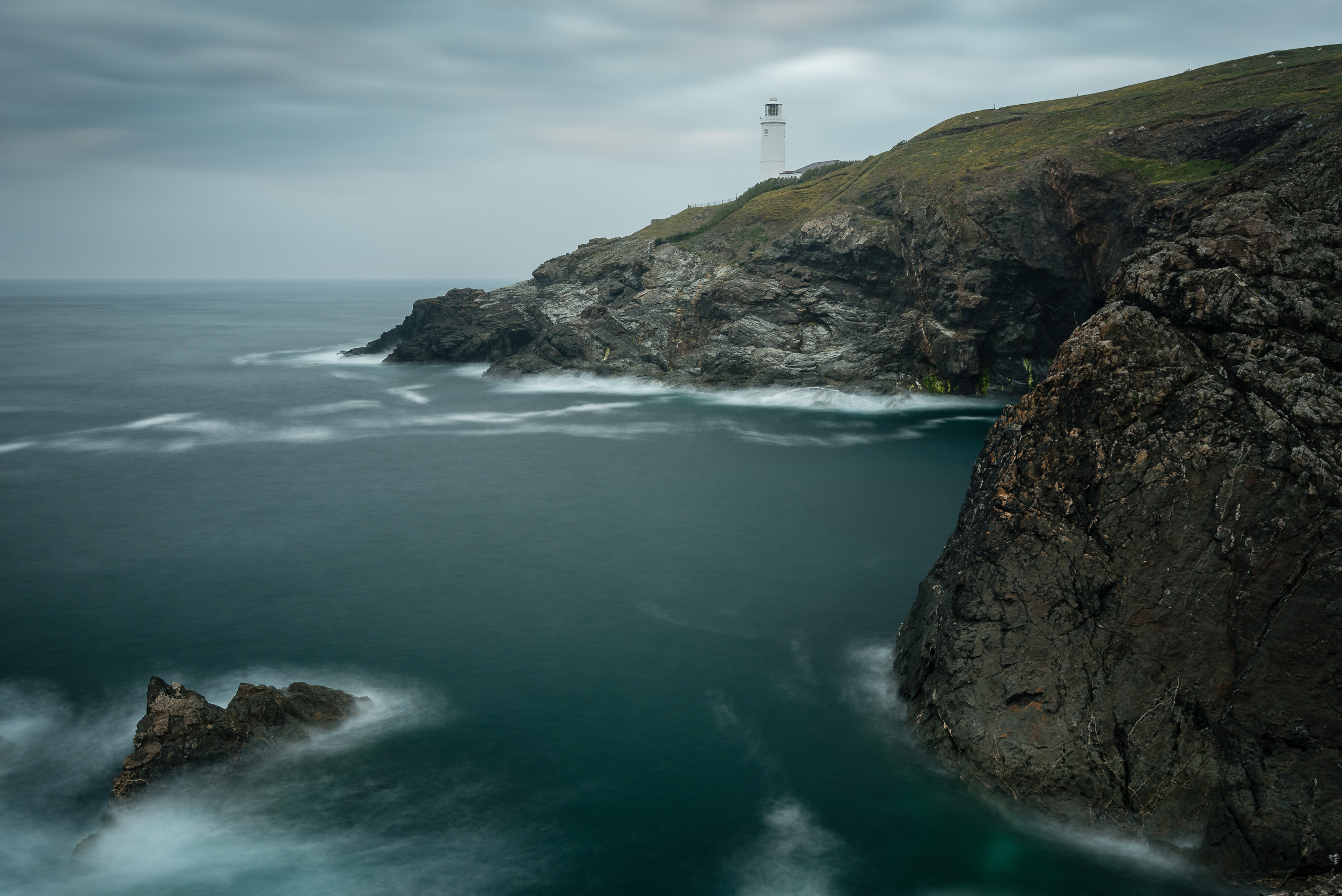
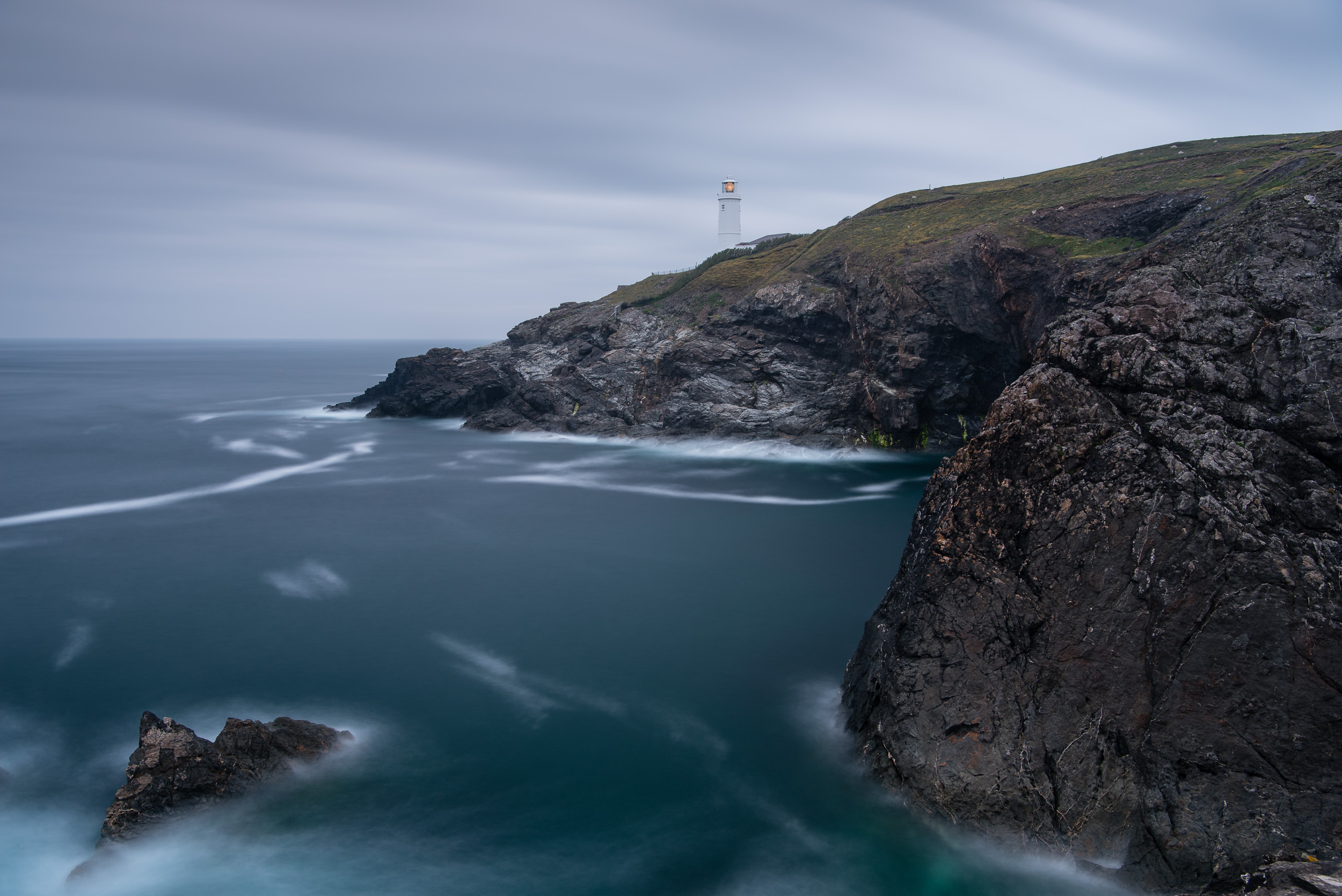
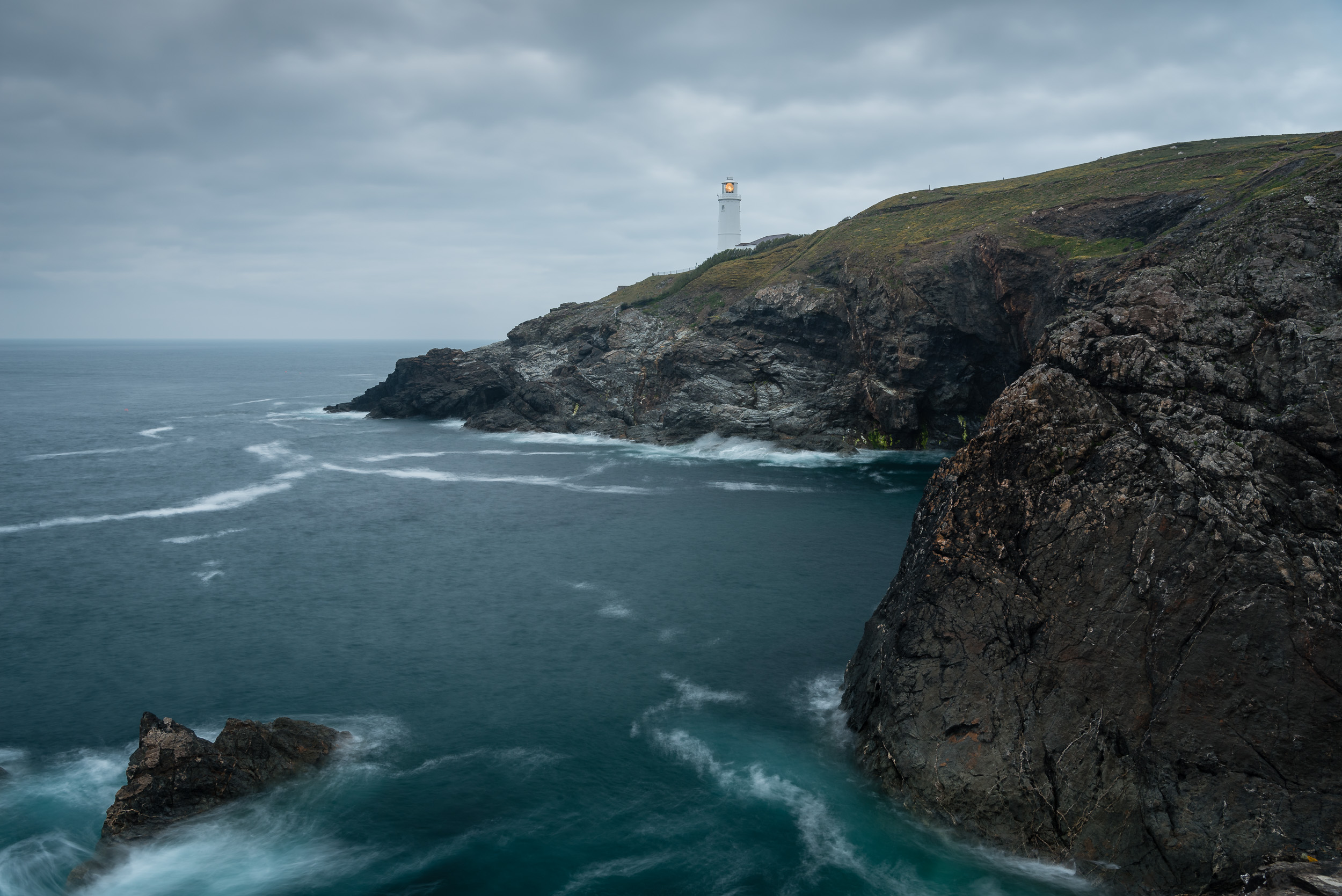
By embracing the grey and opting for longer exposures I was able to create a set of darker and moodier images. I also varied the exposure times by choosing different ND filters. The longer exposures allowed the crashing waves to paint white lines and create shapes on the image.
I'll be back...
Though I didn't manage to create the image I had planned for I still came away with some images that I'm very happy with. I also got a chance to to photograph Padstow Lifeboat station, so it was good to get two locations for the price of one! One thing is for sure, I'll be heading back to Trevose Head again in the near future.
So have you been inspired to visit Trevose Head? Have you photographed this location before? Let me know in the comments below.