Printing and Framing a Special Landscape Photograph
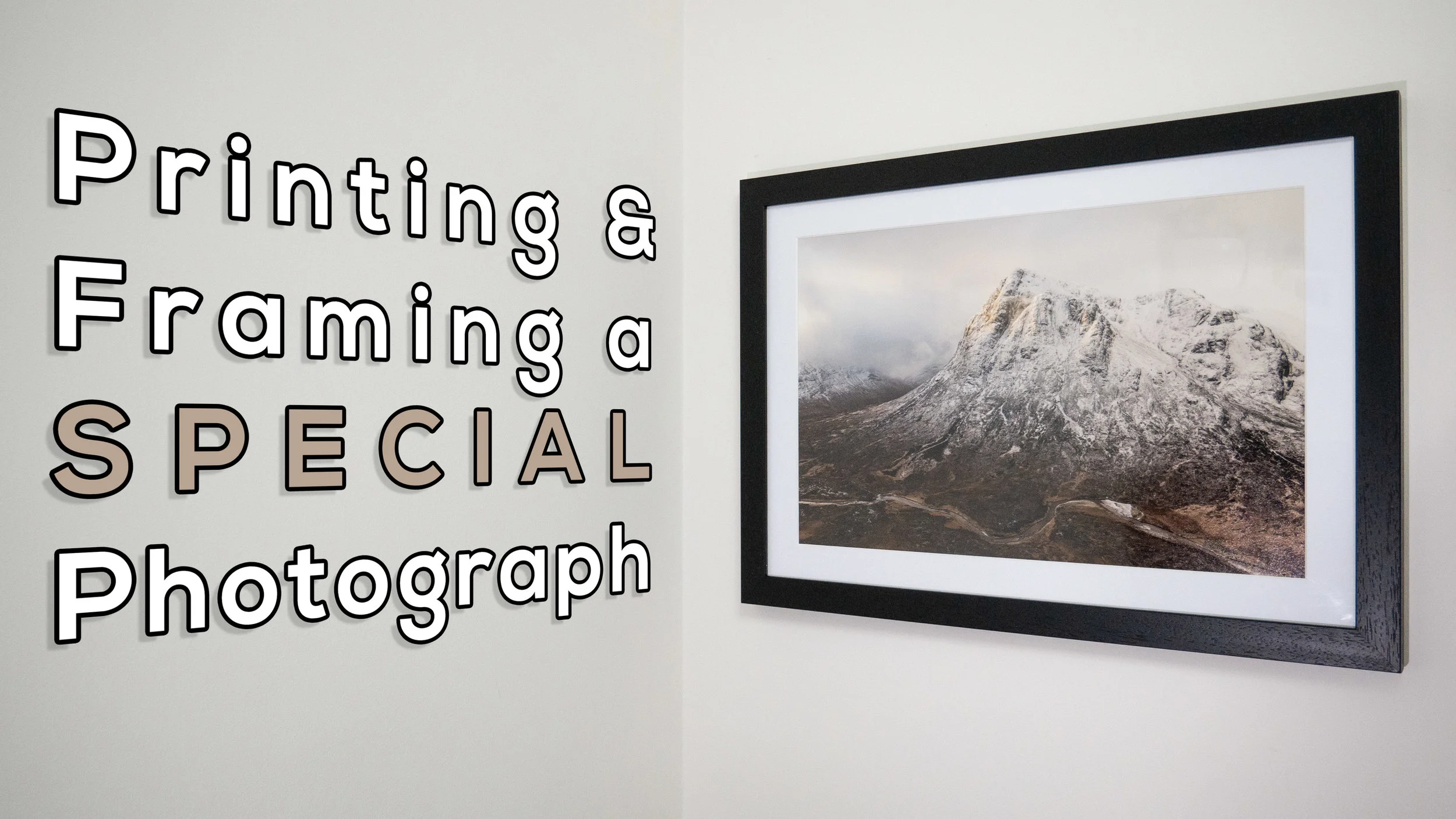
Some landscape photographs just need to be printed and hung on the wall. In this blog post, I take a very special image, print it, frame it, and give it a permanent place on my wall.
Success in Scottish Landscape Photographer of the Year
Entering big photography competitions can seem like a waste of time. Some of these competitions can attract 1000's of entries, sometimes even 10,000’s of entries . Getting shortlisted can seem like an achievement sometimes. How do you create a winning image though? There's no easy answer to that question. Judging, even in the same competition, can vary from year to year. Just look at the winning images from Landscape Photographer of Year since it started. It's really hard to "know" what the judges are looking for.
However, there is one thing I do know. If I don't enter I certainly won't win anything! There is also one piece of advice I can share , and it's a piece of advice given to me by a photographer and photography competition judge. He told me that if you think you have a strong image then keep entering it into competitions year after year. Even if it doesn't get placed in one competition, it might in another. It's also worth entering the same image in the same competition a different year.
I've always remembered this bit of advice, so ever since I took the image of Stob Dearg (Buachaille Etive Mor) you see below, I've been entering it into competitions. This perseverance has finally paid off and the image has received a commended award in the Scottish Landscape Photographer of the Year competition. It's the 2nd time I've entered it into this competition, and 4th time in all competitions. So if you have a good image that you think could win an award, don't be put off by the first failure. Keep trying!!
First Light on Stob Dearg, Buachaille Etive Mor, Glencoe - Nikon D750, Nikkor 24-70 mm f/2.8 VR at 28 mm, f/11, 1/25th sec at ISO 100.
Printing and Framing
The image is one that I am immensely proud off and it brings back many happy memories of my adventure to Glencoe (which you can watch here). While it will be a real privilege to see it in the yearbook from the competition, I really wanted to make my own print of it, frame it, and give it a permanent place on my wall.
In the video below I show you how I went about printing the image, selecting a paper, framing it, and eventually hanging it on the wall.
If you are interested in doing something similar yourself, here are the products I used in the video:
Fotospeed Cotton 305 - https://www.fotospeed.com/Platinum-Cotton-305-Paper/groupproduct/2937/
Fotospeed Baryta 300 - https://www.fotospeed.com/Platinum-Baryta-300/groupproduct/1437/
Fotospeed Legacy Gloss 325 - https://www.fotospeed.com/NEW-Legacy-Gloss-325-Paper/groupproduct/3103/
Picture Frames Express - https://www.pictureframesexpress.co.uk/
Conservation Tape - https://www.pictureframesexpress.co.uk/picture-frame-supplies/tapes/74/
Picture Hanging Strips - https://amzn.to/2TWuE2l
I hope you enjoyed this video and blog post. Do you have any photography competition tips? How do you go about displaying your prints? Let me know in the comments below.

The Importance and Joy of Printing at Home
One of the highlights of my time at The Photography Show this year was doing a talk on printing at the Fotospeed stand. In this blog post, I'm very happy to be sharing with you the unabridged video recording of that talk.
Photography Show Talks - An Opportunity
I'm a firm believer that if a good opportunity presents itself that you should grab it with both hands. So when the team at Fotospeed asked if I'd like to do a talk at The Photography Show this year there really was only one answer to give. Yes!
The topic of the talk was up to me but I knew almost straight away that I wanted to talk about printing. Printing has become an integral and enriching part of the photographic experience for me. As regular readers of this blog and viewers of my YouTube channel will know I like to do my printing at home. I've owned a Canon Pixma Pro 10-S for a couple of years now and ever since I made my first print I've been addicted to hitting that print button.
I wanted this talk to be an opportunity for me to share that passion for printing at home. I wanted people to get excited about printing their own work, to have fun with it, and use it as a way to improve their photography. Most of all I wanted people to see that it's a much more rewarding experience viewing their photographs in printed form.
The Importance and Joy of Printing at Home
Thanks to my fellow photographers and friends I'm able to share with you a video of the entire talk I did which was called The Importance and Joy of Printing at Home. Gareth Danks kindly filmed the talk for me, and both Gareth and Chris Sale were good enough to take the still images you see in this blog post.
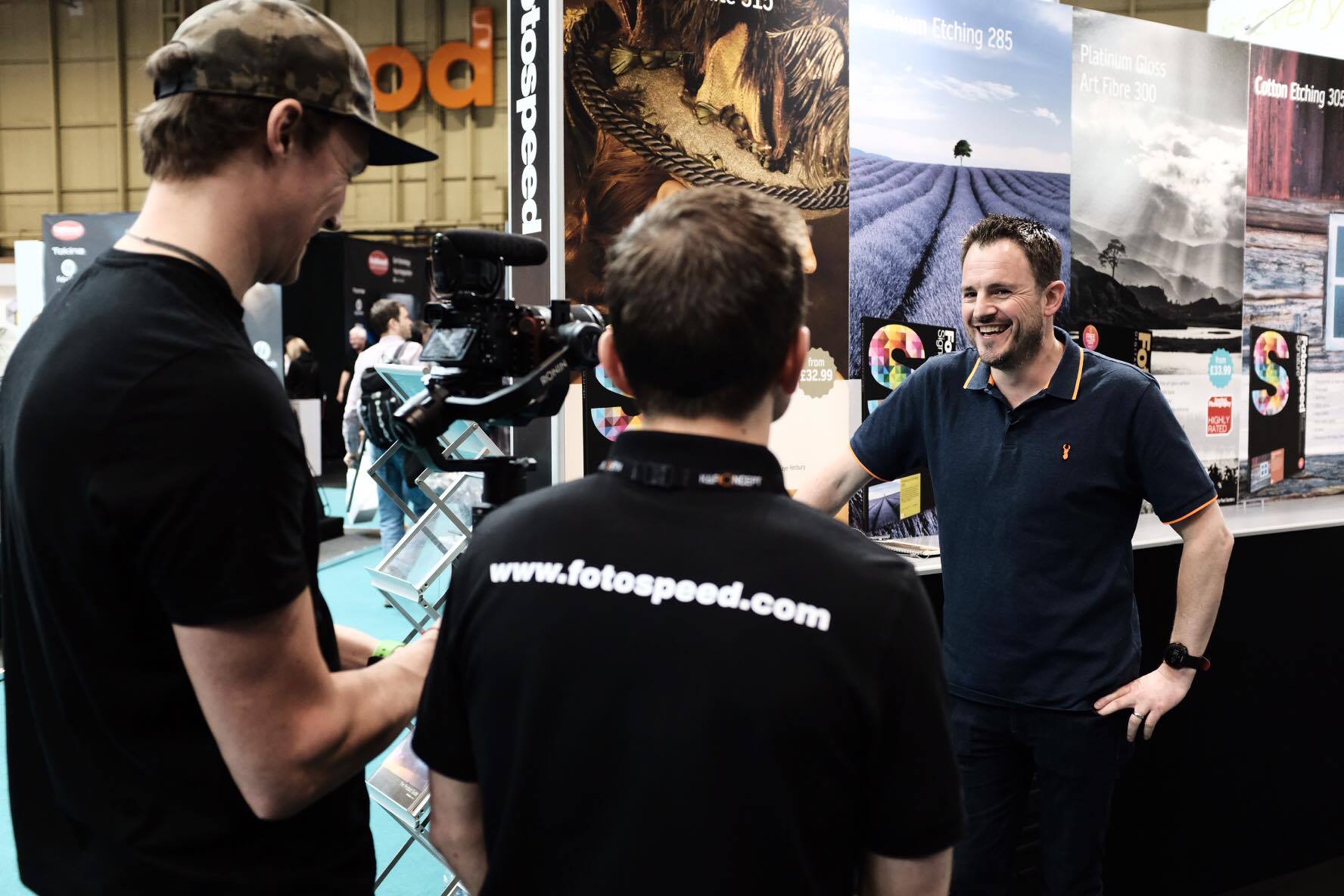
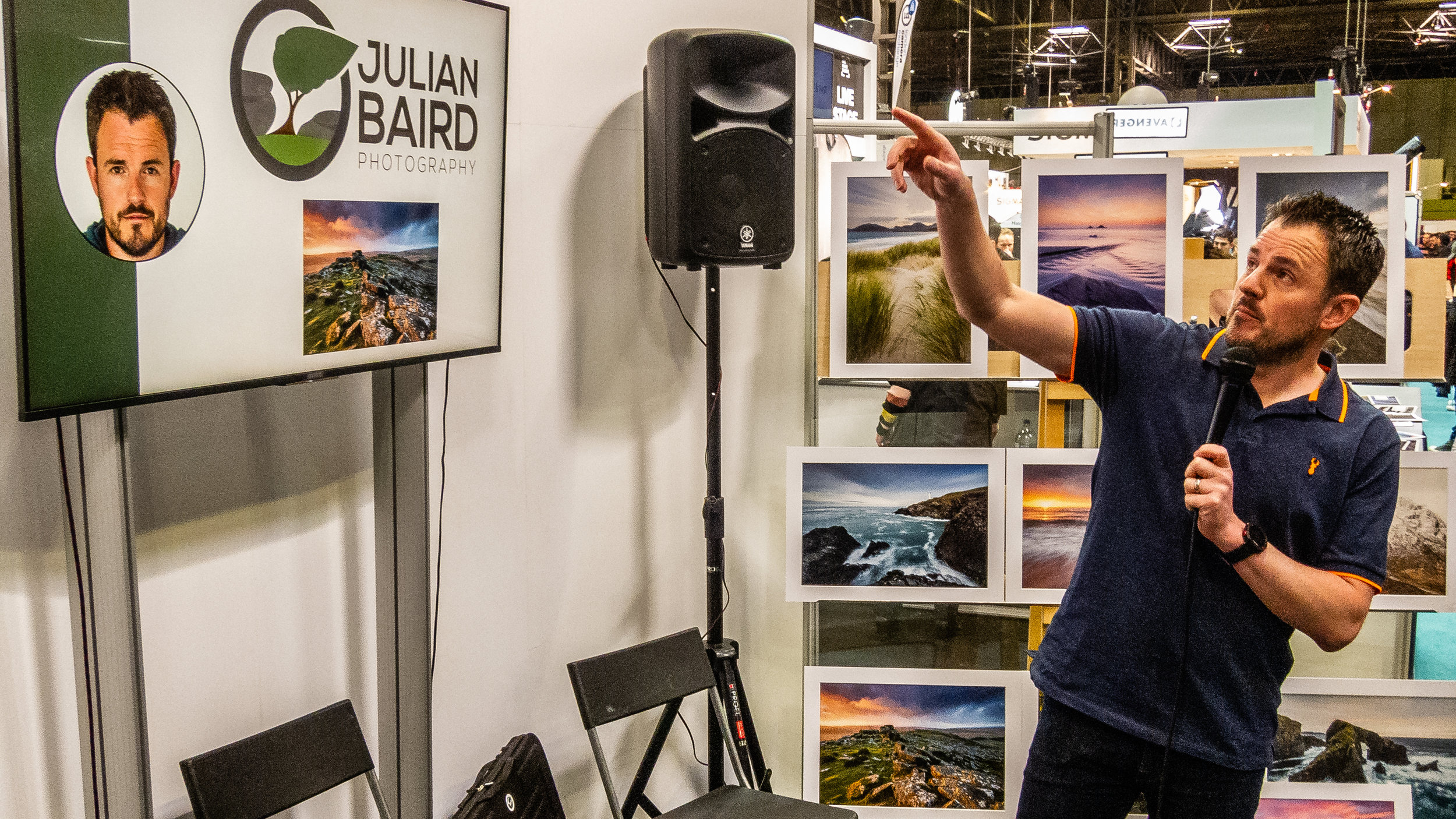
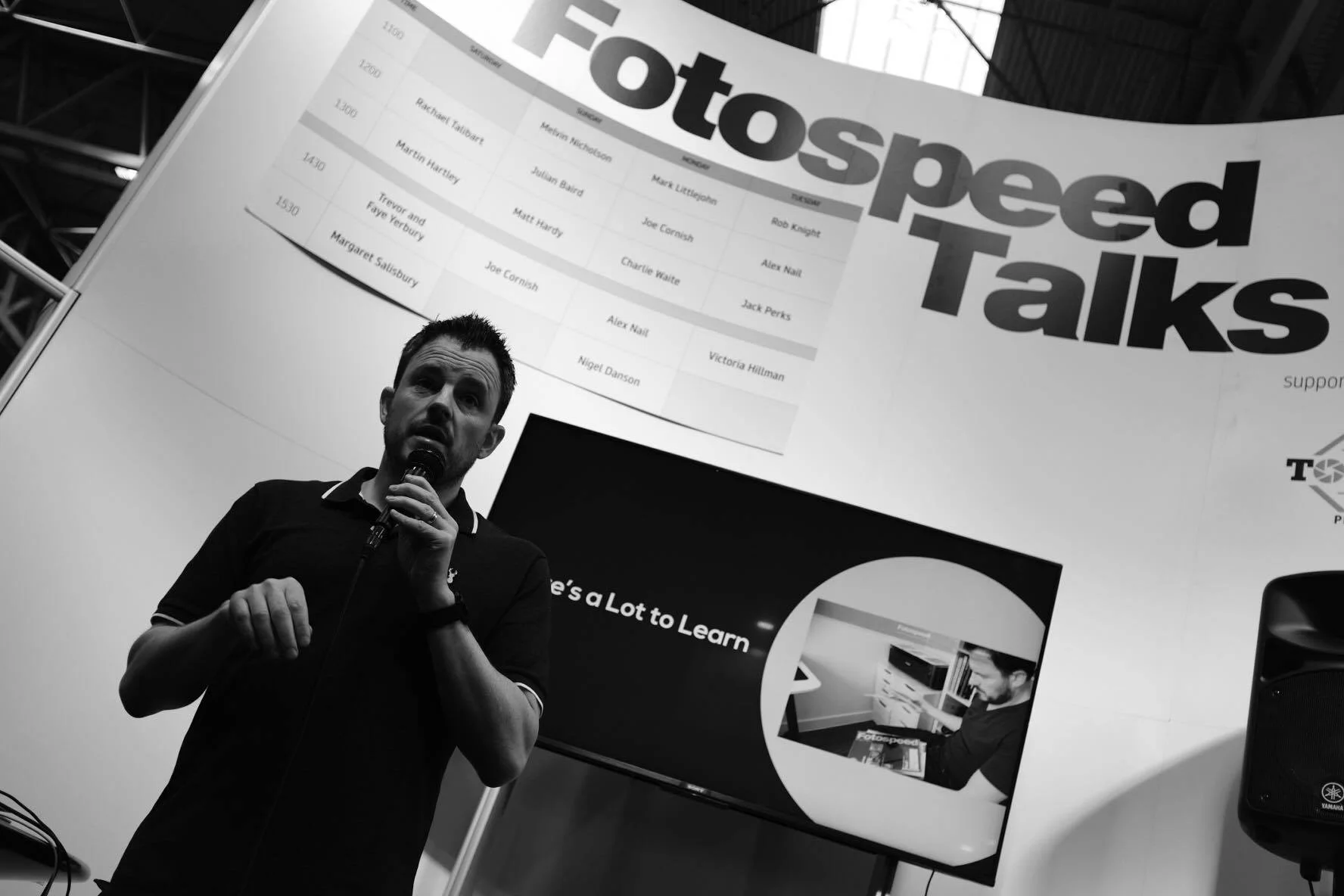
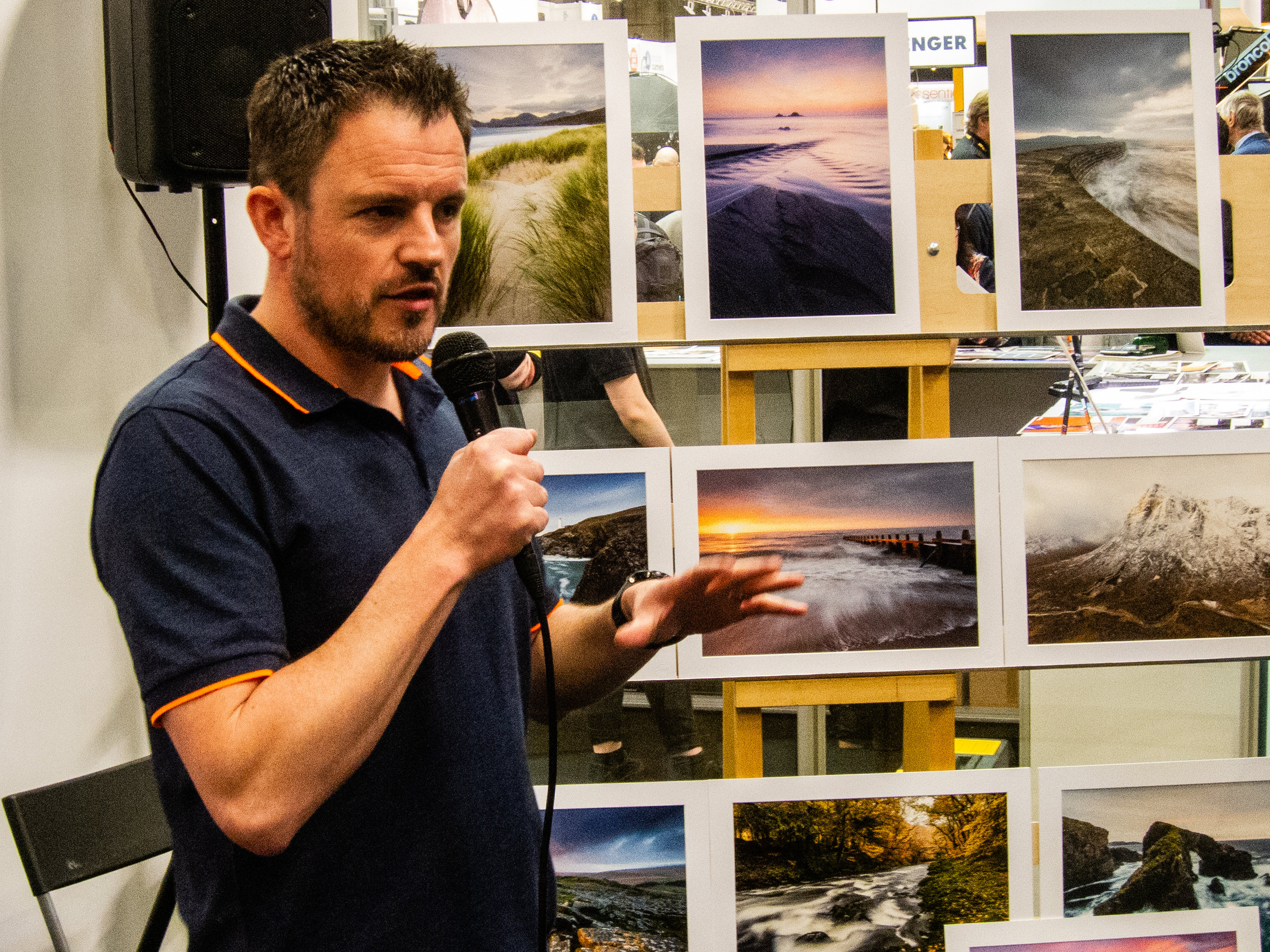
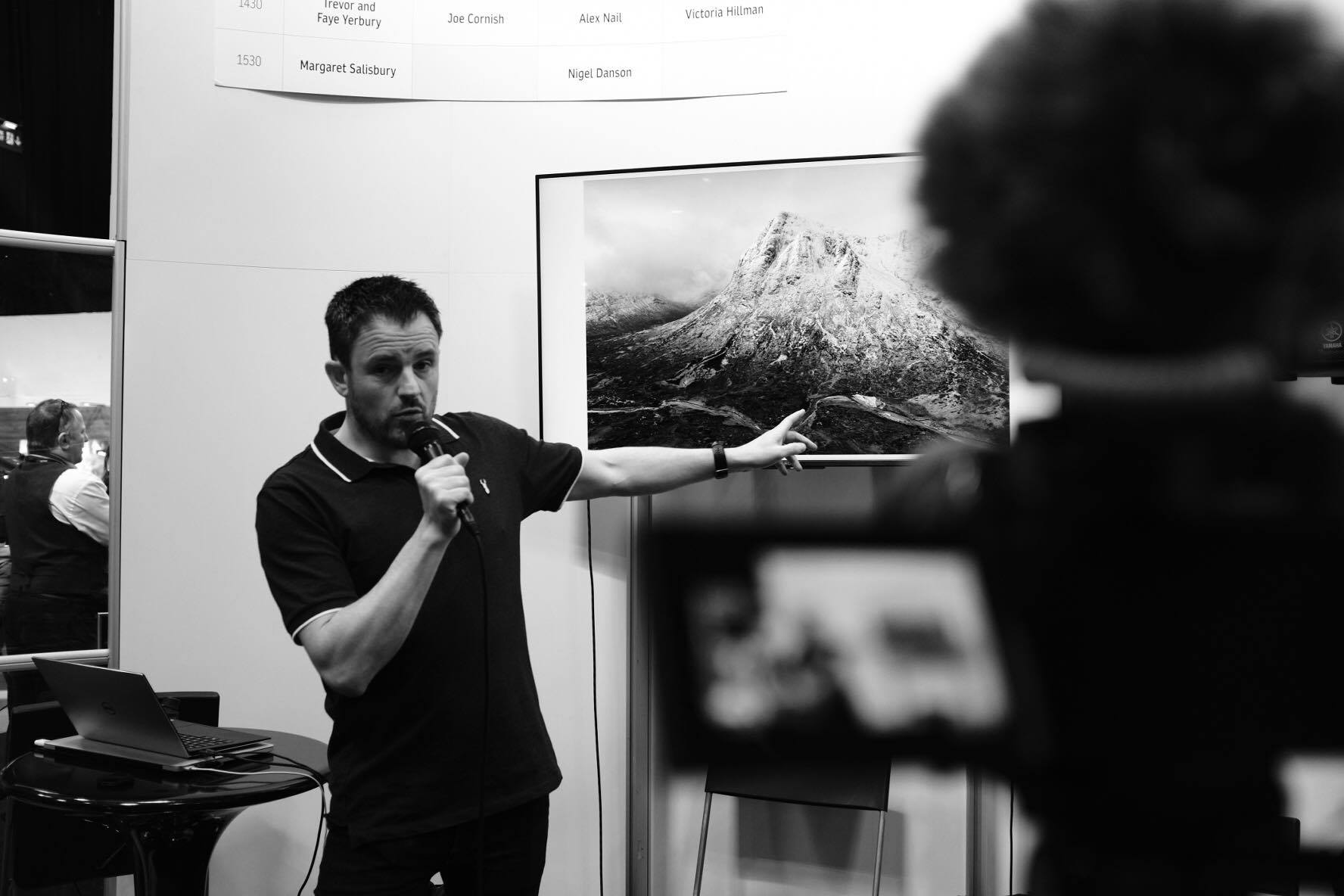
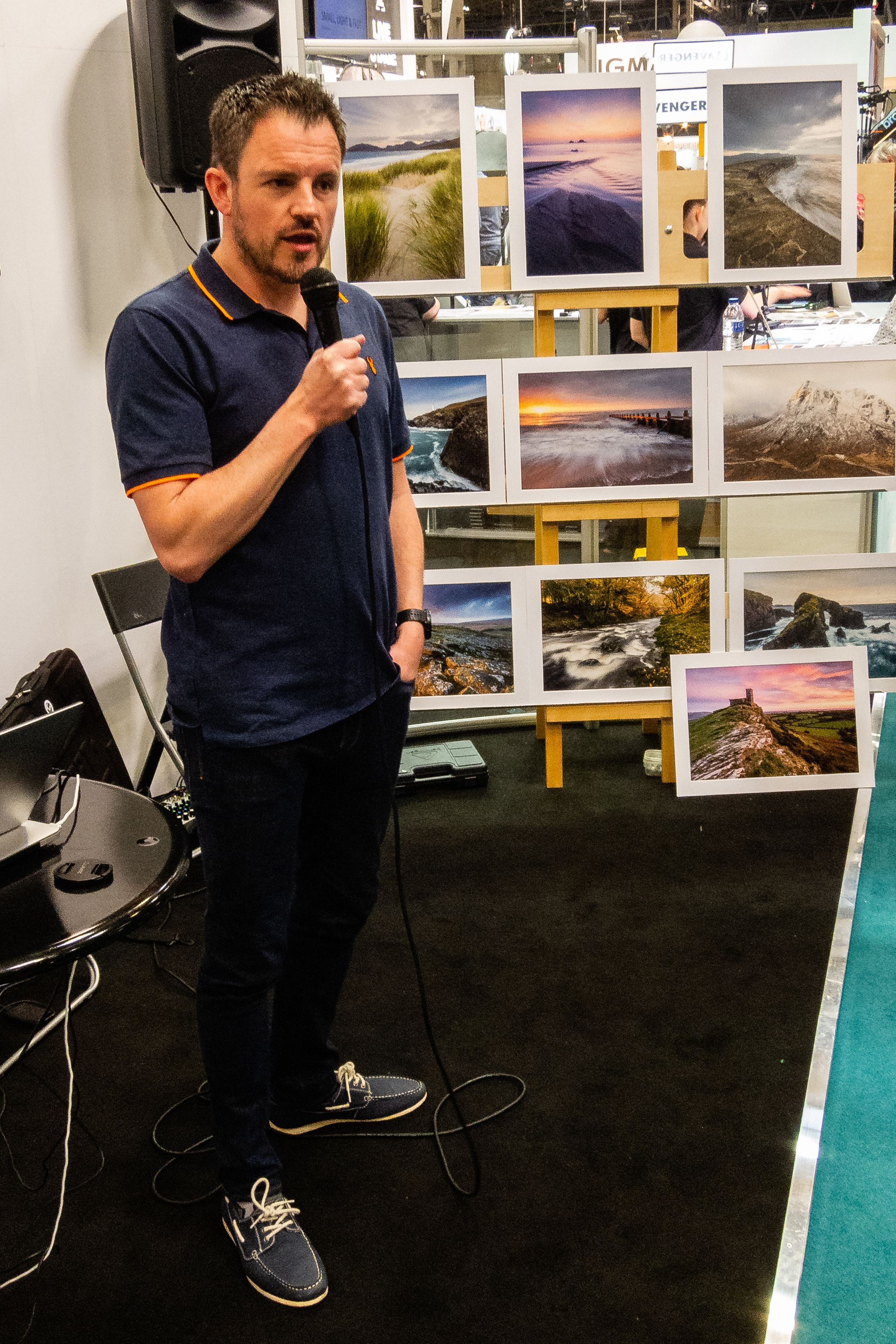
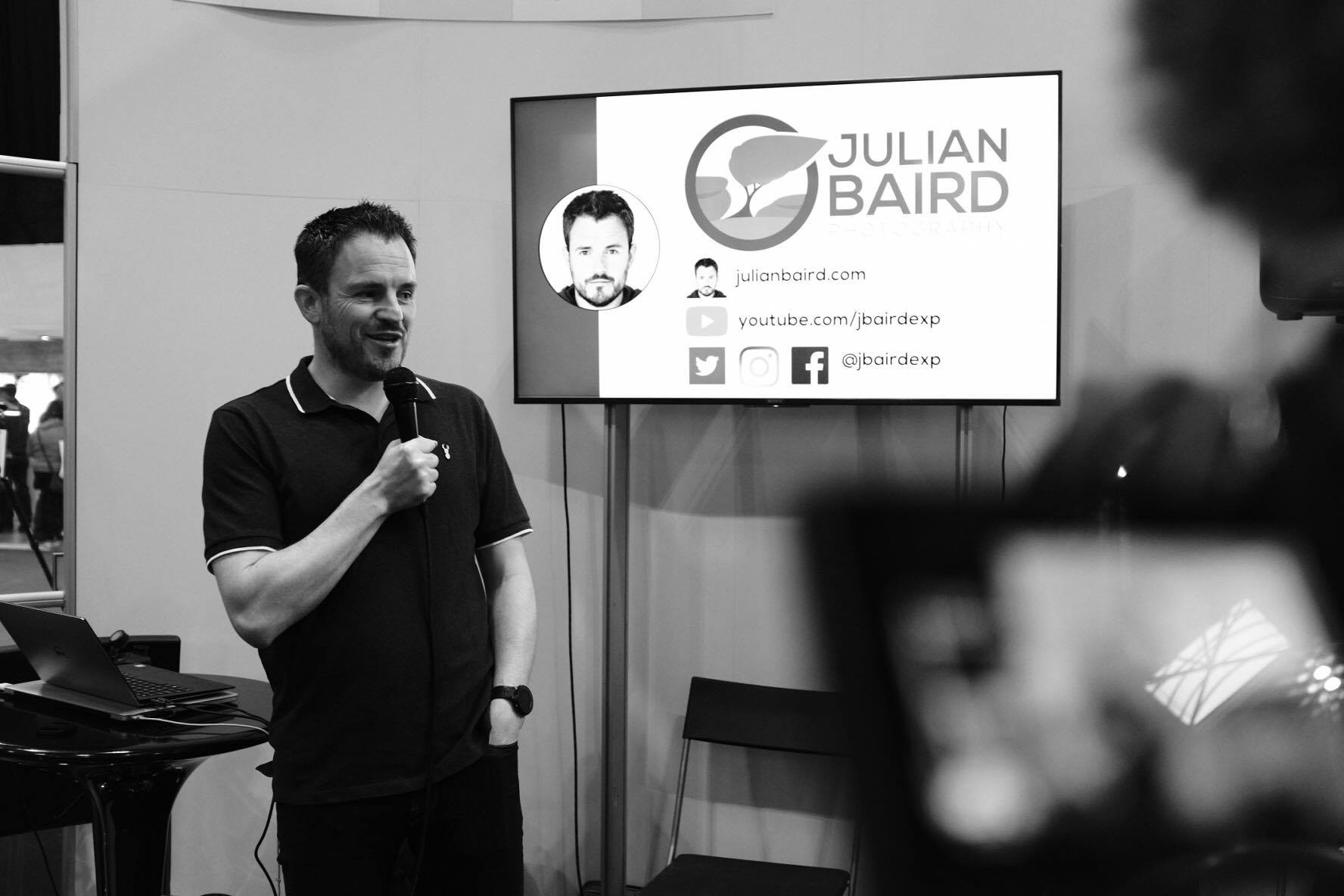
So if you missed my talk at the show, or you did catch it and perhaps want to see it again, here is an unabridged recording. Enjoy!
On The Fotospeed Stage
Presenting a talk on printing wasn't the only thing I did at the Fotospeed stand. I was also asked to be compere for the weekend. This granted me the privilege of not only meeting some wonderful and interesting photographers but also a seat on the stage to listen and watch Rachael Talibart, Martin Hartley, Trevor & Faye Yerbury, Margaret Salisbury, Matt Hardy and Joe Cornish all talk about their photography. With such a breadth of skills and experiences brought by these photographers, it was little surprise that each talk inspired my photography in its own way.

On stage with Joe Cornish. Photo courtesy of Gareth Danks.
You can also see me discussing my time at The Photograph Show in this Fotospeed video.
Next Year at The Photography Show
I've attended The Photograph Show every year and it just gets bigger and better each year. From the variety of talks, the products on show and the number of people I get to have conversations with, it's now become an integral part of my photography calendar. One thing is for sure, I will be heading back to The Photography Show in 2020.
I do hope you enjoyed this blog post. Did I meet you at the show? Did you get to see my talk live? Did you enjoy the talk (recorded or live)? Let me know in the comments below.
PS - Trying Something New
As I was at The Photography Show all weekend I had some spare time on the Saturday evening so I decided to try a different genre of photography with a fellow vlogger. I'll be publishing the video for that soon, but can anyone guess what type of photography I was doing and who with?
PS - You can watch that video here.
Giving the Gift of Photography
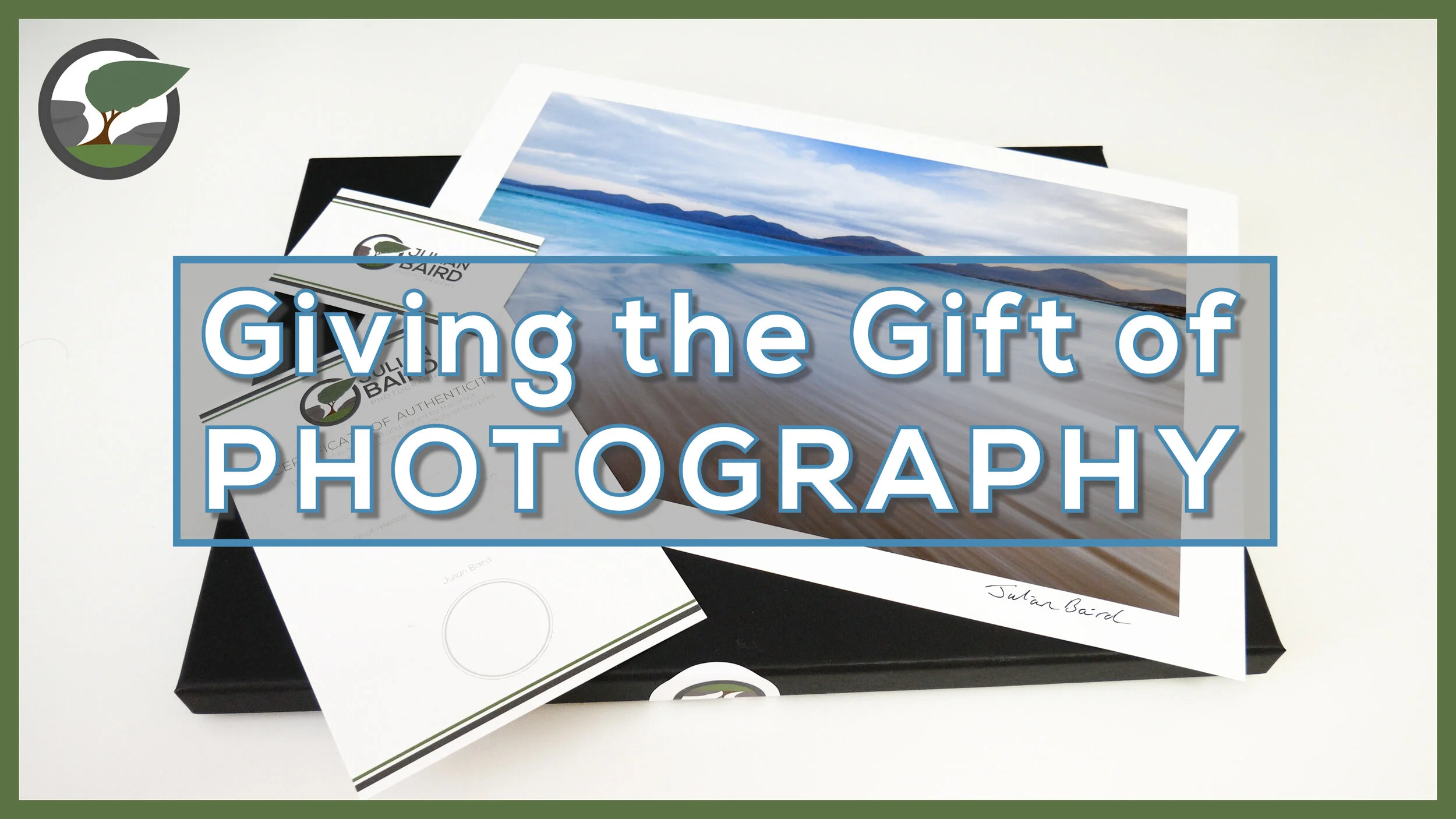
In this blog article I show you how I print and package my photographs before sending them out to clients.
The Gift That Keeps Giving
There’s no doubt that my trip to Lewis and Harris last year, was my 2018 photographic highlight. Being able to immerse myself in photography in such an epic location was amazing. Not only did I get some wonderful images from the trip, but I also got to make a video of my trip, and create a home gallery of the images I captured. It’s fair to say it was a pretty successful trip!
While I was in Harris, I stayed at a really nice property that my friend and I rented for the week. At the time, I thought it would be really nice to offer the owner a print of one of the images I captured on the trip. They might just like a print of a local spot to display on the wall. When I got home and I’d processed all of the photographs, I sent an email to the owner and asked if they would like a print. To my delight, they came straight back to me and said yes!
This was great news, but I didn’t just want to print an image and stick it in the post. I wanted them that have a bit of an experience when they received it. So I got my thinking hat on and got to work on how I was going to package my print.
In the video below, I’ll show you exactly how I’ve packaged my print and describe everything I’ve used to create my unique Julian Baird Photography print experience.
What I Used
I used a number of products in the video, and if you are interested, I’ve listed them below:
Logo and card design by Neil Burnell - Fine Art Photography
An Experience Worth Repeating
All of this may seem a lot of work just to send one person a print, but this won’t be the last print I package and send out. I’m already printing and packaging another order, this time for one of the photographs taken in The Trossachs. It feels great to be able to share my work in this way and to know that people are displaying one of my images in their home.
I do hope you enjoyed this blog post and video. Do you do something similar with your photographs? What packaging do you use? Let me know in the comments below.
Print Giveaway!
At the end of the video, I said I was giving away one of my prints! The lucky winner can choose an A4 print from any image in my portfolio or from my Harris and Lewis collection, and I will package it up in the same way as you saw in this video.
All you need to do is to leave a comment on this blog article with the text “I Love Printing”, and you will be included in the draw. Draw closes on 31st March 2019. Good luck!

Creating a Landscape Photography Gallery at Home
In the blog this week, I show you how I created my very own home gallery of images from Harris & Lewis using some fantastic papers from Fotospeed.
Printing Landscape Photographs at Home
If you’ve been reading my blog or watching my YouTube channel for a while you know I’m a big fan of printing! For me it’s an exciting part of the photographic process as I take a digital image and make it a physical photograph.
Regular readers/viewers will also know that last year I was lucky enough to photograph one of my bucket list locations, the Isle of Harris and the Isle of Lewis. I managed to capture some wonderful images but after sharing them on this blog, and social media, I knew I was going to not only have to print one image but a whole gallery of them!
I thought this would make for an interesting video, so I’m very pleased to share with you this video on how I went about creating my very own landscape photography gallery at home.
My Landscape Photography Adventure to the Outer Hebrides
As I mentioned in the video I created a video of my adventure to the Outer Hebrides, so if you are interested in seeing how some of the photographs I used in this printing video were created, you can see it here:
Products Used in Video
In the video I also said I would list out some of the products and equipment I used to create the gallery:
Fotospeed papers:
FYI - You can find the Fotospeed Tips and Tricks Facebook page here.
Printed using a Canon Pixma Pro-10S
Picture frames from Picture Frames Express
Those white cotton gloves I use to handle the paper
My Other Printing and Processing Videos
I also mentioned in the video that I would share with you all my other videos on printing and processing:
There’s Always Something to Print
I do hope you enjoyed my video on creating your own landscape photography gallery, and hopefully it has inspired you to print a little more. I highly recommend it!
Do you print at home? Do you have somewhere to create your own gallery? Is there another video on printing you would like to see me produce? Let me know in the comments below.
Creating Coastal, Long Exposure, Panoramic Images with the Nikon D850
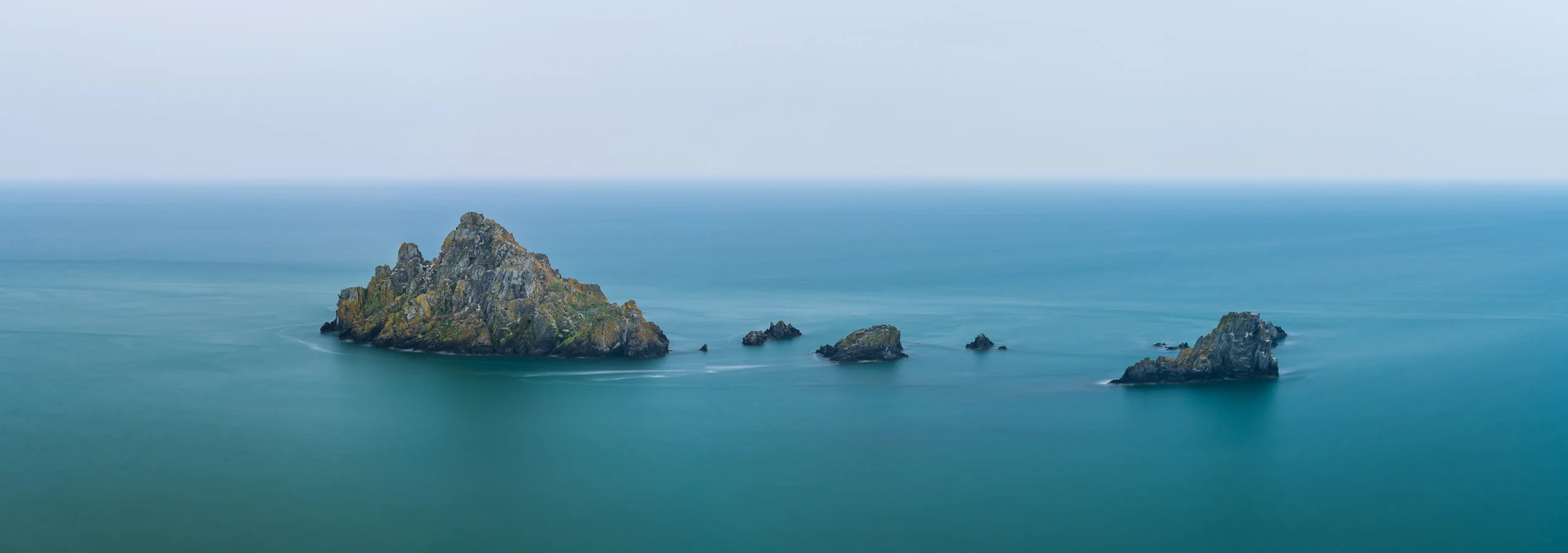
Have you ever taken a coastal, long exposure, panoramic image before? Well, that's just what I did in my latest video. Sometimes you need to see a scene a little differently to get inspired in a big way.
Getting Inspired
Over the years I've visited Froward Point on the south Devon coast a few times. Despite many attempts I've never really captured an image from that location that I'd really been happy with. In fact, I'd just about given up on it as a location.
However, after being inspired by the work of another local photographer, I thought Froward Point might be worth another visit. This time though, I would leave most of my gear behind, travel light, and wander along the coast path a bit more. Rather than go back to the same spot I always end up going to, I would see what other viewpoints there might be.
Sure enough, as I walked along the coast path I got to see a view of rocks near Froward Point in a totally new way! My creative brain got all excited by the new compositions that I could make photographs from. For me, the scene instantly said that this coastal image would be a long exposure, and would be best suited to the panoramic format. I even thought it would work best on a grey and overcast day.
With a clear vision of what I wanted to photograph, I just needed to return at the right time when I had the weather conditions were right and the tide was high. Here is what happened when I did finally return:
As you'll have seen this video was a bit longer than normal, but I wanted to take you through my thought process, how I set up the camera, and how I eventually captured then printed the final image.
So have you ever captured a coastal, long exposure, panoramic image before? What photography techniques have you combined before? Let me know in the comments below.
The Photographs
A Coastal Long Exposure Panorama - Froward Point, Devon: Nikon D850, Nikkor 70-200 mm f/2.8 at 70 mm, 20 secs at f/11, ISO 64, Lee Filters Circular Polariser. 5 Image stitch.
On an Island - Froward Point, Devon: Nikon D850, Nikkor 24-70 mm f/2.8 at 58 mm, 105 secs at f/6.3, ISO 64, Lee Filters Circular Polariser. 5 Image stitch.
Islands in the Blue - Froward Point, Devon: Nikon D850, Nikkor 24-70 mm f/2.8 at 29 mm, 40 secs at f/11, ISO 64, Lee Filters Circular Polariser.

OnePlus 6 Landscape Photography: A Mobile Phone Photography Challenge with Chris Sale
Can you capture a good landscape image using a mobile phone? Well, that's the challenge fellow photographer Chris Sale set me. In the blog, I share with you the video I captured when I headed out to Dartmoor National Park with my new OnePlus 6 mobile phone to capture some landscape photographs.
Landscape Photography Challenges
I like to challenge my landscape photography skills. This could be by doing something new, trying a different bit of kit, or even trying an old bit of kit (see my video Shoot, Print, Surprise). So when my friend and fellow photographer Chris Sale contacted me and suggested a new challenge for us both I immediately asked him to tell me more!
Our previous photography challenge had been a great success. Last time Chris challenged me to ditch my wide angle lens and head out with my 70-200 mm. You can see how I got on here. For this challenge though, Chris asked me to leave my DSLR at home and head out with a mobile phone! This perhaps sounded like a step too far, but I was up for the challenge. Obviously, I sent the challenge back and told Chris he had to do the same.
OnePlus 6
The challenge came at an interesting time as I was actually in the market for a new phone. My heavily used and loved Google Nexus 6p was on its last legs and it couldn't seem to survive much longer than a couple of hours without needing a charge.
I'm not going to bore you with all the reasons why I bought the OnePlus 6, but it was the phone that suited my needs to best. Funnily enough though, camera specs weren't top of my list of things I was looking for in a new phone. I have my Sony RX100M4 as my portable camera so I only ever expected to use the OnePlus 6 to capture the odd photo here and there.
So without knowing too much about the camera capabilities of the OnePlus 6, I head out to Dartmoor National Park to start my challenge. You can see how I got on in the video below:
As I mentioned earlier in the blog, Chris also undertook the same challenge. To see how he got on, check out his video:
Mobile Phone Photography
So can you capture good landscape images with a mobile phone? Sure you can! You can capture landscape images with just about any camera. I'm not saying the camera is irrelevant, but without good light and composition it doesn’t matter what camera you have with you, you might still end up with a dull photo.
So would will I be giving up my Nikon D850 anytime soon? Of course not. While it is perfectly possible to capture good landscape images with a mobile phone, the controls, versatility and image quality of a larger camera will (likely) always be better. As you'll have seen in the video, the dynamic range of the OnePlus 6, is not match for my Nikon D850. But given the price difference, that is hardly surprising is it!
So do you ever take landscape images with your mobile phone? What mobile phone do you have? Did you buy it for its capabilities as a camera? Let me know in the comments below.
The Photograph
Mr Bowerman please meet OnePlus 6 - Bowerman's Nose, Dartmoor, Devon: OnePlus 6, ISO 100, 1/125th sec, f/1.7, DNG processed in Lightroom CC Classic.
PS - The product links used in this article are Amazon affiliate links. By buying through the links I may receive a commission for the sale. This has no effect on the price for you.
A Landscape Photographers Basic Guide to Calibration and Profiling
How do I calibrate my monitor? How do I profile my printer? How do I improve the quality of the photographs I print? You don't need to be a colour expert to improve the way your images look on screen and in print. In the blog this week I show you how.
The Science of Colour
A quick search of the internet on the topics of colour management, monitor calibration and printer profiling, and one would be excused in deciding it was all too much effort. However, like many things in photography you can decide to get your head into the science of it, or you can take a more measured approach and make some small changes to your workflow.
Calibration and Profiling
Even though I don't print high volumes of my landscape photographs, I've always strived to make my workflow is as colour accurate as possible. But why? Most people probably won't even view my images on a calibrated monitor. There are a couple of reasons, Firstly, just for my own personal satisfaction. I like to know what I'm looking at is an accurate representation of the colours in my photographs.
The other reason is that when I print one of my images on my Canon Pixma Pro-10s, I want to be confident that what I print matches what I see on screen.
Perhaps the best way to tell you about my workflow is to show you:
In the video, I mentioned a few links that you might want to look at. In case you missed them in the YouTube video description, here they are again:
For me, those extra little steps I take to calibrate and profile my monitor and to also profile my printer are worth a little extra effort in my workflow. I love the satisfaction of watching an image come to life on the screen as I post process it and then watching it turn into something physical when I print it. knowing that the colours remain accurate along each step is an extra bonus.
So does your workflow include calibration and profiling? If not, does this video encourage you to try and implement new workflow? Let me know in the comments below.
That Image of Trevose Head
In case you wanted to see that image of Trevose Head that you saw in the video in a bit more detail, here it is below:
Trevose Head, Cornwall.
If you want a little more information on Trevose Head, then check out my blog post on this fantastic Cornish location.
PS - The product links used in this article are Amazon affiliate links. By buying through the links I may receive a commission for the sale. This has no effect on the price for you.

Shoot, Print, Surprise!
In this blog I head to Dawlish Warren to shoot a video I'm calling Shoot, Print, Surprise! But what is the surprise? Well, you'll just have the watch the video to find out!
Back at Dawlish Warren
In my latest video, I headed to Dawlish Warren to shoot some dawn seascapes. For those of you who have been following my blog for a while now, you may well be wondering if that is the only location I've ever photographed! I admit it though, I do like going there to capture images.
There are two good reasons for this. Firstly, it's close to home for me. This means that during the winter months when my time is particularly short, it's nice and easy for me to get to. It also offers a variety of different compositions to suit different conditions. With 15 or so groynes of different styles, and long beach it works well with both high and low tides. So, you can virtually go there in any conditions and get an interesting image.
I've mapped out the 15 groynes in a custom google map. It's still a work in progress, but the custom map also has recent images of each groyne so you can see what they look like before you get there. You can view the map here, and you can see how to make your own map here.
Shoot, Print, Surprise!
So back to the topic of the video. Well, the title should give you a good idea of what the video is about. In the video, I head out to Dawlish Warren to capture some dawn seascape images and then I head home to print some of them off. But what is the surprise? Well, you'll just have to watch the video to find out!
Well, I do hope you enjoyed that video, and of course the surprise element. Did you enjoy the surprise? What are your thoughts on the surprise topic? Let me know in the comments below.
The Photographs
As always here are the photographs that were featured in the video.
Nikkor 16-35 mm f/4 @ 34 mm, f/11, 57 seconds at ISO 100, Lee Filters Circular Polariser, ND grad and 3 stop IRND.
Nikkor 16-35 mm f/4 @ 24 mm, f/11, 1.3 seconds at ISO 100, Lee Filters Circular Polariser, and ND grad.
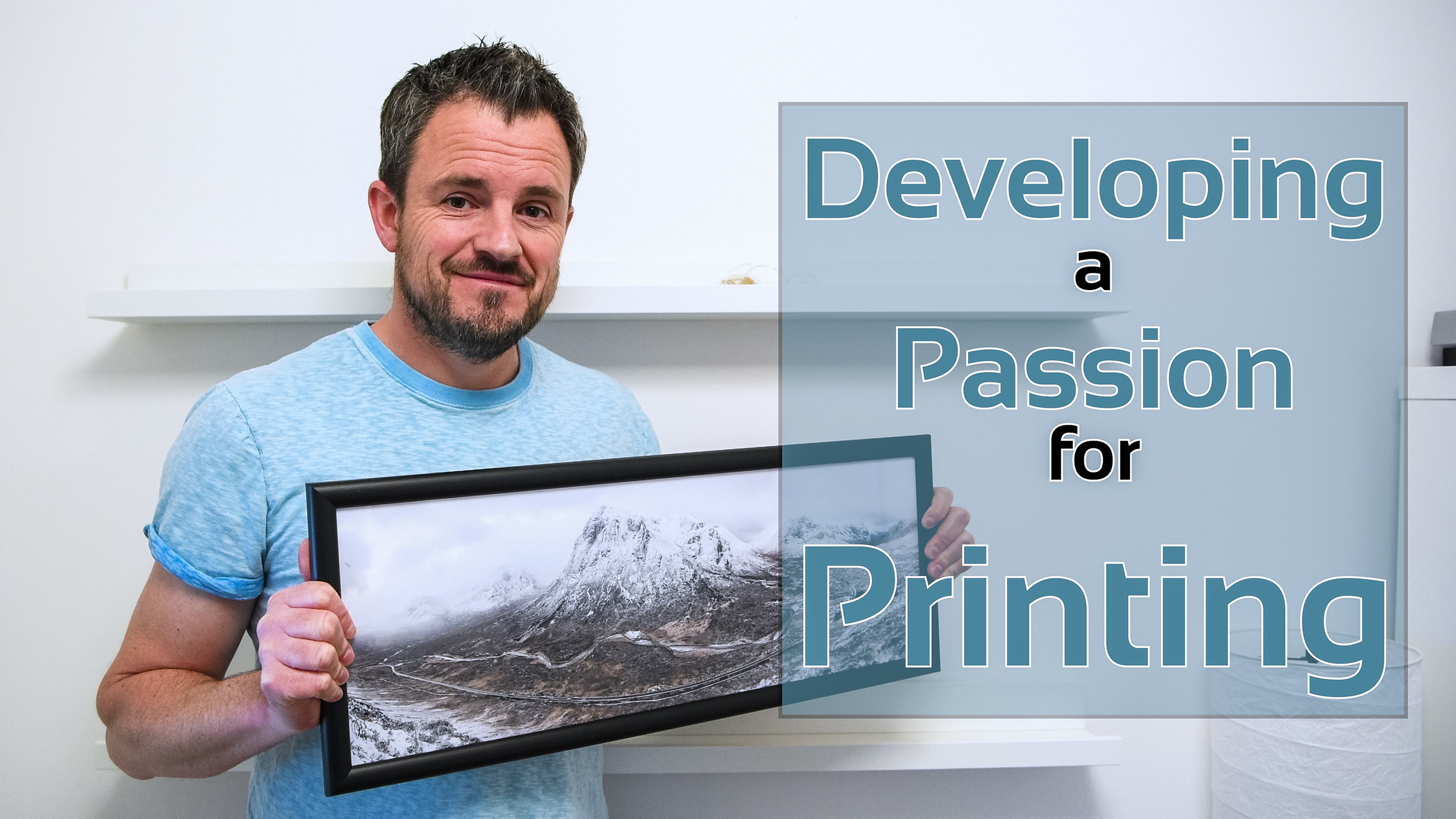
Developing a Passion for Printing
In the vlog this week I expand my printing skills by printing a panoramic image on panoramic paper and then mounting it into a custom-made panoramic frame. I also take a look at some different paper types to try and see what impact each one has on an image.
Discovering the Joy of Printing
Back in April of this year, I wrote about how I purchased a new Canon Pixma Pro-10S printer while I was at The Photography Show in Birmingham. You can read why bought a printer and watch the video I made on my first experiences of printing, in my blog article Discovery the Joy of Printing.
Ever since then I've been printing my images. A lot. And I have to say it's been a lot of fun. I've enjoyed the experience of going out to make an image, post-processing it, and then creating a print at the end.
Developing a Passion for Printing
I have however been keeping things relatively simple. I've been using standard paper sizes, using Canon's Platinum Pro glossy paper. The results have been great. Prints match what is on the screen and the whole workflow is straightforward.
However, there any many different paper types from many different paper manufacturers, so I thought it was about time to expand my printing horizons. In the video below I take one of my favourite panoramic images and print it on some panoramic paper from Fotospeed, and then mount it in a custom frame from Picture Frames Direct. I also take another one of my favourite images of the year and print it on some different paper types.
These are the images I printed in the video.
Nikon D750, Nikkor 24-70mm f/2.8 VR at 20mm, 1/3 sec at f/11, ISO 100, 7 image panorama.
Nikon D850, Nikkor 16-35mm f/4 @ 18mm, ISO 100, 5 sec @ f/13, Lee Filters circular polariser and ND grad.
Well, I hope you enjoyed my follow-up video on printing. As you can see I've still got a lot to learn, but I'm really enjoying the challenge. I get a great sense of satisfaction on owning the entire process from capture to print.
Have you recently taken up printing? Are you an experienced printer? Do you have any advice on printing? Let me know in the comments below.

Nikon D850 Exposed - Unboxing, Capture, Process and Print
In this special blog post and video, I take a look at the new Nikon D850. I unbox it and take it out to Dartmoor to capture some images. Back home I process and print the images and give you my first impressions of the camera.
A Little Camera History
My first full frame camera was the Nikon D600 which was released in September 2012. As many people know this camera had a few problems with oil leaking onto the sensor. Despite a number of product recalls the product was eventually replaced by the D610 in October 2013. I was lucky though as Nikon replaced my D600 with a new D610 under warranty.
In July 2014 Nikon announced the Nikon D810 and this was followed up by the release of the D750 in September of the same year. After only a short time with the D610 I decided that I was going to upgrade again. I looked at both cameras but at the time I felt I couldn't justify the cost of the D810, nor would I probably benefit from what it offered.
The D750, on the other hand, had a few of killer features. It had the flippy out LCD screen, high ISO capabilities, and WiFi built in. While the latter two would only really benefit my music photography, the flippy out LCD would be great for my landscape work. So I sold my (almost new) Nikon D610 and purchased the D750.
It's Finally Here
The D750 continued to be my main camera for the next three years until the D850 appeared on my doorstep the other day. I had been considering an upgrade for around a year but there was nothing really to upgrade to. The Nikon D810 was still a great camera, but I would miss some of those great D750 features.
I wasn't going to change camera systems either. Sure the Sony mirrorless technology is very attractive, and the new Fuji mirrorless medium format camera is a landscape photographers dream, However, the transition to either system would be costly and neither was that well suited to my music photography.
So when I saw the D850 announcement and looked at the specification list it ticked all my boxes. When pre-orders became available I was ordering within minutes! This was going to be a significant investment for me but I feel I'm at a point in my photography journey that I can justify the upgrade. Thanks to part-ex with WEX I can offset some of the cost by trading in my D750.
Using the D850
So now that I have the D850, what is it like? To document my experience from unboxing to capturing my first landscape image, processing it and finally printing it I have created this video.
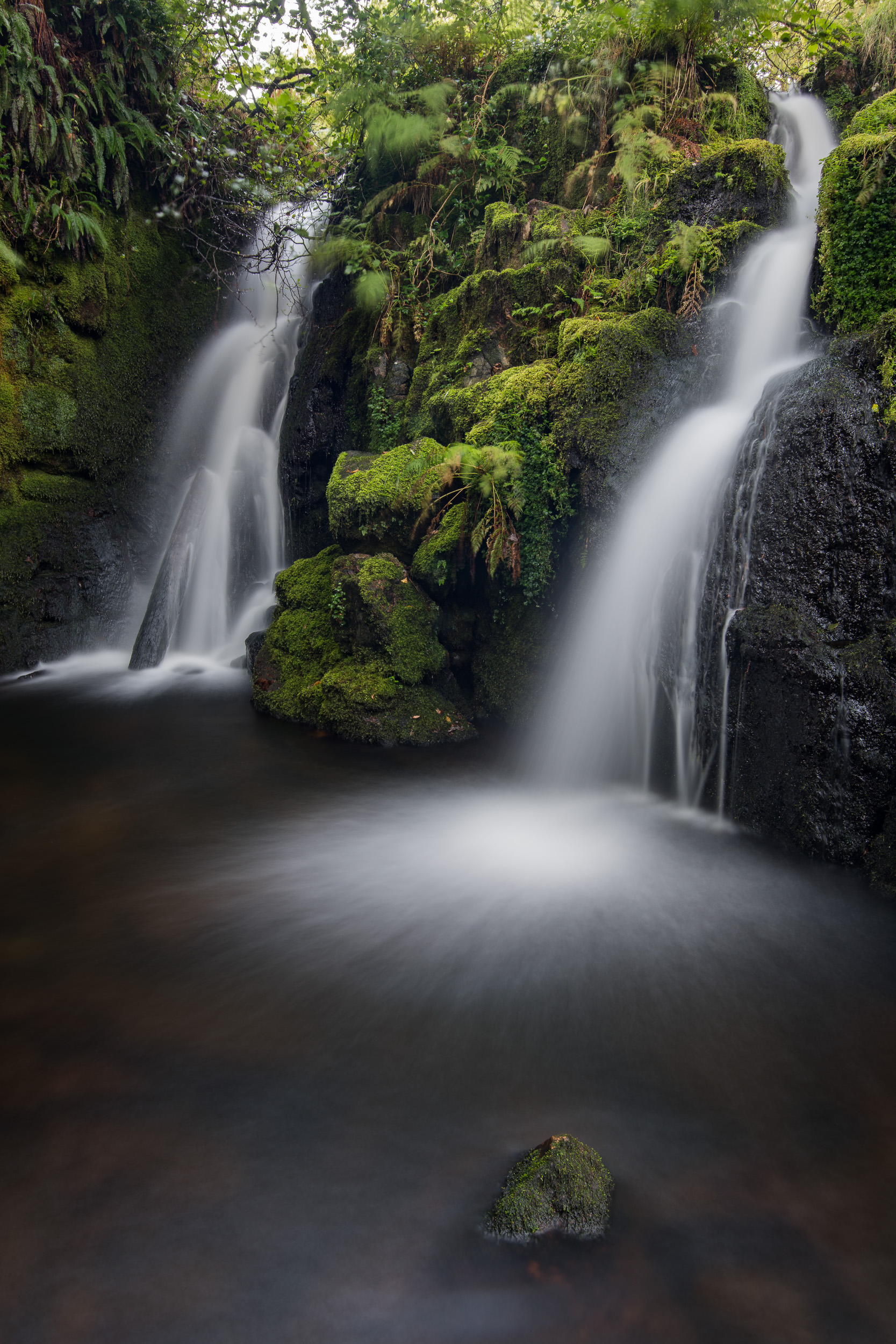
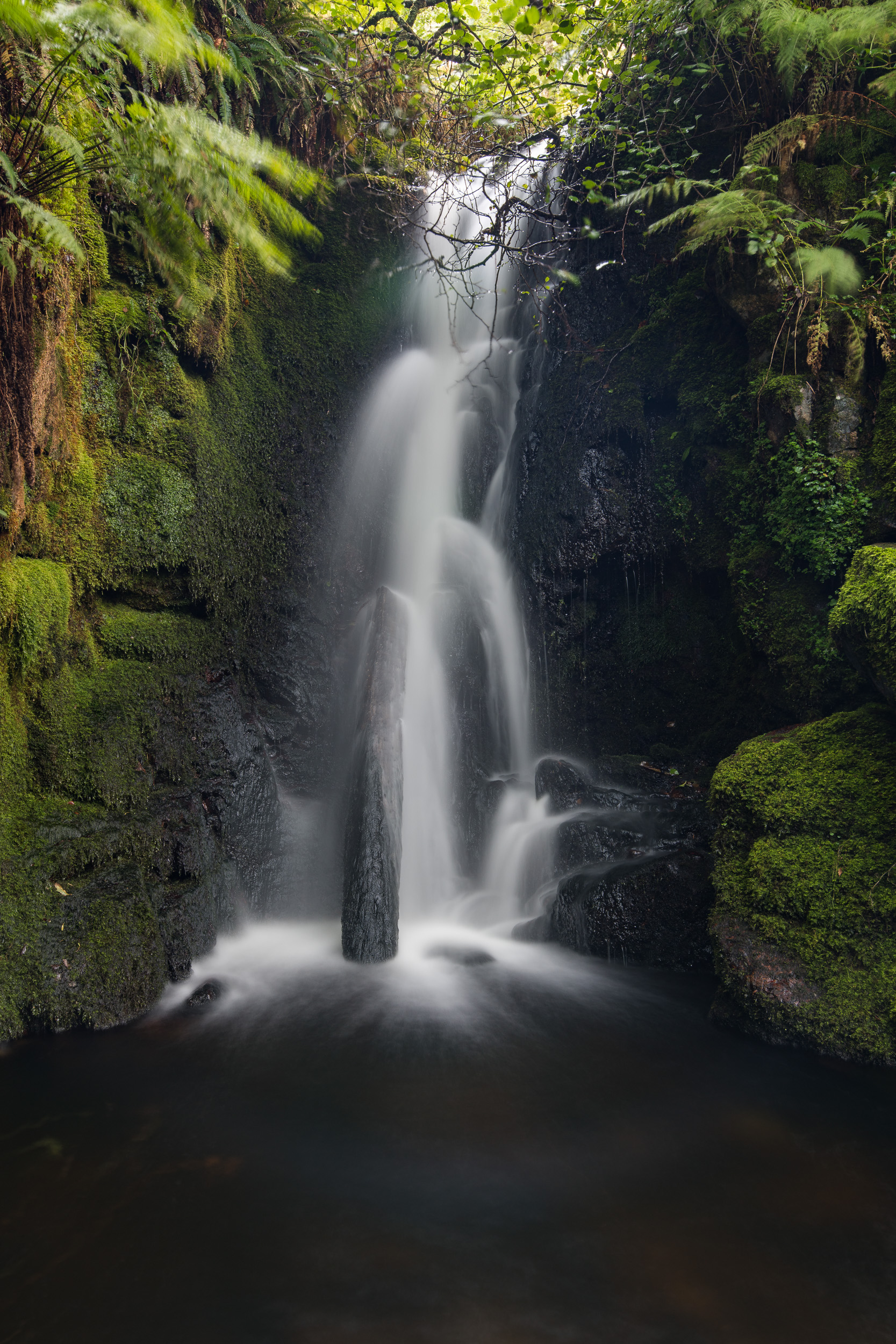
I would have like to have used the camera for the first time in better circumstances but the weather was just proving too problematic. Venford Falls was a good option but looking at the images a lot of foliage is being blown about by the wind. The falls really look their best in spring time when everything is green, fresh and lush.
However, even with the challenging conditions, the camera was able to produce images with great tones, colour, and contrast.
A metered exposure of 30 seconds gives great results.
This image is the same as the previous image but at 8 seconds this image was deliberately underexposed. However, there was no apparent loss in quality when the darker areas of the image were recovered.
I really liked the handling of the camera it made the capturing of images just a little easier than it is in the D750.
More to Learn, More to Shoot
I've only had the D850 for a few days so there is so much more to learn about this camera. There will be the enhanced features over the D750 as well as some new capabilities that I can learn about. I guess it will take a while before I really start leveraging what the D850 has to offer, but it's going to be fun learning.
So will the D850 make me a better photographer? Of course not! Only by practising the craft of photography will I become a better photographer. The D850 is a tool and it will help me capture my images, but it can't improve my creative eye. As David duChemin says, "Gear is good, but vision is better".
So have you bought or considered the new Nikon D850? Have you recently replaced your camera? Have you changed camera systems before? Let me know in the comments below.

Making the Print
In this blog post I tell you about my experience of printing, packing and posting my first print.
A Special Request
On the blog recently I told you about how I have discovered the joy of printing. Adding printing to my photography workflow is something I've been wanting to do for a while and since picking up my Canon Pixma Pro-10S I've very much enjoyed printing out my work.
As if by some happy coincidence a friend of mine who lives in Sweden asked me to create her a print of an image that I took while on a workshop in Glencoe. I was of course delighted by the request. What better way to put the printer to use than to create an A3+ print of this image for a friend.
Pass of Glencoe
As I live in the UK and she lives in Sweden, I would also need to learn how to package and ship my prints. Time to get to work!
Printing the Image
As I said in my video Discovery the Joy of Printing, getting a high quality print from the Canon is fairly straight forward. By using the Canon Print Studio Pro software it was just a matter of setting the correct options:
Set media type to Photopaper Pro Platinum
Paper size to A3+
Set quality to high
Set "clear coat the entire image" - this ensures the entire image, even where no ink as been laid, has an even glossiness.
Set printer profile to match paper
Set layout to bordered - as requested by my friend
Set brightness to +15.
Canon Print Studio Pro - simple and straightfoward to use.
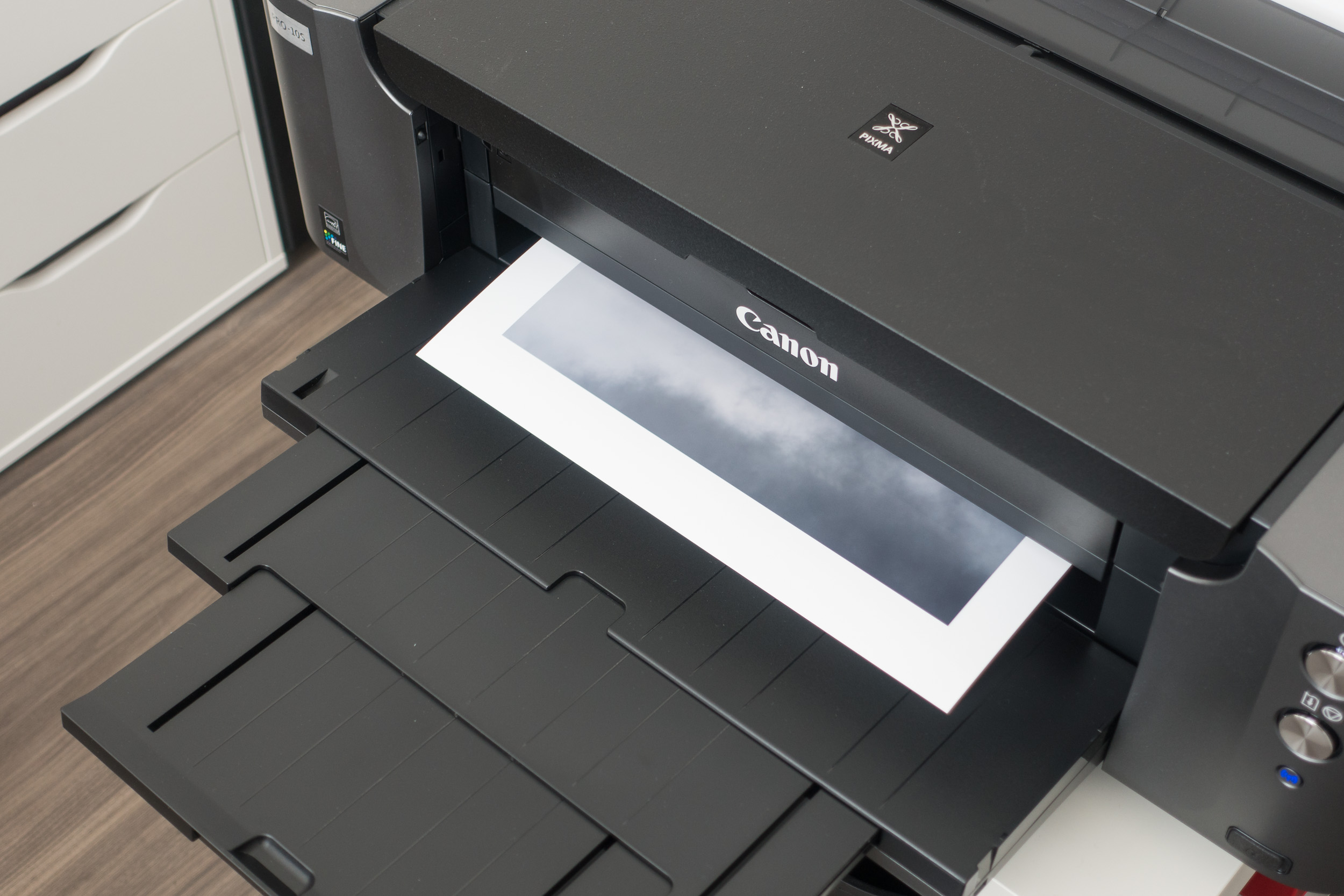
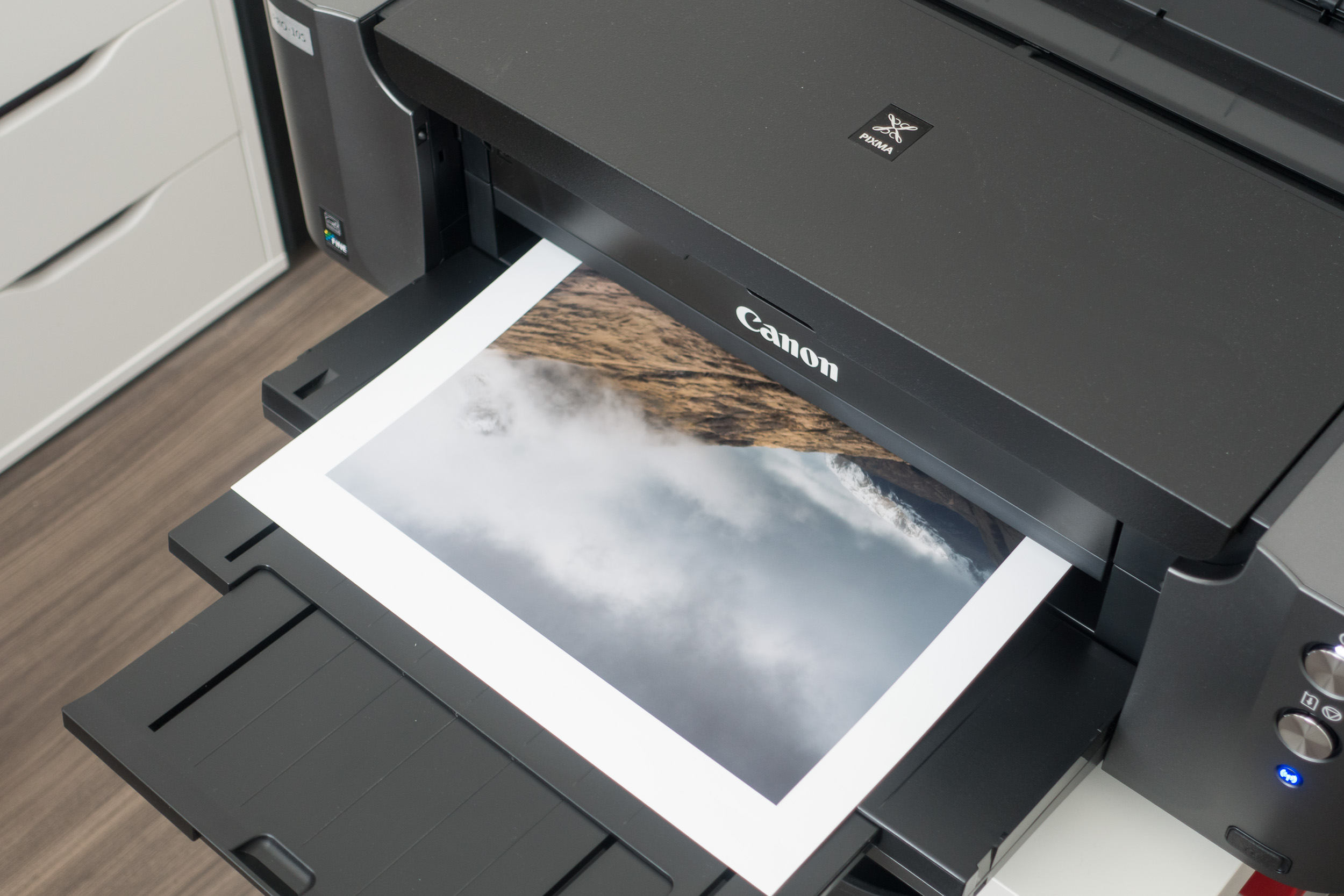
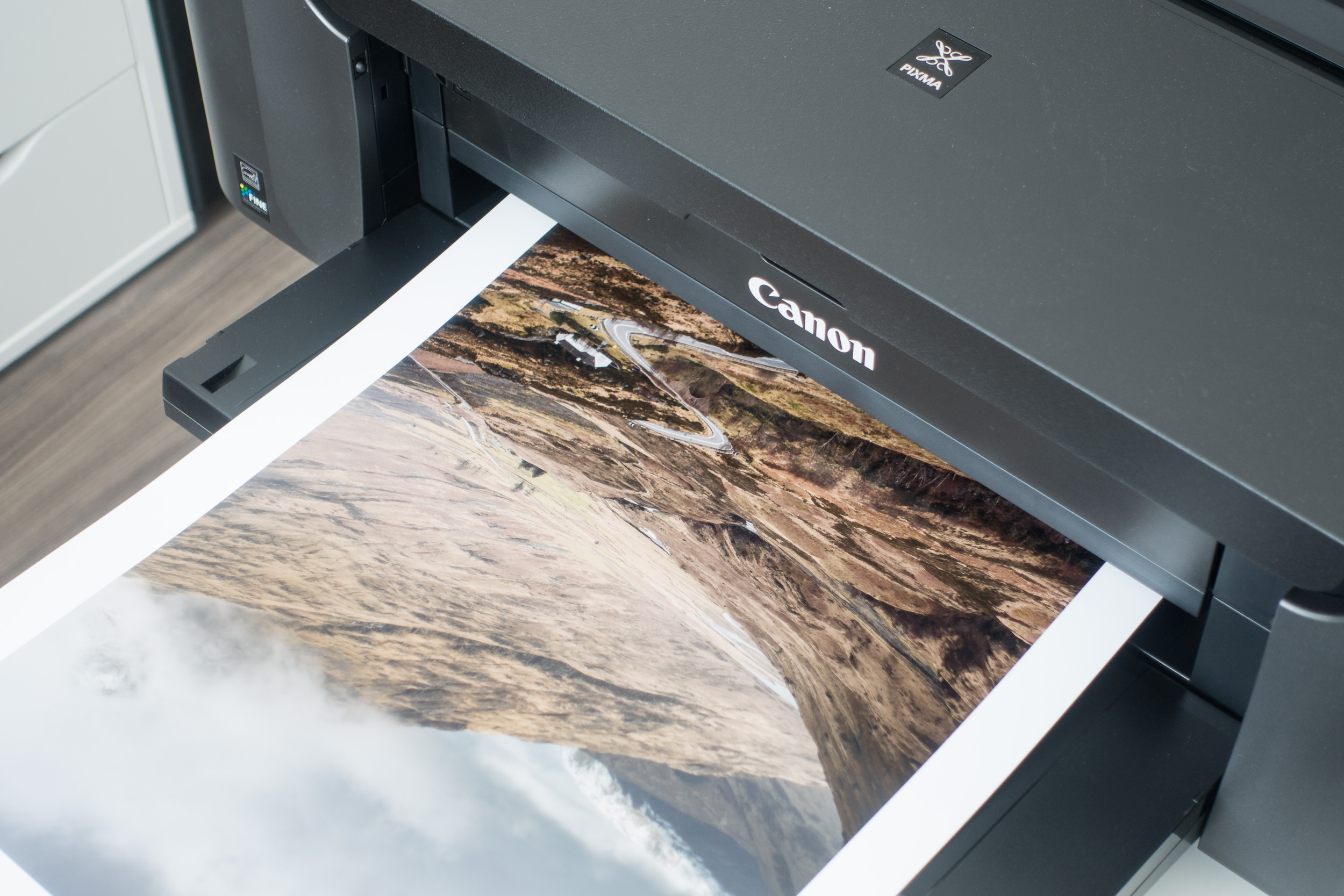
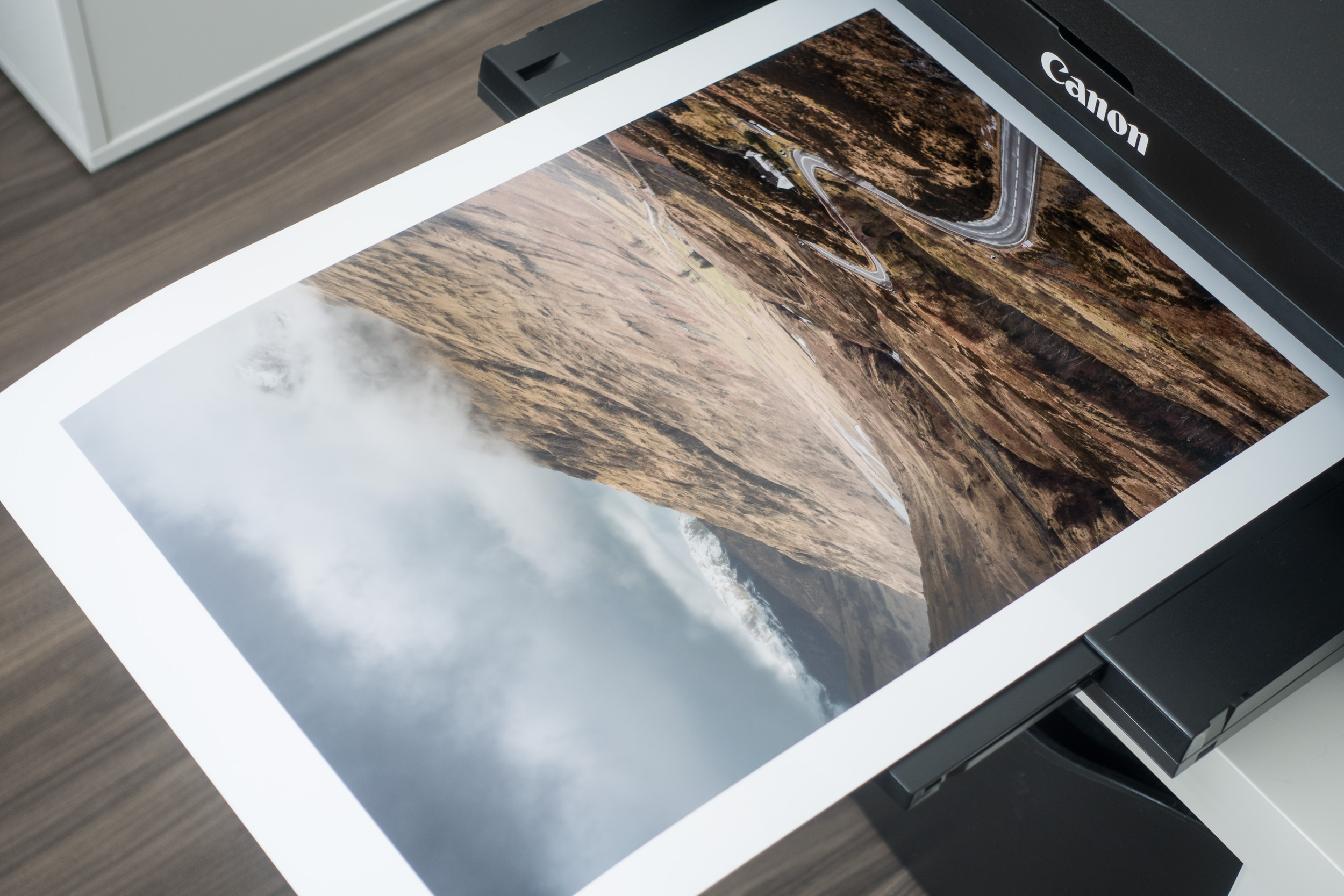
The next step is to load the A3+ paper into the rear tray. As you'll see in this image I am using white cotton gloves so I don't leave any residue from my fingers on the paper. I will use white gloves thoughout the process whenever I am touching the photo paper.

Then you just hit the Print button and wait for your image to take physical form!
Packing the Print
For this part of the process, I really have to thank Martin Bailey for his very informative and detailed blog post and video, Rolling Fine Art Prints for Shipping. Following Martin's workflow I got the following items:
Tracing paper - to put over the print to protect it when rolling. Martin used some Canon paper but tracing paper should be sufficient.
Tear away paper - this is used in the final stages of rolling and using sticky tabs holds the roll to the size you make. This stops the rolled print expanding once it is in the tube.
White gloves - to stop my fingers marking the print
Business card - with my contact details and website address
Bubble wrap bung - these are used at either end of the tube to stop the print banging off the ends when the tube is slightly longer that the print.
Shipping tube - as Martin pointed out you need to make sure its strong tube so it doesn't get crushed in transit.

Once I had everything I needed, I covered the print in tracing paper and then gently started the roll.
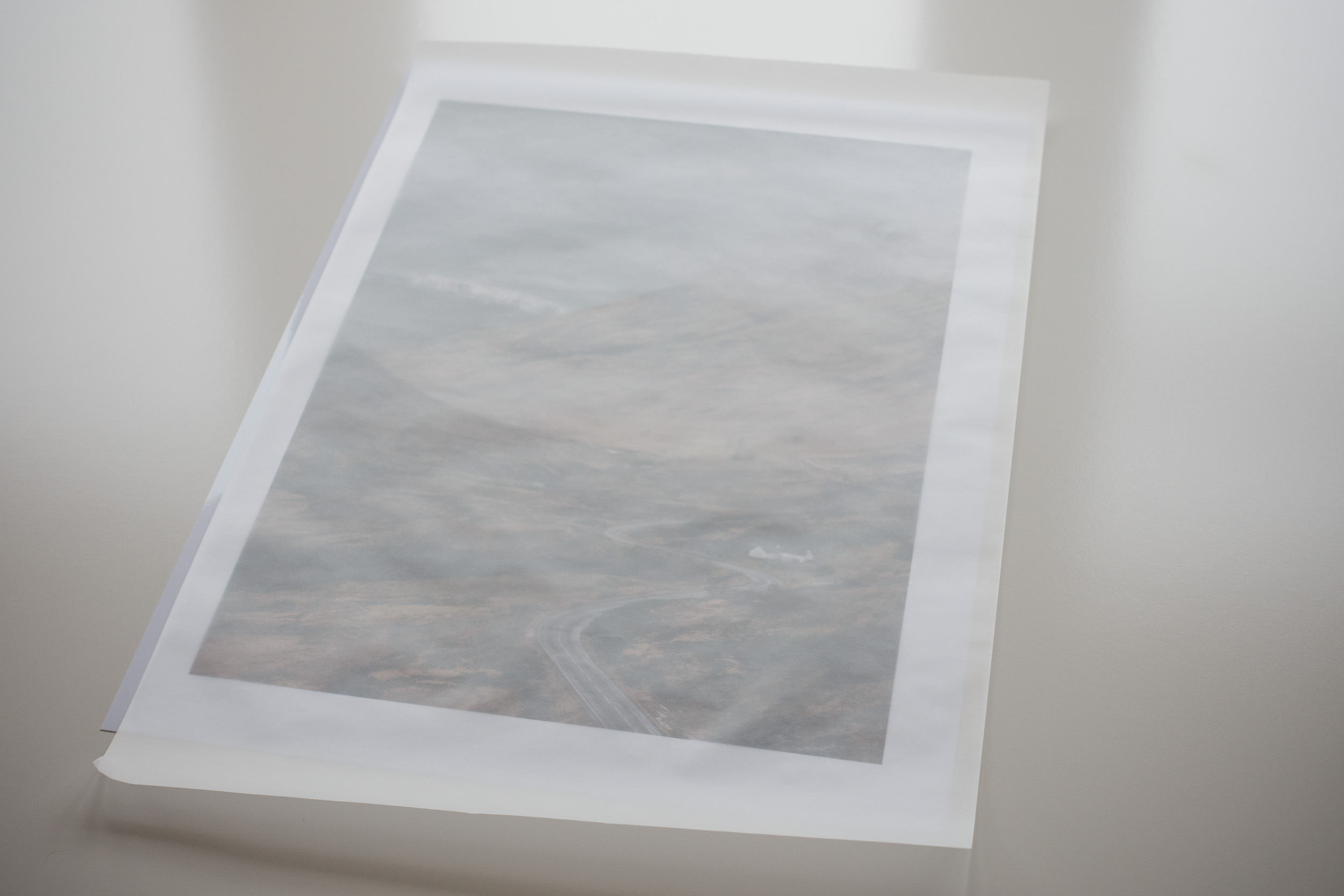
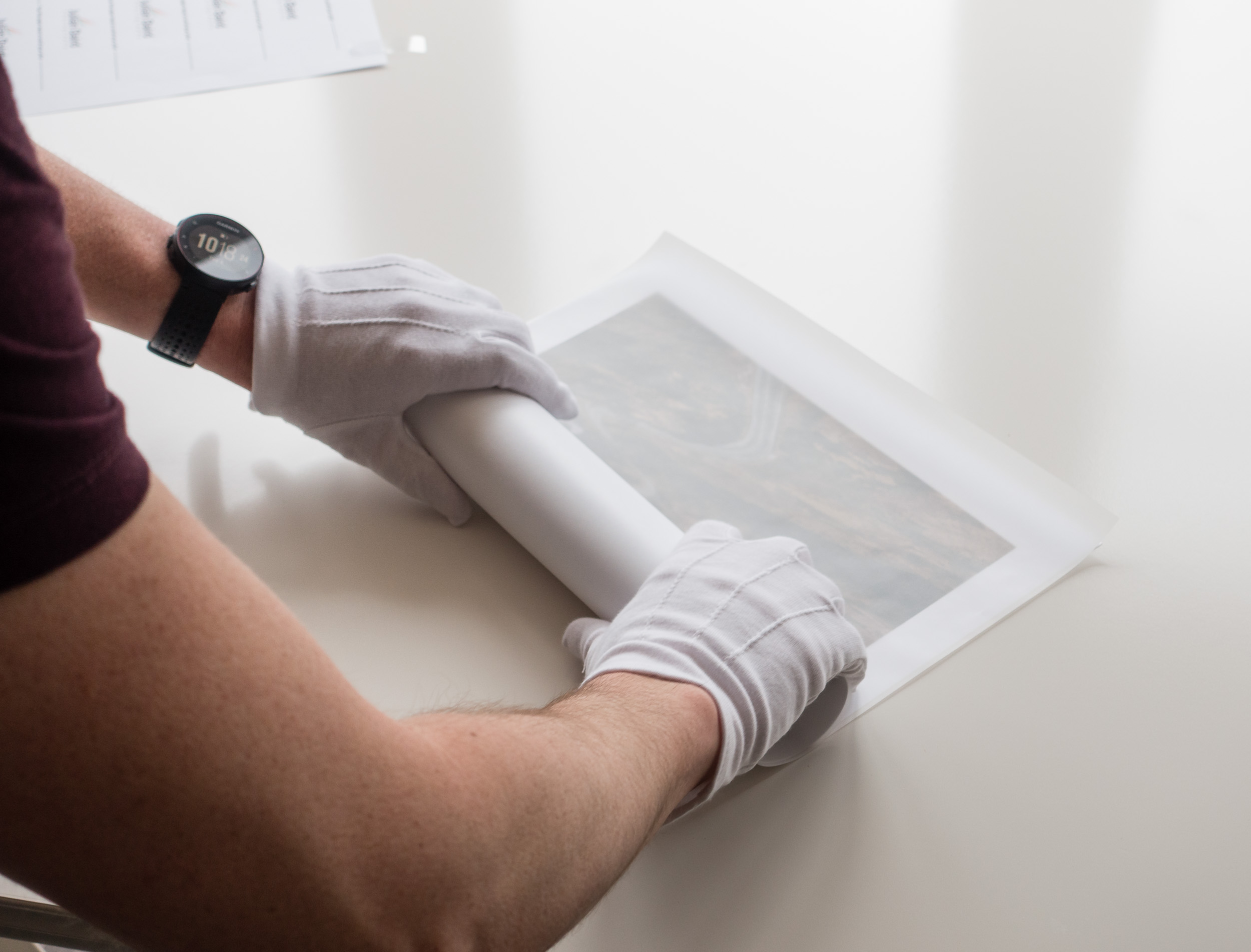
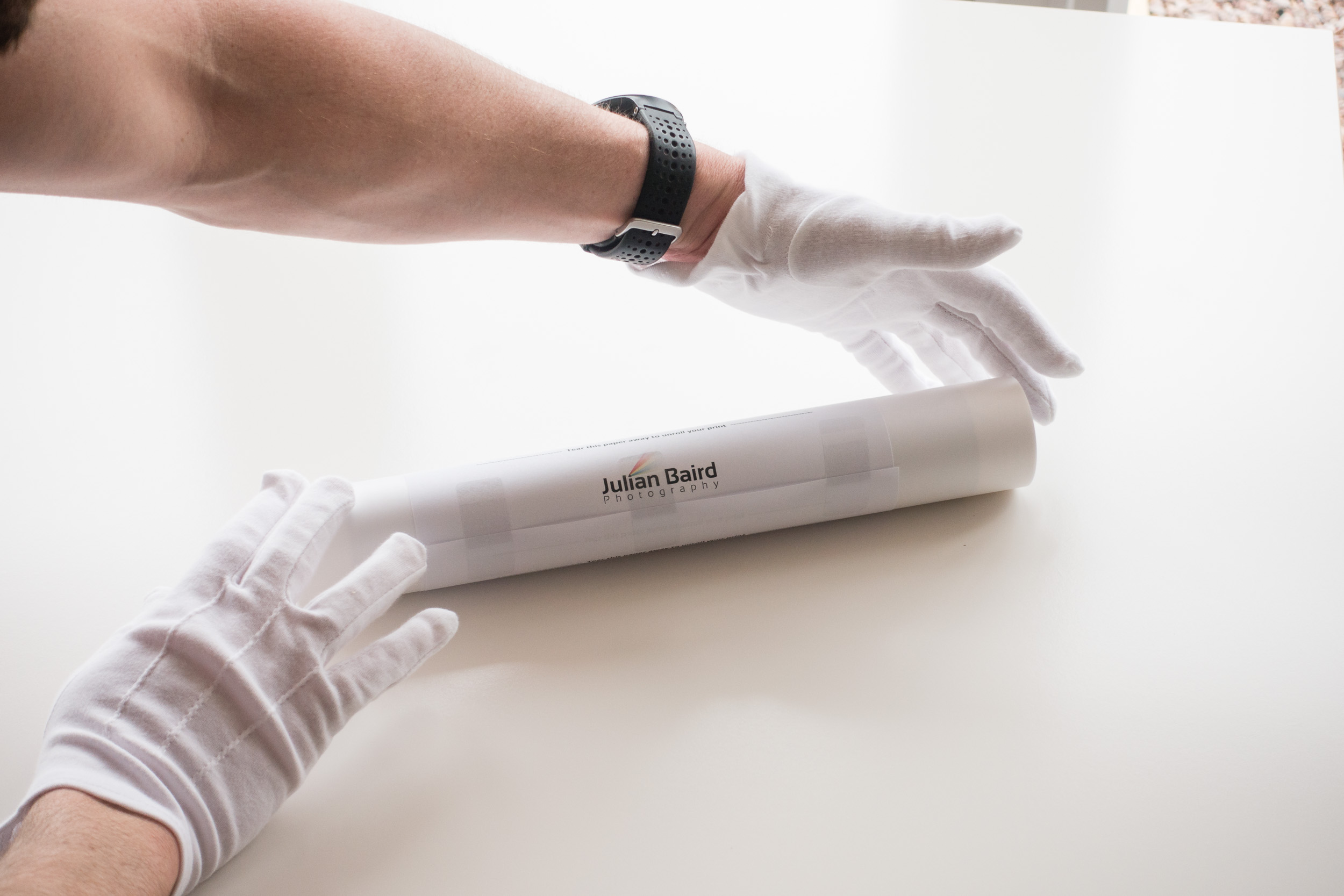
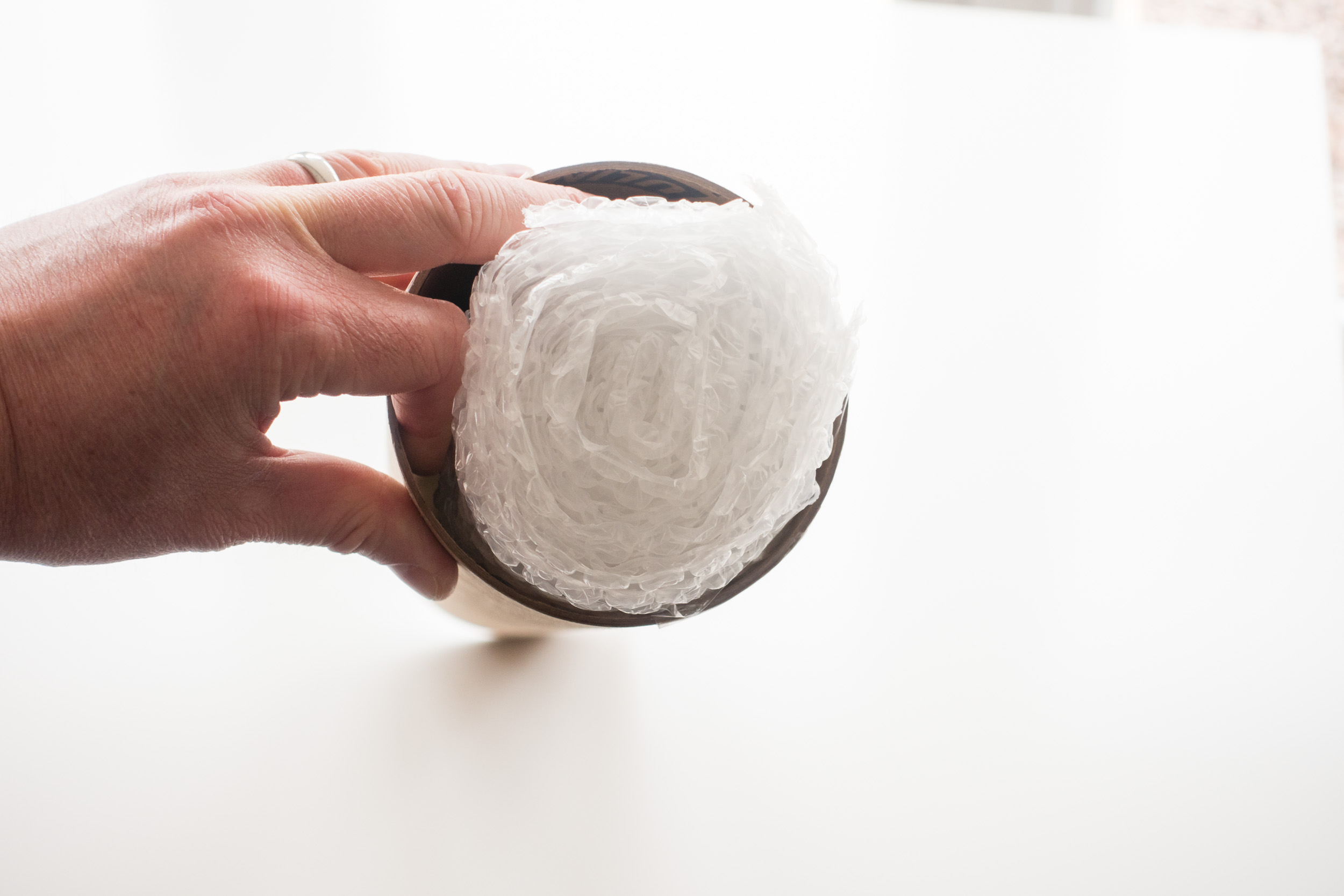
The rolling is the most difficult part of the process and you need to be careful not to damage the print, but after that, it's really just a matter of putting it in the tube along with one or two bubble wrap bungs and a business card.
Once the tube has been addressed and sealed it was off to the Post Office so the print could start its journey to Sweden!
Enjoying the Process
I suspect this whole process of printing and shipping isn't for everyone. After all, you can go to a printing lab online, upload your image and have it shipped directly to where you need it. However, for me at least, part of the enjoyment is doing it all myself. There is the satisfaction of owning the entire process from taking the image to printing it to shipping it. I like the fact that recipient of the print knows that I personally did all the work.
So do you print your own work? Do you sell and pakage your own prints? What personal touches do you put into the process? Let me know in the comments below.

Discovering the Joy of Printing
In my this blog post and video I tell you why I have decided to start printing my work and what it was like to print my first A3 image using a Canon Pixma Pro-10s printer.
Why Print?
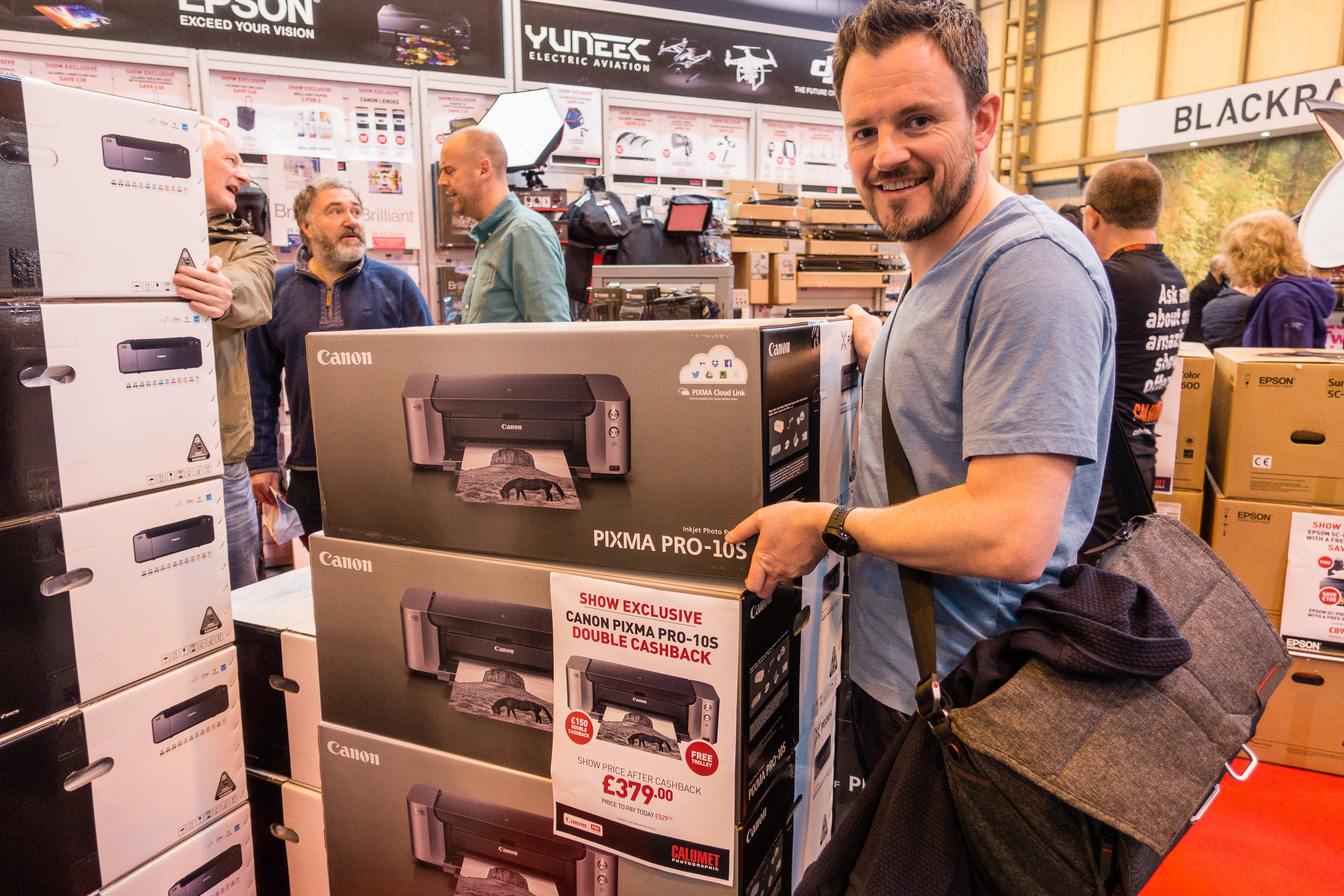
I was at The Photography Show at the Birmingham NEC a few weeks ago and while I was there I picked up a Canon Pixma Pro-10S printer. Every year I hope to pick up a bargain from the show and this year was no different. When I saw that Canon was offering double cash back on their range of Pixma Pro printers I went straight to the Calumet stand and grabbed myself Pro-10S.
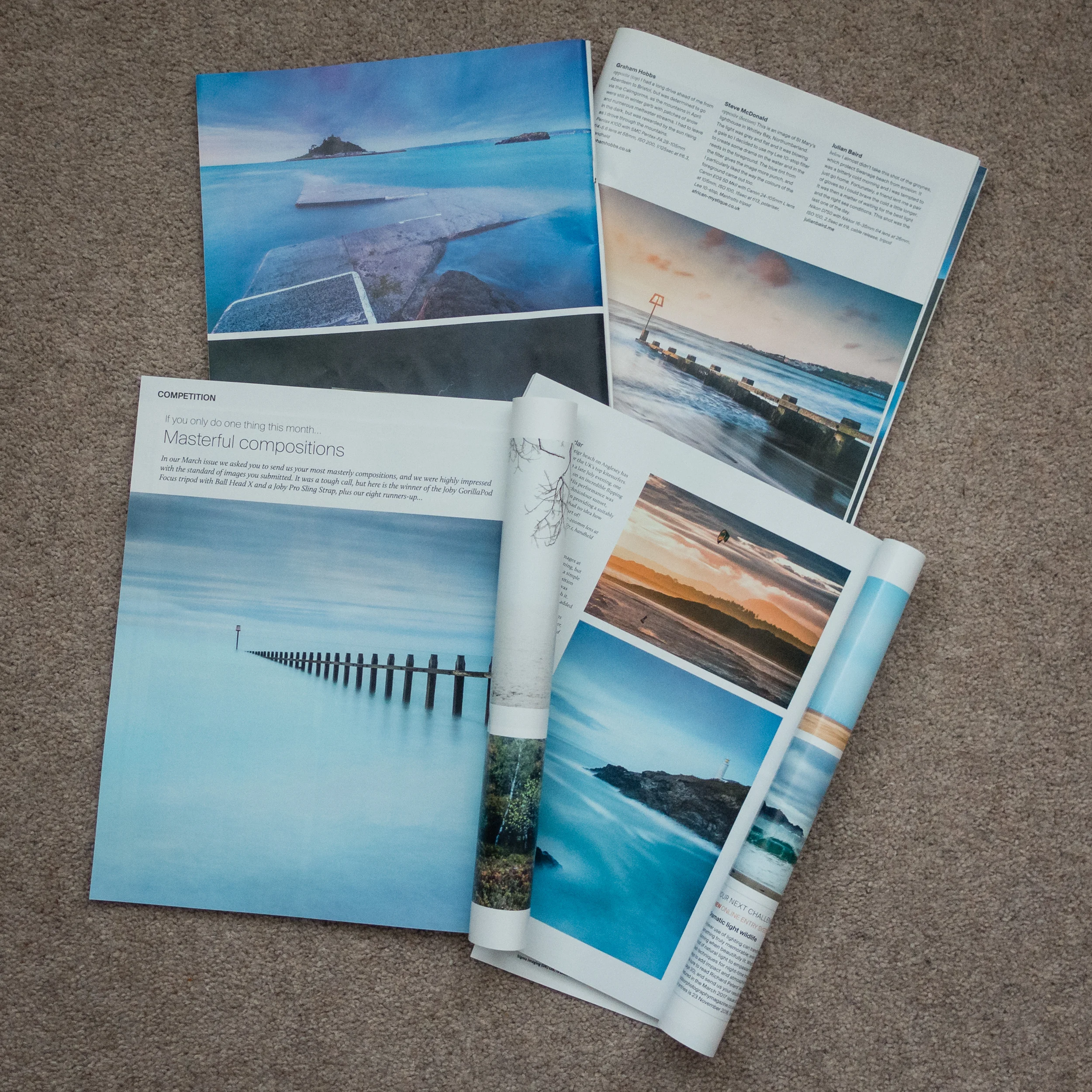
Though this may sound like a spontaneous decision, it was not. For at least a year now I've wanted to extend my workflow to include printing. There are a couple of reasons for this decision. Firstly, seeing some of my images printed in Outdoor Photography magazine has made me realise how wonderful it is to see one of your images in print.
I have also been influenced by a couple of photographers that I follow online that are big proponents of printing, Martin Bailey and David duChemin. Martin wrote and excellent ebook on printing Making the Print and David has an excellent video on Ideas for Living With Your Photographs.
I wanted to live with my work a bit more. Why should my images gather dust in a digital archive? I want to see what my images looked like in physical form.
Printing at Home
So why would I go to all the hassle of printing at home? Why not just send the images to a lab and have a professional do it? This is a valid question but for me, half the fun is the process of the print. There is a sense of excitement as the printer slowly prints out one of your images. The anticipation of seeing the final result. Printing is the last step in a complete end to end photography workflow that starts with capture and ends in print.
This isn't to say that I wouldn't use a lab. Labs are great, especially if you need an unusually large print, need framing or need to print on other materials. But for me, I want that tangible experience of doing the print myself and hanging it on my wall.
What about the cost? Isn't printing at home expensive? I'll be absolutely honest with you, I have not concerned myself with how much each print will cost. That's not to say that I don't care, it's just that the cost per page isn't something that has influenced either my decision to print at home or the decision to buy this specific printer.
I've always owned Canon printers and my current office printer is a Canon so I was very comfortable with my decision to buy the Canon Pixma Pro-10S. Also, given the volumes of printing that I was going to do, I could treat myself to an A3 print every now again. Compared with all the other money I have spent on photography over the years, the cost of a print seems a small price to pay to further my enjoyment and experience of photography.
My First Print
I was excited to make my first print with my Canon Pixma Pro-10S. One of the first things I needed to do was to get some paper. There is a dizzying range of paper types and sizes out there. I thought I would make my life easy to start with by selecting from Canon's own range of pro papers. After watching David Noton's videos on A guide to Fine Art and Photo Printing and Fine Art and Photo Printing I knew the Canon paper types would already have the relevant ICC profiles installed which should make my first print easier. He also made some good suggestion on which paper types to use.
So I got onto Amazon.co.uk and ordered some Canon Pro Platinum A4 and A3+ glossy paper. I was ready to start printing. If you want to see how I got on with my first print, from setup to final output, I've made a short video of my experience.
Impressive, Fun and Simple
To say that I was impressed by the output would be an understatement! The accuracy of the print compared to what I saw on the monitor was remarkable. The colours, tones and contrast all looked amazing on the glossy A3 paper. My black and white image from my Live Music portfolio was also stunning with the printer producing a punchy and detailed print.


I was also pleased how simple it was to make a successful print. I was already calibrating my monitor but I was worried that I might have to extend that to include printing, but Getting an accurate print was no more difficult than selecting the correct paper type in the Canon Print Studio Pro.
However, almost as important as the quality and simplicity of the process was that it was fun. There really was something very special about watching one of your favourite images gradually appear from the printer. When I held up that first print to the light I realised that I had definitely made the right decision to get into printing. The whole experience of looking at your images in print is so vastly different from seeing them on a monitor, even one as good as my Eizo monitor. Printing now as a permanent home in my photography workflow and I can't wait to print more of my images.
So do you print your work? Do you print at home or use a lab? Let me know in the comments below.