

Combining Landscape Photography with Wild Camping on Dartmoor
While most landscape photography locations on Dartmoor can be accessed during the day by those who don't mind a long walk, being at those locations for sunrise or sunset can be more of a challenge. Sometimes the only way to be at these remote locations for the golden hours is to wild camp.
Better Options, More Locations
Over the last couple of years, I’ve been exploring new areas on Dartmoor so that I have a wide range of locations to photograph. As I discover these locations for myself, I am finding that I need to go deeper into Dartmoor and even further away from the roads. It’s been an eye-opening experience and I have walked areas of Dartmoor which have taken my breath away.
However, accessing some of these locations now requires me to walk at least an hour, and sometimes an hour and a half or more. The distance and time to walk to these locations isn’t an issue, but to photograph them at sunrise or sunset is a little trickier. Often the best light can be found from around 30 minutes before sunrise and 30 minutes after sunset. Add that to the time taken to walk in or out of these locations and it all becomes a little more challenging. I love Dartmoor, but not even I’m that keen to spend 90 minutes walking over the moor in the dark.
A new approach would therefore be needed if I’m going to access these locations during the golden hours. For me, wild camping is a natural choice. I’m not what you would call a “tent person,” but needs must, and I’ve finally taken the plunge and bought a tent.
Before I headed out into the wilds with my tent and sleeping bag, I thought it was a good idea to try a solo wild camp at a location I know very well.
I hope you enjoyed watching my first solo wild camp. It was an enjoyable experience and a horrible reminder of how badly I sleep in a tent, but to me, the benefits outweigh and negatives. Expect to see a few more wild camping videos from me in the future!
As I said in the video, if you’ve got any wild camping tips, equipment suggestions or good locations on Dartmoor, do let me know in the comments below.
Landscape Photographs from Belstone Tor on Dartmoor
Belstone Sunset #1, Dartmoor, Devon - Nikon Z fc, Viltrox 13mm f/1.4 at f11, 1/25 at ISO 100.
Belstone Sunset #2, Dartmoor, Devon - Nikon Z fc, Viltrox 13mm f/1.4 at f11, 1/8 at ISO 100.
Belstone Sunset #3, Dartmoor, Devon - Nikon Z fc, Viltrox 13mm f/1.4 at f16, 1/10 at ISO 100.
Irishman’s Wall #1, Dartmoor, Devon - Nikon Z fc, Viltrox 13mm f/1.4 at f11, 1/8 at ISO 100, 16:9 crop.
Irishman’s Wall #1, Dartmoor, Devon - Nikon Z fc, Viltrox 13mm f/1.4 at f11, 1/8 at ISO 100, 16:9 crop.
Belstone Sunrise #1, Dartmoor, Devon - Nikon Z fc, Viltrox 13mm f/1.4 at f11, 1/3 at ISO 100.
Belstone Sunrise #2, Dartmoor, Devon - Nikon Z fc, Viltrox 13mm f/1.4 at f11, 1/3 at ISO 100.
Belstone Sunrise #3, Dartmoor, Devon - Nikon Z fc, Viltrox 13mm f/1.4 at f11, 1/4 at ISO 100.
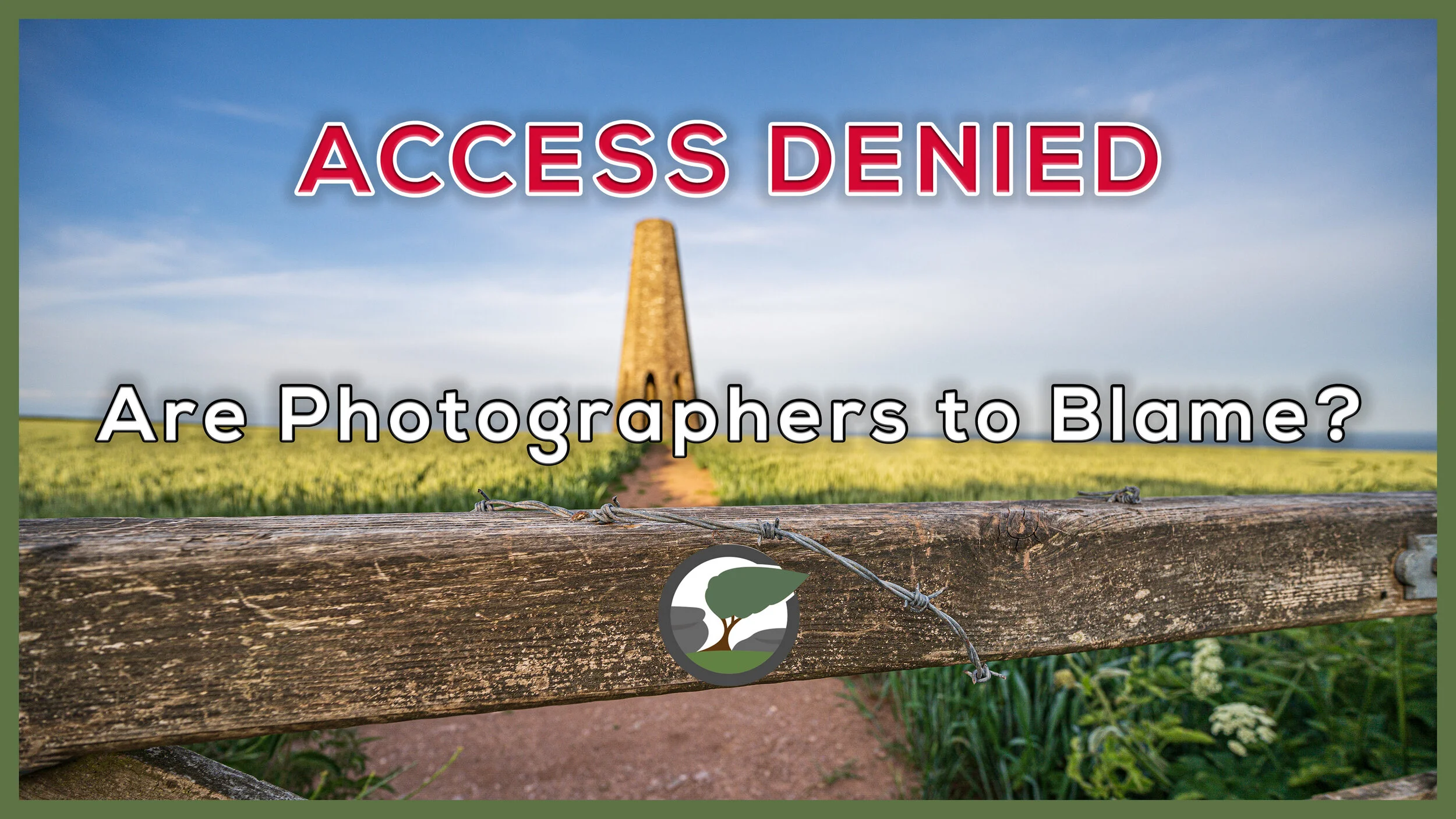
Is My Photography Impacting the Environment?
Access to Daymark Tower has been closed off because of the environmental impact from visitors. In my latest video, I look at the reasons why, consider the impact my photography has on the environment, and capture some landscape photographs of this iconic Devon location along the South West Coast Path.
Daymark Tower - Closed to Visitors
It was a few months ago that people started to mention to me that one of my favourite locations along the South West Coast Path, Daymark Tower, was closed to the public. As I got more information it appeared that the short path that leads from the track to the tower had been locked shut by the farmer due to the damage that was being done to his crops by visitors. This didn’t exactly come as a surprise to me.
As I know the location well, I knew that it was still possible to get good shots of the tower from the track side of the fence. Experience has also taught me that the crops start to look their best (photographically speaking) around June and July, so I thought it was time to visit the tower to take some photographs and look at the access restrictions myself.
Here’s how I got on and what I saw.
While it’s easy for me to criticise other people, making this video has made me think about the impact my photography has on the environment. Issues such are carbon emissions are easy to identify, but what I need to start thinking about is the damage my feet (including those on my tripod) are doing to the ground around me. Over the years I’m sure I’ve been careless so the best thing I can do is to learn from those mistakes and improve my behaviours.
I hope by reading this and by watching the video that a few of you will also consider how you impact your local environment when you are taking photographs. Let me know your thoughts in the comments below.
Daymark Tower Photographs


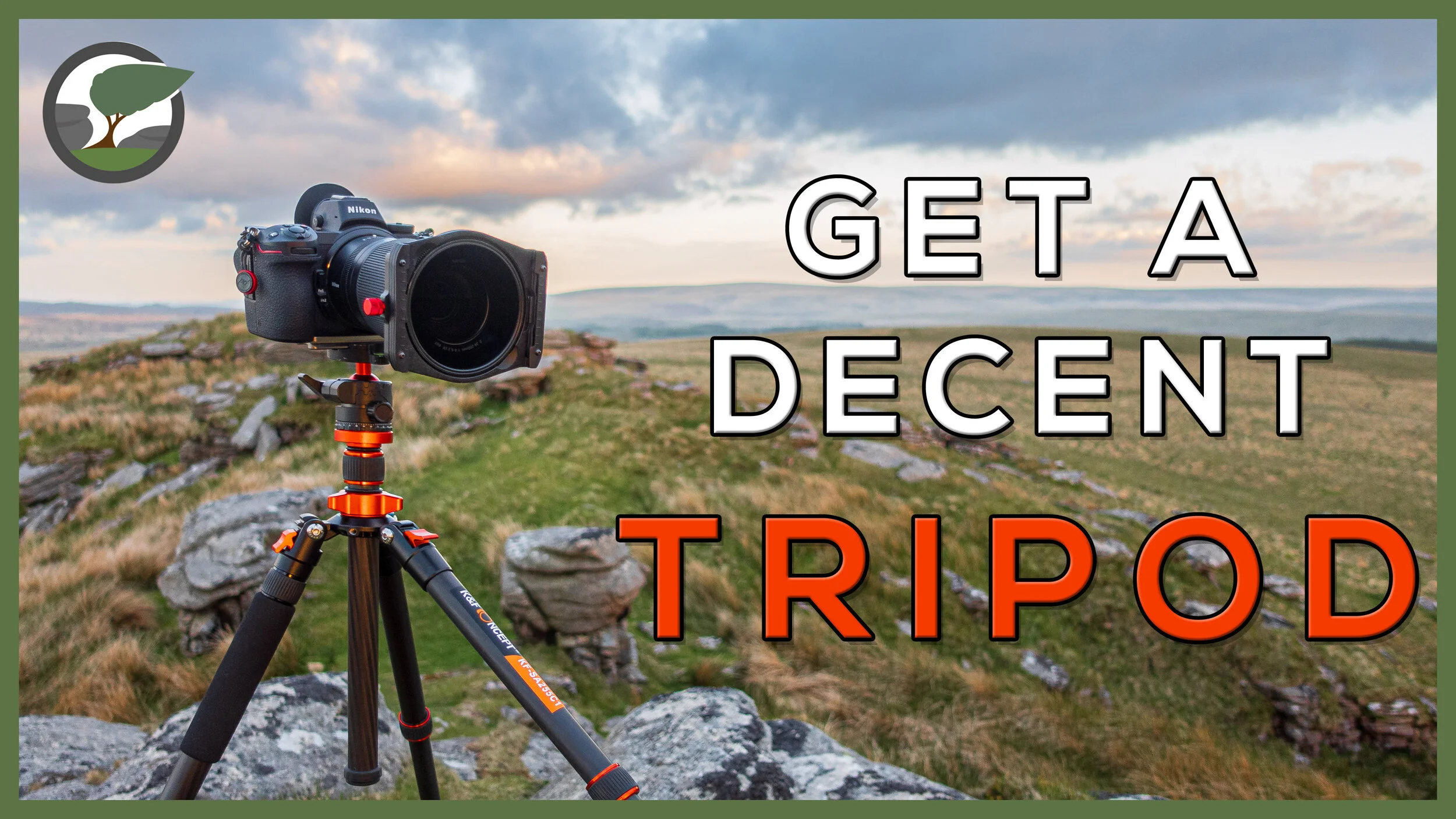
Landscape Photography with the K&F Concept SA255C1 Carbon Fibre Tripod
Don’t be me, get a decent tripod! I wish I’d got the @kfconceptglobal SA255C1 carbon fibre tripod sooner and I might have saved myself from an expensive camera repair bill. In my latest video, I head to Beardown Tors on Dartmoor National Park to capture landscape photographs and to share my thoughts on my new lightweight tripod.
Some Accidents Are More Preventable Than Others
I’d known for a while that I needed to replace one of my tripods. It had served me well for many years, but it was a little too lightweight for what I wanted to use it for, and it had a broken foot. My continued use of this tripod was an accident waiting to happen.
Sure enough, I left the replacement of that tripod a little too long and I had an inevitable accident. Some careless placement of the tripod legs and a gust of wind was all that was needed to send my ZV-1 crashing to the ground. Cameras smashing on rocks never results in a cheap repair bill.
While the ZV-1 was being repaired by Sony I decided that it was past the time to get a replacement tripod. Fortunately for me, K&F Concept had just released a new carbon fibre tripod and they wanted me to try it out (with no strings attached).
Though I’m a little ashamed I let such a preventable accident happen, I thought by sharing my experience I might be able to prevent someone else from having an expensive accident. In the video below I head to Beardown Tors on Dartmoor for a spot of landscape photography and tell you all about my new K&F Concept SA255C1 Carbon Fibre Tripod.
If you'd like to pick up one of these tripods, the kind folks at K&F Concept have shared the following discounts with me:
Website - K&F carbon tripod: https://bit.ly/3fVcaHl Coupon code: KF10UK (10% discount, valid until 31/12/2021)
Amazon - K&F carbon tripod: https://amzn.to/3wSD5dU Coupon code: KFCUK007 (10% discount, valid until 30/06/2021)
Beardown Tors Landscape Photographs
Here are the landscape photographs of Beardown Tors on Dartmoor that you saw me capture in the video.
Beardown Tors #1 - Nikon Z7, Nikkor 24-200mm f/4-6.3 at 26mm, f/13, 0.5 secs at ISO 64.
Beardown Tors #2, Dartmoor, Devon - Nikon Z7, Nikkor 24-200mm f/4-6.3 at 26mm, f/13, 0.4 secs at ISO 64.
Beardown Tors #3, Dartmoor, Devon - Nikon Z7, Nikkor 24-200mm f/4-6.3 at 24mm, f/11, 1/5th secs at ISO 64.
Beardown Tors #4, Dartmoor, Devon - Nikon Z7, Nikkor 24-200mm f/4-6.3 at 24mm, f/11, 0.5 secs at ISO 64.

Cheap Lens, Expensive Camera - Dartmoor Landscape Photography - Bowerman's Nose
Is there any point in really cheap lenses? In this video, I marry my Nikon Z7 with a Pergear 10mm f/8 pancake fisheye lens and head to Dartmoor to photography Bowerman's Nose. Can a £65 lens produce decent landscape photographs?
The Pergear 10mm f/8 Pancake Fisheye Lens
Back in 2018, I published a blog post called Shoot, Print, Surprise. If you haven’t seen that blog post (and watched the video), then now is the time to watch it because there’s a SPOILER ALERT coming up.
In that video, I capture some of my all-time favourite images of Dawlish Warren beach. The best bit though was that I did it using a 15-year-old Nikon D80. I did have the advantage that I was using a Nikkor 16-35mm f/4 lens though. One of the key messages in that video was that the camera body is a lot less important than the lens you attach to it.
Here we are in 2021 and I’ve decided to flip the idea on its head. This time it’s a cheap lens on an expensive camera. To be precise it’s my Nikon Z7 with a Pergear 10mm f/8 pancake fisheye lens. I picked up this lens in the height of lockdown as I thought it would be a bit of fun. And fun it is!
In the video below I head to Bowerman’s Nose on Dartmoor to put this lens to good use. The point of the video is not to tell you that you should all ditch your expensive glass but that you should try different things and have fun with your photography.
Enjoy!
Bowerman’s Nose, Dartmoor
Here are the photos you saw me capture in that video. While they will never compare in quality to the photographs I can capture using a Nikkor 14-30mm f/4, I think the lens has done a pretty good job of capturing the scene.

Bowerman’s Nose #1, Dartmoor, Devon - Nikon Z7, Pergear 10mm f/8 pancake lens, 1/30th sec at ISO 64.
Bowerman’s Nose #2, Dartmoor, Devon - Nikon Z7, Pergear 10mm f/8 pancake lens, 1/30th sec at ISO 64.
Bowerman’s Nose #3, Dartmoor, Devon - Nikon Z7, Pergear 10mm f/8 pancake lens, 1/30th sec at ISO 64.
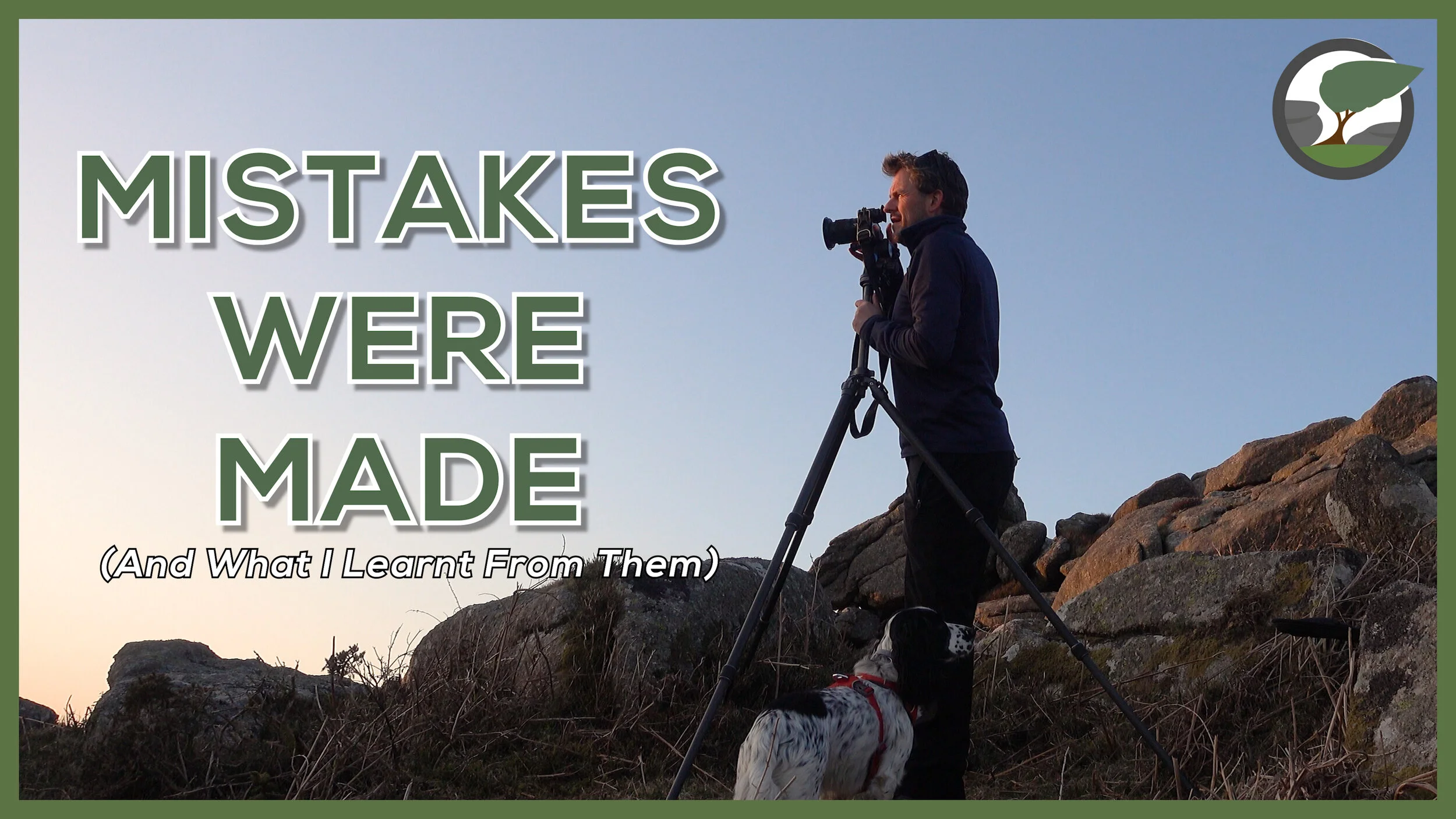
When Things Don't Go to Plan
Landscape photography is full of challenges. Some challenges come from elements you can't control such as the weather, but then there are the mistakes you make yourself. In this video and blog post, I head out to Dartmoor National Park to capture some landscape photographs but end up making a few mistakes. Lessons were learnt!
A Bit Rusty
Last week I shared with you the experience of my first landscape photography shoot for over 3 months. While I didn’t capture any amazing photographs, the experience of being out with the camera again was fantastic. Eager to keep the momentum going I decided to head out Chinkwell Tor with my dog Monty to see what we could find.
However, as you’ll see in the video below, it appears that I’m still a bit rusty, both in terms of preparation and camera skills!
As I said in the video, I’m happy to share with you the successes and failures of my landscape photography adventures. After all, if I can learn something then I’m sure you can too. Let me know some of your photography faux pas in the comments below.
Landscape Photographs from Dartmoor
Here are the photographs I captured while out exploring Chinkwell Tor.

Honeybag Tor, Dartmoor, Devon - Nikon Z7, Nikkor 14-30mm f/4 at 26mm, f/8, 1/60th sec at ISO 64, 3 image focus stack.

The Chink in Chinkwell, Dartmoor, Devon - Nikon Z7, Nikkor 14-30mm f/4 at 27mm, f/22, 1/5th sec at ISO 64.

Bite-Size Blog Post #5 - Two Tors
In the blog this week I visit Dartmoor to photograph one of my regular locations and to photograph somewhere new.
Two Tors
Thanks to the weather, the long days and the company of a good friend I managed to make a few trips to photograph Cornwall. I love shooting the Cornish coast. There’s just so much variety and there always seems to be somewhere new to discover and photograph.
As much as I love Cornwall, I don’t want to completely ignore my local area. In this bite-size blog post, I’m going to share with you some of the photographs I’ve been capturing from Dartmoor. There is a panoramic image from a new location, Bell Tor, and a couple of images from an old favourite, Belstone Tor.
My eyes have been opened to Bell Tor, and the surrounding area and I hope to make a video from this location soon. It has a lot of potential and I’m excited about the possibility of sharing it with you in a bit more detail. In the meantime, though please enjoy the photographs I captured.
Bell Tor
Bell Tor Panorama, Dartmoor, Devon - Nikon Z7, Nikkor Z 14-30mm f/4 at 19mm, f/8, 1/20th sec at ISO 64, 8 image panorama cropped at 6:17.
Belstone Tor
Belstone Tor Sunset #4, Dartmoor, Devon - Nikon Z7, Nikkor Z 14-30mm f/4 at 14mm, f/13, 0.6 sec at ISO 64.
Belstone Tor Sunset #2, Dartmoor, Devon - Nikon Z7, Nikkor Z 14-30mm f/4 at 18mm, f/13, 1.3 sec at ISO 64.
Belstone Tor Sunset #3, Dartmoor, Devon - Nikon Z7, Nikkor Z 14-30mm f/4 at 22mm, f/13, 1.6 sec at ISO 64.

Back to Bowerman's Nose - Part 1
In part one of a two-part blog I return to Bowerman’s Nose on Dartmoor to capture some sunset images and prepare for my return at sunrise.
Bowerman’s Nose - An Old Friend
Amongst all the Dartmoor tors, Bowerman’s Nose must be one of the most unique there is. I’m not claiming to have seen all the tors, but for the tors I have seen none come close to the size and shape of Bowerman’s Nose. Since I discovered it, I have been trying to capture an image of the tor that makes the most of its uniqueness and the surrounding landscape.
I have come close to getting a shot that matches my vision but there always seems to be something that isn’t quite right. That could too much cloud, not enough cloud, lack of light, or even direction of light. Maybe I’ll never be 100% happy with my shots from there. Maybe I don’t care, and I use this as an excuse to keep returning. I like shooting Bowerman’s Nose and over the years I have come to think of this location as an old friend. There is a certain comfort in returning to this unique location.
Planning for Sunrise
I hadn’t considered shooting Bowerman’s Nose at sunrise until I had spoken to friend and fellow Dartmoor photographer Neil Porter. Neil has captured some spectacular photographs of Bowerman’s Nose at sunrise and he recommended that I give it a try myself.
Photographing Bowerman’ Nose at sunrise isn’t an all-year-round option though. The hills behind the tor block the sunrise at certain times of year meaning that some planning with TPE is required. Using my local knowledge, some data from TPE and some handy tips from Neil, I worked out the rough window of opportunity to capture the tor at sunrise.
One thing was clear from the window of opportunity was that I was going to have to get up early in the morning! Even though I don’t live too far away, with a sunrise time of around 5 am, the alarm call was still going to be unsociable. I’m a morning person but a 3:30 am alarm call is still something I don’t go for without good reason.
Shooting Sunset
Weather planning aside I decided that I should head back to Bowerman’s Nose for a sunset shoot first so I can plan for my sunrise shoot. It would be a good opportunity to refamiliarise myself with the details of the location and plan out where I might place myself for sunrise. A bit of planning is rarely a bad thing and as a bonus I might even get some nice sunset pictures.
Bowerman's Nose Sunset #1, Dartmoor, Devon - Nikon Z7, Nikkor 14-30mm f/4 at 23mm, f/13, 1/8th sec at ISO 64, Kase Filters K9 circular polariser.
It appeared that luck was on my side this time and I did indeed get some bonus pictures. While the shots I captured weren’t necessarily good enough for my portfolio I’m still pleased with them. They are a good representation of what I saw, and they remind me of how pleasant Dartmoor can be when you get nice conditions.
Bowerman's Nose Sunset #2, Dartmoor, Devon - Nikon Z7, Nikkor 14-30mm f/4 at 22mm, f/13, 1/10th sec at ISO 64, Kase Filters K9 circular polariser.
It was not a wasted trip. Not only did I get some pleasing images, but I also now had a good idea of what and how I was going to shoot Bowerman’s Nose at sunrise.
Bowerman's Nose Sunset #3, Dartmoor, Devon - Nikon Z7, Nikkor 14-30mm f/4 at 18mm, f/13, 1/6th sec at ISO 64, Kase Filters K9 circular polariser, four image stitched panorama.
I hope you enjoyed these sunset images of Bowerman’s Nose and if you want to find out how I got on then check out part 2 of Back to Bowerman’s Nose.

Back to Bowerman's Nose
This week I photographed one of Dartmoor’s most iconic tors, Bowerman’s Nose. It’s not my first visit and it certainly won’t be my last.
What I’m Looking For
I can’t remember when it was, but ever since I saw my first photograph of Bowerman’s Nose on Dartmoor, I’ve wanted to capture my own image of this iconic tor. I’ve been there many times since but never managed to get the image I was looking for.
For me light is critically important when shooting Bowerman’s Nose. There are plenty of interesting compositions to be had, but without good light on the tor itself it’s just a flat vertical stack of stone. Flatter light might well work if the scene was covered in snow, but given that every time there’s a decent dumping of snow I can’t actually get up onto Dartmoor, it’s unlikely I’ll ever get that shot.
Snow aside, for me the best option for getting a good photograph at Bowerman’s Nose is when I get nice, soft, warm light from a setting sun. (Saying that though, I have been inspired by a recent photograph of Bowerman’s Nose by Neil Porter to photograph it in the morning, but I’ll save that challenge for another day). Anyway, the light is important for a couple of reasons. Firstly it gives the “nose” some contrast turning it from a flat bit of rock into something that looks 3 dimensional. The light also works well on the ground making the undulations and grasses more prominent in the frame.
Together with light and a reasonable amount of cloud I have pre-visualised the shot that I want to get from Bowerman’s Nose. The trouble is, I’ve never managed to get it. I’ve come close once, but the shot I want eludes me so I continue to return to Bowerman’s Nose in the hope that I get the shot one day.
To Exposure Blend or Not
With the desire to get the shot that I wanted I decided to return to Bowerman’s Nose on Thursday evening. I have to admit though the weather forecast wasn’t exactly optimal. I expected to get nice soft light from the setting sun but the cloud forecast was for clear skies. I’m rarely interested in blue skies but sometimes the haze or the very high cloud can go a nice colour as the sun starts to dip below the horizon. I thought it was worth a punt. Better to be out on Dartmoor than in the house watching TV….well, most of the time that is!
When I arrived on location the sky was even clearer than the forecast had predicted so I knew I was going to have my work cut out. The principle challenge was with the contrast between the dark and light areas on the scene. Even though it was only about 30 minutes before sunset the scene had a lot of contrast. As the “nose” typically breaks above the horizon in most compositions, it is almost impossible to use a neutral density graduated filter. To capture the scene I could either try and do it using one carefully exposed frame or capture two frames and exposure blend them later.
Bowerman’s Nose #1, Dartmoor, Devon - Nikon D850, Nikkor 16-35 mm f/4 at 16 mm, f/13, 1/8 sec at ISO 64, Kase CPL.
When it comes to post-processing though I’m very much a light touch/5-minute edit type of person, so exposure blending isn’t top of my list of things to do. However, the HDR merge feature in Lightroom does a pretty good job of exposure blending these days without the need to drop into Photoshop to use layer masks. I’ve included images in this blog that use both a single frame and that have been exposure blended. Can you tell me in the comments which are which?
Bowerman’s Nose #2, Dartmoor, Devon - Nikon D850, Nikkor 16-35 mm f/4 at 20 mm, f/13, 1/15 sec at ISO 250, Kase CPL.
It was a relatively productive evening in the end and I got a couple of images that I’m reasonably happy with. I’ve still not got that killer shot that I want but that always gives me a great excuse to visit Bowerman’s Nose again!

A Tale of the Unexpected
Sometimes the best the shots are on the path rather than the destination itself.
Two Plans in One
Summer generally brings blue skies and warm weather. All very nice for relaxing in and drinking glasses of chilled white wine, but generally useless for landscape photography. After what had seemed to be an endless streak of blue sky evenings I had decided that enough was enough and I was going to go out with the camera. Worst case scenario I could do some exploration of new locations, and best case I might get some high-level cloud around sunset and be able to fire off a couple of frames.
I've been trying to explore more of my local coastline recently so I decided I would visit a location that had been recommended to me by a friend. It's the kind of location you want to visit on a high tide, with a bit of wind and lots of clouds. None of these conditions would be present on this visit, but as this was a mission of exploration, none of that mattered. I just wanted to scope out the location.
As I also had a bit of time I thought I would visit that location first and then head to a different location to catch the sunset. Looking at the map I could see I wouldn’t be far from Froward Point and as I hadn't shot that viewpoint in a while I decided to tag it onto my itinerary.
Blue Skies, Blue Ocean
It was a beautiful summers evening as I set out in my car to my first location. Despite it not being ideal conditions for landscape photography summer is a great time to be driving around Devon. Everything looks lush and green and you can't help but feel everything is going to be just fine!
That sense of well-being and calm continued as I made the last part of my journey to the first location on foot. As I already knew I wasn't going to be taking any "serious" pictures at the location it didn't bother me that it was calm seas and bright blue skies. I took a number of test shots from various different angles. I had to try hard to envisage the location in less settled conditions, but I at least now had a good idea of what I might want to achieve next time. Definitely a location to return to.
I was soon back in the car and crossing the River Dart using the ferry. This is something I haven't done before so it was an added bit of excitement to my little road trip!
Golden Fields
To get to Froward Point you first have to park at the Brownstone National Trust car park and then walk the rest of the way. As you make your way down to the coastline you walk by Daymark Tower, a popular location for photography and a location I’ve shot myself many times. In fact, I had shot it a few weeks before so I was happy enough to pass it by. However, as I walked by it did catch my eye. Instead of the crops being a greeny yellow colour they had turned a golden colour and looked quite different. It did cross my mind that it might photograph well when the sunsets, but I carried on walking, focused on getting to the coastline.
You can shoot Froward Point from a number of different angles as you can see from this blog post here and here. For this visit I decided to go for the spot almost directly below the NCI lookout. I have to admit that when I arrived I just wasn't feeling that excited about shooting there. I'm not sure why this was. The sky now had a few very high-level clouds in it but the rest of the scene wasn't really doing it for me.
I think at the back of my mind I knew that I would have been better off back at Daymark Tower and shooting those golden fields of crops. As time progressed and my desire to photograph Froward Point didn't increase I decided there was no point in waiting until sunset and so I packed my bag and started to walk back to the car.
As I approached Daymark Tower I could see how good the light looked on the tower and the crops. With about 15 minutes of good light left I get to work very quickly and captured these images.
Field of Gold, Daymark Tower, Devon - Nikon D850, Nikkor 16-35mm f/4 at 17mm, f/13, 1/3rd second at ISO 64.
Tower of Gold, Daymark Tower, Devon - Nikon D850, Nikkor 70-200 f/2.8 at 70mm, f/11, 1/6th second at ISO 64.

Fire Beacon, Daymark Tower, Devon - Nikon D850, Nikkor 16-35mm f/4 at 24mm, f/13, 0.4 second at ISO 64 (single image crop at 16:7).
Though I've shot Daymark Tower a few times, I'd never photographed it looking like this. A combination of clear skies, golden light, and golden crops made for some very pleasing images. Considering I hadn't planned on capturing images at Daymark, these unexpected images were very welcome!
Have you ever passed a location and then wished you'd gone back? Have you ever gone to one location but decided to go somewhere that you had originally dismissed? Let me know in the comments below.

Photographing Boscastle and Using Kase Filters
I'm back with a new video! This week I head to the picturesque village of Boscastle in Cornwall to capture some images of the distinctive S shape harbour. I also talk a little bit about filters and what I like about the Kase Filter system which I'm now using.
Back to Boscastle
Boscastle has a special place in my photographic heart. It was about 5 years ago that I decided I really wanted to start learning the craft of photography so I spent the day with local photographer Ross Hoddinott for a bit of 1-2-1 tuition. The first location we visited was Boscastle and from that viewpoint on Penally Hill I probably learnt more about composition than I'd done in the previous 5 years.
Since that day I've been returning to that viewpoint every year to capture images the harbour. Some years have been more successful than others but I've always enjoyed looking down onto that distinctive S-shaped harbour and the hills that run along with it. There's more than just the harbour to shoot as well. There are a couple of great viewpoints closer to the coastline that are worth checking out. Read my blog post Sunrise at Boscastle to see them.
A Slight Break in the Weather
While the lovely summer weather we've been having here in the south-west is fantastic, it's not exactly been optimal for landscape photography. I love the extended hours of light that allow me to travel further and get out more, but those pesky blue skies don't always translate well into good landscape photographs.
After a few weeks of "great" summer weather there was finally a break from the blue skies and the weather forecast was predicting some decent cloud cover that would hopefully make things a bit more interesting. Fortunately for me it was also going to be high tide around sunset as I was keen to shoot some long exposure seascapes. All I had to do was pick a location. Boscastle immediately sprung to mind!
Kase Filters
Even though I'd already made one of my 5 Minute Photo Adventure videos from Boscastle I was so optimistic about the conditions that I thought it would be worth making another vlog from there. As I was going to be shooting long exposures seascapes I thought it would also be an excellent opportunity to talk about Kase Filters. A few months ago I needed to purchase a new filter system and after recommendations from some fellow photographers I know I decided to go with the Kase Filter system. You can hear what I think about them in the video and watch me put them to use.
If you'd like to see how I got on with my latest photography adventure to Boscastle and hear my brief thoughts on the Kase Filter system, then check out the video below.
A Summers Evening in Boscastle
So was my evening in Boscastle a successful one? Let’s find out.
As you will have seen in the video I actually got the better light early on in the evening. Normally the light gets better the closer you get to sunset but due to atmospheric conditions the light fizzled out a bit as the evening progressed. The following image is my favourite because it has the golden light on the foreground rocks as well as the hills surrounding the harbour.
Last Light at Boscastle Harbour, Cornwall - Nikon D850, Nikkor 16-35mm f/4 at 20mm, f/13, 100 seconds at ISO 64, Kase Filters CPL, 6 Stop ND and ND Grad.
The other two images I took are pleasing enough but compared with the first I think they lack some depth and colour.
Boscastle Harbour at Sunset, Cornwall - Nikon D850, Nikkor 16-35mm f/4 at 19mm, f/13, 100 seconds at ISO 64, Kase Filters CPL, 6 Stop ND and ND Grad.
Out to Sea, Boscastle, Cornwall - Nikon D850, Nikkor 16-35mm f/4 at 18mm, f/13, 160 seconds at ISO 64, Kase Filters CPL, 6 Stop ND and ND Grad.
Overall though I was very happy with my adventure to Boscastle and the photographs I took. Does that mean I won't go back? Of course not! There will always be new compositions to found and different conditions and lighting to work with.
I do hope you enjoyed the video and photographs and that it has inspired you to visit Boscastle. If you are looking for more Cornwall locations to inspire your photography then check out some of my other posts from Cornwall. If you've got a favourite Cornish location that you want to share then let me know in the comments below. See you next time!
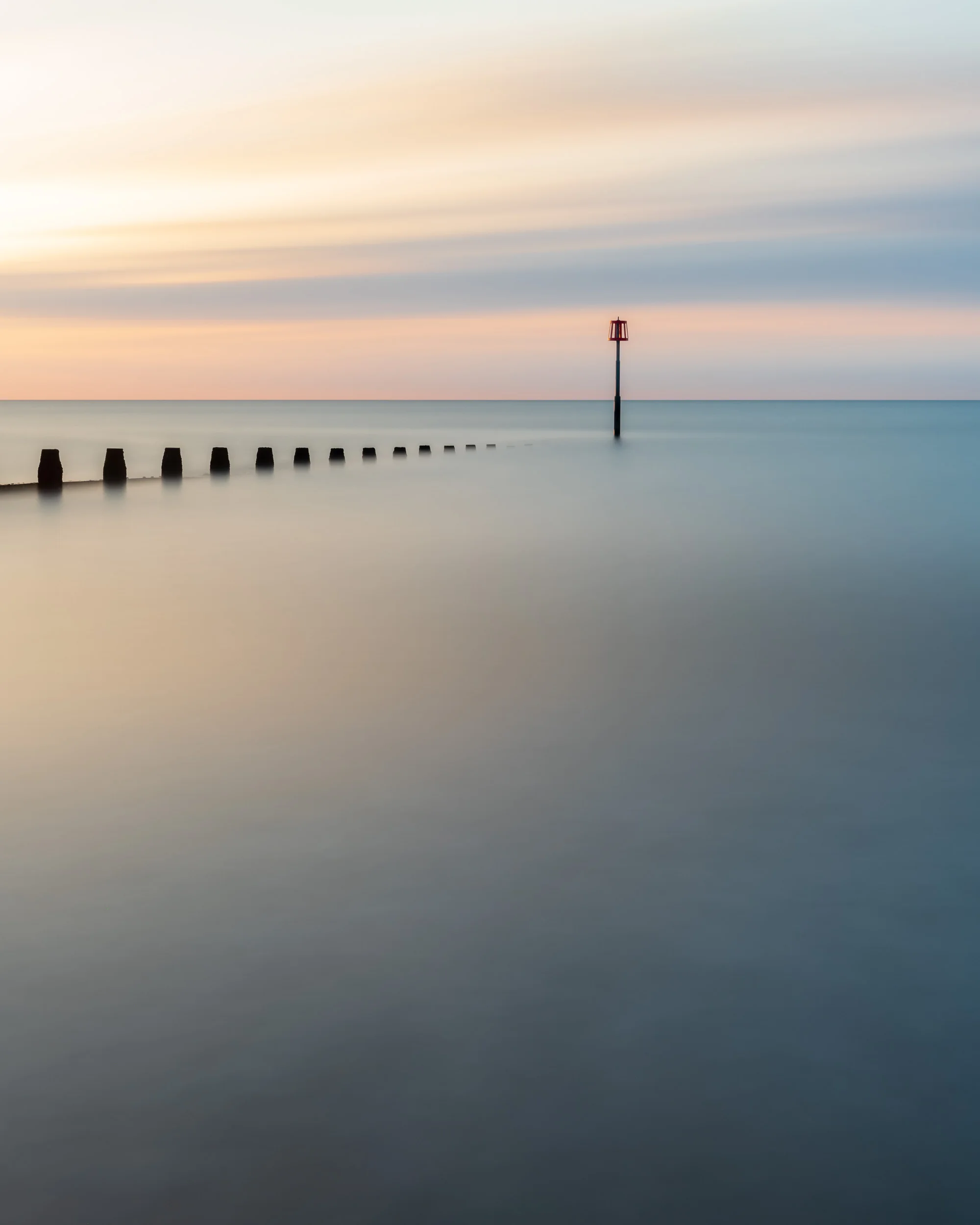
From Dartmoor to Dawlish
In the blog this week, I head to Dartmoor to shoot sunset, and then the following day head to Dawlish Warren to shoot sunrise.
A Good Time of Year
Late September is a good time for landscape photography. Sunset isn’t too late, and sunrise isn’t too early. This means I can do both back to back without feeling like it just killed me. I still remember back in July this year when I photographed Daymark tower for sunset and then Start Point for sunrise. While I had a lot of fun with the friends that joined me, the late finish and very early start just about killed me.
When some welcome settled weather came in recently, I thought I would maximise my shooting opportunities and go out and photograph both sunset and sunrise. But where would I go?
Dusk at Dartmoor
As is normally the way, I was, of course a little short of time so I had to go somewhere local. Fortunately for me, I live near Dartmoor so I’m a little spoilt for locations on my doorstep. Though the weather was settled, it was looking like there would be little in the way of cloud.
I had a number of ideas of what to shoot including the view from Rippon Tor and Honeybag Tor, but the conditions just weren’t going to be right for those elevated viewpoints. I remembered that Haytor Rocks often gets the evening light so I decided to photograph it from Saddle Tor. By photographing from Saddle Tor I could position Haytor Rocks above the horizon and into the only real interesting part of the sky that evening.
Haytor Rocks at Dusk, Dartmoor, Devon - Nikon D850, Nikkor 24-70 mm f/2.8 at 62 mm, 1/3 sec at ISO 64, f/11. Lee Filters ND Grad, single image crop at 6:17.
The image I took is actually a panoramic crop from a single frame. My original composition had Haytor in the lower third of the frame with the rest of the frame being taken up by the sky. My original “big sky” shot might have worked a little better if there had been a bit more interest in the sky, but the lower band of haze in the sky was the only area to get colour. As it turned out, I rather like the panoramic crop so can be reasonably happy with the final output.
Dawn at Dawlish Warren
The morning weather forecast for the following day looked to have a bit more cloud so I decided to head to one of my favourite locations, Dawlish Warren. I tend not to visit Dawlish Warren during the summer months but now sunrise isn’t so early I decided it was time to visit my old friend.
Shooting at dawn is one of my favourite times of the day. There is a sense of excitement as the sun starts to rise and deliver some of its magical morning light. On this morning though, that display of golden light probably wasn’t going to happen. You can plan all you like, check tides, and look at weather forecasts, but if a bank of cloud happens to position itself in the wrong location, all that amazing light you were looking for can be lost.
It’s important to remember though that good morning light can occur 30 minutes before and after sunrise. Even though I didn’t get the best of the light as the sun approached the horizon, I’m glad I stuck around to capture this long exposure.
Into the Sea, Dawlish Warren, Devon - Nikon D850, Nikkor 24-70 mm f/2.8 at 48 mm, 339 seconds at ISO 64, f/11. Lee Filters Circular Polariser and ND Grad,
While this image was captured after sunrise, the long exposure helps capture what light there was and the calmness of the ocean that morning.
It’s always fascinating to see how other photographers interpret the same scene so I was really interested to see how Neil Burnell, who was with me that morning, shot the same scene. Check out his Instagram post to see his take on the beach that morning.
What is your favourite time of day to shoot? Do you use techniques like ICM or long exposures to create a sense of mood? Let me know in the comments below.

Sandymouth Beach
Does bad weather inspire your landscape photography? In the blog this week I head out to Sandymouth beach in Cornwall to discover that inspiration can be found even in the dullest of evenings.
Friendship over Photography
When it comes to weather forecasts I tend air on the side of optimism. I often find myself looking at different forecasts to find one that gives me the best outlook. Sometimes those risks can really pay off. However, there are some weather forecasts that are just so poor that you'd have to be mad to go out.
In the world of landscape photography there aren't many more things that are a depressing as going to a location that has a forecast of 100% low cloud coverage and heavy showers. But that's exactly what I did recently.
So why would I drive all the way to Cornwall when the weather forecast was so rubbish? To see a mate of course! It had been a couple of months since I'd see my friend and as he is a photographer also, we are always looking for an excuse to head out with the cameras. The trouble was the weather forecast was rubbish.
Though we were both keen to do some photography, the lure of chips, chat and the chance to finalise our plans for an upcoming photography trip won the day and we decide to meet up anyway. We would of course both turn up with cameras, just in case the weather wasn't that bad.
Beach Life, Cornwall
Even with a hefty sense of optimism there was no way we were going to commit to a big drive given the weather conditions, so we decided to settle for a local location. I had never visited Sandymouth beach before so when it was suggested we go there I jumped at the chance.
When we arrived at the beach we were surprised to see the car park completely empty. Even on the worst of evenings you normally see a dog walker or two on the beach. It soon became apparent why no one was here as a heavy rain shower came overhead. There was nothing else to do but to sit in the car, eat chips and discuss all the latest mirrorless camera news from Canon and Nikon.
Once the chips were done and the rain shower passed we thought we might as well take a walk along the beach and see if anything catches our eye. It soon became obvious why my friend comes to this location. Miles of sandy beach, sea pools, and rocks could all be used to make some very interesting compositions. Despite the poor weather I felt really inspired and decided to get my camera out!
Tidal Pools at Sandymouth Beach, Cornwall - Nikon D850, Nikkor 16-35 mm f/4 at 20 mm, 1.6 secs at ISO 64, f/11, Lee Filters ND Grad.
Out to Sea, Sandymouth Beach, Cornwall - Nikon D850, Nikkor 16-35 mm f/4 at 20 mm, 5 secs at ISO 64, f/11, Lee Filters ND Grad.
As you can see the weather had cleared just enough to make the sky a bit more interesting, but it was those pools of water that really caught my eye. It's not that I think those images are amazing, it's more that I think how great the future possibilities of this location might be. With some evening light and the sky being reflected in one of those pools, I think it could make for a great image. As the beach is a constantly changing thing, I could end up with a unique image on every visit.
I had been searching for a interesting beach location for a while, and one that wasn't too far away. Despite the poor weather, I was really inspired by this location and I will definitely be heading back there again soon. Just shows how you get can inspired even in the dullest of conditions.
Do you get inspired in sorts of weather? What is your favourite beach location? Let me know in the comments below

Gurnard's Head
In the blog this week I head down to Cornwall again to check out a new location, Gurnard's Head.
Back to Cornwall
For me, the spring and summer months are the time to visit and photograph Cornwall. It's not that I think these are the best seasons to photograph Cornwall, it's just that the longer days means it's more practical to get there for sunset.
Now that the autumn season is upon us I can already sense a chill in the air and the days are getting noticeably shorter. Soon the clocks will change and the opportunities to get to Cornwall will be very much reduced. So while it is still reasonably practical for me, I'm trying to get to Cornwall as much as I can.
Gurnard's Head
One of the great things about my custom Google map is that I should never be short of locations to visit. My map contains a huge number of pins, and a lot of them I haven't even visited. Many of these unvisited pins are locations that I discovered from magazines or social media channels.
For this trip out with the camera, I was looking for somewhere new to photograph down on the north-west coast. A quick look at my custom Google map revealed a location that I had pinned some time ago, Gurnard's Head.
From the text I had added to the pin I could see that I had discovered this location in an issue of Outdoor Photography magazine. Fortunately, I have been buying digital copies of this excellent magazine for a number of years now so it was an easy task to bring up the issue on my computer and get a feel for this location again.
Windy Cornwall
One of the reasons I was heading to the north-east coast of Cornwall was it was one of the few areas of Cornwall that had a forecast that could help yield a good photograph. As with a few of my recent trips to Cornwall though, it was still going to be a bit of a punt if it would work out or not.
After a 2 hour drive to get to my location I made the short walk down to Gurnard's Head. It soon struck me how windy it was. While the sky was relatively clear, and the sun was out, the wind was very strong. Even stronger than my recent visit to Wheal Coates tin mine.
Normally the wind isn't too much of a problem, but it was almost certainly going to be too strong for any long exposure. The wind was coming straight in from the sea so I wouldn't be able to shield the camera either. However, I could at least stand up so no excuses for not taking a couple of pictures!
Gurnard's Head Sunset #1, Cornwall - Nikon D850, Nikkor 16-35 mm f/4 at 32 mm, 0.4 secs at ISO 64, f/13, Lee Filters ND Grad.
Gurnard's Head Sunset #2, Cornwall - Nikon D850, Nikkor 16-35 mm f/4 at 16 mm, 0.4 secs at ISO 64, f/13, Lee Filters ND Grad.
I really enjoyed my time at Gurnard's Head (despite the wind). One observation I did make is that the area around the headland is covered in heather and if I visit there again I'll do so at the start of August. I can imagine Gurnard's Head is a sea of purple at the right time of year.
Despite the strong winds, I was happy to have explored this new location (something I'm trying to do more of). Unfortunately, the predicted cloud cover never transpired that evening (it was painfully beautiful a few miles further east), but sometimes it's the experience of being outdoors that's important.
So have you been to Gurnard's Head before? Which of my two images did you prefer? Let me know in the comments below.

I Missed Spring but Hello Summer!
In the blog this week, I share with you my disappointing experience of photographing spring this year. However, I remain in a positive mood as the first shoot of summer goes a little better.
Spring, My Favourite Season
As a landscape photographer and general fan of the outdoors, I like all of the seasons. Each one has its own unique characteristics and they can transform how you view and photograph locations. For me though, there is something special about spring. It could be the improving weather, the changing colour of the landscape, or simply the longer hours of daylight.
Spring officially started on the 20th of March this year and I was determined to make the most of it. The short days of winter were at an end and it would soon be possible to start heading out weekday evenings. I was hoping to spend a few months being busy with the camera.
Now that the spring season has officially ended (21st June), I'm looking back on the photographs I have taken and I can't help but feel a little disappointed. It's not that I didn't get out with the camera, it's just that I can't really pick out a photo and say "I nailed it". Somehow, it seems that spring has passed me by this year.
The problem doesn't appear to be lack of commitment on my part, it's just I haven't been out when the conditions have been at their best. As a photographer with a full-time job and a young family, time is very much at a premium. The times I get to go out with the camera aren't dictated by the weather conditions, but when I have spare time between my other commitments. So if Tuesday evening is the time I am able to go out with the camera, but the conditions will be better on Wednesday, I either go out on Tuesday or not all.
It's not been all bad. Spring at Venford Falls (Dartmoor, Devon) is always worth a visit.
Don't get me wrong, spring hasn't been a total disaster. I managed to create a bunch of videos for my YouTube channel:
I have been busy but I just haven't created an image that has captured the essence of spring. One of the key shots I wanted to get was of the coastal thrift in Cornwall. While I did capture an image of the thrift, the conditions were far from ideal. Unfortunately, the thrift is only at its best for a couple of weeks, and I simply didn't get a chance to get back and try again.
I created this image for my Focus Stacking with the D850 video. If only the light had been better. (Bedruthan Steps, Cornwall)
However, I need to put things into perspective. While I didn't get my "spring" image, I did get out with the camera. For me, anytime out with the camera is a good time, and being able to practice will mean my camera skills will be sharp the next time to conditions are better.
Summer is Here!
Anyway, spring has gone, and summer is here so time to start capturing the delights of a new season. For one of my first shoots of summer, I decided to head to The Rumps in Cornwall with my friend (who is also a photographer and a bit of a lucky charm!).
It was a tricky decision to head out that evening or not. I was already very, very tired after a 3 am start that morning for a dawn shoot, but even though the forecast was for clear skies, we could see enough clouds in the sky to justify giving it a punt. To help us on our way we had some fish and chips, and a coke, and we instantly felt more optimistic.
It was a really nice evening at The Rumps. Unfortunately, there was only a little cloud in the sky, and what cloud there was, was difficult to frame effectively. It was however, a good start to a summer of photography and I captured this image:
Summer at The Rumps #3 - Nikon D850, Nikkor 16-35 mm f/4 at 18mm, 0.8 seconds at ISO 64, f/13, Lee Filters Circular Polariser. (The Rumps, Cornwall)


As the sun dipped below the horizon a band of deep orange appeared along the horizon. It was spectacular to look at but it was one of those views that was best looked at than photographed. Sometimes you just need to sit there and soak up mother natures show with your own eyes.
Did you manage to capture any good photos from spring? Are you looking forward to photographing summer? Let me know in the comments below.

OnePlus 6 Landscape Photography: A Mobile Phone Photography Challenge with Chris Sale
Can you capture a good landscape image using a mobile phone? Well, that's the challenge fellow photographer Chris Sale set me. In the blog, I share with you the video I captured when I headed out to Dartmoor National Park with my new OnePlus 6 mobile phone to capture some landscape photographs.
Landscape Photography Challenges
I like to challenge my landscape photography skills. This could be by doing something new, trying a different bit of kit, or even trying an old bit of kit (see my video Shoot, Print, Surprise). So when my friend and fellow photographer Chris Sale contacted me and suggested a new challenge for us both I immediately asked him to tell me more!
Our previous photography challenge had been a great success. Last time Chris challenged me to ditch my wide angle lens and head out with my 70-200 mm. You can see how I got on here. For this challenge though, Chris asked me to leave my DSLR at home and head out with a mobile phone! This perhaps sounded like a step too far, but I was up for the challenge. Obviously, I sent the challenge back and told Chris he had to do the same.
OnePlus 6
The challenge came at an interesting time as I was actually in the market for a new phone. My heavily used and loved Google Nexus 6p was on its last legs and it couldn't seem to survive much longer than a couple of hours without needing a charge.
I'm not going to bore you with all the reasons why I bought the OnePlus 6, but it was the phone that suited my needs to best. Funnily enough though, camera specs weren't top of my list of things I was looking for in a new phone. I have my Sony RX100M4 as my portable camera so I only ever expected to use the OnePlus 6 to capture the odd photo here and there.
So without knowing too much about the camera capabilities of the OnePlus 6, I head out to Dartmoor National Park to start my challenge. You can see how I got on in the video below:
As I mentioned earlier in the blog, Chris also undertook the same challenge. To see how he got on, check out his video:
Mobile Phone Photography
So can you capture good landscape images with a mobile phone? Sure you can! You can capture landscape images with just about any camera. I'm not saying the camera is irrelevant, but without good light and composition it doesn’t matter what camera you have with you, you might still end up with a dull photo.
So would will I be giving up my Nikon D850 anytime soon? Of course not. While it is perfectly possible to capture good landscape images with a mobile phone, the controls, versatility and image quality of a larger camera will (likely) always be better. As you'll have seen in the video, the dynamic range of the OnePlus 6, is not match for my Nikon D850. But given the price difference, that is hardly surprising is it!
So do you ever take landscape images with your mobile phone? What mobile phone do you have? Did you buy it for its capabilities as a camera? Let me know in the comments below.
The Photograph
Mr Bowerman please meet OnePlus 6 - Bowerman's Nose, Dartmoor, Devon: OnePlus 6, ISO 100, 1/125th sec, f/1.7, DNG processed in Lightroom CC Classic.
PS - The product links used in this article are Amazon affiliate links. By buying through the links I may receive a commission for the sale. This has no effect on the price for you.

Creating Panoramic Images of Glen Etive with a Drone: A 5 Minute Photo Adventure
In this blog post, I share with you the story, photographs and video of how I went about creating some aerial panoramic images with my DJI Mavic Pro drone.
Over the last couple of weeks, I have told you about my recent photography adventures to the Dalveen Pass, and to Kilchurn Castle. To be honest, given both these adventures were undertaken while on a family holiday I thought I was doing really well. After all, I was supposed to be spending time with my family.
Beinn Duirinnis
Landscape photograph aside one of the things I was most looking forward to doing while visiting Scotland was getting up into the hills. Or to be more precise the mountains! I love Devon. It's a beautiful county but I do miss walking the hills and mountains of the Scottish highlands.
When I suggested to my brother-in-law that maybe we should climb a Munro while I was visiting he couldn't have said yes fast enough. However, there was one slight problem. Despite it being April, there was still a lot of snow on the upper slopes of the higher mountains. Unfortunately, my skills as a hill walker don't include snow so we had to revisit our plan.
Almost directly opposite to where I was staying is a hill called Beinn Duirinnis. At only 550 m this was much more likely to be snow free. However, it would deliver magnificent views of north up Loch Etive towards Glen Etive. This was highlighted in Jager Scot's video and I thought a trip up this mountain might mean another chance for some landscape photography.
Unfortunately for me, Mother Nature hadn't finished delivering snow to Scotland, and an unexpected overnight dumping of snow meant that even Beinn Duirinnis became out of reach. Another plan was needed!
Landscape Photography from Your Back Garden
With almost every local mountain out with my skill set, I decided I would try something a little different. I had been playing with the drone a few days taking some panoramic images of the surrounding landscape. This got me thinking. Perhaps I could do some landscape photography without even leaving home and maybe produce a video to go with it!
With all the extra snow on the hills, I decided to send the drone up and see what I could capture. Here is how I got on:
As you saw, a drone can really open up some new creative options. It would have been impossible to capture those images without a drone. While I haven't used the drone that much for stills photography, this really did open my eyes again to the possibilities that this amazing bit of technology can offer.
Do you have an amazing view from your garden? Do you use a drone for stills photography? Let me know in the comments below.
Those Images
Here are those panoramic images you saw in the video. Enjoy!
This is the image I shot the evening I made the video. DJI Mavic Pro, 1/125th sec at f/2.2, ISO 100, 26mm (35mm equiv'), stitched from 11 DNG files.
I took this image a few days before I shot the video. I much prefer the light in this one. DJI Mavic Pro, 1/125th sec at f/2.2, ISO 100, 26mm (35mm equiv'), stitched from 9 DNG files.

Amazing Light at Brentor Church
In the blog this week I tell about how I was treated to a spectacular sunset at Brentor Church!
Finally, decent light!
For those of you who read my blog on a regular basis, you will know that I've not been the happiest of photographers recently. Despite being the very proud owner of a new Nikon D850, I've not been having much luck with the weather recently. This has played havoc with my creative adventures! However, this all changed a couple of weeks ago when I visited Brentor Church and I was treated to an epic sunset.
The night before I visited Brentor Church on Dartmoor, I also visited another Dartmoor location, Honeybag Tor. It was one of those evenings where you think your photographic mojo has completely deserted you. I found myself mumbling "why do I even bother" as I wandered back to the car.
I'm not one to stay down for too long though. The very next morning, armed with a cup of coffee I got back on the computer and started checking the weather forecast for that evening. Best thing to do when you've had a bad trip out with the camera is get back out there and try again. After all, I have talked about the value of practice and perseverance before on this blog. So I took on my own advice and got to planning a trip out with the camera.
I looked at the weather forecast, and even though it was forecast for nearly 80% cloud coverage, thanks to yr.no (a Norwegian weather service), I could see that most of that cloud would be high up. With virtually no lower cloud cover there would be a chance that just around sunset the golden light of the sun would illuminate the underside of that higher cloud.
After a recent visit to Brentor Church, I was keen to revisit this Dartmoor location. So with a good weather forecast, and a wonderful location picked, I set off with a positive, but cautious frame of mind.
What's It Called?
I normally like to share the details of where I've taken a photograph, so I normally try and include a map. While adding the map for Brentor Church below I noticed a couple of things.
The map above refers to Brent Tor, Brentnor, and St Michael's Church. So what is this location called? Well I did a little checking and to give the church its full name it's called The Church of St. Michael de Rupe (St. Michael of the Rock), which is located on Brent Tor, near the villages of Brentor, South Brentor, and North Brentor.
I believe the church is commonly known as Brentor Church. So looking at the Google Map above I can only assume that some of those location spots are user submitted and contain minor errors. Anyway, now we all know what it should be called and how to spell it!
Lost for Words
My plan for Brentor Church was not only to take photographs but to also shoot one of my 5 Minute Photography Adventure videos. However, as I was visiting the location on a Friday evening and the weather forecast was good, I knew there would be a good chance there would be other photographers there. The problem with that is that I just can't seem to present to the camera when someone else is watching! I'm just too self-conscious!
As suspected though, when I arrived, there were already a few photographers there. I told myself to just get on with it and get filming. But I didn't. To be honest, it was nice to keep the video gear in the bag and just chat to some fellow photographers. One of the photographers was from Wales and the other was a local photographer called Lee Smith (check out his work here). Both chaps were excellent company and we got to enjoy a very special sunset together.
Changing Light
Brentor Church, like many locations, benefits greatly from good light. The ideal conditions would be to have a dramatic sky, and the side of the hill and church illuminated by some nice side lighting from a setting sun. The image below gives you a hint of what that might look like.
Nikon D850, Nikkor 16-35mm f/4 @ 18mm, ISO 100, 0.6 sec @ f/13, Lee Filters circular polariser and ND grad.
On the night that I was there, that side lighting didn't last too long. Unfortunately, the sunset behind some distant low cloud. However, in the next photo, you can just about see the sky and clouds starting to change colour.
Nikon D850, Nikkor 16-35mm f/4 @ 22mm, ISO 64, 210 sec @ f/13, Lee Filters circular polariser, Little Stopper and ND grad.
And then, just as the sunset, the sky lit up in spectacular fashion! All of a sudden the sky was full of pinks and blues. This allowed me to capture my favourite image of the night.
Nikon D850, Nikkor 16-35mm f/4 @ 18mm, ISO 100, 5 sec @ f/13, Lee Filters circular polariser and ND grad.
The amazing sky can't have lasted much more than 5 minutes and you can see from the following two photographs how quickly the sky can change in a few minutes. I was glad I was up there early and had everything set up and ready to shoot before the action started.
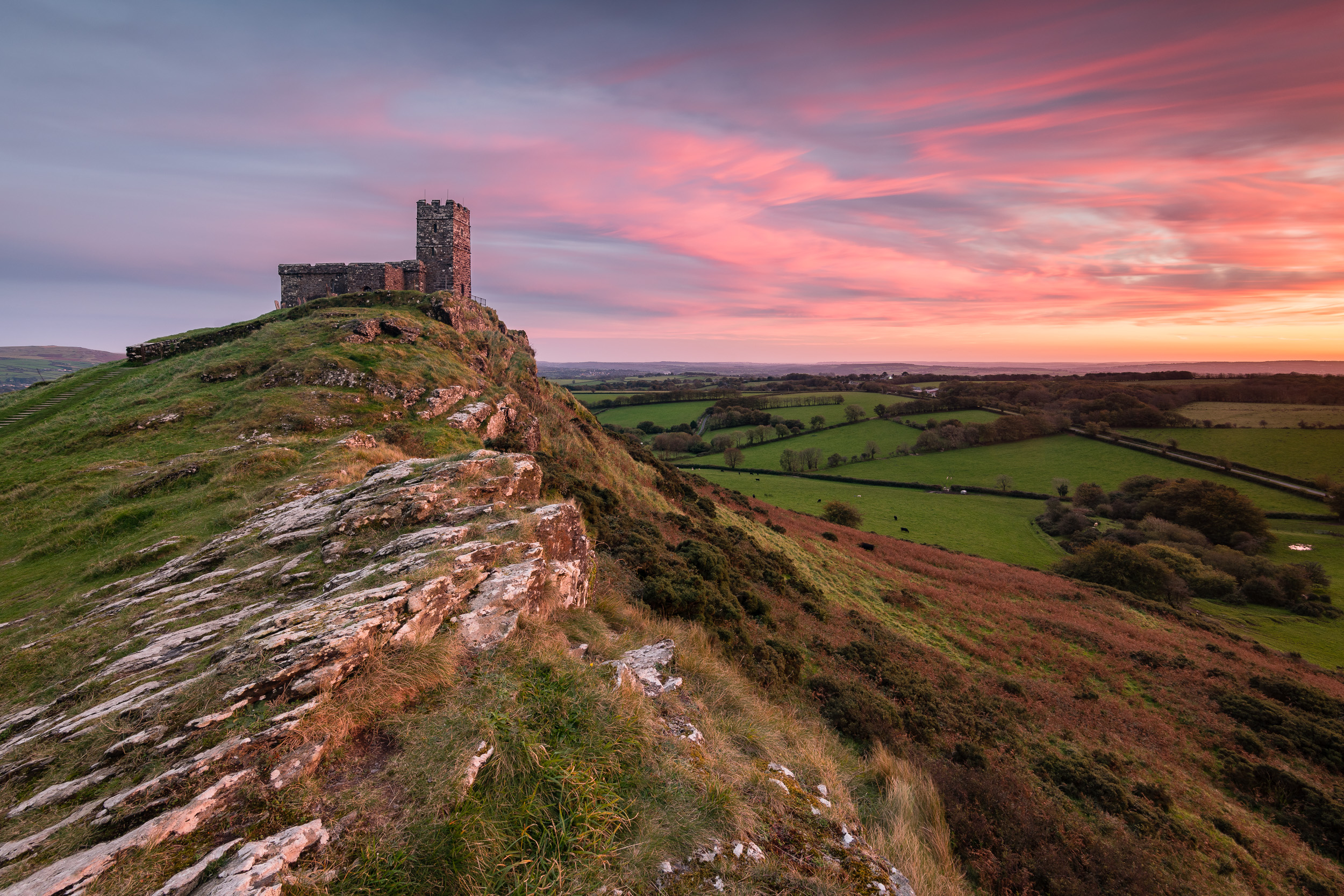

It was a wonderful evening of photography. Not only did I get some images that I was very happy with but I had a great time chatting with some fellow photographers. I will get that video of Brentor Church done one day. Not that I need an excuse to visit this great location again.
So have you shot Brentor Church before? What was the best sunset you've photographed? Let me know in the comments below.

Brentor Church
In the blog this week I head off to Brentor Church on the edge of Dartmoor. Read about how the cold weather almost sends me home early but by sticking around for a break in the weather I was treated to some lovely evening light.
A Bit of Inspiration
I often look for inspiration using my personal locations map that I created using Google Maps. One evening I was looking for something local to shoot when I noticed a map pin on Brentor (St Michael de Rupe) Church on the edge of Dartmoor. I've shot the location a few times but never got an image that I was really happy with, so I thought this would be a good time revisit the old church on the hill.
The weather forecast was for broken cloud and no rain, and the direction of the sunset was favourable for good lighting along the side of the hilltop and church. I had been stuck in the office all day and I was looking forward to getting outside into the fresh air and taking some images.
Wild Dartmoor
The weather at home that day had been very summery so when it came to outdoor clothing I decided to keep things light and I left the thermals and down jacket at home.
When I arrived at Brentor things were a little different than they were at home. Why I should be surprised by this I don't know! It is Dartmoor after all and having four seasons all in one day isn't exactly unheard of. Certainly not to be put off I got my bag out of the car and made the short walk to the viewpoint.
To say that there was a bit of breeze up there would be an understatement! It's not necessarily the height of the location but more that it is very exposed. It wasn't long before I had put on my lightweight jacket, shortly followed by hat and gloves (which I always keep in the bag, fortunately). With the skies being overcast and my body temperature dropping, I was soon feeling uncreative and considering making an early exit and going home.
Game On!
If there is one thing you can count on when photographing Dartmoor is rapidly changing conditions. While I was sitting there gradually getting colder I was keeping an eye on the weather behind me. I could see in the distance some significant breaks in the cloud which I was hoping would lead to more interesting skies and give the sun a chance to break through. So I toughened up and waited!
I got the camera all set up and ready. Breaks in the cloud and splashes of light can be fleeting, so I needed to be ready. I then waited patiently and watched with eagerness as the rays of the sun that were breaking through the cloud gradually got closer and closer.
When the weather did break over Brentor it did so for only 10 or so minutes. I captured a few frames keeping an eye on the cloud converge over the old hilltop church and how the light was breaking on the hillside.
Nikon D750, Nikkor 16-34mm f/4 @ 18mm, ISO 100, 1/6 second, f/13, no filters.

The quality of the light can change dramticaly over a short space of time.
The quality of light can really make or break an image and without light from the setting sun as it broke through the cloud this image would have been much flatter. It's not to say that this image is perfect, far from it, but given the conditions I was working with I was happy with the results.
I tried a few variations on my composition and I even tried increasing the ISO for a shorter shutter speed. I thought that the shorter shutter speed would freeze the grass blowing in the wind, but I decided that keeping the movement of the grass better reflected the mood I was looking for.
So my evening up on Dartmoor was a bit of a roller coaster. Nothing hampers your creativity more than being cold and I really should have known better to head up to Dartmoor without a warm jacket! But I'm glad I stuck it out as at the end of the day as I got some nice images and a lung full of fresh air.
So have you photographed Brentor church before? Would you like me to make a 5 Minute Photo Adventure video there? Have you ever been out with the camera without suitable clothing? Let me know in the comments below.

The Rumps - 5 Minute Photo Adventure
In this blog post I take you on another 5 Minute Photo Adventure. This time I'm back in Cornwall to photography the twin headland known as the Rumps. This is a great coastal sunset location and offers fantastic views of the surrounding coast. Read the blog and watch the video to see why.
Seeing More
The more 5 Minute Photo Adventure videos that I make the more I realise how amazing the coastline around the south west of England is. Over the last few years of photographing my local coastline, I've discovered many wonderful and dramatic locations. I am indeed very lucky to live in a place where I can access a wide range of beautiful photographic locations.
By shooting these videos I have started to discover more about the locations I photograph. For each video, I try to shoot lots of B-Roll so that I have additional footage to help tell the story of the location. This could be me walking around the location or using the drone to capture some aerial footage. It's from this aerial footage that I have seen some amazing coastal sights and views. It could be the elevated view or the view that would otherwise be inaccessible that provides me with a new way of looking at a location. A great example of this would be my previous 5 Minute Photography Adventure video from the Valley of the Rocks (insert link).
When I get home from shooting a video and I look at the B-Roll I often see how much more that location has to offer. Sometimes I get very focused on making an image that I forget to look around me and see what else there is. The B-Roll not only adds the video itself but also reminds me to keep my eyes open when I'm on location and not to just look through the viewfinder.
The Rumps
With so many great locations to pick from in the South West, it was hard to decide where to shoot my next video from. So, as I often do I checked out my custom Google Map and spotted the location known as The Rumps. The weather forecast was looking OK, but I thought it would be worth the risk so I packed my gear and headed out in the car. Here is what happened:
The Images
In the video, I showed you just one of the three images that I took that evening. Here are all three for you to look at:


While these images are pleasing enough, I don't feel any of them stand out. When shooting one of my 5 Minute Photo Adventure videos it's always nice to get a standout image to finish the video with, but the video is more about my desire to share the location with the viewer, tell them about my process of shooting the image, and hopefully inspire them to visit the location. So I don't necessarily consider it too much of an issue not to have a portfolio class image at the end of each video. It would be nice if every trip out with the camera did produce a portfolio class image but this simply isn't the case. For me, any time out with the camera is time well spent. Getting an awesome image is a bit of a bonus.
Looking at the images now I don't think the compositions work particularly well. Sure, not having great light didn't help, but I'm not entirely sure nice side lighting or a pink sky would have helped. The images lack balance and in some cases, they need more negative space in the lower part of the foreground.
So while these images might not necessarily be my best work, they are still important. Every image I take, good or bad, I will personally critique to see how I might improve next time. Photography is a journey of constant learning and improvement, but one that I still very much enjoy.
Looking back at my previous visits though, I think I prefer this viewpoint. This image was taken south of the viewpoint in the video and shows a bit more of landscape around The Rumps.
Have you been to The Rumps before? How much do you critique your own images? Are there any locations you like to me make a 5 Minute Photo Adventure video on? Let me know in the comments below.

Valley of the Rocks - 5 Minute Photo Adventure
In the blog this week I head off to the Valley of the Rocks in north Devon to shoot another 5 Minute Photo Adventure video. See the images I took at this dramatic coastal location and be inspired to visit yourself as I show you grandeur of this location from the air.
Drama!
Photographers will often use the word dramatic to describe the coastline of the south west of England. I've even been know to use the word once or twice in my own videos! While it is true that much of the coastline in the area is indeed dramatic, there are few such locations as the Valley of the Rocks in North Devon that have really earned that title.
No matter if you are a photographer or not, walking along the South West Coast Path as it cuts through the valley is a sight to behold. On a good day you can see out over the channel and onto Wales, or just appreciate the steep and rocky cliffs as you stroll along the path at what appears to be a dizzying height.
But enough of me waxing lyrical about the location, take a look at my latest 5 Minute Photo Adventure video to see what I'm talking about.
On Location
I hope you feel inspired to visit the Valley of the Rocks. I shot a little more drone footage than I probably would have for one of these videos, but sometimes you need more than 15 to 30 seconds of video footage to help tell the story of a location.
I opted to shoot from an elevated position so that I could get a long view down the valley and hopefully get some nice evening light across the rock faces. These are two of the images I took, just taken a little time apart.
Nikon D750, Nikkor 16-35mm f/4 @ 22mm, ISO 100, 1 second, f/16, Lee Filters circular polariser and ND grad.
Nikon D750, Nikkor 16-35mm f/4 @ 22mm, ISO 100, 1.3 seconds, f/16, Lee Filters circular polariser and ND grad.
I'm reasonably happy with both images. They are probably the best images I've captured there. However, being the picky photographer that I am, there are a couple of things I would like to have been a little different. Firstly it would have been nice for the golden light to be a little stronger and more widespread. You can just about see the golden light coming through on the foreground rocks, but having more it along the valley would have been nice. However, it did light up the sky very nicely.
While things like the light are sometimes out with my control, the composition is my job. It's not that I'm unhappy with the composition of both photos, but for the first image, I should have shot just a little wider. Perhaps around 17 or 18 mm. The setting sun in that image is very close to the edge of the frame. I should have either excluded it all together or given it more room. I was probably concentrating on other elements around the frame or just waiting for the sun to go from the frame. It might have been that this was a test shot while I was waiting for the sun to leave my composition. It's strange how sometimes that an image you never intended to be the "one" can end up being the favourite from a shoot.
Go Explore
Though I only photographed from one location that evening, there are numerous spots along that part of the South West Coast Path to shoot from. It's well worth getting there a little early just to have a wander and take in the location. No matter what you shoot with or what you like to photograph you should find something inspiring. It might even be the wondering goats or the cricketers playing a match on the valley cricket field!
So have you been to the Valley of the Rocks? Did the video and images give you the inspiration to visit this stunning location? Let me know in the comments below.
And before you go....

Oh, and one last thing. I'm very happy to be in Feedspots Top 75 Landscape Photography blogs. Why not check out out the other 74! There are some top names in there so it's well worth checking out.