

Back to Bowerman's Nose
This week I photographed one of Dartmoor’s most iconic tors, Bowerman’s Nose. It’s not my first visit and it certainly won’t be my last.
What I’m Looking For
I can’t remember when it was, but ever since I saw my first photograph of Bowerman’s Nose on Dartmoor, I’ve wanted to capture my own image of this iconic tor. I’ve been there many times since but never managed to get the image I was looking for.
For me light is critically important when shooting Bowerman’s Nose. There are plenty of interesting compositions to be had, but without good light on the tor itself it’s just a flat vertical stack of stone. Flatter light might well work if the scene was covered in snow, but given that every time there’s a decent dumping of snow I can’t actually get up onto Dartmoor, it’s unlikely I’ll ever get that shot.
Snow aside, for me the best option for getting a good photograph at Bowerman’s Nose is when I get nice, soft, warm light from a setting sun. (Saying that though, I have been inspired by a recent photograph of Bowerman’s Nose by Neil Porter to photograph it in the morning, but I’ll save that challenge for another day). Anyway, the light is important for a couple of reasons. Firstly it gives the “nose” some contrast turning it from a flat bit of rock into something that looks 3 dimensional. The light also works well on the ground making the undulations and grasses more prominent in the frame.
Together with light and a reasonable amount of cloud I have pre-visualised the shot that I want to get from Bowerman’s Nose. The trouble is, I’ve never managed to get it. I’ve come close once, but the shot I want eludes me so I continue to return to Bowerman’s Nose in the hope that I get the shot one day.
To Exposure Blend or Not
With the desire to get the shot that I wanted I decided to return to Bowerman’s Nose on Thursday evening. I have to admit though the weather forecast wasn’t exactly optimal. I expected to get nice soft light from the setting sun but the cloud forecast was for clear skies. I’m rarely interested in blue skies but sometimes the haze or the very high cloud can go a nice colour as the sun starts to dip below the horizon. I thought it was worth a punt. Better to be out on Dartmoor than in the house watching TV….well, most of the time that is!
When I arrived on location the sky was even clearer than the forecast had predicted so I knew I was going to have my work cut out. The principle challenge was with the contrast between the dark and light areas on the scene. Even though it was only about 30 minutes before sunset the scene had a lot of contrast. As the “nose” typically breaks above the horizon in most compositions, it is almost impossible to use a neutral density graduated filter. To capture the scene I could either try and do it using one carefully exposed frame or capture two frames and exposure blend them later.
Bowerman’s Nose #1, Dartmoor, Devon - Nikon D850, Nikkor 16-35 mm f/4 at 16 mm, f/13, 1/8 sec at ISO 64, Kase CPL.
When it comes to post-processing though I’m very much a light touch/5-minute edit type of person, so exposure blending isn’t top of my list of things to do. However, the HDR merge feature in Lightroom does a pretty good job of exposure blending these days without the need to drop into Photoshop to use layer masks. I’ve included images in this blog that use both a single frame and that have been exposure blended. Can you tell me in the comments which are which?
Bowerman’s Nose #2, Dartmoor, Devon - Nikon D850, Nikkor 16-35 mm f/4 at 20 mm, f/13, 1/15 sec at ISO 250, Kase CPL.
It was a relatively productive evening in the end and I got a couple of images that I’m reasonably happy with. I’ve still not got that killer shot that I want but that always gives me a great excuse to visit Bowerman’s Nose again!

Unexpected Creativity from a Dreary Dartmoor
Sometimes landscape photography can be hard and this was certainly true of my most recent visit to Dartmoor in Devon. However, even when you are feeling creatively challenged, inspiration can appear to come from nowhere. Read on to learn how I got inspired on that dull, grey evening on Dartmoor!
A Quick Happy Birthday
Just before I tell you about my Dartmoor adventure, I just want to announce that this post comes on the day that this very blog celebrates its 2nd birthday! Two years ago today I decided to start documenting my photographic adventures.
As with any creative process, the writing has sometimes been easy and sometimes it's been hard. However, most of all it has been fun and its really helped me with my photography. I wrote a lot about the benefits last year when I wrote a post about the blog's first birthday.
Over the last 24 months, I've written a new blog post every week, and I see no reason why this won't continue into the future. Thanks to all the support and comments I get from everyone on this blog, and other social media channels, I feel inspired and motivated to keep this blog going. So thanks to everyone who has and continues to show support of my work. It is very much appreciated.
And now….
Landscape Photography is Hard
I love landscape photography. I have a real passion for it and there are few things as good as heading out into the wilderness with the camera to capture some landscape photographs. Sometimes the process of capturing those photographs is hard. The weather can be challenging or you can simply lack the imagination or creative energy to produce a good photograph.
For me, there is an additional factor that makes landscape photography hard, and that is time. I think most photographers, pro or amateur, suffer at the hands of the old enemy of time. The amount of time I can commit to my art is limited and more often than not I have to go out when the conditions aren't ideal.
Devon's Dreary Dartmoor
My most recent to Dartmoor is a great example of when I decided to head out with the camera when really I should have stayed at home. The weather forecast for most of the south-west was overcast and rain showers. The trouble was that if I didn't out that evening, it was going to be several days before my next window of opportunity and I had a real need to scratch that creative itch.
I wanted to go and shoot somewhere on the Cornish coast but I saw little point in committing to 3 to 4 hours of driving with the predicted weather conditions. I thought the best thing to do was to keep in local and head up to Dartmoor. The weather forecast for Haytor was looking poor, but it did predict a small break in the clouds that might yield some nice results. To be honest, I think I was being rather optimistic but I grabbed my camera and went out anyway.
Finding Something Out of Nothing
As I drove up the hill from Bovey Tracey to Haytor, things did not look great. While the clouds were at least above the hills, it all looked rather uninspiring. I decided to drive a little further on and park up for Emsworthy Tor.
As I wasn't in a particular hurry I decided to make the walk to Emsworthy Tor at a slower pace. As I walked I made sure I took the time to look for compositions. Occasionally I would hold my eye up to the camera to see what an image would look like, but nothing seemed to capture my imagination.
When I reached Emsworthy Tor I just stood there and wondered why on earth I even bothered coming out. Don't get me wrong. I love Dartmoor. It can look spectacular in many different ways, and it's rare that I can't find something to appreciate. The view in front of me was indeed impressive but that doesn't mean it was going to translate into a good photograph.
It soon dawned on me that the viewpoint I wanted to photograph wasn't going to work in these conditions. As I sat there looking at the great expanse that is Dartmoor, I thought about going home. In the distance was a large dark cloud that was sure to bring a heavy shower. Perhaps it was time for an early exit and a glass of wine.
Just as I was about to pack up and go I had a moment of inspiration. As I looked east there was a small break in the cloud, and from the north was that stormy looking cloud. I know from previous experience that approaching storm clouds can look dramatic when shot with a wide angle lens. So I quickly got the camera out and shot this image:
Approaching Storm on Dartmoor, Devon - Nikon D850, Nikkor 16-35 mm f/4 at 16 mm, 0.5 seconds at ISO 64, f/11, Lee Filters ND Grad.
I had to work fast to get the image because the cloud was rolling in fast. While the image would have greatly benefited from some scattered light on the distant tors, it does show Dartmoor as it was that evening, and perhaps reflects my mood a little.
I then wanted to fine tune my composition a little. I like the rocky tors in the foreground of the first image, but I felt that they were a too close to the bottom of the frame. I also felt that the clouds were a more important element of the photograph, so I decided to point the camera up more to give me this composition.
Storm Clouds over Dartmoor, Devon - Nikon D850, Nikkor 16-35 mm f/4 at 18 mm, 0.6 seconds at ISO 64, f/11, Lee Filters ND Grad.
I'm not sure which image I prefer. The sky in the first image is more appealing as the dark cloud hasn't covered all of the skies yet, but I prefer the overall composition of the 2nd image. To be honest, I'm just really happy to have captured anything. I was sure I was going to go home empty-handed and a little unhappy (creatively speaking).
It was a challenging evening but aside from the pleasing images, I can always take away two positives. Firstly, it's always great to be outdoors. Even if I took no photographs, spending the evening on beautiful Dartmoor is rarely a bad thing. Secondly, it was good to be out with the camera. That time out with the camera gave me more photographic experience and practice that I can put to good use when I really need it. You can be in the most amazing location with the most amazing light, but if you don't how to use your camera properly or know how to read a scene, you might come away with nothing.
Have you ever been out with the camera on a seemingly pointless adventure? Which of my two images did you prefer? Let me know in the comments below.

Brentor Church
In the blog this week I head off to Brentor Church on the edge of Dartmoor. Read about how the cold weather almost sends me home early but by sticking around for a break in the weather I was treated to some lovely evening light.
A Bit of Inspiration
I often look for inspiration using my personal locations map that I created using Google Maps. One evening I was looking for something local to shoot when I noticed a map pin on Brentor (St Michael de Rupe) Church on the edge of Dartmoor. I've shot the location a few times but never got an image that I was really happy with, so I thought this would be a good time revisit the old church on the hill.
The weather forecast was for broken cloud and no rain, and the direction of the sunset was favourable for good lighting along the side of the hilltop and church. I had been stuck in the office all day and I was looking forward to getting outside into the fresh air and taking some images.
Wild Dartmoor
The weather at home that day had been very summery so when it came to outdoor clothing I decided to keep things light and I left the thermals and down jacket at home.
When I arrived at Brentor things were a little different than they were at home. Why I should be surprised by this I don't know! It is Dartmoor after all and having four seasons all in one day isn't exactly unheard of. Certainly not to be put off I got my bag out of the car and made the short walk to the viewpoint.
To say that there was a bit of breeze up there would be an understatement! It's not necessarily the height of the location but more that it is very exposed. It wasn't long before I had put on my lightweight jacket, shortly followed by hat and gloves (which I always keep in the bag, fortunately). With the skies being overcast and my body temperature dropping, I was soon feeling uncreative and considering making an early exit and going home.
Game On!
If there is one thing you can count on when photographing Dartmoor is rapidly changing conditions. While I was sitting there gradually getting colder I was keeping an eye on the weather behind me. I could see in the distance some significant breaks in the cloud which I was hoping would lead to more interesting skies and give the sun a chance to break through. So I toughened up and waited!
I got the camera all set up and ready. Breaks in the cloud and splashes of light can be fleeting, so I needed to be ready. I then waited patiently and watched with eagerness as the rays of the sun that were breaking through the cloud gradually got closer and closer.
When the weather did break over Brentor it did so for only 10 or so minutes. I captured a few frames keeping an eye on the cloud converge over the old hilltop church and how the light was breaking on the hillside.
Nikon D750, Nikkor 16-34mm f/4 @ 18mm, ISO 100, 1/6 second, f/13, no filters.

The quality of the light can change dramticaly over a short space of time.
The quality of light can really make or break an image and without light from the setting sun as it broke through the cloud this image would have been much flatter. It's not to say that this image is perfect, far from it, but given the conditions I was working with I was happy with the results.
I tried a few variations on my composition and I even tried increasing the ISO for a shorter shutter speed. I thought that the shorter shutter speed would freeze the grass blowing in the wind, but I decided that keeping the movement of the grass better reflected the mood I was looking for.
So my evening up on Dartmoor was a bit of a roller coaster. Nothing hampers your creativity more than being cold and I really should have known better to head up to Dartmoor without a warm jacket! But I'm glad I stuck it out as at the end of the day as I got some nice images and a lung full of fresh air.
So have you photographed Brentor church before? Would you like me to make a 5 Minute Photo Adventure video there? Have you ever been out with the camera without suitable clothing? Let me know in the comments below.

Snow, Glorious Snow!
In this blog post, I tell you about a recent visit to photograph Dartmoor in the snow, how I learnt a little more about a favourite location, and how I can plan my shoots more effectively.
Weather Forecast Addict
Though I do whinge about winter with its short days and fewer opportunities for landscape photography, it is also the season for snow. Snow down here in the south-west of England is rare, especially at lower elevations, but every now and again some of the higher ground will get a coating of the white stuff.
All it took was the rumour of a possible snowfall to get me excited and straight onto regularly checking the snow forecast for Dartmoor. As the weekend approached the number of times I was hitting refresh on my browser steadily increased. The "snow risk" percentage went up, then down, then up again. Towards the end of the week I was also checking the Dartmoor Webcam desperately hoping to see a dusting of snow on the ground.
Do You Wanna Build a Snowman?
When I finally saw a little snow on the Dartmoor Webcam I decided that I was going to get up early the next morning and head to Dartmoor. Even without snow, the conditions up on Dartmoor can be arctic so the first step in getting organised was to get out all my winter layers. I know from bitter experience that if I found myself freezing cold that my enthusiasm for photography would be short lived and I would be home with a cup of coffee and bacon roll before sunrise.
When I left in the morning there was no sign of snow but I already knew that I would have to go to higher ground. My planned location of Emsworthy (one of My 5 Favourite Locations for Landscape Photography in Devon) would probably be high enough so I wasn't overly worried. Sure enough just as I passed Haytor everything started to turn white. There wasn't a huge amount of snow, but I was sure there was enough to work with (or at least build a snowman).
Waiting for the Light

The signs looked good early on.
Naturally, snow on Dartmoor attracted a fair few photographers to come out so I wasn't overly surprised to be sharing my Emsworthy location with a couple of other local photographers. There's plenty of room at Emsworthy for three photographers so there were no issues over who was where and it was nice as always to have a chat and a coffee while waiting for the sun to come up.
My vision for the image I was hoping to get was relatively straight forward. In the foreground are small clumps of ground, which when illuminated by the rising sun would hopefully turn the snow a nice golden colour. This coupled with the tree and the tor in the foreground, and some dramatic clouds would make a good image. All I had to do was wait for the sun to rise and bathe the ground, tree and tor in golden light.
Always Learning
Landscape photography is rarely easy and conditions can change rapidly, for the better or for the worse. As I patiently waited for the sun to rise the cloud started to clear. Those nice big pink clouds that I thought would be a key feature of the image cleared from the sky leaving it almost clear. Not to be put off though I continued to wait.
Another problem was that when the sun had risen over the horizon, it wasn't high enough to shine over the hill behind me. What I hadn't taken into account was that during the winter months the direction of the sunrise meant it would be around 30 minutes before the sunlight would hit the foreground at my location. The problem with the sunlight 30 minutes later is it can be a bit harsh and will have lost some of its morning warmth as you can see with the image that I took below.
Nikon D750, Nikkor 24-70 f/2.8 VR at 38mm, F/11, 1/40 sec, Lee Filters ND Grad, post processed in Lightroom CC.
So while my first image lacks the punch I was hoping for I did learn something from the experience. I've shot Emsworthy a few times in the morning, but that doesn't necessarily mean that it's a good sunrise location all year round. Though I use The Photographer's Ephemeris to plan my shoots I've learnt that not only do I need to pay attention to the direction of sunrise, but the height of the surrounding ground.
Alyn Wallace has actually produced an excellent video on how he uses The Photographer's Ephemeris to plan around changes in ground elevation. I shall be watching his video a few more times! Also, be sure to check out Alyn's work, it's inspiring stuff.
Goodbye Snow
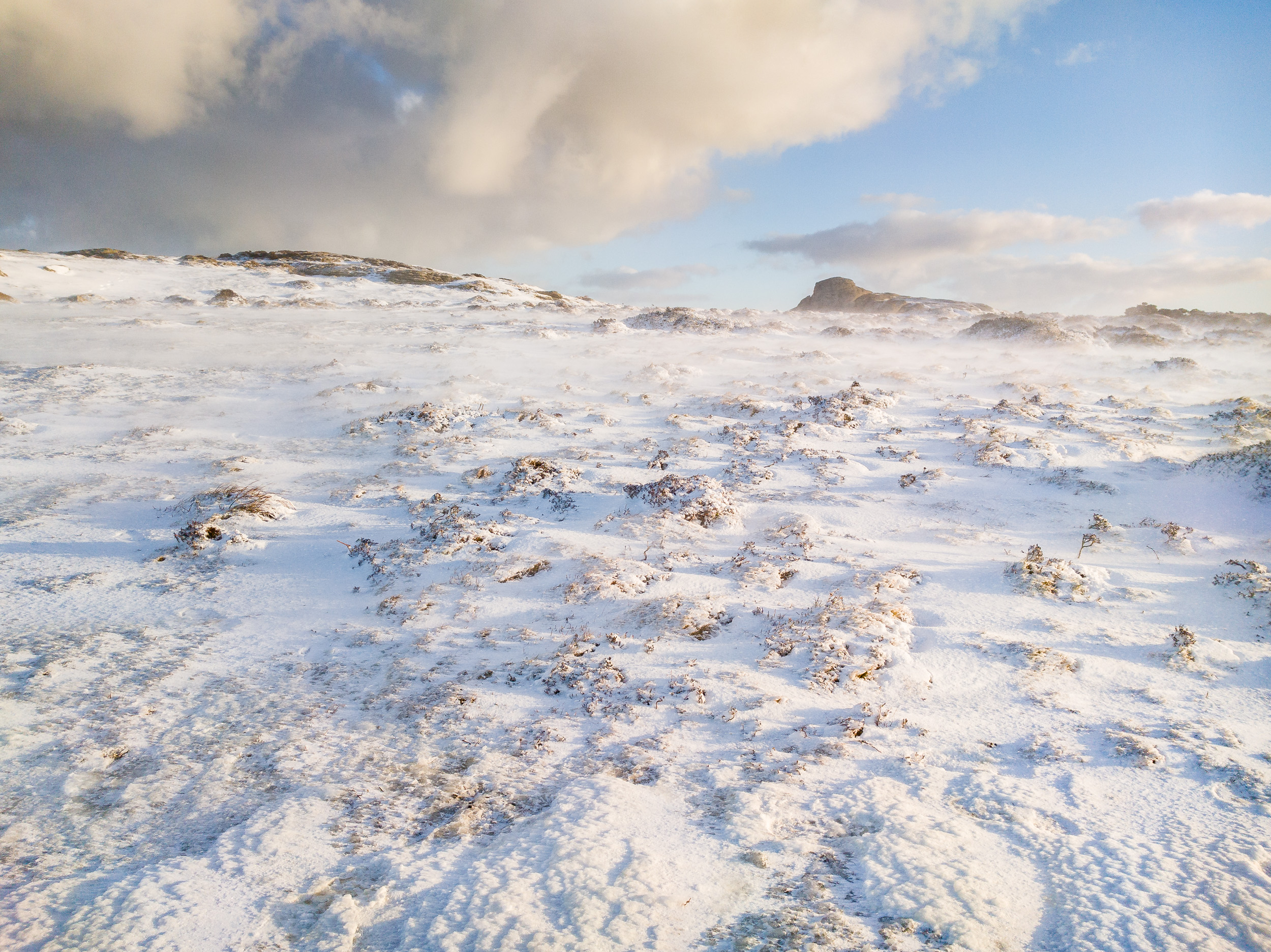
Unfortunately the arctic conditions didn't last the weekend.
The snow on Dartmoor didn't really last past that weekend so I was unable to go back out and try again. So while I was unable to get the image I was hoping for it was great, as always, to get out with the camera and practice the craft of photography. I also learnt something new about one of my favourite locations and how to plan a little bit better. So overall I call that shoot a success!
So have you been out with your camera in the snow recently? Do you use The Photographer's Ephemeris to plan your shoots? Let me know in the comments below.

My New Winter Friends
In this blog post I discuss the importance of having a close by location that you can shoot so that you can scratch that photography itch during the winter months and why it's still important to do a bit of discovery.
Winter Restrictions
Landscape photography in winter has a few advantages. Sunrise is later, sunset is earlier, and it might just snow. (Oh please let it snow on Dartmoor this year, please, please, please!). However, while sunrise and sunset are at much more sociable hours the days are very short and so are my windows of opportunity for photography. During the summer months I can spend all day at work, casually jump into my car, drive to Lands' End and still be there in plenty of time for sunset. I can go out photographing virtually any day of the week.
With winter things are very different. I still have to work and I still have a family life, but now I can't just pop out in the evening to go out and take photographs. The shorter days that come with winter are no different from any other year but this year I'm feeling the restriction more than any other year. I think this is largely due to the level of commitment I have given my landscape photography this year. This year I have committed more time than any other year to improving my art. Now all of a sudden I can't get out as much and if the weather is very bad I sometimes don't get out all in a week. I'm starting to find it frustrating!
My Old Friend
It's not all doom and gloom tough. It's not as if I can't get out with a camera, it’s just I can't get out as much. As with most working parents I have the school run to do. My responsibility is to get the kids to school every morning, except Friday. So if I'm organised and the weather is looking favourable I can just about get out for a dawn shoot on a Friday and still be back in time for work. This means that I have to go somewhere local and this is where my trusty old friend Dawlish Warren beach comes in.
Dawlish Warren is only about 25 minutes' drive from my house and as I said in my video My Top 5 Locations to Shoot in Devon, it's also one of my favourites. I've photographed the beach and the groynes many times but each visit offers something different. With variable weather conditions, changing direction of sunrise and tidal waters, each time I go I need to think how I'm going photograph it that morning.
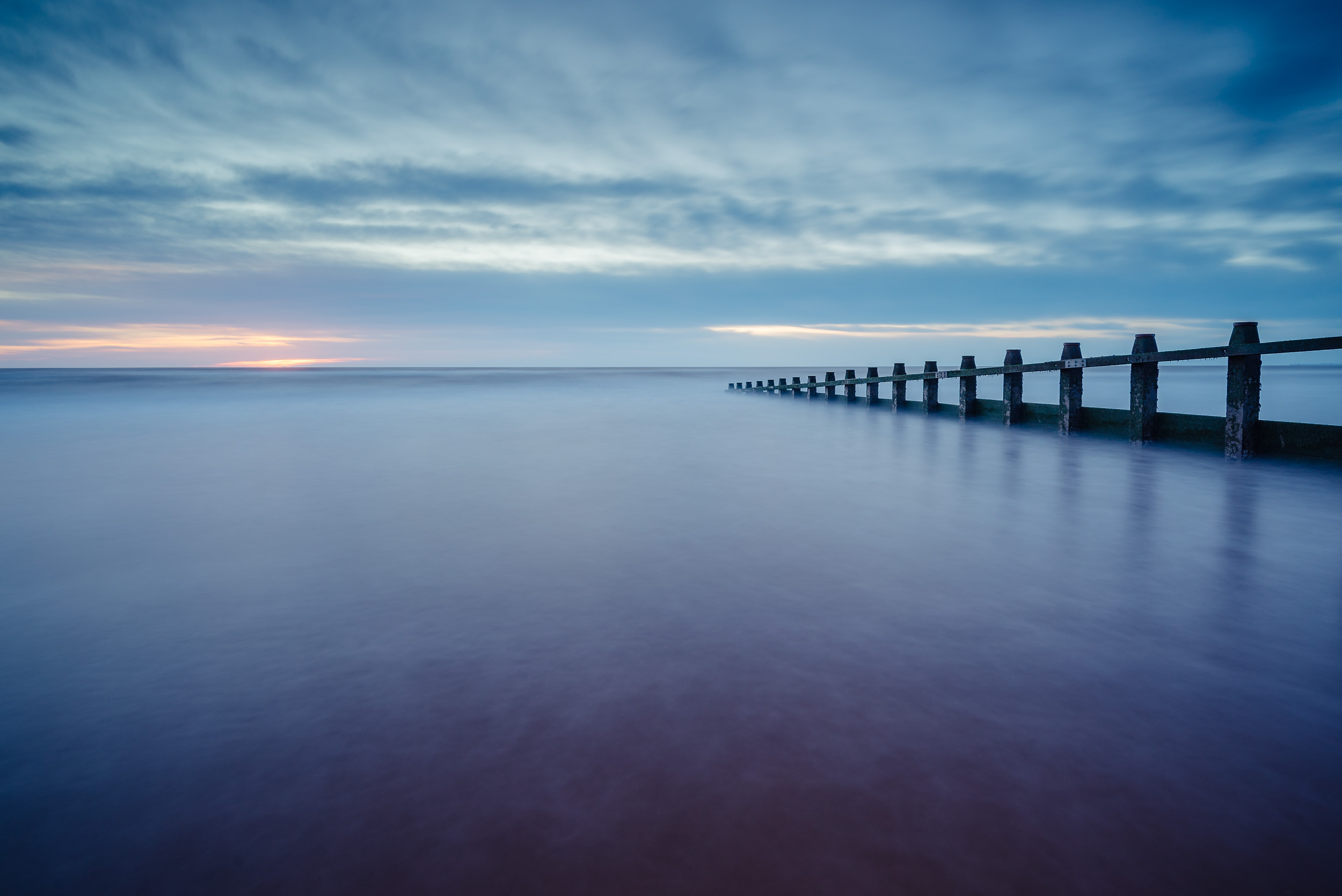
When I visited Dawlish Warren last week it was probably at the lowest tide I had seen so I had access to shoot some of the groynes I've never been able to access before.
Given the proximity of Dawlish Warren and my desire to still practice my photography as much as possible during the winter, I expect to be visiting my old friend a lot this winter.
My New Friend
While visiting on old friend is all very good, particularly when I'm really short of time, I also need to stretch my photographic wings a little. Though time at the weekends is really family time there are windows of opportunity and they need to be put to good use. There is the temptation to visit locations I've been before but winter is also a good time to go out and do a bit of discovery.
Last weekend I got up early and went to North Tor and Bench Tor on Dartmoor. These two tors are very close together and offer all round views of Dartmoor. I actually discovered this location by accident. I was looking through some old issues of Outdoor Photography and came across Bench Tor in the Locations Guide section (which is a great source of inspiration and ideas). I knew roughly knew the area as it's very close to one of my other favourite Devon locations to photography, Venford Falls.
Arriving at the car park in the dark I put on my head torch and began the relatively short walk up to Bench Tor. As with most dawn shoots in the cold I questioned my sanity but a blast of hot black coffee soon put me in the correct frame of mind. As most landscape photographers know it actually starts to get light around an hour before official sunrise so as I wondered about Bench Tor and nearby North Tor I could start to see lots of possibilities for compositions.
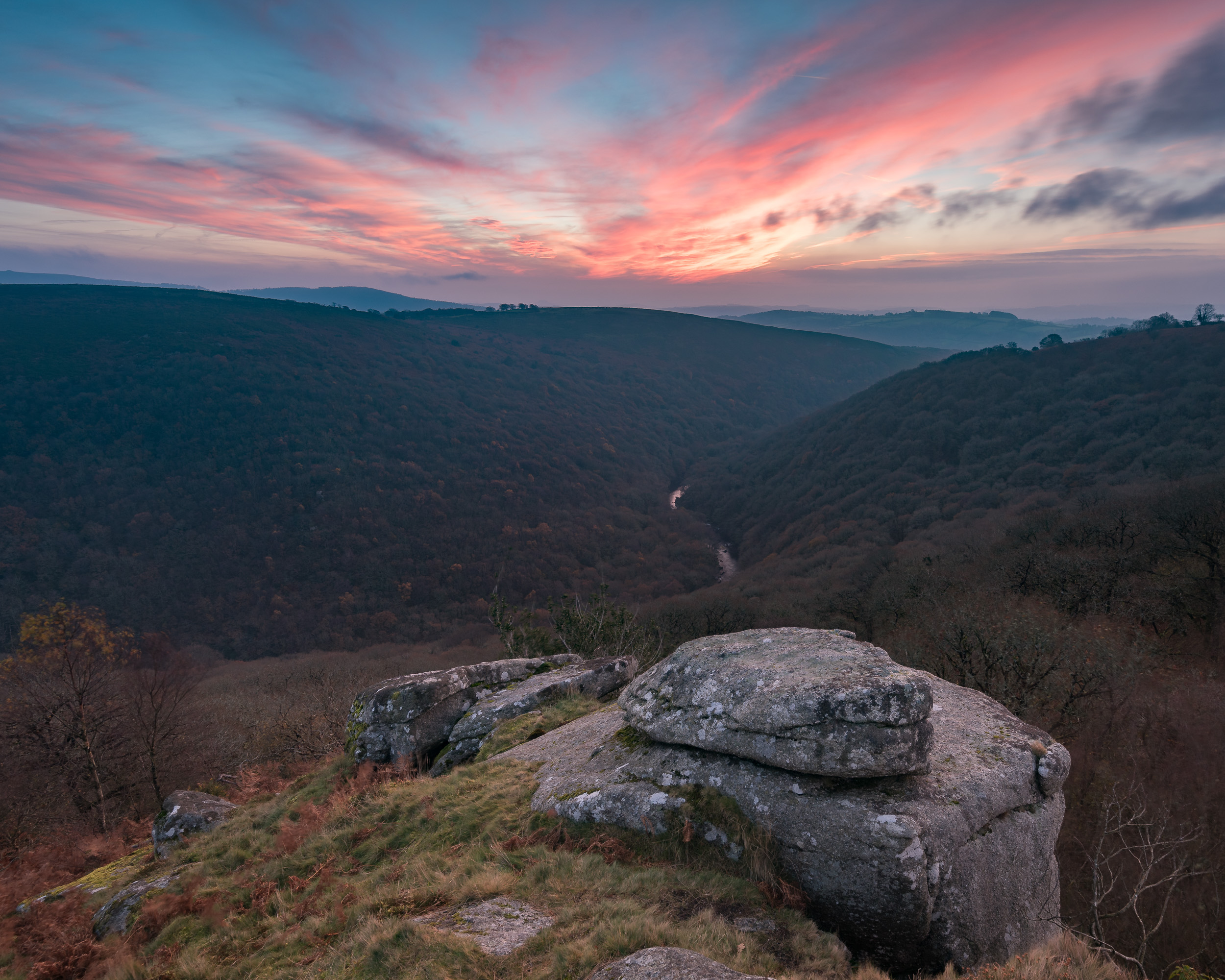
Very much an exploratory shot but as this was a new location for me I wanted to try and get a few shots for reference.
With so many possibilities, including options for sunrise and sunset shoots I think I have found a new friend for winter. Though I expect the best photographs will be had during spring and autumn months I think I will spend a bit of time up there working out how to make the most of it when winter finishes. That is unless it snows in which case the big views up there will be amazing.
So do you struggle to find time during the winter to get out with the camera? Do you have a go-to location that is nearby? Do you use the winter months to get out and discover new locations? Let me know in the comments below.