

Did the Nikon Z8 Kill My Landscape Photography?
I bought a Nikon Z8 then I stopped taking landscape photographs. But why? In this video I head to Dartmoor to capture some dramatic landscape photographs and I'll tell you why you haven't seen me online recently.
I’m Back! But Where Have I Been?
It’s been a few months since I published a video or written something here on the blog. It’s probably the longest gap I’ve had since I started my blog back in 2016. It wasn’t a conscious choice to stop creating content. I just stopped.
There are a number of reasons for this, and I do touch on them in the video, but it has been a bit of a struggle to get back into creating content (something which I love doing). Apart from shooting the odd music festival, I didn’t take any landscape photographs for a couple of months. I just didn’t feel like it. I’d lost my motivation.
After some soul searching, a few failed attempts to create something and support from people close to me, I’m finally back to a place where I feel creative (and importantly, I want to share my photography adventures again).
Dramatic Dartmoor
There’s nothing like a successful trip out with the camera to give your motivation for photography a good boost. The trouble with Dartmoor is that the weather plays a significant part in how your photographs turn out. My favourite kind of conditions are when things are unsettled. I’m looking for a bit of drama!
Every now and again, I get those conditions. Sometimes they are expected, sometimes not. Things get really exciting when you just aren’t sure how things will work out and it changes minute by minute. And that’s exactly the conditions I got on my recent visit to East Mill Tor!
It was the perfect type of morning on Dartmoor to give my photography a significant kick up the arse! You can see why in the video below!
I got a real buzz creating those photographs and making that video. It’s given me all the motivation I need to get going again. While the changes in my life have left me with less time to dedicate to photography, I am committed to regularly producing content for you to enjoy. Make sure you stay tuned!
East Mill Tor, Dartmoor - Landscape Photographs
Here are the landscape photographs you saw me capture in the video. I hope you enjoy them.
East Mill Tor #1, Dartmoor, Devon - Nikon Z8, Nikkor 14-30mm f/4 S at 16mm, 1.3 sec at ISO 64, f/13, Kase Filters CPL.
East Mill Tor #3, Dartmoor, Devon - Nikon Z8, Nikkor 14-30mm f/4 S at 19mm, 0.6 sec at ISO 64, f/13, Kase Filters CPL.
East Mill Tor #4, Dartmoor, Devon - Nikon Z8, Nikkor 14-30mm f/4 S at 16mm, 1/13 sec at ISO 64, f/13, Kase Filters CPL.
East Mill Tor #2, Dartmoor, Devon - Nikon Z8, Nikkor 14-30mm f/4 S at 16mm, 0.5 sec at ISO 64, f/13, Kase Filters CPL.

Stormy Combestone
After a day procrastinating on where to go I decide to head to Combestone Tor where they weather turns out to be a little stormy!
Procrastination
I keep saying to myself that I need to be a little more spontaneous with the locations I shoot but I struggle to let go of the side of me that likes to plan. For me, a plan is a recipe for success, or at the very least, a way to maximise the chances of success. I do like the longer days that spring and summer bring as this allows for more sunset shoots, but this has the downside that it gives me the whole day to procrastinate on where I should be going!
The evening I took these pictures was no different. I had been scanning my map trying to decide if I should go to the coast, or head up to Dartmoor. Even after deciding, I couldn’t make up my mind to go somewhere I knew or venture to a new location. I was feeling a little indecisive!
After checking maps and weather forecasts for what felt like hours, I decided that I would pay a visit to Yar Tor, a location that I had not visited in any capacity before. I’d seen a few photos of it on Flickr and I thought it looked interesting enough to warrant some investigation. The weather forecast was looking unsettled, but this could work in my favour.
Flying Visit or Final Destination
As I planned my route there, I noticed that I would drive by the car park for Combestone Tor. I had visited this location briefly in February, but the conditions were foul, and l left without taking the camera out. I had a bit of spare time so I decided that I would stop there first and give it another look.
When I arrived at Combestone I left my camera bag in the car and went to have a look around. I was surprised how differently I was seeing this location compared to my previous visit. I still wasn’t convinced that I was going to get any great shots from Combestone that evening, but I was sure it was worth heading back to the car to get my camera.
My attention was focused on the hawthorn trees rather than the tor itself. There are a few of them dotted around the area of the tor and each one was distinctly different from the other. The light was still quite harsh but if I waited closer to sunset, I could end up with some nice soft side lighting. I, therefore, had a choice to make. I could either wait it out at Combestone to see what would happen or carry on to Yar Tor.
Combestone Hawthorn #1, Dartmoor, Devon - Nikon Z7, Nikkor 14-30mm f/4 at 23mm, f/8, 1/30th sec at ISO 64, Kase Filters K9 circular polariser.
As I looked at the incoming stormy weather, I decided that to change my visit to Combestone from flying visit to my final destination.
Stormy Weather
One of the great things about being up on Dartmoor is you can often see the weather approaching. This is especially true when a storm front is coming in to replace clear skies. You can often see the tops of the incoming cumulonimbus cloud and they look hugely impressive. These big storm clouds will also bring heavy rain showers which you can also watch travel over the landscape.
Combestone Hawthorn #3, Dartmoor, Devon - Nikon Z7, Nikkor 14-30mm f/4 at 22mm, f/8, 1/160th sec at ISO 800, Kase Filters K9 circular polariser.
The storm clouds were transforming the look of the landscape and I was very much enjoying the process of integrating them into my compositions. I wasn’t sure how long I was going to be able to enjoy this weather though. I could already see that the sun was going to disappear behind the clouds well before sunset and I was sure to get a soaking before too long.
Combestone Hawthorn #2, Dartmoor, Devon - Nikon Z7, Nikkor 14-30mm f/4 at 20mm, f/8, 1/13th sec at ISO 64, Kase Filters K9 circular polariser.
With the weather moving in quickly I had to work fast to make the most of the interesting weather. Unlike my previous visit in February I was more inspired to seek out compositions. I still wasn’t feeling inspired by the tor itself. I just couldn’t seem to find a pleasing composition. I found the hawthorn trees far more interesting and I like the way I could integrate them into the compositions along with the weather.
Combestone Hawthorns - Approaching Storm, Dartmoor, Devon - Nikon Z7, Nikkor 14-30mm f/4 at 18mm, f/8, 1/25th sec at ISO 64, Kase Filters K9 circular polariser, 8 vertical image panorama.
It wasn’t long before the rain started and when it did it was heavy! Fortunately, the walk from the tor to the car park is only a few meters so I escaped a soaking. By the time I was back in the car, the rain was bouncing off the bonnet. As I started the drive home with the windscreen wipers working furiously, I was excited to get home and start processing. After all my procrastination earlier in the day I was glad that I’d made the effort to get out with my camera.

A Stormy Sunday at Start Point
In this blog post I head to Start Point on the south Devon coast to capture some landscape photographs during some stormy weather.
Risk vs Reward
As the crow flies, Start Point in Devon isn’t that far from home. Thanks to some narrow, twisty Devon roads though, the journey there can take up to an hour and a half each way. For that reason, I tend to only visit the location if I think I’m going to get a good photo.
Spectacular sunrises work well at Start Point so I’m always looking at which direction the sun is rising from and what the cloud cover will be before I commit to a trip to one of my favourite lighthouses on the South West Coast Path. The weather forecast for my most recent trip was a little different though. Heavy rain showers and thick cloud were forecast, but it was also forecast to start clearing around sunrise.
This could lead to some spectacular and dramatic weather conditions if everything happens at the right time. Would the risk of travelling all that way reward me with some spectacular landscape photographs?
Stormy Weather Landscape Photography
Despite the 5 am alarm calling causing my brain to become a little muddled when talking to the camera, I did manage to record my South West Coast Path adventure at Start Point. So sit back, relax, keep warm, and join me at Start Point for a spot of landscape photography!
I hope you enjoyed watching my little adventure to Start Point. Which image was your favourite? Have you been to Start Point before? Do you like capturing landscape images during stormy weather? Let me in the comments below.
My Landscape Photographs from Start Point
If you’d like to see the photographs from the video in a bit more detail, here they are.
Breaking Light at Start Point, Devon - Nikon D850, Nikkor 16-35 mm f/4 at 18 mm, f/13, 2 seconds at ISO 64, polariser, ND grad.
Calm in the Storm at Start Point, Devon - Nikon D850, Nikkor 16-35 mm f/4 at 18 mm, f/13, 81 seconds at ISO 64, polariser, ND grad, 6 stop ND.
Start Point Swirls, Devon - Nikon D850, Nikkor 16-35 mm f/4 at 22 mm, f/13, 60 seconds at ISO 64, polariser, ND grad, 6 stop ND.
A Stormy Dawn at Start Point Lighthouse, Devon - Nikon D850, Nikkor 16-35 mm f/4 at 22 mm, f/13, 1.3 seconds at ISO 64, polariser, ND grad.

A New Vision of The Cobb
In the blog this week I tell you about my most recent visit to Lyme Regis in Dorset to capture landscape images of The Cobb, and how an overcast morning changed the way I view this iconic location.
Weather Obsession
I have to admit it, I'm obsessed with the weather. More specifically, the weather forecast. But what landscape photographer isn't slightly obsessed by the weather. I'm constantly checking the forecast and looking for the best place to visit with the limited about of time that I have for my landscape photography.
After a few days of frankly terrible weather, it was going to take some pretty awful conditions to stop me heading out with the camera. After much head scratching over the weather forecast I thought the best place to go would be The Cobb at Lyme Regis in Dorset.
It was a bit of a risk to go there given the predicted cloud cover. Either side of sunrise it was forecasting 100% cloud cover, but around sunrise itself, the cloud cover could drop to around 50%. Combined with the direction of the rising sun, I was hoping to capture an image similar to this one I'd taken a while back.
The Cobb vs The Sea, Lyme Regis, Dorset - Nikon D750, Nikkor 16-35 mm f/4 at 22 mm, f/13, 0.6 secs at ISO 100, Lee Filters ND Grad.
Choose Life, Choose The Cobb
Before I carry on, I've just remembered that I created one of my 5 Minute Photo Adventure videos from The Cobb, so if you want to see what it looks like, then check out the video below. You can also read the blog article for that video here.
Anyway, back to the story of my most recent visit. When I arrived in Lyme Regis, the weather was as forecast and cloud coverage looked to be 100%. As I walked from the car and approached The Cobb I could see that I wasn't the only photographer that high hopes for capturing a good image that morning.
As I setup my camera and took my first few shots, I suddenly changed my mind on the type of shot that I wanted. Rather than trying to repeat the type of shot I showed you earlier, I decided the image below was the style of image I wanted to capture that morning.
A New Vision of The Cobb, Lyme Regis, Dorset - Nikon D850, Nikkor 16-35 mm f/4 at 24 mm, f/13, 30 secs at ISO 64.
The calm waters, overcast sky, the colour of the water and long exposure all add up to a very different, but still pleasing image. Normally I like to capture the drama of the sea at The Cobb, but that morning called for something different.
As soon as I saw the image on the back on the screen on my D850 I realised that I had been missing out on some creative compositions at this location. I would definitely have to visit when the conditions were like this again.
After a short while, a break in the cloud started appearing in the distance, and the mood of the scene changed. Normally I'm happy when the cloud starts breaking up, but in this instance, I wanted the cloud cover to stay at 100%! With the gap in the cloud, the serenity and calmness of the scene was broken.
It was an interesting morning for me. My previous visits to The Cobb had gradually embedded into my mind the type of image I should capture there. This visit broke all that and I left with a renewed sense of excitement about returning to The Cobb on the next grey and overcast day!
Have you had a similar experience? Have you had your perception of a favourite location changed by weather? Let me know in the comments below.

Rippon Tor
The weather conditions on Dartmoor can change rapidly so sometimes it's worth hanging about to see if things improve. In the blog this week you can find out if my patience was rewarded when I recently visited Rippon Tor to capture some landscape images.
Big Blue Skies
The weather recently has been a bit of a mixed bag. Some days it's been grey, overcast and frankly a bit miserable. Not that you can't do landscape photography in bad weather, but it can limit your options. At the opposite end of the weather scale is the clear blue sky days. This type of weather is rather pleasant in the winter, but I don't find it inspires my landscape photography.
As I was checking the local forecast on my favourite weather service one evening all I could see was clear blue skies for the following day. It certainly didn't look like optimal conditions for a bit of landscape photography but I'm not one to pass up an opportunity to get out with my D850. As the weather forecast was largely the same for South West as a whole, I decided there was little point in travelling any further than my local area. But where could I go? Dartmoor of course!
Rippon Tor, Dartmoor
My preference when shooting the open moorland of Dartmoor is to have interesting skies. As this was not going to be the case for this shoot, I decided I would get myself to an elevated position. One of the closest high points for me is Rippon Tor at 473m. While definitely not the highest point on Dartmoor, it still offers impressive views of the Haytor area. Even though clear skies were forecast, the elevated viewpoint can help you take advantage of any distance haze in the sky. This can light up nicely in the right conditions and provide some nice interest in the sky when shooting with a long lens.
When I woke the following morning and left the house I could see clear skies and the stars above so it was looking like the forecast was going to be fairly accurate. As I headed up to Dartmoor things started to look very different. By the time I'd reached the car park for Rippon Tor, things looked very cloudy indeed!
It was pretty windy at the top of Rippon Tor, but that was to be expected. What wasn't expected was the amount of cloud. It was that fast moving type of cloud that always looks like it's about to clear but never seems to. Things didn't look much clearer down towards the coast where the sun was going to rise. Not one to be put off I thought it was worth hanging about to see if things would improve.
Just 5 Minutes More
Your enthusiasm can wear off quickly when it's cold and windy on Dartmoor. As the time for sunrise passed and it didn't look like things were going to improve, I was ready to give up and head home for a coffee. No sooner had I zipped up my bag though, the sky started to clear and the sun peaked up over the cloud and started bathing the scene in the soft morning light. I quickly unpacked the camera and took this shot.
Dawn on Rippon Tor, Dartmoor, Devon - Nikon D850, Nikkor 24-70 mm f/2.8 VR at 29 mm, f/11, 1/4 second at ISO 64, Lee Filters Circular Polariser.
In retrospect, I didn't really take enough time to arrange my composition. I think the image would have worked a little better with a slightly more elevated view of the foreground. However, time was very much against me. Though the sun had just risen above the cloud, sunrise itself was a good 15 minutes earlier, and so the light was already getting harsher. I had to work fast to make the most of that lovely morning light on the side of the tor and on the undulations of the ground.
Now that I was back in the mood for taking some landscape photographs I decided I would capture a panorama. On a recent trip Fingle Bridge I met up with fellow landscape photographer Neil Porter and he recommended to me a relatively inexpensive levelling head. This great bit of kit would greatly simplify the process of levelling my camera in preparation for capturing a panoramic image.
The View from Rippon Tor (Panorama), Dartmoor, Devon - Nikon D850, Nikkor 24-70 mm f/2.8 VR at 52 mm, f/11, 1/10th second at ISO 64, Lee Filters Circular Polariser, 9 image stitch cropped at 6:17.
Shortly after capturing that image the weather conditions had improved markedly and in need of a cup of coffee, I decided that I'd had the best of the morning light. As I walked down from the tor I kept thinking about how upset I would have been with myself if I'd been in the car driving home only to see the conditions improve from the road. I was lucky that I hadn't packed up 10 minutes earlier!
How long do you wait before you give up waiting for the weather to change? Has your patience paid off and you've captured an amazing image? Let me know in the comments below.

Drones, Landscape Photography, and Holidays
Is the drone the perfect camera for the landscape photographer on holiday? I think so and in the blog this week I tell you why.
Relax, I’m on Holiday
When I go on holiday with my family, I really try and forget about landscape photography for a bit. But, the trouble with being a landscape photographer is that your brain is wired a particular way. For example, it is literally impossible for me to watch a nice sunset without a part of me wishing I was photographing it.
Fortunately for me, my desire to get up really in the morning diminishes when I'm on holiday, and a cheeky glass of wine in the afternoon means that I can't just jump into the car and head out to take pictures. But this does mean that I do actually enjoy my holiday, relax and have fun with my family.
Talking about balancing photography and family, there is a very good article on Nature TTL’s website called The Delicate Balance of Photography and Family Life, which is well worth a read.
Always Have One Eye on the Weather
Another odd by-product of being a landscape photographer is that I like to check the weather forecast. A lot. And in detail. Even though I was on holiday, and I had no plans to take any landscape photographs, I couldn’t help but to check the weather forecast on my favourite website yr.no. As I drank a glass one evening I checked the weather forecast for the next day and noticed something interesting.
The weather that caught my interest was the possibility of mist or fog. How did I know that there was a chance of mist? After reading the excellent book From Dawn to Dusk - Mastering the Light in Landscape Photography I had learned that mist can occur when the outside air temperature is close to the dew point, and wind speed is very low. These were the very conditions that were forecast for the next day.
However, even with such interesting conditions forecast, I didn't really have the motivation to get up, go out and find something to shoot early the next morning. I was in full holiday mode.
Misty Mornings
When I woke up the next morning and looked out the window, all I could see was mist. This was all very exciting but it was all a bit late to go anywhere. I was just about to get the coffee on the go when I had a bright idea. What did the landscape look like from above? Well, that's an easy question to answer when you have a drone.
With the coffee brewing away I sent the drone up into the air, just a few feet from my door. Though forward visibility wasn't great, vertical visibility was a lot better and I could clearly see the drone just above me. After a short ascent, I could see mist covering the landscape. It looked amazing! I just knew there was a photograph to be had from my elevated viewpoint. There was just a little too much mist at this point to make an interesting photography, so I brought the drone down and had a coffee.
A short while later I sent the drone back up and captured this image:
Trees in the Dawn Mist - DJI Mavic Pro, 1/1000th sec at f/2.2, ISO 100, 6 image stich cropped at 6:17.
The Perfect Camera for the Landscape Photographer on Holiday
I don't capture a lot of still images with the drone but that's twice now that I've used it to capture a landscape image on holiday (you can see the first one here). I've now come to two conclusions. Firstly, the drone really is a great addition to my landscape photography kit bag. There is no practical way I could have captured that image without the drone. That little bit of elevation the drone gave me opened up a whole new view on the landscape allowing me to capture an image which showed how the mist was covering the landscape.
The other conclusion I came to was that I think the drone may be the perfect camera for the landscape photographer on holiday. Why? Well, it allows you to take photographs without even leaving the comfort of your holiday home! I don't need to sneak off early in the morning or stay sober past 4 pm. Even the kids find it interesting. As long as I'm in a location where it's possible to fly and there is a composition to be made, I can scratch that landscape photography itch.
I know some photographers do manage to indulge their passion for landscape photography while on holiday, but I find it rather tricky, and would actually prefer not to spend large amounts of my holiday time out taking photos. This is why the drone is so useful. It's fun, accessible, doesn't require me to go out for hours, and I can do it from wherever I'm staying.
Do you separate yourself from photography while on holiday? Do you take landscape photographs with a drone? Let me know in the comments below.
Bonus Video
I also captured a 360-degree video of the misty landscape. Enjoy!

Bad Weather Photography
In the blog this week I remember to "embrace the grey" and head out to Dawlish to get some photos in less than optimal conditions.
Time to Embrace the Grey
I once went on a Nikon School one day workshop with Jeremy Walker. I remember the weather not exactly being great but one thing stuck in my mind from that day. As Jeremy was laying out the plans for the day he already knew it was going to be an overcast day. His advice was to "embrace the grey".
I did just that with this photograph:
Banjo Pier, Swanage. Nikon D750, Nikkor 16-35mm f/4 at 28mm, f/11, 30 secs, ISO 100, Lee Filters Big Stopper.
Now I may have mentioned once or twice on the blog recently that the recent weather has been playing havoc with creativity. So when the weather forecast for the week was looking grim I decided enough was enough and I was going yet again embrace the grey!
I needed to find an appropriate location to make an image but when I remembered about the stone groynes at Dawlish my mind was set. So off I headed with a clear vision of what I wanted to capture.
Despite the weather. No hang on, because of the weather, I really enjoyed myself at Dawlish. It made me look at the location with different eyes.
Here's what I photographed:
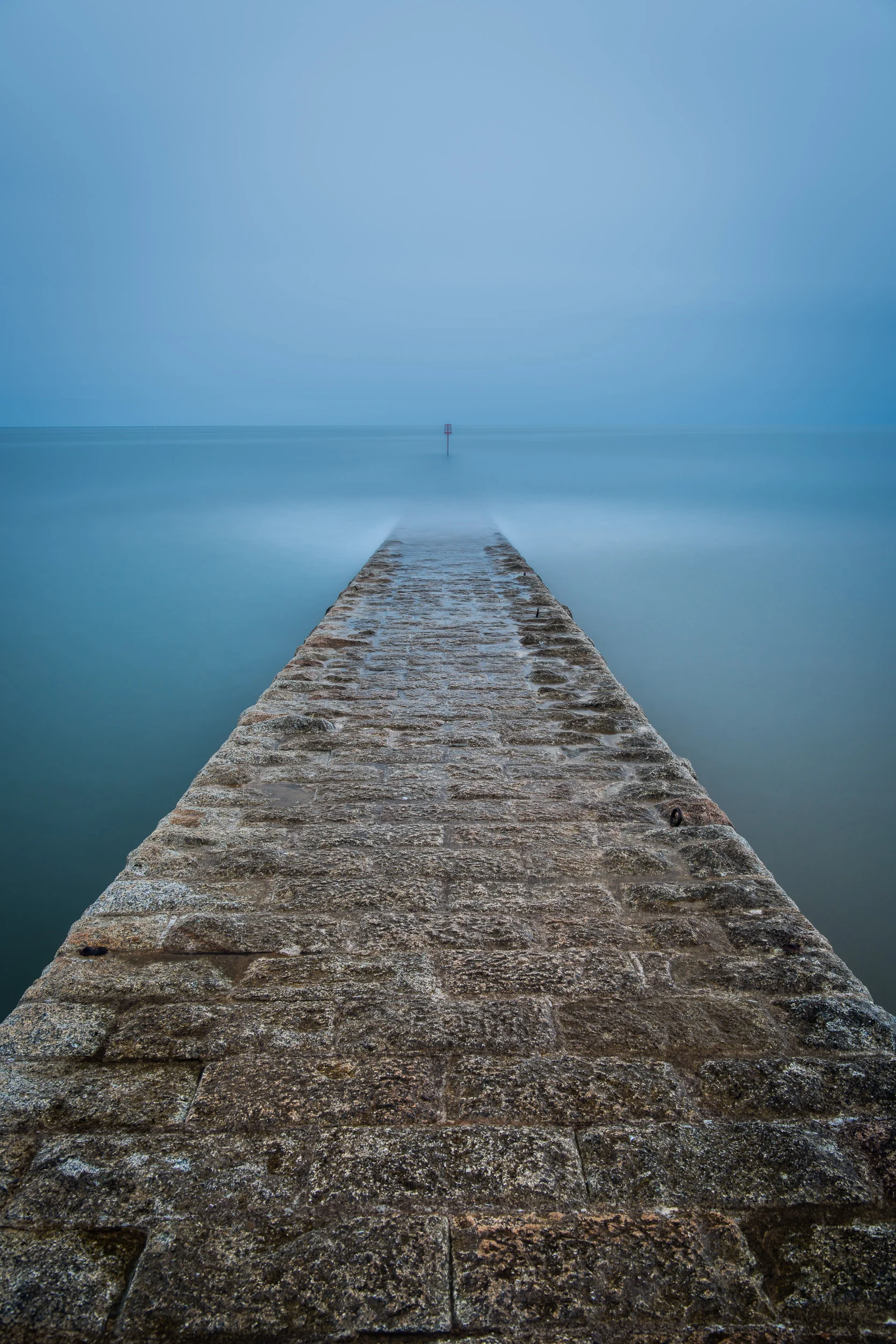
Nikon D850, Nikkor 24-70mm f/2.8 VR at 31mm, ISO 64, 5 minutes at f/11, Lee Filters Circular Polariser and Big Stopper.
If you want to see how I went about capturing the image, here's a short video I shot while I was there...
So do you have a favourite bad weather location to take photographs? Is there really such thing as bad weather for photography? Let me know in the comments below.
PS.
On a little side note, I'm very happy to say that Adobe has now updated Lightroom to support the Nikon D850. This means I no longer have to convert the files to DNG format first. I can now import the NEF (raw) files straight from my memory card. I was so happy about this I posted a video on my YouTube channel.

Brentor Church
In the blog this week I head off to Brentor Church on the edge of Dartmoor. Read about how the cold weather almost sends me home early but by sticking around for a break in the weather I was treated to some lovely evening light.
A Bit of Inspiration
I often look for inspiration using my personal locations map that I created using Google Maps. One evening I was looking for something local to shoot when I noticed a map pin on Brentor (St Michael de Rupe) Church on the edge of Dartmoor. I've shot the location a few times but never got an image that I was really happy with, so I thought this would be a good time revisit the old church on the hill.
The weather forecast was for broken cloud and no rain, and the direction of the sunset was favourable for good lighting along the side of the hilltop and church. I had been stuck in the office all day and I was looking forward to getting outside into the fresh air and taking some images.
Wild Dartmoor
The weather at home that day had been very summery so when it came to outdoor clothing I decided to keep things light and I left the thermals and down jacket at home.
When I arrived at Brentor things were a little different than they were at home. Why I should be surprised by this I don't know! It is Dartmoor after all and having four seasons all in one day isn't exactly unheard of. Certainly not to be put off I got my bag out of the car and made the short walk to the viewpoint.
To say that there was a bit of breeze up there would be an understatement! It's not necessarily the height of the location but more that it is very exposed. It wasn't long before I had put on my lightweight jacket, shortly followed by hat and gloves (which I always keep in the bag, fortunately). With the skies being overcast and my body temperature dropping, I was soon feeling uncreative and considering making an early exit and going home.
Game On!
If there is one thing you can count on when photographing Dartmoor is rapidly changing conditions. While I was sitting there gradually getting colder I was keeping an eye on the weather behind me. I could see in the distance some significant breaks in the cloud which I was hoping would lead to more interesting skies and give the sun a chance to break through. So I toughened up and waited!
I got the camera all set up and ready. Breaks in the cloud and splashes of light can be fleeting, so I needed to be ready. I then waited patiently and watched with eagerness as the rays of the sun that were breaking through the cloud gradually got closer and closer.
When the weather did break over Brentor it did so for only 10 or so minutes. I captured a few frames keeping an eye on the cloud converge over the old hilltop church and how the light was breaking on the hillside.
Nikon D750, Nikkor 16-34mm f/4 @ 18mm, ISO 100, 1/6 second, f/13, no filters.

The quality of the light can change dramticaly over a short space of time.
The quality of light can really make or break an image and without light from the setting sun as it broke through the cloud this image would have been much flatter. It's not to say that this image is perfect, far from it, but given the conditions I was working with I was happy with the results.
I tried a few variations on my composition and I even tried increasing the ISO for a shorter shutter speed. I thought that the shorter shutter speed would freeze the grass blowing in the wind, but I decided that keeping the movement of the grass better reflected the mood I was looking for.
So my evening up on Dartmoor was a bit of a roller coaster. Nothing hampers your creativity more than being cold and I really should have known better to head up to Dartmoor without a warm jacket! But I'm glad I stuck it out as at the end of the day as I got some nice images and a lung full of fresh air.
So have you photographed Brentor church before? Would you like me to make a 5 Minute Photo Adventure video there? Have you ever been out with the camera without suitable clothing? Let me know in the comments below.

Storms, Sunset and Start Point
In this blog post I tell you about how a passing storm at Start Point in Devon forced me back to my car but in the end it added a new dramatic element to my composition.
Favourite Location, New Viewpoint
In my video Top 5 Locations in Devon to Shoot Landscape Photography I took you to Start Point on the south Devon coast. I've shot there numerous times and thanks to the coastal weather I've come away with a wide variety of images. All my visits to Start Point do have one thing in common, they have been shot at dawn and all, roughly speaking, from the same viewpoint.
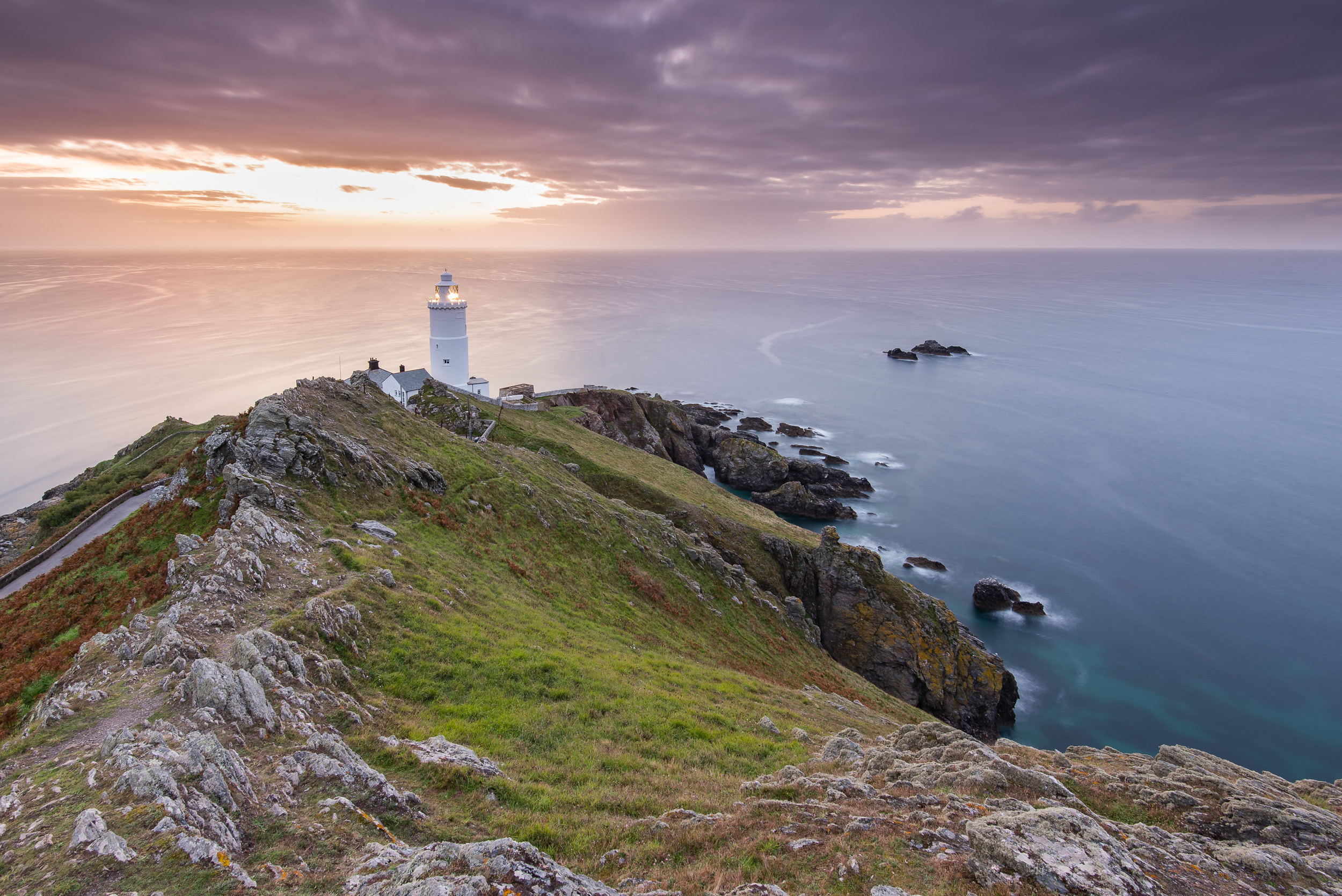
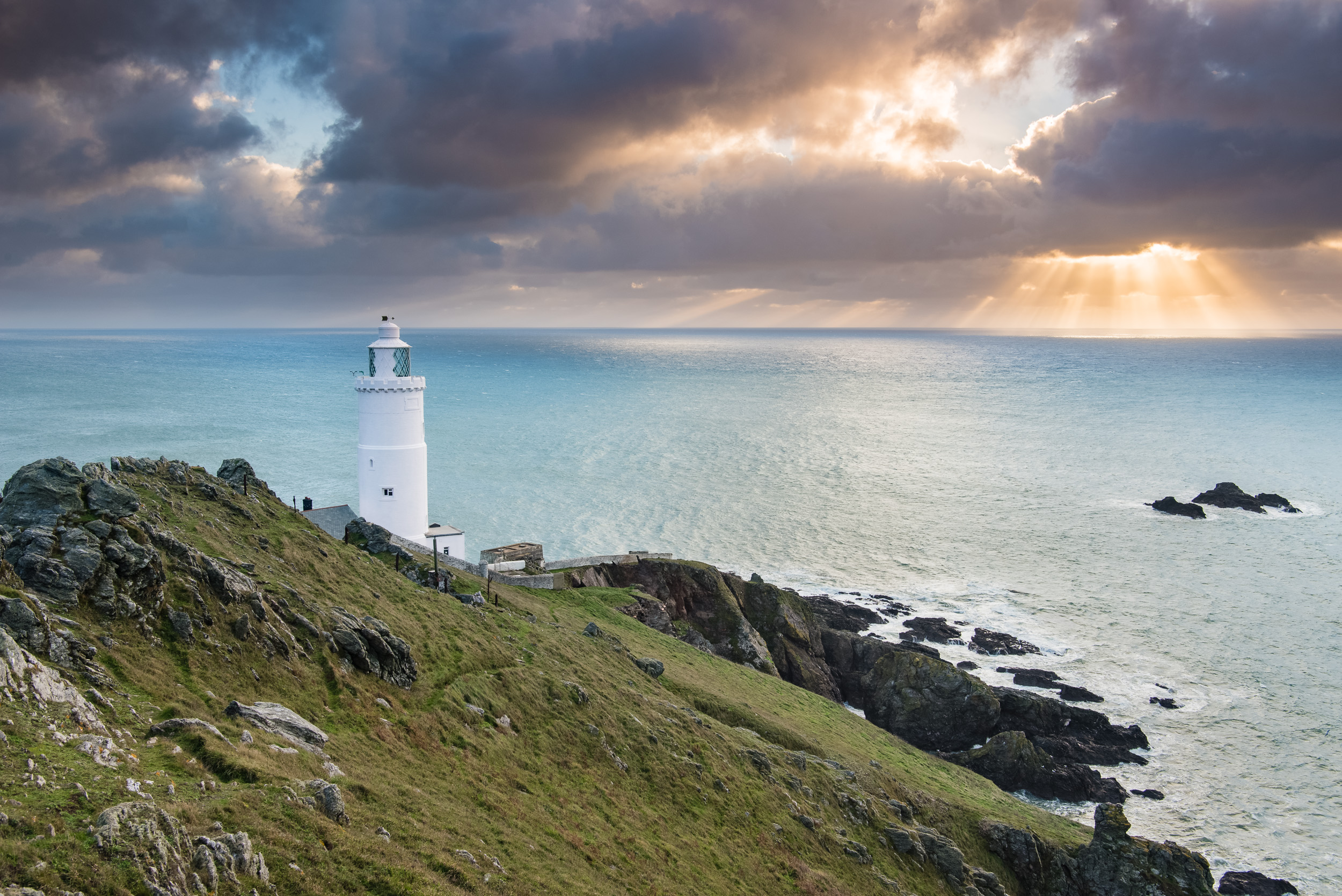
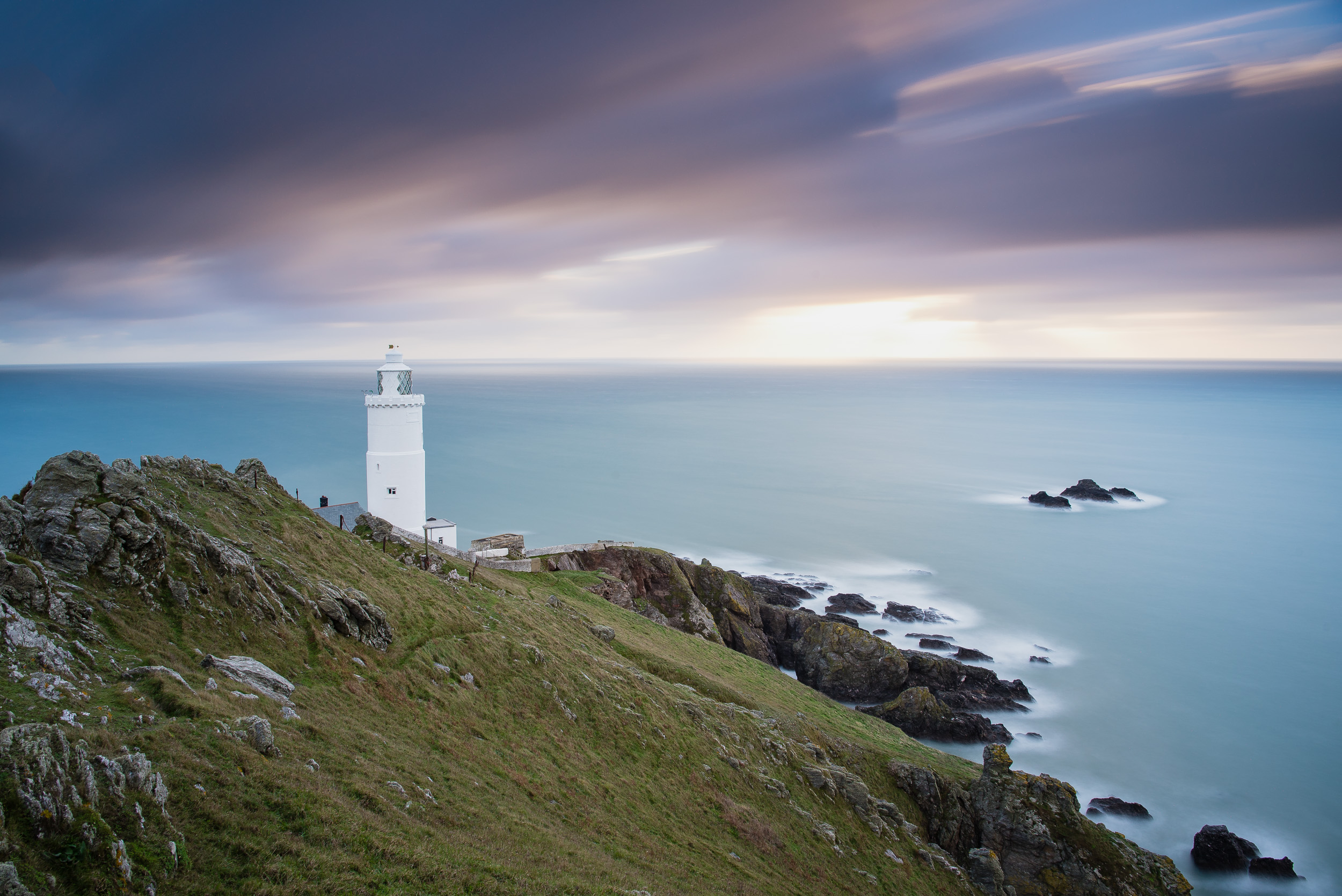
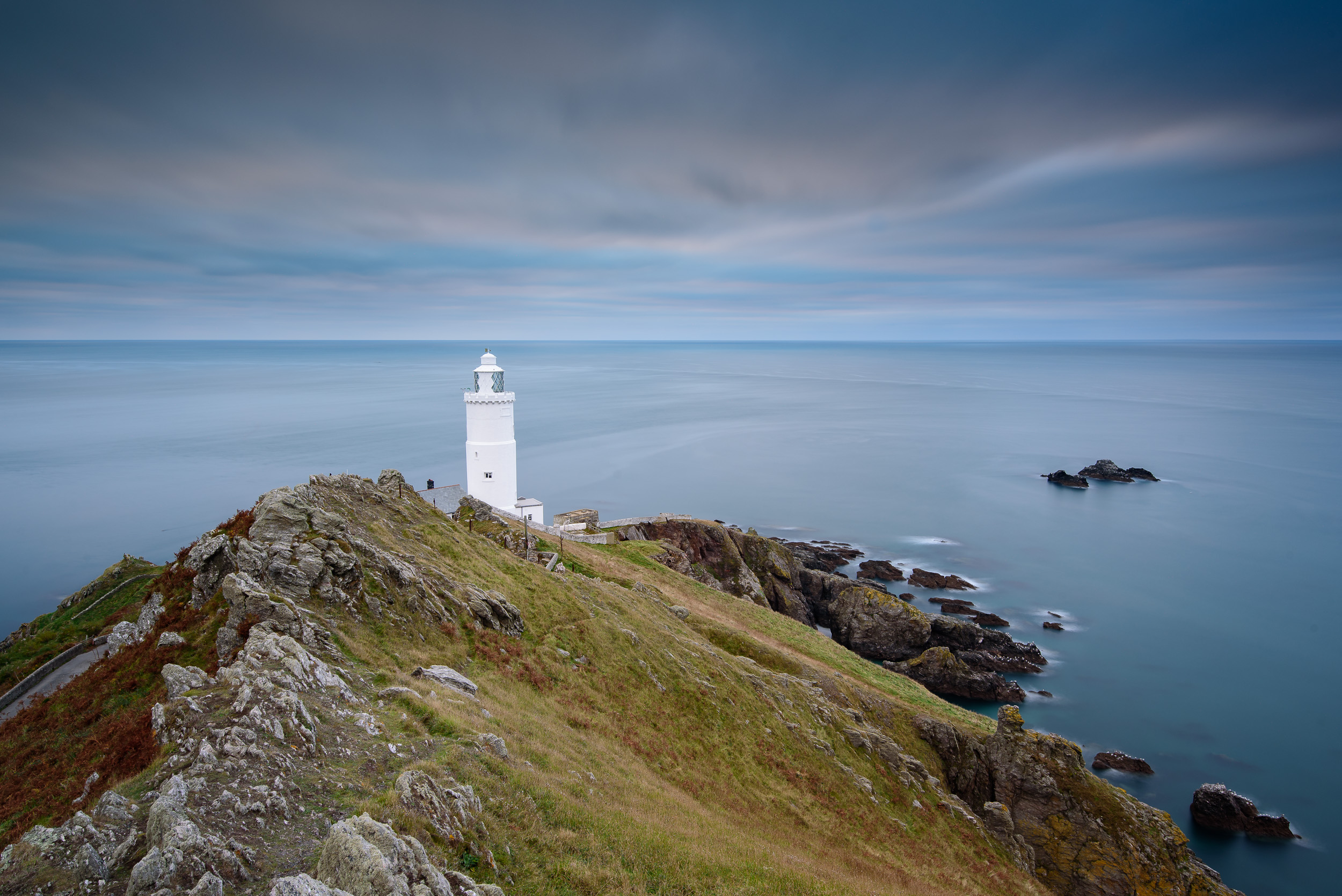
Just recently though I was inspired to shoot Start Point from a slightly different location. I've written about the power of inspiration on this blog before and how important it is to my development as a photography. However, it was a post by one of my favourite local photographers Matt Davis on Instagram that showed me a viewpoint that I hadn't considered before. It was still clearly Start Point, but you could see more of the rugged coastline and it was ideal for shooting at sunset. I had a plan!
Incoming!
It's about 1hr 15m drive from home to Start Point and while it's not that far as the crow flies, it does involve the navigation of a few of the smaller country roads that Devon has to offer so it often feels like a longer drive. With the weather forecast predicting cloud at different heights I felt the drive would be worth it for a great sunset and some drama in the sky.
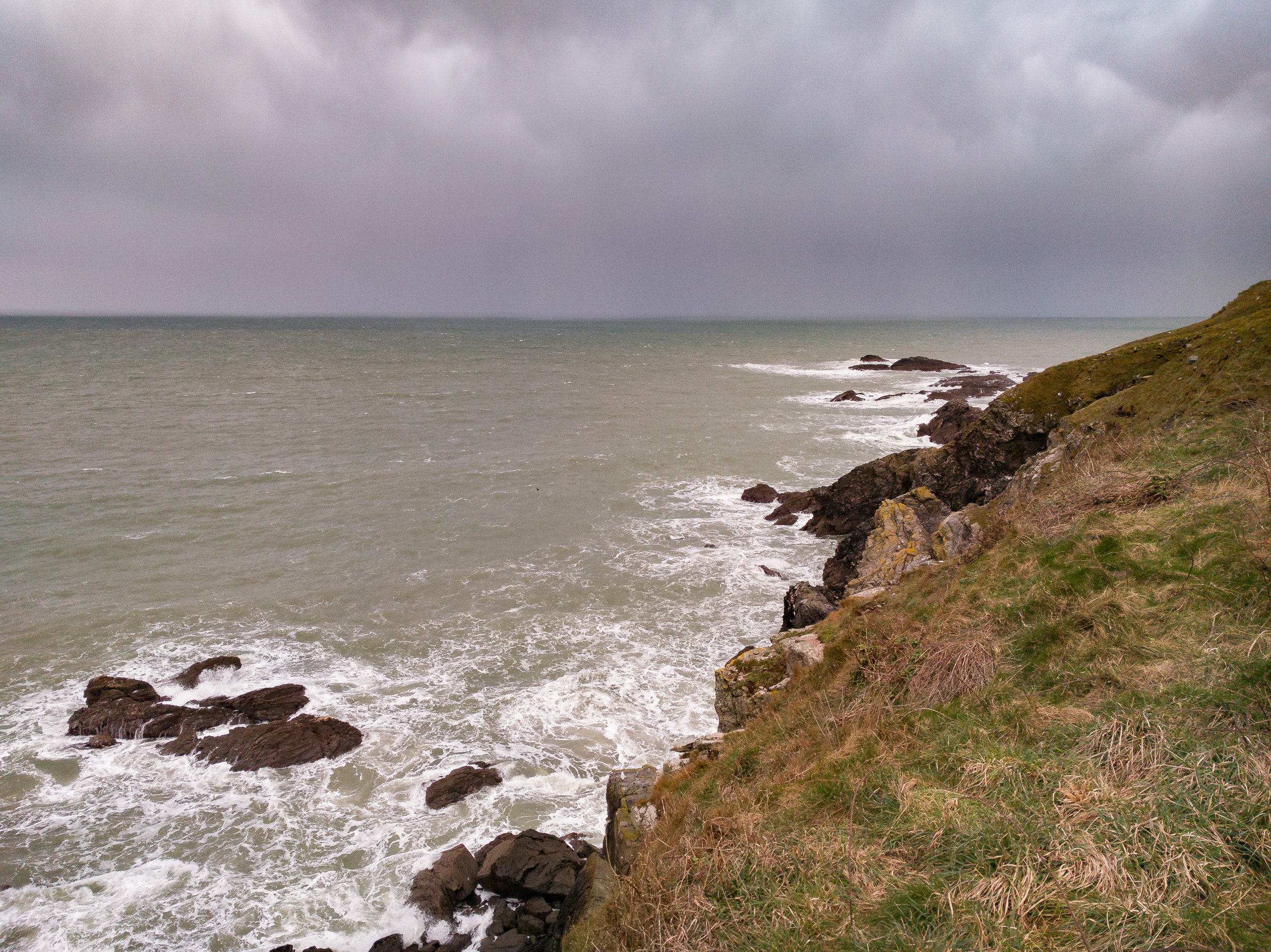
Watching the storm approach from the west.
I arrived at the Start Point car park, got my bag, and headed down to the view point. As I looked west and out to sea I could see a very large rain shower coming my way. I knew from the forecast there might be the odd bit of rain but this looked a little more than just a shower. I stuck to my location, kept my camera in the bag, and waited. Firstly the wind picked up, then the rain started, and then the rain got very heavy!
Determined not to be put off though I decided to shelter on the other side of the ridge that runs down to Start Point lighthouse. It was a lot less windy by still wet. I got my phone out and checked my favourite rain app, Rain Today. All I could see over my location was a big, dark blue blob, indicating heavy rainfall. the good news was that it was only forecast to last 30 minutes, and once it had passed I would still have 30 minutes before sunset.
So I did the sensible thing and went back to the car, had a cup of coffee and ate some chocolate.
Run Julian, Run!
As I sat in my car drinking my coffee I could see what was going on in most directions. To the east, the direction the storm was going, it was looking very dark. To the west, it wasn't really looking much better. I was beginning to think I might not even take a single frame. Then the thunder and lightning started and it was at that point I was very happy to have made the decision to wait it out in the car.
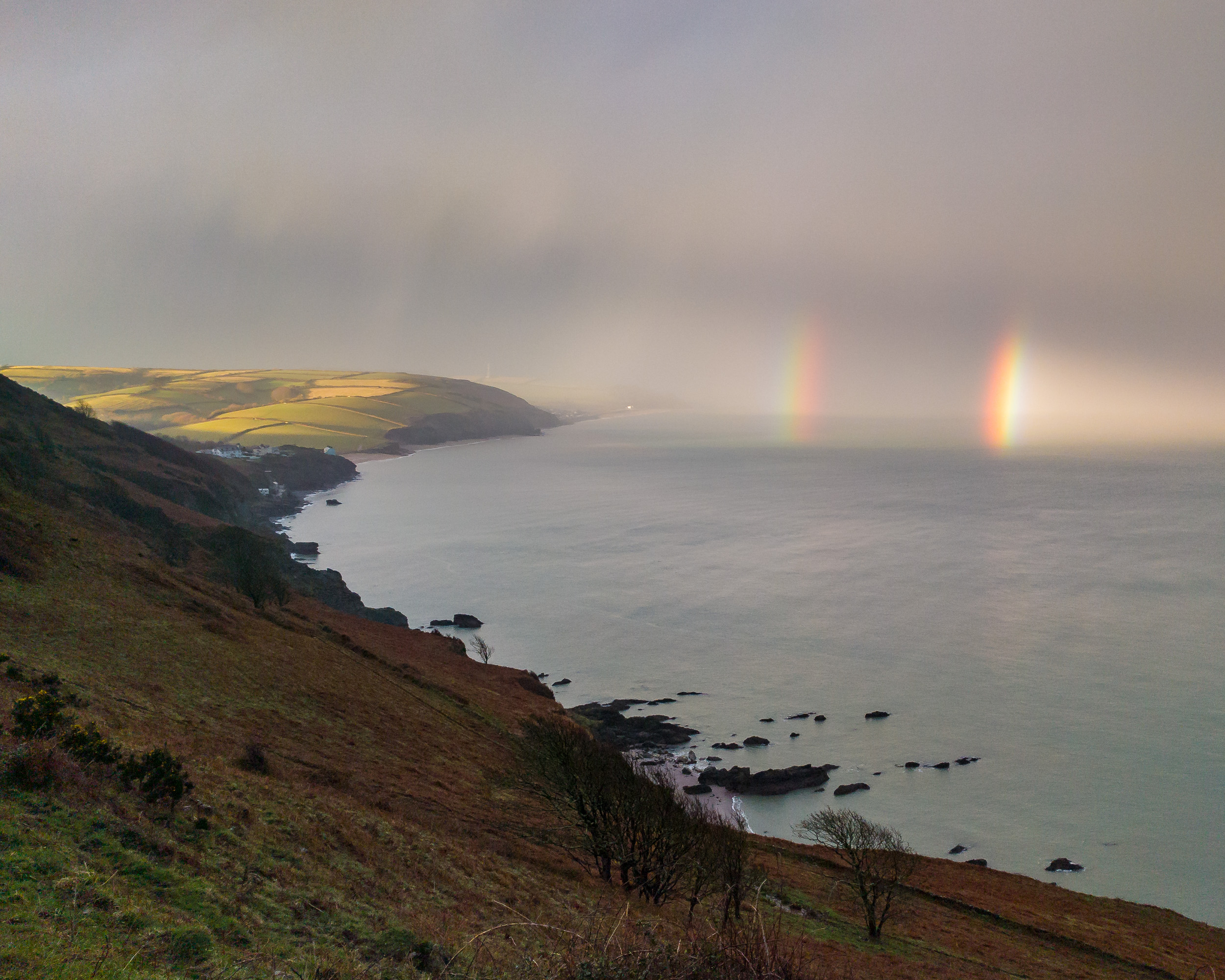
Spectacular conditions immediately after the storm had passed. I had to be quick just to grab this shot with the phone.
As forecast, I could eventually start to see a break in the cloud to the west. I waited to the rain had stopped and then I grabbed my stuff and went for it again. As soon as I got outside I spotted a double rainbow out to sea. It looked spectacular. Photographers often say you get some of the most dramatic conditions for photography just after a storm and from what I could see this was certainly the case.
I knew these conditions wouldn't last too long so I instinctively grabbed my phone and grabbed a shot. I then got to work getting my DSLR out and all the associated gear. As I feared, by the time I actually got all setup the best of the action had gone. Not to worry, I still had time to get back to my original viewpoint and shoot the lighthouse and dark sky, but I would have to run. Which isn't that easy with the amount of gear I had and the muddy ground but if I didn't get there in time I would only regret it.
Drama Everywhere
I got to my view point and frantically got to work getting my shot ready. There was still plenty of drama going on. The sky was still dark and brooding, and the rugged cliffs along Start Point were getting pounded by the sea. Over to my right (to the west) the clouds were breaking and the low sun was producing some lovely colours. That particular bit of action was still just out of frame, so while I had a long exposure running I grabbed a quick panorama with my mobile phone.
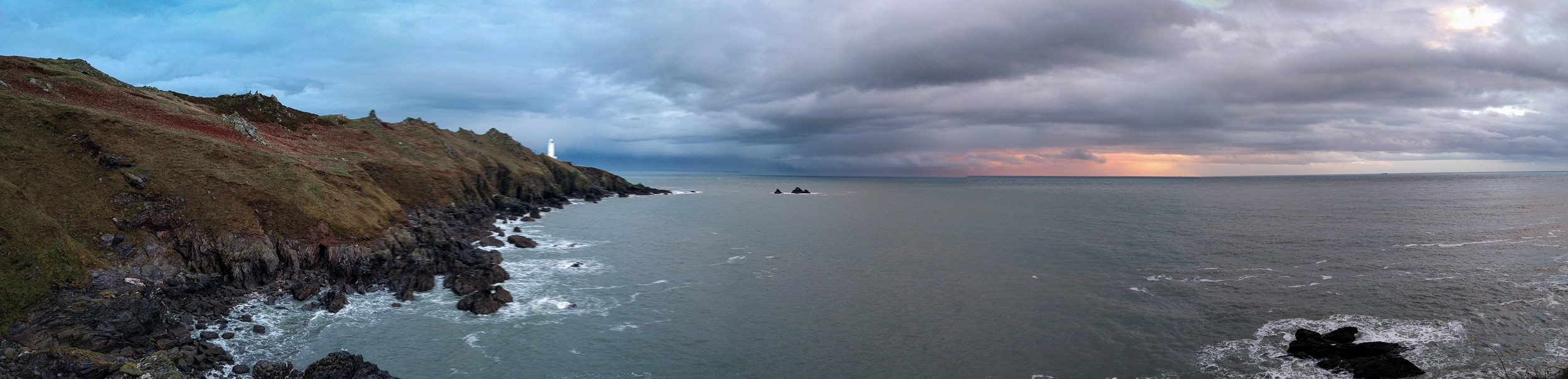
I managed to grab this quick panoramic using my Nexus 6p phone. It's not perfect but it shows the scene as it was.
I kept shooting, varying my compositions slightly but the break in the cloud was just too far over to make for an interesting composition. In hindsight, I probably should have shot a panorama with the DSLR, but there was a lot going on and I didn't have much daylight left. However, I was still very happy with the moody shots I was getting like this one.
Nikon D750, Nikkor 24-70mm f/2.8 @ 40mm, f/11, 129 seconds, ISO 100, Lee Filters Circular Polariser, Lee Filters Little Stopper.
I Must Be Mad
I have to admit that when the rain really started to chuck it down and I went back to the car to wait it out, I did question my sanity. It was looking like it was going to be one of those days where not only do I not get a decent image, but I don't even get the camera out of the bag. However, having read so many times about how some of the best images were captured right after a storm I decided to hold out. And I'm so glad I did.
Perhaps the only thing I should have done would be to have left the car when I had started to see the sky clear, and not when the rain had stopped. This would have given me a bit more time to get back to my location and start shooting immediately after the storm had passed. However, given that I still wouldn't have been able to get a break in cloud or light from the setting sun into my scene I was pretty happy with the results.
Nikon D750, Nikkor 24-70mm f/2.8 @ 27mm, f/9, 60 seconds, ISO 100, Lee Filters Circular Polariser, Lee Filters Little Stopper.
Have you ever stayed out in horrible weather only to be treated for your perseverance? Do you sometimes think that landscape photographers are a little mad? Let me know in the comments.

Back to Boscastle
In this blog post I tell you about my trip to Cornwall to shoot Boscastle one cloudy Saturday afternoon in January.
Decisions, Decisions, Decisions
It's been a reasonably busy start to my photography in 2017. January had already seen me visit Dawlish Warren, Dartmoor and Colmer's Hill in Dorset, so when faced with a photography free weekend I was content to stay at home and clock in some family time.
However, it appeared that the photography gods were looking down on me and unexpectedly my wife decided to take the kids to the cinema. So while the offer to go and see Sing was tempting, I was also offered the chance to go and do something myself. What could I possibly do with a few spare hours on a January afternoon….?
Well, it wasn't going to be DIY that was for sure so I got busy looking at my photography locations map and got to planning a shoot. I had already shot Devon and Dorset this year so I thought why not finish January by going to Cornwall. But where would I go? This is the good thing about keeping a locations map, it allows me to visualise possible shooting locations so I could see which of my Cornish locations would suit my time constraints, weather and time of day.
I eventually decided on Boscastle, a location I've shot a couple of times before. The high viewpoint above the curvy harbour entrance, dramatic coastline and forecast cloud cover would, I decided, make for an excellent sunset coastal location.
An image of Boscastle that I took in May 2016.
Taking a Friend
Landscape photography can often, for me at least, be a solitary past time. After all, getting up at 5 am to visit Dartmoor in freezing conditions in the off chance there is a good sunrise is not exactly on top of everyone's list of things to do. However, this was a Saturday afternoon and while it wasn't exactly a warm and pleasant day I did think my father-in-law would be up for a session with the camera. So I gave him a call and he jumped at the chance. So we packed our stuff and hit the road to Cornwall.
Dramatic Boscastle
It's just over an hour's drive to Boscastle from home so there was plenty of time to analyse the weather as we got closer to our destination. Things were looking very positive. The heavy, but intermittent rain showers meant the sky was full of cumulonimbus clouds as well as the odd thunderstorm cloud with high altitude anvils. As we drove we had visions of a setting sun illuminating these big clouds in a golden orange colour as they travelled along the dramatic Cornish coast. It might just be one of those great trips out with the camera.
It's a short walk from the harbour car park to the viewpoint, but it does require a small ascent to get an elevated viewpoint. It's worth the effort though and the excitement of the shoot gave us more than enough energy to get up the hill.
Once at the top we set up our cameras and got ready to start taking some epic images. However, as has been the way for me recently, I could spot a few problems. The big dramatic rain clouds had now for the most part all passed by leaving only small patches of cloud. There was also a big bank of low cloud on the horizon which I knew would block the last of light when the sun dipped down behind them. Still not to be put off I got shooting and took this image just as the sun dipped below the distant cloud line.
Nikon D750, Nikkor 16-35mm f/4 at 16mm, 0.8 seconds, f/16, ISO 100, Lee Filters Circular Polarizer, Lee Filters 0.9 ND Grad. Processed in Lightroom CC.
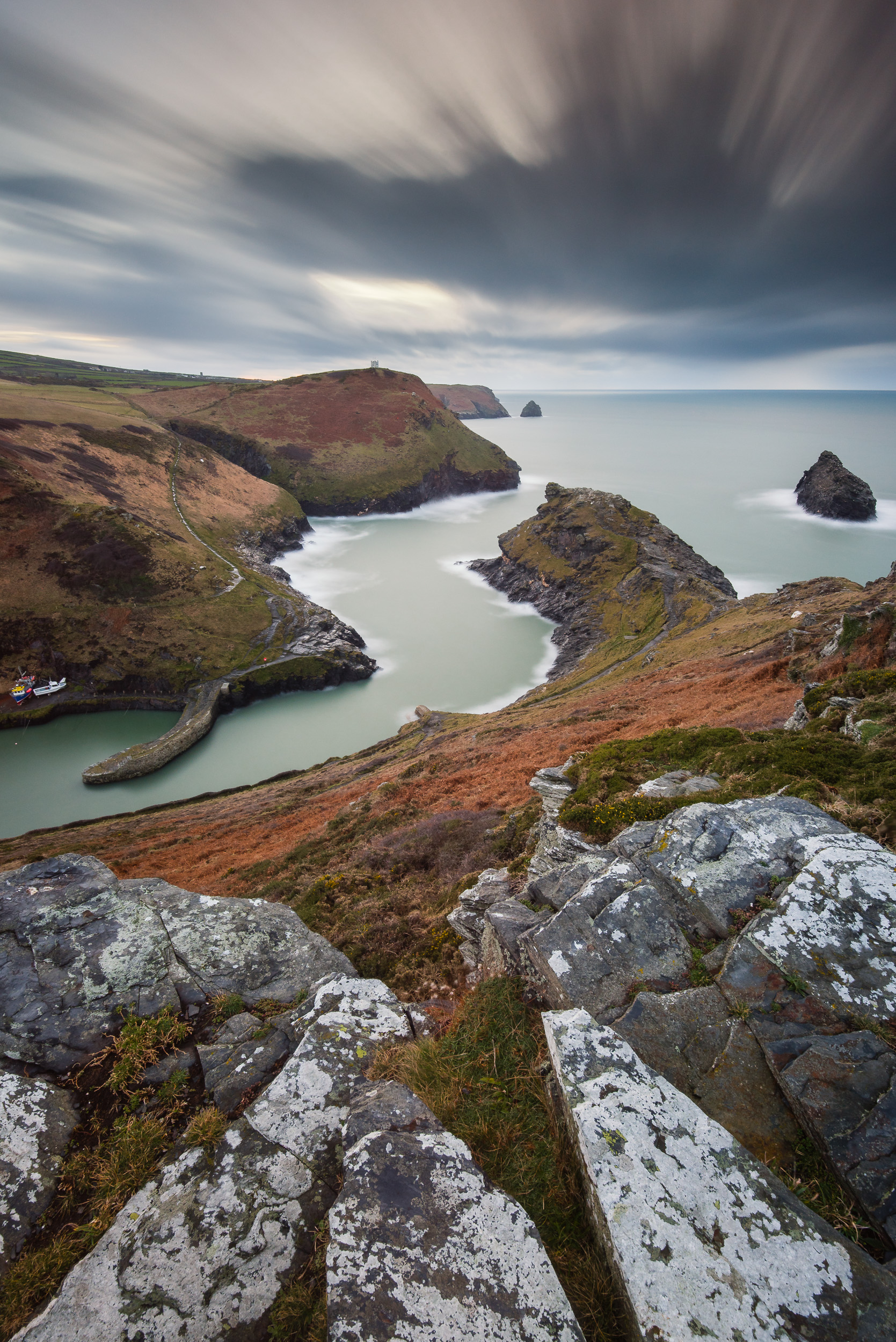
We kept shooting until sunset but the conditions obviously did not improve. Landscape photographers bang on about the quality of light all the time but for very good reason. I know Boscastle is a fantastic location for capturing images but in flat winter light, even the most dramatic of locations can look a bit drab. I tried taking a few long exposures which provided the movement in clouds I was looking for but without good light, the image remains flat and grey.
As it started to get dark we decided to call it a day and head back to the car. Though the conditions hadn't been as we had hoped, we had at least had a good old chat and most importantly been out with the cameras.
Being Positive
Though January hasn't resulted in the capture of any portfolio class images, I am, as always, very happy to have got out with the camera. Despite work and family commitments, I have managed to get out with the camera every weekend in January. I even managed to create a video on how I use ND filters.
I rarely consider a trip out with the camera to be wasted effort. I often talk about the value in practising the craft of photography on this blog and so if anything this trip to Boscastle was still time well spent. Photographers can often set unrealistic expectations on ourselves to capture amazing images each time we go out. However, unlike full-time photographers, my time out with the camera is set around work and family commitments rather than when the conditions are likely to be optimal. I can't always capture amazing images, but I can make sure I'm well prepared for when they are.
So how do you balance your photography with other commitments? Will you wait for the best conditions or head out for the fun of it? Do you like to go out shooting with a friend or prefer solitude when out in the landscape? Let me know in the comments below.

Snow, Glorious Snow!
In this blog post, I tell you about a recent visit to photograph Dartmoor in the snow, how I learnt a little more about a favourite location, and how I can plan my shoots more effectively.
Weather Forecast Addict
Though I do whinge about winter with its short days and fewer opportunities for landscape photography, it is also the season for snow. Snow down here in the south-west of England is rare, especially at lower elevations, but every now and again some of the higher ground will get a coating of the white stuff.
All it took was the rumour of a possible snowfall to get me excited and straight onto regularly checking the snow forecast for Dartmoor. As the weekend approached the number of times I was hitting refresh on my browser steadily increased. The "snow risk" percentage went up, then down, then up again. Towards the end of the week I was also checking the Dartmoor Webcam desperately hoping to see a dusting of snow on the ground.
Do You Wanna Build a Snowman?
When I finally saw a little snow on the Dartmoor Webcam I decided that I was going to get up early the next morning and head to Dartmoor. Even without snow, the conditions up on Dartmoor can be arctic so the first step in getting organised was to get out all my winter layers. I know from bitter experience that if I found myself freezing cold that my enthusiasm for photography would be short lived and I would be home with a cup of coffee and bacon roll before sunrise.
When I left in the morning there was no sign of snow but I already knew that I would have to go to higher ground. My planned location of Emsworthy (one of My 5 Favourite Locations for Landscape Photography in Devon) would probably be high enough so I wasn't overly worried. Sure enough just as I passed Haytor everything started to turn white. There wasn't a huge amount of snow, but I was sure there was enough to work with (or at least build a snowman).
Waiting for the Light

The signs looked good early on.
Naturally, snow on Dartmoor attracted a fair few photographers to come out so I wasn't overly surprised to be sharing my Emsworthy location with a couple of other local photographers. There's plenty of room at Emsworthy for three photographers so there were no issues over who was where and it was nice as always to have a chat and a coffee while waiting for the sun to come up.
My vision for the image I was hoping to get was relatively straight forward. In the foreground are small clumps of ground, which when illuminated by the rising sun would hopefully turn the snow a nice golden colour. This coupled with the tree and the tor in the foreground, and some dramatic clouds would make a good image. All I had to do was wait for the sun to rise and bathe the ground, tree and tor in golden light.
Always Learning
Landscape photography is rarely easy and conditions can change rapidly, for the better or for the worse. As I patiently waited for the sun to rise the cloud started to clear. Those nice big pink clouds that I thought would be a key feature of the image cleared from the sky leaving it almost clear. Not to be put off though I continued to wait.
Another problem was that when the sun had risen over the horizon, it wasn't high enough to shine over the hill behind me. What I hadn't taken into account was that during the winter months the direction of the sunrise meant it would be around 30 minutes before the sunlight would hit the foreground at my location. The problem with the sunlight 30 minutes later is it can be a bit harsh and will have lost some of its morning warmth as you can see with the image that I took below.
Nikon D750, Nikkor 24-70 f/2.8 VR at 38mm, F/11, 1/40 sec, Lee Filters ND Grad, post processed in Lightroom CC.
So while my first image lacks the punch I was hoping for I did learn something from the experience. I've shot Emsworthy a few times in the morning, but that doesn't necessarily mean that it's a good sunrise location all year round. Though I use The Photographer's Ephemeris to plan my shoots I've learnt that not only do I need to pay attention to the direction of sunrise, but the height of the surrounding ground.
Alyn Wallace has actually produced an excellent video on how he uses The Photographer's Ephemeris to plan around changes in ground elevation. I shall be watching his video a few more times! Also, be sure to check out Alyn's work, it's inspiring stuff.
Goodbye Snow
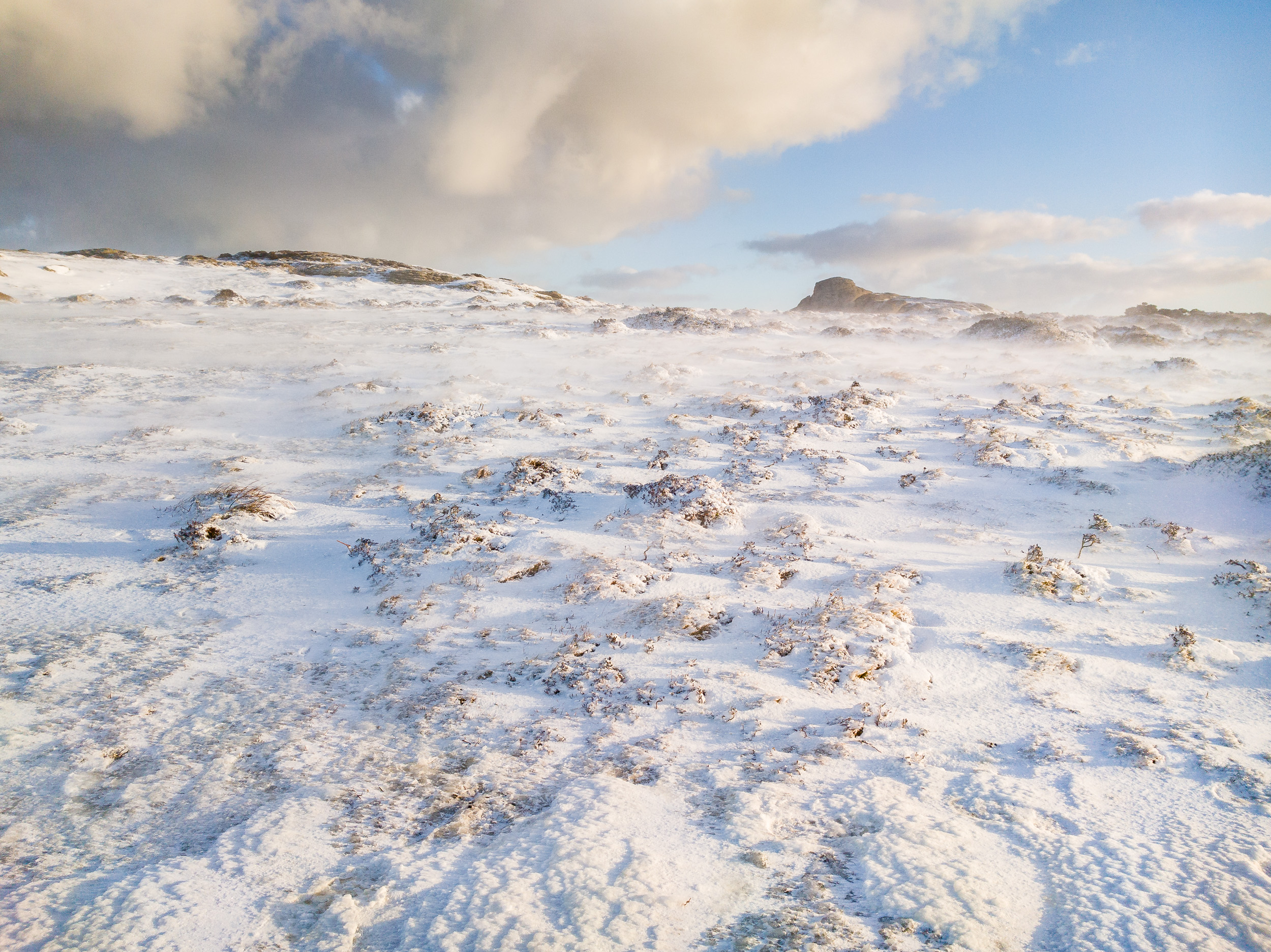
Unfortunately the arctic conditions didn't last the weekend.
The snow on Dartmoor didn't really last past that weekend so I was unable to go back out and try again. So while I was unable to get the image I was hoping for it was great, as always, to get out with the camera and practice the craft of photography. I also learnt something new about one of my favourite locations and how to plan a little bit better. So overall I call that shoot a success!
So have you been out with your camera in the snow recently? Do you use The Photographer's Ephemeris to plan your shoots? Let me know in the comments below.

Landscape Photography in the Lake District
In this blog post I write about my 2 day photographic adventure in the Lake District. Read about how despite the challenging weather I still came away with some great images and a sense of satisfaction.
Escape to the Lakes
When a photographer friend of mine invited me to spend a couple of days shooting the Lake District in the height of autumn I literally jumped at the chance. Over the last decade or so I had visited the Lake District a number of times with my family and enjoyed it immensely. After all if you like the outdoors there really isn't much not to like about the Lake District. This was going to be a different type of visit though. This visit was going to be all about photography and I couldn't wait!
The plan was to spend two full days shooting various locations around the Keswick area taking in tarns, lakes, hills and of course the odd jetty. Our only restriction was dates. Free time for photography has to fit in around family and work time, so when we picked our dates we were committed, no matter the weather.
November seemed to take an age to come round but when it did my levels of excitement had almost become palpable. I had packed my stuff two days prior to departure and when I did hit the road the 300+ mile journey flew by. I couldn't wait to get shooting but as I would soon find out, the Lake District weather was going to be typically British.
High Brandelhow Landing
It was a 5:30 am alarm call on the first day and despite the lack coffee I was in high spirits and ready to get shooting. Our first stop was High Brandlehow Landing, a pier on Derwentwater. It's a classic Lake District composition with a pier but it was an ideal location to get the photography brain into gear.
My first instinct was to shoot the pier vertically but I actually ended up preferring the horizontal version. Using the Little Stopper at ISO 100, f/11 gave a 2 minute exposure but I was loosing the detail in the sky. Setting the camera to ISO 200 gave me a one minute exposure maintaining some texture in the sky.
Stock Ghyll
Despite the sky being almost completely overcast it had been a reasonably successful start to the day. After breakfast though the weather turned rainy so we decided to head into the woodland at Ambleside and walk along Stock Ghyll.
Photographing Stock Ghyll was a real challenge as I spent most of the time clearing rain water from the camera. I found it difficult to concentrate on my composition. I later tried to shoot the waterfalls but couldn't really find a composition I liked.
Grasmere
After drying out over a pub lunch we took the short drive down to the southern end of the lake at Grasmere. Though it had stopped raining the weather remained resolutely overcast which was a shame as there was barely a breath of wind and the reflections were stunning.
Lovely reflections, just a shame about the light. This image is a 2:1 crop from the original frame.
Latrigg Fell
With a renewed sense of optimism on the morning of day 2 I headed down to the hotel lobby to meet my friend. Unfortunately he was taking shelter from the down pour of rain. Not to be put off we checked our respective weather forecast apps and agreed that an ascent of Latrigg Fell could be rewarded with some nice light come sunrise.
The weather at dawn was not great but we dug in and waited.
As time progressed some splashes of light started to appear on Cat Bells. This image is a 3:1 crop of a 9 vertical image panoramic stitch.
The dawn light struggled to get through the clouds but when it did it provided little moments of magic. This is 16:9 crop from the original frame.
Castlerigg Stone Circle
While ancient stone circles don't necessarily offer a lot of interest for me, the location of Castlerigg Stone Circle is still an interesting location to shoot. You don't necessarily need to include the stones in your compositions.
Bad weather can work in your favour as well. I just needed to wait for a break in the light which came and went in the space of seconds. You just have to stand there with the finger on the shutter....waiting....till you get that fleeting moment of light.
As I've written about before, its important to look around to see what else is happening. I was focused so much on getting the previous image that I almost missed this one.
Tarn Hows
After our trip to Castlerigg we headed up to Ashness Bridge. It was a short stop as no sooner had we got our cameras out it started to rain heavily. So as we approached the end of day 2 we decided that we might try and catch last light at Tarn Hows. The weather hadn't exactly been kind to us up to that point and unsurprisingly it didn't improve that much.
This scene just need a splash of light on the trees but it wasn't to be.
Cat Bells
I was due to make the long trip home the morning of the 3rd day, but I couldn't resist one more dawn shoot. My friend had hit the road at 4am to go home, so as I was on my own I decided I would make the 450m ascent of Cat Bells. Despite the the previous two days of poor weather, I remained optimistic as the weather forecast looked like it might produce some nice early morning light.
My vision for this image was to get some morning light break over the fell peaks (Robinson and Red Knot). I waited and waited but this was as good as it got.
As is often the case in the Lake District, the moments of good light are brief but wonderful. This image of Rigg Beck and Causey Pike is a 3:1 crop from a single frame.
I was on my way down from Cat Bells and looking forward to breakfast but sometimes you just have to stop and unpack all your gear again. The light on Lonscale Fell was too good to miss.
Fun but Challenging
There was no doubt that I was extremely excited about my trip to the Lake District. Having seen so many autumnal images of the area I was keen to produce my own spectacular images. However, as you can see from my images old mother nature had a different plan which mostly involved rain and overcast skies. Even when it was dry there was very little of that magical light that you want to really lift a scene. When it did rain I would just spend most of time trying to keep my gear and filters clear of water. This can be infuriating and doesn't leave much time for the creative side of photography.
So was the trip a failure? Of course not! Yes, it was challenging, difficult and sometimes frustrating but I was in the Lake District, in autumn, with my camera. Sure it would have been nice to have better weather but sometimes as a landscape photographer you have to work with what you get. As I write this blog and look back at the photographs there is a lot to be happy about. Those little breaks of light like I saw on Cat Bells, or the stormy sky over the trees at Castlerigg just goes to show that there is an image to capture in almost any weather condition.
For me landscape photography is also about the adventure, about being outdoors. This trip was an adventure and I managed to capture some dramatic images of the Lake District, so I'm calling my trip a success!
Do you have a bucket list of locations or areas you want to shoot? Have you turned up to a location and faced a few challenges? Is there any type of weather you wouldn't go out in? Let me know in the comments.
Remember to check out my Instagram and Flickr feeds so you can see even more of my images. See you next time!

Not All Shoots Are Successful Shoots
In this blog I discuss the challenges of shooting on a beach and I give my own image a critique.
The Best Laid Plans
As a photographer you always want to put your best images out there. If you practice enough your technique will improve and your style develop, hopefully resulting in a gradual but noticeable improvement to your images. While this is generally true, it doesn't necessarily mean that every trip out with the camera will result in an image that was better than the last one. When I started this blog one of my key goals was to discuss my success and my failures. As I said in my first blog post, landscape photography isn't all about 5 star images captured on epic international trips.
In this blog post I'm going to take you through one of my less successful trips out with the camera. I had it all planned out. I would finish work bang on time, drive to West Bay in Dorset, and photograph the sea and evening light as it gloriously reflected off sea and cliffs. Well, that was my vision anyway. I went through all my normal planning steps, weather, cloud, tide, bearing of sunset and it all looked good.
Challenging Conditions
I've visited West Bay a couple of times, but never to photograph it. The east beach there, recently made more famous by the TV series Broadchurch, is long and sandy with dramatic cliffs running as far as the eye can see. However, when I arrived the reality of actually shooting there became apparent.
Firstly was the tide. After checking the tide tables I knew it was coming in, but what you can't tell from the tables is how long of a reach those waves have. The waves weren't tall, but their reach up the beach was long. Now I don't mind getting my feet wet, but it becomes really difficult to frame your shot if your camera sinks a little with each wave. If I moved further away from the waves I lost a lot of the sea in the frame. Normally this would be less of an issue if the beach has a natural curve.
The other challenge was the weather. While it wasn't raining nor the wind as strong as I expected it to be, the light was very flat. The forecast had indicated lots of high cloud and no low cloud. This I hoped would give me a spectacular evening sky to add to my composition. However, there was a lot of low cloud and the chances of there being any evening light bouncing off the cliff seemed very unlikely.
Change of Plan
Spare time to do photography is at a premium for me. While I like to do some location scouting when I can, it's not always possible, and so sometimes I just have to wing it. So with the very real sense that I might have just wasted a 2 hour round trip in the car, I put my thinking hat on and tried to think of a different composition. This approach of looking around and not getting focused on one thing had worked well on a recent trip to Dartmoor, so I picked up my tripod and got walking.
It wasn't long before I had the idea of doing a long exposure of the beach, looking straight out to see, and including a few well-placed rocks or stones in the foreground. This composition would probably deliver better results. I would have better visibility of the waves and the quality of the light was less of a dependency.
An Ever Changing Beach
Though I had a new vision on what my photograph would be my challenges weren't over. I would find an interesting composition, setup, grab a frame, maybe two at the most, and then a wave would come in wash my composition away! Even some of the larger stones in my composition weren't big enough to resist the pull of the waves. So this left me with very little time to grab a frame for each composition I found along the beach. I had to make sure the camera was level, focused, and correctly exposed in very short time or I might not get another go at it.
After only a few compositions the light had faded and I decided to take my very sandy tripod and wet feet back home for a nice meal and glass of wine.
Critiquing My Own Image
I only took a handful of frames that evening but here is the image that I think turned out the best.
Nikon D750 with Nikon 16-35mm f/4, 1.3 secs, f11 at 20mm, Lee Filters Polariser and 3 Stop ND
Now I'll be the first to admit this isn't an image for my portfolio. Though I like the mood and style of the image it does have a number of issues. If I'd had more time at the location I might have worked out these issues but as I said at the start of the blog, not all shoots are successful shoots.
The main issues I have with the image are around the rocks I have used in the foreground. The rock in the lower right of the frame for me is just a little too close to the edge of frame. I would like to have had just a little bit more space as there is with the rock on the left.. Given a bit more time between waves, I might have setup my tripod in a slightly different location to give me that space.
While the image roughly follows the rule of thirds, it doesn't follow the rule of odds. Now, I know that these rules are more like guidelines, but quite often they do make sense and I do think following the rule of odds in this scene would have helped with the overall composition.
Rocks at Porth Nanven - Nikon D750, Nikon 16-34 f/4 at f/16, 1.6 secs at 20mm.
I learnt about the rule of odds in the book, The Art of Landscape Photography by Mark Bauer and Ross Hoddinott (it's a fantastic book and well worth picking up). In the book Ross and Mark discuss how having an odd number of objects helps create visual stability or symmetry.
In this image I took of Porth Naven a couple of years ago you can see how I've composed with three rocks in the foreground. The balance and implied triangle in this image is something I would have liked to have seen in my West Bay image.
Always Good to Be Out With The Camera
Despite the fact that my shoes are still drying off and I had to strip down my tripod to get rid of the sand, I still felt it was time well spent with the camera. I'm also not going to win any awards for the image, but that really isn't the point. I was outdoors with my camera on a beautiful beach taking images and for a person that spends most his time sitting at a desk it's just nice be outside. Yes, conditions were challenging but it's through these challenges that you learn to progress as a photographer.
Actually I'm going to change my mind, it was a successful shoot. Just successful in a different way.
So what do you think of the image? How would you have shot the scene? Have you got any tips for photographing beach scenes? Please let me know in the comments.

Remember to Look Around
It's all to easy to concentrate on the scene in front of you, but as I discovered there can be a lot going on just behind you.
Photographing An Old Friend
I don't know about you but I have a few places on my location map that are easy to get to and provide a variety of angles to shoot from. So when the weather forecast for last Tuesday was a bit 50/50 for a good sunset I thought I'd go somewhere I know so that if it fails to be spectacular I won't have spent a significant amount of effort getting there.
How I saw the scene last year.
Heading down to my target location of Emsworthy Rocks just down from Haytor I was still confident that I was going to get a good shot. I decided to shoot the rocks and tree from a position that I hadn't used before. My plan was to have my back to the setting sun so that the tree and rocks would be bathed in golden light. There wasn't going to be much going on in the sky so I positioned the main elements higher up in the frame leaving some of the ground rock formations in the foreground.
Playing the Waiting Game
I went through all my normal checks for exposure and sharpness and then waited with the remote release for that magic moment where the colour would bath my subject in glorious golden light.
This is the scene I came to shoot but the light and sky just weren't what I wanted.
Well some time passed and I had shot a few frames but the scene just lacked a bit of punch. In my focus on the scene in front of me I'd failed to look to see what else was going on. It's all too easy to go out with a singular focus on what you want to achieve but this can sometimes mean you'll miss something a bit more special. I was convinced that my target scene would come good. However I casually turned 90 degrees to my right and was presented with a much more interesting scene. The light on the rocks was much more pleasing and the sky had a bit more interest about it.
Change of Plans
On the same spot as the last image but 90 degrees to the right.
I pondered if I should go to the hassle of changing my composition and moving my tripod (which had taken bit of setup to balance on the rock I was perched on). I knew I would regret it if I didn't at least try so I repositioned the tripod, got a Lee Filters ND 0.9 medium grad out and shot a few frames of this new scene.
I did go back to shooting a few frames of my original composition but I already knew that I'd grabbed the best shot I was going to get that night. So what did I learn from this particular adventure? Don't get too focused on one scene or shooting a particular direction. The landscape, particularly the wilds of Dartmoor, are wide open spaces and the light can look very different simply by looking a different direction from the same point. I was committed to getting the image in my head but I almost missed a much better one.
Have you had a similar experience? Have you looked round to find a much better shot or do you remain focused on what is in front of you? Let me know in the comments.