

A New Vision of The Cobb
In the blog this week I tell you about my most recent visit to Lyme Regis in Dorset to capture landscape images of The Cobb, and how an overcast morning changed the way I view this iconic location.
Weather Obsession
I have to admit it, I'm obsessed with the weather. More specifically, the weather forecast. But what landscape photographer isn't slightly obsessed by the weather. I'm constantly checking the forecast and looking for the best place to visit with the limited about of time that I have for my landscape photography.
After a few days of frankly terrible weather, it was going to take some pretty awful conditions to stop me heading out with the camera. After much head scratching over the weather forecast I thought the best place to go would be The Cobb at Lyme Regis in Dorset.
It was a bit of a risk to go there given the predicted cloud cover. Either side of sunrise it was forecasting 100% cloud cover, but around sunrise itself, the cloud cover could drop to around 50%. Combined with the direction of the rising sun, I was hoping to capture an image similar to this one I'd taken a while back.
The Cobb vs The Sea, Lyme Regis, Dorset - Nikon D750, Nikkor 16-35 mm f/4 at 22 mm, f/13, 0.6 secs at ISO 100, Lee Filters ND Grad.
Choose Life, Choose The Cobb
Before I carry on, I've just remembered that I created one of my 5 Minute Photo Adventure videos from The Cobb, so if you want to see what it looks like, then check out the video below. You can also read the blog article for that video here.
Anyway, back to the story of my most recent visit. When I arrived in Lyme Regis, the weather was as forecast and cloud coverage looked to be 100%. As I walked from the car and approached The Cobb I could see that I wasn't the only photographer that high hopes for capturing a good image that morning.
As I setup my camera and took my first few shots, I suddenly changed my mind on the type of shot that I wanted. Rather than trying to repeat the type of shot I showed you earlier, I decided the image below was the style of image I wanted to capture that morning.
A New Vision of The Cobb, Lyme Regis, Dorset - Nikon D850, Nikkor 16-35 mm f/4 at 24 mm, f/13, 30 secs at ISO 64.
The calm waters, overcast sky, the colour of the water and long exposure all add up to a very different, but still pleasing image. Normally I like to capture the drama of the sea at The Cobb, but that morning called for something different.
As soon as I saw the image on the back on the screen on my D850 I realised that I had been missing out on some creative compositions at this location. I would definitely have to visit when the conditions were like this again.
After a short while, a break in the cloud started appearing in the distance, and the mood of the scene changed. Normally I'm happy when the cloud starts breaking up, but in this instance, I wanted the cloud cover to stay at 100%! With the gap in the cloud, the serenity and calmness of the scene was broken.
It was an interesting morning for me. My previous visits to The Cobb had gradually embedded into my mind the type of image I should capture there. This visit broke all that and I left with a renewed sense of excitement about returning to The Cobb on the next grey and overcast day!
Have you had a similar experience? Have you had your perception of a favourite location changed by weather? Let me know in the comments below.

Great Staple Tor
In the blog this week I head to Great Staple Tor on Dartmoor where I find I have to work very quickly to get even one shot.
Dartmoor, Here We Go Again
When I’m short of time, there are generally two places I’ll go to get my photography fix. If I’m in the mood for creating coastal images I’ll head to Dawlish Warren and if not, I’ll go to Dartmoor. I’m very lucky to live so close to Dartmoor, but I’m sometimes overwhelmed by the sheer number of different locations I could select to photograph.
Normally the weather will dictate which part of Dartmoor I will go to, but this time the forecast was generally clear all over Dartmoor. On clear days I like to shoot from Rippon Tor <insert URL>, but as I’d visited there recently I decided that I wanted another high elevation point to shoot from. After a little bit of thought, I decided that a visit to Great Staple Tor was in order.
Like most tors on Dartmoor, Great Staple Tor needs good light to make the most of it. That probably wasn’t going to be an issue given the forecast so all I was going to need was a few clouds in the sky so I wouldn’t end up with just a blanket of blue. A little bit of action in the sky always works well when shooting the open moorland of Dartmoor.
Great Staple Tor
As I found on my recent shoot at Rippon Tor <insert URL>, what the weather forecast states and what the weather actually is on Dartmoor can be two very different things. Arriving at the car park on Pork Hill it soon became apparent that it was going to be a very overcast morning. Not to be put off, I started my ascent up and soon reached Middle Staple Tor.
Normally you can see Great Staple Tor from Middle Staple Tor, but all I could see this morning was cloud. In fact, I had to check my map that I was going in the right direction! I soon reached my destination though and the cloud started to lift a little and combined with a cup of coffee, my spirits also started to lift.
It was definitely going to be a morning of waiting. The cloud would clear a little, but then get heavy again. One minute you could see for miles, the next you couldn’t even see the next tor. As time ticked by and sunrise came and went, I thought that was it and I wouldn’t be capturing any images that morning.
Then all of a sudden there was a clear spell and I got some morning light on Great Staple Tor. I quickly took these two images.
Late Morning Light on Great Staple Tor, Dartmoor, Devon - Nikkon D850, Nikkor 16-35 mm f/4 at 21 mm, f/13, 1/6th sec at ISO 64, Lee Filters ND Grad.
Dawn at Great Staple Tor, Dartmoor, Devon - Nikkon D850, Nikkor 16-35 mm f/4 at 21 mm, f/13, 1/6th sec at ISO 64, Lee Filters ND Grad.
Within a few minutes though all that warm light had gone and the sun disappeared behind a bank of cloud. I would have waited longer to see if the sun would make another appearance, but the sky soon clouded over so I decided that I’d probably had the best of the morning conditions.
While it obviously wasn’t the most productive of mornings, I did at least manage to get a couple of images, so it was far from a wasted trip. Besides, even if I’d captured no images that morning, watching the day start from high up the moor with a cup of coffee is rarely a bad thing.
Have you ever photographed Great Staple Tor? Do you shoot a location where the weather can change quickly? Let me know in the comments below.

Rippon Tor
The weather conditions on Dartmoor can change rapidly so sometimes it's worth hanging about to see if things improve. In the blog this week you can find out if my patience was rewarded when I recently visited Rippon Tor to capture some landscape images.
Big Blue Skies
The weather recently has been a bit of a mixed bag. Some days it's been grey, overcast and frankly a bit miserable. Not that you can't do landscape photography in bad weather, but it can limit your options. At the opposite end of the weather scale is the clear blue sky days. This type of weather is rather pleasant in the winter, but I don't find it inspires my landscape photography.
As I was checking the local forecast on my favourite weather service one evening all I could see was clear blue skies for the following day. It certainly didn't look like optimal conditions for a bit of landscape photography but I'm not one to pass up an opportunity to get out with my D850. As the weather forecast was largely the same for South West as a whole, I decided there was little point in travelling any further than my local area. But where could I go? Dartmoor of course!
Rippon Tor, Dartmoor
My preference when shooting the open moorland of Dartmoor is to have interesting skies. As this was not going to be the case for this shoot, I decided I would get myself to an elevated position. One of the closest high points for me is Rippon Tor at 473m. While definitely not the highest point on Dartmoor, it still offers impressive views of the Haytor area. Even though clear skies were forecast, the elevated viewpoint can help you take advantage of any distance haze in the sky. This can light up nicely in the right conditions and provide some nice interest in the sky when shooting with a long lens.
When I woke the following morning and left the house I could see clear skies and the stars above so it was looking like the forecast was going to be fairly accurate. As I headed up to Dartmoor things started to look very different. By the time I'd reached the car park for Rippon Tor, things looked very cloudy indeed!
It was pretty windy at the top of Rippon Tor, but that was to be expected. What wasn't expected was the amount of cloud. It was that fast moving type of cloud that always looks like it's about to clear but never seems to. Things didn't look much clearer down towards the coast where the sun was going to rise. Not one to be put off I thought it was worth hanging about to see if things would improve.
Just 5 Minutes More
Your enthusiasm can wear off quickly when it's cold and windy on Dartmoor. As the time for sunrise passed and it didn't look like things were going to improve, I was ready to give up and head home for a coffee. No sooner had I zipped up my bag though, the sky started to clear and the sun peaked up over the cloud and started bathing the scene in the soft morning light. I quickly unpacked the camera and took this shot.
Dawn on Rippon Tor, Dartmoor, Devon - Nikon D850, Nikkor 24-70 mm f/2.8 VR at 29 mm, f/11, 1/4 second at ISO 64, Lee Filters Circular Polariser.
In retrospect, I didn't really take enough time to arrange my composition. I think the image would have worked a little better with a slightly more elevated view of the foreground. However, time was very much against me. Though the sun had just risen above the cloud, sunrise itself was a good 15 minutes earlier, and so the light was already getting harsher. I had to work fast to make the most of that lovely morning light on the side of the tor and on the undulations of the ground.
Now that I was back in the mood for taking some landscape photographs I decided I would capture a panorama. On a recent trip Fingle Bridge I met up with fellow landscape photographer Neil Porter and he recommended to me a relatively inexpensive levelling head. This great bit of kit would greatly simplify the process of levelling my camera in preparation for capturing a panoramic image.
The View from Rippon Tor (Panorama), Dartmoor, Devon - Nikon D850, Nikkor 24-70 mm f/2.8 VR at 52 mm, f/11, 1/10th second at ISO 64, Lee Filters Circular Polariser, 9 image stitch cropped at 6:17.
Shortly after capturing that image the weather conditions had improved markedly and in need of a cup of coffee, I decided that I'd had the best of the morning light. As I walked down from the tor I kept thinking about how upset I would have been with myself if I'd been in the car driving home only to see the conditions improve from the road. I was lucky that I hadn't packed up 10 minutes earlier!
How long do you wait before you give up waiting for the weather to change? Has your patience paid off and you've captured an amazing image? Let me know in the comments below.

Holne Bridge
Inspired by the autumnal colours I had seen at Fingle Bridge the previous week, this week I head to Holne Bridge on Dartmoor to see how the autumn colours are along the River Dart.
Embracing Autumn on Dartmoor
I don't know if it's my imagination but the autumn colours in Devon, especially Dartmoor seem to be much more vibrant this year. The yellows, oranges, and browns are really standing out on the trees. Woodlands are looking particularly spectacular.
After seeing the wonderful colours down at Fingle Bridge the other week, I was determined to get out again and make the most of this special time of year. But where to go? Easy. My custom Google Map to the rescue again! Holne Bridge on the River Dart was another location that had been on my map for a while, and this seemed to be the perfect time to go.
Holne Bridge
Though the weather forecast for that day was for rain showers, there was going to be a break for a few hours in the morning so off I headed to Dartmoor. I parked up just on the other side of Holne Bridge and started walking along the banks of the Dart. As expected the colours were brilliant, but it also appeared that the strong wind from the previous days had removed a lot of leaves from their branches.
Not to be discouraged by this I got the camera set up and took this image of the river Dart from the east side of the bridge.
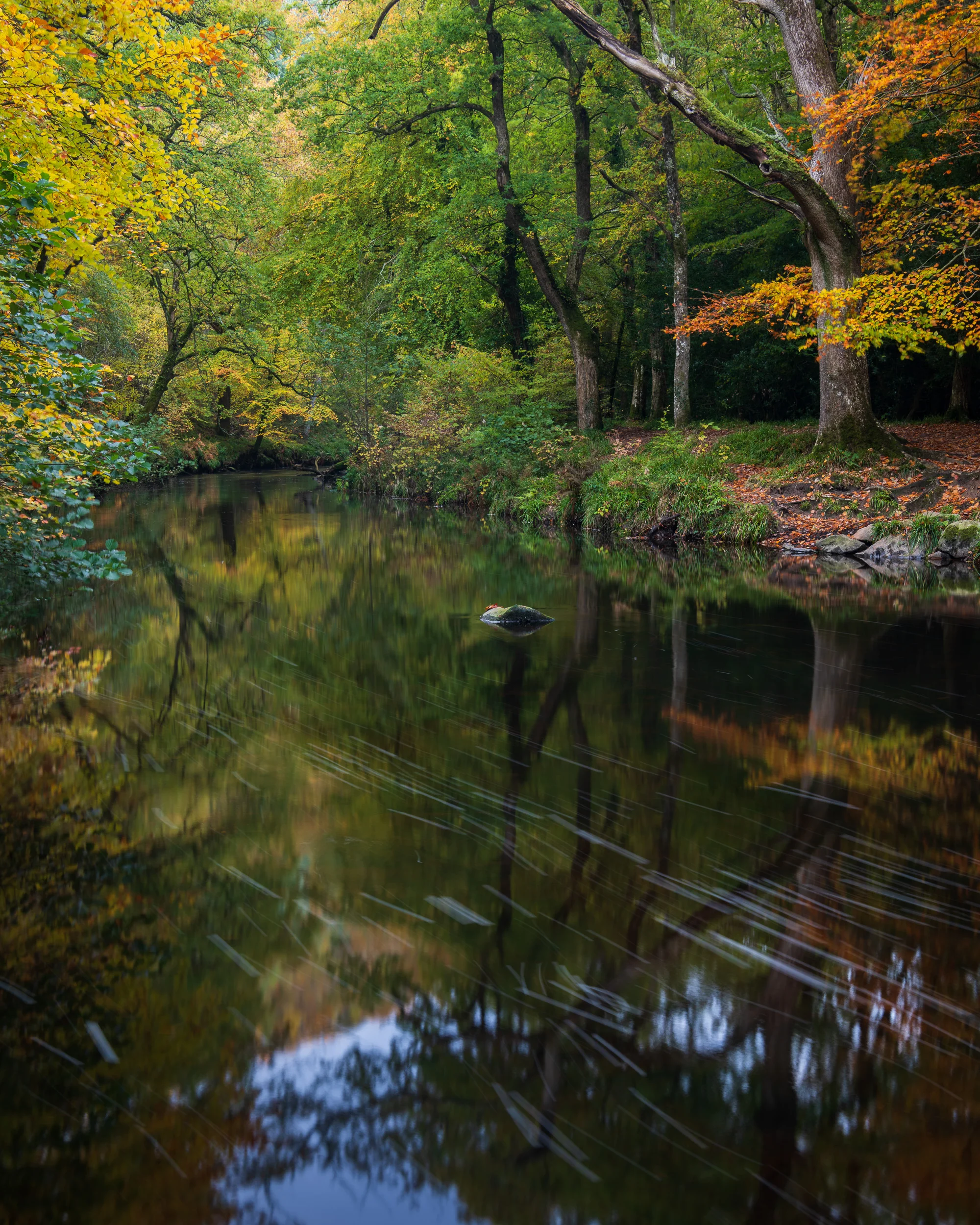
Autumn on the River Dart, Dartmoor, Devon - Nikon D850, Nikkor 24-70 mm f/2.8 VR at 25 mm, f/13, 10 seconds at ISO 64, Lee Filters Circular Polariser and ND Grad.
Just as I started getting into my photography it started raining. At first, I thought it was just a light shower, but the rain started to come down heavily. I soon regretted not taking my waterproof jacket! Never mind, I packed the camera away and decided that this would be a good time to do some exploring. My weather app told me the rain was due to stop in 20 mins so I wouldn't have long to wait.
While I was exploring the river bank looking for compositions, I spotted some woodland on the opposite side that I thought might suit an ICM shot. I had started experimenting with ICM when I was in Harris and Lewis and was interested enough with the results to try it again.
Holne ICM, Dartmoor, Devon - Nikon D850, Nikkor 24-70 mm f/2.8 VR at 34 mm, f/8, 1.3 seconds at ISO 64, Lee Filters Circular Polariser.
As you can see I need to work on my ICM technique and compositions a bit more. However, it did at least pass the time until the rain shower had passed.
Once the rain had passed it was back to the job of capturing of autumnal images of the river Dart. There was still a fair amount of water flowing down the river making capturing engaging images a little more tricky. Too little water and the river looks dirty and bare, too much water and you just end up with a white blur.
To make sure the river represented an important element in the composition I headed upstream from the bridge until I got a place where the water was cascading around and over some large boulders.
Unfortunately, this was one of the very last images I had time to take that morning and I was soon heading home. Happy with the shots I had captured that morning the only problem I had was whether I should return again, go back to Fingle Bridge or try and find another autumnal location for my next trip out with the camera.
What types of shot do you like to take during autumn? Have you tried ICM? What is your favourite season to photograph? Let me know in the comments.
Fingle Bridge
In the blog this week I head to Fingle Bridge on Dartmoor to shoot some autumnal woodlands but some unexpected weather causes a change of plan.
Discovering Fingle Bridge on Dartmoor
I first learnt about the woodlands around Fingle Bridge on Dartmoor in Outdoor Photography magazine in their Locations Guide section (one of my favourite features in the magazine). I can't remember which issue it was in, but I do remember seeing the photograph and then putting the location straight onto my custom Google map.
This was a couple of years ago and since then I've only been back a couple of times, and generally without much success. I filmed one of my earliest YouTube videos there, so if you want to see how much I've improved my videos you can check that video out here.
Remembering Fingle Bridge
My original plan for the morning was to head up to the open moorland of Dartmoor and perhaps shoot Great Mis Tor or Great Staple Tor. The problem with that plan was the weather forecast. The morning sky was going to be largely clear with no cloud. Without some interest in the sky, I wasn't sure it would be worth photographing those Dartmoor locations.
I wasn't however, going to pass up the opportunity to get out with the camera just because of a clear blue sky. A quick scan of my custom Google map and I remembered all about Fingle Bridge. Perfect I thought! I could shoot the woodlands from the top of the valley for sunrise and then head down into the woodland as it gets lighter.
Misty Dartmoor
Arriving at Fingle Bridge it was still dark with only a hint of light from the sun. With sunrise still at least an hour away, I put on my head torch and started the walk up the Hunters Path. It was an interesting walk through the dark woodlands. When I pointed my head torch into the woodland I could several pairs of eyes staring back at me. I assumed they were deer and not some sort of wild beast or cat that prowls Dartmoor!
As I approached the top of the valley and got above the tree line I could see the valley and woodland stretch out before me. In the distance towards Hunters Tor I thought I could make out some low lying mist. We all know how attracted to mist landscape photographers, and I'm no different, so I decided to go an investigate.
Hunter's Tor is at the other end of the valley from Fingle Bridge so it was further than I had planned on walking. I'd given myself plenty of time that morning though so was able to extend my walk without missing sunrise.
Being Indecisive
Arriving at Hunter's Tor I could see a beautiful blanket of mist to the west. There were two small problems though. Firstly, it wasn't covering the woodland, and secondly, it was very thick and you couldn't actually see much of the land below.
It was at this point I got a little indecisive. I thought I could hang about Hunter's Tor and wait for it clear a little, or I could head back along the valley and shoot the mist from further away, or revert back to my original plan. I decided to head back along the valley.
By the time I got halfway back along the valley path the mist had started to clear, so I decided to head back to Hunter's Tor! Even though the sun hadn't risen, the mist was clearing fast so I had to run! Back at Hunter's Tor, I decided to make the most of the frosty conditions and mist, and captured these images:
Hunter's Tor on a Frosty Morning, Dartmoor, Devon - Nikon D850, Nikkor 16-35 mm f/4 at 16 mm, f/13, 15 seconds at ISO 64, Lee Filters ND Grad.
Frosty Fingle, Dartmoor, Devon - Nikon D850, Nikkor 16-35 mm f/4 at 22 mm, f/8, 0.8 seconds at ISO 64, Lee Filters ND Grad, focus stacked image.
Autumnal Colours along the River Teign
After capturing those images I decided that I would head back down to Fingle Bridge and maybe capture some shots of the River Teign. As I packed up and started the walk back I bumped into local photographer Neil Porter. I hadn't met Neil before but I was aware of his excellent work and we soon got chatting.
Neil offered me a lift back to Fingle Bridge which I gratefully accepted. The heated seats in his car were very welcome after standing on that frosty tor for an hour!
Arriving at Fingle Bridge we headed along the river and into the woodland to find the autumnal colours looking glorious. Neil has a lot of experience in shooting this area and he informed me that the colours would get even better over the next week or so. I made a mental note that I would need to come back to Fingle Bridge again very soon.
Autumn at the River Teign, Dartmoor, Devon - Nikon D850, Nikkor 24-70 mm f/2.8 VR at 42 mm, f/11, 3 seconds at ISO 64, Lee Filters Circular Polariser and ND Grad.
Soon after capturing that image we started to see a few more photographers arrive. Happy with what I got, and with the need to get home, I left Neil and the other photographers to carry on shooting this beautiful autumnal location.
New Dartmoor Video
I hope you enjoyed the photographs from this location. If you did you might be pleased to know that I also did some filming while I was taking those images. The video from Fingle Bridge will feature in a Dartmoor video that I'm currently producing. I'm not sure when it will be out, but stay tuned to the blog, and be sure to subscribe to my YouTube channel.
Have you photographed Fingle Bridge before? What is your favourite autumnal location? Let me know in the comments below.
Evolving Landscapes - On My Bookshelf S01E06
In this episode of On My Bookshelf, I take a look at Evolving Landscapes by Light & Land. Is this a landscape photography book that needs to be on your bookshelf?
I expect most of you will have heard of Charlie Waite. He is one of the highest profile landscape photographers in the UK and also the founder of the hugely popular competition Landscape Photographer of the Year. He is also founded the photography travel and workshop company Light & Land. Over the years, Light & Land have built a reputation for having some of the best landscape photographers as workshop tutors and leaders.
When I heard that Light & Land were releasing Evolving Landscapes and it would feature photographs from some those tutors I thought it would make an excellent addition to my bookshelf. However, the question is, is it a book that should be on your bookshelf. Let's find out.
If you want to pick up a copy of Evolving Landscapes you can do so directly from Light & Land by following this link: https://www.lightandland.co.uk/store/view/evolving-landscapes-book/books
You will also have heard me mention The Togcast podcast. Be sure to check out that show here: http://www.thetogcast.com/
I hope you enjoyed this episode of On My Bookshelf. What was the last photography book you purchased? Are there any books you are planning on buying? Let me know in the comments below.

GREAT Landscape Photography Locations on Harris and Lewis
Looking for a new bucket list location for your landscape photography? In the blog this week, I share with you some of the amazing locations I discovered while photographing two of the Outer Hebrides most famous locations, Harris and Lewis.
Harris and Lewis - Photography Bucket List Locations
I can’t remember when the Isle of Harris and the Isle of Lewis made it onto my bucket list of landscape photography locations. I’m not entirely sure what inspired me to want to go there. Maybe it was a Thomas Heaton video from Harris or seeing some holiday photographs from my sister.
Maybe it wasn’t just one thing, but rather it came through a gradual consumption of media and photographs from this most stunning Scottish location. No matter how it made it on to my list, I had decided that early on in 2018 that I was committed to making the long journey back into my homeland and onwards to the Outer Hebrides.
Immersing Myself in Photography
Time is precious and the amount of time I can normally commit to just doing landscape photography is limited. Things would be different on this trip though. Where my longest landscape photography adventures had normally been limited to a long weekend, this trip would see me commit 9 days. Nine whole days of landscape photography!
Actually, it was going to be nearer to 5 days. From Devon, it’s a two-day drive there and a two day drive back. It is over 650 miles one way, and you also need to get a ferry for part of the journey. That aside, 5 days is way more than I normally get to allocate to my passion. Besides, the journey wouldn’t be so long as I had a mate coming long with me. Plenty of time to catch up and chat.
I also set myself some clear priorities. This trip was going to be all about my photography. The weather gods hadn’t been kind to me in 2018 and I felt I wasn’t taking the images I knew I could. This trip was going to change that and I was going immerse myself in landscape photography.
With the decision to immerse myself in stills photography, I also made the decision not to make creating content for my YouTube channel a priority. The stills photography would be the top priority. My goal for the trip was to capture great landscape images. However, I do love creating content for my YouTube channel so I wasn’t going to go all the way to Harris and Lewis and not film anything.
The Journey Up
Our plan was to get as far as Glencoe on the first day. With a bit of luck, we’d get there before sunset and grab some shots. Fortunately for us, we did and you can see the results in the blog post Glencoe - One Location, 3 Compositions.
Our luck the next day soon ran out though. Not only was the weather not suitable for any sort of landscape photography, but the winds had picked up to gale force and it looked like the ferry crossing would be cancelled. Well, it appeared as if the captain of the boat wasn’t going to let a thing like the wind stop him from sailing, so we eventually left Uig at 9 pm. There wasn’t going to be a sunset shoot on Harris that day, but we were at least going to be making the crossing that evening.
Now the Story Really Starts
It was dark when we arrived in Tarbert, and it was dark when the alarm went off the next day for the first of our sunrise shoots. Having seen nothing of Harris so far we set off in the dark and headed to Luskentyre beach. This is the point where I move the storytelling from the blog to the vlog.
Photographs, Locations and Information
You will have noticed in the video that I didn’t talk about some of the locations we visited. I only showed the photographs. As I said earlier though, I really wanted this trip to be about immersing myself in my photography and not having to worry about talking to the camera.
So you have a more complete picture (excuse the pun) of my trip to Harris and Lewis, the next few sections of this blog post will feature all the images you saw in the video, along with the camera settings, and where they were taken. I hope you will find this information useful and the photographs inspiring.
If you are looking for a bit more inspiration, and more details on some of the locations I visited, be sure to check out Dougie Cunningham's excellent book Photographing Scotland.
Luskentyre Beach #1
No visit to Harris would be complete without going to Luskentyre. I found the photography here so inspiring that I photographed it almost every day.
North Harris from Luskentyre Beach, Isle of Harris - Nikon D850, Nikkor 16-35 mm f/4 at 19 mm, f/13, 3 seconds at ISO 200, Lee Filters Circular Polariser and ND Grad.
Pull of the Tide at Luskentyre Beach, Isle of Harris - Nikon D850, Nikkor 16-35 mm f/4 at 19 mm, f/13, 2 seconds at ISO 64, Lee Filters Circular Polariser and ND Grad.
Dunes of Luskentyre Beach #2, Isle of Harris - Nikon D850, Nikkor 16-35 mm f/4 at 20 mm, f/13, 1/5th second at ISO 64, Lee Filters Circular Polariser and ND Grad.
Northton Saltings
This interesting location is easy to access as it is right beside the road. Take some wellies though!
Stormy Saltings, Isle of Harris - Nikon D850, Nikkor 16-35 mm f/4 at 16 mm, f/13, 15 seconds at ISO 64, Lee Filters Circular Polariser, IRND and ND Grad.
The S in Saltings, Isle of Harris - Nikon D850, Nikkor 16-35 mm f/4 at 35 mm, f/13, 15 seconds at ISO 64, Lee Filters Circular Polariser, IRND and ND Grad.
Northon Saltings from Above, Isle of Harris - DJI Mavic Pro, 1/100th second at ISO 126, 26 mm at f/2.2.
Traigh Mheilein
Not the easiest beach to get to, but worth the walk.
Traigh Mheilein, Isle of Harris - Nikon D850, Nikkor 24-70 mm f/2.8 VR at 32 mm, f/13, 62 seconds at ISO 64, Lee Filters Circular Polariser, IRND and ND Grad.
Stac a' Phris
A spectacular coastline made even more impressive with the Stac a' Phris sea arch.
Turbulent Water at Stac a' Phris, Isle of Lewis - Nikon D850, Nikkor 16-35 mm f/4 at 18 mm, f/11, 1 seconds at ISO 64, Lee Filters Circular Polariser and ND Grad.
Stac a' Phris, Isle of Lewis - Nikon D850, Nikkor 16-35 mm f/4 at 20 mm, f/11, 2 seconds at ISO 64, Lee Filters Circular Polariser and ND Grad.
Sunset at Stac a' Phris, Isle of Lewis - Nikon D850, Nikkor 16-35 mm f/4 at 21 mm, f/11, 5 seconds at ISO 64, Lee Filters Circular Polariser and ND Grad.
Luskentyre Beach #2
The 2nd visit proved even more amazing than the first!
Sunrise at Luskentyre Dunes, Isle of Harris - Nikon D850, Nikkor 16-35 mm f/4 at 18 mm, f/13, 1 second at ISO 100, Lee Filters Circular ND Grad.
Sky Fire at Luskentyre, Isle of Harris - Nikon D850, Nikkor 16-35 mm f/4 at 18 mm, f/13, 0.6 seconds at ISO 100, Lee Filters Circular ND Grad, single image crop at 6:17.
Mangurstadh Stacks
Another dramatic coastal location on the Isle of Lewis.
Mangurstadh Stacks, Isle of Lewis - Nikon D850, Nikkor 24-70 mm f/2.8 VR at 52 mm, f/11, 119 seconds at ISO 64, Lee Filters Circular Polariser, IRND and ND Grad.
Tràigh Scarasta
There are so many beaches to photograph on Harris, but if you like patterns in your sand this one is well worth a visit.
Tràigh Scarasta, Isle of Harris - Nikon D850, Nikkor 16-35 mm f/4 at 19 mm, f/13, 69 seconds at ISO 64, Lee Filters Circular Polariser and ND Grad.
Tràigh Scarasta (ICM), Isle of Harris - Nikon D850, Nikkor 16-35 mm f/4 at 24 mm, f/22, 1/4 second at ISO 64, Lee Filters Circular Polariser and ND Grad.
Tràigh Sheileboist
I know it’s another beach, but even in the wildest of conditions it’s possible to get an image at one of the many golden beaches on Harris.
Tràigh Sheileboist, Isle of Harris - Nikon D850, Nikkor 16-35 mm f/4 at 26 mm, f/13, 30 seconds at ISO 64, Lee Filters Circular Polariser and ND Grad. Single image crop at 6:17
Luskentyre Beach #3
Last of the Luskentyre images…promise! (It was such an amazing location!)
Tranquility at Luskentyre, Isle of Harris - Nikon D850, Nikkor 16-35 mm f/4 at 19 mm, f/13, 3 seconds at ISO 64, Lee Filters Circular Polariser, ND and ND Grad.
Sand, Wind and Time, Luskentyre, Isle of Harris - Nikon D850, Nikkor 16-35 mm f/4 at 25 mm, f/13, 25 seconds at ISO 64, Lee Filters Circular Polariser, ND and ND Grad.
The Pastel Shades of Luskentyre, Luskentyre, Isle of Harris - Nikon D850, Nikkor 16-35 mm f/4 at 18 mm, f/13, 144 seconds at ISO 400, Lee Filters Circular Polariser, ND and ND Grad.
Luskentyre Beach Panorama, Isle of Harris - DJI Mavic Pro, 1/50th second at ISO 161, 26 mm at f/2.2, 9 image stitch cropped at 6:17.
A Tearful Goodbye
After 5 whole days of photography, it was sadly time to go home. We were really rather lucky with the conditions we got. The Outer Hebrides aren’t exactly known for settled weather but we managed to make it out every day with the camera. Some days were definitely more challenging than others, but even in wild conditions this magical place had something to offer.
As for the trip home ,that was similar to the trip up. The ferry was delayed due to bad weather so no chance of a sunset shoot back on the mainland, and the conditions the following morning were flat grey and overcast. As we headed down the M6 past the Lake District I didn’t even feel bad for passing it by as I had memory cards full of amazing images and video.
I do hope this blog post and video has given you a sense of not only what my adventure was like, but also what it is like to photograph Harris and Lewis. It truly is one of the most amazing landscapes I’ve ever photographed. From its dramatic coastal locations, grand mountains and open moorland, it never failed to surprise me. There was a real sense of awe. I grew up in the highlands of Scotland and now live in Devon so I know a good landscape, but Harris and Lewis were something special.
Are you planning a trip to the Outer Hebrides? Which photograph or locations was your favourite? What locations are on your bucket list? Let me know in the comments.

Drones, Landscape Photography, and Holidays
Is the drone the perfect camera for the landscape photographer on holiday? I think so and in the blog this week I tell you why.
Relax, I’m on Holiday
When I go on holiday with my family, I really try and forget about landscape photography for a bit. But, the trouble with being a landscape photographer is that your brain is wired a particular way. For example, it is literally impossible for me to watch a nice sunset without a part of me wishing I was photographing it.
Fortunately for me, my desire to get up really in the morning diminishes when I'm on holiday, and a cheeky glass of wine in the afternoon means that I can't just jump into the car and head out to take pictures. But this does mean that I do actually enjoy my holiday, relax and have fun with my family.
Talking about balancing photography and family, there is a very good article on Nature TTL’s website called The Delicate Balance of Photography and Family Life, which is well worth a read.
Always Have One Eye on the Weather
Another odd by-product of being a landscape photographer is that I like to check the weather forecast. A lot. And in detail. Even though I was on holiday, and I had no plans to take any landscape photographs, I couldn’t help but to check the weather forecast on my favourite website yr.no. As I drank a glass one evening I checked the weather forecast for the next day and noticed something interesting.
The weather that caught my interest was the possibility of mist or fog. How did I know that there was a chance of mist? After reading the excellent book From Dawn to Dusk - Mastering the Light in Landscape Photography I had learned that mist can occur when the outside air temperature is close to the dew point, and wind speed is very low. These were the very conditions that were forecast for the next day.
However, even with such interesting conditions forecast, I didn't really have the motivation to get up, go out and find something to shoot early the next morning. I was in full holiday mode.
Misty Mornings
When I woke up the next morning and looked out the window, all I could see was mist. This was all very exciting but it was all a bit late to go anywhere. I was just about to get the coffee on the go when I had a bright idea. What did the landscape look like from above? Well, that's an easy question to answer when you have a drone.
With the coffee brewing away I sent the drone up into the air, just a few feet from my door. Though forward visibility wasn't great, vertical visibility was a lot better and I could clearly see the drone just above me. After a short ascent, I could see mist covering the landscape. It looked amazing! I just knew there was a photograph to be had from my elevated viewpoint. There was just a little too much mist at this point to make an interesting photography, so I brought the drone down and had a coffee.
A short while later I sent the drone back up and captured this image:
Trees in the Dawn Mist - DJI Mavic Pro, 1/1000th sec at f/2.2, ISO 100, 6 image stich cropped at 6:17.
The Perfect Camera for the Landscape Photographer on Holiday
I don't capture a lot of still images with the drone but that's twice now that I've used it to capture a landscape image on holiday (you can see the first one here). I've now come to two conclusions. Firstly, the drone really is a great addition to my landscape photography kit bag. There is no practical way I could have captured that image without the drone. That little bit of elevation the drone gave me opened up a whole new view on the landscape allowing me to capture an image which showed how the mist was covering the landscape.
The other conclusion I came to was that I think the drone may be the perfect camera for the landscape photographer on holiday. Why? Well, it allows you to take photographs without even leaving the comfort of your holiday home! I don't need to sneak off early in the morning or stay sober past 4 pm. Even the kids find it interesting. As long as I'm in a location where it's possible to fly and there is a composition to be made, I can scratch that landscape photography itch.
I know some photographers do manage to indulge their passion for landscape photography while on holiday, but I find it rather tricky, and would actually prefer not to spend large amounts of my holiday time out taking photos. This is why the drone is so useful. It's fun, accessible, doesn't require me to go out for hours, and I can do it from wherever I'm staying.
Do you separate yourself from photography while on holiday? Do you take landscape photographs with a drone? Let me know in the comments below.
Bonus Video
I also captured a 360-degree video of the misty landscape. Enjoy!

Glencoe - One Location, 3 Compositions
It’s almost impossible to drive through Glencoe and not want to stop to take some landscape photographs. In the blog this week I make an unscheduled stop in Glencoe and take 3 photographs from one location.
Glencoe
There are some locations for landscape photographers that are virtually impossible to drive through without stopping to take a photograph. In my mind, Glencoe is one such location. It is stunningly beautiful and impressive no matter the weather. I still have many happy memories of my last visit.
Check out this video of my last visit to Glencoe.
A few weeks ago I was heading up to Harris & Lewis for a week-long photography trip. With such an amazing destination one could be forgiven for trying to get there as soon as possible. However, when your route takes you through the heart of Glencoe there was no way I wasn’t going to take at least one photograph.
Fortunately for me, my journey from Devon would allow me to arrive in Glencoe for around sunset. With so many locations to pick from in Glencoe, what would I photograph?
Stob nan Cabar and Lochan na Fola
I first discovered the beauty of this location on a workshop I attended last year. Despite its grandeur, it’s not that well photographed and can be easily missed despite its roadside location. As I photographed it at dawn last time, I thought I would try it at dusk this time.
I wasn’t feeling any pressure to take an image so I spent a little more time experimenting with my composition. While I would normally only post one image from a location, I thought it would be interesting to show you the three variations I have.
Stob nan Cabar from Lochan na Fola (Vertical), Glencoe, Scotland - Nikon D850, Nikkor 16-35 mm f/4 at 16 mm, 0.8 seconds at ISO 64, f/13, Lee Filters Circular Polariser, ND Grad.
Stob nan Cabar from Lochan na Fola (Landscape), Glencoe, Scotland - Nikon D850, Nikkor 16-35 mm f/4 at 18 mm, 1.0 seconds at ISO 64, f/13, Lee Filters Circular Polariser, ND Grad.
Stob nan Cabar from Lochan na Fola (Panoramic), Glencoe, Scotland - Nikon D850, Nikkor 16-35 mm f/4 at 16 mm, 0.8 seconds at ISO 64, f/13, Lee Filters Circular Polariser. 8 Image panoramic stitch, cropped to 6:17.
All three images benefit from the beautiful autumnal colours of the ground, and just the right amount of cloud cover to get some light reflected from the setting sun. While I do like all three, I think it is perhaps the first image I prefer the most. Though this scene would typically be shot in landscape orientation, the portrait orientation of the first image works well.
There are a couple of things I like about the first image. First of all the reflection is larger, and clearer giving it more impact. I also like all the triangles in the image. There is, of course, the mountain and its reflection, but also from the cloud in the top right of the image which leads you back to the mountain.
It was a long drive from Devon to get to Glencoe so I only had time to shoot this one location, but what a location. It was unfortunately dark when I drove back through Glencoe, but even this brief opportunity to photograph it again means its right up near the top of my list of locations to photograph again.
So which image composition did you like best? What is your favourite Glencoe location to photograph? Let me know in the comments below.
P.S. Harris & Lewis
Oh, that Harris & Lewis trip I mentioned at the start of this blog…well…I hope to have a blog and video posted right here in a couple of weeks time.
From Dartmoor to Dawlish
In the blog this week, I head to Dartmoor to shoot sunset, and then the following day head to Dawlish Warren to shoot sunrise.
A Good Time of Year
Late September is a good time for landscape photography. Sunset isn’t too late, and sunrise isn’t too early. This means I can do both back to back without feeling like it just killed me. I still remember back in July this year when I photographed Daymark tower for sunset and then Start Point for sunrise. While I had a lot of fun with the friends that joined me, the late finish and very early start just about killed me.
When some welcome settled weather came in recently, I thought I would maximise my shooting opportunities and go out and photograph both sunset and sunrise. But where would I go?
Dusk at Dartmoor
As is normally the way, I was, of course a little short of time so I had to go somewhere local. Fortunately for me, I live near Dartmoor so I’m a little spoilt for locations on my doorstep. Though the weather was settled, it was looking like there would be little in the way of cloud.
I had a number of ideas of what to shoot including the view from Rippon Tor and Honeybag Tor, but the conditions just weren’t going to be right for those elevated viewpoints. I remembered that Haytor Rocks often gets the evening light so I decided to photograph it from Saddle Tor. By photographing from Saddle Tor I could position Haytor Rocks above the horizon and into the only real interesting part of the sky that evening.
Haytor Rocks at Dusk, Dartmoor, Devon - Nikon D850, Nikkor 24-70 mm f/2.8 at 62 mm, 1/3 sec at ISO 64, f/11. Lee Filters ND Grad, single image crop at 6:17.
The image I took is actually a panoramic crop from a single frame. My original composition had Haytor in the lower third of the frame with the rest of the frame being taken up by the sky. My original “big sky” shot might have worked a little better if there had been a bit more interest in the sky, but the lower band of haze in the sky was the only area to get colour. As it turned out, I rather like the panoramic crop so can be reasonably happy with the final output.
Dawn at Dawlish Warren
The morning weather forecast for the following day looked to have a bit more cloud so I decided to head to one of my favourite locations, Dawlish Warren. I tend not to visit Dawlish Warren during the summer months but now sunrise isn’t so early I decided it was time to visit my old friend.
Shooting at dawn is one of my favourite times of the day. There is a sense of excitement as the sun starts to rise and deliver some of its magical morning light. On this morning though, that display of golden light probably wasn’t going to happen. You can plan all you like, check tides, and look at weather forecasts, but if a bank of cloud happens to position itself in the wrong location, all that amazing light you were looking for can be lost.
It’s important to remember though that good morning light can occur 30 minutes before and after sunrise. Even though I didn’t get the best of the light as the sun approached the horizon, I’m glad I stuck around to capture this long exposure.
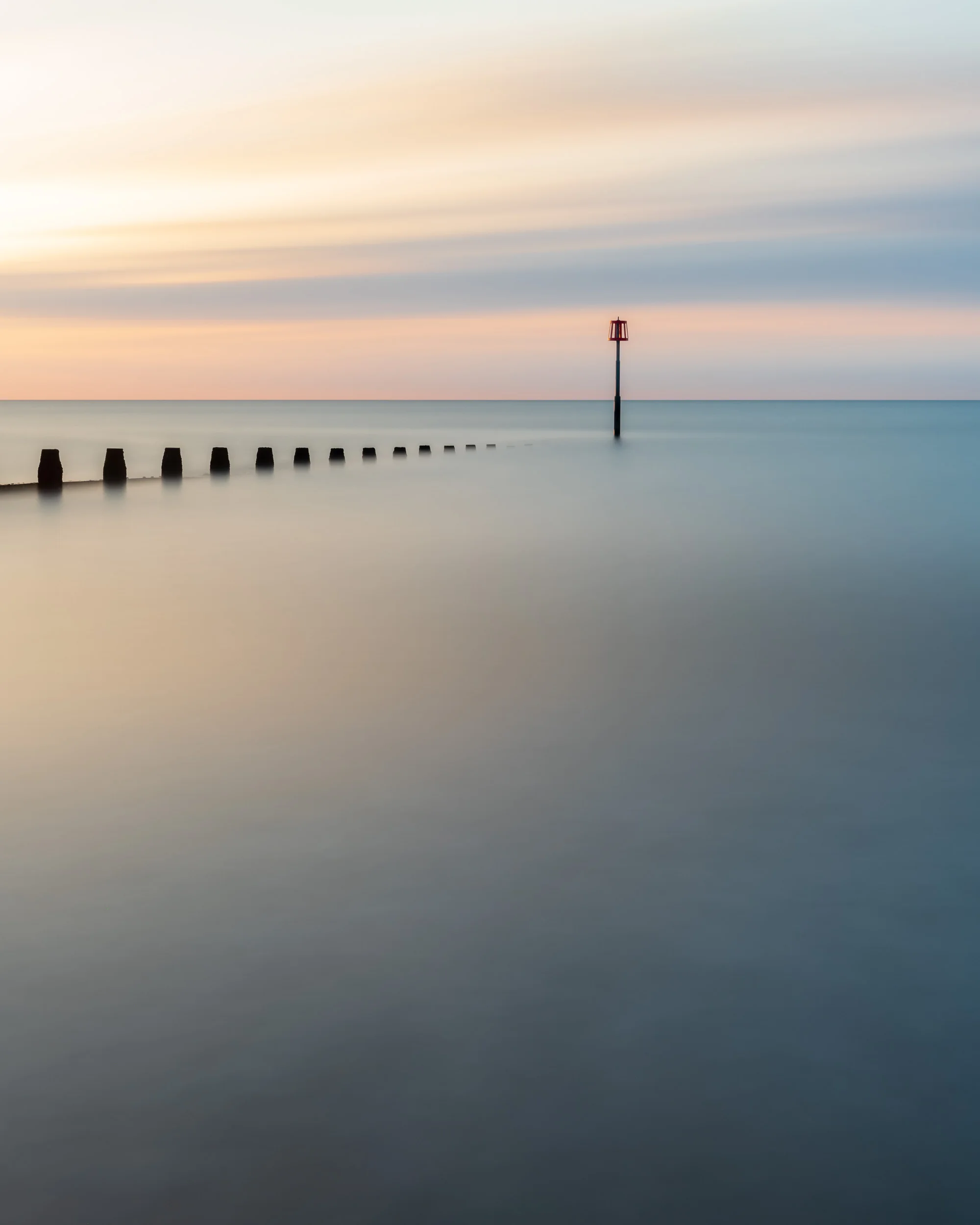
Into the Sea, Dawlish Warren, Devon - Nikon D850, Nikkor 24-70 mm f/2.8 at 48 mm, 339 seconds at ISO 64, f/11. Lee Filters Circular Polariser and ND Grad,
While this image was captured after sunrise, the long exposure helps capture what light there was and the calmness of the ocean that morning.
It’s always fascinating to see how other photographers interpret the same scene so I was really interested to see how Neil Burnell, who was with me that morning, shot the same scene. Check out his Instagram post to see his take on the beach that morning.
What is your favourite time of day to shoot? Do you use techniques like ICM or long exposures to create a sense of mood? Let me know in the comments below.

Sunrise at Boscastle
The blog this week I head to Boscastle. Though I've visited this location many times before for some landscape photography, this is my visit at dawn.
Dawn at Boscastle
Boscastle has been one of my favourite locations in Cornwall for landscape photography for some time now. Perhaps my favourite Boscastle spot is to be up on Penally Hill around sunset. You get the perfect view up there of the harbour inlet as it snakes its way out to sea. If you are lucky the light from the setting sun lights up the sky and surrounding hills and islands. I have, however, never really considered shooting Boscastle at dawn.
This all changed when I recently visited Boscastle to finish off my video 3 GREAT Landscape Photography Locations in Cornwall. I just needed to film the video intro and outro sections but as autumn approached and the number of daylight hours got smaller, it was becoming increasingly difficult to get to Cornwall before the sun set.
While autumn months make sunset photography more challenging for me, it does, however, mean that sunrises are a bit easier to get up for. So I decided that I would give sunrise at Boscastle a go. The priority was to shoot the video, but that didn't need great light, and if I got some photographs, that would just be a bonus.
Wind, Clouds and Running
As usual, I arrived about one hour before sunrise to give myself plenty of time to get to my favourite spot up on Penally Hill. When I got there though I soon decided that this was the perfect time to explore a few other spots. So I descended down Penally Hill towards the sea giving me a much better view of the ocean and the island of Meachard.
The view down there was obviously very different from that up on Penally Hill. Gone was any view of the harbour inlet and of Boscastle itself. I did, however, have excellent views of the ocean, the coastline and surrounding islands. I could also see all the turbulent weather out at sea including some low-level rain clouds, and some towering but beautiful cumulonimbus cloud. I was though getting battered by some very strong winds but the views were worth it.
The first composition that caught my eye was this view of Meachard island. Normally this island appears a lot smaller in compositions from Penally Hill, but down here I could make it my main focus. I really like the mood of the image as it rains just above the island. The image isn't as sharp as it should be because I had a real job keeping the camera stable in the wind, but I think it's worth sharing.
Meachard Rock Standing Strong - Boscastle, Cornwall. Nikon D850, Nikkor 24-70 mm f/2.8 at 56 mm, 5 seconds at ISO 64, f/11, Lee Filters Circular Polariser and ND Grad.
As I mentioned earlier, from the location where I was taking this photograph I couldn't see Boscastle or the harbour. As it was getting near to sunrise at this point I was worried that I might be missing some good light so I packed up and moved on. As the harbour came into view it soon became apparent that there was nothing exciting about the view on this morning. I decided that I would maybe start doing the filming I had planned on doing.
As I set up the shot I could see behind that a big cumulonimbus cloud out at sea was turning orange from the morning light. It looked spectacular, but was it worth packing up all the gear again and running back to get the shot?
Storm Rising over Meachard Rock - Boscastle, Cornwall. Nikon D850, Nikkor 24-70 mm f/2.8 at 27 mm, 0.5 seconds at ISO 64, f/13, Lee Filters Circular Polariser and ND Grad.
Looking at the image above, I believe that it was indeed worth running back to the coastline. I had to move a little further north along the pathway to get this shot. This is so I could position the cumulonimbus cloud more effectively in the frame. I wish I'd been there a minute or two earlier as the light was slightly better, but I at least still managed to capture some of that orange glow reflected in the water. It was still a tricky shot to get as the path is very narrow where I was and the wind was still strong enough to make getting a sharp image tricky.
Pleased, and somewhat surprised by the photographs I managed to capture I happily returned to my harbour location and shoot the video I needed. I've been doing more exploring recently and I've been finding inspiration in unusual circumstances, but my dawn shoot at Boscastle on further affirmed that this type of exploration is well worth the effort.
So have you photographed Boscastle before? Have you ever tried shooting a favourite location at a new time of day? Let me know in the comments below.

3 GREAT Landscape Photography Locations in Cornwall
What are the best locations in Cornwall for landscape photography? In this blog article, I'm going to show you 3 GREAT landscape photography locations in Cornwall that I think will inspire you to photograph Cornwall.
Landscape Photography in Cornwall
When it comes to landscape photography in Cornwall, where do you start? With so many amazing and inspiring locations to pick from it can be a challenge selecting locations to visit. So a few months ago I decided to put together a video of 3 locations that I think you should visit. It's not a top 3 or best 3, but just 3 great locations that I think will inspire your landscape photography.
After driving hundreds of miles, dealing with challenging weather, and hours of editing I'm delighted to be able to share with you my video, 3 GREAT Landscape Photography Locations in Cornwall.
A Bonus 4th Location
Gurnard's Head was probably one of the most challenging locations I visited while creating this video. It was so windy that it made shooting video and taking images very difficult. However, I thought it was a great location and worth sharing as your bonus 4th location.
More Information on Those Locations
If you want a bit more information on these amazing locations or the images from the video, then I've already published blog posts on the featured locations:
Sandymouth Beach - this blog post was written before I shot the video, but it still has location information in it plus a couple of photographs to inspire you to visit.
All Those Landscape Photographs
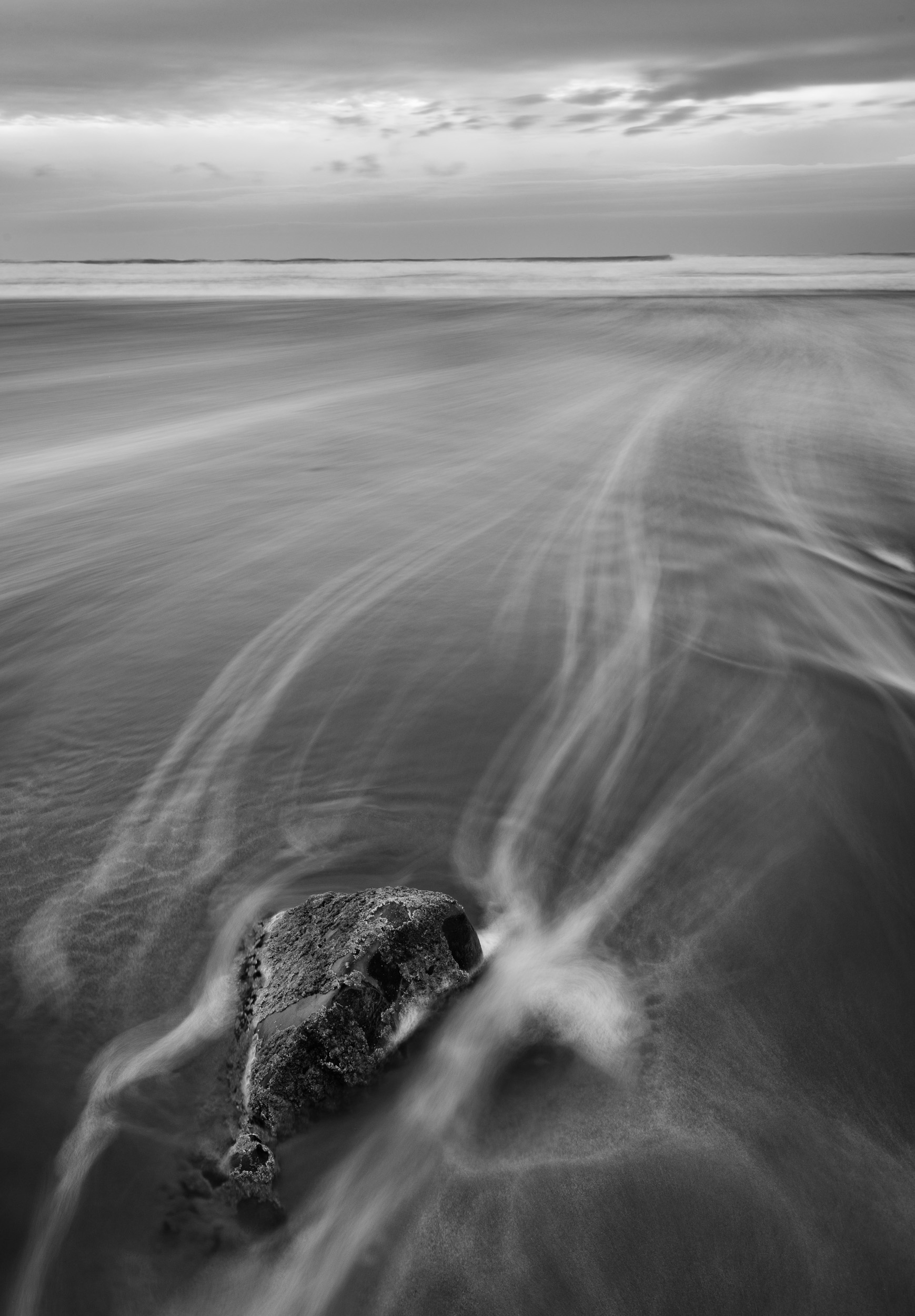
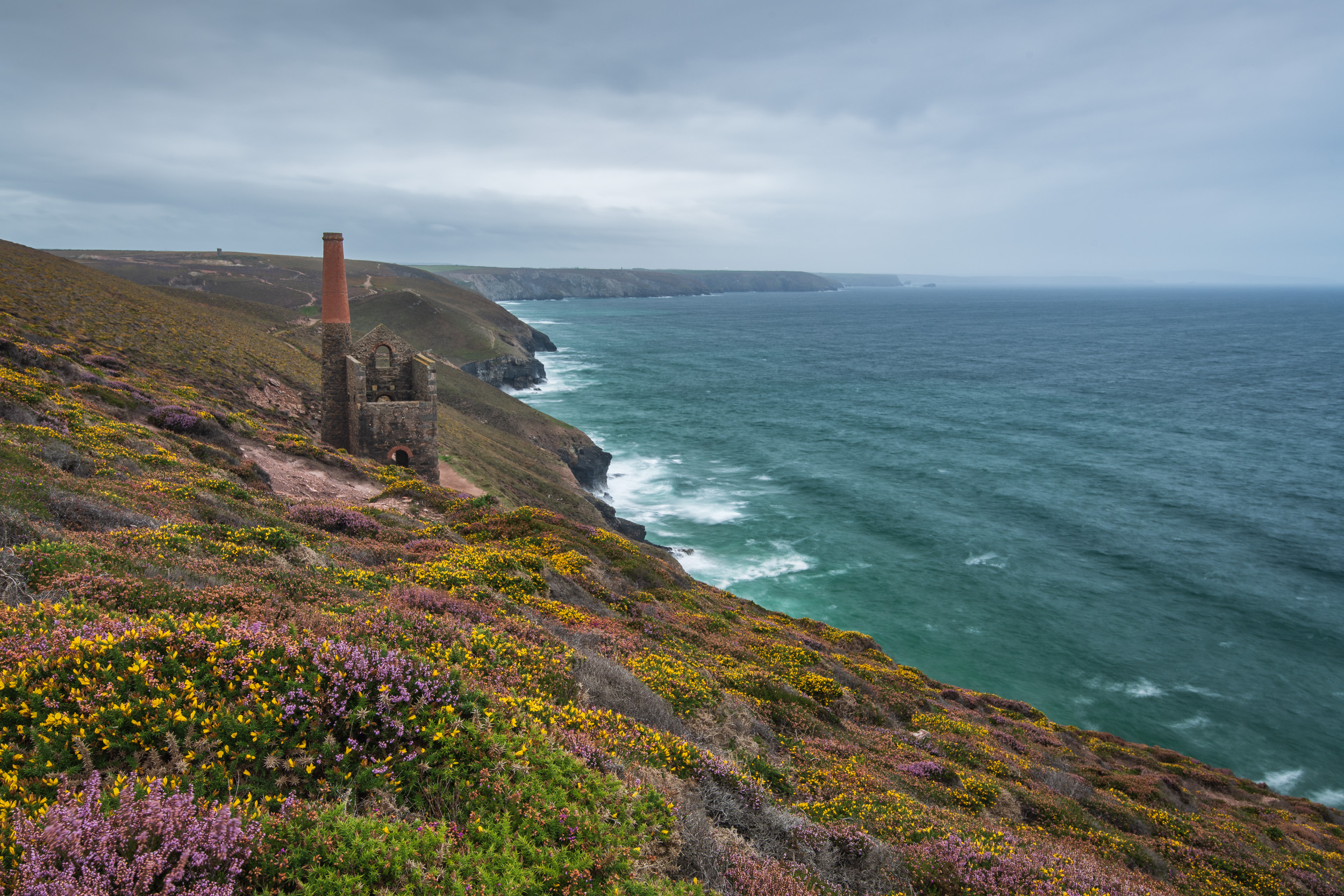
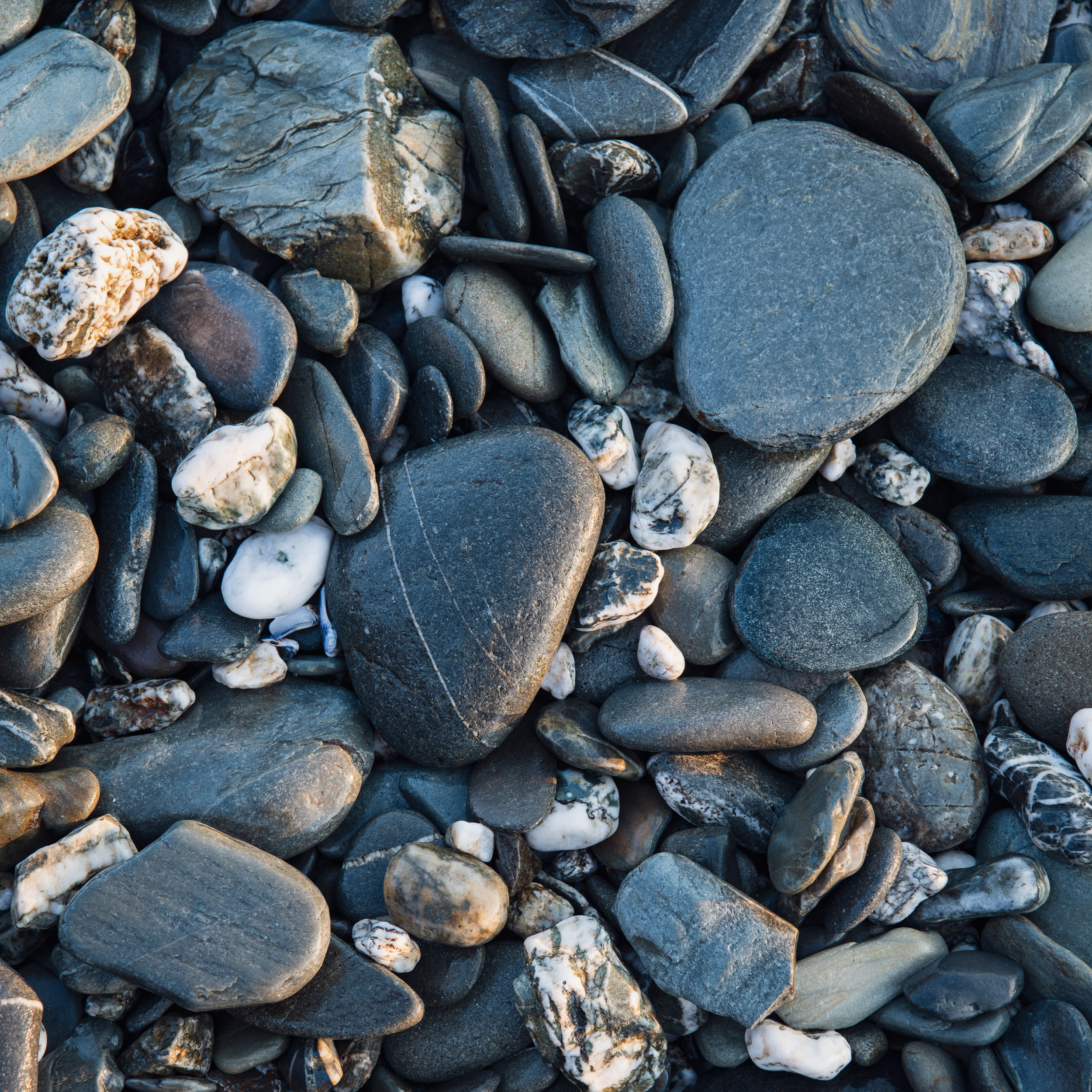
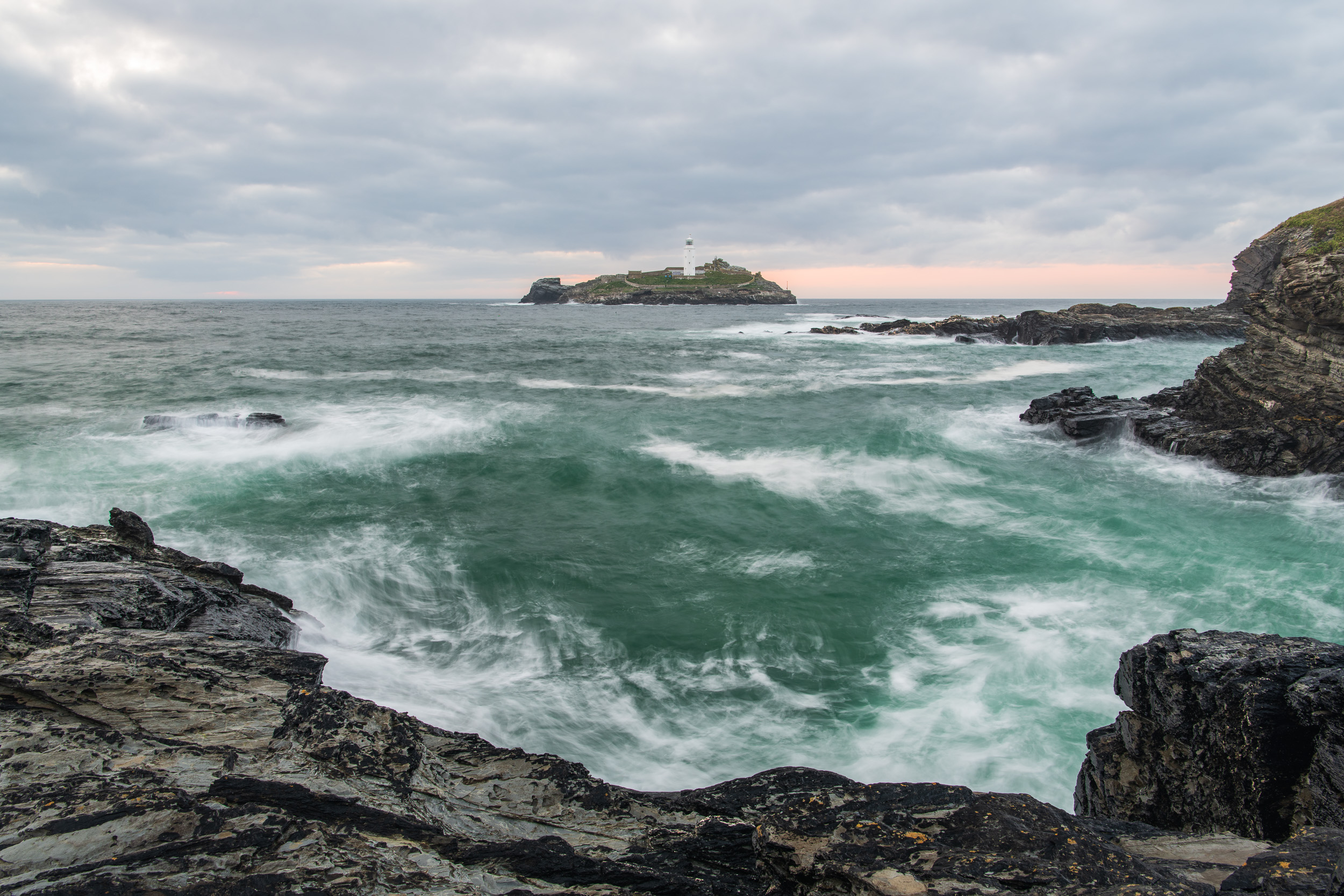
For your viewing pleasure here are all the photographs from all 4 locations:







Even More Landscape Photography Locations in Cornwall
If those 4 great Cornish locations weren't enough for you, I've also compiled a playlist of all my other videos that I've made from locations in Cornwall. Enjoy!
What Next?
Though the creation of this video was quite the effort I would like to do more videos like this. I'm already planning one for Dartmoor, but are there any other others in the south-west you would like me to do a similar video on? Or where there any locations in Cornwall that you think I should visit? Let me know in the comments below.

Sandymouth Beach
Does bad weather inspire your landscape photography? In the blog this week I head out to Sandymouth beach in Cornwall to discover that inspiration can be found even in the dullest of evenings.
Friendship over Photography
When it comes to weather forecasts I tend air on the side of optimism. I often find myself looking at different forecasts to find one that gives me the best outlook. Sometimes those risks can really pay off. However, there are some weather forecasts that are just so poor that you'd have to be mad to go out.
In the world of landscape photography there aren't many more things that are a depressing as going to a location that has a forecast of 100% low cloud coverage and heavy showers. But that's exactly what I did recently.
So why would I drive all the way to Cornwall when the weather forecast was so rubbish? To see a mate of course! It had been a couple of months since I'd see my friend and as he is a photographer also, we are always looking for an excuse to head out with the cameras. The trouble was the weather forecast was rubbish.
Though we were both keen to do some photography, the lure of chips, chat and the chance to finalise our plans for an upcoming photography trip won the day and we decide to meet up anyway. We would of course both turn up with cameras, just in case the weather wasn't that bad.
Beach Life, Cornwall
Even with a hefty sense of optimism there was no way we were going to commit to a big drive given the weather conditions, so we decided to settle for a local location. I had never visited Sandymouth beach before so when it was suggested we go there I jumped at the chance.
When we arrived at the beach we were surprised to see the car park completely empty. Even on the worst of evenings you normally see a dog walker or two on the beach. It soon became apparent why no one was here as a heavy rain shower came overhead. There was nothing else to do but to sit in the car, eat chips and discuss all the latest mirrorless camera news from Canon and Nikon.
Once the chips were done and the rain shower passed we thought we might as well take a walk along the beach and see if anything catches our eye. It soon became obvious why my friend comes to this location. Miles of sandy beach, sea pools, and rocks could all be used to make some very interesting compositions. Despite the poor weather I felt really inspired and decided to get my camera out!
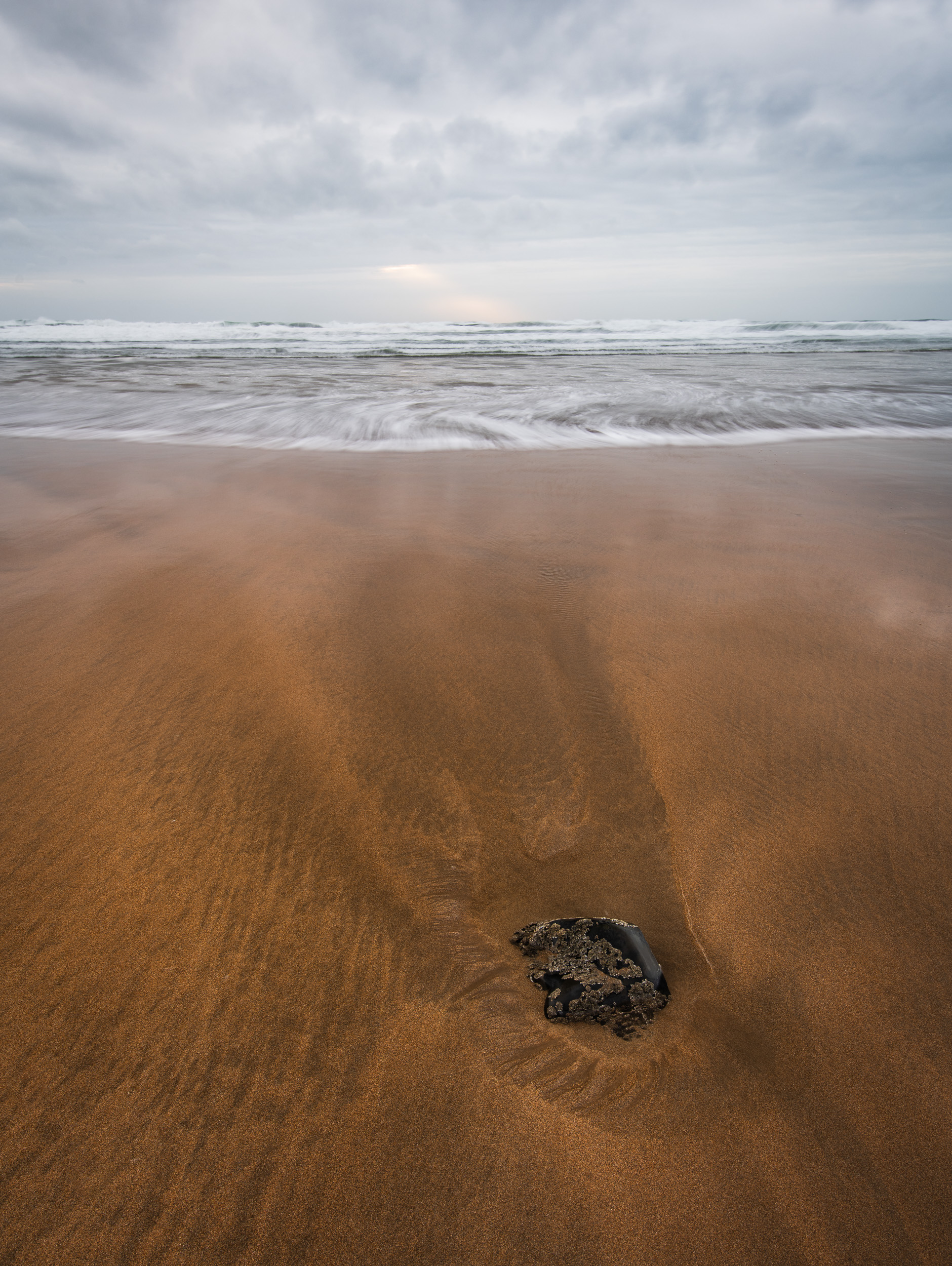
Tidal Pools at Sandymouth Beach, Cornwall - Nikon D850, Nikkor 16-35 mm f/4 at 20 mm, 1.6 secs at ISO 64, f/11, Lee Filters ND Grad.
Out to Sea, Sandymouth Beach, Cornwall - Nikon D850, Nikkor 16-35 mm f/4 at 20 mm, 5 secs at ISO 64, f/11, Lee Filters ND Grad.
As you can see the weather had cleared just enough to make the sky a bit more interesting, but it was those pools of water that really caught my eye. It's not that I think those images are amazing, it's more that I think how great the future possibilities of this location might be. With some evening light and the sky being reflected in one of those pools, I think it could make for a great image. As the beach is a constantly changing thing, I could end up with a unique image on every visit.
I had been searching for a interesting beach location for a while, and one that wasn't too far away. Despite the poor weather, I was really inspired by this location and I will definitely be heading back there again soon. Just shows how you get can inspired even in the dullest of conditions.
Do you get inspired in sorts of weather? What is your favourite beach location? Let me know in the comments below

Gurnard's Head
In the blog this week I head down to Cornwall again to check out a new location, Gurnard's Head.
Back to Cornwall
For me, the spring and summer months are the time to visit and photograph Cornwall. It's not that I think these are the best seasons to photograph Cornwall, it's just that the longer days means it's more practical to get there for sunset.
Now that the autumn season is upon us I can already sense a chill in the air and the days are getting noticeably shorter. Soon the clocks will change and the opportunities to get to Cornwall will be very much reduced. So while it is still reasonably practical for me, I'm trying to get to Cornwall as much as I can.
Gurnard's Head
One of the great things about my custom Google map is that I should never be short of locations to visit. My map contains a huge number of pins, and a lot of them I haven't even visited. Many of these unvisited pins are locations that I discovered from magazines or social media channels.
For this trip out with the camera, I was looking for somewhere new to photograph down on the north-west coast. A quick look at my custom Google map revealed a location that I had pinned some time ago, Gurnard's Head.
From the text I had added to the pin I could see that I had discovered this location in an issue of Outdoor Photography magazine. Fortunately, I have been buying digital copies of this excellent magazine for a number of years now so it was an easy task to bring up the issue on my computer and get a feel for this location again.
Windy Cornwall
One of the reasons I was heading to the north-east coast of Cornwall was it was one of the few areas of Cornwall that had a forecast that could help yield a good photograph. As with a few of my recent trips to Cornwall though, it was still going to be a bit of a punt if it would work out or not.
After a 2 hour drive to get to my location I made the short walk down to Gurnard's Head. It soon struck me how windy it was. While the sky was relatively clear, and the sun was out, the wind was very strong. Even stronger than my recent visit to Wheal Coates tin mine.
Normally the wind isn't too much of a problem, but it was almost certainly going to be too strong for any long exposure. The wind was coming straight in from the sea so I wouldn't be able to shield the camera either. However, I could at least stand up so no excuses for not taking a couple of pictures!
Gurnard's Head Sunset #1, Cornwall - Nikon D850, Nikkor 16-35 mm f/4 at 32 mm, 0.4 secs at ISO 64, f/13, Lee Filters ND Grad.
Gurnard's Head Sunset #2, Cornwall - Nikon D850, Nikkor 16-35 mm f/4 at 16 mm, 0.4 secs at ISO 64, f/13, Lee Filters ND Grad.
I really enjoyed my time at Gurnard's Head (despite the wind). One observation I did make is that the area around the headland is covered in heather and if I visit there again I'll do so at the start of August. I can imagine Gurnard's Head is a sea of purple at the right time of year.
Despite the strong winds, I was happy to have explored this new location (something I'm trying to do more of). Unfortunately, the predicted cloud cover never transpired that evening (it was painfully beautiful a few miles further east), but sometimes it's the experience of being outdoors that's important.
So have you been to Gurnard's Head before? Which of my two images did you prefer? Let me know in the comments below.

Wild Camping in Wales
Can you combine landscape photography with wild camping? That's the question I wanted to answer when I asked fellow photographer and experienced wild camper Gareth Danks to take me on my first wild camp. Read the blog to find out how I got on!
What's Wild Camping
Until recently I hadn't heard of wild camping. Obviously, I'd heard of camping but I'll be honest with you, it never really appealed to me. I like a nice warm bed and a full cooked breakfast if I have to stay away from home!

Gareth Danks - photographer, wild camper and all round great guy.
One of the great things about having my YouTube channel is the number of different people I have connected with. One such person is Gareth Danks and he is super keen on wild camping. Through watching his videos I saw that wild camping is more than just pitching your tent on a windy campsite.
As I watched through his videos I started to see the appeal of wild camping. Changes in camera and tent technology now meant you were able to take all the gear required to take photographs and get a good nights sleep. While I'm no stranger to an early morning, there are some locations that just aren't practical to reach before sunrise. However, by camping on location, you could be in the right place the night before.
Wonderful Wales
When Gareth finally talked me into wild camping all we had to do was agree on a location. Pen y Fan has always been a location I'd wanted to photograph and given that Gareth had both experience of camping and photographing there, it seemed like a great place for my first wild camp. We put a plan together, picked a date, and hoped for good weather.
If you want to see how I got on in my wild camping adventure then check out the video I made below:
And here is Gareth’s video:
More Wild Camping?
So would I go wild camping again? Absolutely I would! OK, the weather wasn't great for photography, but I had such a good time camping. I was really impressed by modern camping equipment. It was surprisingly easy to put up the tent (under guidance from Gareth of course), it was comfortable, warm, and it was even possible to make a great cup of coffee. OK, it's not as a good as a nice B&B, but it has the benefit of being much more flexible.
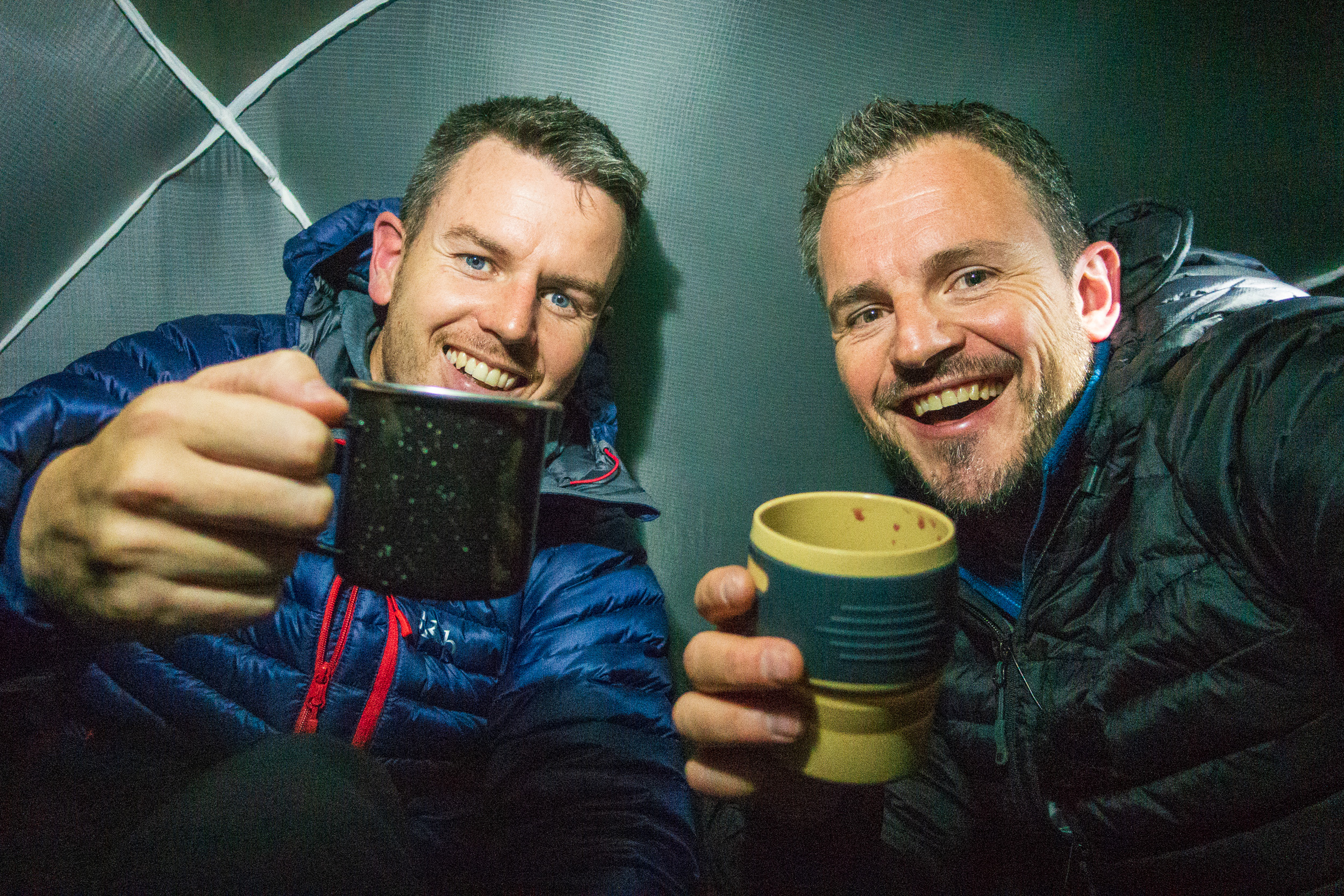
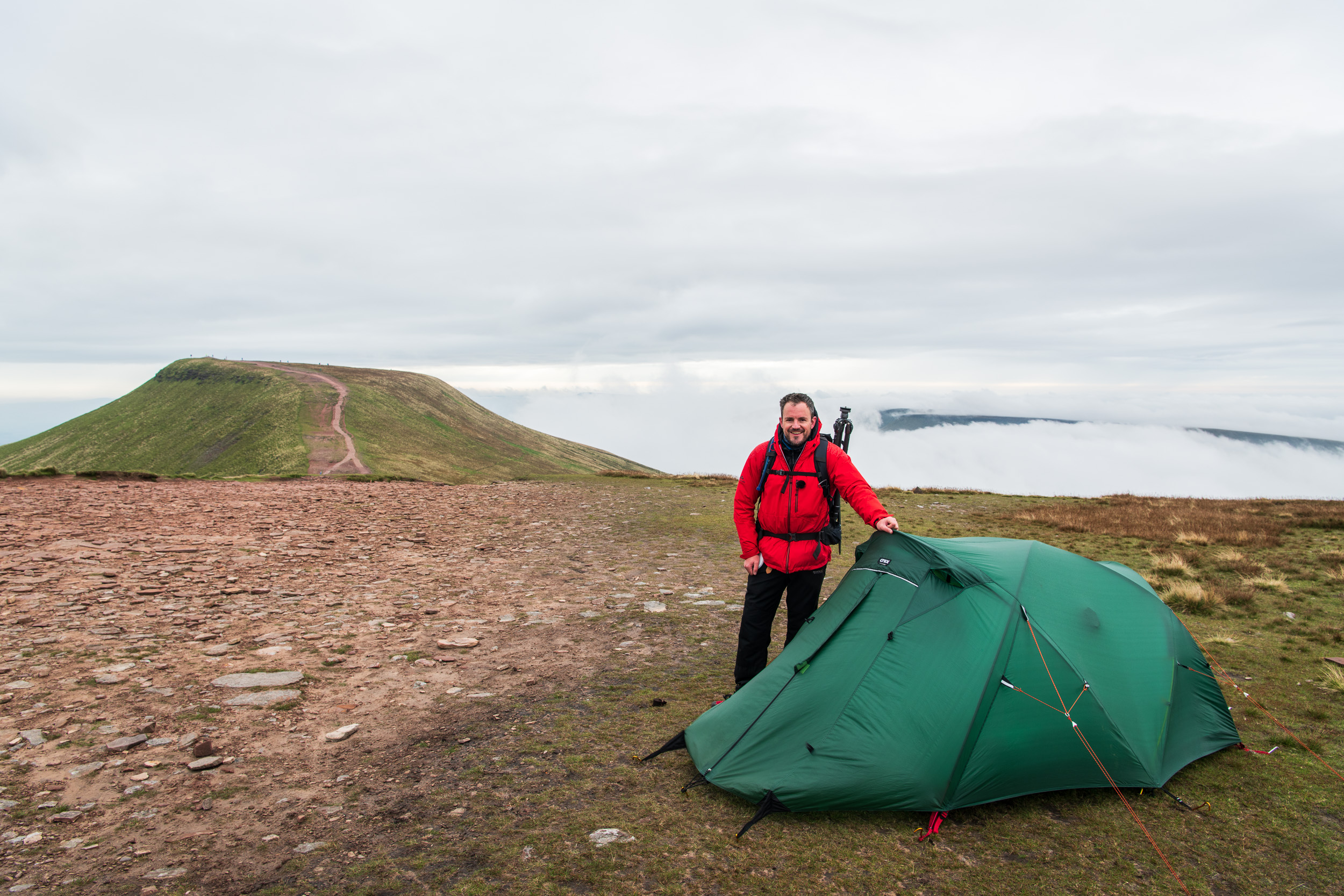
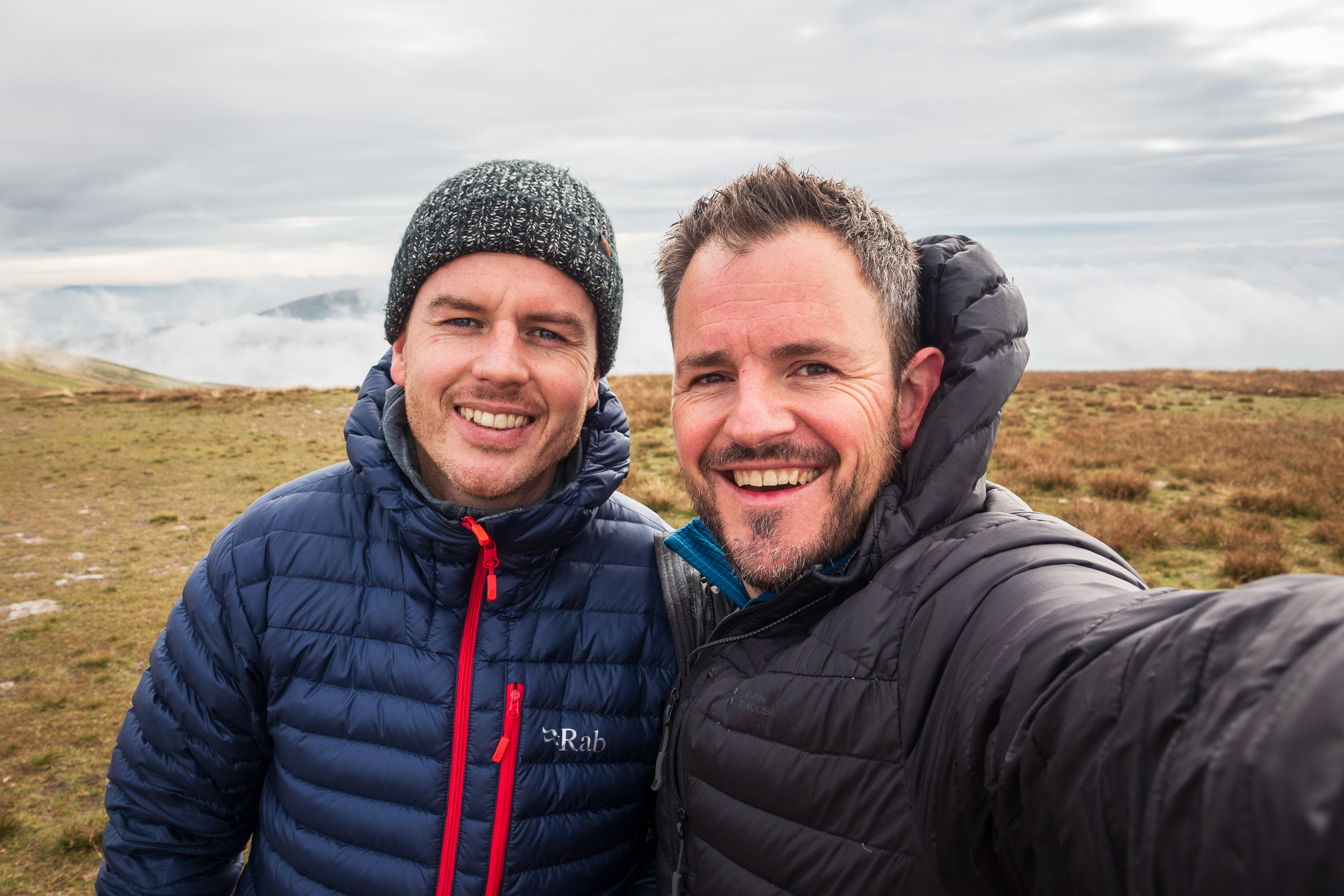
I don't think I'm ready for a wild camp in the winter, but I sure I'll be giving it another go next spring.
So have you been wild camping before? Do you remember the first time you did it? Would you like to give it a try? Let me know in the comments below.
The Photographs
Here are the photographs from the video:
Creeping Clouds over Cribyn - Pen y Fan, Brecon Beacons, Wales: Nikon D850, Nikkor 24-70 mm f/2.8 VR at 34 mm, 1/80th sec at ISO 64, f/8.
Cefn Cwm Llwch Mountain Path - Pen y Fan, Brecon Beacons, Wales: Nikon D850, Nikkor 24-70 mm f/2.8 VR at 34 mm, 1/80th sec at ISO 64, f/8.
There You Are Cribyn - Pen y Fan, Brecon Beacons, Wales: Nikon D850, Nikkor 24-70 mm f/2.8 VR at 34 mm, 1/80th sec at ISO 64, f/8.

Windy Wheal Coates
In the blog this week I head to a windy Wheal Coates tin mine on the coast of Cornwall. With the weather forecast being less than favourable, would I be able to capture an image? Read on to find out if my creativity beat the windy conditions.
A Return to Wheal Coates in Cornwall
It doesn't seem that long ago that I last photographed Wheal Coates tin mine on the coast of Cornwall. When I looked in my Lightroom catalogue to find my last photograph from Wheal Coates I was shocked to see that it had been nearly two years to the day since I had last visited this great Cornish coastal location. Where does all the time go?
It's not as if I had forgotten about it. There's a pin for it on my custom Google map but for some reason, I just haven't been back. It was time to go back that was for sure.
If you read my blog on a regular basis you may remember reading my recent post on Dartmoor. In that post, I tell you why I headed up onto the moor when the weather forecast said I should really be at home. My most recent visit to Wheal Coates was in a similar situation. Any sane photographer wouldn't have even considered the 4-hour round trip if they'd looked at the weather forecast. But there was a small gap in the clouds predicated and given that I had the evening free, I thought it was worth a punt.
Typically Cornish Weather
As I drove along the A30 from Devon to Cornwall, I really started to question if I had done the right thing. Unlike my trip to Dartmoor the previous week which only involved a small drive, the drive to Wheal Coates was significantly longer. The further I drove into Cornwall the worst the weather got. At one point my windscreen wipers were on full and I was driving through a low-level cloud.
However, I was still clinging onto that predicated break in the cloud. It is well known that you can get some amazing light from cloud breaks after a storm passes by, so I just kept thinking about how pleased I would be with myself if I got a really nice shot.
As I pulled into the National Trust car park for Wheal Coates I looked out to the sea where I could see broken cloud, bits of blue sky and even the sun. I though that maybe this could turn out to be an amazing evening of photography.
Windy Wheal Coates
As I wandered down from the car park and onto the slopes, I was pleased to see that there was still a lot of heather about. Unfortunately, I was probably about two weeks too late to get it at its best, but it was still a wonderful sight to see.
You would, of course, think that with so much heather on the slopes that picking a composition is easy. It can however be a little more tricky than just sticking your tripod on the ground and snapping away. The slopes are a complex mesh of paths, gorse, heather and unsightly dead vegetation. So it's worth taking a little time to wander about and finding a nice clump of heather that also doesn't have too many unwanted distractions around it.
While I was wandering about looking for my composition I noticed the wind was picking up. I looked out to sea to see a very large bank of cloud heading my way. Well, there goes my sunset I thought! So I quickly got set up and took my first composition of the evening:
A Splash of Colour on a Grey Day at Wheal Coates #2, Cornwall - Nikon D850, Nikkor 16-35 mm f/4 at 26 mm, 3 seconds at ISO 64, f/13, Lee Filters Circular Polariser and ND Grad.
As you see in the image above I had already lost much of the light and clear sky. The cloud appeared very quickly and anyone who photographs Cornwall a lot will tell you that even in the summer the weather can change rapidly.
While I would have loved some light from the setting sun on the slopes I decided that I would #EmbraceTheGrey and make the most of the moody skies. For the next shot, I headed a little further down the slopes and closer to one of the old mine buildings.
A Splash of Colour on a Grey Day at Wheal Coates #1, Cornwall - Nikon D850, Nikkor 16-35 mm f/4 at 20 mm, 2 seconds at ISO 64, f/13, Lee Filters Circular Polariser and ND Grad.
As I looked back out to sea all I could see was cloud and the light was fading fast. I decided that I'd probably had the best of the conditions and it was time to head home, happy that I'd managed to capture a couple of images.
I mentioned in my post from Godrevy a few weeks back that I was producing a video on photographing Cornwall for my YouTube channel. I'm pleased to say that I also did some filming for that video on my visit to Wheal Coates. So be sure to say tuned to the blog and make sure you are subscribed to my YouTube channel.
I do hope you enjoyed this blog. Which of the two images was your favourite? Have you photographed Wheal Coates before? Let me know in the comments below.

Unexpected Creativity from a Dreary Dartmoor
Sometimes landscape photography can be hard and this was certainly true of my most recent visit to Dartmoor in Devon. However, even when you are feeling creatively challenged, inspiration can appear to come from nowhere. Read on to learn how I got inspired on that dull, grey evening on Dartmoor!
A Quick Happy Birthday
Just before I tell you about my Dartmoor adventure, I just want to announce that this post comes on the day that this very blog celebrates its 2nd birthday! Two years ago today I decided to start documenting my photographic adventures.
As with any creative process, the writing has sometimes been easy and sometimes it's been hard. However, most of all it has been fun and its really helped me with my photography. I wrote a lot about the benefits last year when I wrote a post about the blog's first birthday.
Over the last 24 months, I've written a new blog post every week, and I see no reason why this won't continue into the future. Thanks to all the support and comments I get from everyone on this blog, and other social media channels, I feel inspired and motivated to keep this blog going. So thanks to everyone who has and continues to show support of my work. It is very much appreciated.
And now….
Landscape Photography is Hard
I love landscape photography. I have a real passion for it and there are few things as good as heading out into the wilderness with the camera to capture some landscape photographs. Sometimes the process of capturing those photographs is hard. The weather can be challenging or you can simply lack the imagination or creative energy to produce a good photograph.
For me, there is an additional factor that makes landscape photography hard, and that is time. I think most photographers, pro or amateur, suffer at the hands of the old enemy of time. The amount of time I can commit to my art is limited and more often than not I have to go out when the conditions aren't ideal.
Devon's Dreary Dartmoor
My most recent to Dartmoor is a great example of when I decided to head out with the camera when really I should have stayed at home. The weather forecast for most of the south-west was overcast and rain showers. The trouble was that if I didn't out that evening, it was going to be several days before my next window of opportunity and I had a real need to scratch that creative itch.
I wanted to go and shoot somewhere on the Cornish coast but I saw little point in committing to 3 to 4 hours of driving with the predicted weather conditions. I thought the best thing to do was to keep in local and head up to Dartmoor. The weather forecast for Haytor was looking poor, but it did predict a small break in the clouds that might yield some nice results. To be honest, I think I was being rather optimistic but I grabbed my camera and went out anyway.
Finding Something Out of Nothing
As I drove up the hill from Bovey Tracey to Haytor, things did not look great. While the clouds were at least above the hills, it all looked rather uninspiring. I decided to drive a little further on and park up for Emsworthy Tor.
As I wasn't in a particular hurry I decided to make the walk to Emsworthy Tor at a slower pace. As I walked I made sure I took the time to look for compositions. Occasionally I would hold my eye up to the camera to see what an image would look like, but nothing seemed to capture my imagination.
When I reached Emsworthy Tor I just stood there and wondered why on earth I even bothered coming out. Don't get me wrong. I love Dartmoor. It can look spectacular in many different ways, and it's rare that I can't find something to appreciate. The view in front of me was indeed impressive but that doesn't mean it was going to translate into a good photograph.
It soon dawned on me that the viewpoint I wanted to photograph wasn't going to work in these conditions. As I sat there looking at the great expanse that is Dartmoor, I thought about going home. In the distance was a large dark cloud that was sure to bring a heavy shower. Perhaps it was time for an early exit and a glass of wine.
Just as I was about to pack up and go I had a moment of inspiration. As I looked east there was a small break in the cloud, and from the north was that stormy looking cloud. I know from previous experience that approaching storm clouds can look dramatic when shot with a wide angle lens. So I quickly got the camera out and shot this image:
Approaching Storm on Dartmoor, Devon - Nikon D850, Nikkor 16-35 mm f/4 at 16 mm, 0.5 seconds at ISO 64, f/11, Lee Filters ND Grad.
I had to work fast to get the image because the cloud was rolling in fast. While the image would have greatly benefited from some scattered light on the distant tors, it does show Dartmoor as it was that evening, and perhaps reflects my mood a little.
I then wanted to fine tune my composition a little. I like the rocky tors in the foreground of the first image, but I felt that they were a too close to the bottom of the frame. I also felt that the clouds were a more important element of the photograph, so I decided to point the camera up more to give me this composition.
Storm Clouds over Dartmoor, Devon - Nikon D850, Nikkor 16-35 mm f/4 at 18 mm, 0.6 seconds at ISO 64, f/11, Lee Filters ND Grad.
I'm not sure which image I prefer. The sky in the first image is more appealing as the dark cloud hasn't covered all of the skies yet, but I prefer the overall composition of the 2nd image. To be honest, I'm just really happy to have captured anything. I was sure I was going to go home empty-handed and a little unhappy (creatively speaking).
It was a challenging evening but aside from the pleasing images, I can always take away two positives. Firstly, it's always great to be outdoors. Even if I took no photographs, spending the evening on beautiful Dartmoor is rarely a bad thing. Secondly, it was good to be out with the camera. That time out with the camera gave me more photographic experience and practice that I can put to good use when I really need it. You can be in the most amazing location with the most amazing light, but if you don't how to use your camera properly or know how to read a scene, you might come away with nothing.
Have you ever been out with the camera on a seemingly pointless adventure? Which of my two images did you prefer? Let me know in the comments below.

Discovering Prawle Point and Gammon Head
In the blog this week I head out to Gammon Head and Prawle Point on the South West Coast Path in Devon to explore a new location and to try something I don’t do very often!
Exploring New Landscape Photography Locations
I have to admit that I think one of my weaknesses with my photography is allocating enough time to go out and find new locations. It's not that I've got any shortage of inspiration. My custom Google map is awash with locations not visited. It's just that I always seem to be short of time, so I think I tend to go to locations that I know to try and increase the chances of getting a good image.
Recently I have been trying to do a little more exploring as you might have seen in my Froward Point and My Photography is Not a Priority blog posts. However, sometimes the best way to find something new is to head out with someone. So when I met up with fellow local photographer Neil Burnell recently, I asked him to suggest a location that we could photograph. You may remember Neil's work from a recent episode of On My Bookshelf where I took a look at his rather excellent book, Seascapes. You can see that video here.
Great Gammon Head
Neil knows the south Devon coast extremely well and given the weather and tide conditions he suggested we try photographing around the Prawle Point area. I've visited Prawle Point a couple of times with the family so I knew of the coastline there, but I'd never taken the time to explore it properly so I was excited to see what I could discover.
Neil suggested I take a look at Gammon Head, so while he did some IR photography I took a walk along the South West Coast Path. My instinct was to get up high, but as I ascended Gammon Head, I noticed an interesting rocky outcrop (Ball Rock I believe) down on the waters edge. There was no path down to the waters edge, and while it wasn't very steep, the descent was made difficult due to the thick vegetation.
When I finally made it down there I realised how exposed and hidden this part of the coastline was. If I was to have an accident I would have no chance of been spotted by someone walking the main path and with no mobile phone signal, I wouldn't be able to call for help. I decided that if I visit this location again I wouldn't do so on my own.
All that said, I was down there now and it was time to take some photographs. The light was fading fast by this point so I had to work fast.
My gut feeling for shots at these types of locations is to go with a long exposure, but as you can see below, an exposure of just 0.5 seconds can produce pleasing results. The wider view of the sea looks a bit messy, but I really like the texture of the water around the rocks.
The Rocks at Gammon Head #1, Devon - Nikon D850, Nikkor 16-35 mm f/4 at 24 mm, 0.5 seconds at ISO 64, f/13, Lee Filters Circular Polariser.
Below is the same image but with a 6 stop IR ND filter from Lee. This has given me a 30-second exposure which has resulted in the image I originally had in mind. However, I'm a bit torn between this image and the version before it. Which one do you prefer?
The Rocks at Gammon Head #2, Devon - Nikon D850, Nikkor 16-35 mm f/4 at 24 mm, 30 seconds at ISO 64, f/13, Lee Filters Circular Polariser and 6 Stop IR ND.
So while the first two images are pleasing enough, I wanted to fine-tune my composition. This is can be rather tricky when your down on a bit of coastline like this. Just stepping to right can mean a swim in the sea! I think I prefer the composition below as the furthest away rock now sits just above the horizon, rather than on it.
The Rocks at Gammon Head #3, Devon - Nikon D850, Nikkor 24-70 mm f/2.8 VR at 24 mm, 30 seconds at ISO 64, f/13, Lee Filters Circular Polariser and 6 Stop IR ND.
Ideally, I would have liked for that furthest away rock to not only have separation from the horizon but from the mass of rock to its left. But as I mentioned earlier, that would have meant walking on water!
For the final composition at Gammon Head, I headed down as close to the waters edge as I could and decided to take a vertical image.
The Rocks at Gammon Head #4, Devon - Nikon D850, Nikkor 24-70 mm f/2.8 VR at 27 mm, 30 seconds at ISO 64, f/13, Lee Filters Circular Polariser and 6 Stop IR ND.
I wouldn't normally publish so many similar images in the same blog post, but I wanted to share with you what I was doing and why. Hopefully, you found it interesting. Moving around a scene just a little can yield very different photographs.
Stars at Prawle Point
One of the other benefits of shooting with someone else is that you may find yourself photographing something a little different. As the sunset, the clouds started to clear so we decided to head up to the coastguard lookout at Prawle Point. Neil suggested this would make for an ideal location for some night sky photography.
I am in no way a night sky / astro photographer. I've done a bit of reading on the subject so I understand some of the basics around camera setup. I have even taken the odd night sky photograph, but nothing really serious. So capturing an image of this location in the dark was going to be a challenge. This challenge became even more obvious as I watched Neil set up his camera and take photographs like it was the middle of the day!
Anyway, I was having fun and I wasn't not going to let a thing like experience put me off having a go! So while the image below is not going to win any awards, I rather like it. I have to admit that there was a little luck involved in getting the shot. I couldn't really see very much, making focusing on anything difficult. I did have a head torch, but the beam wasn't strong enough to light the building, so I either guessed it or get Neil to use his head torch. Composition in the dark wasn't exactly easy either!
A Stary Night at Prawle Point Coastguard Lookout, Devon - Nikon D850, Nikkor 16-35 mm f/4 at 16 mm, 15 seconds at ISO 1600, f/14.
Every year I promise myself that this will be the year that I get into astrophotography. I find the night sky fascinating, and now that I've got a little extra motivation, maybe this is the time I follow through on my promise.
I really enjoyed my time at Prawle Point and Gammon Head. It was really good to explore somewhere new and to try out something a little different. I was glad I didn't just head out to somewhere I knew and played it safe!
So which of my Gammon Head shots do you prefer? Do you do any astrophotography? How much time to do you spend just exploring new locations? Let me know in the comments below.

Landscape Photography at Godrevy Point and Lighthouse
In the blog this week I head to Godrevy Point in Cornwall to capture some seascape photographs. As I discovered, there is more to photograph than just lighthouse.
Cornwall's Spectacular Coastline
The coastline of Cornwall is without a doubt one of Britain's best natural features. The seemingly endless coastline features everything from golden sandy beaches to rugged cliffs that get battered by the never-ending power of the sea.
As a landscape photographer, Cornwall has to be one of the top locations in Britain for seascape photography. I'm lucky enough to live near Cornwall, so during the summer months when the days are longer I will often find myself crossing the border from Devon for a spot of photography.
Discovering to Godrevy
One of my favourite locations in Cornwall is Trevose Head. It's a cracking location with rugged cliffs, big crashing waves and a lighthouse. However, further down the coast is Godrevy Point, a very similar bit of coastline that also has a lighthouse.
I first discovered Godrevy Point when I was taken there by professional photographer Ross Hoddinott. I was there with my father-in-law to do a feature called "Photo Challenge" for the magazine Digital SLR Photography. Ross had us "competing" against each other in a series of challenges. We visited St Michael's Mount in the morning (somewhere else I must return to), and then later in the day we went to Godrevy point.
It was a fantastic day and a lot of fun. If you want to see the article, it was in the December 2014 issue of Digital SLR Photography, so if you have a copy kicking about check it out! I captured some images that even today I'm very happy with (see below).
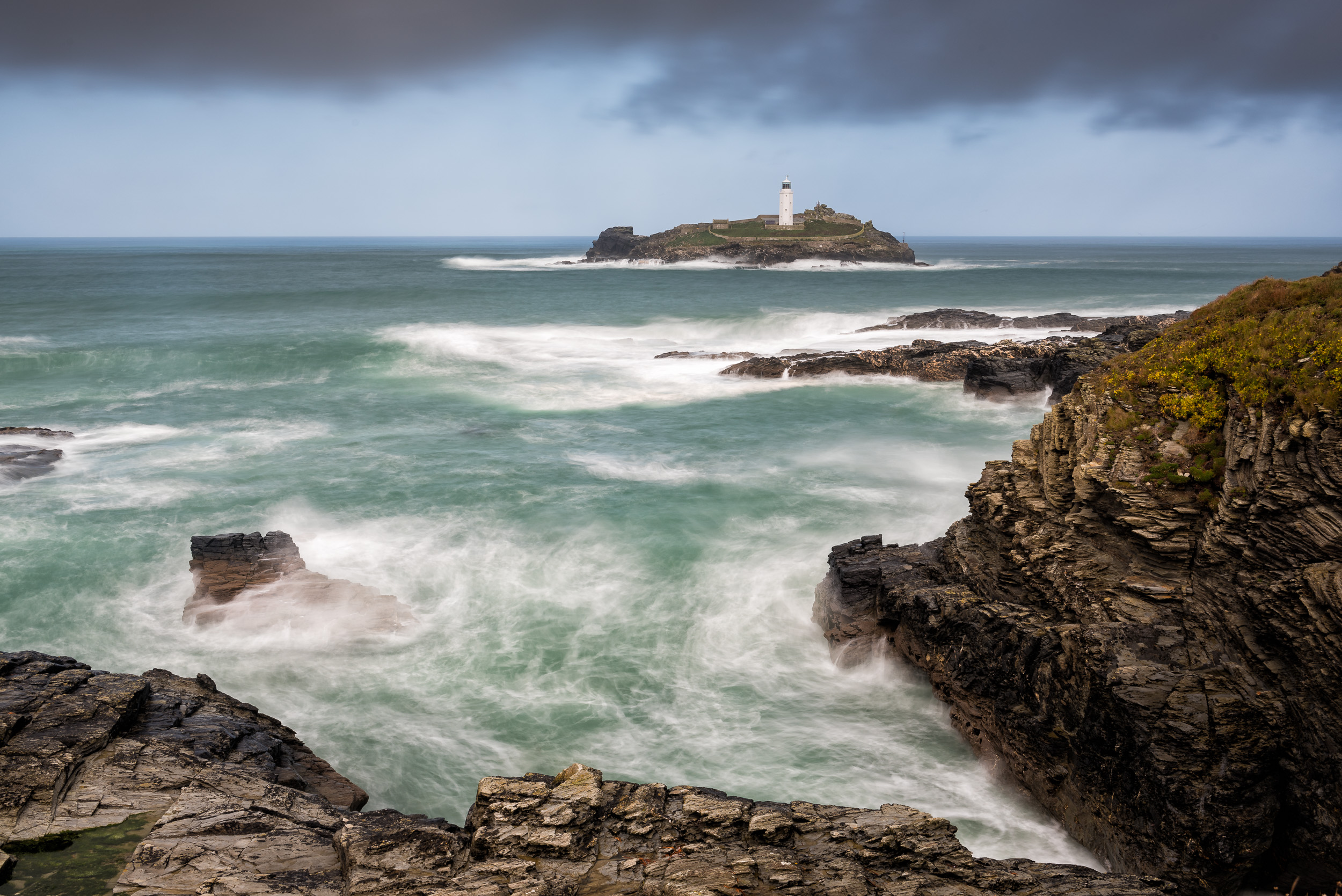
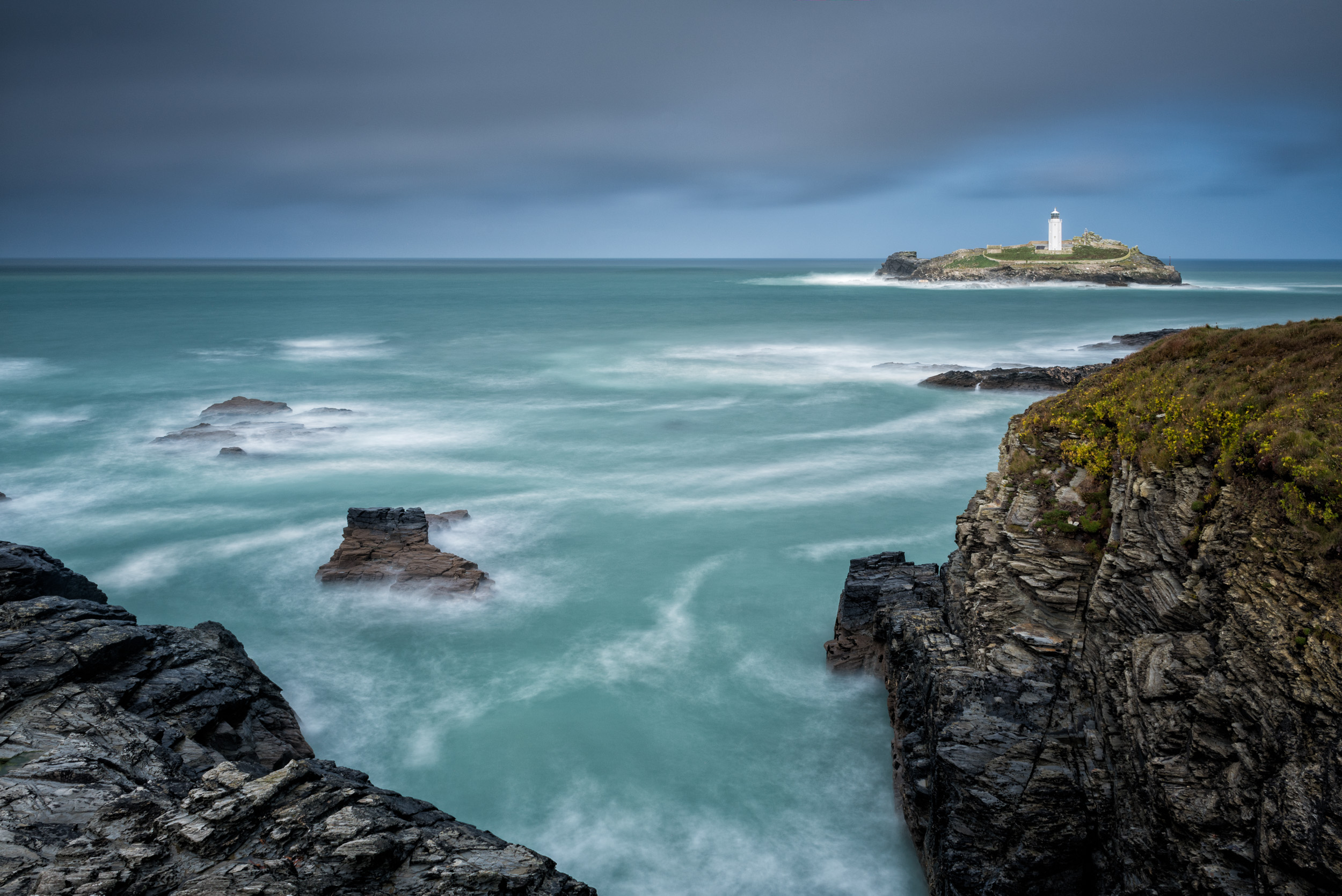
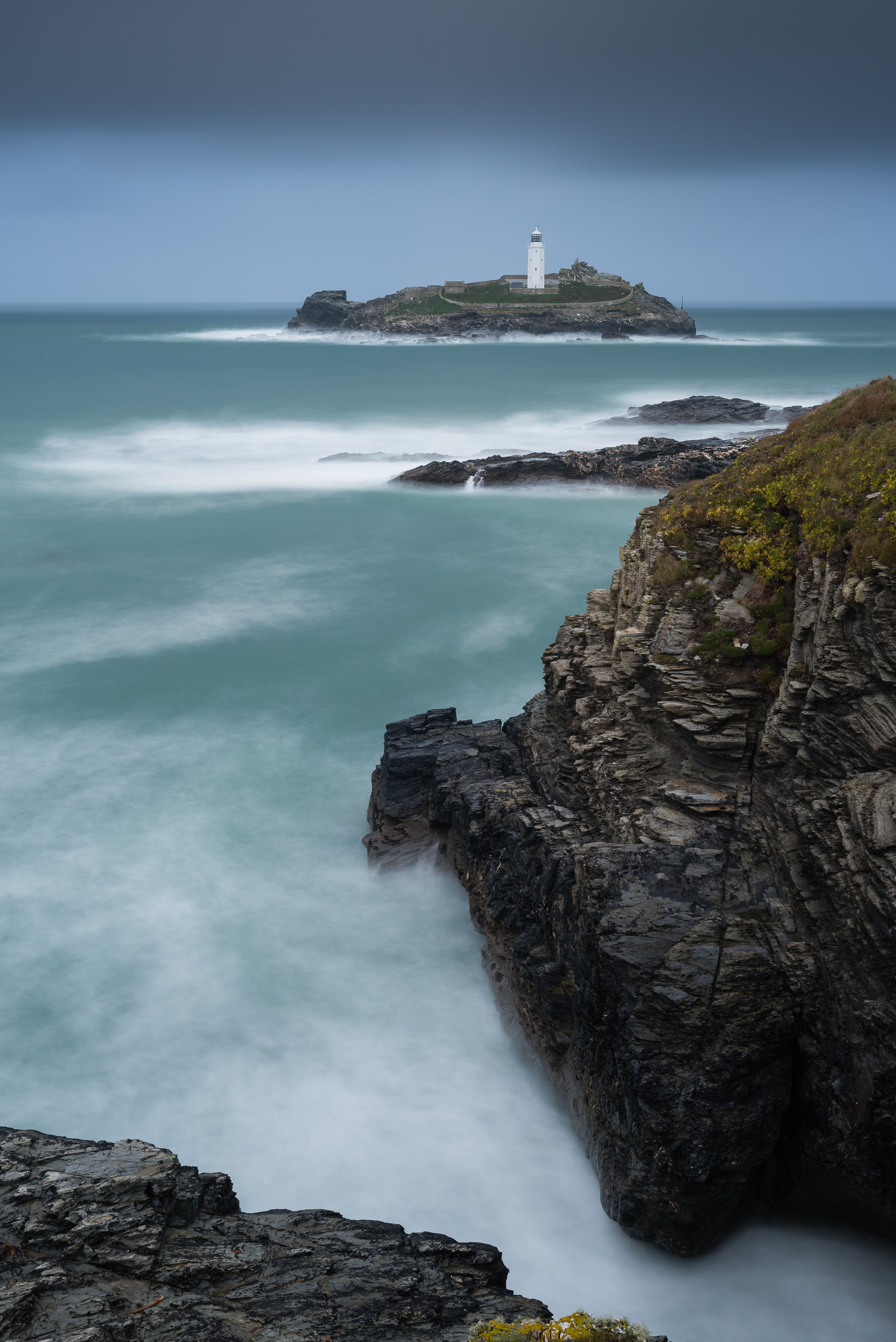
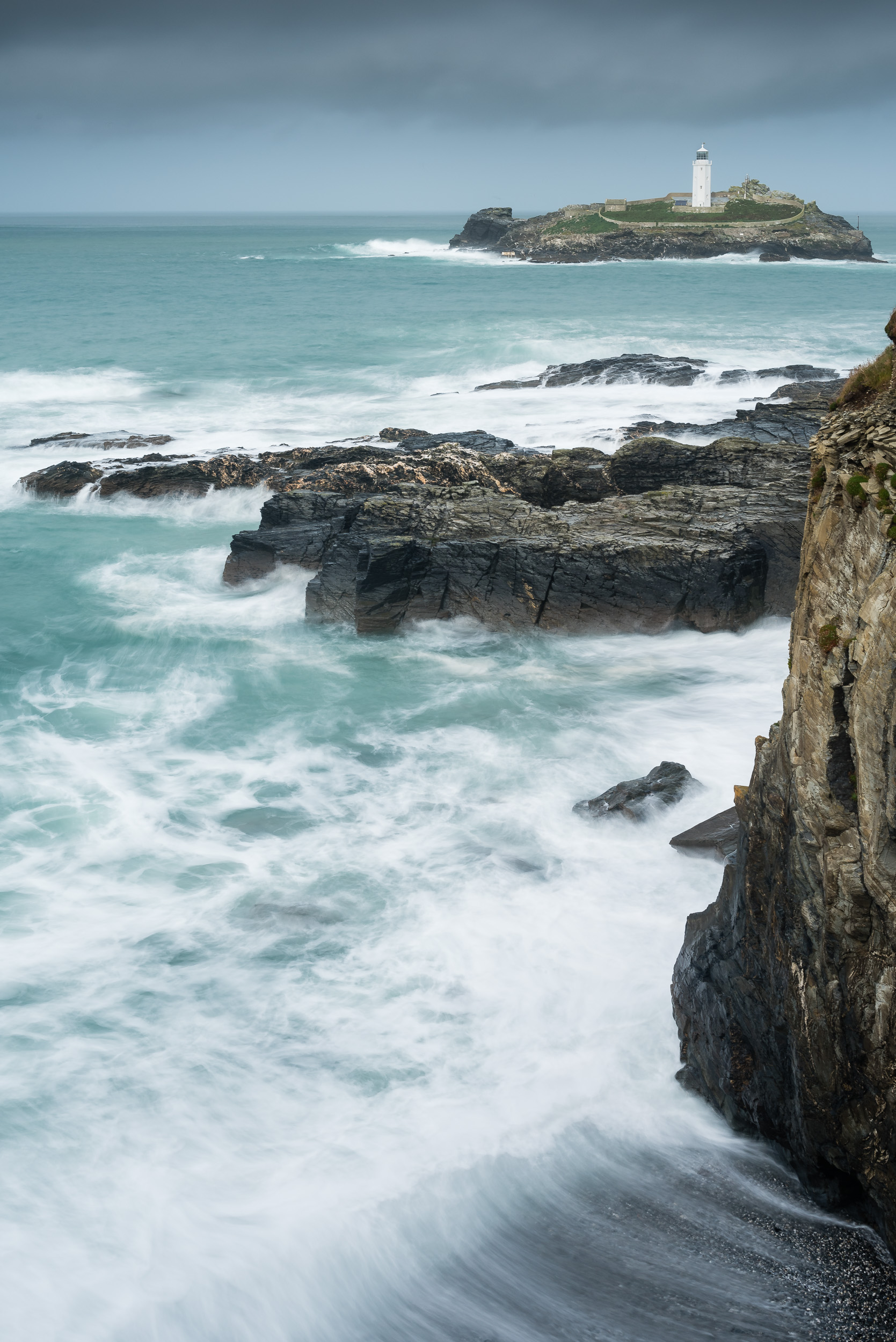
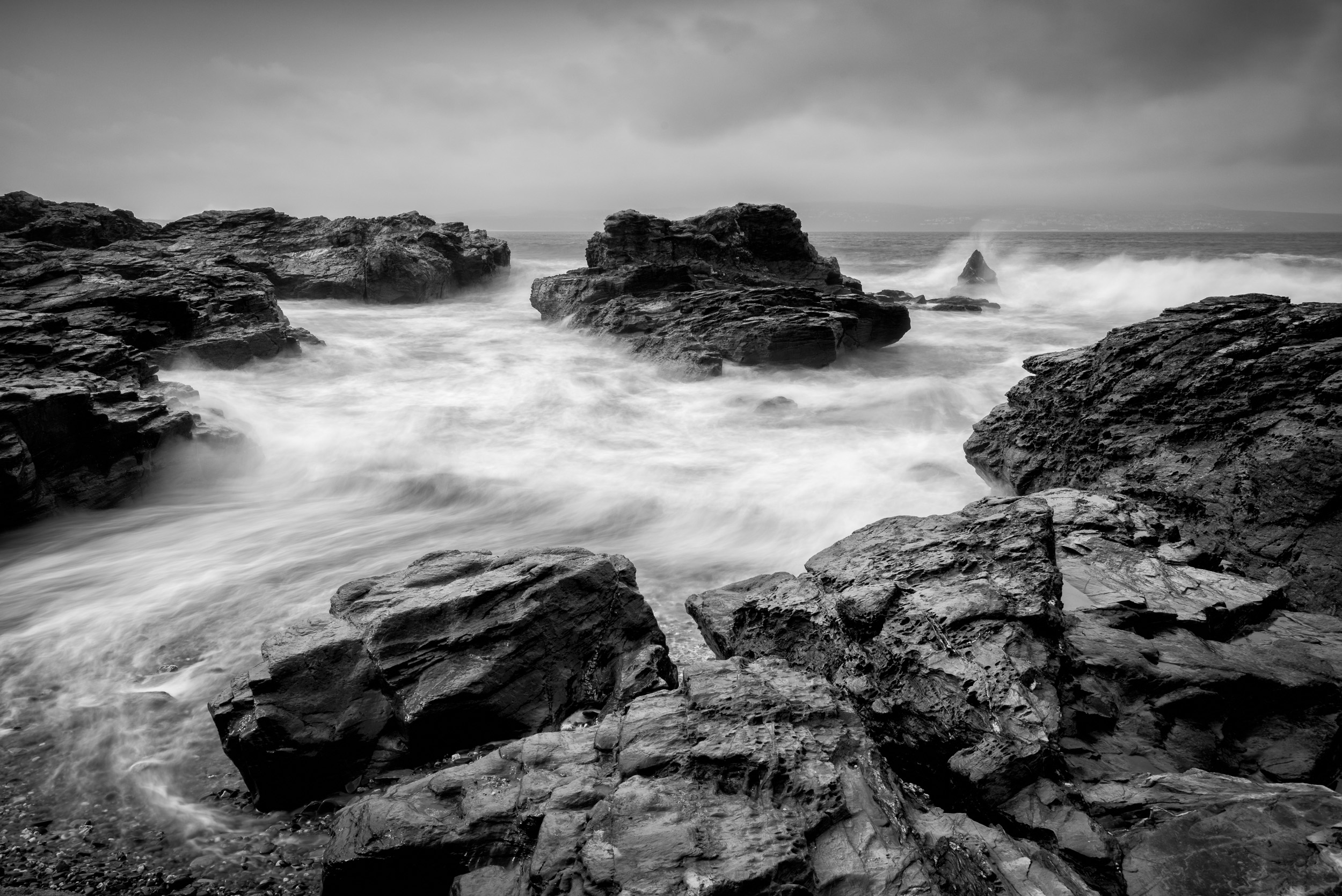
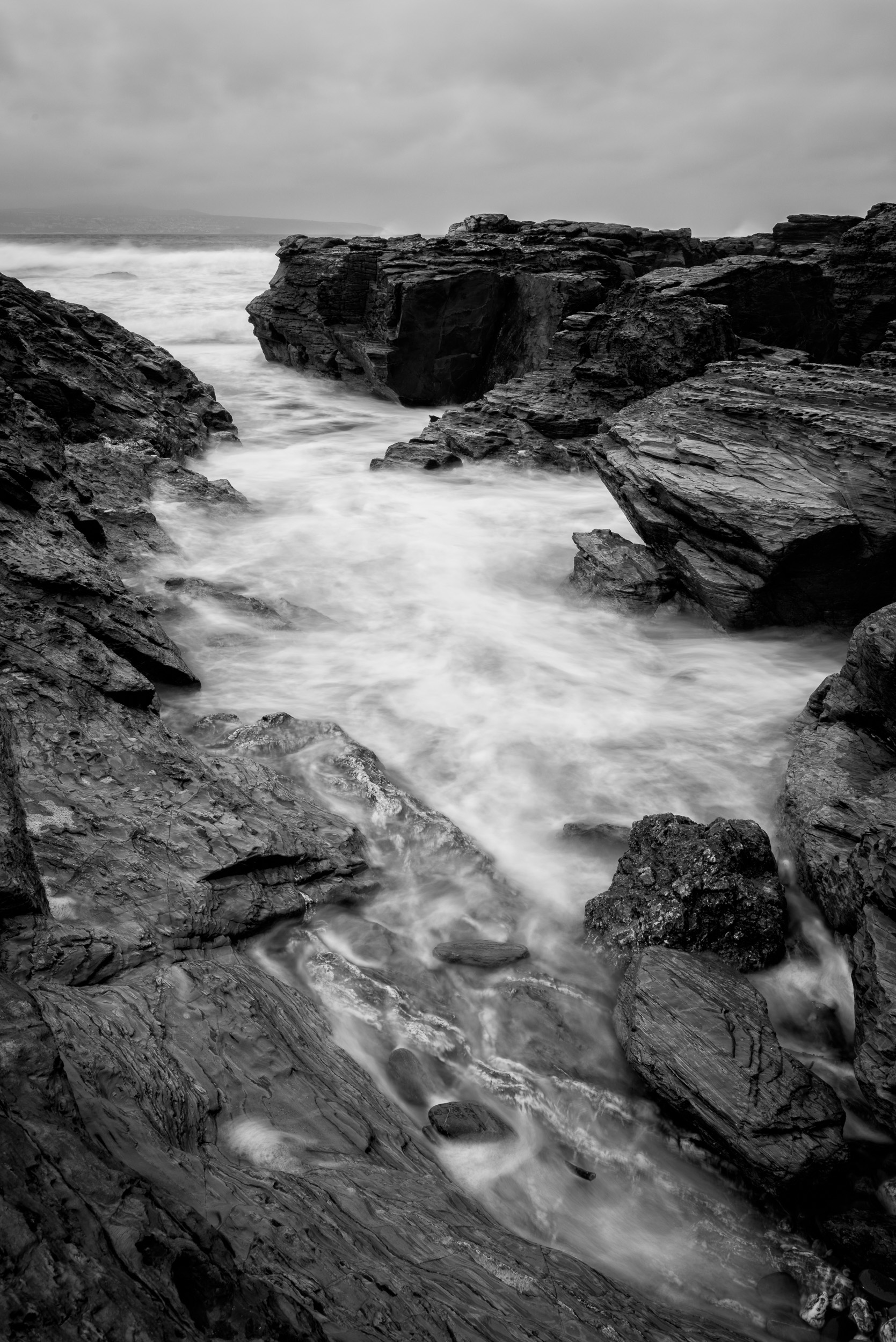
Since that initial visit, Godrevy Point has been on my locations map. However, as it's 2 hours from home, I've always favoured going to Trevose Head which is a little closer.
Returning to Godrevy
This week I finally decided to return to Godrevy Point. The weather forecast and tides were favourable, and I had enough time to drive there and still have time to take photographs before the sun would set.
As it had been nearly fours years since my last visit the first thing I did was have a little walkabout. There are all the cliff top locations to look at, as well as locations down on the beach and the rocky ledges. As I knew the tide was going out, I felt OK about going down onto the ledges. I still had to keep a very close eye on the waves though. It's always best to watch the water for a few minutes before moving onto your next spot as the strength and reach of waves can vary.
My first image from my visit, shown below, was taken up on the cliffs along the South West Coast Path. It's a pleasing enough image but it lacks dramatic light. Some light on the island or cliff face to the side would have really lifted the image. Normally I would have also gone for a long exposure here, but I wanted to capture the movement of the waves so went for the shorter exposure time.
Godrevy Lighthouse from the South West Coast Path, Cornwall - Nikon D850, Nikkor 16-35 mm f/4 at 25 mm, f/11, 1/10th sec @ ISO 64, Lee Filters Landscape Polariser and 2 stop ND Grad.
For my next spot, I decided to leave the South West Coast Path and head down onto the beach and Godrevy Cove. While the lighthouse is a prominent feature of coastline at Godrevy, not all photographs need to include it. The photograph below is actually my favourite of the evening, so it pays to explore an area before digging in your tripod legs.
Again for this image, I really wanted to capture the movement of the waves. Using a polariser not only enhanced the colours, and reduced glare, but it also reduced the amount of light entering the camera, allowing me to get a slightly longer exposure without the need for an ND filter.
Godrevy Point Waves (Godrevy Cove), Cornwall - Nikon D850, Nikkor 24-70 mm f/2.8 VR at 24 mm, f/13, 1/8th sec @ ISO 64, Lee Filters Landscape Polariser and 2 stop ND Grad.
It's important to try new things every now and again, and it's OK to experiment with your photography. While the photograph of the beach stones below might not win any awards, it was still fun to take and provides a welcome break from photographs of waves!
Godrevy Point Beach Stones (Godrevy Cove), Cornwall - Nikon D850, Nikkor 24-70 mm f/2.8 VR at 70 mm, f/8, 1/4th sec @ ISO 64, Lee Filters Landscape Polariser.
As the sun started to set, I headed down to the rocky ledges to get ready for my final shots of the day. I was hoping for better light, either to illuminate parts of the scene, or for it to go dark and stormy, but I ended up with something in the middle. So while I like the composition of both of the images below, they just lack something to make them special. Maybe I'm just getting fussier with my photogrpahy these days!
Dusk at Godrevy Lighthouse, Cornwall - Nikon D850, Nikkor 24-70 mm f/2.8 VR at 27 mm, f/13, 1.3 sec @ ISO 64, Lee Filters Landscape Polariser.
Just a little note on the photography below. Unfortunately, both my main tripod and cable release were away for repair making capturing this photograph tricky. I needed to use the self-timer so there wasn't any camera shake from pressing the shutter button. Normally 2 seconds would be enough, but because the tripod wasn't as stable as my normal tripod, it needed to be 5 seconds. This makes timing really difficult as waves aren't as predictable as you might hope!
Godrevy Lighthouse from Godrevy Point, Cornwall - Nikon D850, Nikkor 24-70 mm f/2.8 VR at 38 mm, f/13, 0.5 sec @ ISO 400, Lee Filters Landscape Polariser.
More Godrevy
I really enjoyed my visit to Godrevy. It was great to be back and I really must make the extra effort to return there again. Looking back at my images from 2014 and those I captured this week, I'm not sure that I don't prefer the images from 4 years ago. I think it probably has something to do with the moodier skies of the images back then. Still, I was very happy that I undertook the 4 hour round trip to Godrevy.
I also have some exciting news. While I was there, I actually did a little filming for my YouTube channel. I'm producing a video on photographing Cornwall's coastline and Godrevy is one of the featured locations. I'm not sure when the video will be ready, but be sure to head over to my YouTube channel and subscribe. Remember to click on the bell icon as well so you'll receive a notification as soon as I post up a new video.
So have you photographed Godrevy Point before? Did you photograph the lighthouse or exclude it? Did you prefer my 2018 or 2014 photographs? Let me know in the comments below.

How I Manage My Images in Lightroom - From Import and Export
In the blog this week I share with you Adobe Lightroom workflow. I show you how I manage my images from import to export and everything in between.
My Lightroom Workflow
I've been using Adobe Lightroom since version 3 and over the years I've been fine-tuning my image workflow around its capabilities. While its image processing speed had left me screaming up until a recent update, I've always liked its ability to organise and manage my photographs.
In the video below I share with you my Lightroom workflow. I show you how I import my images, select images for processing, apply keywords, rate images and finally get them ready for export. There are lots of different ways to do Digital Asset Management (DAM) in Lightroom, so my way is probably neither the right way, nor the wrong way, but hopefully, you'll be able to take something away from this video and use it in your workflow.
Do you have any Lightroom tips for image organisation? How does your workflow differ? Let me know in the comments below.