And Now for Something Completely Different
A short blog post from me this week with a little bit of news of upcoming video projects and a new member of the team!
Busy but No Content
Since starting my blog nearly 3 years ago I’ve managed to create a new post every week, without fail. This week though, I was faced with the very real prospect of not having a new post to share. I had already been out with the camera at the start of the week but the content for that is part of a much bigger project I’m working on (but more on that in a bit). So with nothing to share from that trip (and a few other previous trips), my blog post this week was going to feature photos from a trip to Dartmoor on Friday morning.
One of the final things to do in planning my trip to Dartmoor was to work out how early in the morning I would need to get up in order to be there for sunrise. Having driven to Dartmoor on many occasion before I already had a good idea on how long it might take, but I always like to check. Just as well I did though! I soon found out that the stretch of the A38 I wanted to drive was closed and would be until 6 am. Though a detour would be in place, this would double my journey time so I decided that effort of getting up even earlier wasn’t justified by the weather forecast.
With no photographs to share with you this week, I thought I’d update you with some news instead.
New Video Projects
Much of my time out with the camera recently has been focused on two new projects for my YouTube channel. I’m not going to go into too much detail as I don’t want to spoil the surprises. The first video I’m working on has been in production since January and won’t be finished until December. When I came up with the idea I thought it would be relatively easy to get done but that hasn’t been the case. Challenging weather and constraints on my time have made production tricky, but I’m looking forward to sharing it with you all in December.
The other project I’ve been working really has consumed a lot of my camera time. Even though it’s a series of short videos, producing them has been more time consuming than I thought. Though I could have shared the photographs from each “episode” in a new blog post each week, I’ve decided to hold back on publishing the photos until the videos are released. I’m hoping this will be within the next 4 to 6 weeks, and if this collection of episodes is successful I’m hoping to do a 2nd series!
With both of these projects being in production at the same time, it hasn’t left me much time for just going out to shoot photographs so I can share them here on the blog. I’m hoping though that you’ll appreciate the effort when they do get published.
A New Member of the Team
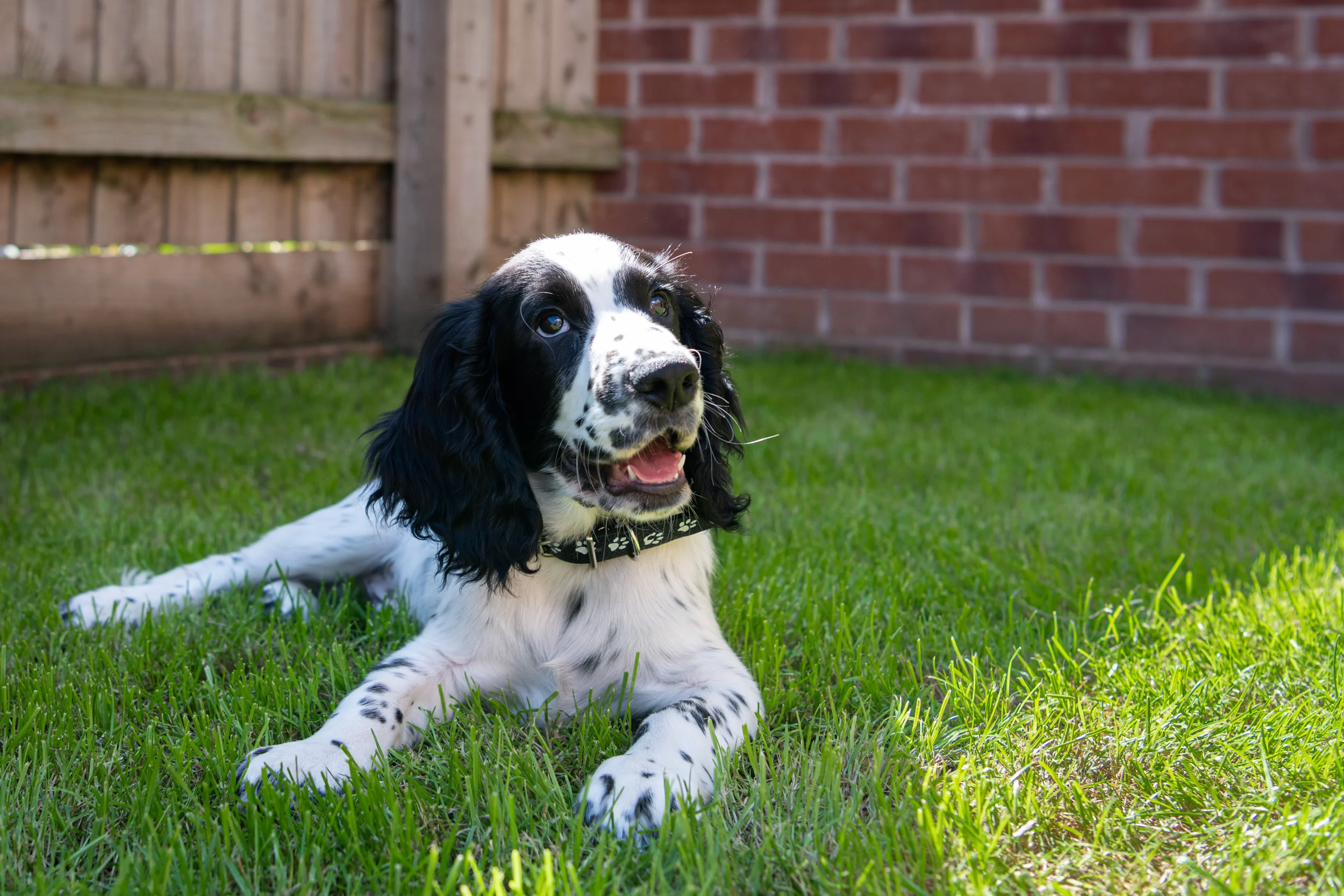
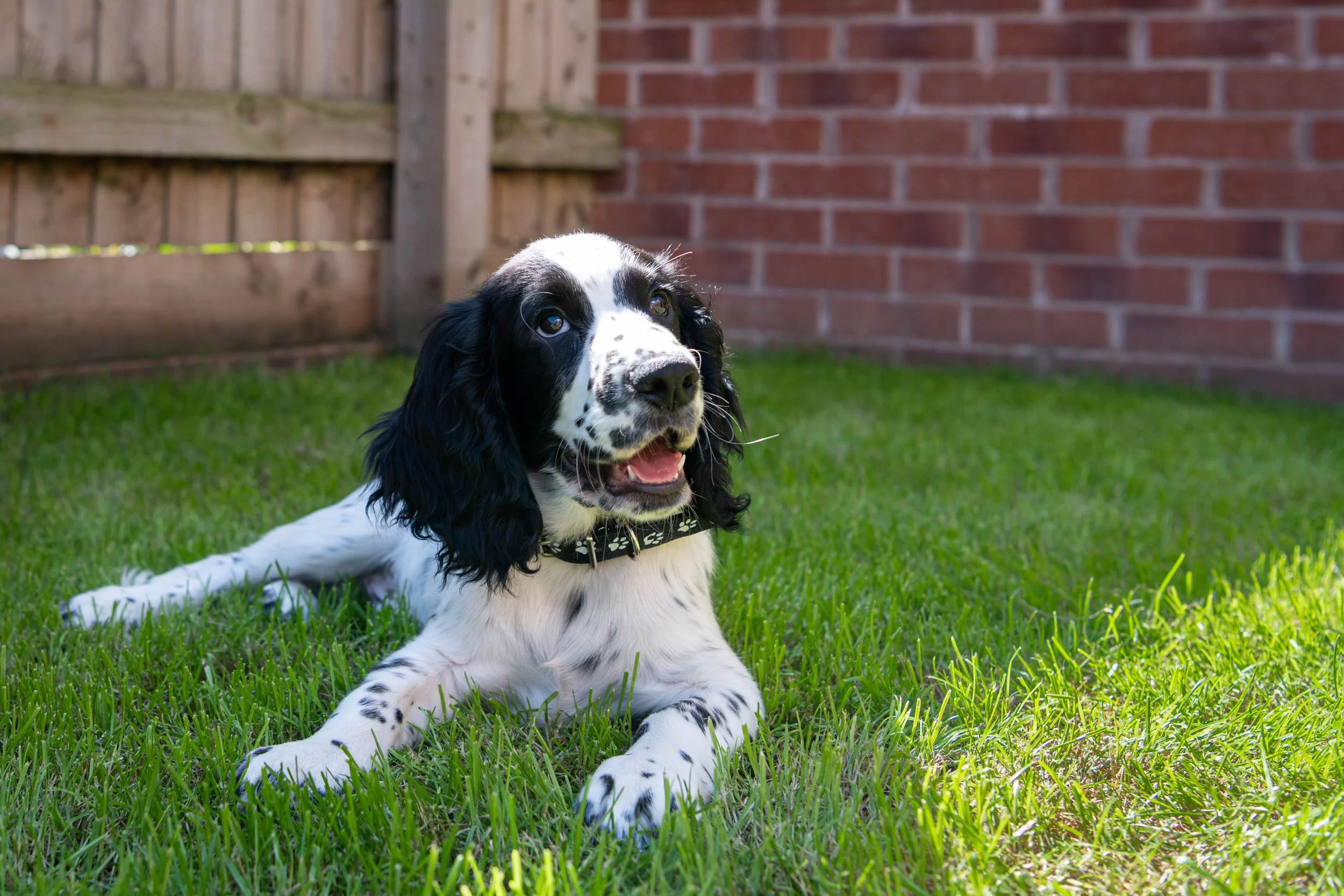
To finish up this news-based blog post I would like to introduce a new member of the Julian Baird Photography team, Monty Baird. As you can see from the photo Monty is actually a dog, a cocker spaniel to be precise. OK, Monty isn’t going to be capturing any images or processing any photographs, but I do hope that when he is a little older he will be able to join me on some of my photographic adventures. Though I value the solitude that landscape photography can sometimes bring, I’m quite looking forward to having Monty along for company. You might even get to see him in a future video!
Sorry for the lack of photographs in this blog post, but normal service will be resumed next week!
Cloudy with a Chance of Brecon Beacons
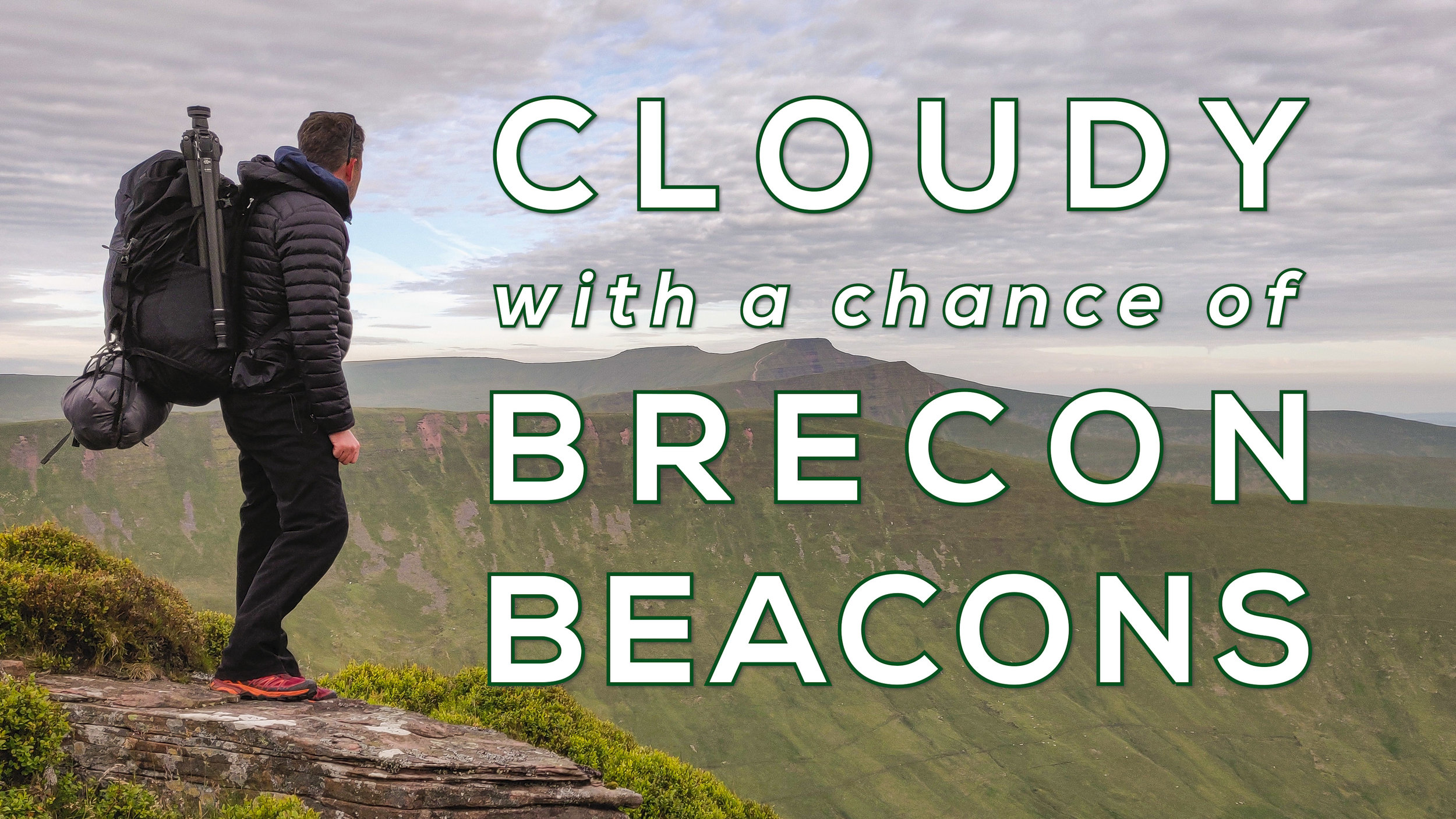
I had such fun last year wild camping with Gareth Danks in the Brecon Beacons that I decided to do it again. Armed with a tent, a camera, and a sense of adventure I head up into the hills of the Brecon Beacons for a spot of landscape photography. Would the weather be kinder to me this time though?
Discovering Wild Camping
Last September I went on my first wild camping adventure . It had been something I'd been meaning to do for some time. Much of my enthusiasm for giving it a try was due to me watching wild camping videos from my friend and fellow photographer Gareth Danks. In my first wild camping adventure I headed to the Brecon Beacons and camped up on Pen y Fan. The conditions for photography weren't great, but I really enjoyed the experience.
Back to the Breacon Beacons
After the experience of my first wild camping adventure it was only a matter of time before I wanted to do it again. Fortunately for me though, Gareth is always keen to head out with his tent, and share his experience in wild camping. I might have some skills with a camera, but I'm sensible enough to recognise that I don't have the camping skills!
For our 2nd wild camping trip we did discuss going somewhere further afield like Snowdonia. I visited Snowdonia back in February and I loved the place. (You can watch my adventure in Snowdonia here). However, we both had personal reasons for sticking to somewhere a bit closer to home so we decided on Gareth's backyard. Fortunately for us Gareth's backyard is the Brecon Beacons National Park!
There were a number of questions about this trip though. Would we get better conditions than last time? Would we spend more time drinking coffee? Would I be able to put my own tent up? Let's find out.


As you can see from the video, the conditions were tricky for photography but despite all that I really enjoyed my adventure. I might not have been saying that if I didn't have Gareth along for company. It would have been pretty boring staring into the cloud all by myself!
I'm definitely going to give the wild camping a go again though. I enjoy being outside, walking in the mountains, and brewing cups of coffee in the wilderness. I'm even considering buying my own tent. Would I go back to Brecon Beacons though? Well that all depends on the weather!
Gareth’s Video
Remember to check out Gareth’s video from our wild camping adventure!

A Macro Holiday
I’m just back from my summer holiday and while I was away I did a little more experimentation with macro photography.
Taking a Break from Landscape Photography
As passionate as I am about my landscape photography even I need a break from it every now and again. For the last couple of weeks I’ve been on holiday enjoying some welcome time with my family. Normally when I go away for my summer holiday I don’t bother taking my D850 but this year I decided that I would. However, I didn’t take it to do any landscape photography.
If you are a regular reader of the blog you’ll be aware that I tried my hand at macro photography for the first time earlier this year. You can see my first attempts at macro photography here and here. From those two experiences I knew I wanted to do more macro photography and I promised myself I would invest in a macro lens in 2020.
The reason I took my D850 on holiday was that I knew the person I was staying with had a Nikon mount Sigma 105 macro lens and a garden full of life. I could borrow his lens and without having to travel anywhere get some macro photography practice in.
My time with the camera on holiday was still going to be limited though as I had a lot of other priorities, but I thought I would share with you some of my macro holiday snaps!
Flower Bud
Looking around the garden I could see a lot of flowers in bloom and my first instinct was to photograph them. Looking more closely though I discovered that the flowers that hadn’t fully bloomed were far more interesting!
I like a few things about this photograph. I like the colours, composition and the subject itself. Technically speaking though, it’s not perfect. I could have probably done with a fraction more depth of field as the tip of the flower is just a little out of focus. I would have opened up the aperture a bit more, but this would have caused more of the messy background to come into focus.
Despite the technical issues with this picture it is my favourite from this collection.
Flower Bud - Nikon D850, Sigma 105mm f/2.8, f/5.0, 1/400th sec at ISO 64
Green Bug
OK, firstly, apologies for not knowing the name of this particular bug so you will have to excuse me referring to it as just a green bug. Names aside, what drew me to this composition was colour contrast between the bug itself and the fruit it was sat on. Unfortunately I couldn’t get close enough to isolate the fruit and bug from the rest of tree but I thought it was still worth taking.
I very narrowly missed out on nailing the focus for this one. If you look closely the eyes are just a little out of focus. I think the eyes are slightly further away than the front of the head and the part of the head behind the eyes as both of those parts are in focus. It just shows you how razor-thin the plane of focus can be in macro photography.
Obviously I have much to learn in this area of photography and plenty of practice is required!
Green Bug - Nikon D850, Sigma 105mm f/2.8, f/6.3, 1/100th sec at ISO 64
The Fly
I have to admit that I’ve never found the humble fly that interesting until I took a macro photograph of one. Now, I did cheat a little bit with this photograph. I couldn’t get very close to this subject but thanks to all those megapixels in the D850, even with a heavy crop, there is still loads of detail to be seen. Sure, a heavy crop isn’t the way to approach a photograph like this normally, but I just found the photograph too fascinating not to share. Does anyone have any idea what the red blob on its mouth is? You can even see my reflection in it!
The Fly - Nikon D850, Sigma 105mm f/2.8, f/5.6, 1/125th sec at ISO 64
I know these macro photographs aren’t going to win any awards. My composition and focusing needs a lot of work but that didn’t take away any of the enjoyment I got from capturing and viewing these images. The macro world is absolutely fascinating and these holidays snaps have only firmed up my commitment to doing more macro photography!

Mid Year Image Review - The Hits
Last week I shared with you some of my images that didn’t make the cut in my mid year review. To balance things out, this week I’m going to share with you some of my more successful images!
The Mid Year Review
At the end of each year I like to take a look back the images I’ve captured and the select my favourites. This is always a useful exercise as it allows me to reflect and judge how my photography has developed over the year. A year is a long time though so I also like to have a quick review of images midway through the year. This is a useful exercise as it shows me that perhaps it’s not been such a bad year and it reminds me of some of the great adventures I’ve had. It also inspires me to plan more adventures for the remainder of the year!
Let’s take a look at 3 of my favourite images of the year so far. (If you want to see some of the images that didn’t make the cut and why, then check out my blog post from last week).
Snowdonia
My first big adventure of the year was a cracker. I was lucky enough to meet up with Nick Livesey in Snowdonia to discuss his book Photographing the Snowdonia Mountains. We spent the day wandering his local area, taking photographs and having a good old chat. You can see my photos and the video I made of my time with Nick here.
The image below was the first image I took that day and remains a firm favourite from the trip. It’s not a perfect image. I like the composition, with the warm sky and the distant mountains but with only a partial covering of snow in the foreground I feel it looks a little messy. I suspect the image has made it onto this blog post due to my attachment with the adventure rather than it is an amazing image. Still, I said I would share my favourite images, not necessarily my best!
Snowdon from Clogwyn Mawr, Capel Curig, Snowdonia National Park - Nikon D850, Nikkor 24-70 mm f/2.8 VR at 36 mm, f/11, 1/2 sec at ISO 64, polariser and ND grad.
Dartmoor
Given that Dartmoor is on my doorstep if would be unusual if this blog post hadn’t featured a photograph from there. You can read about how I captured the image below by reading this blog post here.
This image has definitely grown on me. I remember thinking it was OK at the time, but now that I look at it again several months later I rather like it. I like the row of tors on the left as they curve round to the distant tor and then on the right you have all the scattered boulders which also seem to curve in. Add in an interesting sky and I think I have a fairly decent image. It will be interesting to see how it fairs at the end of the year when compared with everything else.
Belstone Tor and Belstone Common at Dawn, Dartmoor, Devon - Nikon D850, Nikkor 16-35 mm f/4 @ 26 mm, f/13, 3 secs @ ISO 64.
Macro
And now for something completely different. Though the vast majority of my photography is landscape based, I have been wanting to try macro photography for some time. This year I finally got around to it and you read about how I captured the image below here.
The image isn’t perfect but I do love it. The tips of the wings are just falling out of focus, and my eye for composition in this genre needs developing, but I do love everything else about it. The Zeiss lens that I used as produced some wonderful bokeh and the D850 has rendered some beautiful detail in the butterfly. It’s an image that has solidified my desire to get a macro lens and I expect that the shots I take next spring will feature a lot of macro work.
Common Blue #1, Devon - Nikon D850, Zeiss 100mm f/2 at f/3.5, 1/400th second at ISO 1600
I hope you enjoyed these images. Remember to have a look at the links to the blog posts that go with these images to see more photographs and possibly even a video or two!
Do you review your images just once a year or a number of times over the year? Let me know in the comments below.

Mid Year Image Review - The Misses
Some images are destined to only ever sit on a hard drive. In this blog post I take a look at some of those images in my library and discuss why they never saw the light of today until now.
Confidence Boost
It’s about that time of year when I take a look back at the images I’ve captured over the last six months. Though I like to do a complete review at the end of a year to find my favourites, I also like to have a quick look at the midpoint of the year. This can be a useful thing to do particularly if you think the first half of the year hasn’t been a productive one. As I find with my annual reviews, I often find things were a little better than I remembered and I can take a little confidence boost from the images I see.
The Misses
As I ploughed through my images from the last six months I noticed that for some trips out with the camera I hadn’t even shared one image from that collection. This wasn’t an oversight on my part though. It’s just that I felt the images weren’t really good enough to share. It’s maybe the composition wasn’t quite right, or the light was flat, or the image just lacked “something”.
While it’s all very nice sharing my best images, I thought I would take this opportunity to share a few of those images that never made it passed the import stage. Why? Well it’s just as important to review the images you don’t like as it is to review the images you do like. By also looking at the images you don’t like you can learn why and then take that knowledge out with you on the next shoot.
By me sharing some of “misses” you can hopefully see that life isn’t full of 5-star images and that there are lessons to be learnt from every frame we take.
Colmer’s Hill
Colmer’s Hill, Dorset - Nikon D850, Nikkor 70-200mm f/2.8 at 82mm, f/8, 1/60th second at ISO 64.
First up we have this panoramic image of Colmer’s Hill in Dorset that I took back in February. This is a pleasing enough image in retrospect but I think the thing that catches my eye most about this photograph is the colour in the sky. But that’s about it really. There isn’t enough low lying mist to make the foreground interesting and to separate the hill from the surrounding landscape. I could have maybe lived with the lack of mist if there had been some light on Colmer’s Hill itself, but without that either, the image just lacks a bit of contrast and punch.
It’s one of those cases of being at a location to watch the sunrise was far more exciting than the resulting photograph.
Dawlish Warren
Dawlish Warren, Devon - Nikon D850, Nikkor 16-35mm f/4 at 16mm, f/11, 0.4 seconds at ISO 64.
Dawlish Warren is definitely one of my favourite locations to photograph. I’ve blogged about it many times. When I was scanning through my catalogue I wasn’t surprised to find some unpublished images from that location. In retrospect though, I feel that I may have been a bit harsh with my initial critique of this image. Don’t get me wrong, I’m not saying it’s an amazing image (I have better from there), but overall it’s a decent enough image.
I think the problem with this image for me is that the morning I shot it I was after something very specific so when I didn’t get it I probably just dismissed this image as not what I was after. I rather like the movement in the water and there is a bit of drama in the sky. The composition needs some work though. I’m not convinced that the central placement of the groyne marker works and while the I like the sky, I would have preferred there to be some cloud in the top right to stop the eye wandering off. Overall though it’s a better image than I first gave it credit for.
Wembury
Wembury, Devon - Nikon D850, Nikkor 16-35mm f/4 at 24mm, f/13, 240 seconds at ISO 100.
This image was taken on my first visit to Wembury so getting a really good image without having explored the area first can be a bit of a challenge. As I look at this image I’m trying to put my finger on what I don’t like about it. I like the triangular shape of the rocks going from the left, out to sea and then out to the island but I would have preferred there to have been more horizontal separation between the rock in the sea and the island in the distance. However, moving about those slippy rocks is challenging and it might have been the best position I could find.
I do however like the pastel colours in the sky and the wispy look of the water from the long exposure, but I’m also not sure that the contrast between the lightness of the sea and sky is too much against the darkness of the rocks. I am definitely a little undecided by this image. However, what I do know is that I want to visit this location again.
In Summary
It certainly has been an interesting exercise writing this blog as it has got me to think a bit more about the images that I had previously rejected. In retrospect, they weren’t too bad at all. Not portfolio pieces or competition entries, but definitely images I would have been happy sharing on my blog. It just goes to show that sometimes you need to leave your images for a while before making any final decisions on them.
How long do you leave an image for before deciding on how good it is? Do you go back on a regular basis and review your images? Let me know in the comments below.
PS - Some Videos You Might Like
On the topic of image review, I thought you might like these videos which you might not have seen yet:

A Tale of the Unexpected
Sometimes the best the shots are on the path rather than the destination itself.
Two Plans in One
Summer generally brings blue skies and warm weather. All very nice for relaxing in and drinking glasses of chilled white wine, but generally useless for landscape photography. After what had seemed to be an endless streak of blue sky evenings I had decided that enough was enough and I was going to go out with the camera. Worst case scenario I could do some exploration of new locations, and best case I might get some high-level cloud around sunset and be able to fire off a couple of frames.
I've been trying to explore more of my local coastline recently so I decided I would visit a location that had been recommended to me by a friend. It's the kind of location you want to visit on a high tide, with a bit of wind and lots of clouds. None of these conditions would be present on this visit, but as this was a mission of exploration, none of that mattered. I just wanted to scope out the location.
As I also had a bit of time I thought I would visit that location first and then head to a different location to catch the sunset. Looking at the map I could see I wouldn’t be far from Froward Point and as I hadn't shot that viewpoint in a while I decided to tag it onto my itinerary.
Blue Skies, Blue Ocean
It was a beautiful summers evening as I set out in my car to my first location. Despite it not being ideal conditions for landscape photography summer is a great time to be driving around Devon. Everything looks lush and green and you can't help but feel everything is going to be just fine!
That sense of well-being and calm continued as I made the last part of my journey to the first location on foot. As I already knew I wasn't going to be taking any "serious" pictures at the location it didn't bother me that it was calm seas and bright blue skies. I took a number of test shots from various different angles. I had to try hard to envisage the location in less settled conditions, but I at least now had a good idea of what I might want to achieve next time. Definitely a location to return to.
I was soon back in the car and crossing the River Dart using the ferry. This is something I haven't done before so it was an added bit of excitement to my little road trip!
Golden Fields
To get to Froward Point you first have to park at the Brownstone National Trust car park and then walk the rest of the way. As you make your way down to the coastline you walk by Daymark Tower, a popular location for photography and a location I’ve shot myself many times. In fact, I had shot it a few weeks before so I was happy enough to pass it by. However, as I walked by it did catch my eye. Instead of the crops being a greeny yellow colour they had turned a golden colour and looked quite different. It did cross my mind that it might photograph well when the sunsets, but I carried on walking, focused on getting to the coastline.
You can shoot Froward Point from a number of different angles as you can see from this blog post here and here. For this visit I decided to go for the spot almost directly below the NCI lookout. I have to admit that when I arrived I just wasn't feeling that excited about shooting there. I'm not sure why this was. The sky now had a few very high-level clouds in it but the rest of the scene wasn't really doing it for me.
I think at the back of my mind I knew that I would have been better off back at Daymark Tower and shooting those golden fields of crops. As time progressed and my desire to photograph Froward Point didn't increase I decided there was no point in waiting until sunset and so I packed my bag and started to walk back to the car.
As I approached Daymark Tower I could see how good the light looked on the tower and the crops. With about 15 minutes of good light left I get to work very quickly and captured these images.
Field of Gold, Daymark Tower, Devon - Nikon D850, Nikkor 16-35mm f/4 at 17mm, f/13, 1/3rd second at ISO 64.
Tower of Gold, Daymark Tower, Devon - Nikon D850, Nikkor 70-200 f/2.8 at 70mm, f/11, 1/6th second at ISO 64.

Fire Beacon, Daymark Tower, Devon - Nikon D850, Nikkor 16-35mm f/4 at 24mm, f/13, 0.4 second at ISO 64 (single image crop at 16:7).
Though I've shot Daymark Tower a few times, I'd never photographed it looking like this. A combination of clear skies, golden light, and golden crops made for some very pleasing images. Considering I hadn't planned on capturing images at Daymark, these unexpected images were very welcome!
Have you ever passed a location and then wished you'd gone back? Have you ever gone to one location but decided to go somewhere that you had originally dismissed? Let me know in the comments below.

Photographing Boscastle and Using Kase Filters
I'm back with a new video! This week I head to the picturesque village of Boscastle in Cornwall to capture some images of the distinctive S shape harbour. I also talk a little bit about filters and what I like about the Kase Filter system which I'm now using.
Back to Boscastle
Boscastle has a special place in my photographic heart. It was about 5 years ago that I decided I really wanted to start learning the craft of photography so I spent the day with local photographer Ross Hoddinott for a bit of 1-2-1 tuition. The first location we visited was Boscastle and from that viewpoint on Penally Hill I probably learnt more about composition than I'd done in the previous 5 years.
Since that day I've been returning to that viewpoint every year to capture images the harbour. Some years have been more successful than others but I've always enjoyed looking down onto that distinctive S-shaped harbour and the hills that run along with it. There's more than just the harbour to shoot as well. There are a couple of great viewpoints closer to the coastline that are worth checking out. Read my blog post Sunrise at Boscastle to see them.
A Slight Break in the Weather
While the lovely summer weather we've been having here in the south-west is fantastic, it's not exactly been optimal for landscape photography. I love the extended hours of light that allow me to travel further and get out more, but those pesky blue skies don't always translate well into good landscape photographs.
After a few weeks of "great" summer weather there was finally a break from the blue skies and the weather forecast was predicting some decent cloud cover that would hopefully make things a bit more interesting. Fortunately for me it was also going to be high tide around sunset as I was keen to shoot some long exposure seascapes. All I had to do was pick a location. Boscastle immediately sprung to mind!
Kase Filters
Even though I'd already made one of my 5 Minute Photo Adventure videos from Boscastle I was so optimistic about the conditions that I thought it would be worth making another vlog from there. As I was going to be shooting long exposures seascapes I thought it would also be an excellent opportunity to talk about Kase Filters. A few months ago I needed to purchase a new filter system and after recommendations from some fellow photographers I know I decided to go with the Kase Filter system. You can hear what I think about them in the video and watch me put them to use.
If you'd like to see how I got on with my latest photography adventure to Boscastle and hear my brief thoughts on the Kase Filter system, then check out the video below.
A Summers Evening in Boscastle
So was my evening in Boscastle a successful one? Let’s find out.
As you will have seen in the video I actually got the better light early on in the evening. Normally the light gets better the closer you get to sunset but due to atmospheric conditions the light fizzled out a bit as the evening progressed. The following image is my favourite because it has the golden light on the foreground rocks as well as the hills surrounding the harbour.
Last Light at Boscastle Harbour, Cornwall - Nikon D850, Nikkor 16-35mm f/4 at 20mm, f/13, 100 seconds at ISO 64, Kase Filters CPL, 6 Stop ND and ND Grad.
The other two images I took are pleasing enough but compared with the first I think they lack some depth and colour.
Boscastle Harbour at Sunset, Cornwall - Nikon D850, Nikkor 16-35mm f/4 at 19mm, f/13, 100 seconds at ISO 64, Kase Filters CPL, 6 Stop ND and ND Grad.
Out to Sea, Boscastle, Cornwall - Nikon D850, Nikkor 16-35mm f/4 at 18mm, f/13, 160 seconds at ISO 64, Kase Filters CPL, 6 Stop ND and ND Grad.
Overall though I was very happy with my adventure to Boscastle and the photographs I took. Does that mean I won't go back? Of course not! There will always be new compositions to found and different conditions and lighting to work with.
I do hope you enjoyed the video and photographs and that it has inspired you to visit Boscastle. If you are looking for more Cornwall locations to inspire your photography then check out some of my other posts from Cornwall. If you've got a favourite Cornish location that you want to share then let me know in the comments below. See you next time!

Just One Image
Sometimes you only have time to take one image. Sometimes that’s all you need.
Too Clear, Too Cloudy
In landscape photography there is one thing more than anything else that annoys me and that is the weather. It’s an element I have no control of and it seems that I spend more time checking forecasts than I actually do taking photographs. With shooting time at a premium I’m always keen to make the most of what time I do have by going to locations where the conditions will be optimal. Over the years I’ve discovered this is very difficult. On the plus side it does make those times when it all does come together even more satisfying.
Summer normally brings better weather and more importantly longer days so more opportunities for photography. However, the summer weather recently has been a bit of a mixed bag. It’s either been overcast and dull, or bright blue skies. I know some people can do wonders with their photography in clear conditions but I just don’t get on with it (unless I’m chilling out with a glass of wine). What I really want for my photograph at this time of year is somewhere between cloud and clear. It’s not much to ask is it.
The other night I was faced with another clear sky evening. I had the choice of staying in and being grumpy or heading out to do some exploring instead. As I was keen to discover some new locations I decided on the latter and head out anyway.
Middle Dartmoor
I had a quick look at my custom Google Map and saw a pin against Mel Tor in the middle of Dartmoor so that seemed as good a place as any to head out to. I wasn’t expecting to get any images, but I thought I’d better take my camera anyway. When I arrived at the car park I was presented with some beautiful, panoramic views of Dartmoor.
It was only a short walk to Mel Tor and while I didn’t think there was a photograph to be had there that evening I have made a note to return there for autumn because of the big wide views of the woodland below.
I then had the option of taking a look at Sharp Tor but time was getting on and I rather fancied taking a panoramic image of that view I had seen earlier. I wanted to get a better angle and elevation for the panoramic view though so I jumped in the car and drove towards Corndon Tor.
All You Need Is One Image
By the time I got to the summit the light was starting to fade. Although the sun hadn’t reached the horizon yet I knew the surrounding hills would start casting big shadows so I had to get to work quickly. I set up my tripod, took a test shot (to check for focus and exposure) and then took a series of images for my panoramic photograph.
By the time I’d done that the light was gone. I literally had time to take that panoramic image and that was it. Considering I didn’t think I’d take any images, or any decent images that evening I was pretty happy with the result!
Sometimes all you need is one image. It could be the first image you take, the last image you take, or indeed the only image you take.
Dartmoor from Corndon Down, Devon - Nikon D850, Nikkor 70-200 f/2.8 at 98mm, f/8, 1/5th second at ISO 64, 13 image stitched panoramic cropped to 16:7.

Blackchurch Rock
In the blog this week I tell you about a recent trip to Blackchurch Rock in Devon. With still water and flat light, was it worth the effort to get there?
Return to Blackchurch Rock
Around the coast of Britain you will find many interesting rock formations. Sea stacks by there very nature are impressive. Lone stacks of rock standing tall and in defiance of the constantly crashing waves. Around the south west of England where I live they are fairly common and easy to find. The sea arch on the other hand tends to be a little more on the rare side.
The sea arch is no less impressive than its sea stack cousin, but given its a relative rarity, they can offer something a little bit different to the seascape photographer. I say that, but I forgot all about Durdle Door for which it is rather difficult to get something different due to its popularity. There is also a sea arch at Lands End which is well worth photographing if you don’t mind the drive!
For me though, I’ve always been fascinated by Blackchurch Rock in North Devon. Like many locations I can’t actually remember how I first learnt about it but I suspect it was most likely to be from Flickr. I’ve only been to Blackchurch Rock once before and that was way back in 2015. I didn’t really get the shot I was after but I was impressed by the location and I knew there was plenty of scope for compositions.
So why has it taken me 4 years to return? The simple answer is that because it’s not the easiest of locations to get to I put off returning until I thought the conditions would be ideal. It’s about 1.5 hr drive, plus nearly a 30 minute walk to get to the location. With a journey time of 2 hours there and 2 hours back, I was only going to return for ideal conditions.
For me ideal conditions consist of a number of things. I want good light and in the right direction. The sea arch stands out from the rest of the beach and having it illuminated by good light will make it stand out even more. There are numerous channels and pools around the beach so tide height and water flow are also important. A good sky with interesting clouds illuminated by the setting sun would also be useful. I probably have a set of conditions that rarely come together if I’m honest!
Less Than Ideal Conditions
As you’ll see in the photographs below my most recent visit didn’t really meet any of my criteria for a return visit. When I planned my visit I knew it was going to be a bit of a risk to go there. The tide was in my favour (it was going out), but the weather forecast was a bit 50/50. For me though, photography is sometimes more than just waiting for ideal conditions, it’s also about adventure and friendship.
Blackchurch Rock, Devon - Nikon D850, Nikkor 16-35 mm f/4 at 16 mm, f/13, 20 seconds at ISO 64.
The Bottle Stop, Devon - Nikon D850, Nikkor 16-35 mm f/4 at 16 mm, f/13, 25 seconds at ISO 64.
Though it was going to be a bit of a punt to go to Blackchurch Rock I knew it was going to be worth the effort because I’d have company. My mate, who also happens to be a photographer, hadn’t been to Blackchruch Rock in a while and fancied going back. As I was in a similar position I thought it was worth a visit. We might get lucky with the conditions (always a possibility), but more than that it would be a good chance to catch up.
As it turned out the conditions were a bit flat. The sky was heavily overcast, the sun was nowhere to be seen, and even though the tide was going out there was barely any movement in the water. It still wasn’t a wasted trip though. Far from it. I got the opportunity to explore the location a bit more and pick out some compositions that I could use on a future visit. Having a good idea of what compositions work in advance can make it easier to capture images when the conditions are ideal.
Most of all though, it wasn’t a wasted trip because I got to catch up with a mate and eat some chips. Sometimes photography is just a bonus!

Tricky Trevose
In my blog this week I head out to Trevose Head where I discover that previous success at a location doesn’t guarantee future success.
High Hopes
It’s been a while since I captured an image that I really connected with. Or it at least feels that way. Sometimes when the last few shoots don’t go as planned and you come away with a few OK images it’s all too easy to become negative about your own photography. I was starting to feel that way and what I needed was a really productive session out with the camera.
To get some inspiration I opened up Lightroom and looked through my catalogue of images. I was immediately drawn to my photographs of Trevose Head. It appeared that every visit had resulted in a decent image. In fact, some of my favourite images were taken from this location. With such an apparent high success rate at this location how could I go wrong?
I checked the weather forecast and tide times and decided that conditions were favourable enough to make the 1 hour 45-minute drive there. I had high hopes for this trip and I had visions of me capturing an image like this one I took back in 2016:
Last Light at Trevose Head, Cornwall - Nikon D750, Nikkor 16-35mm f/4 at 22mm, f/11, 97 seconds at ISO 100.
Challenges
When I arrived at Trevose Head, conditions looked as predicted. The majority of the cloud was starting to clear revealing a lovely blue sky. Not great for photography I admit, but if the forecast was right, more cloud would arrive around sunset so I wasn’t too worried. At the car park it was very windy and I thought this might make long exposures a bit tricky, but as I descended to my favourite spot on the rocks it was a lot more sheltered.
I had arrived a couple of hours before sunset so I had plenty of time to work out my compositions. I already had a couple in mind. These were either based on existing shots I had taken or some new ones that I thought might prove interesting. Taking test shots this early on was tricky though due to the contrast of the scene. The sky was very bright and the rocks dark making getting a balanced exposure difficult. It’s a hard scene to grad as well as the horizon is broken by the lighthouse.
As the evening progressed and it got closer to sunset some cloud started to roll in. It was some of that nice high-level cloud you sometimes get so I was feeling optimistic. That feeling didn’t last long though. Though I was happy enough with the compositions I had I was finding it a difficult scene to photograph. The problem was that between the cloud and the horizon there was a very bright band of sky where there was no cloud cover. Even when the sun (which was at 90 degrees to me) was behind the cloud, the band of cloudless sky was very bright.
Tricky Trevose Head, Cornwall - Nikon D850, Nikkor 16-35mm f/4 at 22mm, f/11, 90 seconds at ISO 64.
Unfortunately I couldn’t use an ND grad effectively. The band of bright sky was close the horizon and given that the lighthouse breaks the line of the horizon, I couldn’t get the grad close enough without cutting through the lighthouse. I guess I could have bracketed some exposures, but my post-processing skills in that area aren’t that good, and I wasn’t convinced it would have delivered a natural looking result anyway.
Out to sea I could see a very impressive storm cloud approaching (see image below). This would have really added some drama to my coastal scene but it wasn’t going to get to my location before I lost the light so I decided that I’d had enough and packed my bag.
Isolated, Trevose Head, Cornwall - Nikon D850, Nikkor 24-70mm f/2.8 VR at 50mm, f/8, 1/3rd second at ISO 64.
I was really optimistic and excited about my trip to Trevose Head, but it turned out to be a bit of a disappointment. I don’t think I ever really got into my stride. Yes, the photography was challenging, but I also suspect I was hungry. I hadn’t eaten properly for a few hours and I know from past experience that being hungry really can ruin your creativity!
This hasn’t put me off from shooting Trevose Head again. Far from it. It still remains one of my favourite Cornish coastal locations to photography. If I ever want to be reminded though I’ll just watch the video I made from there.

Beautiful Blue Butterflies at Berry Head
In the blog this week I’m out again taking macro photographs. This time it’s butterflies and I had no idea how beautiful these creatures are!
More Macro
In the blog last week I talked about Discovering the Joy of Macro Photography. This was my first real attempt at macro photography and I have to say, I really enjoyed it! Yes, it was challenging, but it was a very rewarding type of photography.
From that experience I knew that this was a genre of photography that I would want to do again. So when friend and fellow photographer Neil Burnell said he was heading out to photograph some butterflies and would I like to come, there really was only one answer I could give!
Common Blue #1, Devon - Nikon D850, Zeiss 100mm f/2 at f/3.5, 1/400th second at ISO 1600
Beautiful Bokeh
One of the challenges I have with doing macro photography is that I don’t actually own a macro lens. I borrowed a Nikkor 105mm f/2.8 when I shot the banded demoiselles last week and I was going to have to borrow again for this shoot. Fortunately for me Neil offered to lend me his beautiful Zeiss 100mm f/2 Makro-Planar lens.
As soon as I started using this lens I noticed what a different experience it was from using my Nikkor lenses. The focusing can only be described as buttery smooth! It made precisely focusing the lens a real joy. That didn’t necessarily make capturing the images easy as the subject could still move because of the gentle breeze but at least when it was still you could be confident with the focusing. Couple that with the D850’s focus peaking in live view, the job of focusing was at least made a little simpler
As a landscape photographer I’m not that concerned with bokeh. Most of the time I’m trying to get front to back sharpness so I rarely use wide apertures. In this instance though I very much wanted to create some lovely bokeh in my shots. I’d been looking at Neil’s work in this area but it soon became apparent to me that even though the Zeiss lens could create some lovely bokeh, putting the subject and the other elements all together to create the look was more challenging than I had originally thought!
Common Blue #2, Devon - Nikon D850, Zeiss 100mm f/2 at f/3.2, 1/800th second at ISO 1600
Easy To Miss
As with my previous macro adventure, having someone along with the relevant knowledge was key. Neil knew exactly where to find the butterflies and identify which species they were. The thing that got me though was how small they were! Both the Common Blue and Small Blue that I photographed were tiny. They were about the size of a thumbnail and could be easily missed.
Being so small it’s hard to see all the beautiful detail in these wonderful creatures. This is where the joy of macro photography gets me. Put a macro lens on your camera and suddenly you can see all the tiny details from the stripes along the antenna, the hairs an the thorax and the striking patterns of the wings. A macro lens really does open up a whole new world of natural beauty.
Small Blue, Devon - Nikon D850, Zeiss 100mm f/2 at f/2.8, 1/160th second at ISO 2000
These last two trips out with the camera to do macro photography have really opened my eyes on how I could capture the “landscape” in a different way. Yes, I love taking those big landscape photographs but I’m also quickly learning that there is a whole other world of photography down at my feet.
Just before I finish up the blog, I just want to thank Neil again for inviting me out. Without his local knowledge I would have been a bit lost! As I’m finding out with macro photography, knowledge of your subject is as important as being able to use your camera gear. If you’re looking to develop your macro photography and then definitely check out Neil’s 1-2-1 close up tuition page.
I’m not sure what will be in the blog next week, but one thing is for sure, if there is a chance to do more macro photography I’ll be taking it!
Are you a macro photographer? What is your favourite subject to photograph? Let me know in the comments below.

Discovering the Joy of Macro Photography
I’ve been talking about trying my hand at macro photography for years now and now that I’ve finally tried it I really wish I’d tried it out earlier!
Springing into Macro Photography
Earlier on this year I tried my hand a street photography. This was a genre of photography very much outside of my normal photography comfort zone. There is also another genre of photography that I've wanted to try for a while and that's macro. It's arguably a little more aligned with my landscape photography work but as I was to find out, still very challenging.
Every spring I promise myself that I will allocate some time to explore the world of macro photography. I've long been inspired by the work of some photographers I know who produce stunning macro photographs of flowers and insects. As spring started to draw to a close though it was looking like I was going to miss out again and I would have to be satisfied with looking at the work of others.
Fortunately for me though I had to meet up with a friend to finish a photography related project we were are working on and he suggested we do some photography beforehand. The weather forecast wasn't looking suitable for landscape work so he asked if I fancied giving macro photography a go. He even had a 105mm macro lens he could lend me. Well, I jumped at the chance!
The only downside to this great opportunity was how early I would have to get up. Though I wouldn't need to be at the location for sunrise, I still needed to be there early before the insects warm up and get active. As I needed to drive to Cornwall as well I had to set my alarm for 4 am. Nothing a cup of coffee wouldn't sort out though.
I arrived to meet my friend in plenty of time, a little bleary-eyed but very excited. Thanks to my friend's local knowledge we were quickly able to identify a number of damselflies that would make for good subjects and we got to work.
The Challenges of Macro Photography
As I soon found out though, picking out a subject is just the first of the problems I would need to deal with. I'd heard that focusing can be challenging with a macro lens but I really didn't appreciate how shallow the depth of field can be. Even at modest apertures you can have your subjects eye in focus but the rest of the body not. Very minor adjustments to camera position in relation to the subject can have a dramatic impact on what is in focus and what isn't.
Changing the aperture to help increase the depth of field also came with challenges as well. Wide open on a macro lens is normally enough to throw even the messiest background out into a nice blur of colour, but at f/5.6 and beyond keeping an eye on how your background looks becomes more critical. Rather than enhancing the photograph the background starts to become a distraction. When you've got a damselfly perched on a blade of grass with a plane of focus that is already tiny, just moving the camera to get a less distracting background puts you all back to square one.
Banded Demoiselle (Calopteryx Splendens), Female - Nikon D850, Nikkor 105mm Macro @ f/4.0, 1/160th second at ISO 800.
Don't get me wrong though, I loved working through these challenges. Careful positioning of the camera, selecting the right aperture, shutter speed and ISO were all part of the fun. Though I didn't get everything right in one shot I was still immensely satisfied with the images I captured. The amount of detail you see in the images is staggering. I've seen damselflies before but to see them in such close-up details make you realise how beautiful and colourful these insects are.
Banded Demoiselle (Calopteryx Splendens), Male - Nikon D850, Nikkor 105mm Macro @ f/5.6, 1/125th second at ISO 1600.
So would I give macro photography another go? Absolutely I would. I can even see myself buying a macro lens. There is a lot to learn though. Not just the technical side, but also understanding your subjects. Luckily on this trip out with the camera I had someone very knowledgeable with me to make life easier, but knowing what, where and how to find a subject is a skill in itself. It's a challenge I welcome though.
Are you a macro photographer? Got any tips for someone starting out in macro? What's your favourite thing to shoot with a macro lens? Let me know in the comments below.

Creative Exploration
In the blog this week I head off to the south Devon coast to not only explore a new area but also to try a slightly different style of long exposure photography.
Creative Inspiration
My landscape photography is a constantly evolving thing and what I look for in my photographs changes over time. Some of this change comes as I discover my personal style but it also comes from being inspired by the work of other photographers. Recently one such source of inspiration has been the work of fellow local photographer Neil Burnell. You may remember me highlighting Neil's work on a blog post last year where I took a look at his book Seascapes.
Neil, who recently won Amateur Photographer of the Year, is best known for his long exposure and minimalistic photography. As someone who takes long exposure photographs myself, I find Neil's work compelling and he has a very distinctive style. Neil's ethereal and minimalistic style is very different from my style of long exposures with big views. It's not only the processing style of his images that I find fascinating but also his choice of locations.
Exploration
As I mentioned earlier, Neil is a local photographer living only a few miles down the coast (well, as the crow flies that is!). Much of his long exposure coastal work is taken on the south Devon coast but unlike my work from the same area, it's not easily identifiable as being so.
Looking at Neil's work from the south Devon coast I realised that I really needed to explore the nooks and crannies of this part of the coastline a lot more. While locations like Start Point and Dawlish Warren are firm favourites of mine, there was obviously a whole other world out there to discover on my local coastline. So that's exactly what I decided to do one evening.
Going Minimal
Some of south Devon's coastal locations like the aforementioned Dawlish Warren and Start Point are nice and easy to access, while others require a reasonable amount of effort to get to. The location I decided to go and shoot was one of the latter. I'd seen photographs of this location before but it took a little bit of effort to work out where exactly it was and how to get there.
I also knew that I would probably be taking long exposure images but I also knew that this location would also suit a much more minimalistic type of image akin to the images that Neil takes. So this trip out with the camera would not only be an opportunity to do some exploration of a new location but to also explore my creativity.
Treacherous #1, Devon - Nikon D850, Nikkor 24-70 mm f/2.8 at 70mm, f/11, 100 seconds at ISO 64
Arriving at the location I could see where the inspiration for some of Neil's work came from. Rather than go straight for the wide angle lens I opted for a longer focal length lens and go to searching for compositions that might make for some interesting long exposure, minimalistic images.
Some photographs look like they are easy to create, and one might be mistaken into thinking that minimalistic long exposures would fall into that category. I was certainly under no illusions that this was the case and my experience of capturing those images only reinforced that. The location was certainly inspiring with the jagged rocks of the cliffs and the small rocky islands, but actually picking out a composition was tricky. Even when I spotted a composition, there was the very real challenge of getting into a spot to set up your tripod. There was no doubt that this location has some treacherous areas and I had to be very careful where I was standing and where I placed my tripod.
Treacherous #2, Devon - Nikon D850, Nikkor 24-70 mm f/2.8 at 40mm, f/8, 200 seconds at ISO 64
Challenges aside though, the whole experience was a lot of fun. Exploring a new location and trying something a little different with my photography was very rewarding. I've got a long way to go before I become proficient in this style of photography but that doesn't take away from the enjoyment of the experience. I really enjoyed sitting about and soaking up the scene while I waited for my exposures to complete. I even had seal pop it's head up a couple of times to say hello!
Treacherous #3, Devon - Nikon D850, Nikkor 24-70 mm f/2.8 at 70mm, f/8, 240 seconds at ISO 64
I also enjoyed the post-processing of the images. My normal post-processing technique is fairly straight forward and involves reducing the highlights, increasing texture and clarity, but I enjoyed experimenting with selectively increasing highlights and reducing clarity and texture in these images. Overall it was time very well spent and this is definitely a style of photography I want to develop. It was also a great reminder that I need to get out and explore a bit more!!
Do you have a personal style? How do you go about developing it? Have you been inspired by the work of others to try something a little different? Let me know in the comments below.

Mountain Landscape Photography - A 5 Minute Photo Adventure from Ben Cruachan
The ascent of a Munro is a rare treat for me these days so I was really excited when I recently got the chance to walk up Ben Cruachan to do some mountain landscape photography in the Scottish Highlands.
Hill Walking in Scotland
It’s rare for me to have the opportunity to walk up a Munro these days. I live hundreds of miles away from the nearest one, and when I am in Scotland it’s usually for a family holiday and so disappearing for a day in the mountains can be a little tricky.
I almost managed an ascent of a 3000+ ft Scottish mountain last year but some unexpected snowfall put all of the Munros out of reach due to my lack in snowy mountain skills. So when I planned a return visit to Scotland over Easter, I was eager try and squeeze in an ascent.
As is the way with family holidays though, my time was squeezed, so I had to select a mountain that I could do in a few hours!
Photography from the Summit of Ben Cruachan
When selecting which mountain I was going to walk up I need only have looked out the window from where I was holidaying. Ben Cruachan, standing at 1126 m high, it definitely qualifies as a Munro, and I could make a quick ascent and still be back down before it got too dark.
In order to get up to the summit in time for sunset I need to strip my backpack down to essential camera gear. So I just took my Nikon D850, my Nikkor 24-70 mm f/2.8, my tripod, and a few filters. I had considered taking the drone but the wind was too strong. (Though it was very still at the summit….how annoying!)
I also decided to take my vlogging camera because I thought my little mountain adventure would make for a great 5 Minute Photo Adventure. So if you want to see how I got on, then check out my video below:
It was unfortunate that the conditions weren’t a little better. The sun really fizzled out in the haze along the horizon so I didn’t get much in the way of light on the mountains. However, just watching that dramatic sky from such an amazing location was reward enough for me.
Do you ever get the chance to combine landscape photography with hill walking? What’s your favourite hill or mountain? Let me know in the comments below.
Landscape Photographs from Ben Cruachan
Before I go here are the photographs you saw me capture in the video.
Drochaid Ghlas from Ben Cruachan, Argyll, Scotland - Nikon D850, Nikkor 24-70 mm f/2.8 VR at 24, f/13, 1/5th sec at ISO 64.
Stob Dearg from Ben Cruachan, Argyll, Scotland - Nikon D850, Nikkor 24-70 mm f/2.8 VR at 24mm, f/13, 1/5th sec at ISO 64.

Rode Wireless Go - A Vloggers Review
Something a little bit different from me in the blog this week. I’m taking a look at the Rode Wireless Go, a wireless microphone that I hope will help improve my videos. But is the Rode Wireless Go the ultimate wireless microphone for the vlogger?
Reviewing Gear
I don’t normally review gear. I will sometimes talk about the products that I’ve paid for and use, but it is rare that I will do a flat out gear review. Even when if I do discuss something that it is gear focused, it’s normally for something that helps me take photographs such as a camera. I will also try and integrate the gear discussion into a trip out with the camera to take photographs.
The Rode Wireless Go is different though. As a wireless microphone system it really has no bearing on how I take my photographs at all. In fact, it’s a bit of gear that only helps me with creating content for my YouTube channel. So why am I talking about it on my blog? While I appreciate that the majority of people that read this blog have no interest in the practical aspects of vlogging, I know that a number of you actually do. There is a rich and vibrant community of photography content creators out there, and I thought that if I created a short video on my latest purchase it might prove useful.
So here’s a quick look at the Rode Wireless Go:
If you are a vlogger, are you thinking of getting this product? How do you currently record audio? Let me know in the comments below.
Regular Viewing Back Next Week
If you’re a regular reader of my blog, don’t worry, I’ll be back next week with another post or video on landscape photography!

Glencoe Landscape Photography - A 5 Minute Photo Adventure
In this coffee break length video I head to the Three Sisters in Glencoe for a spot of landscape photography. Unfortunately the conditions were a little windy. Did that put me off? Of course not!
Short, Sweet, and Very Windy
When I go on a family holiday to Scotland I often make grand plans for some landscape photography adventures. The reality is that these plans rarely come to fruition and I have to scale things back. With the time I do have for photography I do try and cram in as much as possible.
This year I was on holiday not far from Glencoe so when my family suggested we head to there for a pub lunch at the Clachaig Inn. I thought there would be a great opportunity to finish the day with a little bit of landscape photography. With the family safely heading back home I decided to hit some of the photographic highlights of Glencoe. Unfortunately, the weather conditions were going to somewhat dampen my plans.
Well, I say dampen, but rain would have been very welcome. In all my excitement about photographing Glencoe I had forgotten that it hadn’t rained there in over a week. In fact, it had been hot and sunny all week. As most of my favourite spots for landscape photography in Glencoe involve water of some kind, this made things very challenging.
I wanted the video to cover three locations, but every location I visited looked horrible and dry. As it got closer to sunset I decided to head to a viewpoint that would allow me to capture an image of the Three Sisters. Unluckily for me though the weather had other ideas!
I do hope you enjoyed this short video. Do you have a favourite location in Glencoe? Have you ever taken photographs in very windy conditions? Let me know in the comments below.
Those Photographs
Here are the photographs you saw in the video.
Beinn Fhada and Gearr Aonach, Glencoe, Scotland - Nikon D850, Nikkor 16-35 mm f/4 VR at 25 mm, f/10. 1/8th sec at ISO 64.
Gearr Aonach, Glencoe, Scotland - Nikon D850, Nikkor 24-70 mm f/2.8 VR at 31 mm, f/13. 1/4th sec at ISO 64.
The Three Sisters - Beinn Fhada, Gearr Aonach, and Aonach Dubh, Glencoe, Scotland - Nikon D850, Nikkor 16-35 mm f/4 VR at 16 mm, f/13. 0.6 sec at ISO 64.
Looking Back
All this talk of Glencoe has made me think about the last time I made a video there, so I thought it would be a good time to share that video again:

Why and How I Calibrate My Monitor
What is monitor calibration? Why should you bother? How do you do it? In this coffee break length video I will try to answer all those questions. I'll tell you what monitor calibration is, why it is important and also how I calibrate monitor using a SpyderX calibration device.
The What, Why and How of Monitor Calibration
Last year I did a relatively long video on monitor calibration and printer profiling (you can see it here). I've recently changed my calibration device though, so I thought it was a good time to revisit the subject of monitor calibration. My new calibration device is a SpyderX and it works directly with my Eizo monitor to perform the calibration.
However, you don't need an expensive monitor like those from Eizo to benefit from using a monitor calibration device. So in the video below I will take a quick look at monitor calibration, what it is, why you should do it and how I used the SpyderX to calibrate my 2nd monitor (not an Eizo).
I hope you enjoyed that short video but if you like to more detailed information on calibration then check out this free ebook.
Just a short video and blog post from me this week, but I’ll be back next week with a new blog post on a recent landscape photography adventure!

Landscape Photography and Fitness - Running Up Cat Bells with David Dixon
Can physical or mental fitness have any impact on your landscape photography? To help me answer this question I'm joined in my latest video by fellow photographer and vlogger David Dixon. To put us in the right frame of mind we decide to run up Cat Bells in the Lake District for a spot of sunrise landscape photography. At the summit, we also have a conversation about how physical fitness and mental well-being can benefit our photography and our lives.
A Fast Ascent of Cat Bells
The ascent of Cat Bells in the Lake District is a popular walk and for good reason. The relatively short ascent to 451 m can be achieved by most with a reasonable level of fitness. Those who do make the ascent are rewarded with some spectacular views. For this reason, it is very popular with landscape photographers.
It is an ascent that I’ve made twice myself (here, and here), and each time I’ve been rewarded for my efforts. Each time I stand at the summit though I always think to myself what it would be like to run up the path. I’ve been up there before and seen some fell runners and being a keen runner myself I’ve always thought I’d be able to make it.
Running Friends
The idea of running up Cat Bells had been bubbling away at the back of my mind for sometime when I noticed that fellow photographer and vlogger, David Dixon was doing a lot of running as part of a January challenge. The challenge of running up Cat Bells would be much easier and more enjoyable if I had a friend to run it with. It wasn’t long before me and David had hatched a plan!
Is Fitness Important in Landscape Photography?
Being a vlogger I obviously wanted to video my run up Cat Bells, but I didn’t want the video to be me and David just running up a hill. So we both decided to do our own videos with slightly different themes. In my video you will find me running up Cat Bells and doing a little photography, but also talking to David about how fitness impacts my landscape photography.
So if you want to know why being fit is important to my landscape photography, or you simply want to see some dawn shots take from the summit of Cat Bells, the check out the video below.
Of course as David is vlogger himself he recorded his own video of our little adventure. So for a slightly different point of view check out his video below:
Your Thoughts
Does you physical fitness impact your landscape photography? How do you like to keep fit? Let me know in the comments below.
My Photographs
And finally, here are the photographs I took that morning.
Cat Bells Dawn Panoramic, Lake District - Panasonic Lumix G80, Lumix 12-60 mm f/3.5-5.6 @ 12mm, f/9.0, 1/60th sec @ ISO 100.
Golden Crags, Cat Bells, Lake District - Panasonic Lumix G80, Lumix 12-60 mm f/3.5-5.6 @ 18mm, f/11, 1/40th sec @ ISO 200.
Dawn Crags from Cat Bells, Lake District - Panasonic Lumix G80, Lumix 12-60 mm f/3.5-5.6 @ 12mm, f/11, 1/50th sec @ ISO 200.

Extreme Scotland by Nadir Khan - On My Bookshelf S02E05
In the latest episode of On My Bookshelf, I take a look at Nadir Khan's Extreme Scotland. Is this a book for photographers, adventure sports fans, lovers of the Scottish landscape or is there something in it for everyone?
Discovering Other Photographers
I discover the work of other photographers in many different ways. A few weeks ago I wrote about how discovered the book Beara by Norman Mccloskey in Outdoor Photography magazine. The book that I'm looking at in this episode of On My Bookshelf, Extreme Scotland, I found by listening to a recent episode of one of my favourite photography podcasts, The Togcast.
The book Extreme Scotland appealed to me in 3 different ways, photography, adventure sports and Scotland! But does it deliver on any or all of those things? Let's find out.
I do hope you enjoyed this episode of On My Bookshelf. A bit of a short blog post from me this week I'm afraid as I'm writing this while I'm on holiday in Scotland. However, I am here with my camera so I might have time to create some content for a blog or vlog. So stay tuned!
You can pick up a copy of Nadir Khan's Extreme Scotland here.

Capturing the Decisive Moment - On the Streets of Birmingham with the Fujifilm X-T2
After watching a few videos on street photography I was inspired to give it a try myself. So armed with a Fujifilm X-T2 I hit the streets of Birmingham. Was I able to capture the decisive moment?
The Fujifilm X-T2, Street Photography and Being Inspired
I'd never really considered doing street photography before. I've definitely enjoyed looking at street photography much in the same way that I like and appreciate many different genres of photography. However, actually going out and doing a bit of street photography didn't really seem like my kind of thing.
Recently though I've been coming around to the idea that street photography might indeed be something I’d want to try. I think most of this new found motivation has come from watching street photography videos from my good friend, photographer and fellow vlogger Gareth Danks. The more I watched his videos the more I wanted to give this genre of photography a try.
When I mentioned this Gareth he very kindly offered to take me out and help me capture some street photographs. As fortune would have it we were both spending a couple of days at The Photography Show a few weeks back so we decided that we should hit the streets of Birmingham on the Saturday evening. I was really excited about the prospect of trying something new with my photography.
As I was going to try something new with my photography, I thought I also needed a new camera for the job. But what camera should I get for street photography? Well, there was only one camera I was really considering and that was a Fujifilm. So I got myself a Fujifilm X-T2 and hit the streets with my Fujifilm camera and street photography guru, Gareth.
Can I Capture that Decisive Moment?
So how did I get on? Did I manage to get some good street photographs? Let's find out…
Learning Photography All Over Again
As you'll have seen in the video I didn't find street photography easy. To be honest though, I didn't think I would. It was actually a bit like learning photography all over again. Plus I had the added challenge of learning a new camera system. However, despite all that I really, really enjoyed it. I was lucky to not only have Gareth to help with composition, camera setup, but to also to video it for me. I don't think I would have been able to manage my vlogging camera along with everything else.
All that aside, I liked the challenge of finding and capturing compositions. In some respects, it’s the same as landscape photography. You find a good composition and you wait for the right moment, but in a city environment, you need to have your eyes trained in a different way. Gareth was just wondering about picking out compositions and at first, I was just walking by everything. Step by step though, I started getting into the flow. Yes, it was a challenge, but a fun challenge.
Rent or Buy
It's worth pointing out that while I did use a Fujifilm X-T2 for this shoot, I did not buy this camera. I've always wanted to try a Fujifilm camera so for this street photography shoot I decided to rent one for the weekend. I got my rental through WEX Rental. Service was fast and efficient and I got the whole weekend rental for the cost of just one day's normal rental. I also paid for delivery and collection service so it was delivered and collected from my house on Friday and Monday respectively. Great service!
Birmingham Street Photography
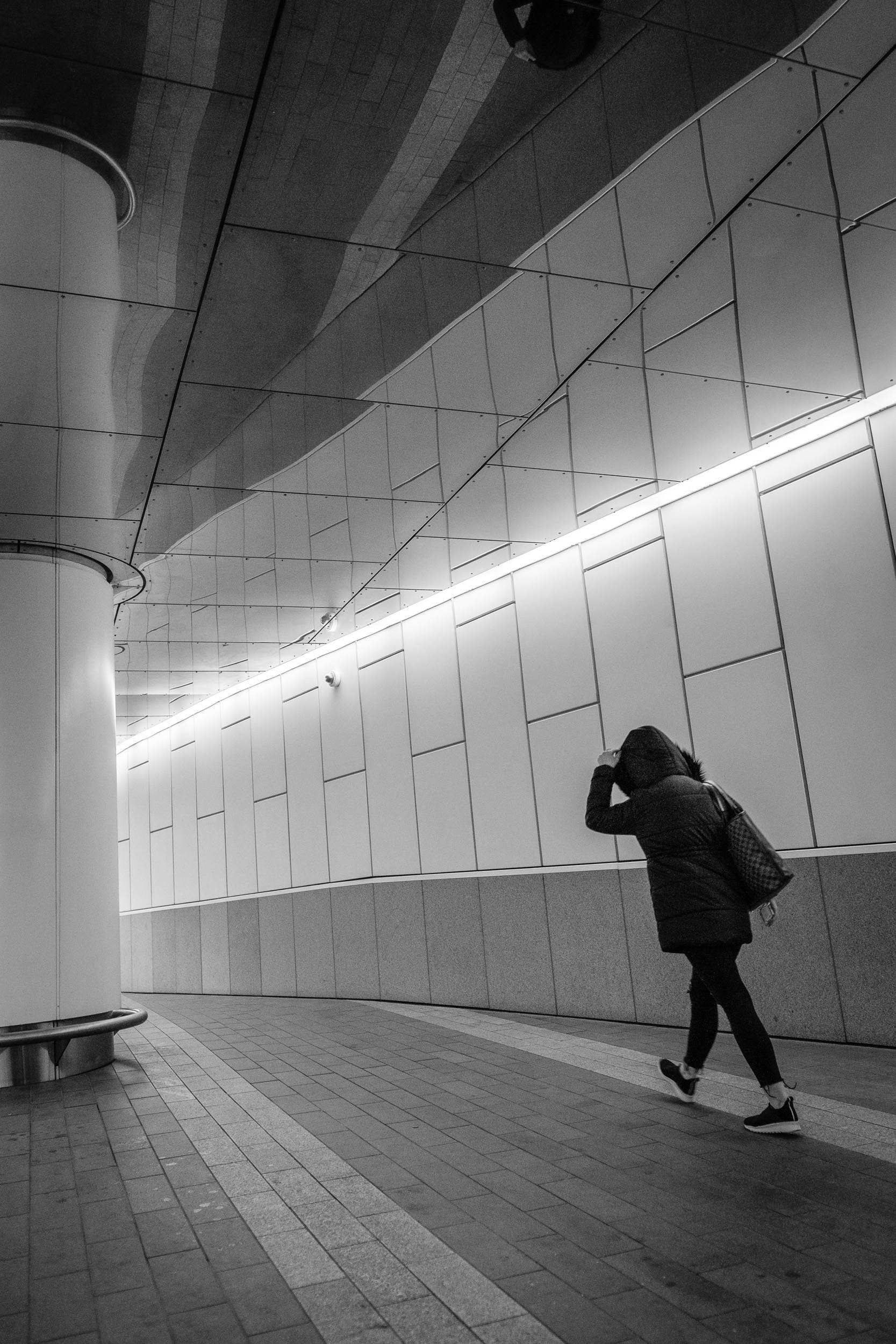
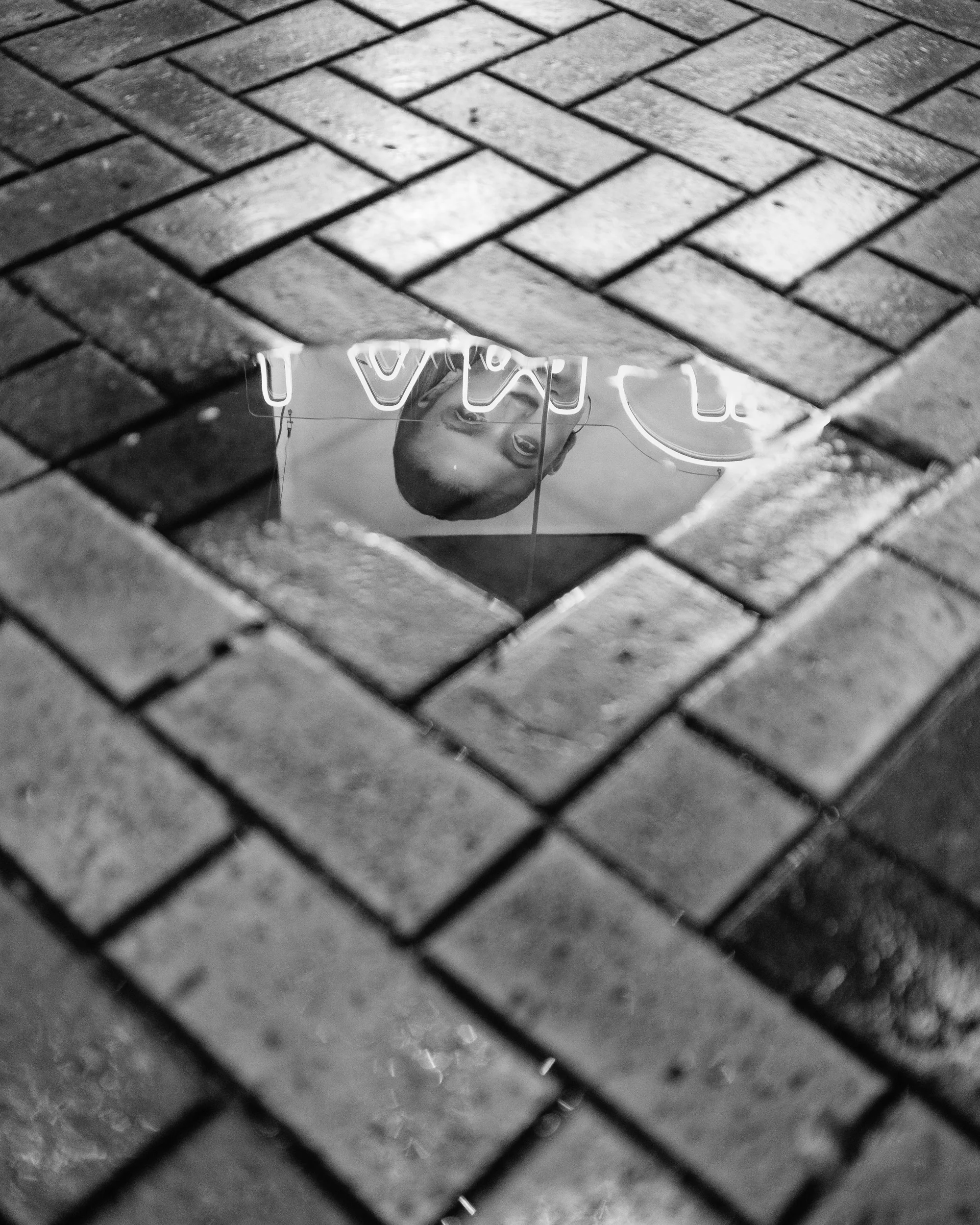
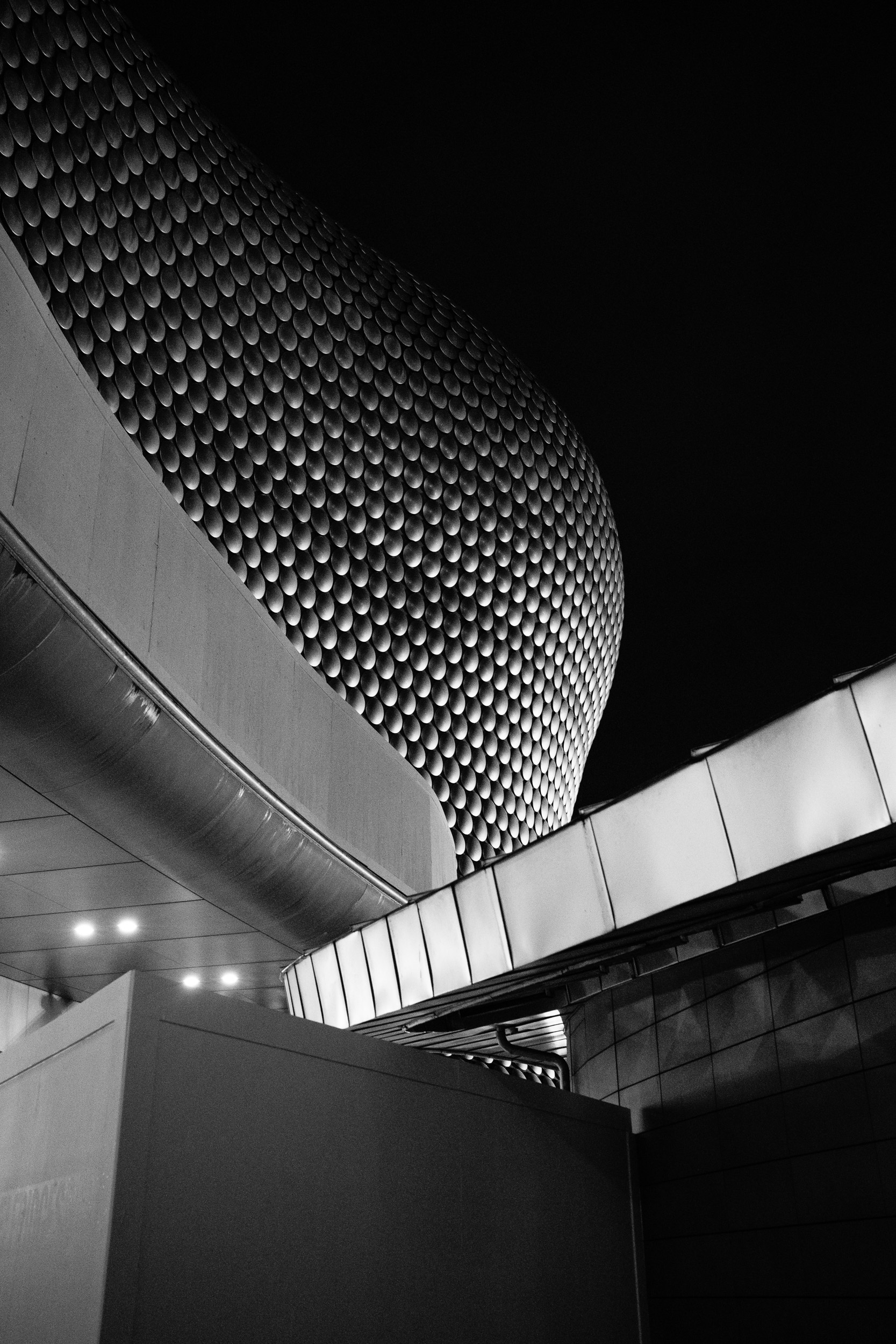
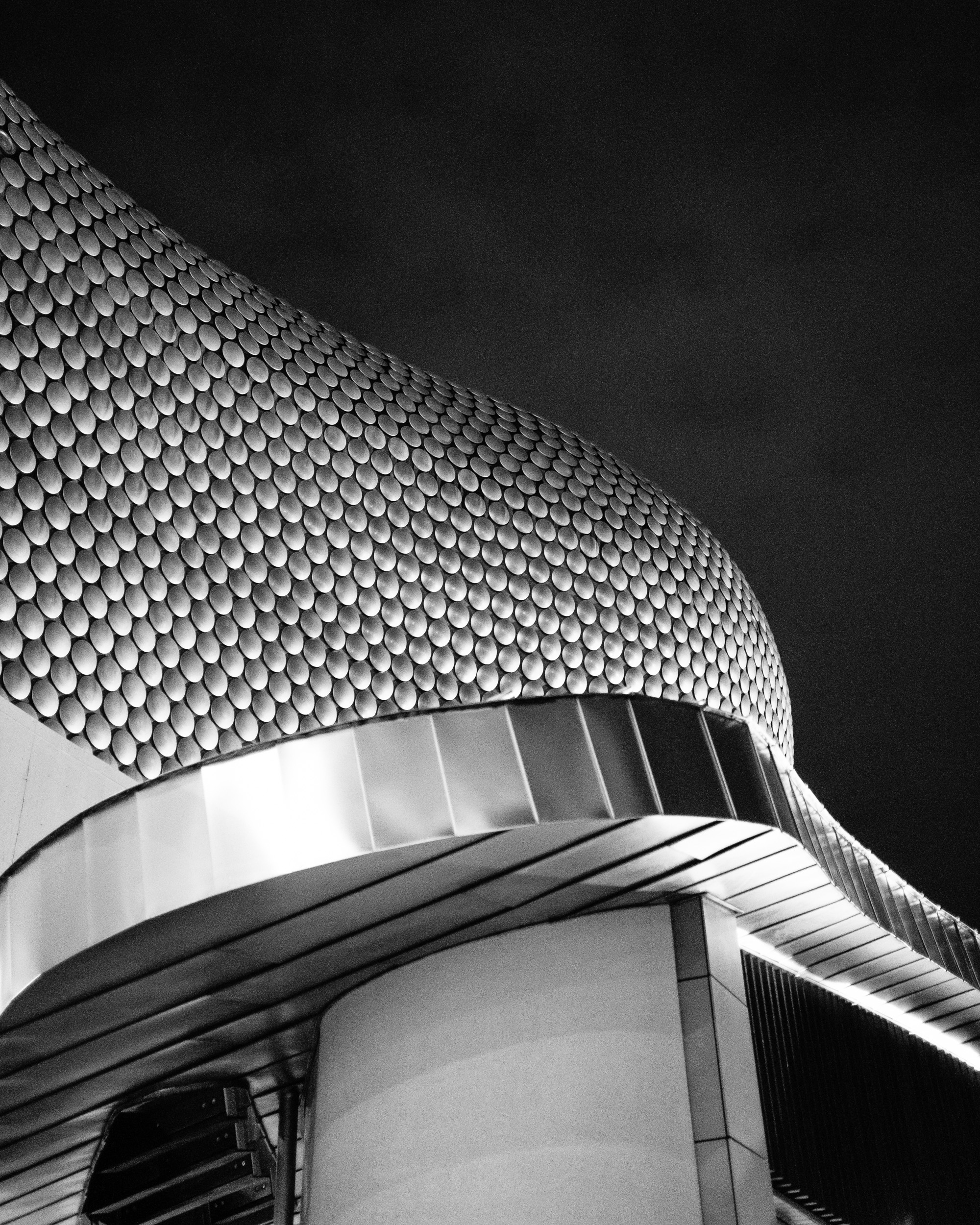
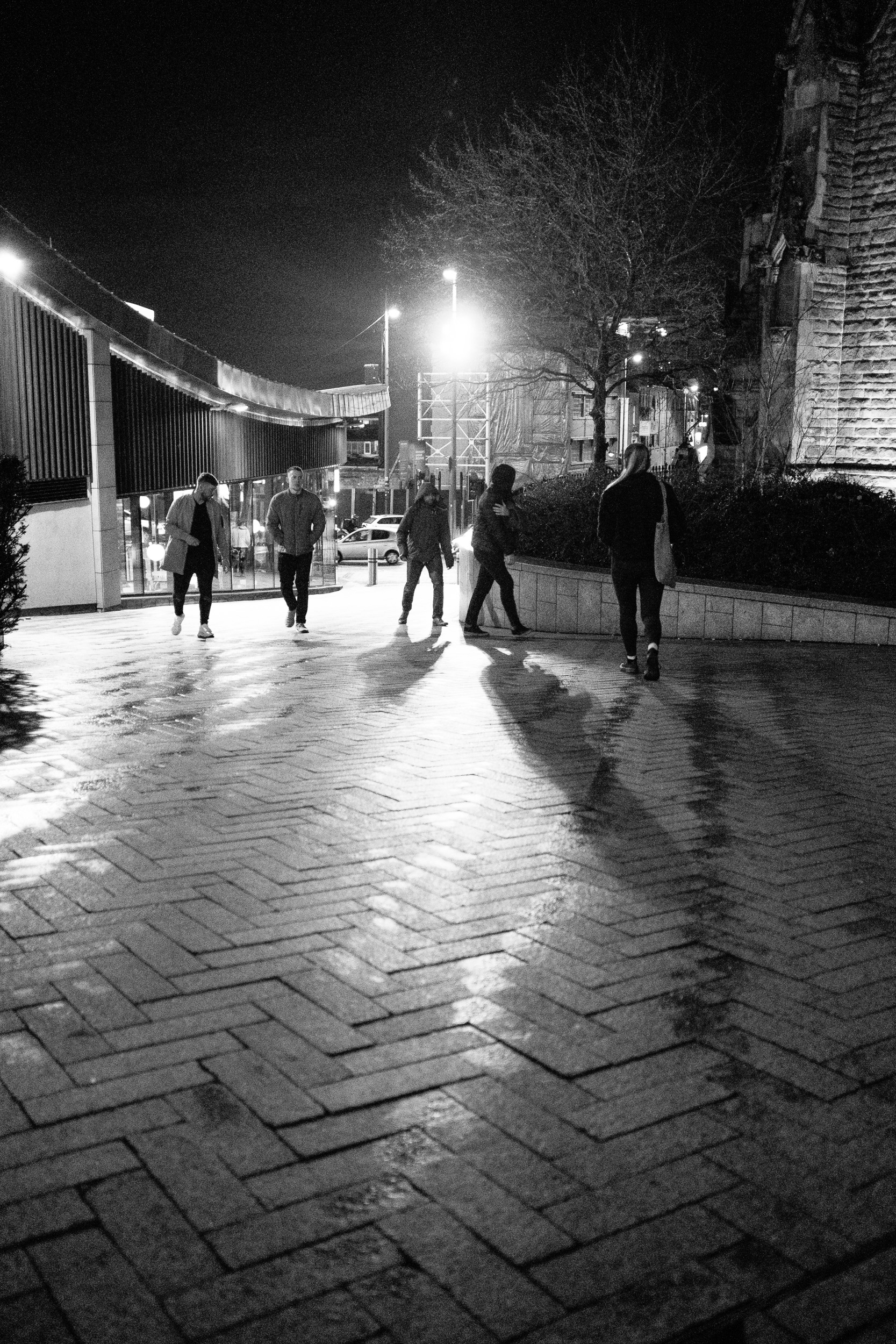
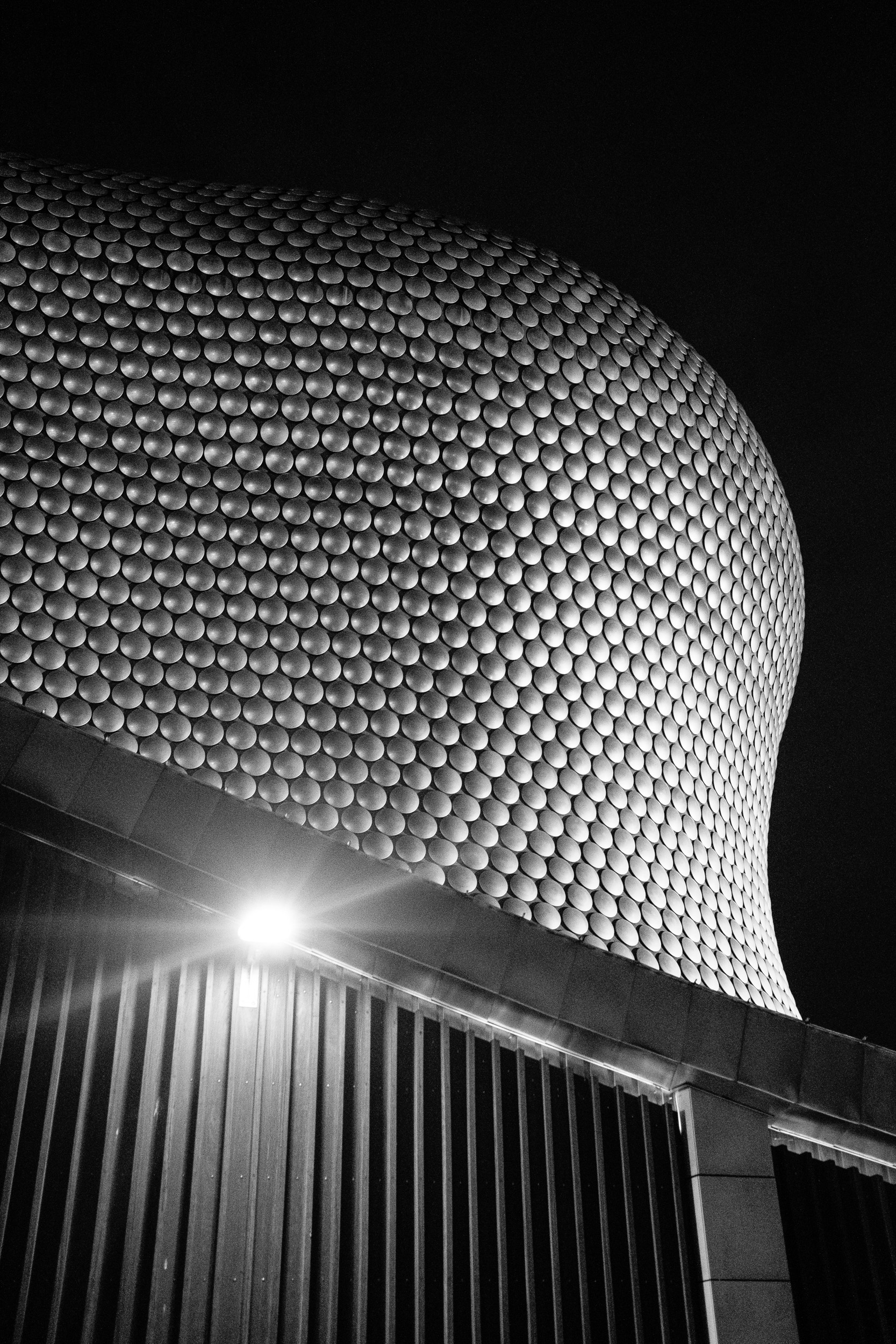
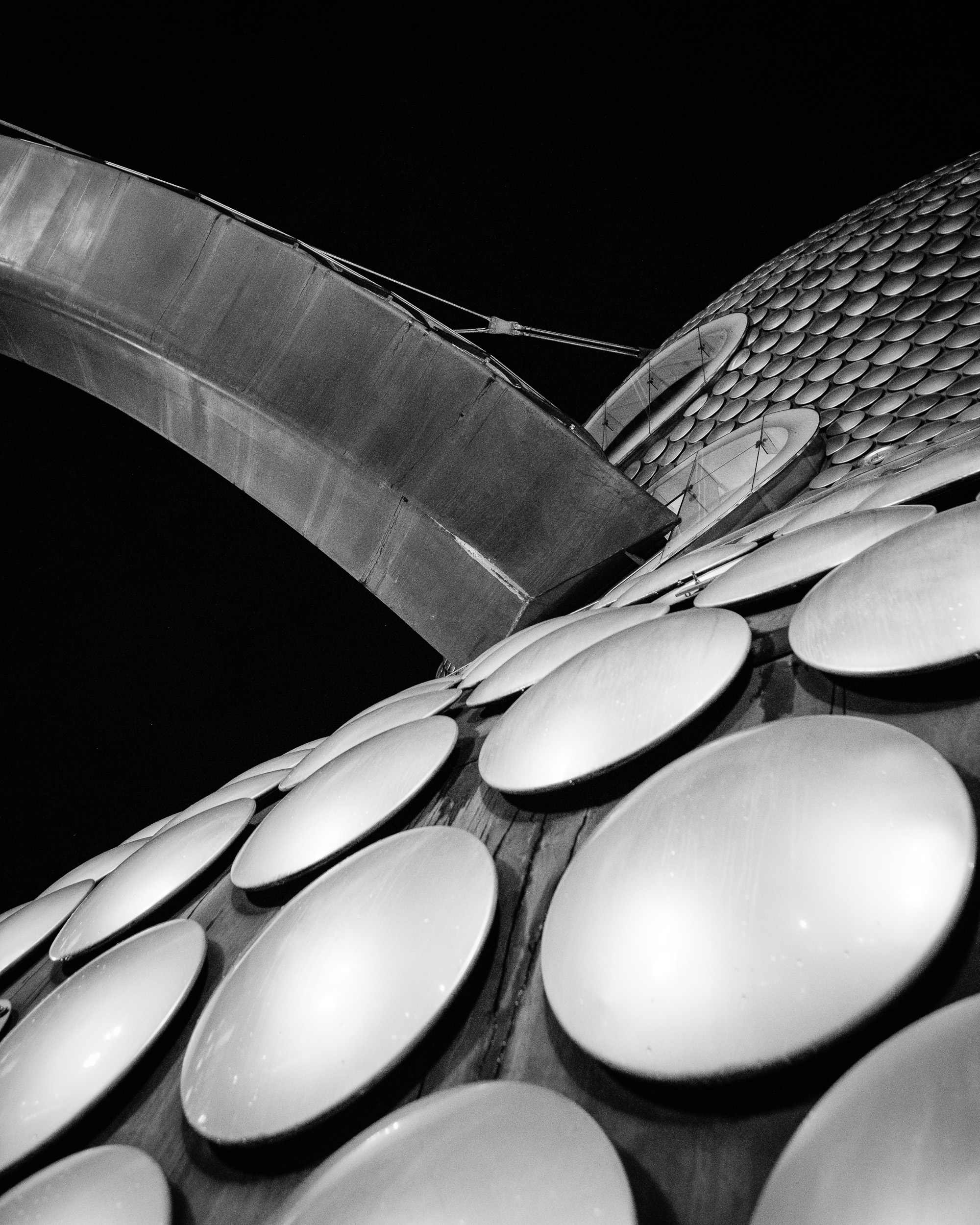
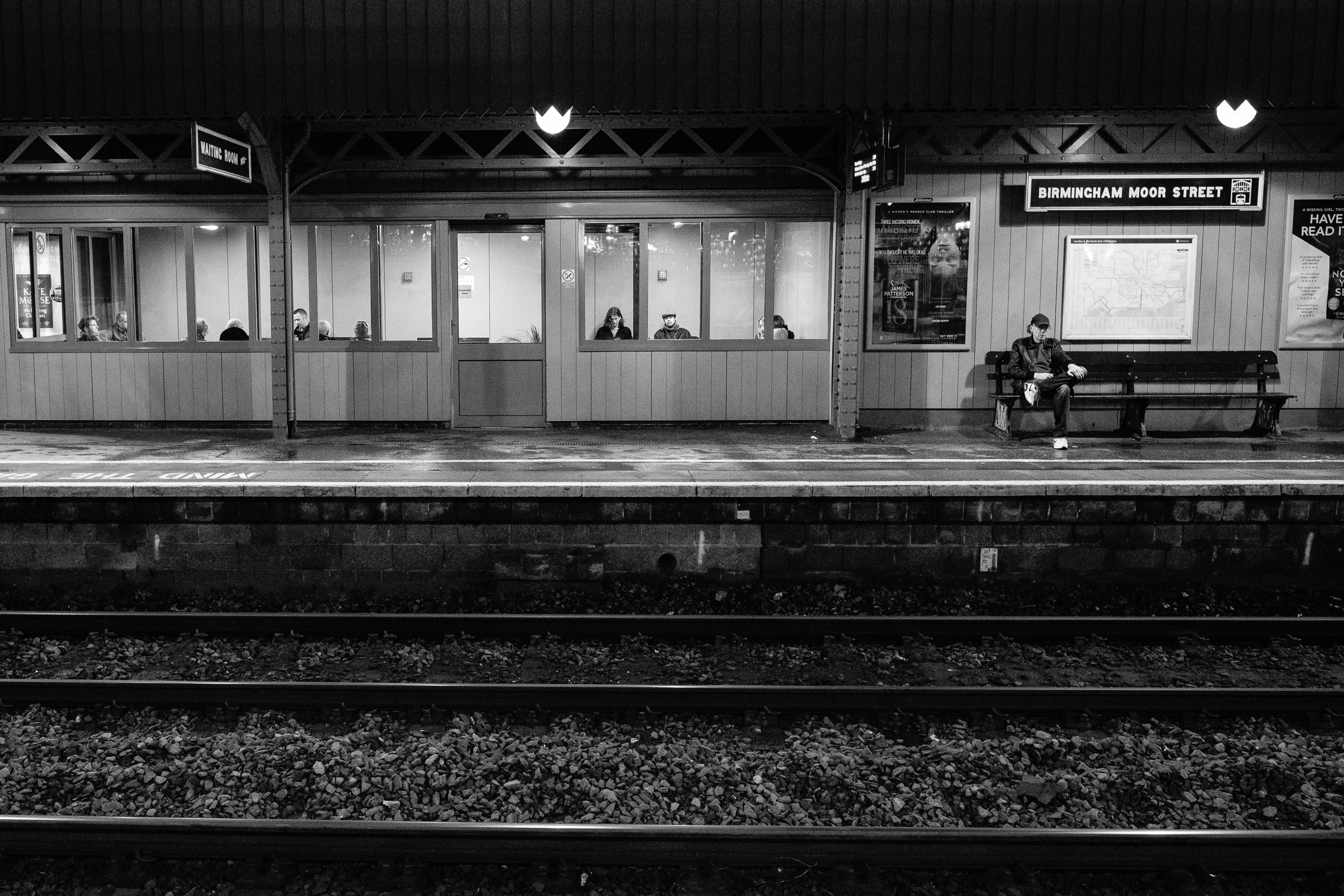
I'm certainly not going to claim that my photographs are amazing. Like any genre of photography, it's going to require a lot of practice to ever get even remotely good. However, I very much enjoyed the experience so I'm keen to do more and see how my street photography progresses.
Have you done any street photography before? Got any street photography tips? What is your favourite location? Let me know in the comments below.
Finally, here are some of the photos I captured.