
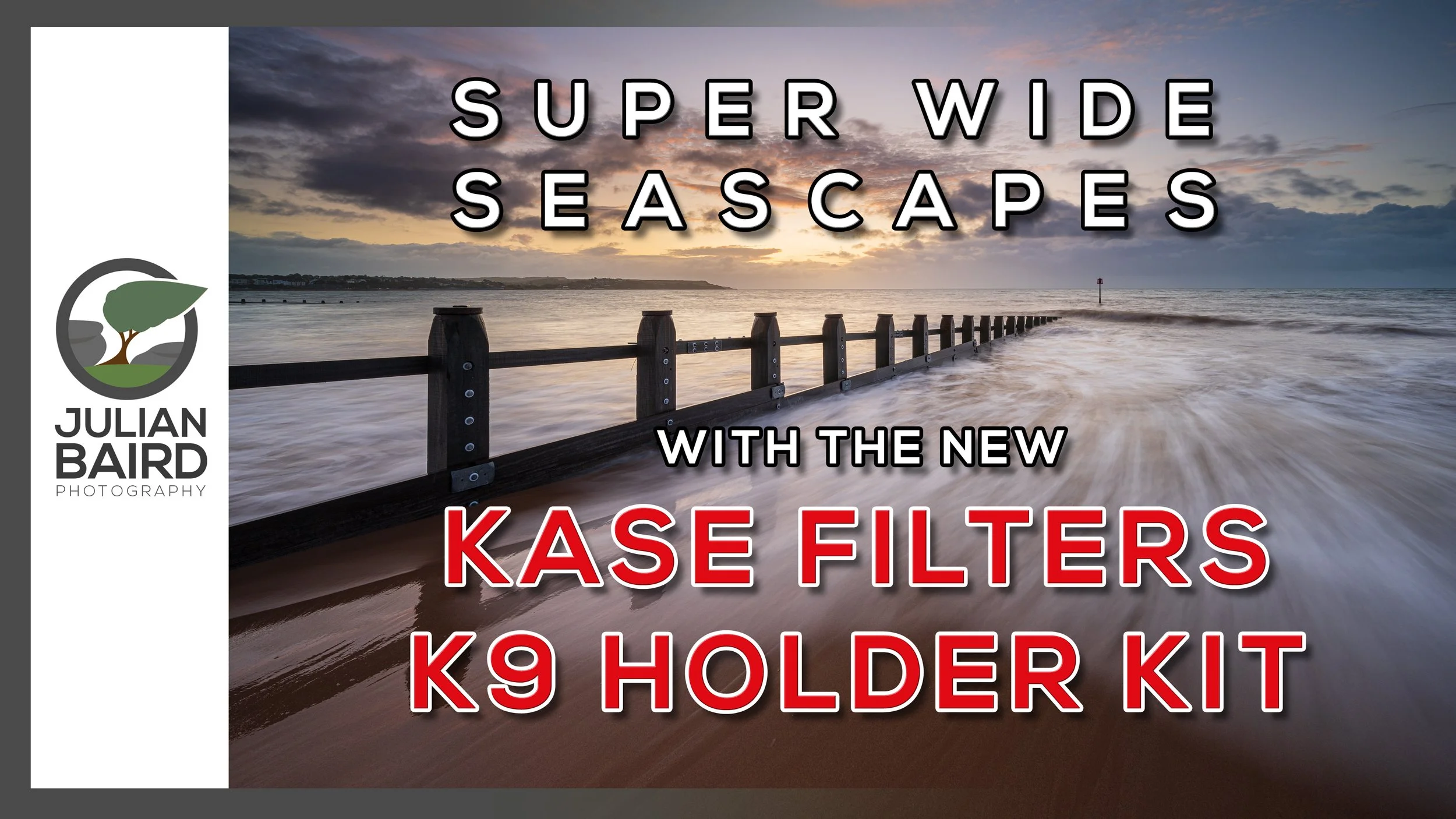
Super Wide Seascapes with the Kase Filters K9
In the blog this week I head out to one of my favourite coastal locations with the new Kase K9 filter holder and polariser to capture some super wide seascapes.
Switching to the Kase Filter System
Back in July I shared with you my thoughts on the Kase Filter system. I had made the switch from Lee Filters to Kase Filters back in late 2018, but I wanted to give them a proper test before I told you what I thought about them. If want to see that video and see the images of Boscastle harbour that I captured that beautiful summers evening then check out this blog post here.
Going from Kase K8 to the Kase K9 Filter Holder
As I said in that video, I was very happy with my Kase filter system including the K8 filter holder and slim polariser. I know nothing is perfect but I honestly didn't think there was room for improvement with the K8. That was all true until I picked up a Nikon Z7 with the Nikkor 14-30 mm f/4. With my previous wide angle lens, the Nikkor 16-35 mm f/4, you could happily shoot at 16 mm with the K8 and polariser with no vignetting. However, at 14 mm on the Nikkor 14-30 mm with the K8 and polariser, you could get a little bit of vignetting (the same applies for the Sony GM 16-35 mm.
So when the team at Kase Filters UK told me about the improvements they had made with the K9 and asked if I'd be interested in trying it out I jumped at the chance. I was keen to put this new K9 filter holder and polariser to the test but I needed a suitable location. Where could I shoot super wide angle images that need a polariser? Dawlish Warren beach of course!
Super Wide Seascapes
The removal of vignetting at 14 mm isn't the only improvement to the K9, there are a number of other minor, but very welcome improvements as well. If you want to know what they are, or if you should upgrade to the K9, then check out the video below:
When I got my Nikkor 14-30 mm f/4 lens I didn't think I'd notice that extra 2 mm or use it that often, but as it turns out I really appreciate it. Not only does it give me more creative options in certain scenarios, but the image quality and sharpness, particularly around the edges seems to be much improved over my trusty old 16-35 mm f/4. It's also good to know that I've also got a filter system that can make the most of those super wide angles and help me create images like this:
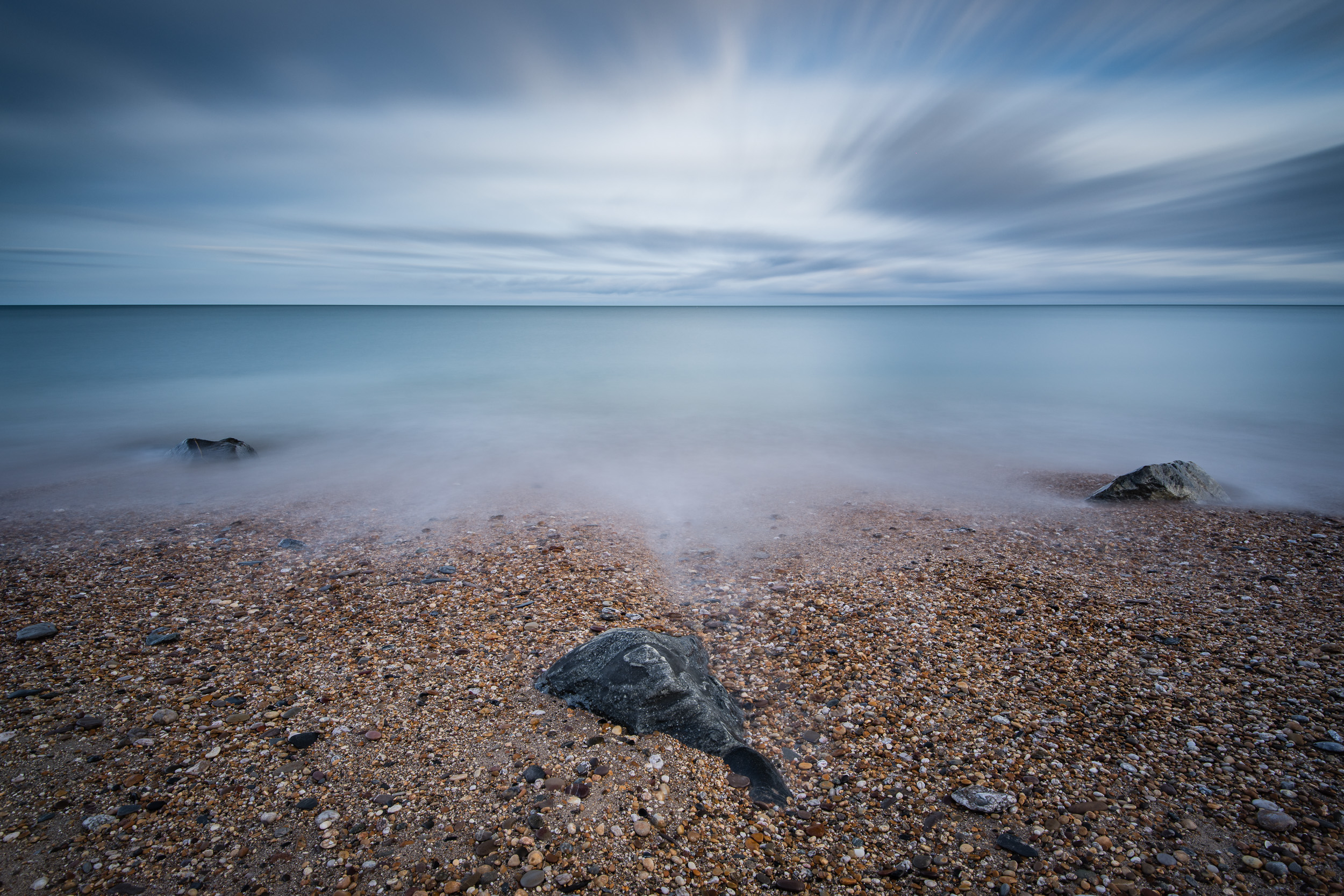
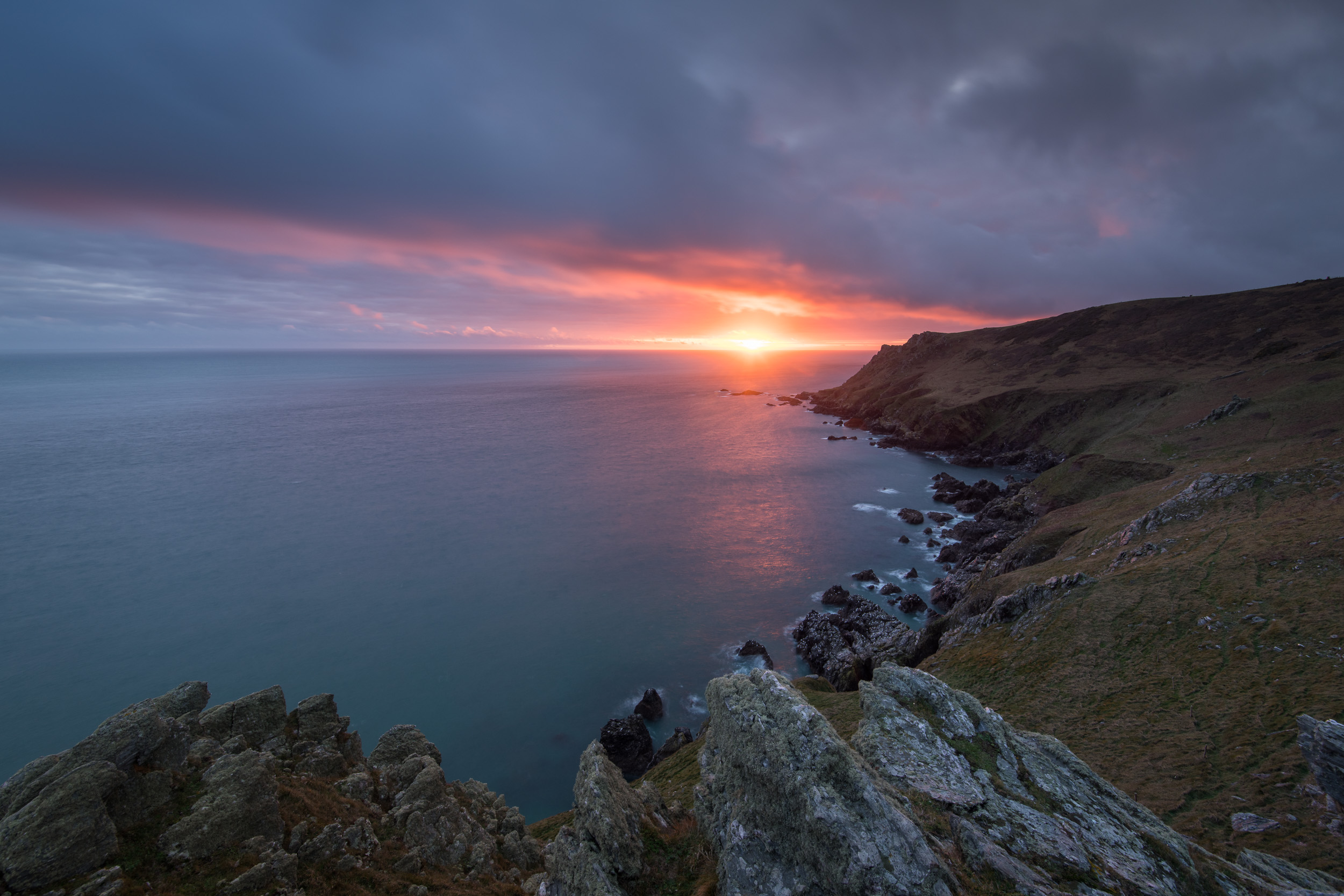
Dawlish Warren Sunrise #1, Devon - Nikon Z7 with Nikkor Z 14-30 mm f/4 at 14 mm, f/11, 1.6 sec at ISO 64, Kase Filters K9 holder, CPL, and ND grad.
Dawlish Warren Sunrise #2, Devon - Nikon Z7 with Nikkor Z 14-30 mm f/4 at 14 mm, f/13, 1 sec at ISO 64, Kase Filters K9 holder, CPL, and ND grad.
I hope enjoyed this quick look at the K9 and the images I captured that morning on Dawlish Warren. If you've got any questions about the Kase Filters system, the K9 or the images I captured let me know in the comments below.
A Quick Word on Moving to the Kase System

Since moving to the Kase Filters system a number of regular readers of the blog and viewers of my YouTube channel have asked about how easy it is to move from another filter system to Kase. Well, the good news is that if you are coming from another 100mm based system such as the Lee100 Filter System, most of your existing ND and ND grads should work just fine in the K9 or K8 holder.
The Lee Filters range of Stoppers, which have foam on the inner edge, need to be slotted in with the foam facing outwards (as shown in the image).
Kase circular polarisers (CPLs) are designed specifically for each of their filter holders so you probably won’t be able to use a CPL from another manufacturer. The good news is that the K8 and K9 filter holder kits come with the correct CPL for that holder.
I appreciate that changing filter systems can be costly and the need to gradually transition is an important one so I hope this information is useful for you. I would of course recommend you plan to replace your ND and ND grads with Kase equivalents as Kase filters have some useful benefits (which you can hear about in the video below).

Dawlish Warren - Three in a Row
Is there any benefit to going to the same location three times in a row? In the blog this week I find out.
Let me start off by apologising. I know this is now the third blog post in a row to feature Dawlish Warren but because of some not very interesting reasons, it's the only place I've managed to get out to photograph recently. I also have a special blog post from Dawlish Warren to share with you in a couple of weeks time as well! However, I will be mixing things up over the next few weeks. I've got one more blog post on a local location before I head to Scotland for a week of uninterrupted photography, so expect plenty of interesting blog posts, photos and videos from that trip!
After last weeks blog post from Dawlish Warren where I talked about becoming complacent with my compositions, I was determined to try a little harder this time out. I wasn't sure what to make of the weather forecast. One weather forecast was predicting dry conditions and high clouds, while another was saying overcast and showers Regardless of the weather I thought this was going to be my only opportunity to get out with the camera this week so I decided to go for it anyway.
I arrived at Dawlish Warren a little earlier than normal so I sat in my car and enjoyed the cup of coffee that I had bought from the petrol station on the way there. You simply can't beat the feeling of that first cup of coffee in the morning, so as I walked towards the beach I already had a bit of a skip in my step. As I walked along the beach and breathed in the sea air I decided that this was indeed a fantastic place to watch the start of a new day.
Caffeine highs aside the weather was actually a mix of the two forecasts. There were some great looking patches of sky and some big rain clouds kicking about. However, as is often the way, there was a big bank of thick cloud on the horizon where the sun was going to rise. No vibrant morning light for me. Though I knew I probably wasn't going to get any amazing pictures, I thought I would use the time constructively and work on some compositions. This is all good practice. I'd rather work out some new compositions during average light rather than when the conditions are amazing. Better to practice when there is less pressure.
So was this third consecutive trip the most productive? I'm not sure, so I'd be interested to hear your thoughts. Here is the image from this week, plus the other two from the previous weeks.


I personally don't have a favourite. They all have different qualities and minor issues. For me at least, it's only by looking at them all together do they deliver in a completely different way. While no one image is a stand out image, by shooting the same location in 3 slightly different ways under 3 slightly different weather conditions I have increased my working knowledge of this location. I can see from the photographs which style of image works for a certain combination of gryone and weather. This means I can be more effective and efficient for future visits. I can use my knowledge of the location to create a composition that is suited to whichever groyne I'm shooting and the weather. Hopefully, this will result in me capturing better images.
I said at the start of this blog post that I wanted to apologise for the 3rd Dawlish Warren blog post in a row, but by writing this very blog post I've gained a new perspective and that’s something that I didn't expect.
I'll see you next week when I promise you that the blog post won't be about Dawlish Warren.

Does Familiarity Breed Complacency?
I’m no stranger to photographing Dawlish Warren, but is that familiarity gradually leading to poorer images?
Under Normal Circumstances
Under normal circumstances I wouldn’t have bothered heading to Dawlish Warren last Friday. I had already been there the week before, and with the weather forecast not exactly predicting spectacular conditions, I wouldn’t have normally visited this location again. However, these weren’t normal circumstances. My friend and newly turned professional photographer, Chris Sale, was in the area and he was keen to visit the beach at Dawlish Warren.
Chris was staying in Cornwall for a week to immerse himself in photography and see his mum. This was also going to be an excellent opportunity for us to catch up and do a little photography. Unfortunately for us the weather was pretty poor all week. The one evening I was able to meet up with Chris the weather was particularly poor.
We had decided to meet at Trebarwith Strand, a wonderful coastal location to photograph, but the wind was howling. While stormy weather can sometimes be used to great effect, this wasn’t one of those evenings. The wind had churned up the sea into a mass of white water and foam. Only a mad person would have ventured down onto the beach and the view from the cliffs wasn’t exactly inspiring. In the end I didn’t take any photographs so we went to the pub and had a very nice pizza.
With Trebarwith a right off, we committed ourselves to a dawn shoot. Chris had always wanted to photograph the beach at Dawlish Warren so we decided to head there on Friday morning. Unfortunately, yet again, the weather forecast was poor. High winds, lots of cloud and the potential for rain didn’t fill me with enthusiasm. I did however want to head out on another shoot with Chris and go out for a spot of breakfast, so I thought it was worth a punt.
More Chat than Photography
Arriving at Dawlish Warren the conditions were slightly better than forecast but still not particularity inspiring. I already knew I probably wasn’t going to get a better shot than last week. No worries though, Chris was with me and the banter was flowing.
Even after many years of photographing Dawlish Warren, it is still a place that excites me, but sometimes when I feel I can’t get a better or a different image than previous visits then I do perhaps get a little lazy with my photography. That familiarity with a location can sometimes make me a bit complacent.
While I do like the image I captured that morning, I think I could have taken a better shot if I’d focused a little more on what I was doing and the conditions I had to work with.
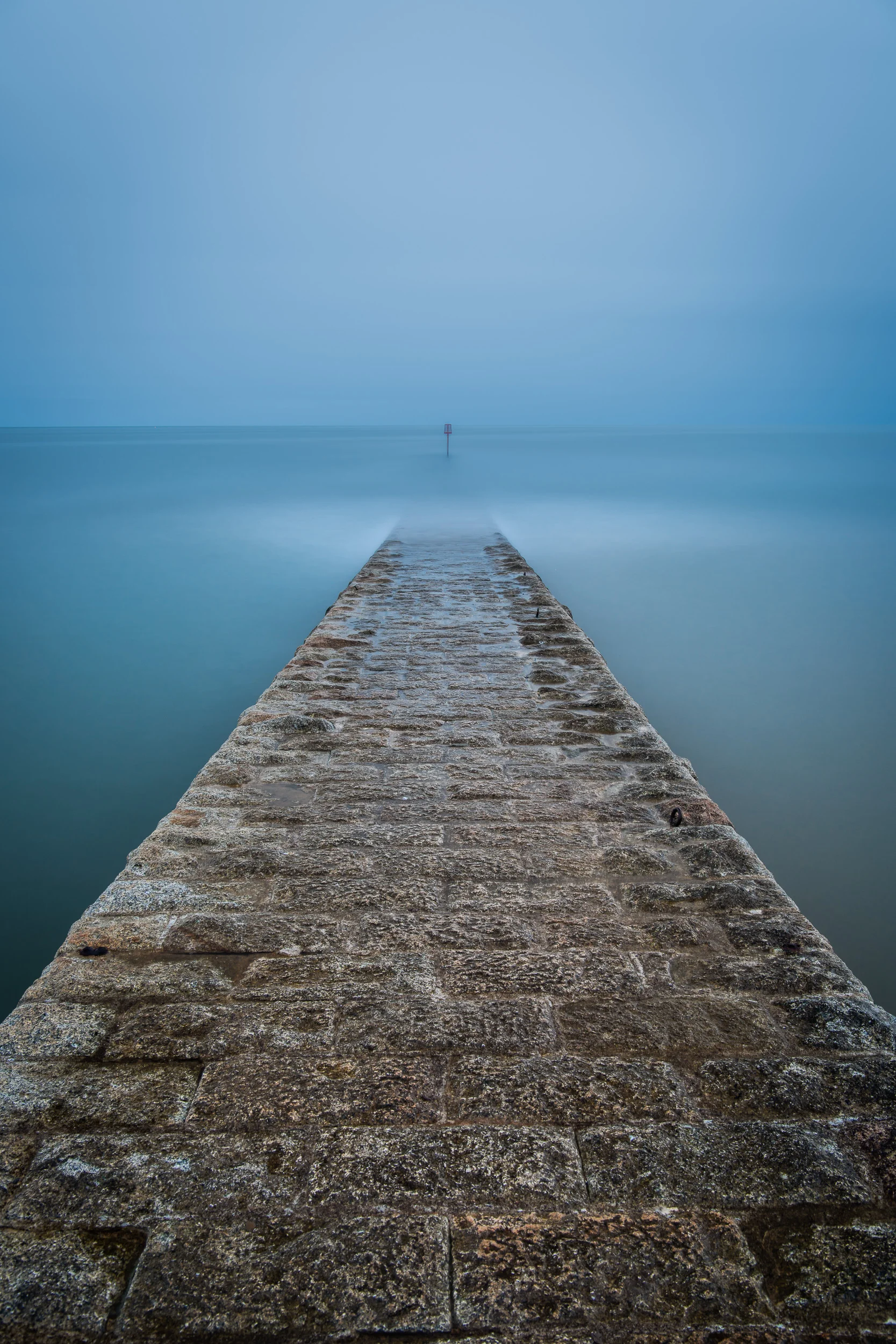
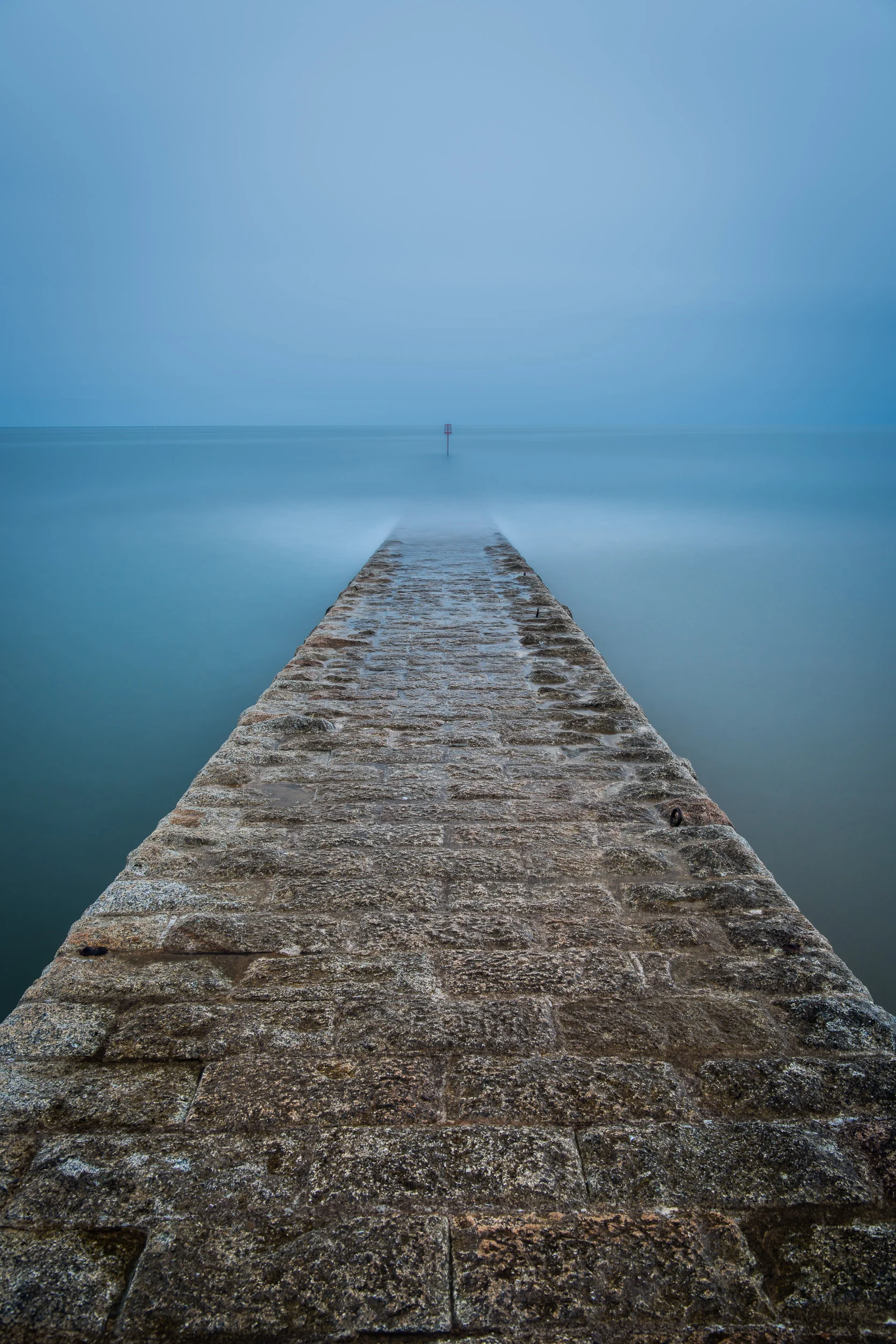
Into the Void, Dawlish Warren, Devon - Nikon Z7 with Nikkor Z 14-30 mm f/4 at 29 mm, f/8, 224 sec at ISO 64, Kase Filters K8 holder, CPL, and 10 stop ND.
So what exactly do I feel is wrong with the photograph? While I like the long exposure, the slightly desaturated colour palette, and the way the groyne fades into the sea, I’m not that happy with the location in the frame where the groyne appears in the photograph. For me at least, I think the right-hand side of the groyne needs to be more prominent and perhaps start further down in the frame. This probably would have been best achieved by moving closer to the groyne and perhaps turning to face it more directly.
I could change the relative position of the groyne in this image through a crop but I would lose a lot of the sea in the foreground. The best option of course is just to get it right in camera in the first place!
While I like the image, it definitely has room for improvement. Perhaps if I’d been a little less complacent and was focusing more on all the elements of the composition, I might have made a slightly different but improved image. Photography is a constant journey of learning, and this trip to Dawlish Warren has taught me not to be so complacent or lazy with composition, even when I don’t think I can improve on previous images.
Do you agree with my critique? Do you sometimes get complacent when photographing your favourite locations? Let me know in the comments below.

Get Your Camera Out!
With sunrises now being at a much more sociable time of the morning I decided to get myself back into the swing of early morning rises and head to my favourite local beach.
Summer Sunrises
I like to think I don't have much of a problem getting up early in the morning so I can capture sunrise images. During the summer months the shock of a 3 am alarm call is enough to shake the resolve of even the hardest landscape photographer. While I can and have got up at this time in the morning it often means a fairly difficult rest of the day.
The difficult part is when I return from the shoot. It would be lovely if I could just come home, have some breakfast and then have a nice little nap. For a couple of hours. In reality though I have to plough through the rest of the day as if I had just got up at 7 am. It's hard to function with little sleep and still behave like a normal human being. It is for those reasons that I will only get up for a 5 am sunrise if the weather is promising to be epic or I am meeting someone.
Winter Sunrises
As the nights start to draw in it's getting harder for me to get out to shoot sunsets, so as I sat at my computer the other day planning out my photographic week it suddenly dawned on me (excuse the pun), that sunrises are now at a much more sociable hour! With a 7 am sunrise I don't have to set an alarm until 5 am, maybe even 5:30 depending on the location.
To get myself back into the swing of early morning rises I decided that I would make life easy for myself and go somewhere I know and that is local. If you've been reading my blog for a while you'll know exactly the location I'm talking about. Yep, that's right, Dawlish Warren. I've created many videos and blog posts from this location. There are too many to list here, so if you want to see what I captured on previous trips just use the search box at the top of The Exposed Blog page and search for Dawlish Warren.
Dawlish Warren - 2015. Nikon D750, Nikkor 16-35 mm f/4 at 35 mm, f/13, 72 secs at ISO 100.
Get Your Camera Out!!
I was actually rather excited to be heading out for a dawn shoot at Dawlish Warren. Not only I had I not been on a sunrise shoot for a while but I also hadn't been to Dawlish Warren for some time. It was hard to tell exactly what the sunrise would be like from the weather forecast but I wasn't going to let that put me off.
I arrived at Dawlish Warren about 6 am, roughly an hour before sunrise. As I strolled along the beach I took in a big lung full of fresh sea air and decided that there was no place better to start the day. I was the only person there and it was wonderful.
When shooting the beach at Dawlish Warren I normally like to shoot past groyne 9. Dogs aren't allowed past groyne 9 at any time of year so there is no risk of jumping dogs and unwanted footprints in the pristine sand. As I got to groyne 9 I could see a heavy bank of cloud on the horizon where the sun would rise from. This could be a problem but I decided not to let it get me down and so I sat down on one of the sand dunes to see how things might pan out.
As I watched the waves roll in that pesky bank of cloud wasn't shifting. The sky above Dawlish Warren was looking good with plenty of breaks in the cloud which, if the sun could break the horizon, would light up nicely. The time for sunrise approached, arrived, and went, but no sign of the sun in the sky.
Sitting there I did think to myself that I might not even bother getting the camera out. It's not as if I'd never been here, or would never return, or that I didn't have any good shots from this location. Experience has taught me though that it is always worth getting the camera out! So I got my camera out and I have to say that I'm glad I did. As the sun finally broke above the bank of cloud the sky started to get interesting. Not amazing, but interesting enough for me to want to take some photographs. I soon found my creative juices flowing and I got busy with the job of creating photographs.
Dawn at Dawlish Warren, Devon - Nikon Z7 with Nikkor Z 14-30 mm f/4 at 14 mm, f/13, 99 sec at ISO 64, Kase Filters K8 holder, CPL, and 6 stop ND.
Do you shoot sunrises all year round or wait like me until the autumn and winter months? What is your favourite sunrise location? Do you always get your camera out or have you gone home having taken no pictures at all? Let me know in the comments below.

7 AMAZING Devon and Cornwall Landscape Photography Locations
In this blog post I’m going tell you about 7 AMAZING locations in Devon and Cornwall for landscape photography. This post is PACKED full of photographs and videos to inspire your landscape photography!
Vignettes of Landscape Photography
Over the last week I’ve been publishing videos from my new series Vignettes of Landscape Photography. It’s a series of short videos on the locations that have inspired my landscape photography. Each episode is a mix of still photography and video clips that will hopefully not only show you the natural beauty and variety of the location but also inspire you to visit that location to capture your own photographs.
Now that all 7 episodes from series 1 have been published on YouTube, I thought I would bring them all together in a big blog post. Not only can you choose to play them all from the playlist I have created below, but if you scroll down you will find each individual episode along with a map and the images I captured from that location. I hope you’ll agree that these are indeed 7 AMAZING locations in Devon and Cornwall for landscape photography!
I really hope you enjoy this first series of Vignettes of Landscape Photography. Please leave me a comment below and let me know what you think. Did you have a favourite episode or a favourite image? What would you like to see from series 2? Have you been to any of these locations? Have you been inspired to visit any of the locations featured? Let me know in the comments below.
Bedruthan Steps
A Bedruthan Spring, Bedruthan Steps, Cornwall - Nikon D850, Nikkor 16-35 mm f/4 at 26 mm, f/11, 1/4 sec at ISO 64, Kase CPL and ND grad.
Spring Cliffs at Bedruthan, Bedruthan Steps, Cornwall - Nikon D850, Nikkor 16-35 mm f/4 at 22 mm, f/11, 1/2 sec at ISO 64, Kase CPL and ND grad.
Last Light at Bedruthan, Bedruthan Steps, Cornwall - Nikon D850, Nikkor 24-70 mm f/2.8 at 42 mm, f/8, 136 sec at ISO 64, Kase CPL, ND and ND grad.
Venford Falls
The Twin Falls of Venford, Dartmoor, Devon - Nikon D850, Nikkor 16-35 mm f/4 at 28 mm, f/11, 4 sec at ISO 64, Kase CPL.
The Fall, Dartmoor, Devon - Nikon D850, Nikkor 16-35 mm f/4 at 35 mm, f/11, 2.5 sec at ISO 64, Kase CPL.
The Flow, Dartmoor, Devon - Nikon D850, Nikkor 16-35 mm f/4 at 16 mm, f/11, 2.5 sec at ISO 64, Kase CPL.
Belstone Common
Stormy Belstone #1, Dartmoor, Devon - Nikon D850, Nikkor 16-35 mm f/4 at 16 mm, f/13, 1/3rd sec at ISO 64, Kase CPL and ND grad.
Stormy Belstone #2, Dartmoor, Devon - Nikon D850, Nikkor 16-35 mm f/4 at 16 mm, f/13, 1/3rd sec at ISO 64, Kase CPL and ND grad.
Daymark Tower
The Daymark Tower, Devon - Nikon D850, Nikkor 16-35 mm f/4 at 16 mm, f/13, 1/5th sec at ISO 64, Kase CPL and ND grad.
Tower in the Field, Devon - DJI Mavic Pro, 23 mm, 1/290th sec at f/2.2, ISO 100.
Stormy Belstone #1, Dartmoor, Devon - Nikon D850, Nikkor 24-70 mm f/2.8 at 70 mm, f/2.8, 1/125th sec at ISO 64, Kase CPL.
Trevose Head
Trevose Head #2, Cornwall - Nikon D850, Nikkor 24-70 mm f/2.8 at 26 mm, f/13, 2.5 sec at ISO 64, Kase CPL.
A Long Night Ahead - Trevose Head, Cornwall - Nikon D850, Nikkor 16-35 mm f/4 at 20 mm, f/13, 13 sec at ISO 64, Kase CPL and 6 stop ND.
Botallack
Botallack #1, Cornwall - Nikon D850, Nikkor 16-35 mm f/4 at 16 mm, f/11, 1.6 sec at ISO 64, Kase CPL and 6 stop ND.
Botallack #3, Cornwall - Nikon D850, Nikkor 16-35 mm f/4 at 30 mm, f/13, 90 sec at ISO 64, Kase CPL and 6 stop ND.
Brent Tor
Brent Tor, Dartmoor, Devon - Nikon D850, Nikkor 16-35 mm f/4 at 16 mm, f/14, 1/13th sec at ISO 64, Kase CPL.
Brentor Church Sunset #2, Dartmoor, Devon - Nikon D850, Nikkor 16-35 mm f/4 at 19 mm, f/8, 1/6th sec at ISO 64, Kase CPL. Focus stacked image.

A Tale of the Unexpected
Sometimes the best the shots are on the path rather than the destination itself.
Two Plans in One
Summer generally brings blue skies and warm weather. All very nice for relaxing in and drinking glasses of chilled white wine, but generally useless for landscape photography. After what had seemed to be an endless streak of blue sky evenings I had decided that enough was enough and I was going to go out with the camera. Worst case scenario I could do some exploration of new locations, and best case I might get some high-level cloud around sunset and be able to fire off a couple of frames.
I've been trying to explore more of my local coastline recently so I decided I would visit a location that had been recommended to me by a friend. It's the kind of location you want to visit on a high tide, with a bit of wind and lots of clouds. None of these conditions would be present on this visit, but as this was a mission of exploration, none of that mattered. I just wanted to scope out the location.
As I also had a bit of time I thought I would visit that location first and then head to a different location to catch the sunset. Looking at the map I could see I wouldn’t be far from Froward Point and as I hadn't shot that viewpoint in a while I decided to tag it onto my itinerary.
Blue Skies, Blue Ocean
It was a beautiful summers evening as I set out in my car to my first location. Despite it not being ideal conditions for landscape photography summer is a great time to be driving around Devon. Everything looks lush and green and you can't help but feel everything is going to be just fine!
That sense of well-being and calm continued as I made the last part of my journey to the first location on foot. As I already knew I wasn't going to be taking any "serious" pictures at the location it didn't bother me that it was calm seas and bright blue skies. I took a number of test shots from various different angles. I had to try hard to envisage the location in less settled conditions, but I at least now had a good idea of what I might want to achieve next time. Definitely a location to return to.
I was soon back in the car and crossing the River Dart using the ferry. This is something I haven't done before so it was an added bit of excitement to my little road trip!
Golden Fields
To get to Froward Point you first have to park at the Brownstone National Trust car park and then walk the rest of the way. As you make your way down to the coastline you walk by Daymark Tower, a popular location for photography and a location I’ve shot myself many times. In fact, I had shot it a few weeks before so I was happy enough to pass it by. However, as I walked by it did catch my eye. Instead of the crops being a greeny yellow colour they had turned a golden colour and looked quite different. It did cross my mind that it might photograph well when the sunsets, but I carried on walking, focused on getting to the coastline.
You can shoot Froward Point from a number of different angles as you can see from this blog post here and here. For this visit I decided to go for the spot almost directly below the NCI lookout. I have to admit that when I arrived I just wasn't feeling that excited about shooting there. I'm not sure why this was. The sky now had a few very high-level clouds in it but the rest of the scene wasn't really doing it for me.
I think at the back of my mind I knew that I would have been better off back at Daymark Tower and shooting those golden fields of crops. As time progressed and my desire to photograph Froward Point didn't increase I decided there was no point in waiting until sunset and so I packed my bag and started to walk back to the car.
As I approached Daymark Tower I could see how good the light looked on the tower and the crops. With about 15 minutes of good light left I get to work very quickly and captured these images.
Field of Gold, Daymark Tower, Devon - Nikon D850, Nikkor 16-35mm f/4 at 17mm, f/13, 1/3rd second at ISO 64.
Tower of Gold, Daymark Tower, Devon - Nikon D850, Nikkor 70-200 f/2.8 at 70mm, f/11, 1/6th second at ISO 64.

Fire Beacon, Daymark Tower, Devon - Nikon D850, Nikkor 16-35mm f/4 at 24mm, f/13, 0.4 second at ISO 64 (single image crop at 16:7).
Though I've shot Daymark Tower a few times, I'd never photographed it looking like this. A combination of clear skies, golden light, and golden crops made for some very pleasing images. Considering I hadn't planned on capturing images at Daymark, these unexpected images were very welcome!
Have you ever passed a location and then wished you'd gone back? Have you ever gone to one location but decided to go somewhere that you had originally dismissed? Let me know in the comments below.

Blackchurch Rock
In the blog this week I tell you about a recent trip to Blackchurch Rock in Devon. With still water and flat light, was it worth the effort to get there?
Return to Blackchurch Rock
Around the coast of Britain you will find many interesting rock formations. Sea stacks by there very nature are impressive. Lone stacks of rock standing tall and in defiance of the constantly crashing waves. Around the south west of England where I live they are fairly common and easy to find. The sea arch on the other hand tends to be a little more on the rare side.
The sea arch is no less impressive than its sea stack cousin, but given its a relative rarity, they can offer something a little bit different to the seascape photographer. I say that, but I forgot all about Durdle Door for which it is rather difficult to get something different due to its popularity. There is also a sea arch at Lands End which is well worth photographing if you don’t mind the drive!
For me though, I’ve always been fascinated by Blackchurch Rock in North Devon. Like many locations I can’t actually remember how I first learnt about it but I suspect it was most likely to be from Flickr. I’ve only been to Blackchurch Rock once before and that was way back in 2015. I didn’t really get the shot I was after but I was impressed by the location and I knew there was plenty of scope for compositions.
So why has it taken me 4 years to return? The simple answer is that because it’s not the easiest of locations to get to I put off returning until I thought the conditions would be ideal. It’s about 1.5 hr drive, plus nearly a 30 minute walk to get to the location. With a journey time of 2 hours there and 2 hours back, I was only going to return for ideal conditions.
For me ideal conditions consist of a number of things. I want good light and in the right direction. The sea arch stands out from the rest of the beach and having it illuminated by good light will make it stand out even more. There are numerous channels and pools around the beach so tide height and water flow are also important. A good sky with interesting clouds illuminated by the setting sun would also be useful. I probably have a set of conditions that rarely come together if I’m honest!
Less Than Ideal Conditions
As you’ll see in the photographs below my most recent visit didn’t really meet any of my criteria for a return visit. When I planned my visit I knew it was going to be a bit of a risk to go there. The tide was in my favour (it was going out), but the weather forecast was a bit 50/50. For me though, photography is sometimes more than just waiting for ideal conditions, it’s also about adventure and friendship.
Blackchurch Rock, Devon - Nikon D850, Nikkor 16-35 mm f/4 at 16 mm, f/13, 20 seconds at ISO 64.
The Bottle Stop, Devon - Nikon D850, Nikkor 16-35 mm f/4 at 16 mm, f/13, 25 seconds at ISO 64.
Though it was going to be a bit of a punt to go to Blackchurch Rock I knew it was going to be worth the effort because I’d have company. My mate, who also happens to be a photographer, hadn’t been to Blackchruch Rock in a while and fancied going back. As I was in a similar position I thought it was worth a visit. We might get lucky with the conditions (always a possibility), but more than that it would be a good chance to catch up.
As it turned out the conditions were a bit flat. The sky was heavily overcast, the sun was nowhere to be seen, and even though the tide was going out there was barely any movement in the water. It still wasn’t a wasted trip though. Far from it. I got the opportunity to explore the location a bit more and pick out some compositions that I could use on a future visit. Having a good idea of what compositions work in advance can make it easier to capture images when the conditions are ideal.
Most of all though, it wasn’t a wasted trip because I got to catch up with a mate and eat some chips. Sometimes photography is just a bonus!

Beautiful Blue Butterflies at Berry Head
In the blog this week I’m out again taking macro photographs. This time it’s butterflies and I had no idea how beautiful these creatures are!
More Macro
In the blog last week I talked about Discovering the Joy of Macro Photography. This was my first real attempt at macro photography and I have to say, I really enjoyed it! Yes, it was challenging, but it was a very rewarding type of photography.
From that experience I knew that this was a genre of photography that I would want to do again. So when friend and fellow photographer Neil Burnell said he was heading out to photograph some butterflies and would I like to come, there really was only one answer I could give!
Common Blue #1, Devon - Nikon D850, Zeiss 100mm f/2 at f/3.5, 1/400th second at ISO 1600
Beautiful Bokeh
One of the challenges I have with doing macro photography is that I don’t actually own a macro lens. I borrowed a Nikkor 105mm f/2.8 when I shot the banded demoiselles last week and I was going to have to borrow again for this shoot. Fortunately for me Neil offered to lend me his beautiful Zeiss 100mm f/2 Makro-Planar lens.
As soon as I started using this lens I noticed what a different experience it was from using my Nikkor lenses. The focusing can only be described as buttery smooth! It made precisely focusing the lens a real joy. That didn’t necessarily make capturing the images easy as the subject could still move because of the gentle breeze but at least when it was still you could be confident with the focusing. Couple that with the D850’s focus peaking in live view, the job of focusing was at least made a little simpler
As a landscape photographer I’m not that concerned with bokeh. Most of the time I’m trying to get front to back sharpness so I rarely use wide apertures. In this instance though I very much wanted to create some lovely bokeh in my shots. I’d been looking at Neil’s work in this area but it soon became apparent to me that even though the Zeiss lens could create some lovely bokeh, putting the subject and the other elements all together to create the look was more challenging than I had originally thought!
Common Blue #2, Devon - Nikon D850, Zeiss 100mm f/2 at f/3.2, 1/800th second at ISO 1600
Easy To Miss
As with my previous macro adventure, having someone along with the relevant knowledge was key. Neil knew exactly where to find the butterflies and identify which species they were. The thing that got me though was how small they were! Both the Common Blue and Small Blue that I photographed were tiny. They were about the size of a thumbnail and could be easily missed.
Being so small it’s hard to see all the beautiful detail in these wonderful creatures. This is where the joy of macro photography gets me. Put a macro lens on your camera and suddenly you can see all the tiny details from the stripes along the antenna, the hairs an the thorax and the striking patterns of the wings. A macro lens really does open up a whole new world of natural beauty.
Small Blue, Devon - Nikon D850, Zeiss 100mm f/2 at f/2.8, 1/160th second at ISO 2000
These last two trips out with the camera to do macro photography have really opened my eyes on how I could capture the “landscape” in a different way. Yes, I love taking those big landscape photographs but I’m also quickly learning that there is a whole other world of photography down at my feet.
Just before I finish up the blog, I just want to thank Neil again for inviting me out. Without his local knowledge I would have been a bit lost! As I’m finding out with macro photography, knowledge of your subject is as important as being able to use your camera gear. If you’re looking to develop your macro photography and then definitely check out Neil’s 1-2-1 close up tuition page.
I’m not sure what will be in the blog next week, but one thing is for sure, if there is a chance to do more macro photography I’ll be taking it!
Are you a macro photographer? What is your favourite subject to photograph? Let me know in the comments below.

Creative Exploration
In the blog this week I head off to the south Devon coast to not only explore a new area but also to try a slightly different style of long exposure photography.
Creative Inspiration
My landscape photography is a constantly evolving thing and what I look for in my photographs changes over time. Some of this change comes as I discover my personal style but it also comes from being inspired by the work of other photographers. Recently one such source of inspiration has been the work of fellow local photographer Neil Burnell. You may remember me highlighting Neil's work on a blog post last year where I took a look at his book Seascapes.
Neil, who recently won Amateur Photographer of the Year, is best known for his long exposure and minimalistic photography. As someone who takes long exposure photographs myself, I find Neil's work compelling and he has a very distinctive style. Neil's ethereal and minimalistic style is very different from my style of long exposures with big views. It's not only the processing style of his images that I find fascinating but also his choice of locations.
Exploration
As I mentioned earlier, Neil is a local photographer living only a few miles down the coast (well, as the crow flies that is!). Much of his long exposure coastal work is taken on the south Devon coast but unlike my work from the same area, it's not easily identifiable as being so.
Looking at Neil's work from the south Devon coast I realised that I really needed to explore the nooks and crannies of this part of the coastline a lot more. While locations like Start Point and Dawlish Warren are firm favourites of mine, there was obviously a whole other world out there to discover on my local coastline. So that's exactly what I decided to do one evening.
Going Minimal
Some of south Devon's coastal locations like the aforementioned Dawlish Warren and Start Point are nice and easy to access, while others require a reasonable amount of effort to get to. The location I decided to go and shoot was one of the latter. I'd seen photographs of this location before but it took a little bit of effort to work out where exactly it was and how to get there.
I also knew that I would probably be taking long exposure images but I also knew that this location would also suit a much more minimalistic type of image akin to the images that Neil takes. So this trip out with the camera would not only be an opportunity to do some exploration of a new location but to also explore my creativity.
Treacherous #1, Devon - Nikon D850, Nikkor 24-70 mm f/2.8 at 70mm, f/11, 100 seconds at ISO 64
Arriving at the location I could see where the inspiration for some of Neil's work came from. Rather than go straight for the wide angle lens I opted for a longer focal length lens and go to searching for compositions that might make for some interesting long exposure, minimalistic images.
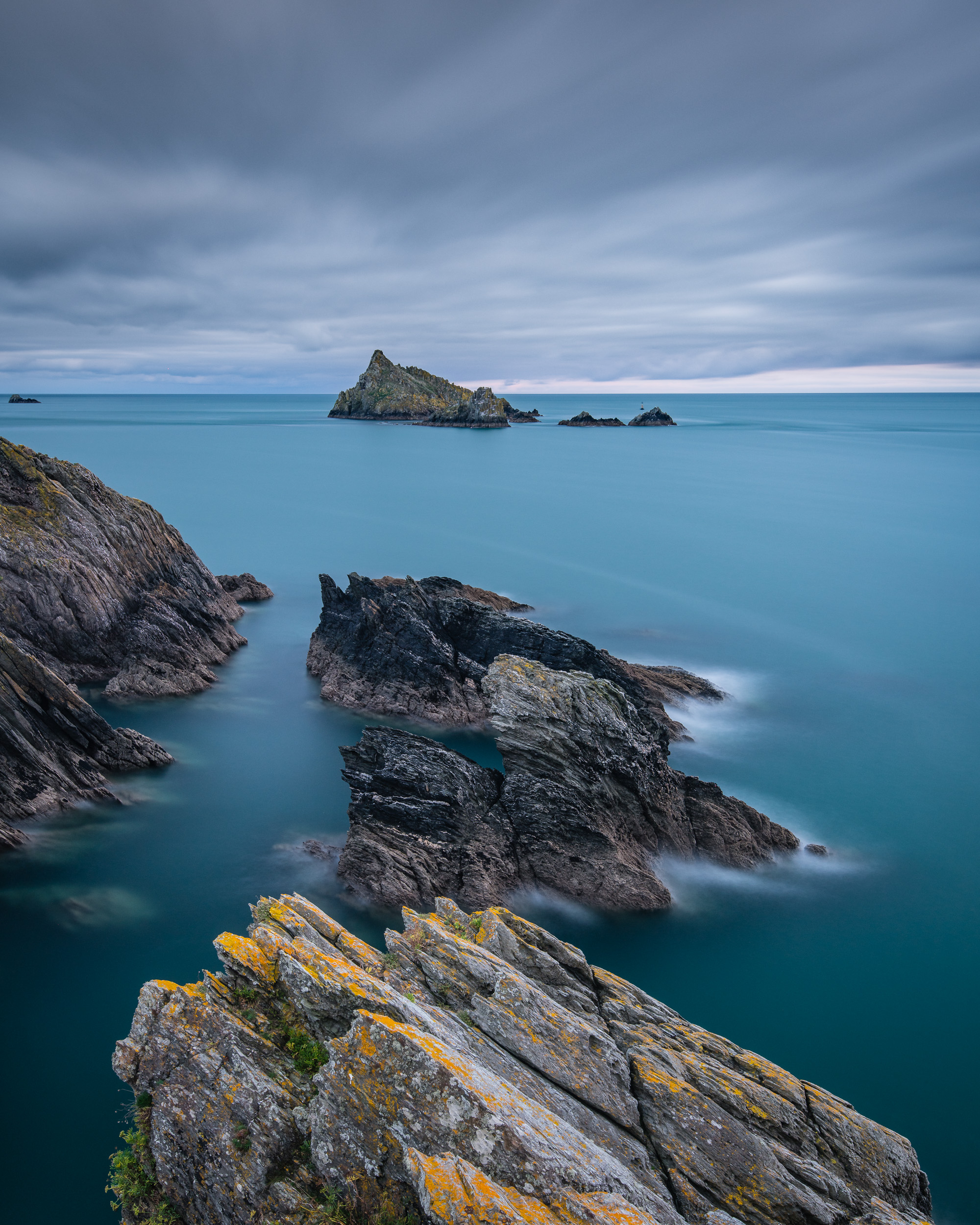
Some photographs look like they are easy to create, and one might be mistaken into thinking that minimalistic long exposures would fall into that category. I was certainly under no illusions that this was the case and my experience of capturing those images only reinforced that. The location was certainly inspiring with the jagged rocks of the cliffs and the small rocky islands, but actually picking out a composition was tricky. Even when I spotted a composition, there was the very real challenge of getting into a spot to set up your tripod. There was no doubt that this location has some treacherous areas and I had to be very careful where I was standing and where I placed my tripod.
Treacherous #2, Devon - Nikon D850, Nikkor 24-70 mm f/2.8 at 40mm, f/8, 200 seconds at ISO 64
Challenges aside though, the whole experience was a lot of fun. Exploring a new location and trying something a little different with my photography was very rewarding. I've got a long way to go before I become proficient in this style of photography but that doesn't take away from the enjoyment of the experience. I really enjoyed sitting about and soaking up the scene while I waited for my exposures to complete. I even had seal pop it's head up a couple of times to say hello!
Treacherous #3, Devon - Nikon D850, Nikkor 24-70 mm f/2.8 at 70mm, f/8, 240 seconds at ISO 64
I also enjoyed the post-processing of the images. My normal post-processing technique is fairly straight forward and involves reducing the highlights, increasing texture and clarity, but I enjoyed experimenting with selectively increasing highlights and reducing clarity and texture in these images. Overall it was time very well spent and this is definitely a style of photography I want to develop. It was also a great reminder that I need to get out and explore a bit more!!
Do you have a personal style? How do you go about developing it? Have you been inspired by the work of others to try something a little different? Let me know in the comments below.

A Stormy Sunday at Start Point
In this blog post I head to Start Point on the south Devon coast to capture some landscape photographs during some stormy weather.
Risk vs Reward
As the crow flies, Start Point in Devon isn’t that far from home. Thanks to some narrow, twisty Devon roads though, the journey there can take up to an hour and a half each way. For that reason, I tend to only visit the location if I think I’m going to get a good photo.
Spectacular sunrises work well at Start Point so I’m always looking at which direction the sun is rising from and what the cloud cover will be before I commit to a trip to one of my favourite lighthouses on the South West Coast Path. The weather forecast for my most recent trip was a little different though. Heavy rain showers and thick cloud were forecast, but it was also forecast to start clearing around sunrise.
This could lead to some spectacular and dramatic weather conditions if everything happens at the right time. Would the risk of travelling all that way reward me with some spectacular landscape photographs?
Stormy Weather Landscape Photography
Despite the 5 am alarm calling causing my brain to become a little muddled when talking to the camera, I did manage to record my South West Coast Path adventure at Start Point. So sit back, relax, keep warm, and join me at Start Point for a spot of landscape photography!
I hope you enjoyed watching my little adventure to Start Point. Which image was your favourite? Have you been to Start Point before? Do you like capturing landscape images during stormy weather? Let me in the comments below.
My Landscape Photographs from Start Point
If you’d like to see the photographs from the video in a bit more detail, here they are.
Breaking Light at Start Point, Devon - Nikon D850, Nikkor 16-35 mm f/4 at 18 mm, f/13, 2 seconds at ISO 64, polariser, ND grad.
Calm in the Storm at Start Point, Devon - Nikon D850, Nikkor 16-35 mm f/4 at 18 mm, f/13, 81 seconds at ISO 64, polariser, ND grad, 6 stop ND.
Start Point Swirls, Devon - Nikon D850, Nikkor 16-35 mm f/4 at 22 mm, f/13, 60 seconds at ISO 64, polariser, ND grad, 6 stop ND.
A Stormy Dawn at Start Point Lighthouse, Devon - Nikon D850, Nikkor 16-35 mm f/4 at 22 mm, f/13, 1.3 seconds at ISO 64, polariser, ND grad.

Discovering Prawle Point and Gammon Head
In the blog this week I head out to Gammon Head and Prawle Point on the South West Coast Path in Devon to explore a new location and to try something I don’t do very often!
Exploring New Landscape Photography Locations
I have to admit that I think one of my weaknesses with my photography is allocating enough time to go out and find new locations. It's not that I've got any shortage of inspiration. My custom Google map is awash with locations not visited. It's just that I always seem to be short of time, so I think I tend to go to locations that I know to try and increase the chances of getting a good image.
Recently I have been trying to do a little more exploring as you might have seen in my Froward Point and My Photography is Not a Priority blog posts. However, sometimes the best way to find something new is to head out with someone. So when I met up with fellow local photographer Neil Burnell recently, I asked him to suggest a location that we could photograph. You may remember Neil's work from a recent episode of On My Bookshelf where I took a look at his rather excellent book, Seascapes. You can see that video here.
Great Gammon Head
Neil knows the south Devon coast extremely well and given the weather and tide conditions he suggested we try photographing around the Prawle Point area. I've visited Prawle Point a couple of times with the family so I knew of the coastline there, but I'd never taken the time to explore it properly so I was excited to see what I could discover.
Neil suggested I take a look at Gammon Head, so while he did some IR photography I took a walk along the South West Coast Path. My instinct was to get up high, but as I ascended Gammon Head, I noticed an interesting rocky outcrop (Ball Rock I believe) down on the waters edge. There was no path down to the waters edge, and while it wasn't very steep, the descent was made difficult due to the thick vegetation.
When I finally made it down there I realised how exposed and hidden this part of the coastline was. If I was to have an accident I would have no chance of been spotted by someone walking the main path and with no mobile phone signal, I wouldn't be able to call for help. I decided that if I visit this location again I wouldn't do so on my own.
All that said, I was down there now and it was time to take some photographs. The light was fading fast by this point so I had to work fast.
My gut feeling for shots at these types of locations is to go with a long exposure, but as you can see below, an exposure of just 0.5 seconds can produce pleasing results. The wider view of the sea looks a bit messy, but I really like the texture of the water around the rocks.
The Rocks at Gammon Head #1, Devon - Nikon D850, Nikkor 16-35 mm f/4 at 24 mm, 0.5 seconds at ISO 64, f/13, Lee Filters Circular Polariser.
Below is the same image but with a 6 stop IR ND filter from Lee. This has given me a 30-second exposure which has resulted in the image I originally had in mind. However, I'm a bit torn between this image and the version before it. Which one do you prefer?
The Rocks at Gammon Head #2, Devon - Nikon D850, Nikkor 16-35 mm f/4 at 24 mm, 30 seconds at ISO 64, f/13, Lee Filters Circular Polariser and 6 Stop IR ND.
So while the first two images are pleasing enough, I wanted to fine-tune my composition. This is can be rather tricky when your down on a bit of coastline like this. Just stepping to right can mean a swim in the sea! I think I prefer the composition below as the furthest away rock now sits just above the horizon, rather than on it.
The Rocks at Gammon Head #3, Devon - Nikon D850, Nikkor 24-70 mm f/2.8 VR at 24 mm, 30 seconds at ISO 64, f/13, Lee Filters Circular Polariser and 6 Stop IR ND.
Ideally, I would have liked for that furthest away rock to not only have separation from the horizon but from the mass of rock to its left. But as I mentioned earlier, that would have meant walking on water!
For the final composition at Gammon Head, I headed down as close to the waters edge as I could and decided to take a vertical image.
The Rocks at Gammon Head #4, Devon - Nikon D850, Nikkor 24-70 mm f/2.8 VR at 27 mm, 30 seconds at ISO 64, f/13, Lee Filters Circular Polariser and 6 Stop IR ND.
I wouldn't normally publish so many similar images in the same blog post, but I wanted to share with you what I was doing and why. Hopefully, you found it interesting. Moving around a scene just a little can yield very different photographs.
Stars at Prawle Point
One of the other benefits of shooting with someone else is that you may find yourself photographing something a little different. As the sunset, the clouds started to clear so we decided to head up to the coastguard lookout at Prawle Point. Neil suggested this would make for an ideal location for some night sky photography.
I am in no way a night sky / astro photographer. I've done a bit of reading on the subject so I understand some of the basics around camera setup. I have even taken the odd night sky photograph, but nothing really serious. So capturing an image of this location in the dark was going to be a challenge. This challenge became even more obvious as I watched Neil set up his camera and take photographs like it was the middle of the day!
Anyway, I was having fun and I wasn't not going to let a thing like experience put me off having a go! So while the image below is not going to win any awards, I rather like it. I have to admit that there was a little luck involved in getting the shot. I couldn't really see very much, making focusing on anything difficult. I did have a head torch, but the beam wasn't strong enough to light the building, so I either guessed it or get Neil to use his head torch. Composition in the dark wasn't exactly easy either!
A Stary Night at Prawle Point Coastguard Lookout, Devon - Nikon D850, Nikkor 16-35 mm f/4 at 16 mm, 15 seconds at ISO 1600, f/14.
Every year I promise myself that this will be the year that I get into astrophotography. I find the night sky fascinating, and now that I've got a little extra motivation, maybe this is the time I follow through on my promise.
I really enjoyed my time at Prawle Point and Gammon Head. It was really good to explore somewhere new and to try out something a little different. I was glad I didn't just head out to somewhere I knew and played it safe!
So which of my Gammon Head shots do you prefer? Do you do any astrophotography? How much time to do you spend just exploring new locations? Let me know in the comments below.
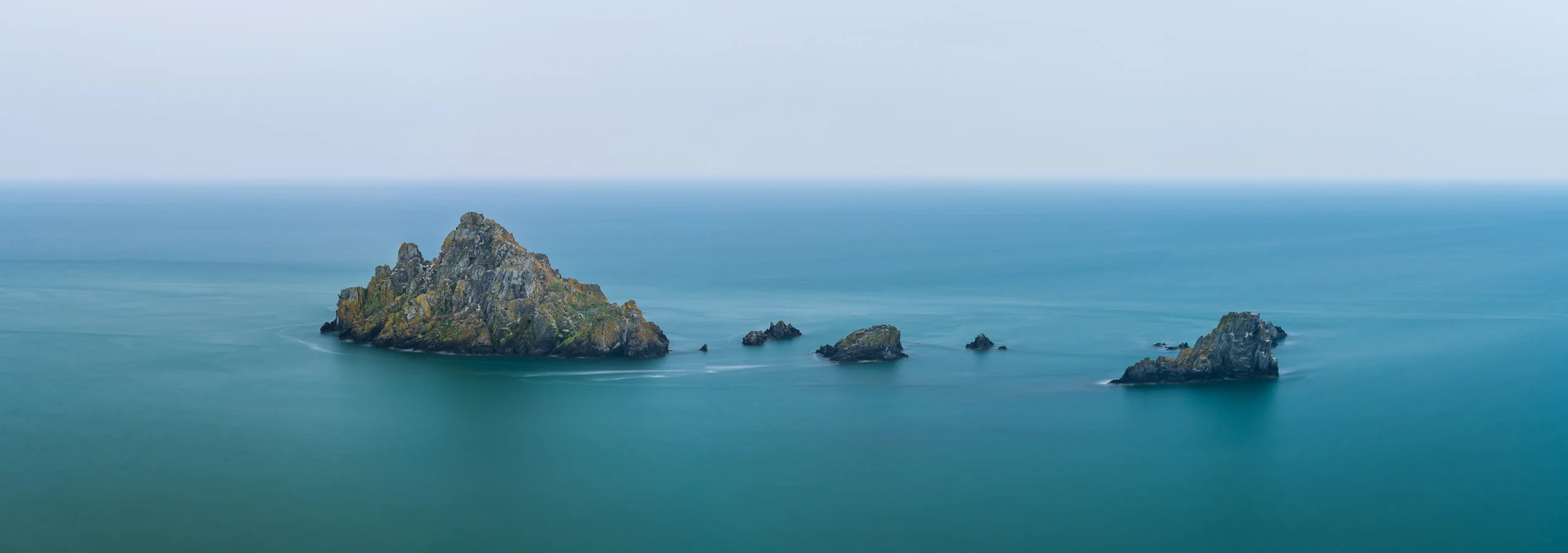
Creating Coastal, Long Exposure, Panoramic Images with the Nikon D850
Have you ever taken a coastal, long exposure, panoramic image before? Well, that's just what I did in my latest video. Sometimes you need to see a scene a little differently to get inspired in a big way.
Getting Inspired
Over the years I've visited Froward Point on the south Devon coast a few times. Despite many attempts I've never really captured an image from that location that I'd really been happy with. In fact, I'd just about given up on it as a location.
However, after being inspired by the work of another local photographer, I thought Froward Point might be worth another visit. This time though, I would leave most of my gear behind, travel light, and wander along the coast path a bit more. Rather than go back to the same spot I always end up going to, I would see what other viewpoints there might be.
Sure enough, as I walked along the coast path I got to see a view of rocks near Froward Point in a totally new way! My creative brain got all excited by the new compositions that I could make photographs from. For me, the scene instantly said that this coastal image would be a long exposure, and would be best suited to the panoramic format. I even thought it would work best on a grey and overcast day.
With a clear vision of what I wanted to photograph, I just needed to return at the right time when I had the weather conditions were right and the tide was high. Here is what happened when I did finally return:
As you'll have seen this video was a bit longer than normal, but I wanted to take you through my thought process, how I set up the camera, and how I eventually captured then printed the final image.
So have you ever captured a coastal, long exposure, panoramic image before? What photography techniques have you combined before? Let me know in the comments below.
The Photographs
A Coastal Long Exposure Panorama - Froward Point, Devon: Nikon D850, Nikkor 70-200 mm f/2.8 at 70 mm, 20 secs at f/11, ISO 64, Lee Filters Circular Polariser. 5 Image stitch.
On an Island - Froward Point, Devon: Nikon D850, Nikkor 24-70 mm f/2.8 at 58 mm, 105 secs at f/6.3, ISO 64, Lee Filters Circular Polariser. 5 Image stitch.
Islands in the Blue - Froward Point, Devon: Nikon D850, Nikkor 24-70 mm f/2.8 at 29 mm, 40 secs at f/11, ISO 64, Lee Filters Circular Polariser.

Dawn with Danks - A Mini Adventure with Gareth Danks
In the blog this week I share with you vlog I made when fellow photographer and YouTuber, Gareth Danks paid me a visit. We headed down to the south Devon coast for a bit a coastal photography and a chat.
Meeting Gareth Danks
I've been following Gareth Danks on YouTube for a while and we briefly met up at The Photography Show earlier this year. At the show, we discussed the idea of meeting up to do some photography but finding a date we could both do proved a little tricky.
As spring came around and the days got longer, the number of opportunities to get out with the camera also increased. So when Gareth announced he was going to be making a visit to Devon we thought it would be a great time to meet up. We agreed to shoot sunset on Thursday evening and then shoot sunrise the following day.
Our Adventures
The plan was set and the day soon came around. In the following videos, you can see exactly what we got up to.
The first and only video I made was of the Friday morning shoot at Dawlish Warren and Dawlish. You can see it here:
For an alternative take on the morning, check out Gareth's video from Friday morning:
And finally, if you want to see what we got up to on Thursday evening on Dartmoor, you can see Gareth's video here:
I hope you enjoyed all those videos. I think we both have a similar style when it comes to our vlogs so it was really easy to mix up the photography, shooting my video and appearing in his vlog. Though it was only a short meetup, it was a mini adventure to remember!
My Photographs
You will have seen my photographs from the Friday morning in the video, but as always I like to share them here on the blog as well.
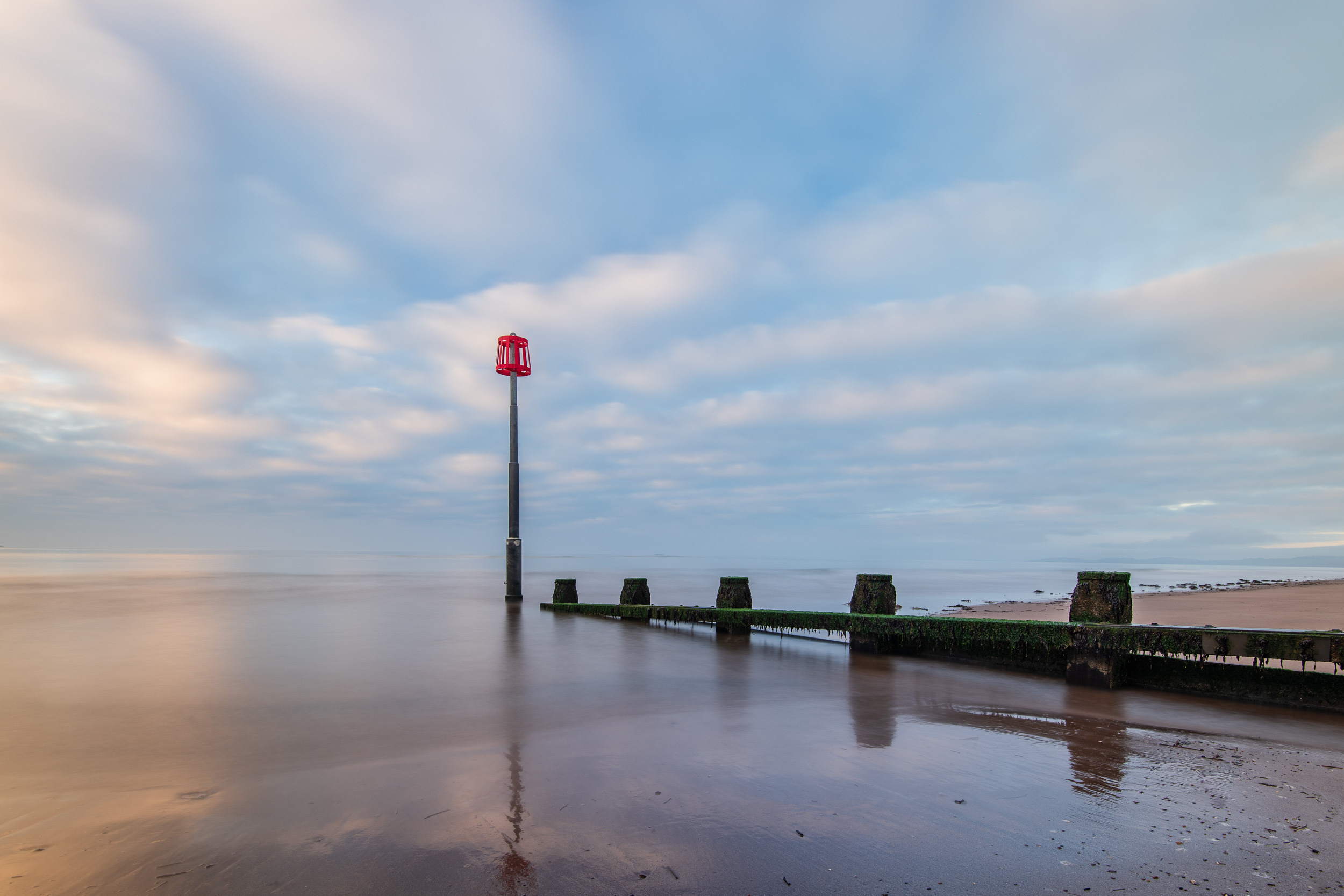

Nikon D850, Nikkor 16-35 mm f/4 at 16mm, f/13, 240 secs at ISO 64, Lee Filters circular polariser and 10 stop ProGlass IRND.
Nikon D850, Nikkor 16-35 mm f/4 at 20mm, f/11, 80 secs at ISO 64, Lee Filters circular polariser, 2 stop hard edge grad and 10 stop ProGlass IRND.
I do hope you also watched Gareth's video. It's really interesting to see how another photographer shoots the same scene at the same time. It was beneficial for me as watching Gareth setup his compositions got me to think about my own compositions.
Do you meet up with other photographers? Do you find yourself learning from them or trying something new out? Let me know in the comments below.

Something Old, Something New
In the blog this week I get something new from one of my favourite locations, Dawlish Warren beach on the south Devon coast. I also visit Teignmouth Pier and discover that good photographs don't have to be taken during the golden hours.
An Old Friend is a Best Friend
I have photographed the beach at Dawlish Warren a lot. It's probably my most visited location. Since I started this blog I've written about it several times and I'm made several videos for my YouTube channel there. You can read why I keep going back and watch my latest video from there in my blog article Shoot, Print, Surprise!
However, the more I photograph Dawlish Warren the better I get to know it. As my knowledge of the location increases, I need to think less about where I am, freeing up my brain to focus on the creative and composition aspects of my photography. Rather than repeat visits becoming boring they do in fact become more productive. An old friend is indeed a best friend.
Something Old, Something Special
The trip to Dawlish Warren for this blog article was actually postponed several times due to poor weather. It's not that you can't put the bad weather to good use. Just have a look at my articles on Bad Weather Photography and Let's All #EmbraceTheGrey. However, for this particular trip, the conditions needed to be a little more forgiving.
My father-in-law, who is a keen amateur photographer, had managed to score himself a day out with a professional photographer as part of a magazine feature. Fortunately for me, I was asked if I wanted to tag along. I could do my own thing at each location, but I would also have the added benefit of some good company.
After what felt like weeks of poor weather we finally got a break and we all met up at Dawlish Warren car park. The conditions looked good and we all felt very positive. In fact, it turned out to be one of the best mornings I've had at Dawlish Warren.
It was one of those mornings that you look forward to as a landscape photographer on the coast. We were treated to some beautiful morning light, calm winds and a gentle sea. It was one of those mornings where you think that if this is the only image I get today I'll be happy.
I took a number of images that morning using varying shutter speeds. Here a couple of my favourites.
Nikon D850, Nikkor 16-35mm f/4 @ 18mm, f/11, 3 seconds at ISO 64.
Nikon D850, Nikkor 16-35mm f/4 @ 32mm, f/11, 8 seconds at ISO 64.
You can see how my father-in-law got on with his photographs by checking out this months issue of Digital SLR Magazine (April 2018).
Something New
I'm not much of a daytime shooter. I much prefer dawn and dusk than midday. As we headed to Teignmouth to photograph the pier I had already decided that I probably wouldn't shoot it. I've only photographed Teignmouth pier once before and while I liked the location, it was at dawn when the light was better. I wasn't sure that shooting it during the day would suit my personal style.
When we got there about 11 am, it all looked a bit different than I had envisaged. The sky had a good coverage of clouds and the outgoing tide was leaving some nice white lines in the sand as the waves pulled back. So I thought stuff personal style and got the camera out!
Nikon D850, Nikkor 16-35mm f/4 @ 19mm, f/11, 2 seconds at ISO 64.
Nikon D850, Nikkor 16-35mm f/4 @ 19mm, f/11, 2 seconds at ISO 64.
As it turned out I would have missed out on creating some pleasing images if I had just left my camera in its bag. Yes, I much prefer the light at dawn and dusk, but taking those images did show me that these aren't the only times I should be looking to take landscape images. It appears it wasn't just my father-in-law that was learning something new that day!
So what are your favourite times of day to shoot? Do you have a favourite local location? What location have you discovered recently? Let me know in the comments below.
The Best of the Rest
It was hard to pick just a couple of photographs to feature in this blog article. So rather than leave the other images out of the blog, here they are in a gallery. Enjoy!
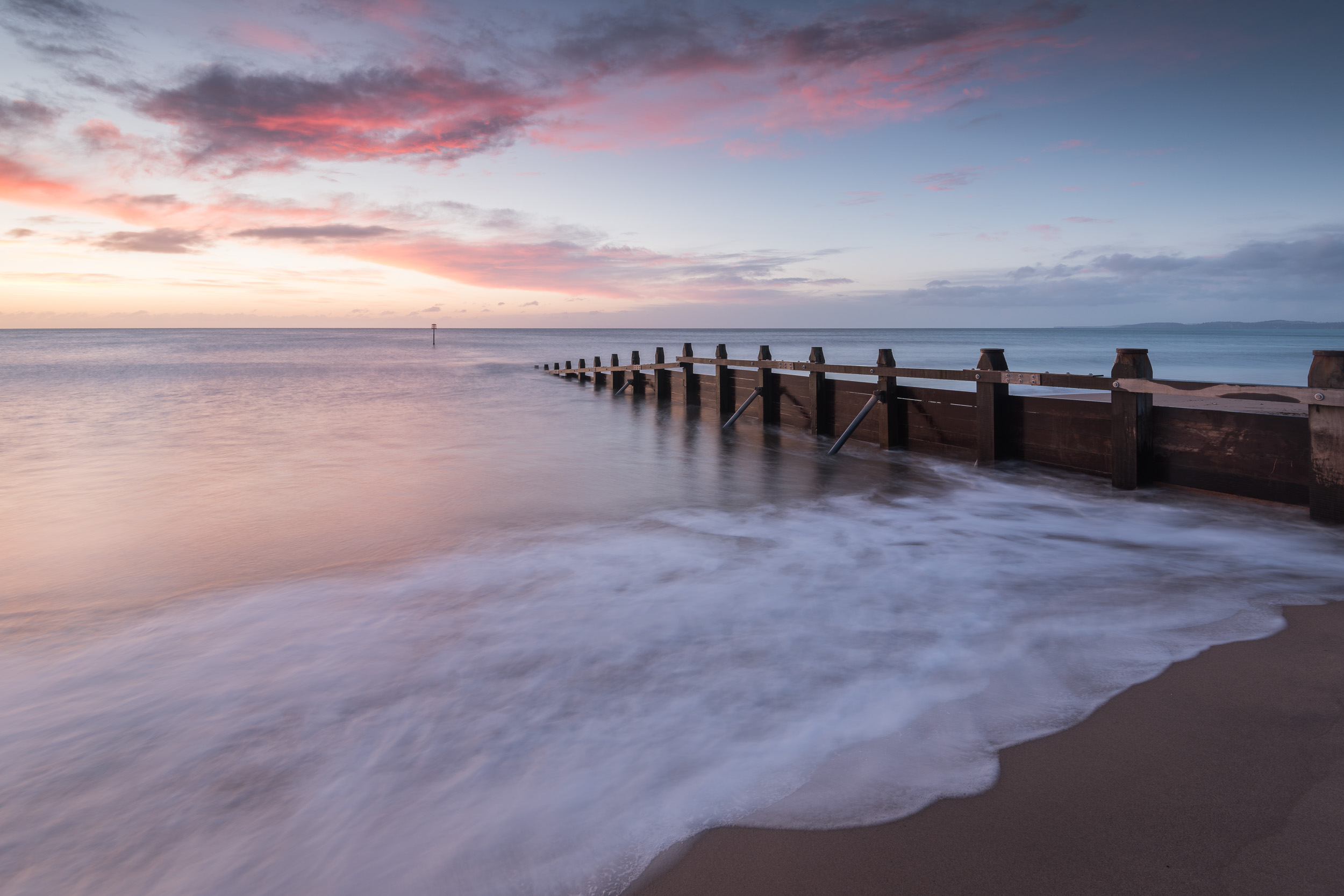
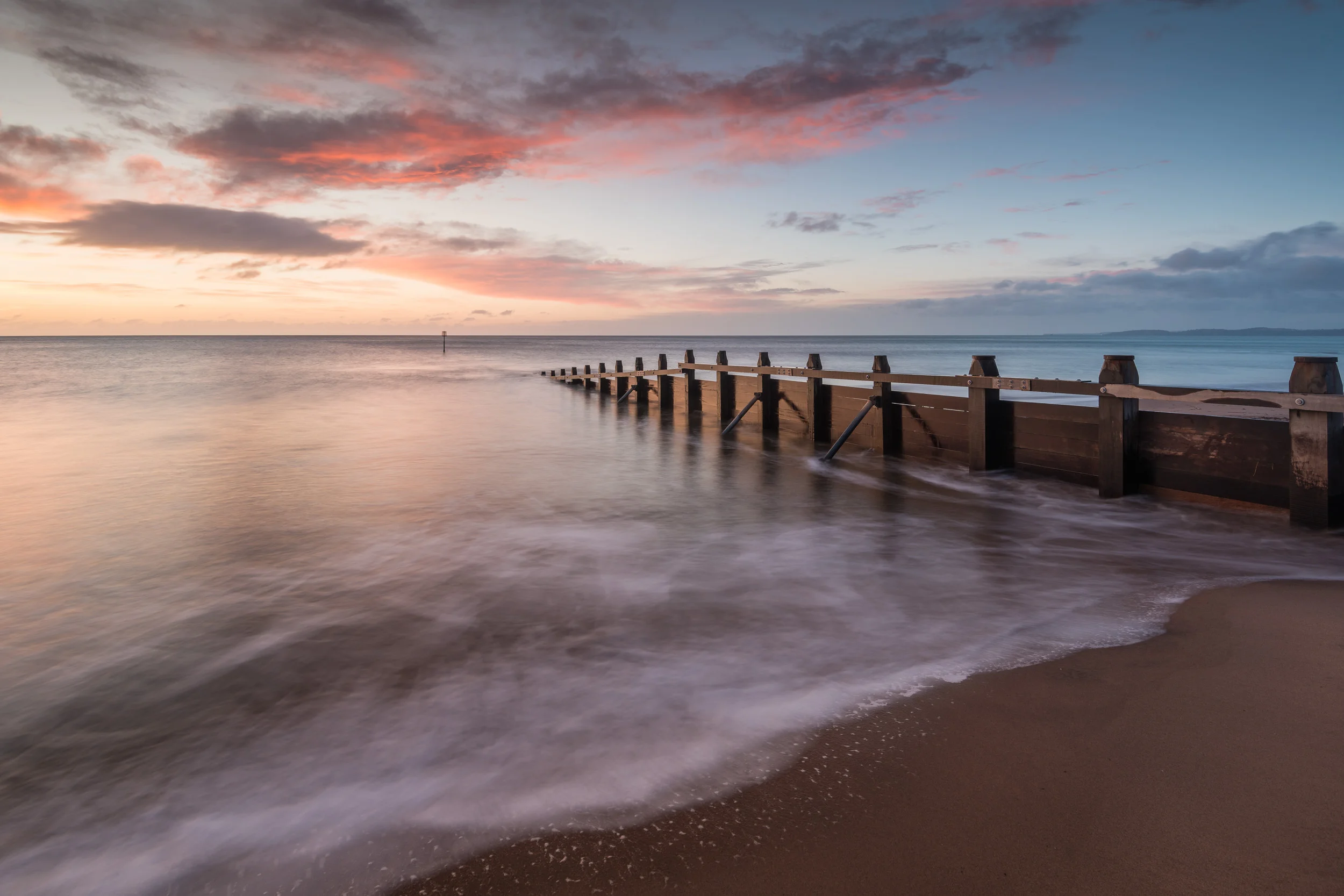
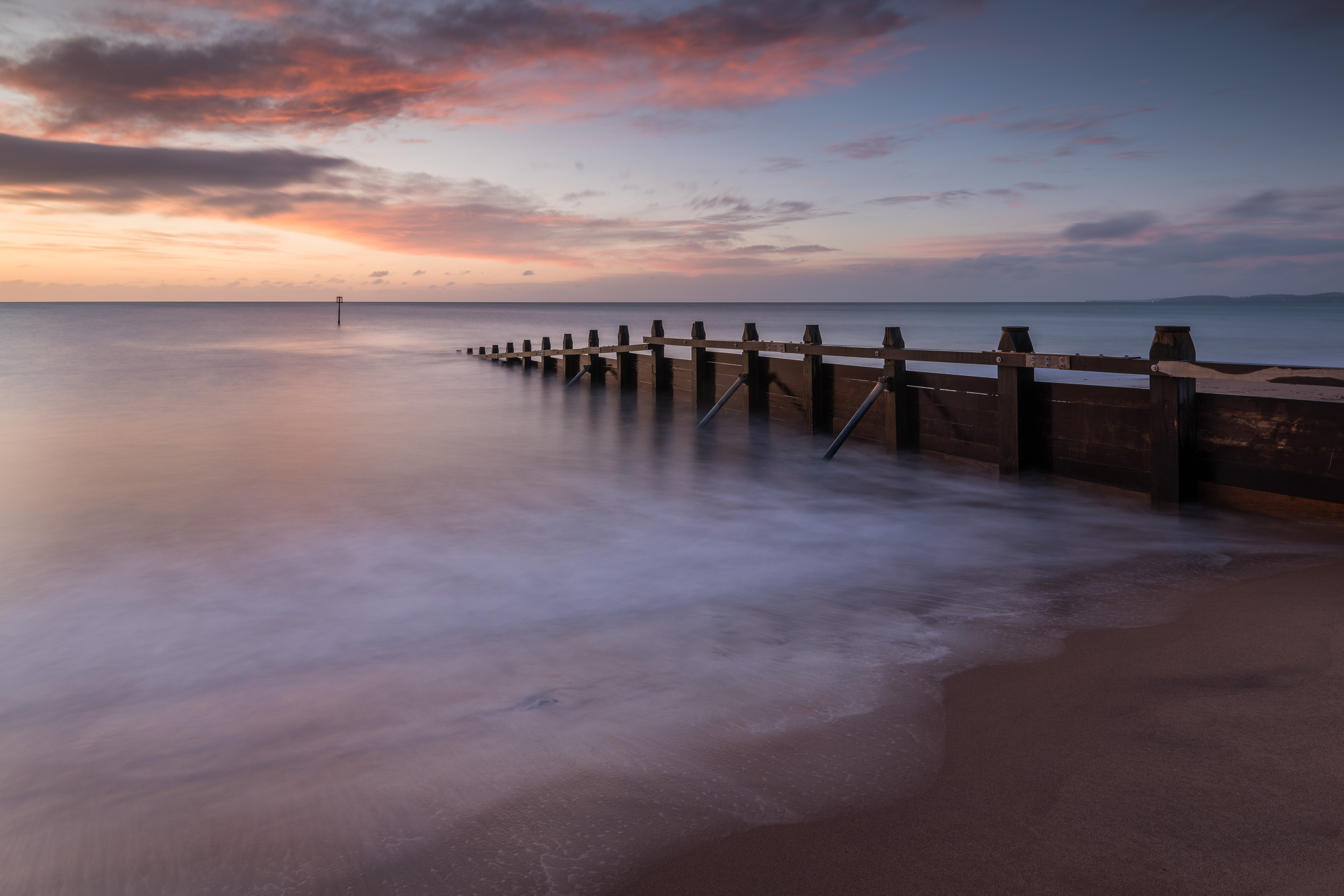
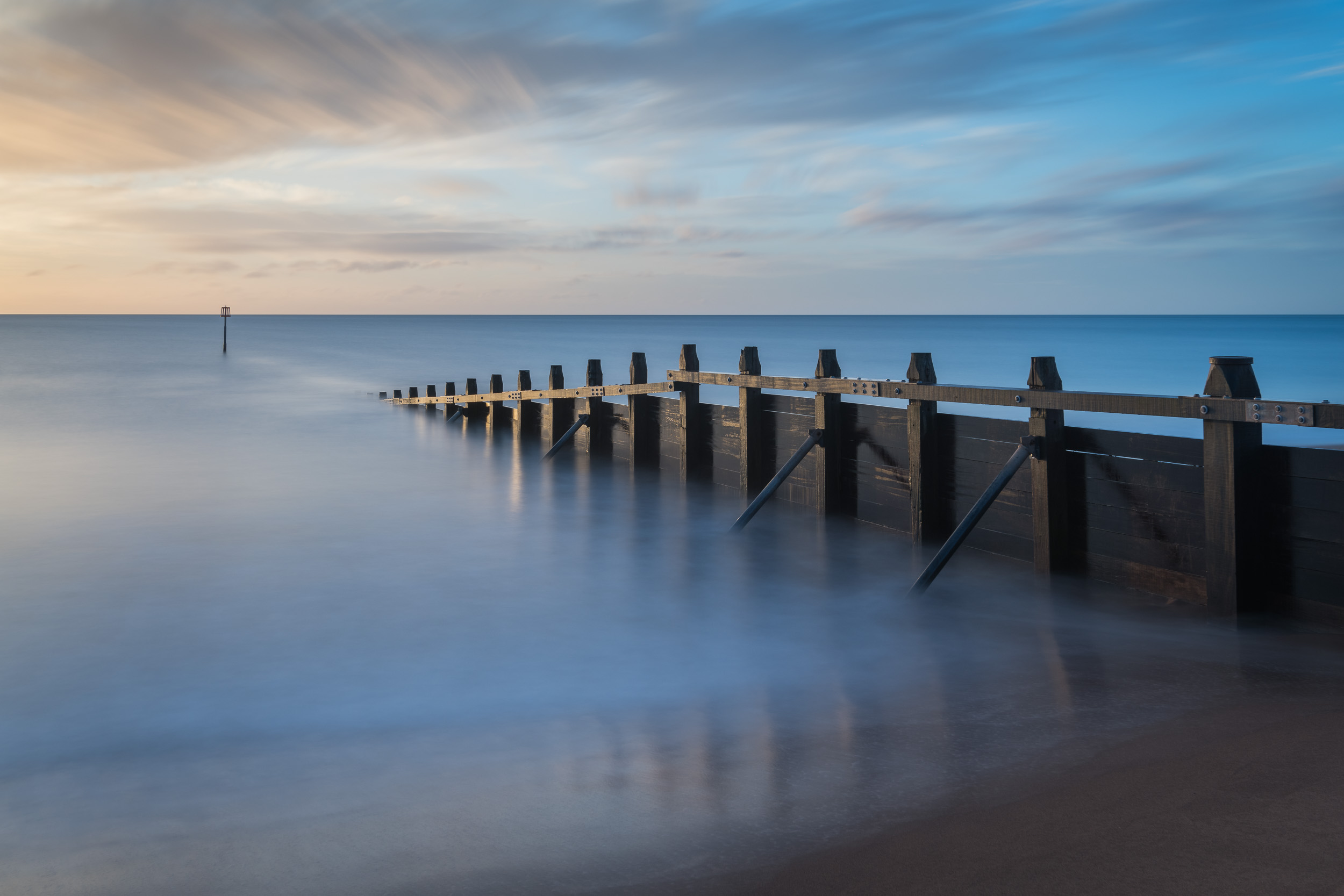
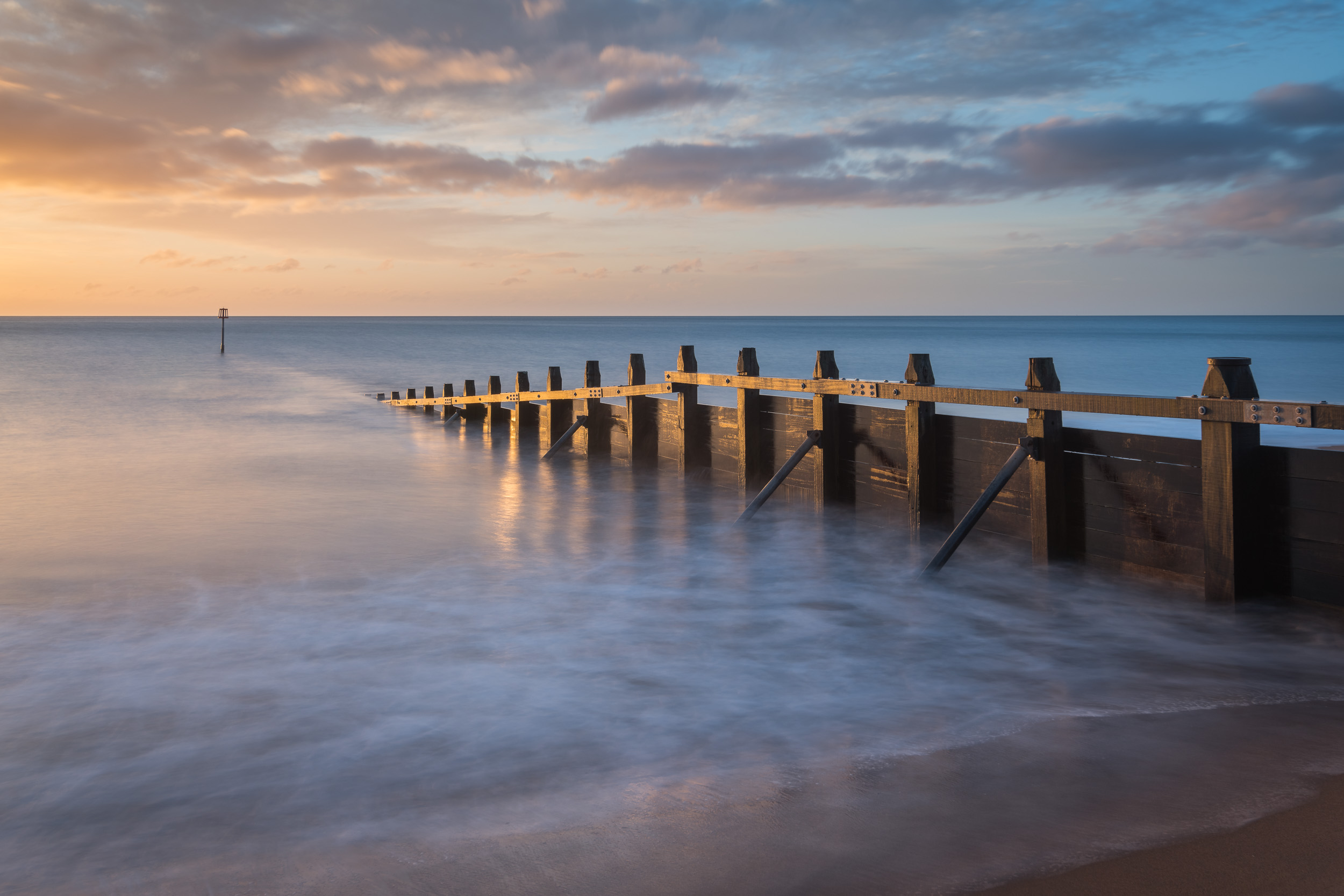

Shoot, Print, Surprise!
In this blog I head to Dawlish Warren to shoot a video I'm calling Shoot, Print, Surprise! But what is the surprise? Well, you'll just have the watch the video to find out!
Back at Dawlish Warren
In my latest video, I headed to Dawlish Warren to shoot some dawn seascapes. For those of you who have been following my blog for a while now, you may well be wondering if that is the only location I've ever photographed! I admit it though, I do like going there to capture images.
There are two good reasons for this. Firstly, it's close to home for me. This means that during the winter months when my time is particularly short, it's nice and easy for me to get to. It also offers a variety of different compositions to suit different conditions. With 15 or so groynes of different styles, and long beach it works well with both high and low tides. So, you can virtually go there in any conditions and get an interesting image.
I've mapped out the 15 groynes in a custom google map. It's still a work in progress, but the custom map also has recent images of each groyne so you can see what they look like before you get there. You can view the map here, and you can see how to make your own map here.
Shoot, Print, Surprise!
So back to the topic of the video. Well, the title should give you a good idea of what the video is about. In the video, I head out to Dawlish Warren to capture some dawn seascape images and then I head home to print some of them off. But what is the surprise? Well, you'll just have to watch the video to find out!
Well, I do hope you enjoyed that video, and of course the surprise element. Did you enjoy the surprise? What are your thoughts on the surprise topic? Let me know in the comments below.
The Photographs
As always here are the photographs that were featured in the video.
Nikkor 16-35 mm f/4 @ 34 mm, f/11, 57 seconds at ISO 100, Lee Filters Circular Polariser, ND grad and 3 stop IRND.
Nikkor 16-35 mm f/4 @ 24 mm, f/11, 1.3 seconds at ISO 100, Lee Filters Circular Polariser, and ND grad.

Winter Solstice Adventure
In the blog this week I share with you the highs and lows of landscape photography as I head out on winter solstice to capture some images.
The Longest Shortest Day
Back in June of 2017, I headed out with the camera to create some landscape images on the summer solstice. You can see the images I created that day along with the video I made by clicking here.
I really enjoyed that day so I knew that when winter solstice came along in December I was going to spend the day out with the camera. Being the shortest day of the year it shouldn't have been nearly as tiring as the summer solstice.
Unfortunately when winter solstice did come around the weather was grey and overcast. I had checked the weather forecast the night before and had planned my locations to suit the weather. I'm all for "embracing the grey", but a full day might well be a challenge too far even for me!
As with summer solstice, I spent the day capturing images and filming my experiences. It was definitely a tough day. Maybe I was tired, maybe I was feeling challenged, but one thing is for sure, it sure did feel like a long day. However, saying all that I did have some great experiences, and if you watch all the video you'll see something special happen right at the end.
Enjoy!
A Winter Solstice Gallery
As always I do hope you enjoyed watching my adventures. I tried to make the most of the weather conditions and the images I took that day both reflect my varying moods and the conditions I had to work with.
You'll have seen these images in the video, but here they are again in case you want a closer look.

Nikon D850, Nikkor 16-35 mm f/4 VR at 19 mm, 180 seconds at ISO 64, f/11, Lee Filters circular polariser and Big Stopper.
Nikon D850, Nikkor 16-35 mm f/4 VR at 19 mm, 180 seconds at ISO 64, f/11, Lee Filters circular polariser, ND grad and Big Stopper.

Nikon D850, Nikkor 16-35 mm f/4 VR at 18 mm, 180 seconds at ISO 64, f/13, Lee Filters circular polariser, ND grad and Big Stopper.

Nikon D850, Nikkor 16-35 mm f/4 VR at 18 mm, 8 seconds at ISO 64, f/13, Lee Filters circular polariser, ND grad and Little Stopper.
Nikon D850, Nikkor 16-35 mm f/4 VR at 17 mm, 4.8 seconds at ISO 64, f/13, Lee Filters circular polariser, ND grad and Little Stopper.
Well, I do hope you enjoyed those images and my winter solstice video. Did you head out for winter solstice? Have you had days where landscape photography has been both a joy and a drag? Let me know in the comments below.
Bad Weather Photography
In the blog this week I remember to "embrace the grey" and head out to Dawlish to get some photos in less than optimal conditions.
Time to Embrace the Grey
I once went on a Nikon School one day workshop with Jeremy Walker. I remember the weather not exactly being great but one thing stuck in my mind from that day. As Jeremy was laying out the plans for the day he already knew it was going to be an overcast day. His advice was to "embrace the grey".
I did just that with this photograph:
Banjo Pier, Swanage. Nikon D750, Nikkor 16-35mm f/4 at 28mm, f/11, 30 secs, ISO 100, Lee Filters Big Stopper.
Now I may have mentioned once or twice on the blog recently that the recent weather has been playing havoc with creativity. So when the weather forecast for the week was looking grim I decided enough was enough and I was going yet again embrace the grey!
I needed to find an appropriate location to make an image but when I remembered about the stone groynes at Dawlish my mind was set. So off I headed with a clear vision of what I wanted to capture.
Despite the weather. No hang on, because of the weather, I really enjoyed myself at Dawlish. It made me look at the location with different eyes.
Here's what I photographed:
Nikon D850, Nikkor 24-70mm f/2.8 VR at 31mm, ISO 64, 5 minutes at f/11, Lee Filters Circular Polariser and Big Stopper.
If you want to see how I went about capturing the image, here's a short video I shot while I was there...
So do you have a favourite bad weather location to take photographs? Is there really such thing as bad weather for photography? Let me know in the comments below.
PS.
On a little side note, I'm very happy to say that Adobe has now updated Lightroom to support the Nikon D850. This means I no longer have to convert the files to DNG format first. I can now import the NEF (raw) files straight from my memory card. I was so happy about this I posted a video on my YouTube channel.

On Location with the Nikon D850: Froward Point
In the blog this week I share with you my latest video on the Nikon D850. Watch I as I go on location to shoot some seascape images at Froward Point in Devon. I take you through my workflow on how I setup the camera and how I'm using some of the features of the D850. I then head home where I process, print and review the image.
Getting to Know the Nikon D850
Since getting my Nikon D850 I haven't been out to take photographs with it as much as I hoped I would. The bad weather at the moment always seems to know when I have time to go out with the camera. However, I was treated to an epic sunset up on Dartmoor the other day. I got some wonderful images and I'll be sharing them on my blog in the near future.
The Nikon D850 is performing very well and is delivering me some wonderful raw files full of dynamic range. I just wish I didn't have to convert them to DNG first....c'mon Adobe, update Lightroom, please! LR issues aside this is a great camera and so I wanted to do a follow up to my Nikon D850 Initial Impressions video. This video is my most popular video on YouTube to date and there seemed to be a real desire from people to know more about some of the capabilities of this camera.
So in this video, I take the Nikon D850 out to photograph seascape images at Froward Point in Devon. This time I take a closer look at my workflow and how I put some of the features of the Nikon D850 to work.
Froward Point
I've talked about Froward Point a couple of times on the blog and in my videos, but in case you don't know where it is, here it is on the map:
So onto the image itself. Unfortunately, I didn't get the light I was after but I'm still reasonably happy with the image I took.
Nikon D850, Nikkor 16-35mm f/4 @ 29mm, ISO 64, 180 secs at f/10. Lee Filters circular polariser and 3 stop medium edge ND grad.
While the image might not be one that goes in the portfolio it was, as always, good to get out with the camera. I'm still familiarising myself with the D850 so time with the camera at the moment is even more important. Overall though I only have positive things to say about the D850 and I'm looking forward to shooting even more with it.
So have you been to Froward Point? What new feature in the D850 interests you? Let me know in the comments below.

Getting to Know Dawlish Warren Again
In the blog this week I tell you about a frustrating couple of weeks with my photography and I return to Dawlish Warren to see how the beach looks now the works have been completed.
Why Dawlish Warren Again?
Over the years I have photographed the beach a Dawlish Warren numerous times. I've written about it my blog a few times and it's featured on my YouTube channel a couple of times. So why do I keep going back here? The simple fact is that I love shooting there. Every time I go there the conditions are slightly different and so I get a slightly different shot.
It is also one of the closest photography locations I have to home. I'm no stranger to driving for over 90 minutes to get a shot in Cornwall, but Dawlish Warren is less 30 mins from home making it nice and easy to get to. It also works well as a sunrise location pretty well throughout the year. It doesn't seem to matter if it's a grey overcast morning or an epic sunrise, there always seems to be a shot to be had. So it's close to home, works well throughout the year and in varying weather conditions. What's not to like!
Desperation and Frustration
For those of you who have read my blog over the last couple of weeks, you'll know that I've recently moved from the Nikon D750 to the Nikon D850. This change in camera represents a step up in camera technology for me and when I made the decision to buy one (not a hard decision I might add), I made a commitment to make the most of my purchase.
So when the D850 arrived on my doorstep on the day of release I was very keen to get out with my latest bit of gear. However, the photography gods have not been kind to me since the arrival of the D850. Photography is a bit of an all-consuming passion for me but I still have to balance my desire to go out with the camera, work a full-time job and being a family man.
Over the last couple of weeks, the weather in Devon has been fairly unsettled. It's not that there hasn't been great weather for photography, it's just that it never seems to have been on the days when I'm free to go out and take pictures. It's not been a total disaster. I managed to create a D850 video and head out to Trebarwith Strand, but I've been desperate to get out way more than that!
That's it! I'm going out!
As my working week progressed and the days came and went without out any camera action I decided that I would go out at the weekend instead. When I checked the weather forecast for the weekend it was generally overcast with light showers. I was damned if I was going to let another weekend pass me by, so I was going to go out regardless of the weather.
I considered some woodland locations, but I thought I might leave those locations for a couple more weeks until the autumn colours really kick in. Then while I was scanning through my custom locations map <insert link> I remembered about good old Dawlish Warren! (If you haven't seen my video on creating a custom Google Map for you photo locations you really should - my map is always a great source of inspiration!).
Not only is Dawlish Warren a great location to shoot but I was also keen to see how the beach had changed since the end of the Beach Management Scheme works. When I visited there for my Summer Solstice video the beach was having a significant amount of work being done on it. Some of the groynes had been replaced and repaired, and more sand was being introduced to the beach areas.
Now the works have been completed I felt it was time to go and reacquaint myself with Dawlish Warren. I was fairly also sure I could get an image despite the forecasted cloud cover.
A New Dawlish Warren
So has there been a significant change in the beach? Here is the image I took so you can see for yourself.
Nikon D850, Nikkor 16-35mm f/4 @ 22mm, f/13, 90 seconds, ISO 64, Lee Filters Circular Polariser and ND Grad.
For those who know Dawlish Warren beach, it may look just the same but most of the groynes have been repaired and strengthened giving them a slightly different look when viewed up close. The woodwork looks fresher and the supporting poles are thicker. To casual beach walker they may look the same but having photographed them for so many years I think they could make for some interesting new photos.
With that in mind, I will be heading back to Dawlish Warren again to shoot one of my 5 Minute Photo Adventure videos there. Though I have featured Dawlish Warren in this video and this video I think it's time to make a dedicated video now that the beach works have been completed. Now that I can automatically GPS tag my images on the D850 I hope to also start logging some accurate location data so I know which groynes I have photographed and which groynes I haven't.
So have you photographed the groynes at Dawlish Warren beach before? Have you been there since the beach works have been completed? What are your thoughts on the updated groynes? Let me know in the comment below.

Valley of the Rocks - 5 Minute Photo Adventure
In the blog this week I head off to the Valley of the Rocks in north Devon to shoot another 5 Minute Photo Adventure video. See the images I took at this dramatic coastal location and be inspired to visit yourself as I show you grandeur of this location from the air.
Drama!
Photographers will often use the word dramatic to describe the coastline of the south west of England. I've even been know to use the word once or twice in my own videos! While it is true that much of the coastline in the area is indeed dramatic, there are few such locations as the Valley of the Rocks in North Devon that have really earned that title.
No matter if you are a photographer or not, walking along the South West Coast Path as it cuts through the valley is a sight to behold. On a good day you can see out over the channel and onto Wales, or just appreciate the steep and rocky cliffs as you stroll along the path at what appears to be a dizzying height.
But enough of me waxing lyrical about the location, take a look at my latest 5 Minute Photo Adventure video to see what I'm talking about.
On Location
I hope you feel inspired to visit the Valley of the Rocks. I shot a little more drone footage than I probably would have for one of these videos, but sometimes you need more than 15 to 30 seconds of video footage to help tell the story of a location.
I opted to shoot from an elevated position so that I could get a long view down the valley and hopefully get some nice evening light across the rock faces. These are two of the images I took, just taken a little time apart.
Nikon D750, Nikkor 16-35mm f/4 @ 22mm, ISO 100, 1 second, f/16, Lee Filters circular polariser and ND grad.
Nikon D750, Nikkor 16-35mm f/4 @ 22mm, ISO 100, 1.3 seconds, f/16, Lee Filters circular polariser and ND grad.
I'm reasonably happy with both images. They are probably the best images I've captured there. However, being the picky photographer that I am, there are a couple of things I would like to have been a little different. Firstly it would have been nice for the golden light to be a little stronger and more widespread. You can just about see the golden light coming through on the foreground rocks, but having more it along the valley would have been nice. However, it did light up the sky very nicely.
While things like the light are sometimes out with my control, the composition is my job. It's not that I'm unhappy with the composition of both photos, but for the first image, I should have shot just a little wider. Perhaps around 17 or 18 mm. The setting sun in that image is very close to the edge of the frame. I should have either excluded it all together or given it more room. I was probably concentrating on other elements around the frame or just waiting for the sun to go from the frame. It might have been that this was a test shot while I was waiting for the sun to leave my composition. It's strange how sometimes that an image you never intended to be the "one" can end up being the favourite from a shoot.
Go Explore
Though I only photographed from one location that evening, there are numerous spots along that part of the South West Coast Path to shoot from. It's well worth getting there a little early just to have a wander and take in the location. No matter what you shoot with or what you like to photograph you should find something inspiring. It might even be the wondering goats or the cricketers playing a match on the valley cricket field!
So have you been to the Valley of the Rocks? Did the video and images give you the inspiration to visit this stunning location? Let me know in the comments below.
And before you go....

Oh, and one last thing. I'm very happy to be in Feedspots Top 75 Landscape Photography blogs. Why not check out out the other 74! There are some top names in there so it's well worth checking out.