
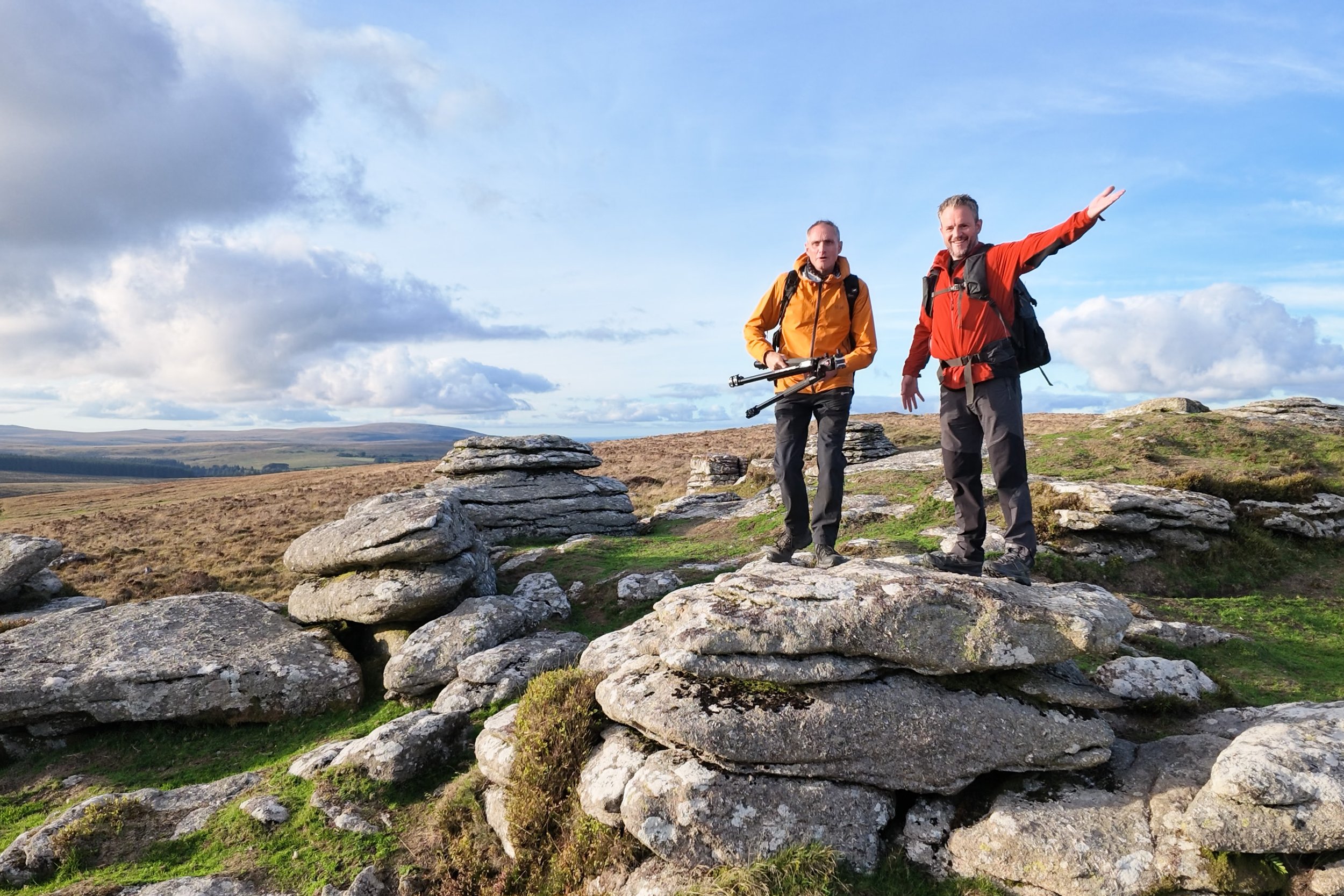
Five Things to Look for in a Photography Tutor on Dartmoor
Looking for a photography tutor on Dartmoor? Discover five key qualities to consider before booking Dartmoor photography tuition or one to one workshops.
What Are Your Goals?
Before you start searching for a photography tutor, stop for a moment and ask yourself two simple questions.
What are your goals?
Do you know why you want a photography tutor?
Are you hoping to finally feel confident shooting in manual mode? Do you want to understand filters properly? Are you drawn to the wild beauty of Dartmoor but struggle to capture it in a way that reflects what you felt at the time?
Clarity Matters
Some photographers want structured technical guidance. Others want creative direction. Many want both. When you understand why you are seeking tuition, you are far more likely to choose someone who can genuinely help you move forward.
With that in mind, here are five things to look for in a photography tutor, especially if you are considering Dartmoor photography tuition.
Great Links Tor - understanding the surrounding topography and direction of light helped increase the chances of capturing a strong image of this challenging location.
1. Does Their Photography Style Match Your Aspirations?
Before you look at qualifications, teaching experience, or price, spend time studying your potential tutor’s photography. Ask yourself the question:
When you look at their images, do you think, that is a photograph I would be proud to take?
A strong portfolio is not just about technical perfection. It is about connection. The images should resonate with you and reflect the kind of photographer you want to become.
There is little value in hiring someone who specialises in seascapes, abstract camera movement, or wildlife if your goal is to create compelling landscape images on Dartmoor. It doesn’t matter how accomplished they are within their own genre. If their work does not align with your aspirations, the teaching may not either.
Look for consistency.
Look for a body of work that demonstrates:
The type of images you want to create
Strong composition and technical control
An understanding of the landscape you care about
If their photographs make you think, I would love to create something like that, you are likely looking at someone whose style aligns with your goals.
The right tutor is not simply a good photographer. They are a photographer whose work reflects where you want to go.
Bowerman’s Nose - colour, light, contrast, and texture all play a key role in creating a compelling Dartmoor image.
2. Deep Local Knowledge of Dartmoor
If you want to photograph Dartmoor well, it helps enormously to learn from someone who truly understands it.
Dartmoor is not just open moorland. It is a landscape shaped by granite, time, and human history. Its tors are formed by ancient geological processes. Its rivers are Dartmoor’s lifeblood, and the woodlands are its heart. Its stone rows, circles, and clapper bridges speak of Bronze Age communities and centuries of farming life.
A tutor with strong local knowledge understands these characteristics and uses them to shape their photographs rather than simply record them.
They should understand:
How granite tors catch and reflect light at different times of day
How the shape of the land influences composition
Where rivers create natural leading lines
How historic features can add depth and context
How seasonal changes affect colour and texture
Just as importantly, they should know how to adapt technique to suit Dartmoor’s distinctive landscape.
Using composition to emphasise structure.
Selecting focal lengths that balance open space with strong foreground interest.
Managing contrast between bright skies and dark stone.
Using shutter speed thoughtfully to control movement in water.
Dartmoor rewards patience and understanding. A tutor who understands its geology and history can help you move beyond simply taking photographs of the moor and begin creating images that feel rooted in it.
Client feedback -
“Julian through his extensive knowledge of the area was able to divert us off to some great locations as and when the variable weather conditions dictated.”
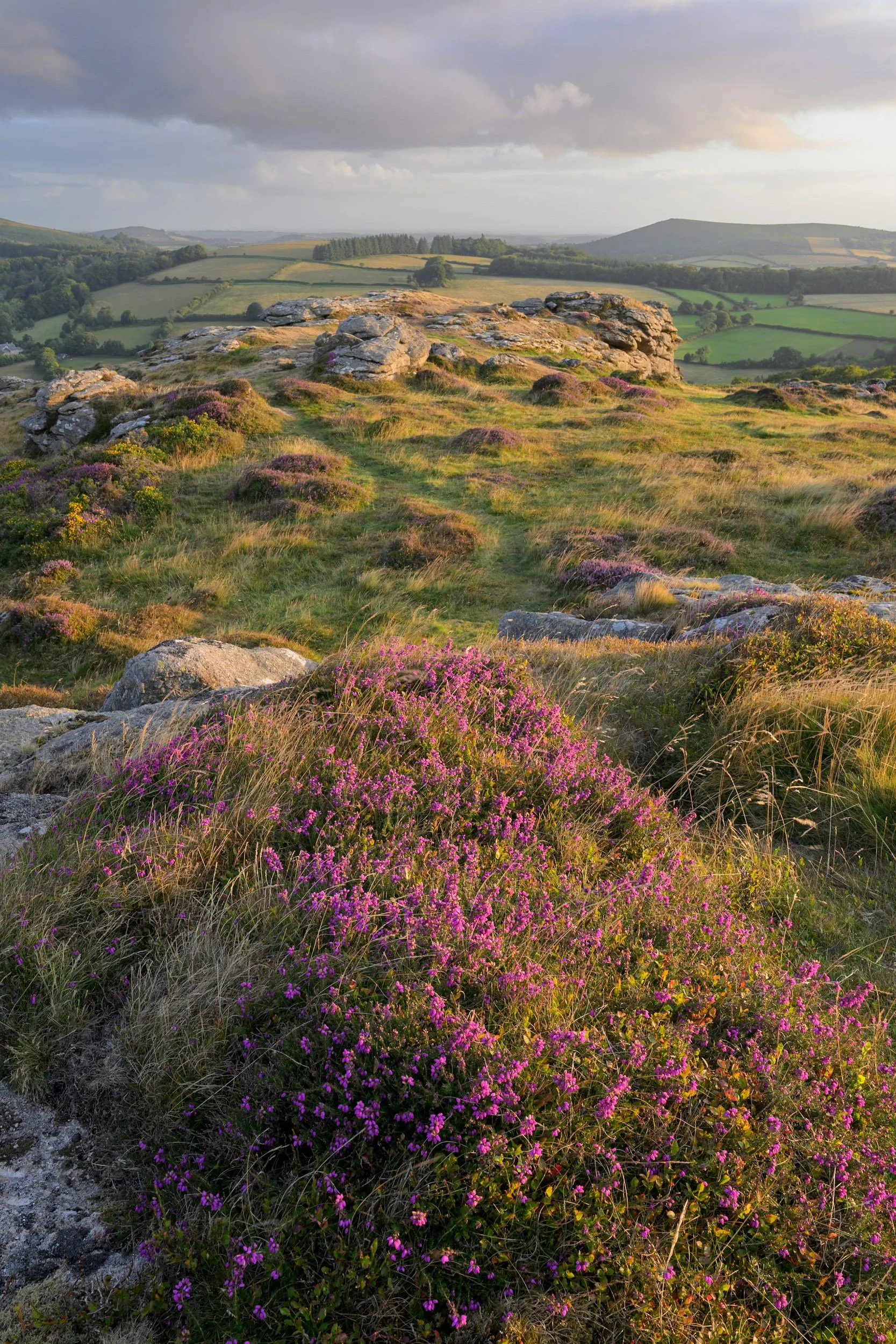
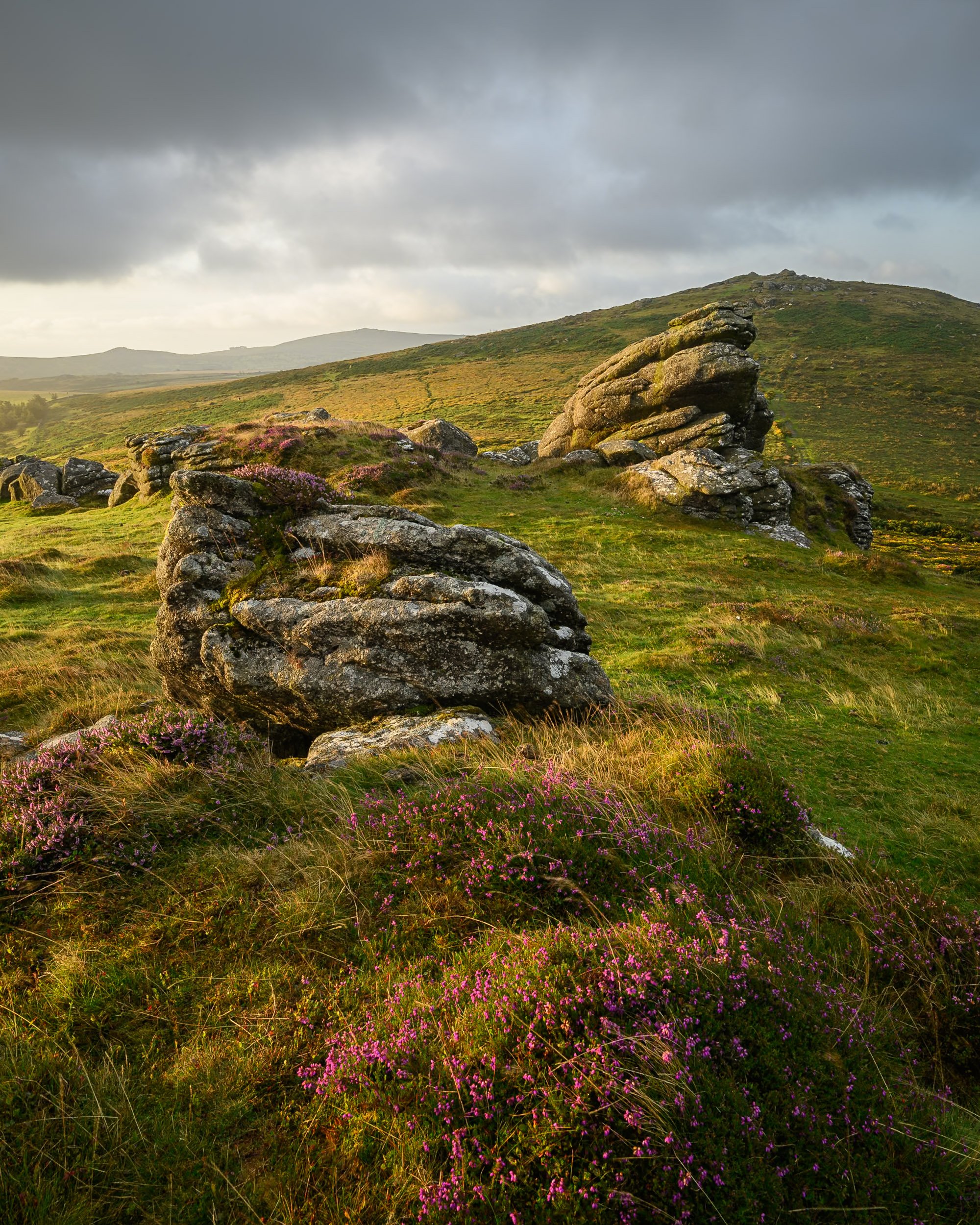
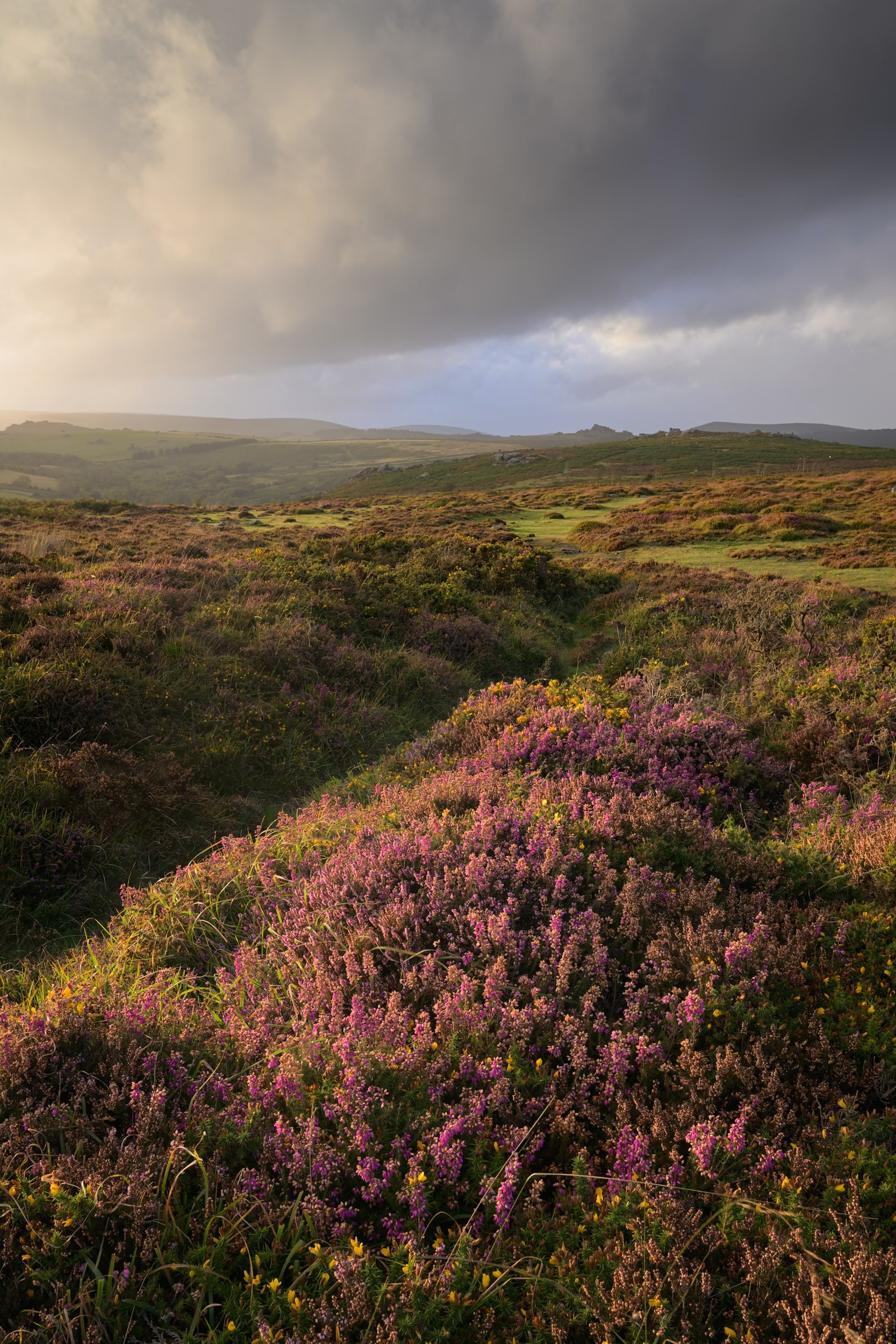
Heather Season on Dartmoor - knowing where to go and when is a key skill, especially when photographing one of the Dartmoor’s seasonal highlights..
3. Passion for Teaching and a Supportive Approach
A great photographer does not automatically make a great tutor.
Technical skill and a strong portfolio are important, but teaching is a separate skill. It requires patience, generosity, and a genuine desire to see others improve.
So ask yourself:
Do they seem passionate about teaching, or only about their own images?
Are they open about their process?
Will they share what they know freely?
Will they take you to the strongest locations, or keep the best spots to themselves?
A tutor who truly enjoys teaching wants you to succeed. They do not guard techniques or workflows. They take pride in seeing you create images you are proud of.
A supportive tutor creates an environment where:
Questions are welcomed
Mistakes are part of the learning process
Feedback is constructive and specific
Confidence grows naturally
An easy going manner is not about being casual. It is about helping you feel comfortable enough to stretch yourself. Passion for teaching makes a significant difference.
See how how I approach 1 to 1 photography tuition, from understanding your goals to helping you develop your own photography.
Client feedback -
“Julian’s kind and warmhearted approach to photography tuition just hits the spot.”
“He tailored the day to my needs and physical abilities as well as my request to help with a particular technique that I was struggling with.”
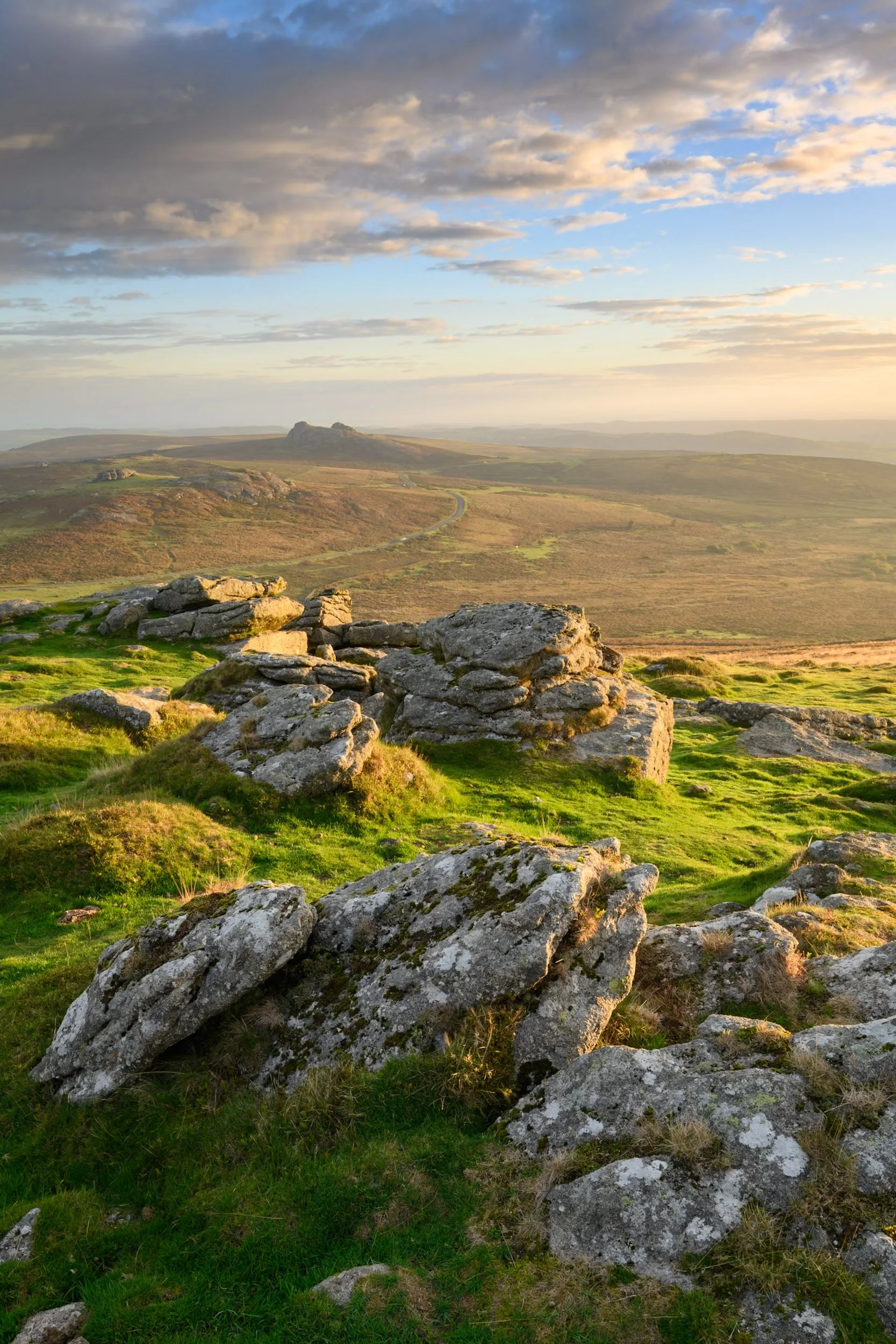
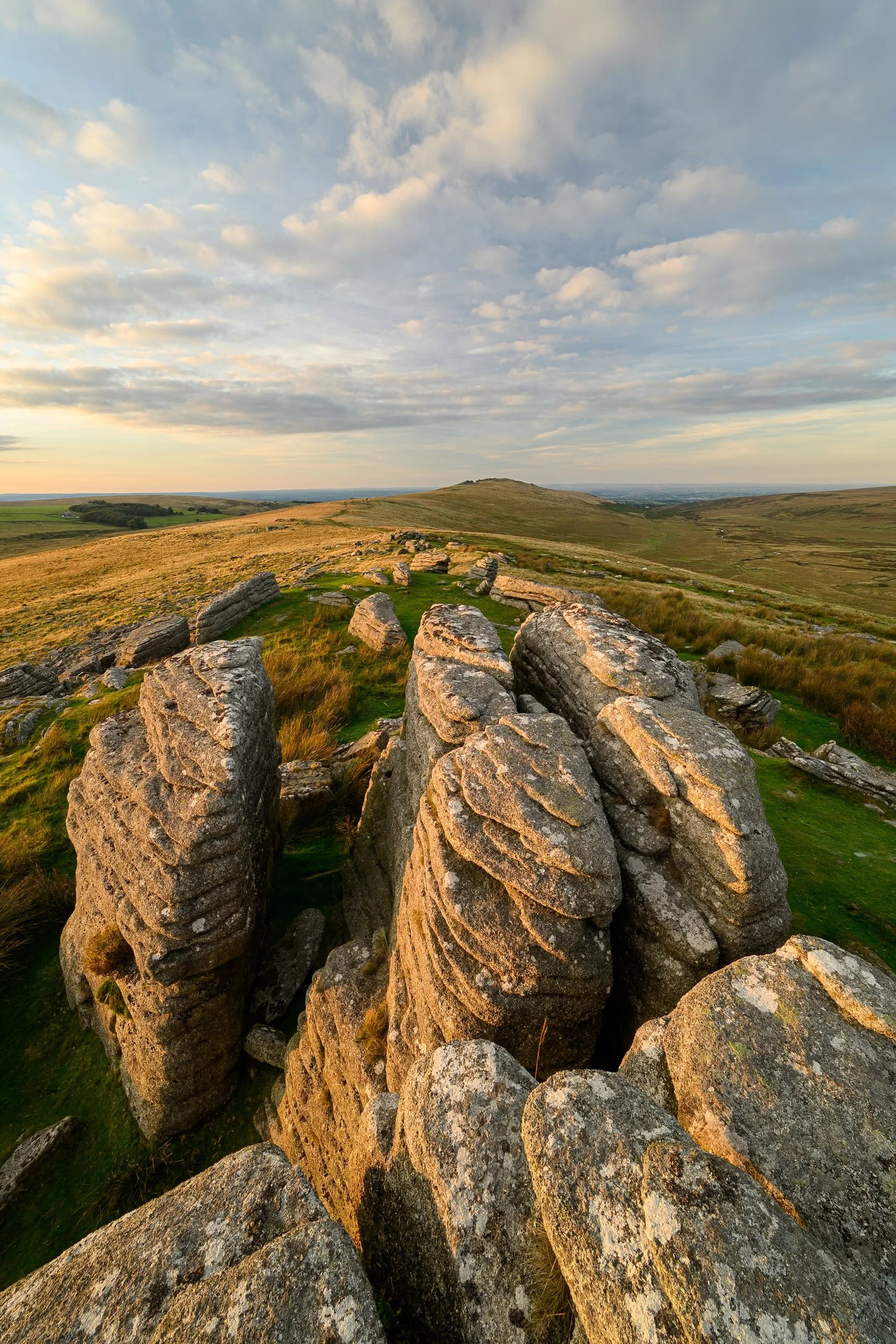
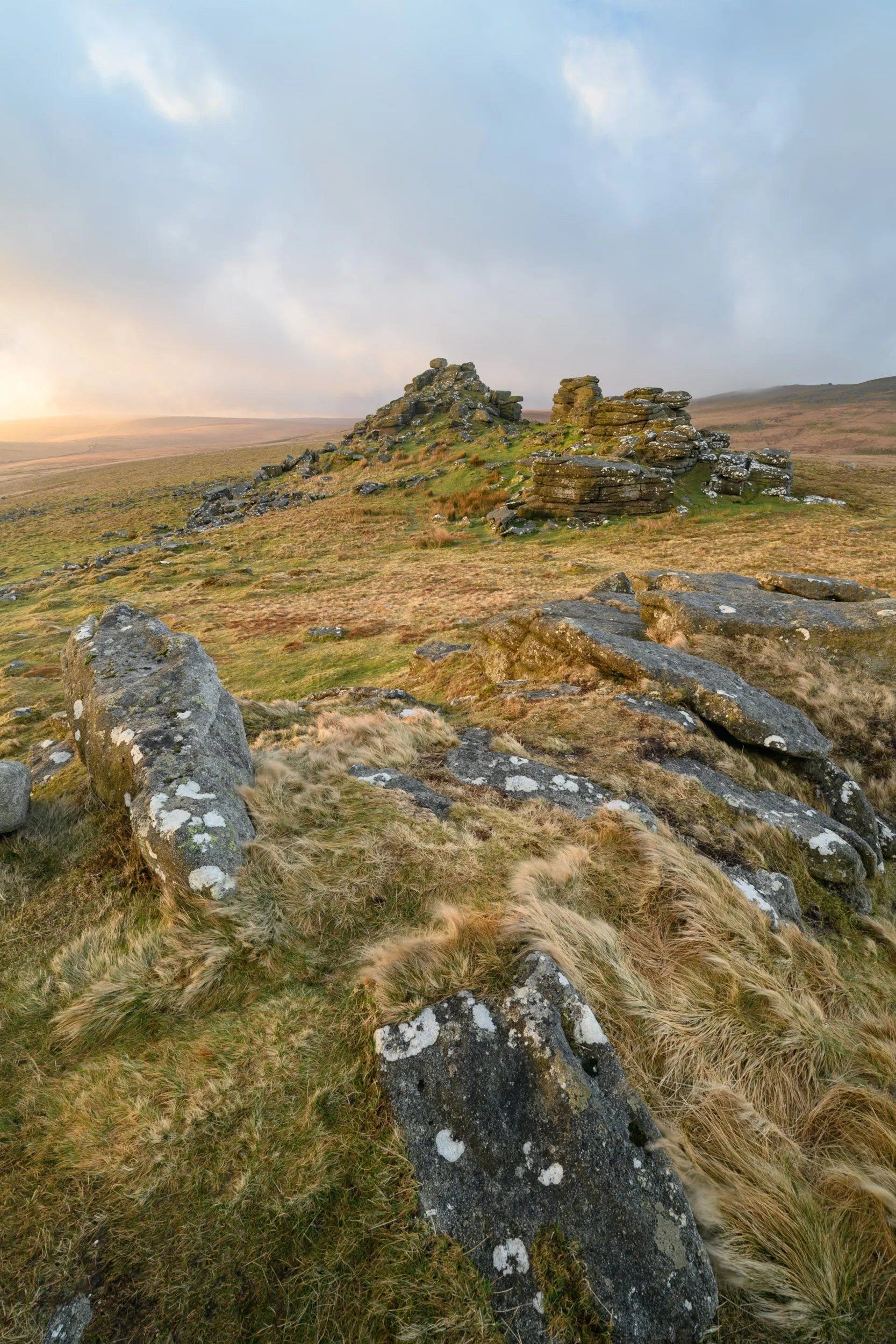
Composing images on Dartmoor can feel challenging at first, but a simple, structured approach can help you create more dramatic photographs.
4. Look for Evidence of Clear and Structured Teaching
You may not know how someone teaches until you spend time with them. But you can often see signs of it in advance. A photographer who can turn knowledge into results usually demonstrates it publicly.
Look for evidence such as:
Blog posts that explain not just what was photographed, but how and why
Videos that clearly break down settings and decisions
Testimonials that mention improved understanding and confidence
Workshop descriptions that outline what you will learn, not just where you will go
Language that focuses on progress and development
Clear explanation is a skill in itself.
If a tutor regularly talks about why they chose a particular composition on Dartmoor, how they managed exposure in high contrast conditions, or how they approach depth of field and focal length, they are showing you how they think.
You are looking for structure as well as enthusiasm. Good tuition should have progression. You should be able to see that they understand how to move someone from uncertainty to clarity, step by step.
Before booking one to one tuition or a workshop, spend time reading, watching, and listening. The way a tutor shares knowledge publicly often reflects how they teach privately.
Learn how I you can create stunning photographs of Dartmoor (or anywhere) in this educational series of videos.
Client feedback -
“I’m now looking at composition and my camera settings in a much better way thanks to his input and teaching.”
“It’s amazing how much you can gain just by having a fresh pair of eyes take a look through your viewfinder!”
Birch Tor - anticipating the light and how it shapes contrast in the landscape is just as important as finding strong leading lines.
5. Depth of Experience and Consistency
There is a difference between knowing a place and having a long relationship with it.
Dartmoor changes with the seasons and the light. Understanding those shifts does not happen in a handful of visits. It comes from returning again and again, across years, in different conditions, and with a steady commitment to learning the landscape.
When considering a photography tutor, look for depth rather than novelty.
Do they regularly photograph the landscape you want to learn?
Do they show consistency across seasons and conditions?
Do their images demonstrate judgement as well as technique?
Experience builds instinct. It shapes decisions about where to stand, when to wait, when to adjust, and when to accept that the conditions are not right.
It also brings professionalism. A tutor who knows the terrain understands timing, access, and safety. That calm presence allows you to focus on learning rather than logistics.
Over time, consistency matters more than one or two standout images. You are looking for someone who demonstrates a sustained connection to the landscape and a steady standard of work.
Because ultimately, choosing a photography tutor is about trust.
Client feedback -
“He has a wealth of knowledge regarding technical matters, composition and importantly, the landscape in general.”
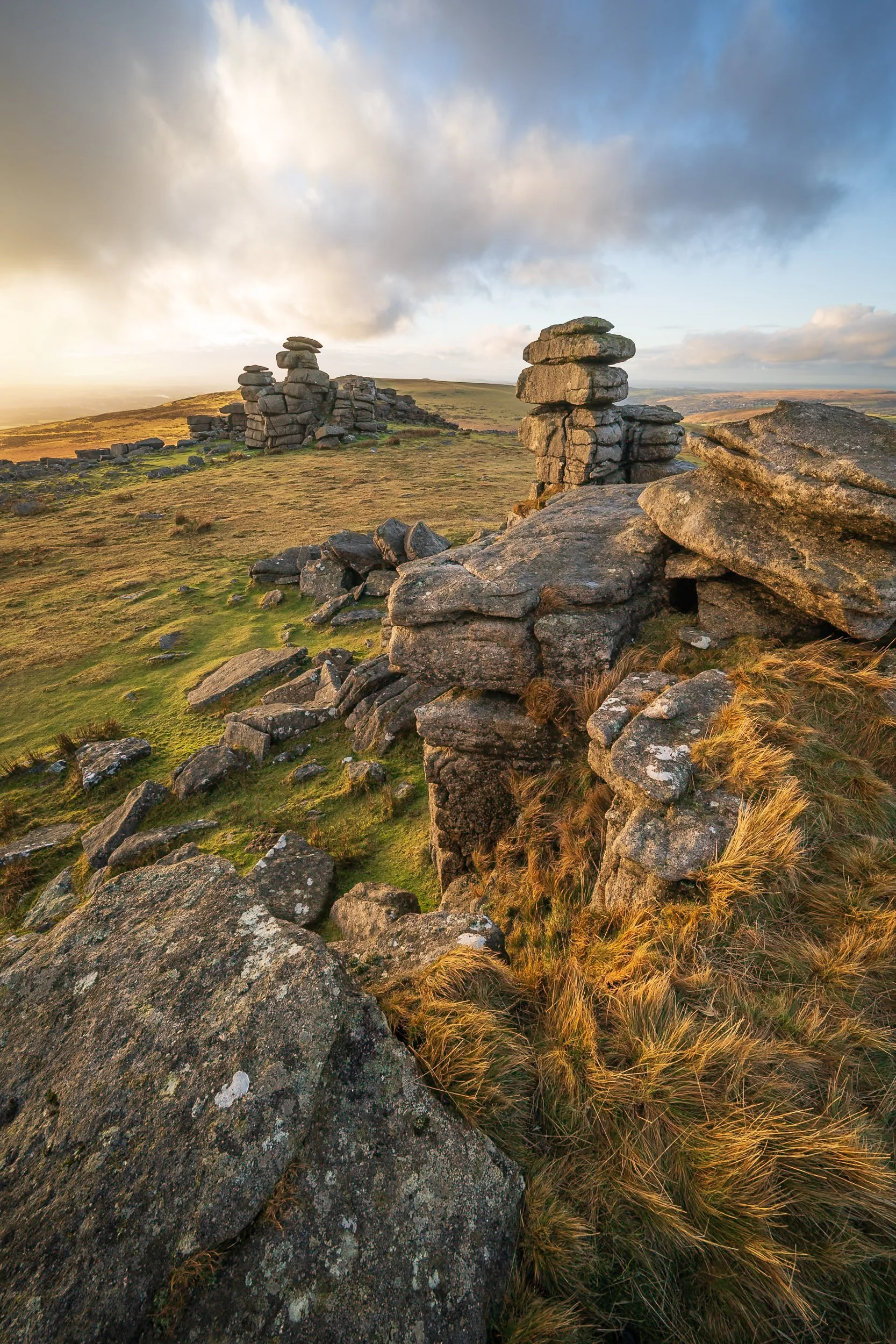
Great Staple Tor - this image drew on years of experience photographing Dartmoor, where composition, light, and a deeper understanding of the landscape all came together.
Bringing It All Together
Choosing a photography tutor is not about finding the most dramatic portfolio or the loudest voice.
It is about alignment.
Does their style reflect where you want to go?
Do they understand Dartmoor deeply?
Are they generous with their knowledge?
Do they communicate clearly and with structure?
Have they built genuine experience over time?
When those elements come together, progress feels natural. Confidence grows. Your photographs begin to reflect not just what you saw, but what you intended to create.
If you feel this approach resonates with you and would like a supportive, personalised way to develop your photography on Dartmoor, why not explore my one to one photography tuition page and see how we can work together to help you see and capture this extraordinary landscape in your own way.
Client feedback -
“It’s the best money I’ve spent on my camera for sometime!”
In my Discovering Dartmoor video series, I’ve extensively explored the moor to not just to find the best photography locations, but to truly understand it. That deeper knowledge is something I share with the photographers I work with.
Bite-Size Blog Post #89 - Dawlish Warren
Dawlish Warren is a familiar location to me, but every visit brings different conditions, new compositions and another reason to keep coming back.
There’s a Reason I Keep Coming Back
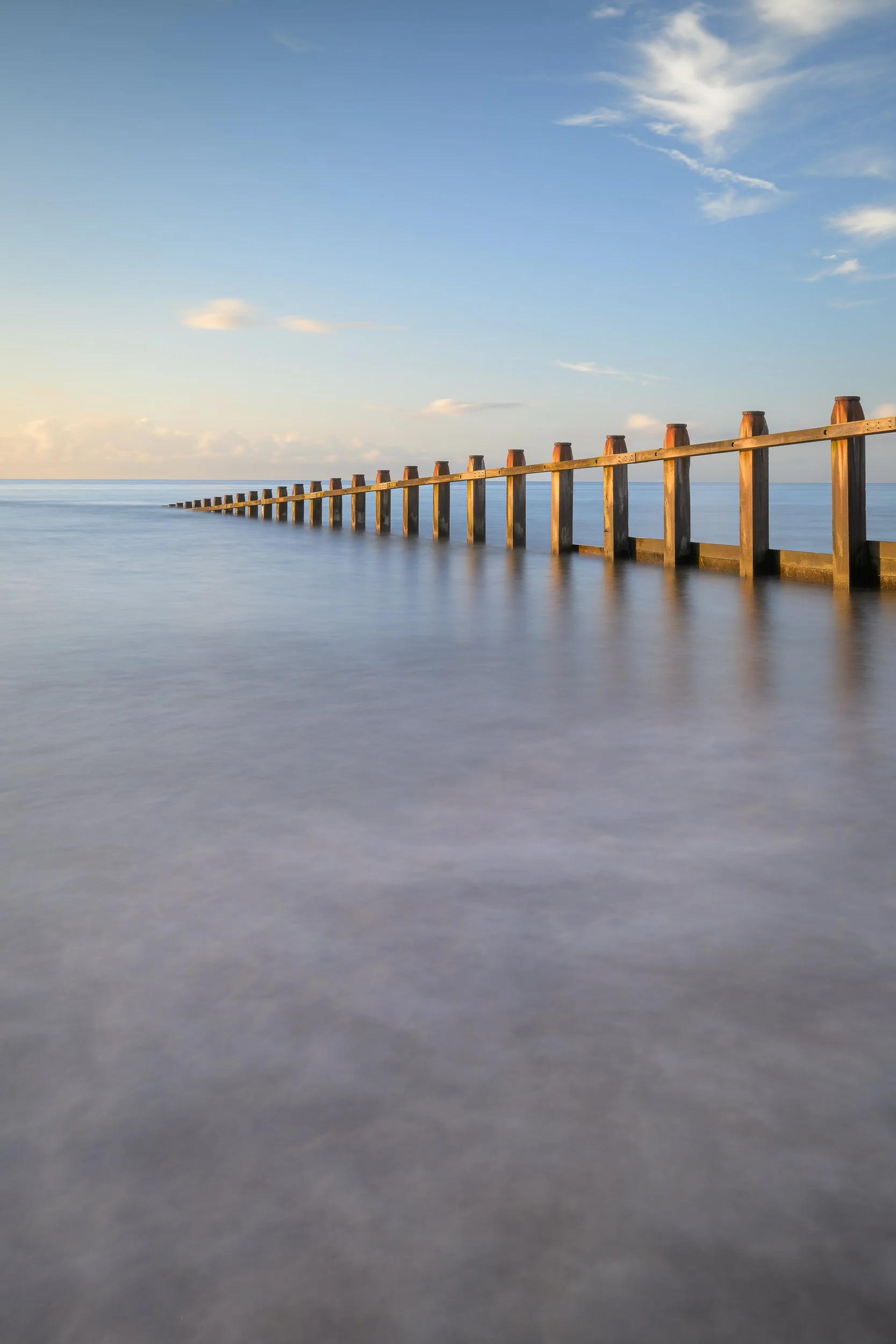
There’s something therapeutic about being on the coast, especially at sunrise. As many of you will know, Dawlish Warren is a beach location I visit regularly, and over the last decade I’ve photographed it countless times.
There are many reasons for this. Perhaps it’s the relaxing walk along the beach, watching the sky change colour as I make my way towards the groynes and listening to the waves gently wash over the sand. The walk itself builds a sense of anticipation about what the morning might bring.
But ultimately, it’s the photography that keeps bringing me back.
Dawlish Warren is a completely different environment to the tors and hills of Dartmoor and requires a different set of skills and camera equipment. It’s one of the places where I regularly use not only my CPL, but also my ND filters. The NDs allow me to control the length of the exposure, creating longer exposures that smooth out the movement of the water and give the resulting photograph a more ethereal feel.
Structure and simplicity are also themes I enjoy exploring on Dawlish Warren beach. The sky, sea, sand and groynes are really the only elements I have to work with, and arranging these into a strong composition is a challenge I appreciate.
It may sound simple, and perhaps even a little repetitive, but the conditions are different on every visit, and so is the way I see the landscape. The light, clouds, tide and movement of the water all influence how I approach the scene.
I always come away feeling like I’ve created something new.
And that’s the reason I keep coming back.
Kase Filters
Use the discount code 'Julian' for a 5% discount
🛒 Kase Kanopy Metal Lens Hood - https://kasefilters.com/product/kase-kanopy-metal-lens-hood-95mm-with-82mm-lens-adapter/ref/JulianB/
🛒 Kase Revolution Plus Entry Kit - https://kasefilters.com/product/kase-revolution-plus-entry-kit/ref/JulianB/
🛒 Kase Revolution Plus Pro Kit - https://kasefilters.com/product/kase-revolution-plus-pro-kit/ref/JulianB/
Dawlish Warren Beach, Devon - Nikon Z8 with Nikkor Z 14-30mm f/4 S at 30mm, f/14, 30 secs at ISO 64, Kase Revolution CPL and ND.
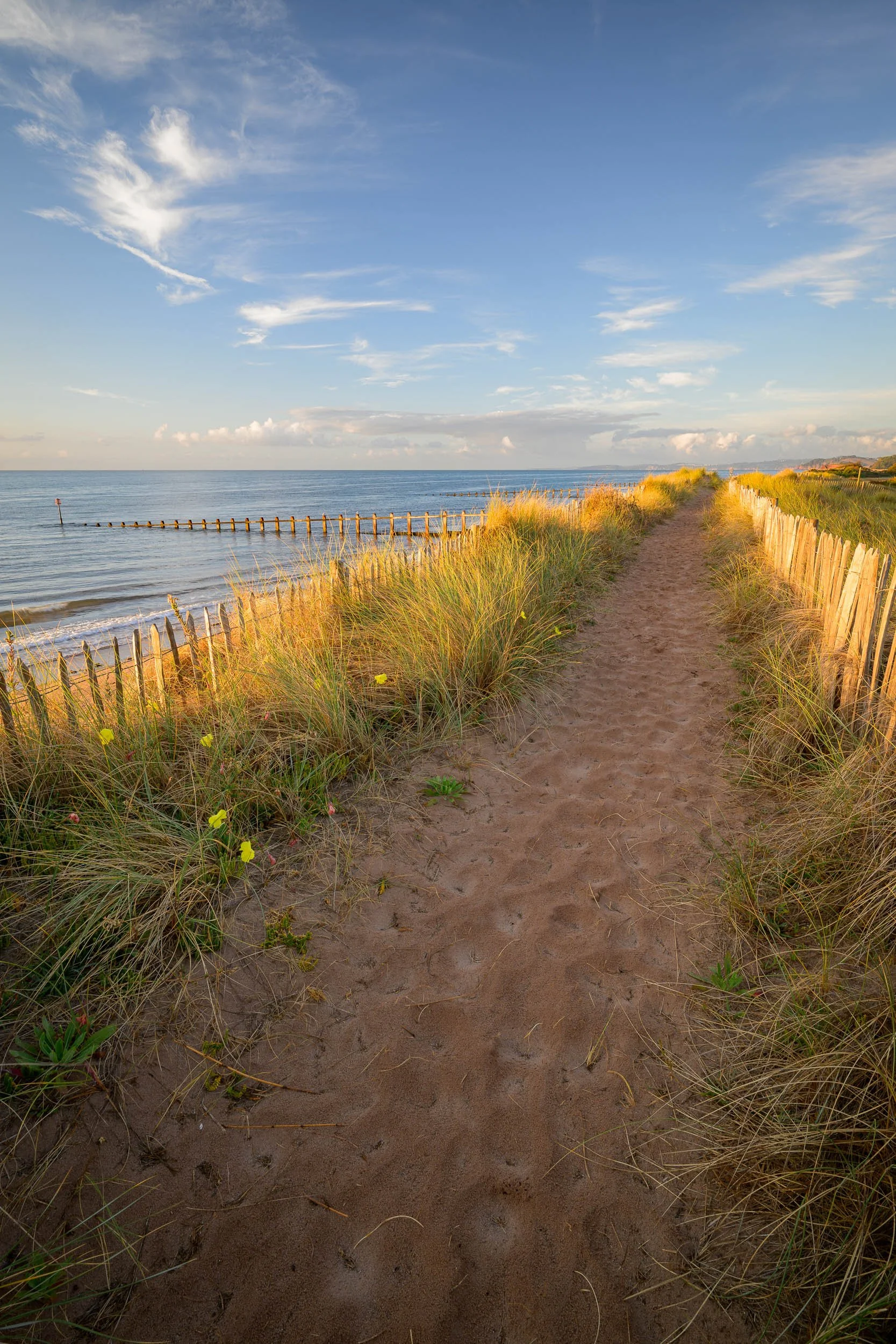
Dawlish Warren Beach, Devon - Nikon Z8 with Nikkor Z 14-30mm f/4 S at 18mm, f/11, 1/10 sec at ISO 64, Kase Revolution CPL.
Dartmoor: Learning to Develop a Photography Project
In this video, I discuss what developing a photography project can change the way you see and photograph Dartmoor.
Why Photography Projects are Valuable
In this episode of Learning Landscape Photography on Dartmoor, I explore the value of developing a photography project rather than simply going out in search of individual photographs.
My own passion for photographing heather on Dartmoor provides the perfect example. Over the years I have returned to Dartmoor during heather season, visiting different locations, working in different conditions, learning from the photographs that didn't work and gradually building a collection of images around a single subject.
A photography project gives you a reason to return. It encourages you to look more carefully, experiment, embrace the failures and learn from them. Most importantly, it can help you move beyond creating individual photographs towards developing a body of work that reveals something about your subject.
In this video, I explore how you can develop your own photography projects, why the process can be more valuable than the final images, and how choosing a subject and committing to it can change the way you see and photograph the landscape.
The subject doesn't have to be heather. It could be a particular place, a season, a type of landscape, a natural feature or simply something that interests you.
Sometimes the best way to improve your photography is not to find somewhere new to photograph, but to spend more time photographing something you already love.
This is part of my Learning Landscape Photography on Dartmoor series, exploring the ideas and thought processes behind landscape photography on Dartmoor and beyond.
Bite-Size Blog Post #88 - Haresceugh Fell
I make a very quick photography stop with an old friend before heading north for an exciting adventure.
On My Way to Something Exciting
My friend and long time photography collaborator, Chris Sale, has been photographing the Pennines ever since he moved there a few years ago. I try to pop in and see him and his lovely wife whenever I’m passing by on the M6. It’s always good to catch up, especially when it involves an overnight stay, as that gives us the opportunity to head out with the cameras.
Earlier this week, Chris kindly invited me to stay on my way up to Scotland. I’m visiting Scotland to catch a flight to a very special location, but more of that in a future blog post.
I arrived at his house after dark, so there wasn’t much time to do anything other than enjoy a glass of wine and have a chat. We did, however, promise ourselves that we’d get up early the following morning for some photography.
It turned out to be a challenging hour or so. The morning had brought heavy cloud, and Chris’s home territory in the Pennines is far from the easiest place to photograph. As Chris describes it, it’s like Dartmoor, but without any of the interesting stuff!
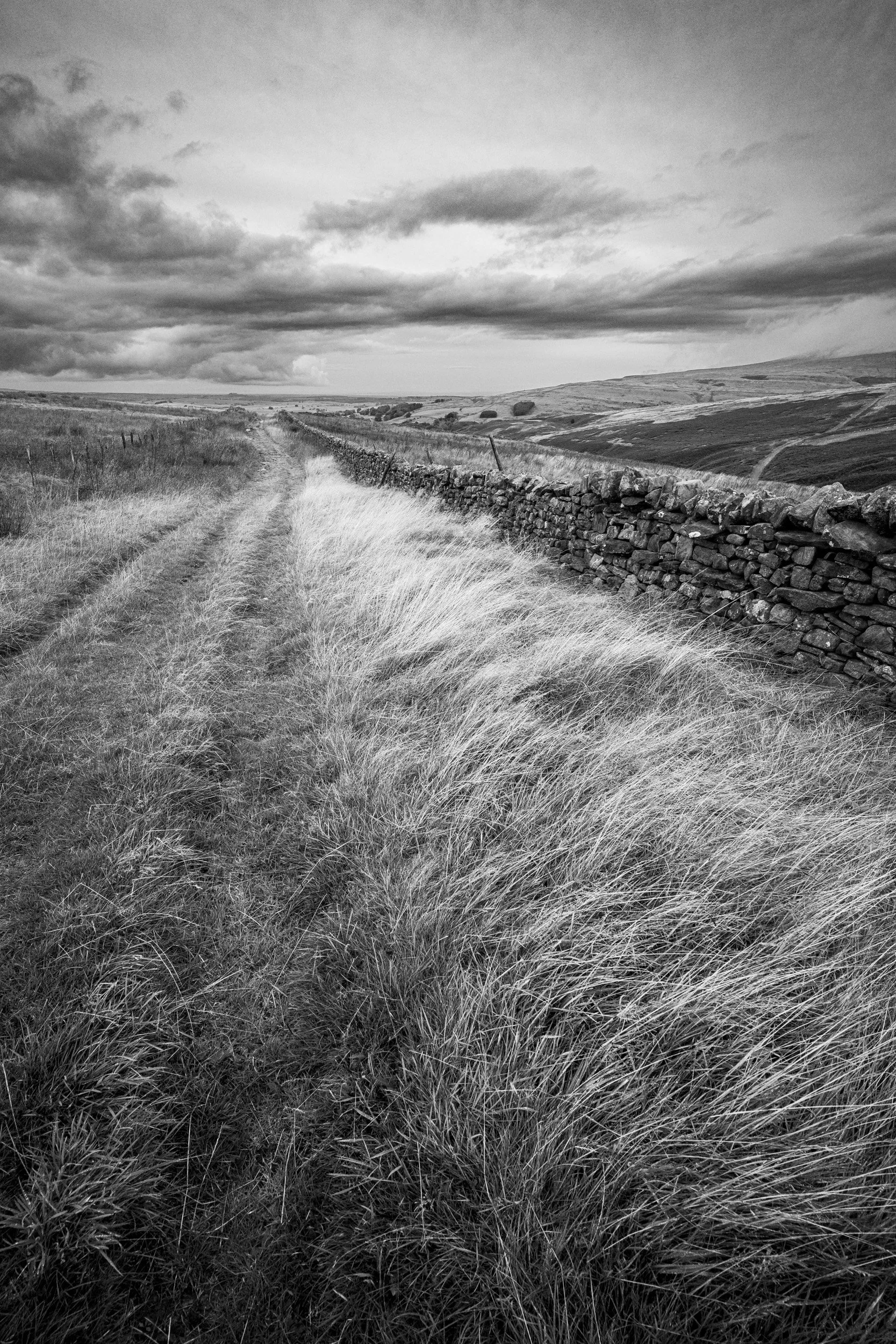
The image you see below was actually taken on the walk back to the car. I had found the morning very challenging and I don’t think I took more than five frames in total. Yet, somehow, this photograph caught my attention.
Perhaps it was the long path stretching into the distance. Maybe, subconsciously, it represented the long journey I had ahead of me. Or perhaps it’s just a picture of a path!
Either way, spending an hour with a friend doing the thing we both love is never a waste of time. In fact, I’ll be stopping off on my way back from this trip, so we’ll get the cameras out and do it all again.
Hopefully, with better weather this time.
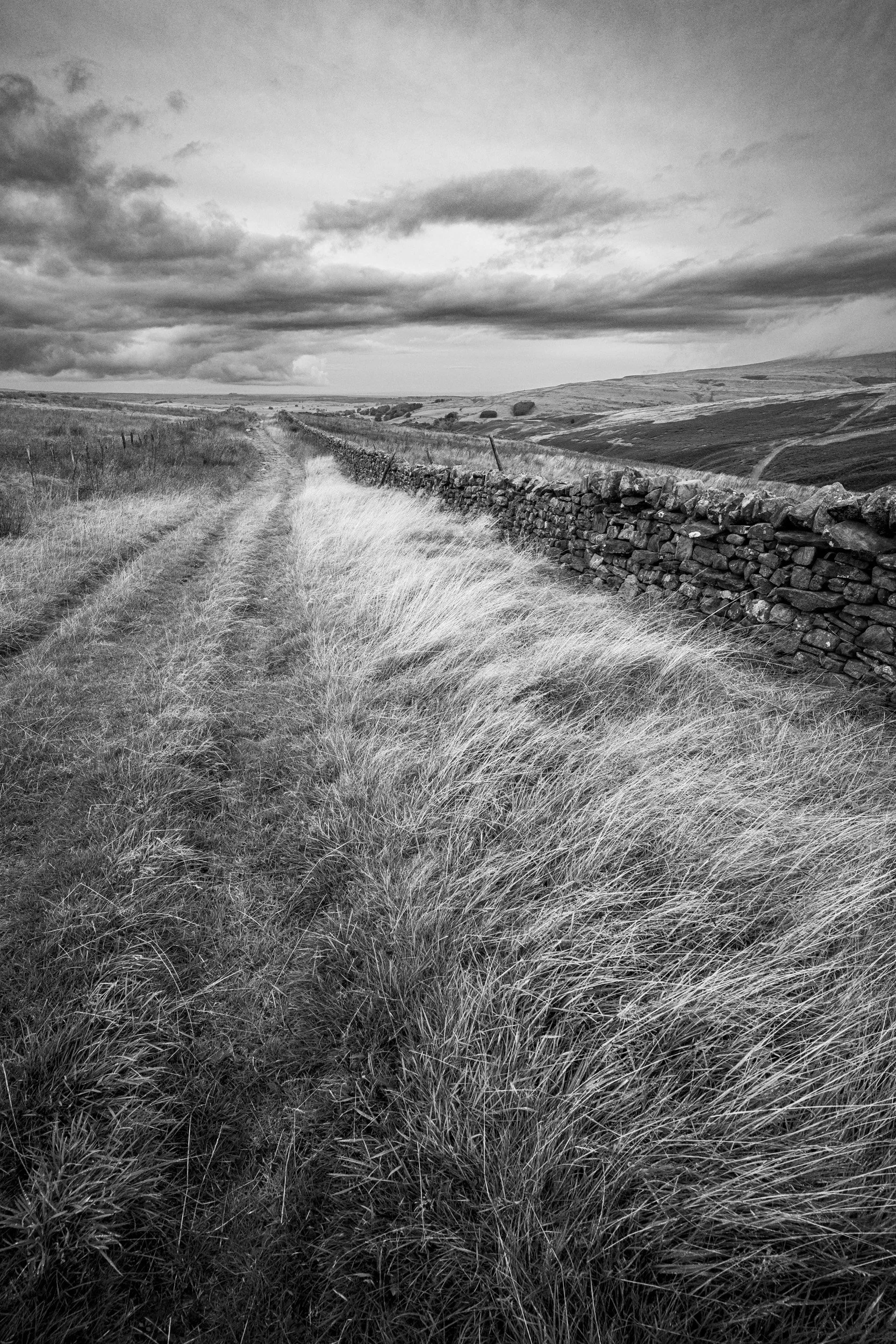
Haresceugh Fell, The Pennines - Nikon Z8 with Nikkor Z 14-30mm /f4 S at 16mm, f/8, 1/60 sec at ISO 500, Kase Revolution CPL.
Why I Rarely Use ND Grads
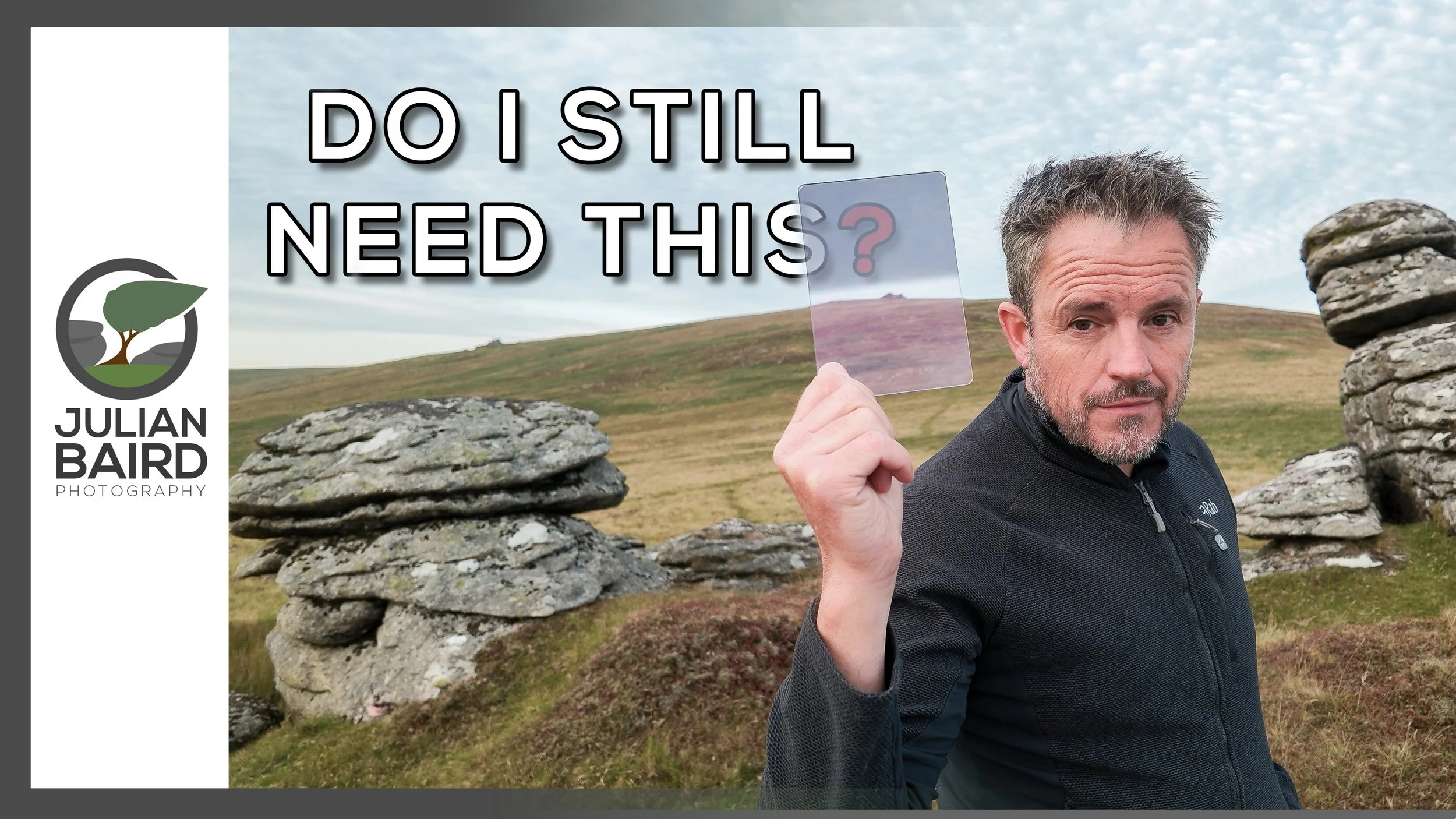
For years, graduated ND filters were an essential part of my landscape photography. But as camera technology has improved, and my own approach to photographing Dartmoor has evolved, I find myself reaching for them less and less.
Infrequently Used, Not Obsolete
If you've been a photographer for a long time, you'll have owned plenty of different cameras, lenses and accessories. Ask most photographers which pieces of gear they remember most fondly, and they'll probably mention a favourite camera or lens. Accessories rarely make the list.
Look inside a camera bag, though, and you'll find much more than just a camera and a collection of lenses. It's often full of accessories, some essential and others that seemed like a good idea at the time. Most of them come and go without leaving much of an impression.
It's the same for me. I can remember every Nikon camera I've owned and almost every lens that has accompanied me over the years. But ask me which camera bag I was using ten years ago, or what accessories I carried, and I'd struggle to tell you.
One accessory, however, has recently made me stop and think. Graduated neutral density filters.
I've found myself reaching for ND grads less and less over the last few years, almost to the point where I can't remember the last time I actually used one. When I first heard about circular only filter systems, I thought they were a step backwards. Surely every landscape photographer still needed graduated filters? Now that I've been using the Kase Revolution system for a while, I think I may have been a little hasty with that opinion.
The reality is that I rarely use ND grads these days. The filters I reach for most often are a circular polariser and a standard ND filter, both of which work perfectly in a circular magnetic system.
The biggest reason is that my photography has changed.
I'm fortunate enough to photograph with a Nikon Z8, a camera with exceptional dynamic range. It gives me so much latitude when processing RAW files that, in many situations, I simply don't need a graduated filter on location. Recovering highlight and shadow detail from a single exposure is often all that's required.
Just as importantly, the landscapes I photograph have changed too.
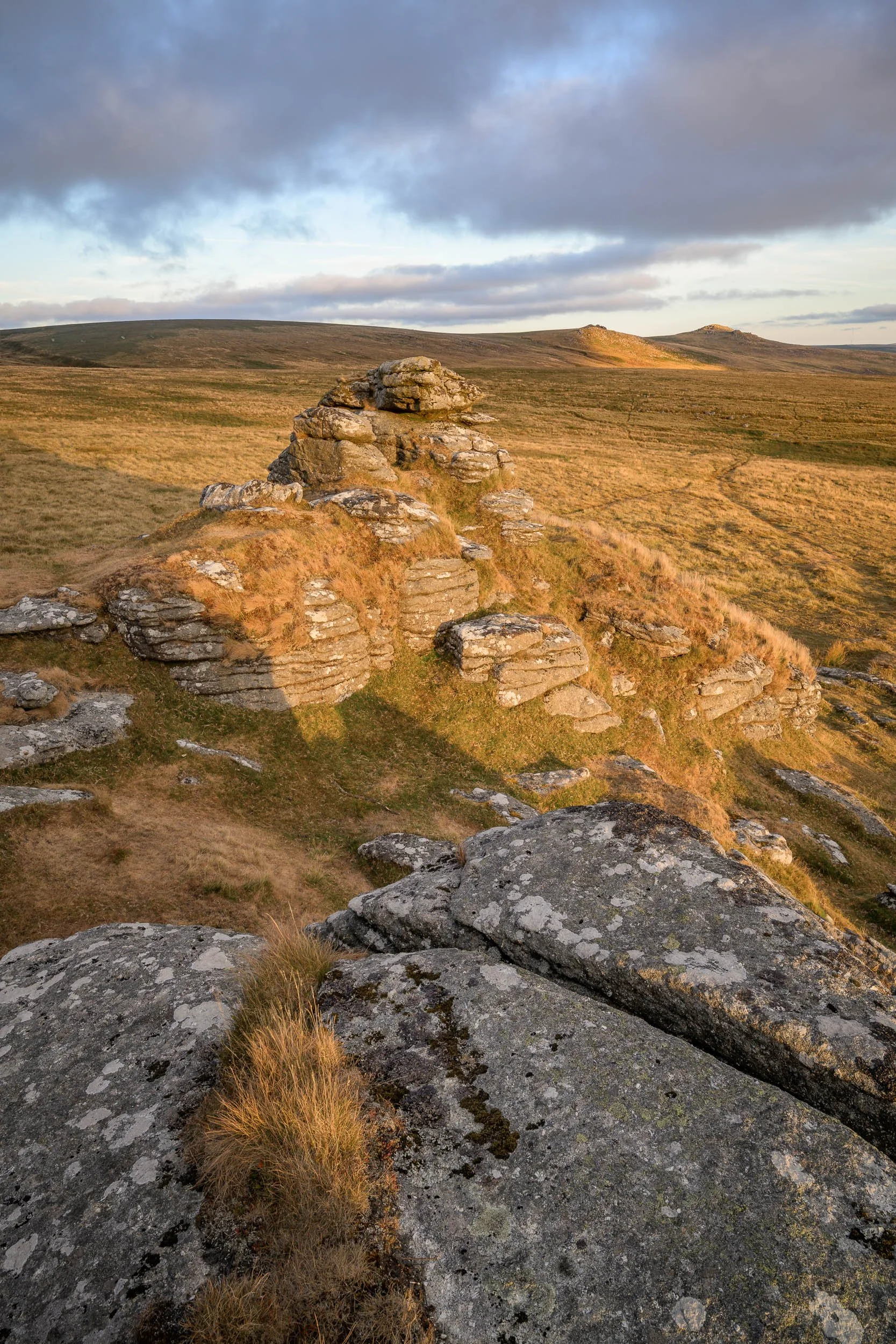
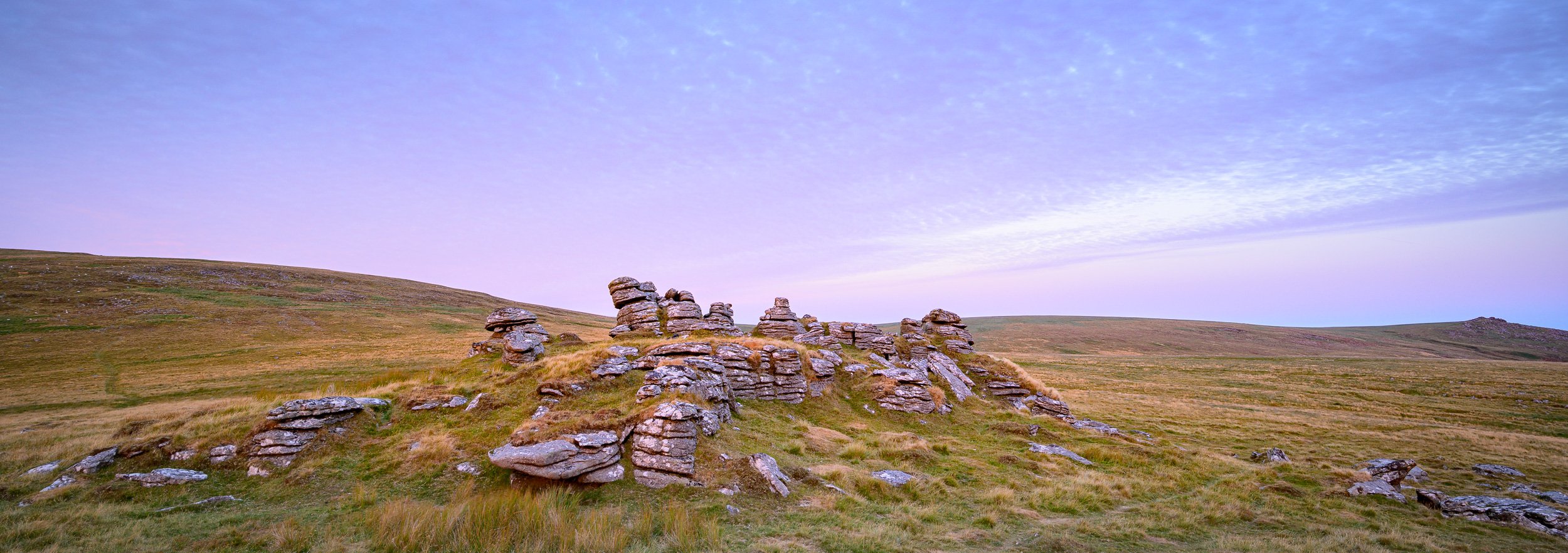
Most of my photography now takes place on Dartmoor, where clean horizons are few and far between. Tors and rocky outcrops constantly interrupt the skyline. Place a graduated filter over a scene like that and it doesn't just darken the sky, it often darkens the very features I'm trying to emphasise. In those situations, the filter can create more problems than it solves.
That doesn't mean ND grads are obsolete. Far from it.
Every photographer has a different camera, a different workflow and photographs different landscapes. If you spend your time along the coast, where the horizon is often clean and uninterrupted, a graduated filter can still be one of the most useful accessories in your bag. Likewise, if you're photographing scenes that exceed the dynamic range of your camera, or simply prefer getting as much done in camera, ND grads remain an excellent solution.
So no, I'm not saying goodbye to them.
In just a few weeks I'll be travelling to one of my bucket list photography destinations. I'll be photographing very different landscapes in very different conditions, and my set of graduated filters will be coming with me. I may not use them, but I'd much rather have them and not need them than need them and leave them at home.
For me, ND grads have become infrequently used, not obsolete.
What about you? Do you still use graduated ND filters regularly, or has your workflow changed with modern cameras? I'd love to hear your thoughts in the comments.
Kase Filters Revolution System
The circular filter system I refered to earlier in this blog post is the Kase Filters Revolution system. If you are interested in knowing more about these filters, here are the links you need:
🛒 Kase Revolution Plus Entry Kit - https://kasefilters.com/product/kase-revolution-plus-entry-kit/ref/JulianB/
🛒 Kase Revolution Plus Pro Kit - https://kasefilters.com/product/kase-revolution-plus-pro-kit/ref/JulianB/
Use the discount code 'Julian' for a 5% discount
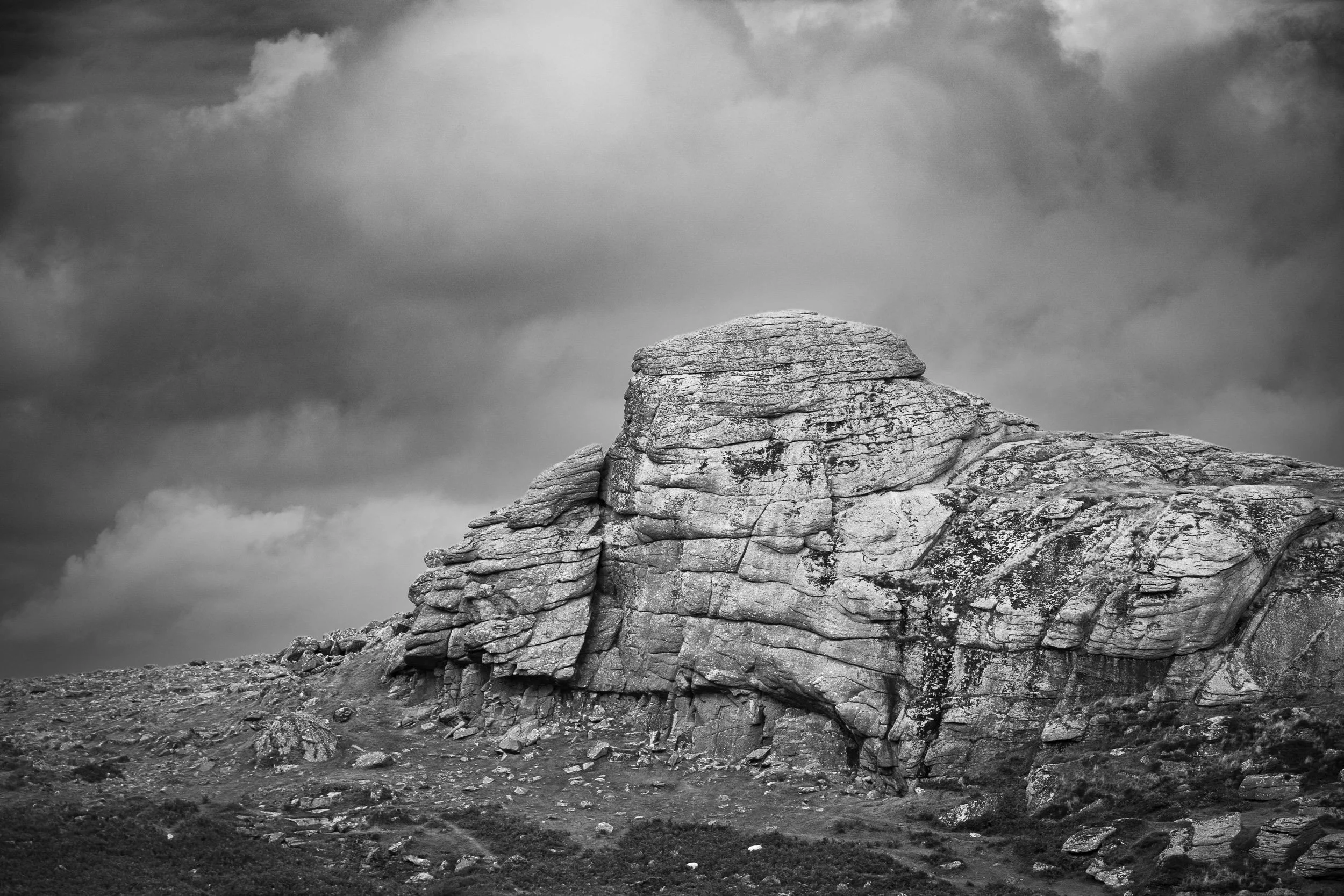
Bite-Size Blog Post #87 - Haytor
I’d gone to Haytor hoping for some evening light on the heather, but the cloud had other ideas. Instead, I found myself looking at the tor in a completely different way, exploring its texture and contrast in black and white.
Texture, Contrast and Storms
I already knew before I left for Haytor that the chances of the cloud breaking were slim. Nonetheless, the forecast was predicting a small, but hopefully meaningful, break in the cloud around sunset.
Now that we are into September, and with me heading off on a big photography trip next week, time was running out to capture some more photographs during my favourite time of year on Dartmoor: heather season. So, even though I felt the chances of seeing any evening light were slim, I set off regardless.
Arriving at Haytor, I soon realised those chances had gone from slim to non existent. A solid bank of cloud lay to the west, looking like it was going to bring rain at any moment. I’ve seen the sun make its way through the smallest of breaks in the cloud before, but with this much cloud cover, the sun would have to make the journey to Earth and then somehow step in front of the cloud!
Accepting that the light I had hoped for wasn’t going to happen, I set about making the most of the situation.
One thing stormy skies can bring, though, is drama. With no direct light to highlight the heather or add contrast to the landscape, I switched my camera to black and white mode and started looking more closely at the texture and contrast of the distant Haytor.
Haytor Rocks, Dartmoor National Park - Nikon Z8 with Tamron 35-150mm f/2-2.8 at 89mm, f/8, 1/6 sec at ISO 64.
Without the distraction of colour, I was free to explore the surface of the tor, and it was striking. Black and white photography can reveal the underlying character of a tor, and that was certainly the case with Haytor. The rough surface, the lines and cracks, the lumps and bumps were fascinating, and I found myself looking at Haytor in a whole new way.
Sure, I never got the heather shots I was after, but by making the most of the conditions and opening myself up to looking at things differently, I left feeling satisfied.
And slightly damp.
Not a bad result from a visit to one of Dartmoor’s most iconic tors.
Haytor Rocks, Dartmoor National Park - Nikon Z8 with Tamron 35-150mm f/2-2.8 at 150mm, f/8, 1/6 sec at ISO 64.
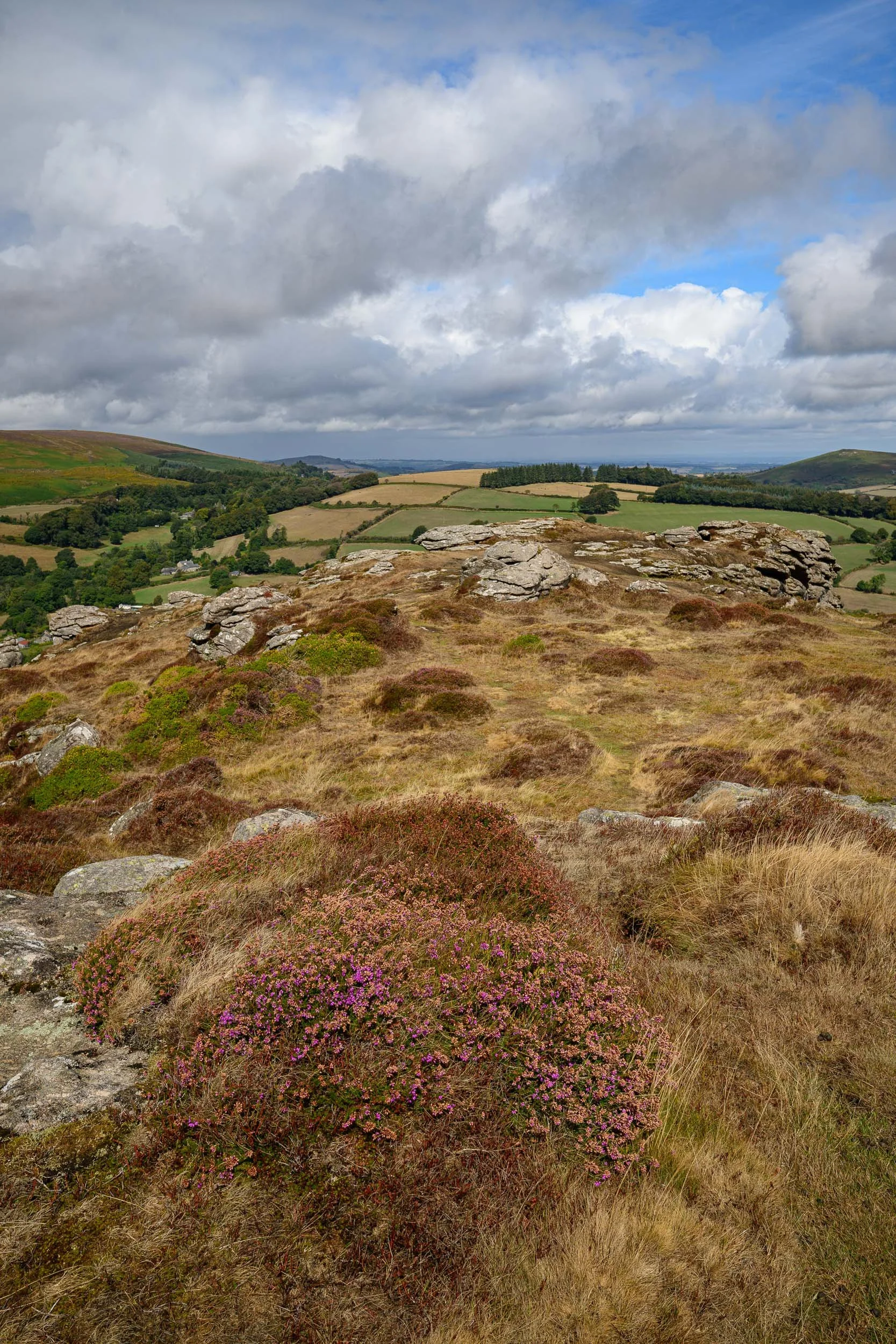
Dartmoor Preservation Association Photo Walks - Honeybag Tor
I joined the Dartmoor Preservation Association for my first photography walk, taking an enthusiastic group to Honeybag Tor to capture Dartmoor’s heather in some fantastic light.
There’s More to a Day Than Just the Golden Hour
You’ll often hear me talk about the benefits of photographing Dartmoor during the golden hours, that magical period around sunrise and sunset. The light takes on a beautiful golden colour, hence the name, and its softness adds a gentle contrast to the scene, highlighting the character of the Dartmoor landscape.
However, that’s not a reason to overlook the experience of taking landscape photographs during the middle of the day. Just as with photographing during the golden hours, you need the right conditions.
Bright blue skies and strong sunshine often lack interest and can make a scene too contrasty, while grey skies can flatten the light too much, resulting in a rather bland image. Ideally, you want lots of moving cloud, allowing the sun to break through and illuminate different parts of the landscape while still providing an interesting sky.
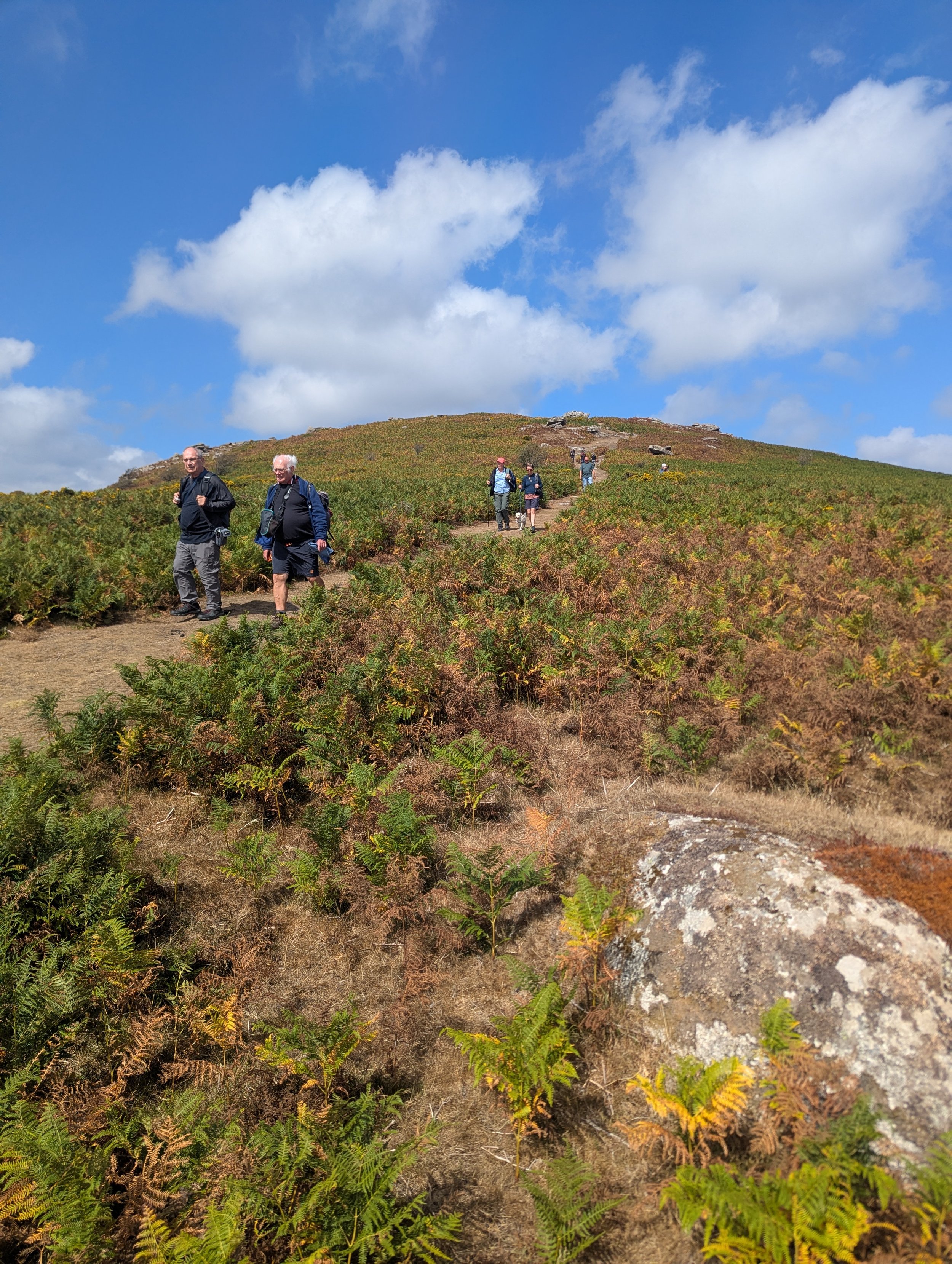
And that’s exactly the conditions I got when I co led my first photography walk with the Dartmoor Preservation Association (DPA).
The DPA, who I have worked with before, delivers lots of free walks throughout the year, and this year they asked if I would lead their photography walks. When I was asked, I was delighted to be able to donate some of my time to this important and hard working charity.
Unlike the direct one to one tuition and workshops I provide, these photography walks are much shorter events, lasting just a few hours. They feature larger groups, usually around 15 people, and typically focus on a single location that is relatively easy to access. Everyone is welcome, whether they are carrying the latest mirrorless camera or simply using their mobile phone.
Honeybag Tor, Dartmoor - Nikon Z8 with Nikkor Z 14-30mm f/4 S at 30mm, f/11, 1/100 sec at ISO 64.
For the first walk, I took a very engaged and enthusiastic group of 15 walkers, cameras in hand, up to Honeybag Tor to photograph the heather.
When I arrived at the meeting point, the weather looked pretty poor. At one point, while driving past Haytor, I thought I was going to disappear into the cloud!
But I held onto the fact that the forecast predicted the cloud would break up and there would be sunny spells. So, I eagerly led the group up the hill alongside Helen from the DPA.
It didn't take long for the weather to start improving. As the cloud began to break, sunlight started illuminating different parts of the landscape, near and far. I found myself running around the group, telling everyone to get their phones or cameras out and look for the light as it moved across the landscape.
Over the next couple of hours, the conditions continued to improve, providing the group with some fantastic opportunities to capture photographs of Dartmoor and the heather.
Teaching people about photography on Dartmoor is something I am passionate about, and it was a real pleasure to share my knowledge and tips with the group in such great conditions. It was especially satisfying to see the pleasure on people’s faces when they looked at the photographs they had captured.
I have another two photography walks scheduled with the DPA. The first is at Hound Tor and Bowerman’s Nose on 8th October 2026, followed by Great Staple Tor on 11th November 2026.
I can’t guarantee the weather, but I do know the groups will be enthusiastic and fun. So, why not come along and join us?
Details can be found on the DPA website.
Honeybag Tor, Dartmoor - Nikon Z8 with Nikkor Z 14-30mm f/4 S at 28mm, f/11, 1/100 sec at ISO 64.
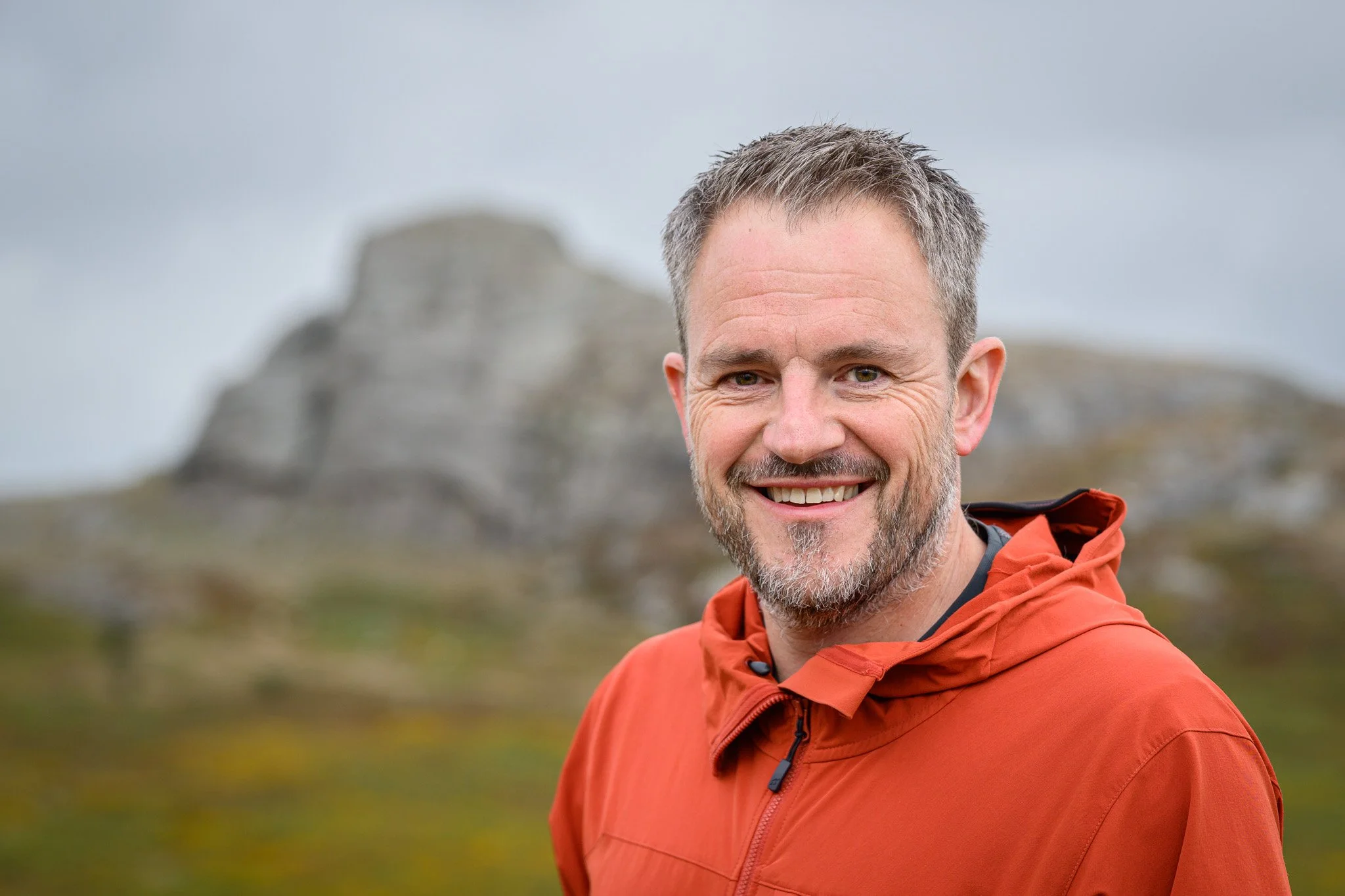
Celebrating a Decade of Landscape Photography Blogging
After ten years, nearly 500 blog posts and almost a quarter of a million views later, I’m taking a look back at how this blog began and what it has become.
We all have to start somewhere…
It was 16 August 2016 when I published my first blog post right here on this website. Titled We all have to start somewhere, it was an introductory post about who I was, why I was starting a blog and what you could expect from it.
Reading that first post now feels like taking a trip down memory lane. So much has changed in my life, both personally and professionally, over the past decade.
But the goal of the blog remains much the same as it was then. It’s a place for me to share my photography knowledge, stories, adventures and, of course, my photographs.

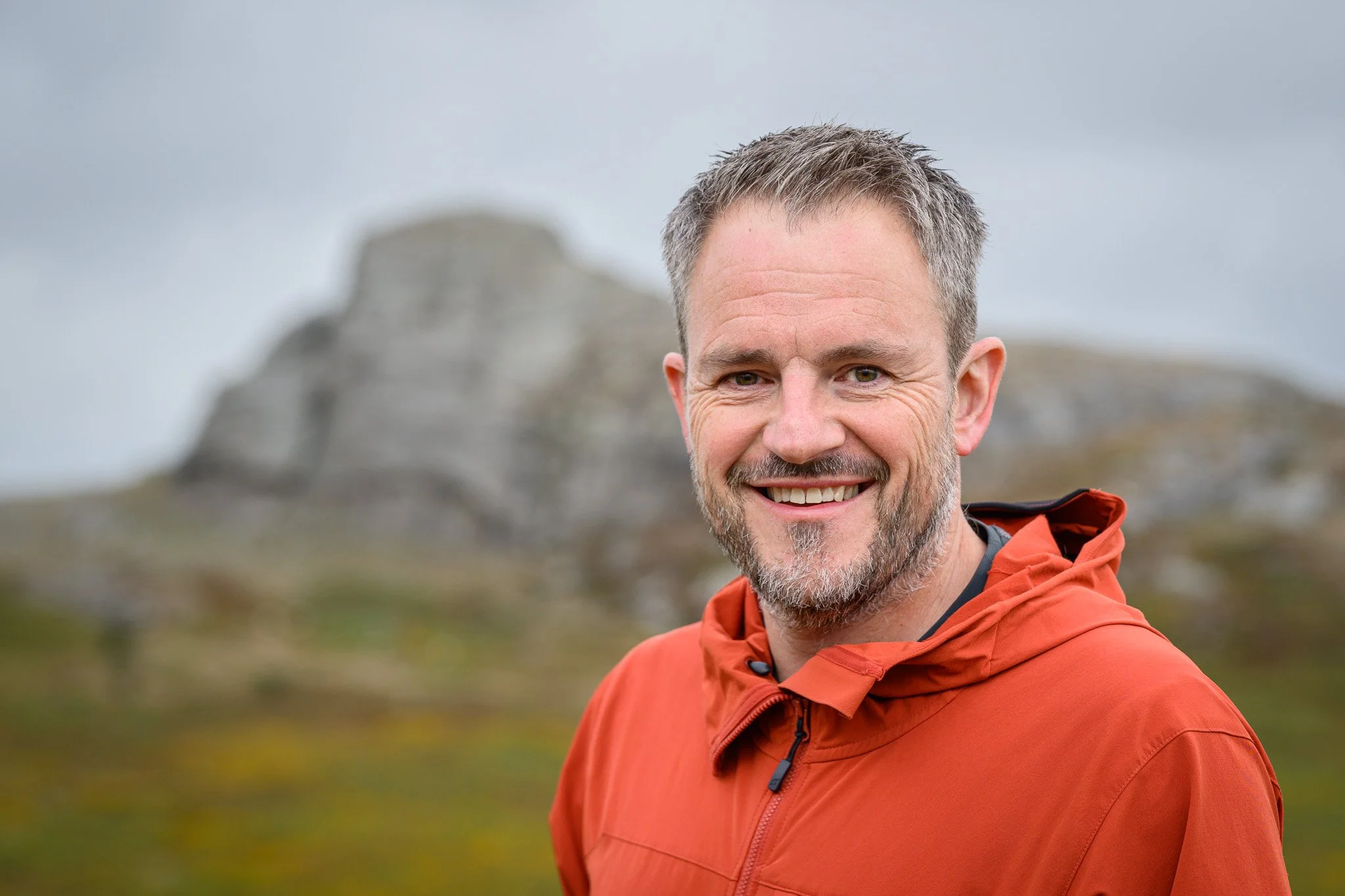
Apparently, this is what I looked like when I started the blog!
Over the past ten years I’ve published nearly 500 blog posts and, along the way, the blog has become something more than I originally intended. As well as being a place to share my photography with you, it has become a personal photography journal. In many ways, it has documented my life as a photographer.
The blog has become the heart of my website. Over those ten years it has received nearly a quarter of a million views from people in more than 100 countries.
When I first started writing, I wasn’t sure I’d find an audience of one. But as time went on, the numbers grew, and so did the engagement. The blog became an extension of my photography life, giving me somewhere to record the places I’ve visited, the photographs I’ve made, the things I’ve learned and the experiences I’ve had along the way.
Even now, a decade later, the blog remains a significant part of my photography life. It’s something I enjoy doing for myself, but it’s also a way of sharing my journey with you.
I’m particularly excited about reaching my 500th blog post, which I’ll be dedicating to a very special photography adventure that I’m starting next week. It feels like a fitting way to mark such a significant milestone.
If this is the first blog post of mine you’ve read, then welcome! There’s plenty for you to catch up on, with nearly 500 posts covering everything from photography, locations and technique to adventures and the occasional rambling thought.
And this is what a decade of landscape photography blogging looks like!
And if you’ve been here for a while, thank you.
Thank you for reading, for following my journey and, especially, for taking the time to leave a comment. Those comments and conversations have always been a big part of what makes writing the blog worthwhile.
And if you’ve never left a comment before, now’s a great time to start. Let me know below what you enjoy about the blog, or what your favourite blog post has been.
Will I make it to 20 years? Will I make it to 1,000 blog posts?
I honestly don’t know.
But one thing is for sure. I’m as dedicated to the blog today as I was when I published that very first post ten years ago.
And who knows where the next ten years will take me…
Bite-Size Blog Post #86 - Grimspound
Sometimes returning to a familiar composition is exactly what a I need, even when the conditions aren’t quite as good as before.
A Safe Bet?
In yesterday’s blog I wrote about my slight disappointment with the heather around Birch Tor. It wasn’t so much that there wasn’t much of it, but that there wasn’t any at all! Well, at least not where I wanted it anyway.
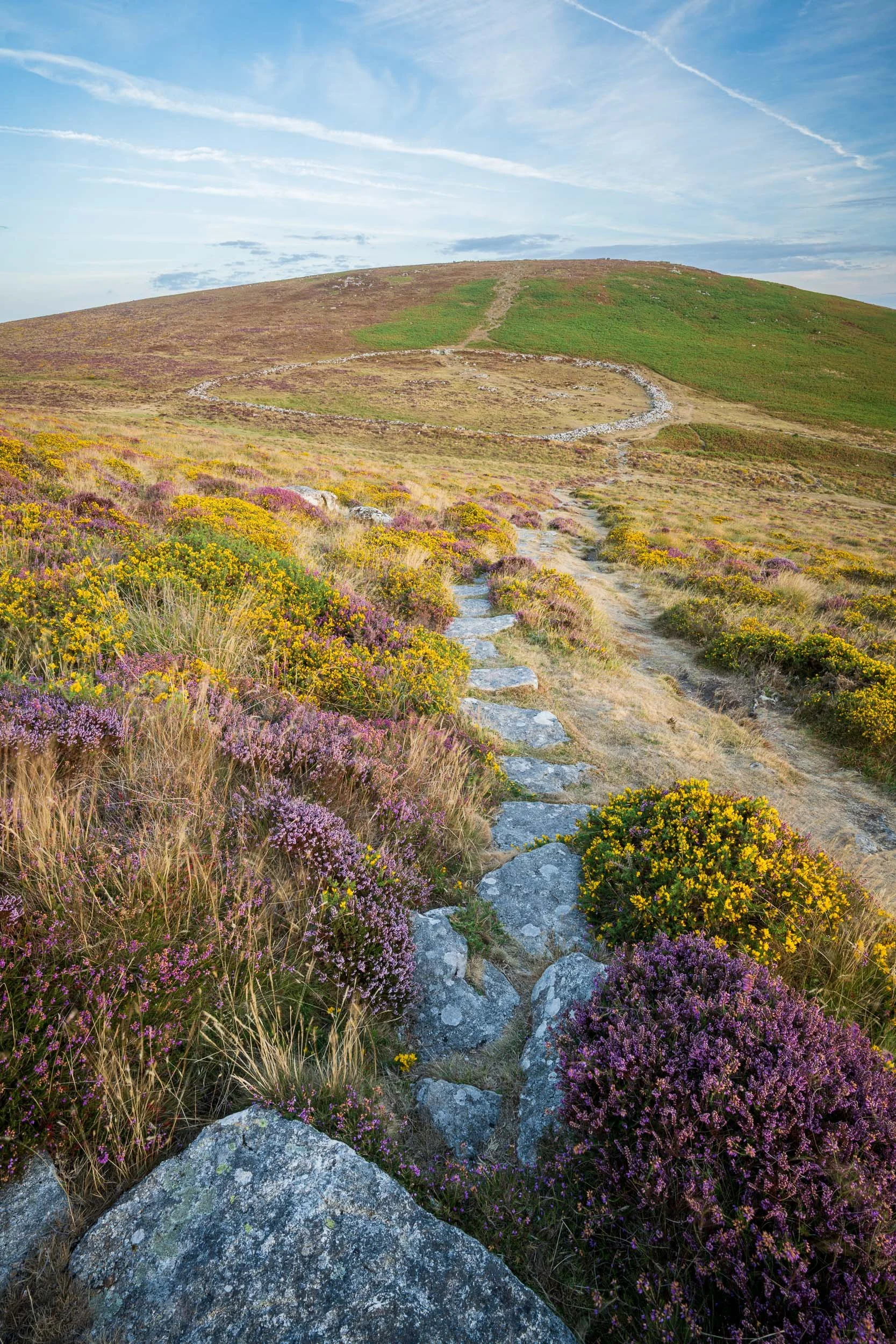
While I was standing on Birch Tor, making the most of the view I did have, I looked across towards Hookney Tor and Grimspound. It reminded me of the wonderful photographs I captured there last year as part of my heather project, so I made a mental note to return.
Returning to Grimspound was like visiting an old friend. I knew the location, I knew the composition and, in a way, I felt safe there.
But with that familiarity comes a problem.
As I stood in exactly the same spot I had stood in for the previous two years, preparing to capture the same composition once again, I started to question why I was taking the photograph. Were the conditions better than on my previous visits? Was the heather looking better?
The answer to both questions was no.
So, is taking the same photograph problematic for a photographer?
Yes and no.
Yes, because as photographers we should push ourselves creatively. We should explore our local landscapes, but also push our creative boundaries, even when we are somewhere we know well. It is very easy to fall back on a familiar composition simply because we know it works.
And no, because sometimes a composition just works. There is still a lot of joy to be had from standing in the same place you stood last year and taking the same photograph, perhaps in slightly different conditions.
As I mentioned in yesterday’s blog post, a trip out with the camera can sometimes be challenging and even disappointing from a photographic point of view. But what is never disappointing is the experience of being outdoors.
Breathing in the fresh air, listening to the birds and simply soaking up the view. Those moments are restorative, and sometimes the photography has to come second.
I’ll be back to Grimspound.
Maybe I’ll take the same composition again. But one thing is for sure, I’ll love doing it.
Grimspound, Dartmoor National Park - Nikon Z8 with Nikkor Z 14-30mm f/4 S at 18mm, f/13, 0.6 sec at ISO 64.
Bite-Size Blog Post #85 - Heather Hunting on Birch Tor
I was disappointed by lack of heather on Birch Tor but I still have high hopes for this location later in the year.
A Parched Landscape
When I first photographed Birch Tor earlier this year, I was sure it was going to make a great location during heather season. It’s in an area that is well known for heather, with locations such as Hookney Tor and Grimspound being firm favourites of mine.
Returning for the first time during this year’s heather season, I was disappointed to find there was very little heather around the tor. It’s not that there isn’t any in the surrounding landscape, but there simply isn’t enough close to the tor to make for an interesting composition.
I put this down to the lack of rain and an unusually long spell of hot summer weather, which has left the ground looking parched and distinctly unphotogenic. Returning one evening, during what should be the peak of heather season, I again found the landscape looking bare and dry.
It’s not just the lack of heather. The absence of the lushness I would normally expect at this time of year takes something away from the experience of photographing this wonderful tor.
But I don’t want to end on a gloomy note. Despite the challenging appearance of the landscape, spending a summer evening on Dartmoor is a pleasure and never a waste of time. There is always something to see, even when the conditions aren’t quite what I had hoped for.
In fact, this visit has only reinforced my feeling that Birch Tor has more to give. It might not be heather this year, but I’m already looking forward to seeing how the landscape transforms when autumn arrives.
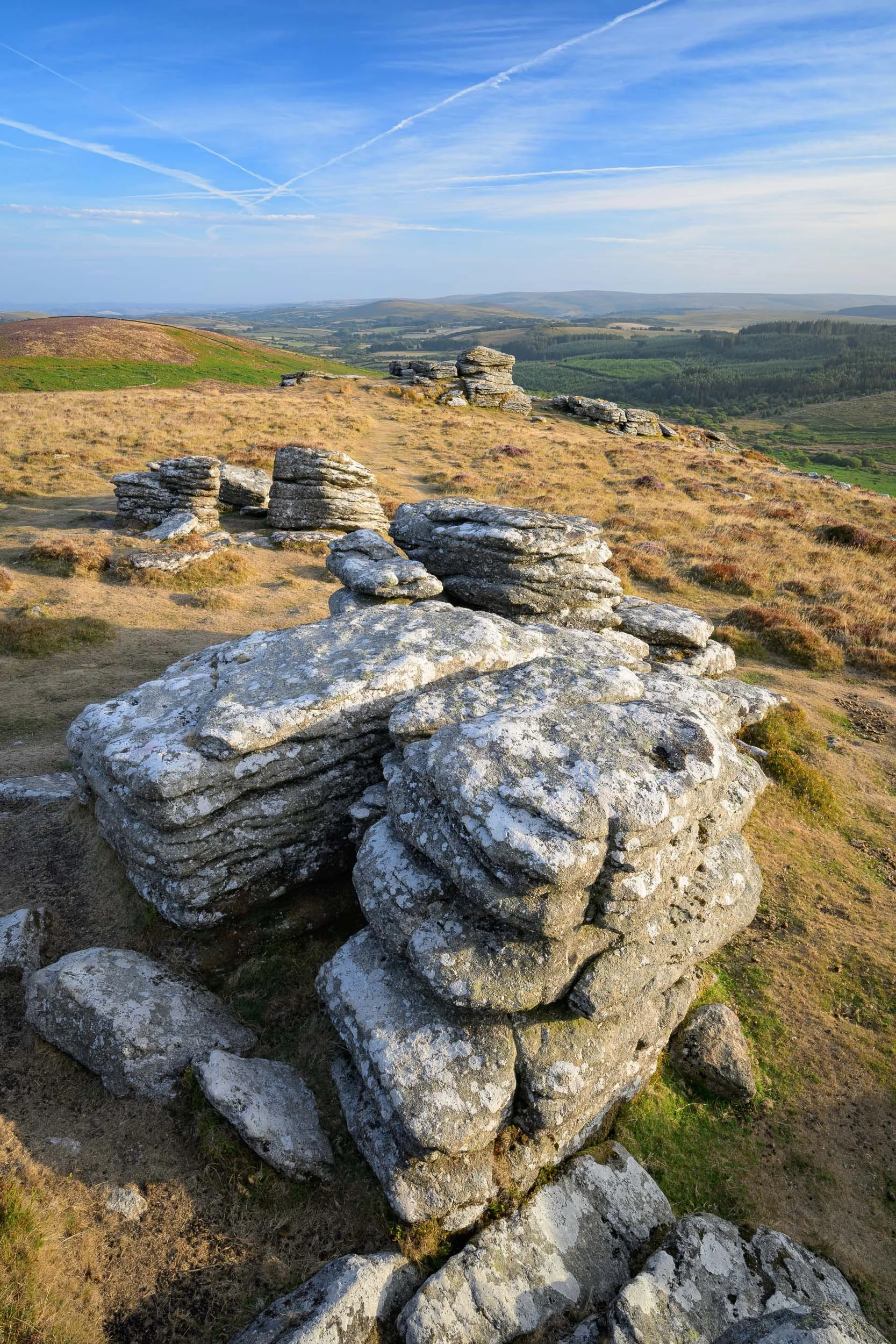
Birch Tor, Dartmoor National Park - Nikon Z8 with Nikkor Z 14-30mm f/4 S at 22mm, f/13, 1/8 sec.
Bite-Size Blog Post #84 - Return to Honeybag
I return to Honeybag Tor for another sunrise with the heather, and a tiny gap in the clouds rewards me with spectacular light.
The Smallest of Gaps
If you’ve been reading my blog for a while, you’ll know that I often talk about the thrill of seeing a gap in an otherwise cloudy sky, especially around the horizon just as the sun is rising.
There is always a sense of anticipation. Not knowing for 100% certain that the sun will actually pass through that gap is all part of the fun. Sometimes it does, but more often it doesn’t. You think you’ve found the perfect opening, only for it to move, disappear or turn out to be nothing more than a layer of distant cloud. It’s all part of the fun of landscape photography.
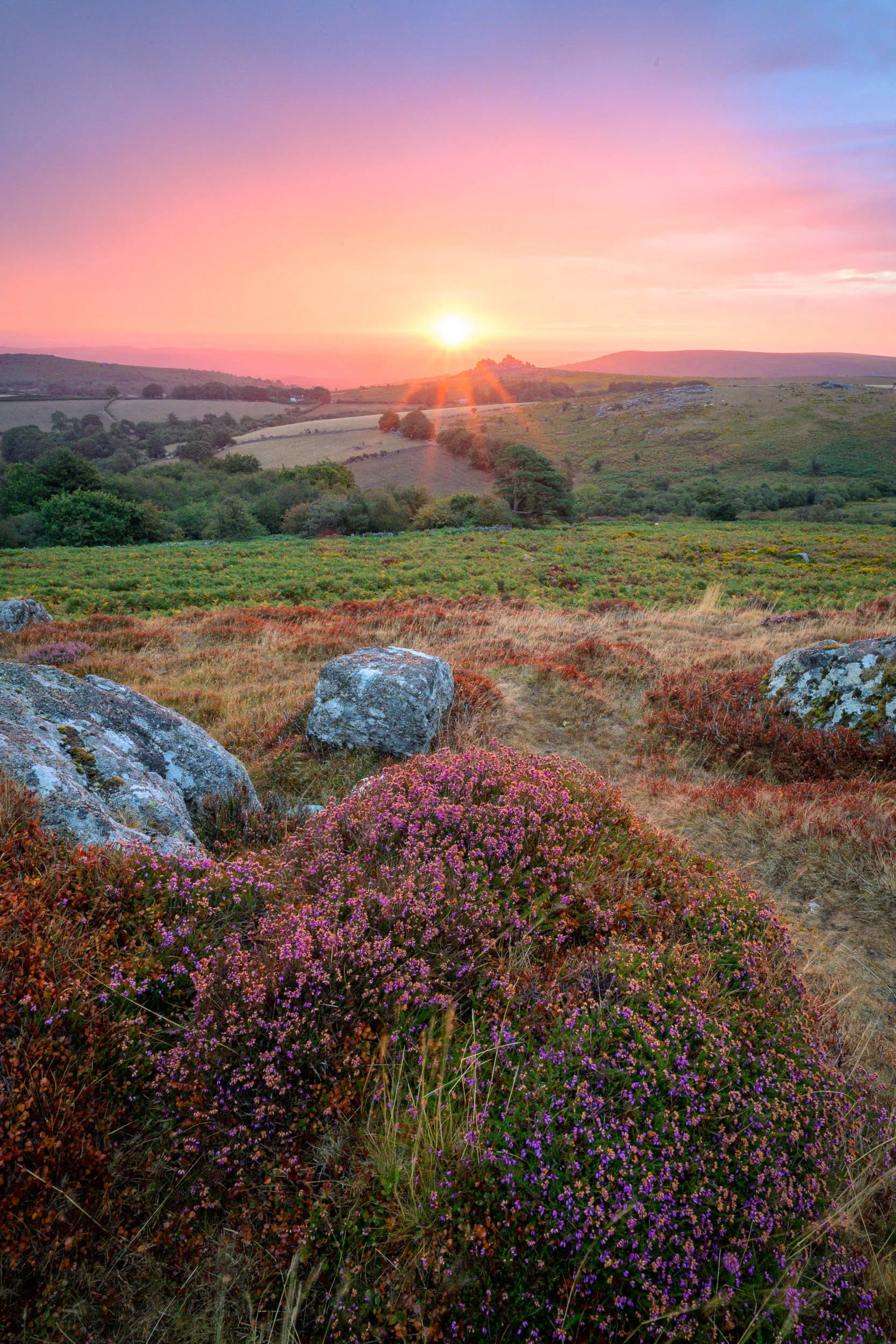
Returning to Honeybag Tor to capture more photographs of the heather, I was presented with the smallest of gaps. All around me was heavy cloud and it was raining lightly, but I was pretty confident I would see the sun.
I’d checked PhotoPills to verify the exact position where the sun would rise using its AR mode. The gap appeared to be clear sky, and there was already a strong orange glow beginning to develop.
My personal photography style is to use side lighting, but I had a strong feeling that the sky was going to be the star of the show this morning. So I pointed my camera straight at the gap and waited.
Normally, the glow from the rising sun only illuminates the underside of the clouds as it approaches the horizon. But thanks to the rain and the position of the cloud, the glow continued to build as the sun broke the horizon.
Honeybag Tor, Dartmoor National Park - Nikon Z8 with Nikkor Z 14-30mm f/4 S at 18mm, f/22, 0.6 sec at ISO 800
It was a glorious sight, and yet another reminder of why I get up early in the morning to photograph sunrise. You see things that few other people get to witness. It really is a special time of day.
I’ve already photographed Honeybag Tor a few times during this heather season, but I see no reason to stop going back. As long as there is heather on the ground and soft light from the rising sun, I’ll be there with my camera and a massive smile on my face.
Bite-Size Blog Post #83 - Emsworthy
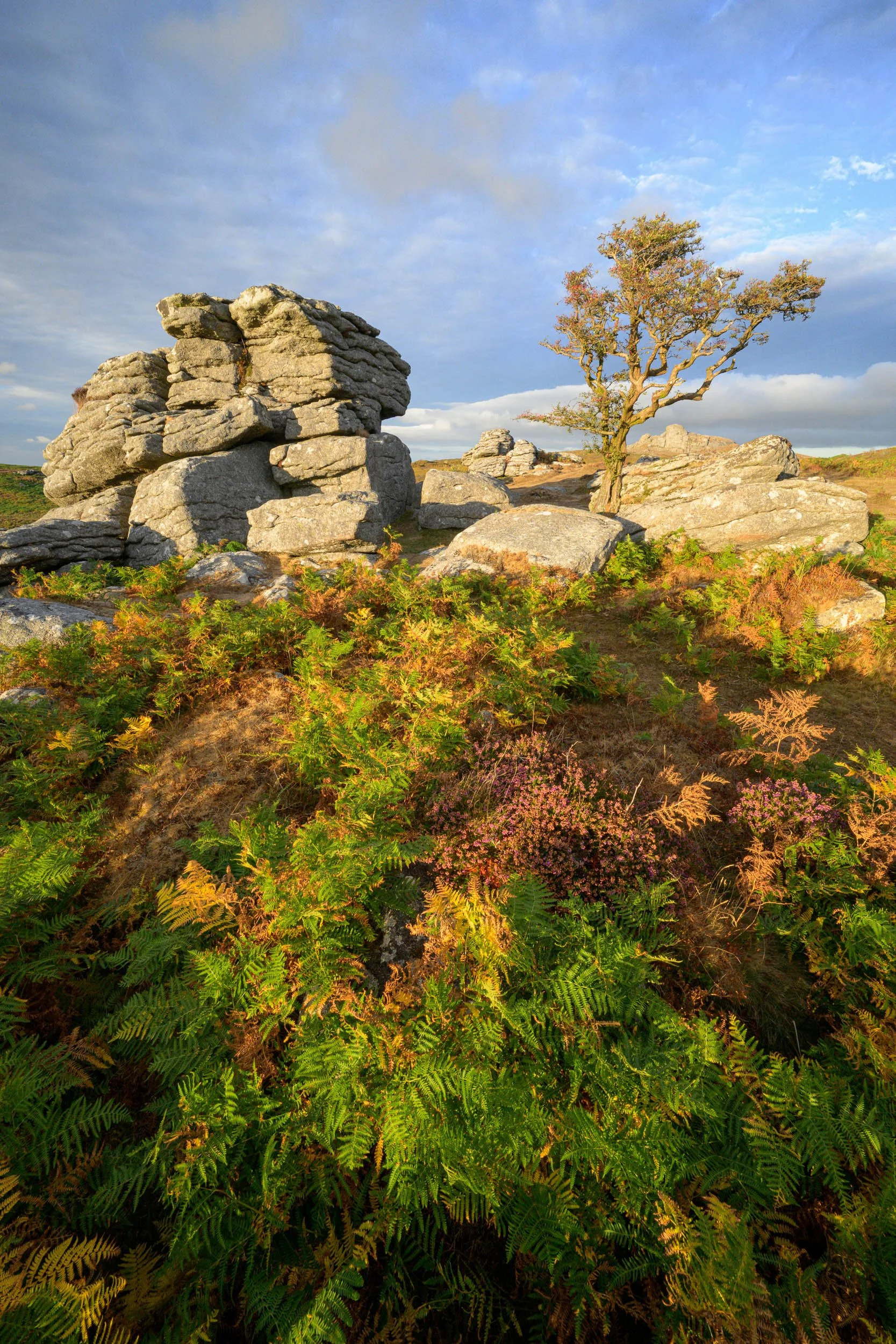
Emsworthy Tor has been part of my photography journey for many years, even inspiring the logo that represents my work.
Does It Look Familiar?
The landscape photography blog you’re reading now, The Exposed Blog, will celebrate its 10th birthday next month. With nearly 500 blog posts published, it has been a regular part of my photography journey and one of the main ways I share my work.
This milestone has got me thinking about the last decade and the locations that have come to mean something to me. One of those places is Emsworthy Tor, and not simply because it is such a photogenic location.
Back in 2018, I decided to have a logo commissioned to represent my landscape photography. I didn’t want the usual lens aperture graphic or something that simply represented a camera. I wanted something that represented me and my photography.
The designer, who knew my work, picked up on my love of photographing Emsworthy Tor and based the logo around it. I couldn’t have been happier with the result.
When I found myself in the Haytor area this week, I decided it was time to give this old favourite a visit. Although I’ve walked past Emsworthy Tor many times over the years, I hadn’t photographed it for quite some time.
Unfortunately, the tree that is such a significant part of this location has been damaged and no longer has the distinctive shape that made it so appealing to photograph. It’s a real shame that it doesn’t look quite as good as it once did.
But in the right conditions, Emsworthy Tor is still well worth photographing. Especially on a lovely summer evening, with cloud in the sky, warm light from the setting sun, and the greens, yellows and purples of the Dartmoor landscape all coming together.
It might be a while before I return again, but Emsworthy Tor is a location that will always remain close to my heart.
Emsworthy Tor, Dartmoor National Park - Nikon Z8 with Nikkor Z 14-30mm f/4 S at 14mm, f/13, 1/80 sec at ISO 640, Kase Filters Revolution CPL.
Bite-Size Blog Post #82 - Honeybag Tor at Sunrise
I never quite know what the Dartmoor weather is going to give me, but after a morning of waiting, the light finally broke through and transformed Honeybag Tor.
What a Difference 12 hrs Makes
Yesterday I wrote about photographing Honeybag Tor on a sunny, clear blue sky day. The photographs were bright and colourful, but perhaps lacked a little impact. They lacked the drama that I so often seek in my Dartmoor photographs.
The following morning couldn’t have been more different.
The forecast had predicted some cloud cover, but arriving at Honeybag Tor again, I was slightly dismayed to find that the sky was completely covered. I know, just yesterday I was complaining about blue skies and now I’m complaining about too much cloud. What can I say? I’m difficult to please!
That said, there was a small slither of a gap near the horizon, so there was a chance I might get a little light on the landscape if the sun passed through it. And indeed it did, but unfortunately the gap wasn’t clear sky. It was simply a layer of hazy cloud further away. I could see the sun, but it wasn’t casting any light on the landscape, which remained firmly in flat light.
I spent some time staring at the sky, hoping the conditions would change, but I was reasonably sure they weren’t going to. So I started walking back to the car.
I hadn’t got far when I noticed another, much clearer gap appearing in the cloud. There was a possibility that the sun might find a way through it, but I wasn’t sure. So I waited.
And waited.
Sure enough, my patience was rewarded and I found myself walking very quickly back up to my viewpoint to capture some photographs.
The scene had been completely transformed.
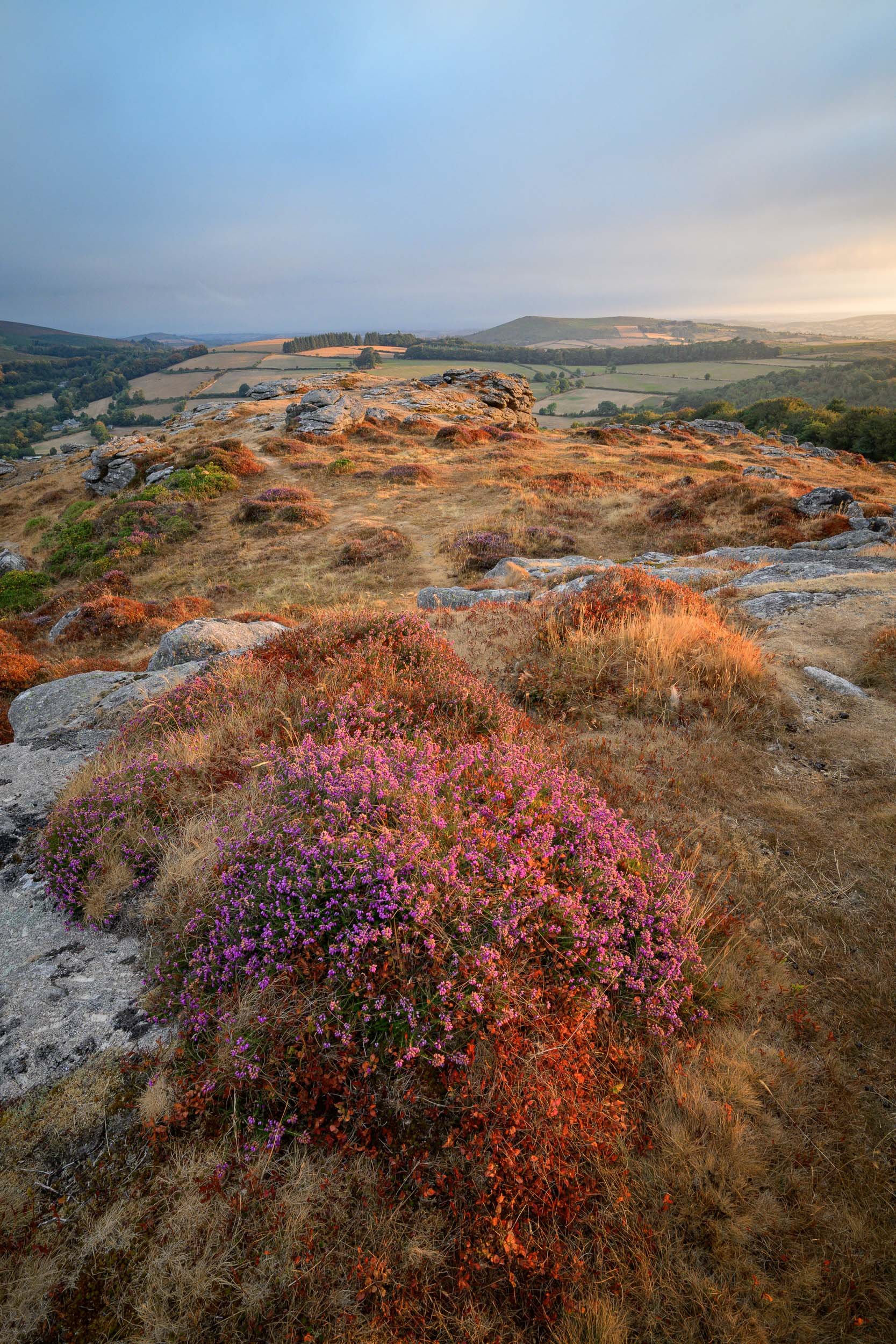
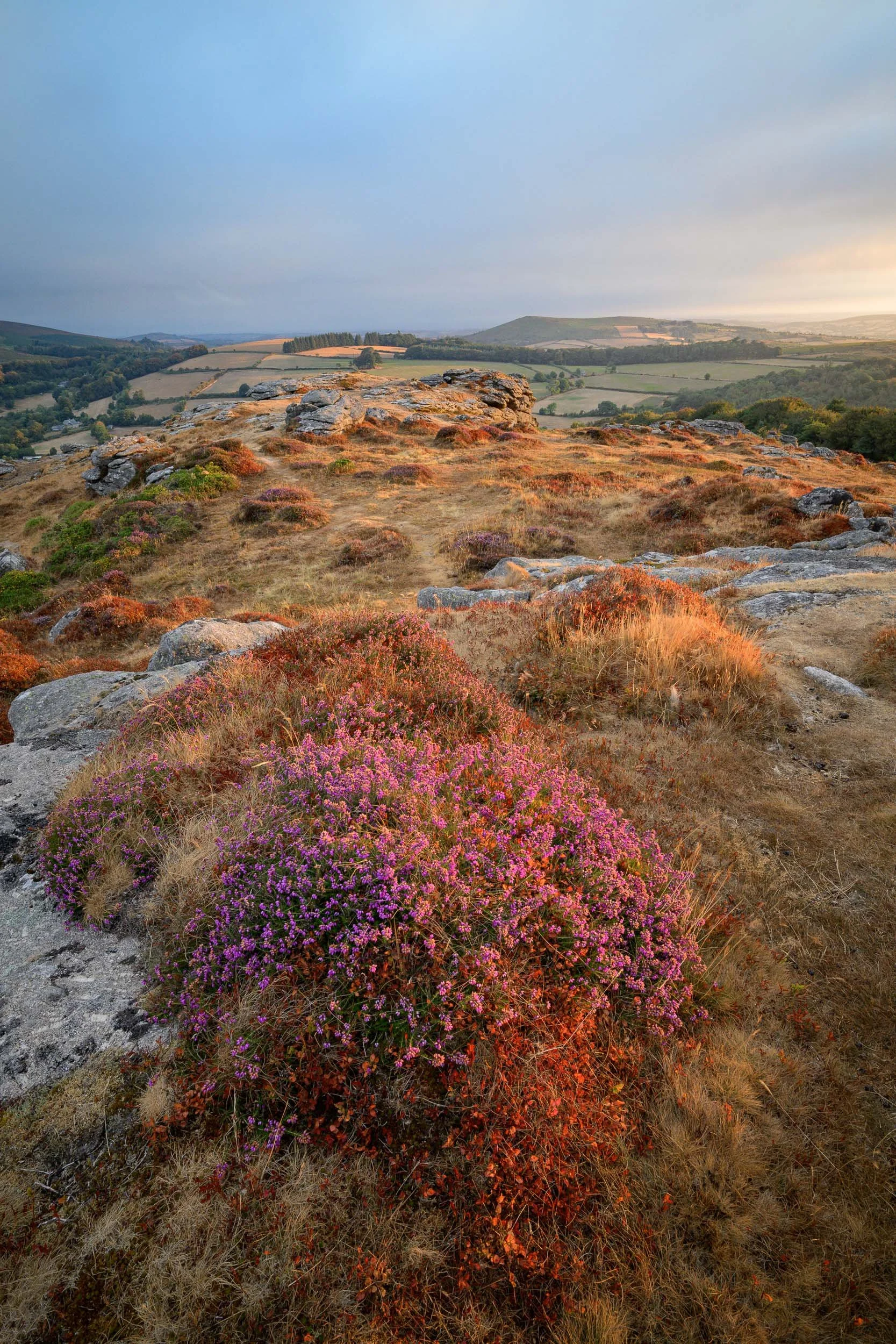
Yes, there was still plenty of cloud, but thanks to the glow from the sun, it had become another character in my scene rather than something that was simply getting in the way. The light was illuminating the ground perfectly, catching the clump of heather that I had deliberately positioned in my frame.
It was magical.
No sooner had the light arrived, it was gone again. But what a morning of ups and downs!
And it’s those ups and downs that make landscape photography so exciting. You can spend an hour watching a scene unfold, wondering whether anything is going to happen, only for everything to suddenly come together for a frame or two.
Even after all these years, the experience of seeing the landscape come alive in front of me will never become boring.
It’s those moments I cherish.
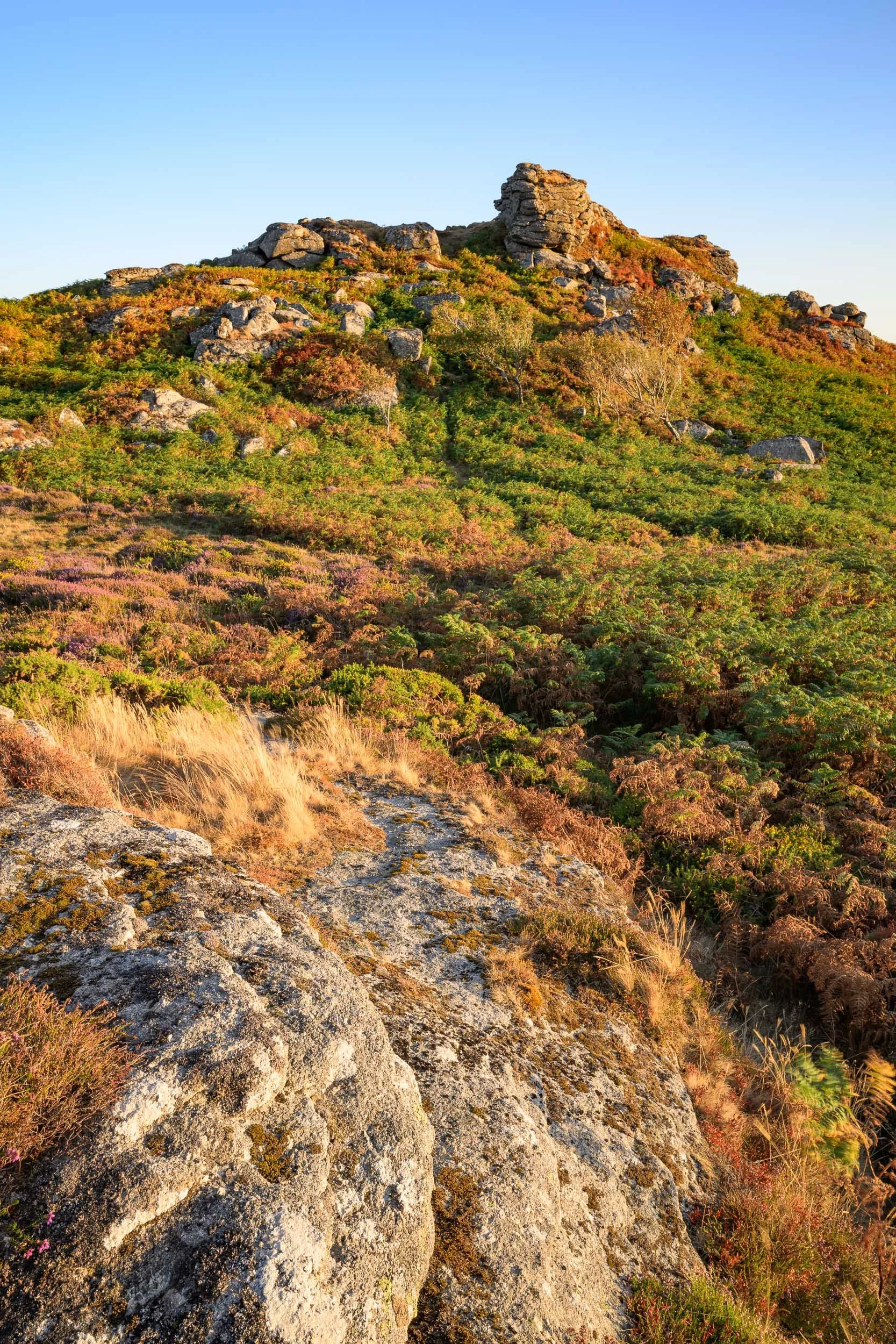
Bite-Size Blog Post #81 - Honeybag Tor at Sunset
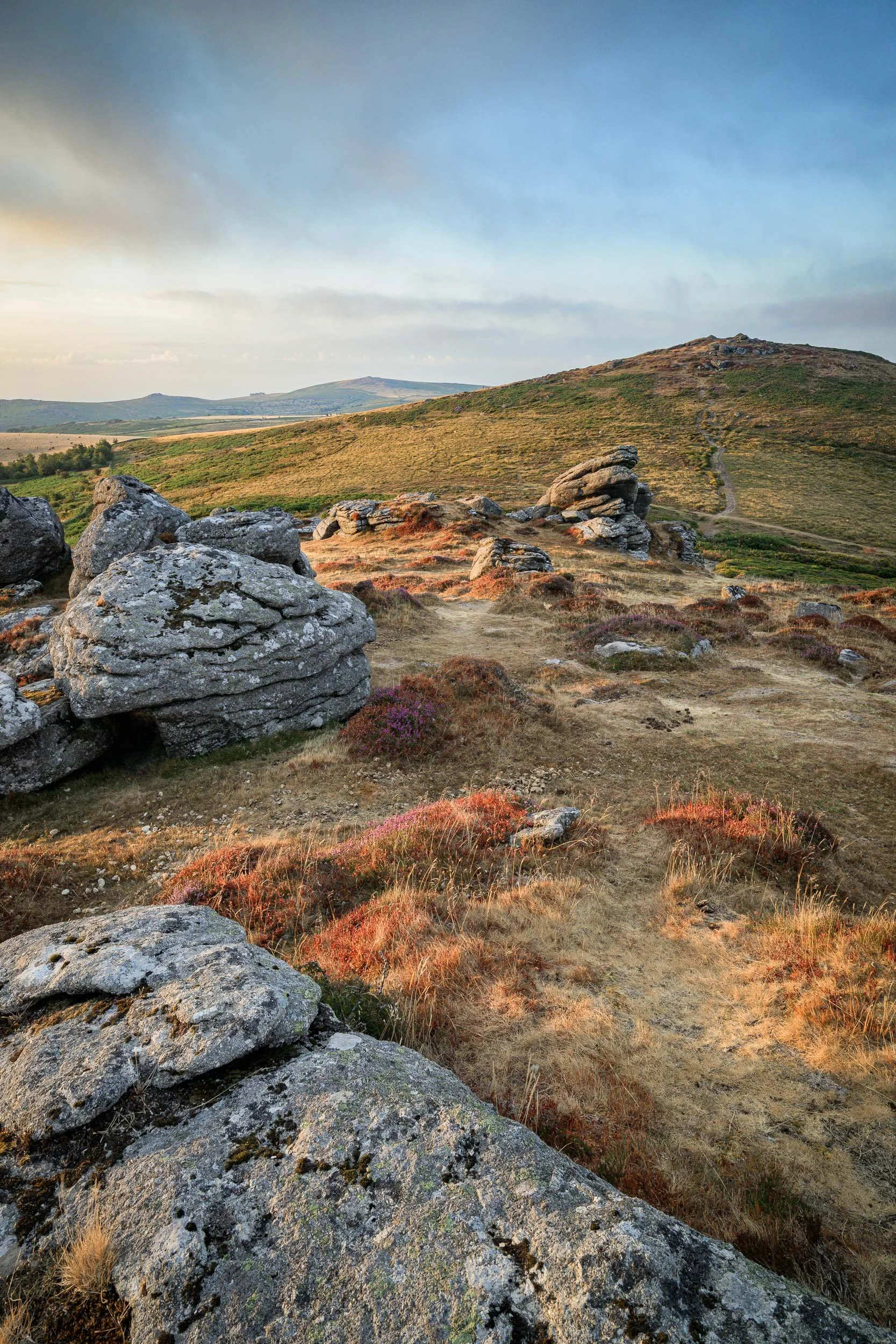
I spent an evening at Honeybag Tor exploring the heather beneath yet another clear blue sky. While the conditions weren’t ideal, the session gave me the chance to explore new compositions and prepare for when the clouds finally return.
When Will I See Cloud Again?
There is a recurring theme with my landscape photography this summer, and that is clear blue skies. As most landscape photographers will tell you, there are few worse types of sky than a completely clear blue one! But as I said in a recent blog post, “when life gives you lemons, make lemonade”, so I’m learning to embrace the blue skies.
And embrace them I did when I visited Honeybag Tor the other evening in search of heather. I had been becoming increasingly concerned that the long, dry summer might have affected the heather this year, but it appears that Honeybag Tor still has its fair share of photogenic clumps.
The long dry weather has brought some unexpected benefits, though. The yellow, sun kissed colour of the grass can be quite striking, while the bracken is taking on shades of green and gold. Mixed with the purple of the heather and the yellow of the gorse, these colours can create some wonderfully bold and colourful compositions.
A little rain would certainly help those colours pop, though!
Honeybag Tor, Dartmoor National Park - Nikon Z8 with Nikkor Z 14-30mm f/4 S at 14mm, f/13, 1/10 sec at ISO 64, Kase Revolution CPL.
But I didn’t have rain, or clouds, so my time out with the camera would have to be more exploratory. Not every trip out with the camera has to result in an amazing photograph. Sometimes, it’s simply about exploring an area, reacquainting myself with familiar compositions and looking for new possibilities.
In fact, I often find that these exploratory sessions can be some of the most valuable trips I make with the camera. They give me the opportunity to work out where I want to be, what compositions might work and, perhaps most importantly, what I want to do when the conditions eventually come together.
These photographs might be a little clichéd, but that doesn’t really matter. I now know that when the clouds finally return, the light is right and the conditions are more favourable, I’ll know exactly where I want to be and what I want to photograph.
Now, if only someone could arrange for those clouds to make an appearance!
Honeybag Tor, Dartmoor National Park - Nikon Z8 with Nikkor Z 14-30mm f/4 S at 23mm, f/13, 1/6 sec at ISO 64, Kase Revolution CPL.
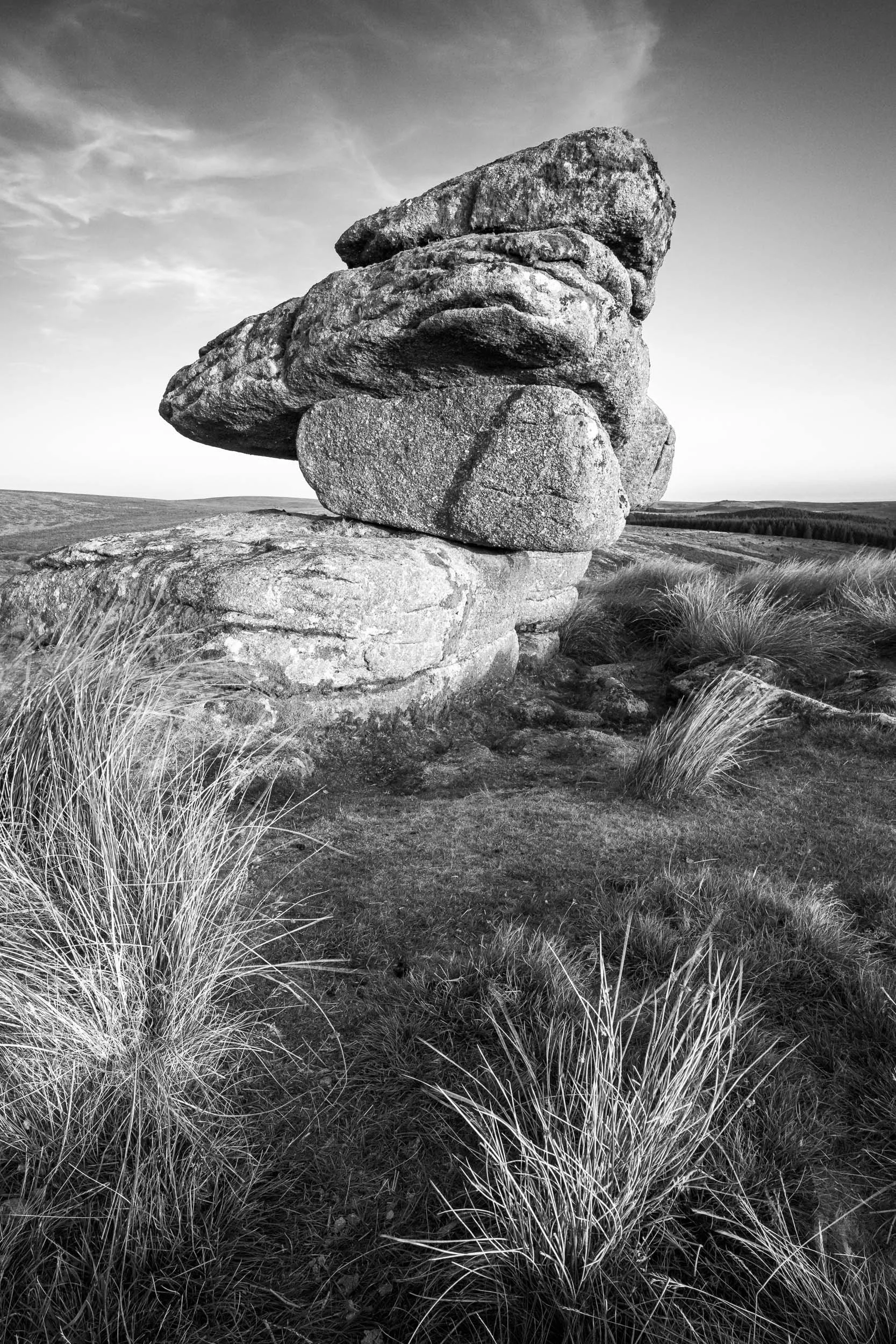
Bite-Size Blog Post #80 - Black Tor
I head back to Black Tor to explore its shapes, textures and contrasts through the simplicity of black and white photography.
An Exercise in Shape and Contrast
The long dry period that has accompanied this summer is showing no signs of abating. Clear skies and a parched landscape are becoming something I’m getting used to. Summer is a period that sends some landscape photographers into hibernation as they wait for autumn to arrive, but for me, it’s an exciting time, full of opportunities.
One of those opportunities is to practise the craft of black and white photography. This style of landscape photography can work particularly well with the clearer skies and dry landscape, allowing me to concentrate on shapes, textures and contrast rather than colour.
Black Tor is a location I haven’t photographed since visiting a few years ago while filming my Discovering Dartmoor video series. It’s been on my list of places to return to ever since, but you know how it is. Life just gets in the way sometimes!
I was sitting in my studio looking at my locations map, trying to think of somewhere fresh to visit, and despite Black Tor being on the opposite side of Dartmoor from where I live, I decided to make the long journey to this somewhat diminutive tor.
There aren’t necessarily any obvious compositions at Black Tor, particularly with the prominent Princetown mast sitting in the background. But after moving the tripod around, up and down, left and right, I soon found myself looking at a composition that started to work.
Using my Nikon Z8’s Deep Tone Monochrome picture profile, I could visualise on the camera what the finished image might look like. The texture of the tor is striking and colour of the grass really stand out, helped by just how dry the landscape has become.
The photographs are somewhat experimental, but I really enjoyed capturing them. And isn’t that the primary point of photography? To enjoy the experience, experiment a little and perhaps come away with something different from what you originally had in mind?
Let me know what you think in the comments below.
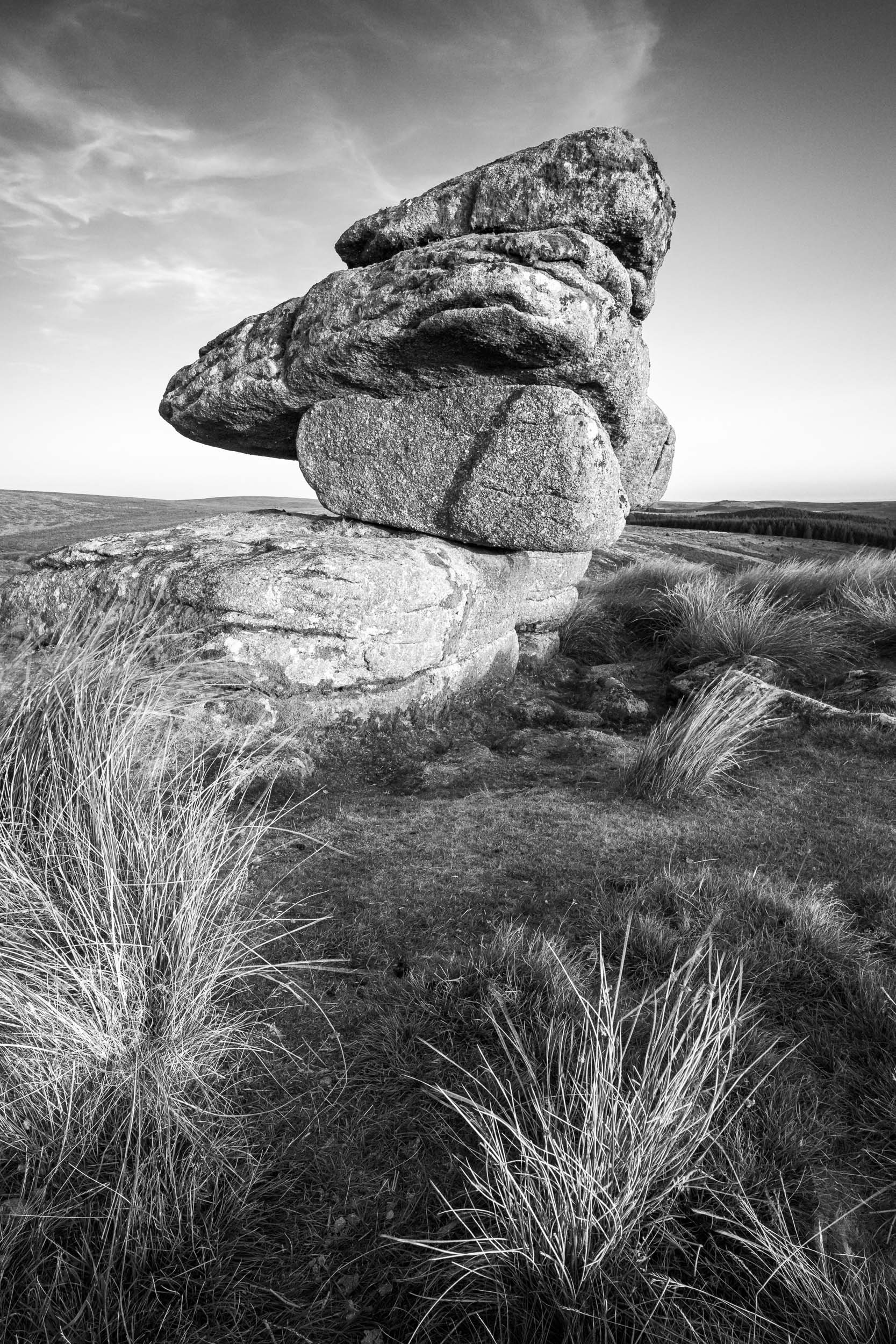
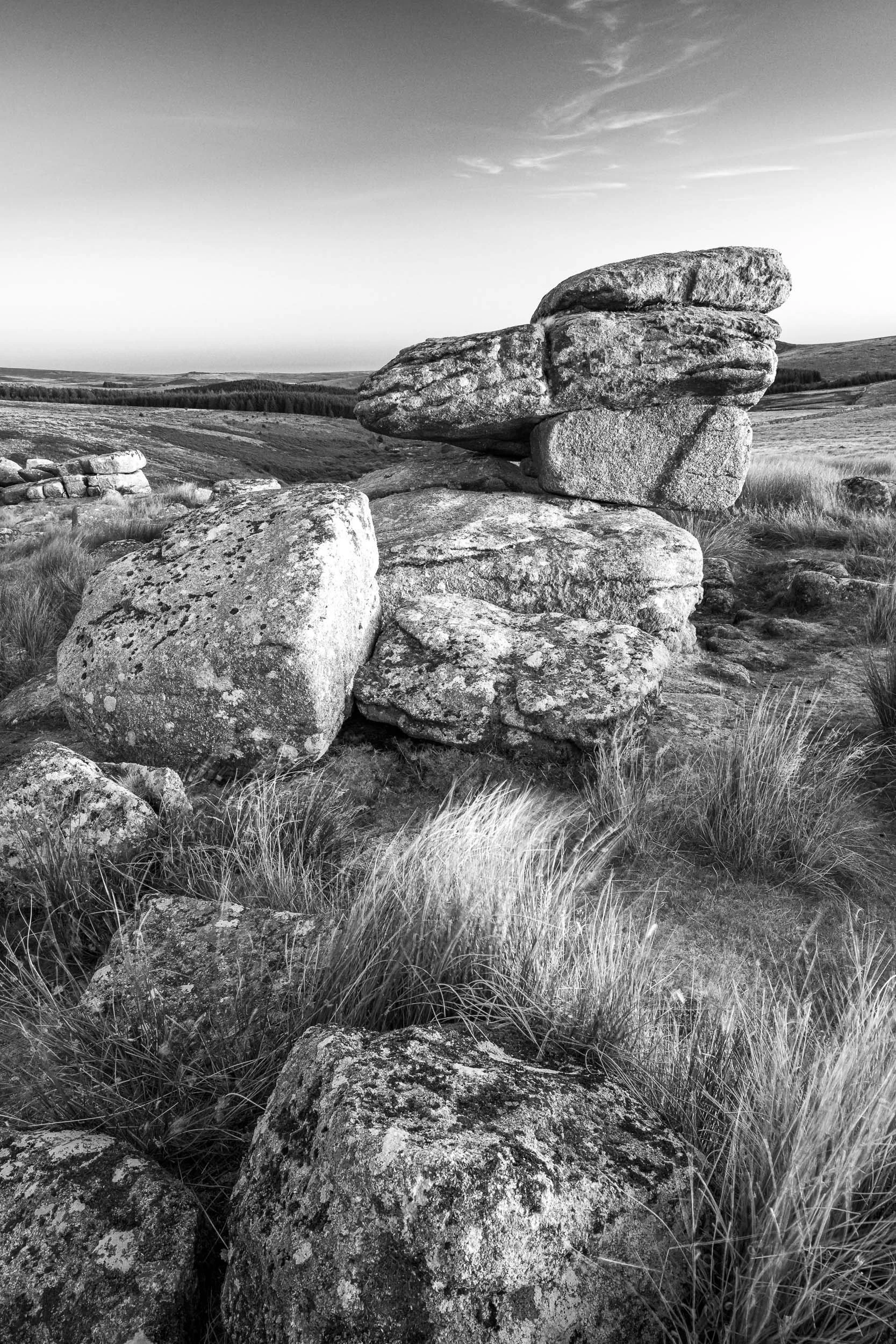
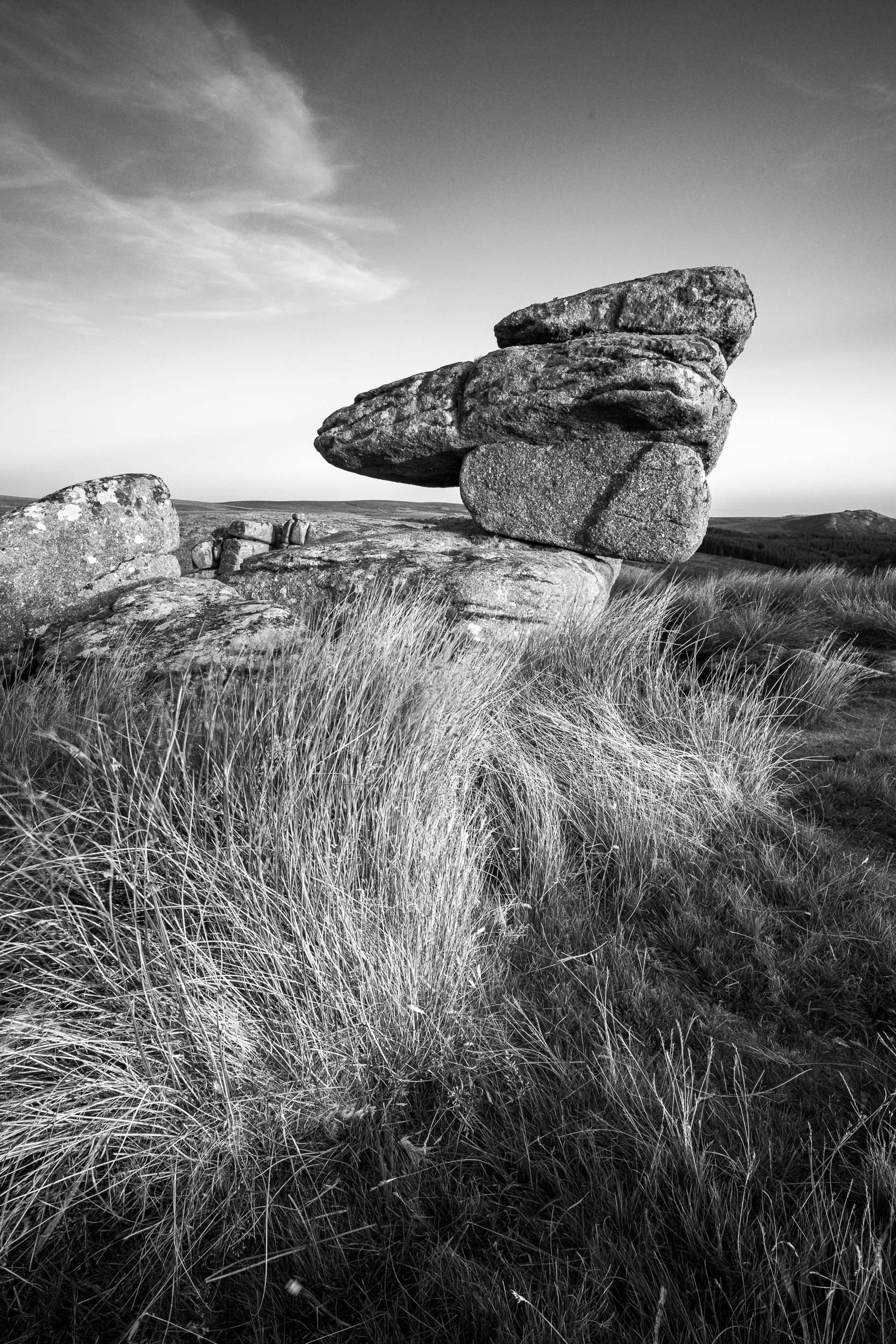
All images captured with Nikon Z8 and Nikkor Z 14-30mm f/4 S, ISO with Kase Revolution CPL.
Bite-Size Blog Post #79 - Dawlish Warren
I had imagined a very different morning at Dawlish Warren, but with a little creativity I found a way to turn the fog and flat light into a photograph I really like.
When Life Gives You Lemons, Make Lemonade
I’m sure most of you are familiar with the saying, “When life gives you lemons, make lemonade.” It’s a phrase that encourages you to turn something negative into something positive. It’s a phrase that could be applied to almost every trip out with the camera, because it’s very rare that you’ll get perfect conditions. Of course, that ignores the question of whether there is such a thing as perfect conditions in the first place, but perhaps that’s a conversation for another day.
The reason I bring up this popular saying is that it very neatly applies to my most recent trip to Dawlish Warren beach. It’s a beach I love and have photographed more times than I can remember. It’s a special place, and it keeps pulling me back.
On the morning of my most recent visit, I had a glorious sunrise in my mind’s eye. I was imagining reflected light on the water, the undersides of the clouds catching the first light, and perhaps a little glow on the groynes. I’ve seen these conditions before, and it can be very special when everything comes together.
However, what I had imagined was very different from reality.
Arriving at Dawlish Warren, I found the beach cloaked in fog. Or perhaps sea mist. I’m not entirely sure where the difference in definitions lies! Everything looked rather flat and grey. This wasn’t what I had come for, but I needed to find something in my creative toolbox that would allow me to make the most of the conditions.
I’d been given lemons, and I was definitely going to make lemonade!
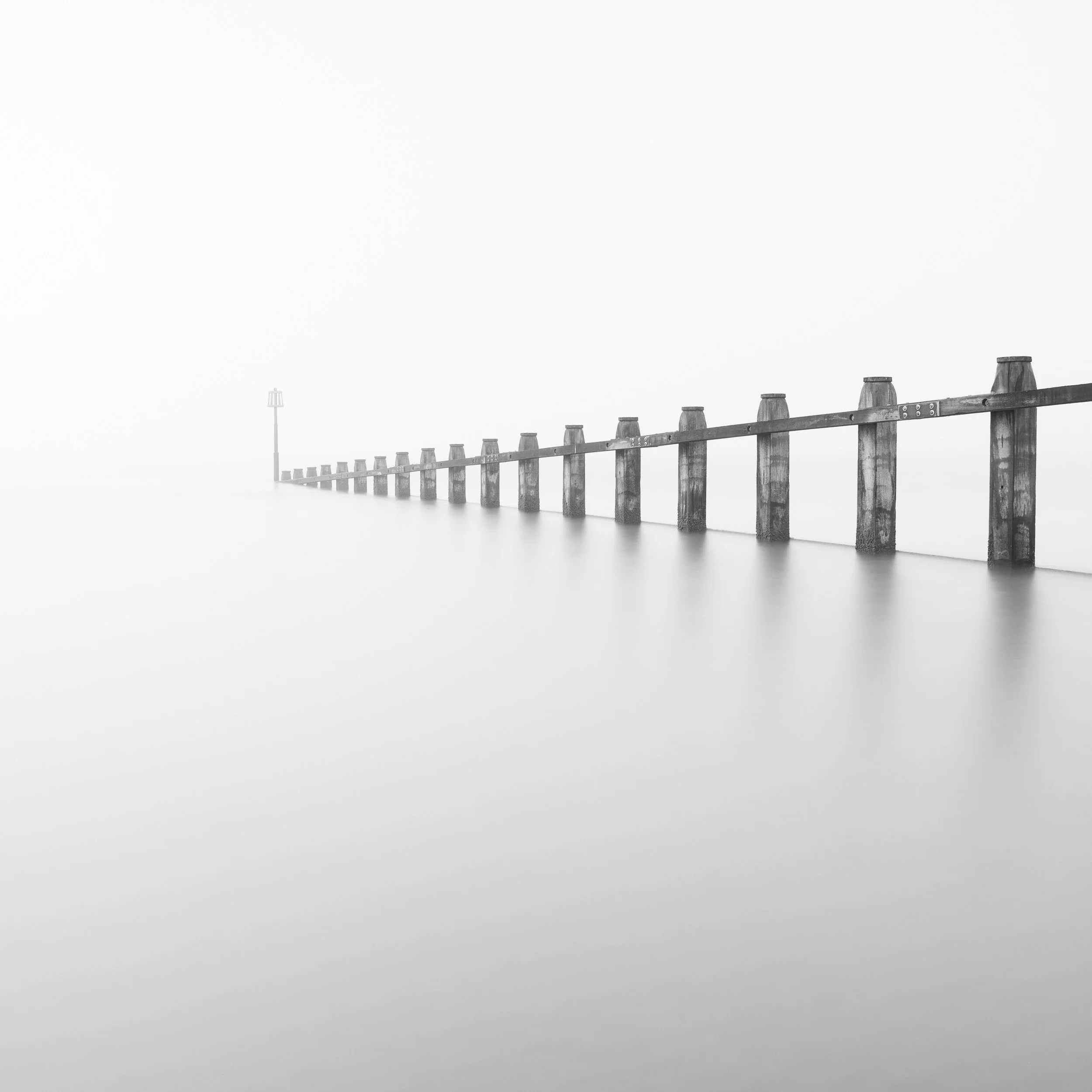
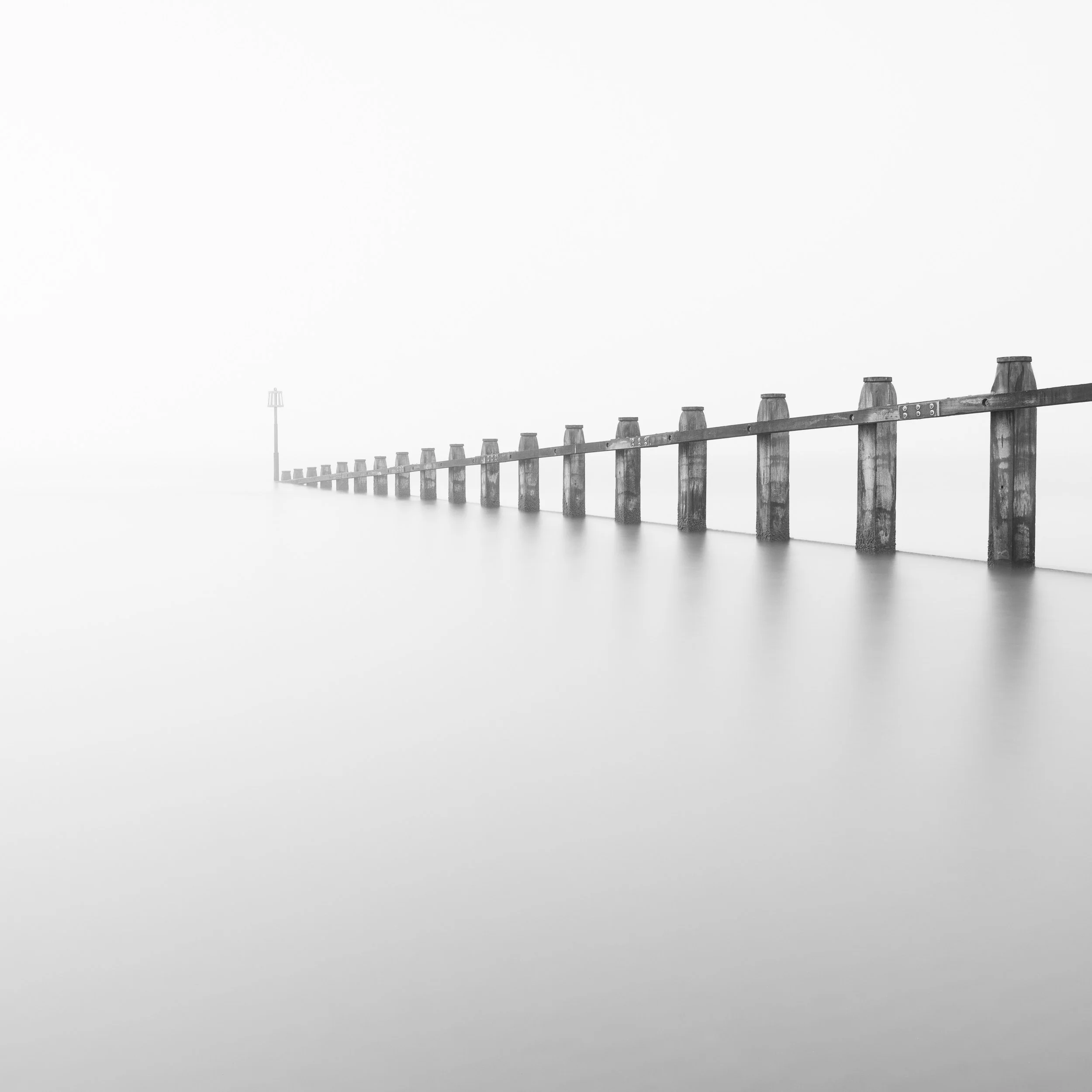
Dawlish Warren Beach, Devon - Nikon Z8 with Nikkor Z 24-120mm f/4 S at 24mm, f/11, 60 secs at ISO 64, Kase Revolution CPL and 6 stop ND.
The key to getting a compelling photograph was to simplify the scene as much as I could. There was no colour to speak of, very little movement in the water, and the sky was blending into the sea at the horizon. For me, the creative solution was to remove what little colour there was and work in black and white, combined with a long exposure.
With the groyne being the only really definable object in the scene, I thought it could make for a striking composition. The simplicity of the scene actually became its strength. Rather than trying to capture everything in front of me, I could concentrate on that single structure and the atmosphere surrounding it.
So, was my lemonade tasty?
Well, I think it was. But I’d be interested to know what you think, so please leave me a comment below.
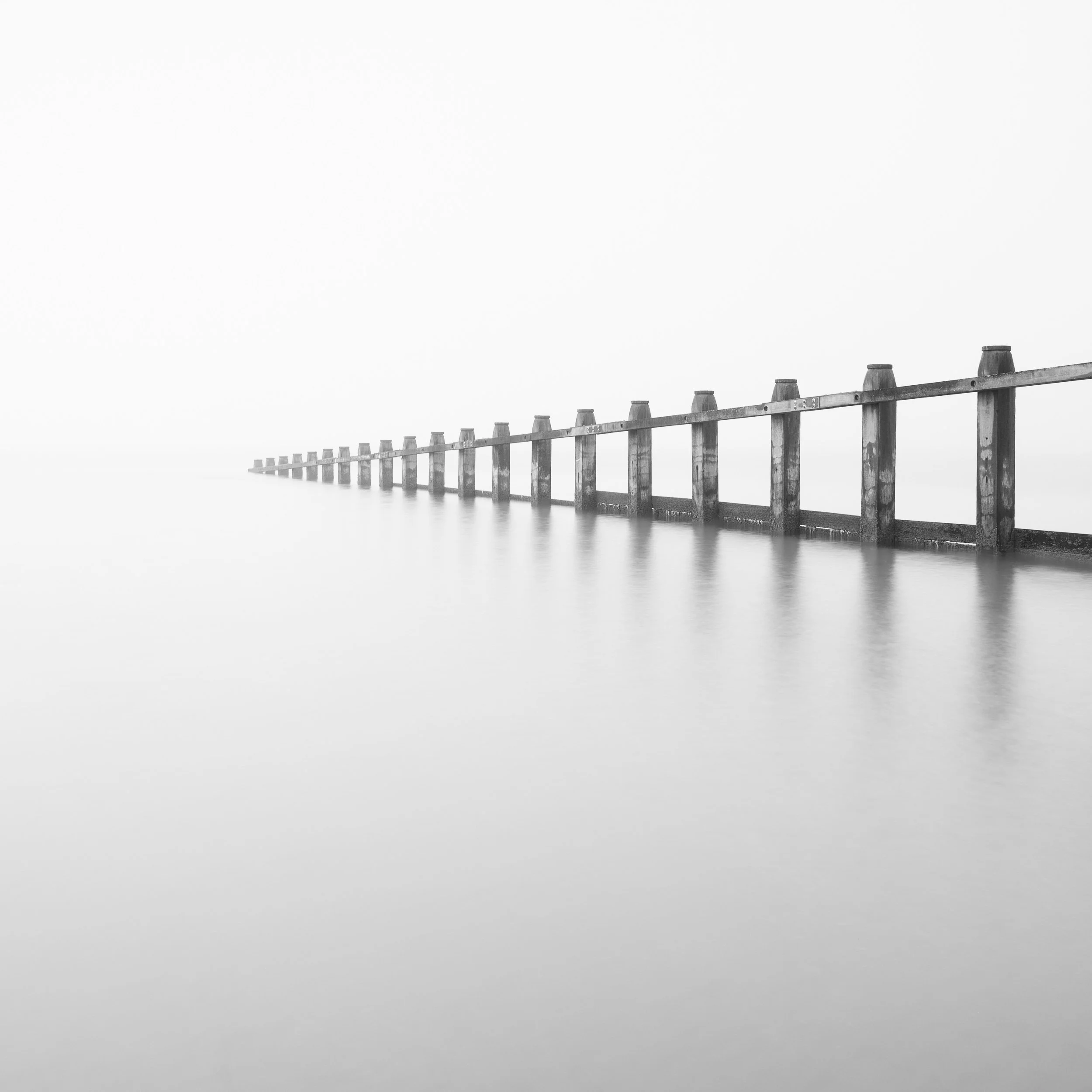
Dawlish Warren Beach, Devon - Nikon Z8 with Nikkor Z 24-120mm f/4 S at 24mm, f/11, 8 secs at ISO 64, Kase Revolution CPL and 3 stop ND.
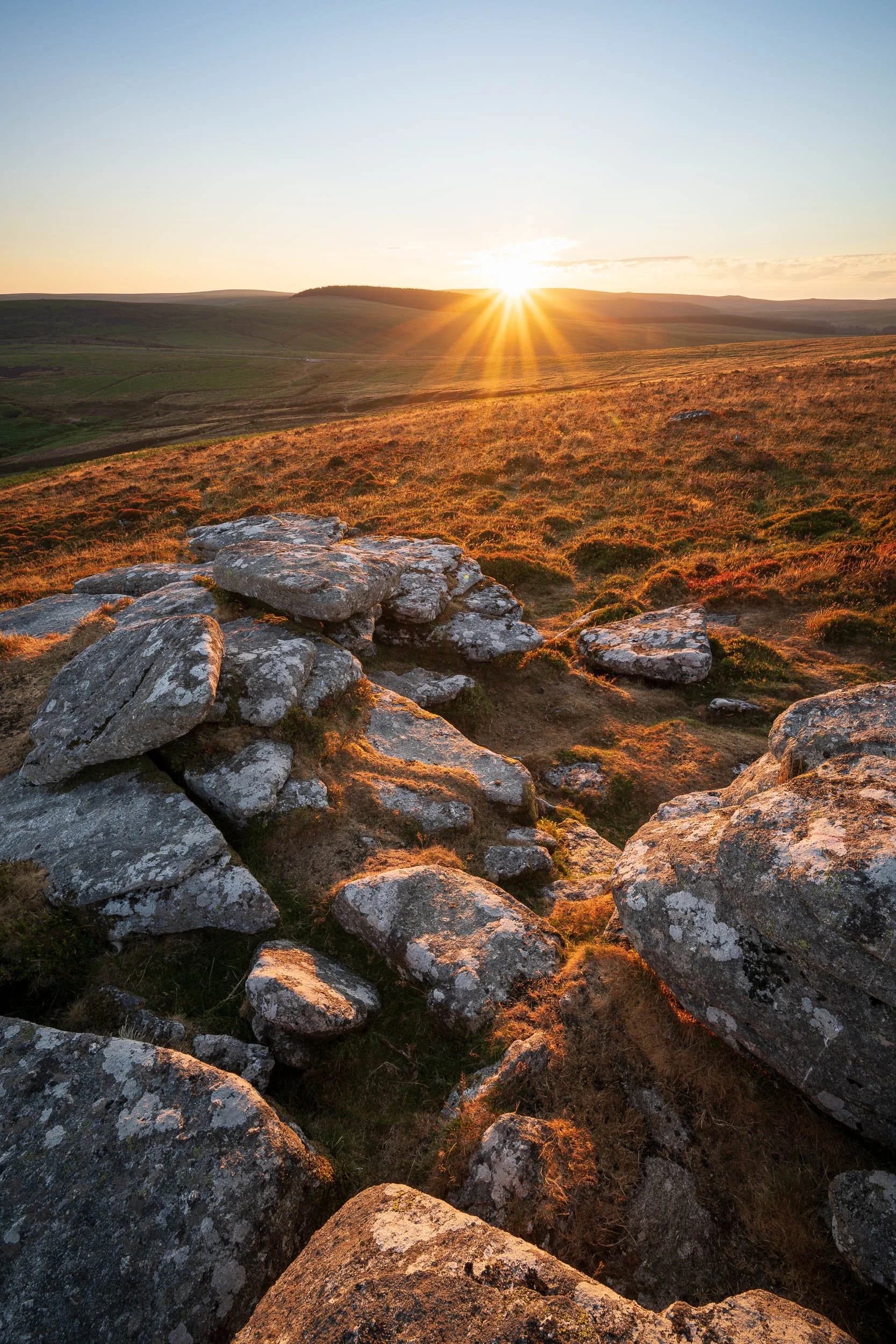
Bite-Size Blog Post #78 - Birch Tor
A dry summer has left me wondering how this year’s heather season will unfold as I head to Birch Tor in search of Dartmoor’s purple landscape.
In Search of Heather
Late July, through August and into September are some of my favourite times for photography on Dartmoor. It’s heather season, and as summer progresses, the landscape gradually starts to turn purple. I find it gives me a whole new level of motivation to get out early in the morning.
But this summer is different.
Why? Well, unusually for the South West of the UK, it hasn’t rained. For weeks. In fact, I can’t remember the last time we had any proper rain. Of course, we can have long periods of good weather here and I’m more than happy to enjoy all the benefits that brings. But those periods are almost always interrupted by a few days of rubbish weather and a bit of rain.
This year has been very different.
It’s so dry on Dartmoor at the moment that the government has even issued emergency warnings, including restrictions on things such as portable BBQs. The ground is parched, the grass has turned yellow and the landscape is starting to look very different from the Dartmoor I’m used to seeing at this time of year.
So, will the dry weather affect the heather?
It isn’t a simple question to answer. Dry weather doesn’t necessarily mean there will be no heather, and there are plenty of other factors that influence how it develops and when it flowers.
I was thinking about all of this when I visited Birch Tor recently. I had been hoping to find the first real signs of the purple landscape I associate with this time of year, but I was disappointed to find very little heather in flower.
There could be several reasons for this. Perhaps I was simply too early and the heather on this particular part of the moor hadn’t reached its peak. Perhaps the exceptionally dry conditions have affected its growth. Or perhaps Birch Tor simply doesn’t produce the same spectacular display as its nearby neighbour, Grimspound.
Whatever the reason, I’m not going to write Birch Tor off just yet.
This is only the beginning of the heather season for me, and while I wasn’t able to capture the photographs I had hoped for on this visit, I’ll be returning. One of the things I love about photographing Dartmoor is how dramatically a familiar location can change over the course of just a few weeks.
And, even without the heather, the photographs I captured on this visit have given me plenty of motivation to return again very soon.
So stay tuned. There’s still plenty of heather season to come.
Birch Tor, Dartmoor National Park, Devon - Nikon Z8 with Nikkor Z 14-30mm f/4 S at 16mm, f/13, 1/10 sec at ISO 80.
Birch Tor, Dartmoor National Park, Devon - Nikon Z8 with Nikkor Z 14-30mm f/4 S at 16mm, f/13, 1/30 sec at ISO 400.
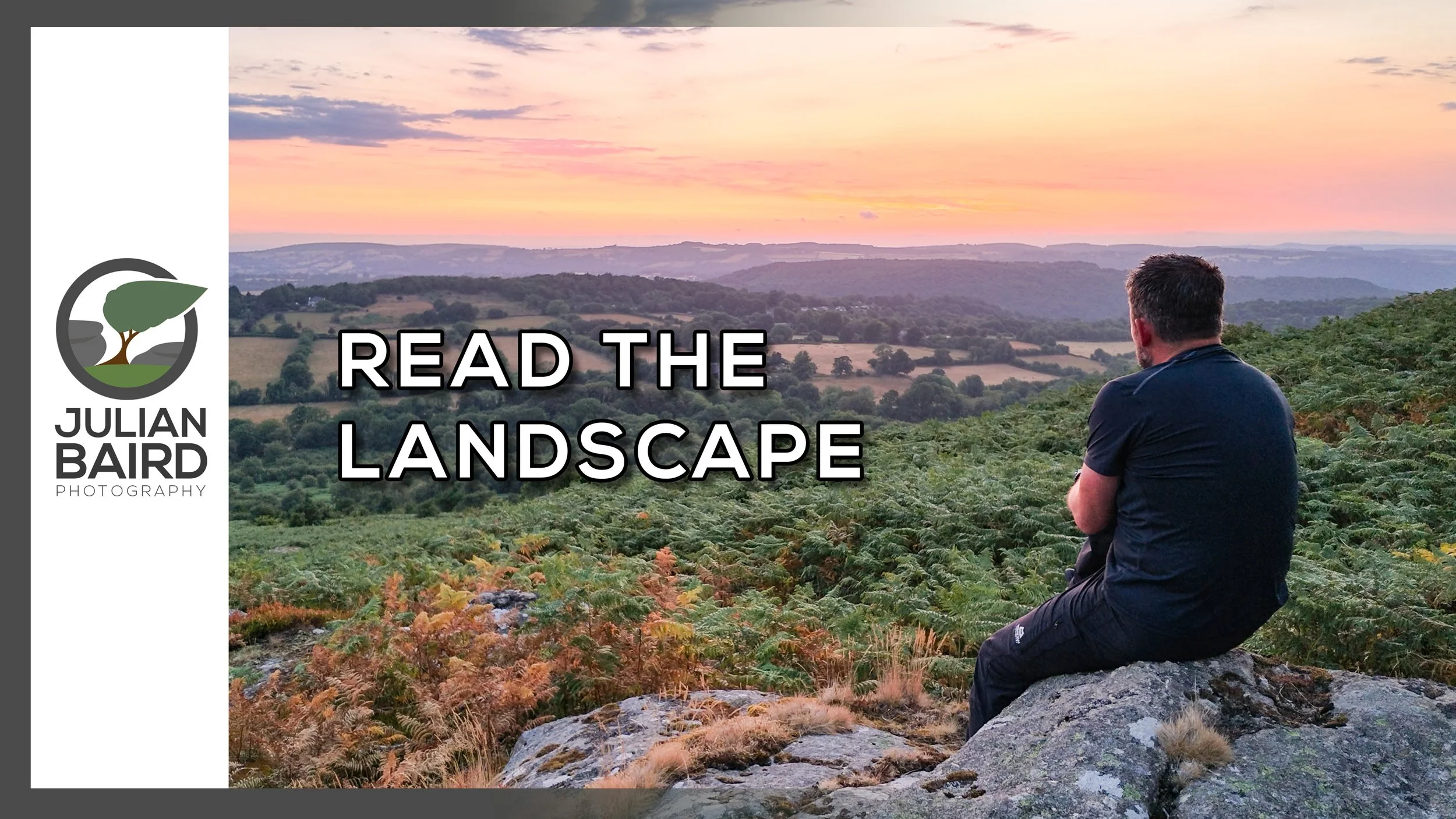
Dartmoor: Learning to Read the Landscape
Understanding how light interacts with the landscape is one of the most valuable skills in landscape photography. Join me at Bowerman's Nose on Dartmoor as I explain why this sunrise composition only works at certain times of year.
Understand the Landscape
Light is one of the most important elements in landscape photography. The quality of that light can make or break a photograph, and for me the very best conditions are often found during the hour around sunrise and sunset, commonly known as the golden hours.
During late spring and summer, photographing sunrise in the UK certainly isn't for the faint hearted. With the sun rising as early as 5am, the alarm often goes off around 3.30am, leaving just enough time to get ready, drive to the location and be in position before the first light appears above the horizon.
I have to admit though, I rather enjoy those early starts. There is something special about being on Dartmoor before the rest of the world has woken up. The anticipation builds as the eastern sky begins to glow, knowing that in a matter of minutes the landscape will be transformed by the first rays of sunlight.
Bowerman’s Nose, Dartmoor National Park, Devon - Nikon Z8 with Nikkor Z 14-30mm f/4 S at 22mm, f/13, 1 sec at ISO 64.
That said, getting out of bed that early only feels worthwhile if I know the conditions are going to work. You might be treated to the most spectacular sunrise imaginable, but if the surrounding landscape prevents the light from reaching your composition, you've missed the very moment you came to photograph.
Bowerman's Nose is a perfect example of this.
The classic view of this distinctive tor only receives the soft light of sunrise for a relatively short period of the year. Although the hill behind it doesn't look particularly significant, it has a huge influence on how the morning light reaches the landscape. For much of the year, the sun rises behind that hill, meaning the light doesn't reach the tor until it is much higher in the sky and considerably harsher. During late spring and summer however, the angle of the sunrise changes just enough for the first light to illuminate the rocks beautifully.
Bowerman’s Nose, Dartmoor National Park, Devon - Nikon Z8 with Nikkor Z 14-30mm f/4 S at 19mm, f/13, 0.4 sec at ISO 64.
Knowing when that happens isn't something you can learn from a map alone. I use planning tools to understand where the sun will rise, but they are only part of the process. Years spent exploring Dartmoor have taught me how the shape of the land influences the light, and that experience is just as valuable as any app.
In this video I capture Bowerman's Nose at sunrise while explaining the decisions behind the photograph. I'll show you why this composition only works at certain times of year, how the surrounding landscape affects the light, and why learning to read the landscape is one of the most valuable skills any landscape photographer can develop.
This video forms part of my Learning Landscape Photography on Dartmoor series, where I share the knowledge and experience I've gained from many years of photographing this remarkable landscape. If you'd like to continue learning, do take a look at the rest of the series. There is much more still to come.
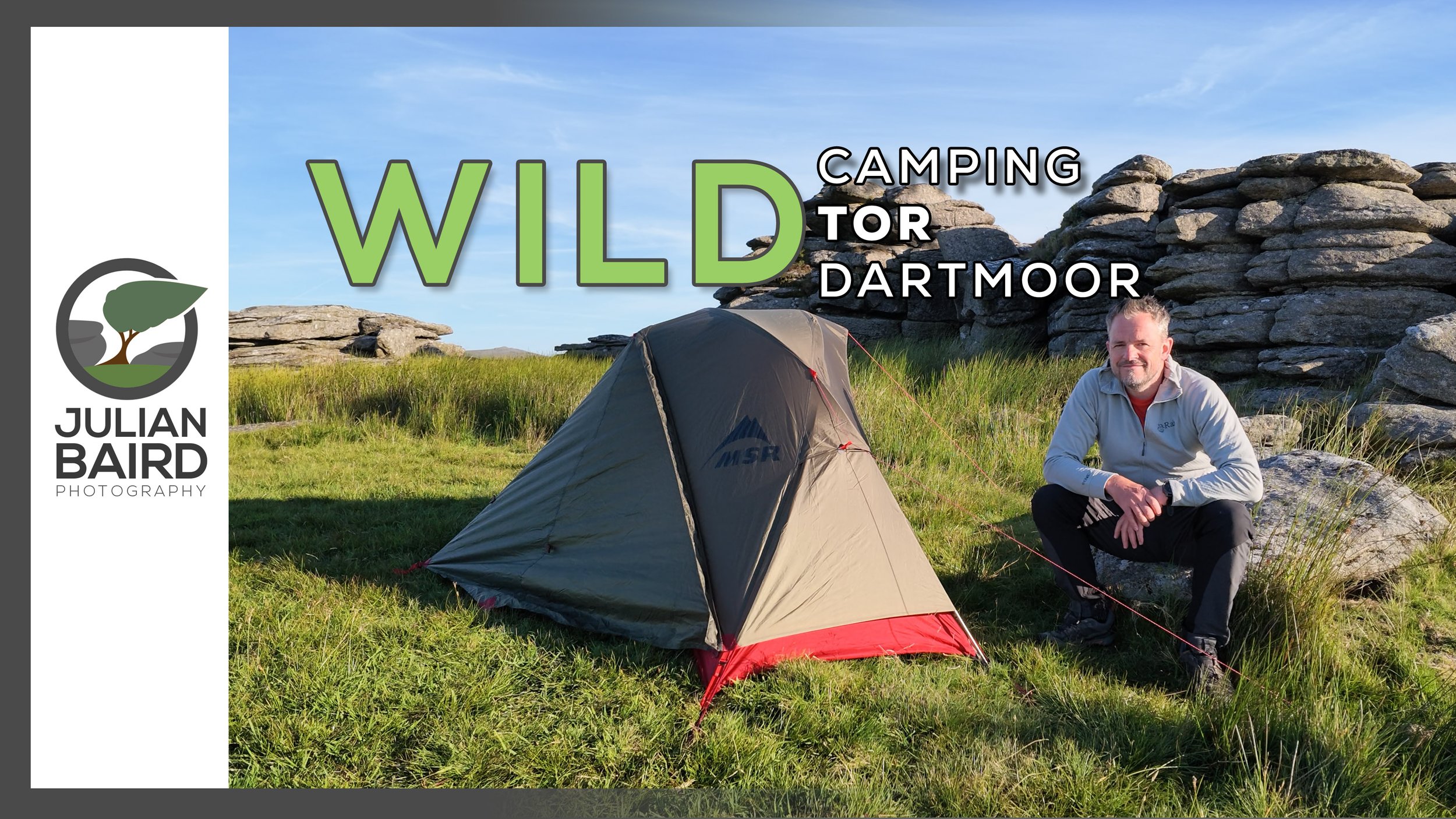
Dartmoor: Learning to Photograph Remote Landscapes - Wild Camping on Dartmoor
Wild camping isn't simply about spending a night outdoors. It's about giving yourself the opportunity to experience and photograph Dartmoor’s landscape in ways that day visits rarely allow.
Dusk to Dawn
Most landscape photographers appreciate the quality of light at sunrise and sunset. On Dartmoor, the soft light from a low sun can transform a familiar scene into something truly special. Reaching some of Dartmoor's more remote locations at the right time, however, can require a lot of effort. With some tors involving a walk of 90 minutes or more, much of the journey is often completed in darkness.
My solution to this, particularly during the spring and summer months, is to incorporate wild camping into my landscape photography. With sunset as late as 9:30pm and sunrise as early as 5:00am, it makes sense to camp close to remote locations such as Wild Tor. Rather than spending hours walking to and from the location, I can spend more time enjoying the landscape and making the most of the changing light.
In this video I share my experience of wild camping at Wild Tor, one of Dartmoor's most remote locations. I explain why wild camping has become such an important part of my approach to landscape photography and the benefits it brings. I'll also take you through the camping equipment and camera gear that I carry on these backpacking adventures.
For me, wild camping is about far more than simply spending a night outdoors. It gives me the opportunity to photograph the landscape in conditions that relatively few people experience, from the last light of the day through to first light the following morning. It also allows me to slow down, spend more time in the landscape and appreciate Dartmoor in a way that simply isn't possible on a day visit.
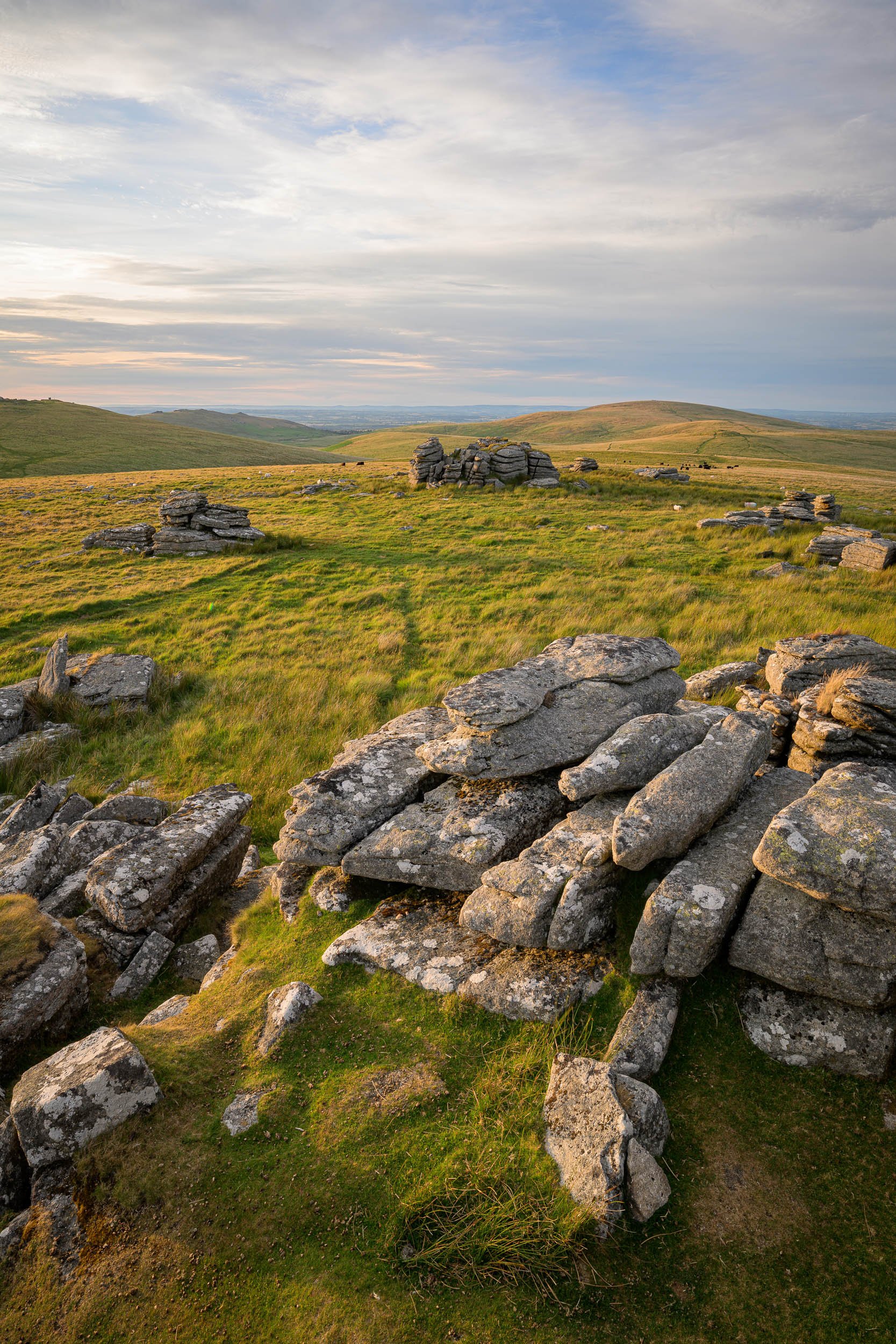
Wild Tor, Dartmoor, Devon - Nikon Z8 with Nikkor Z 14-30mm f/4 S at 14mm, f/13, 2 secs at ISO 64.
If you enjoy long walks and a night beneath the stars, then wild camping can be an incredibly rewarding way to experience Dartmoor. If you're already an experienced wild camper but would like to explore Dartmoor with a knowledgeable local guide, I'd be delighted to accompany you on a guided photographic adventure. Please get in contact.
This video forms part of my Learning Landscape Photography on Dartmoor series, where I share the knowledge and experience I've gained from many years of photographing this remarkable landscape. If you'd like to continue learning, do take a look at the rest of the series. There is much more still to come.
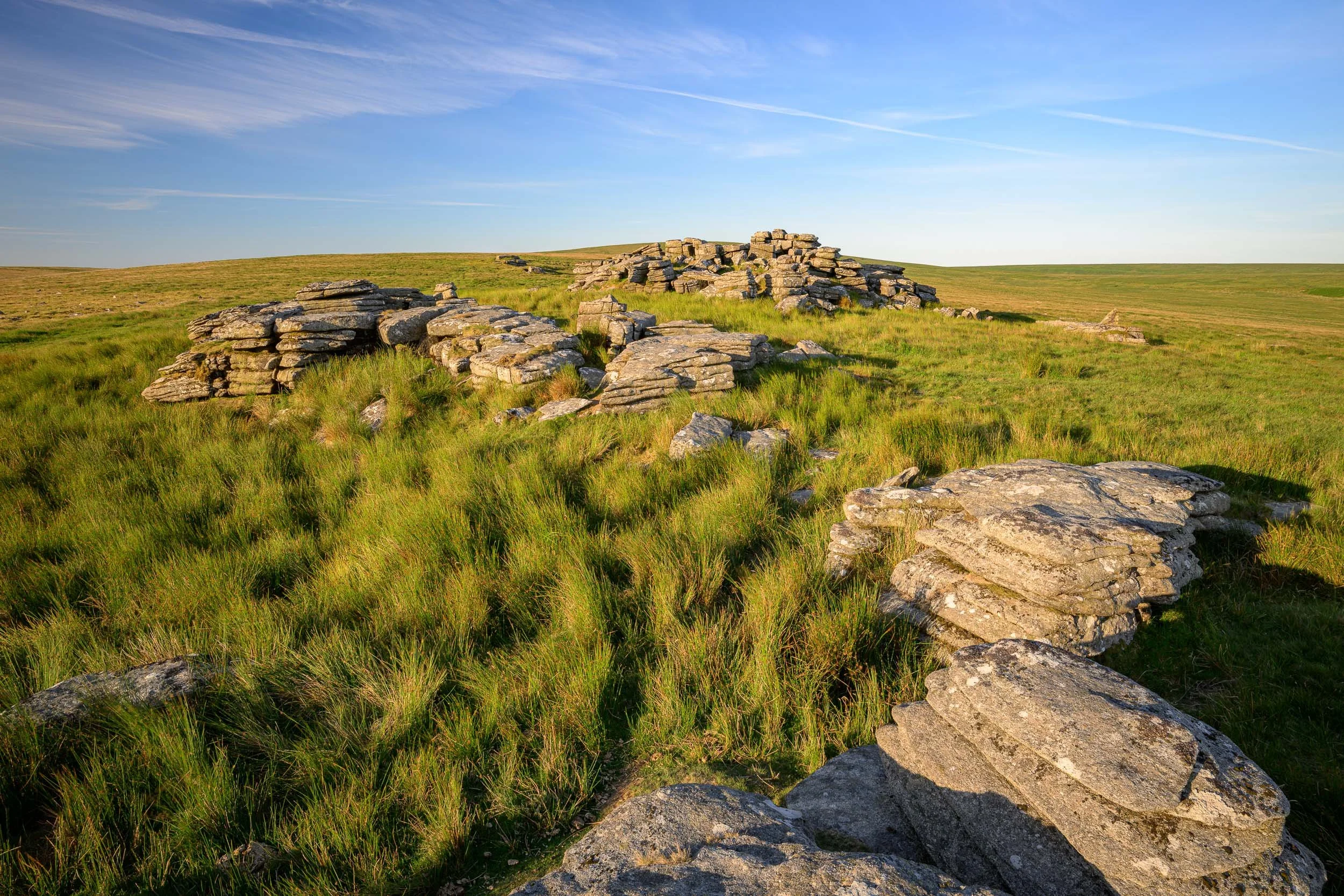
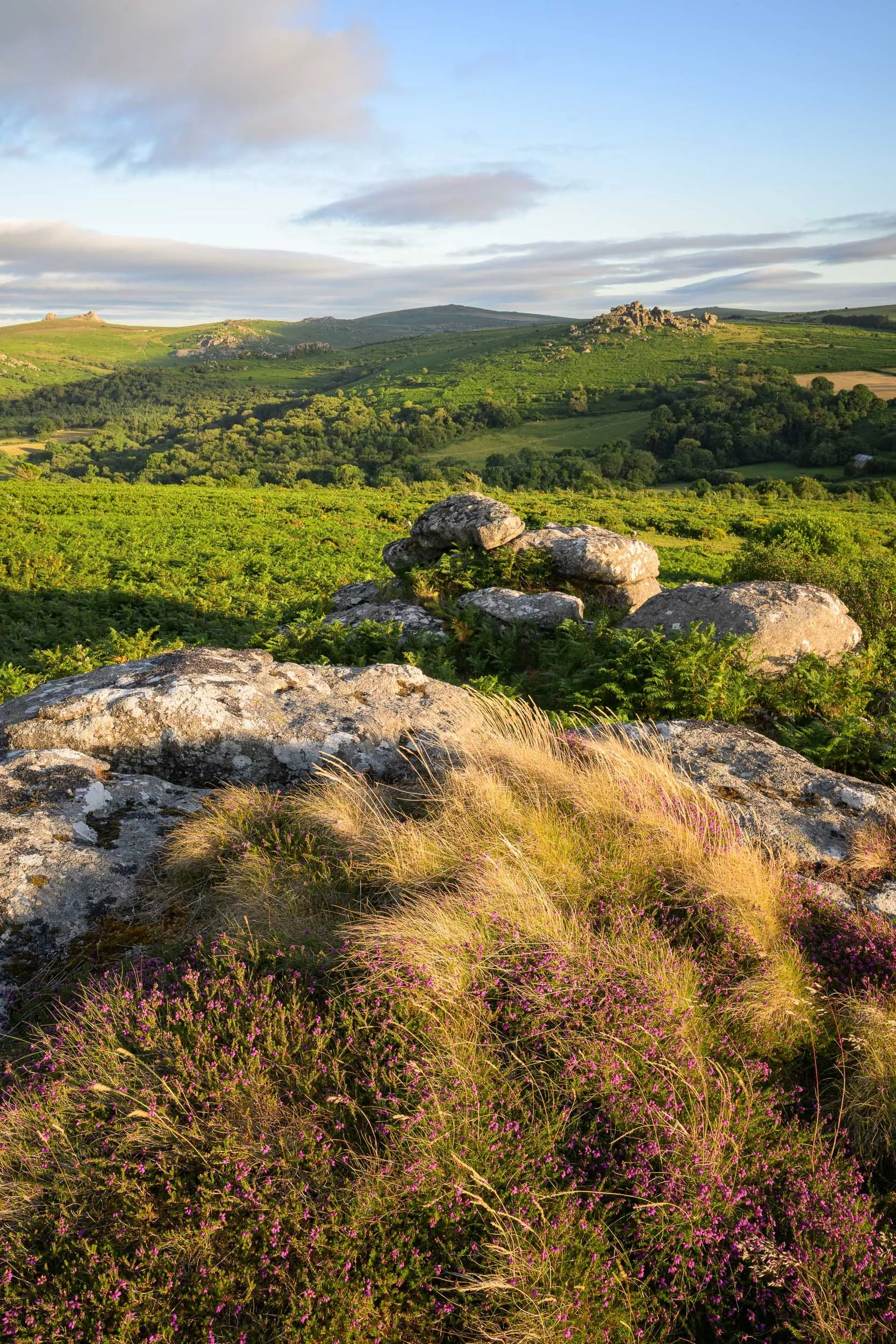
Wild Tor Gallery
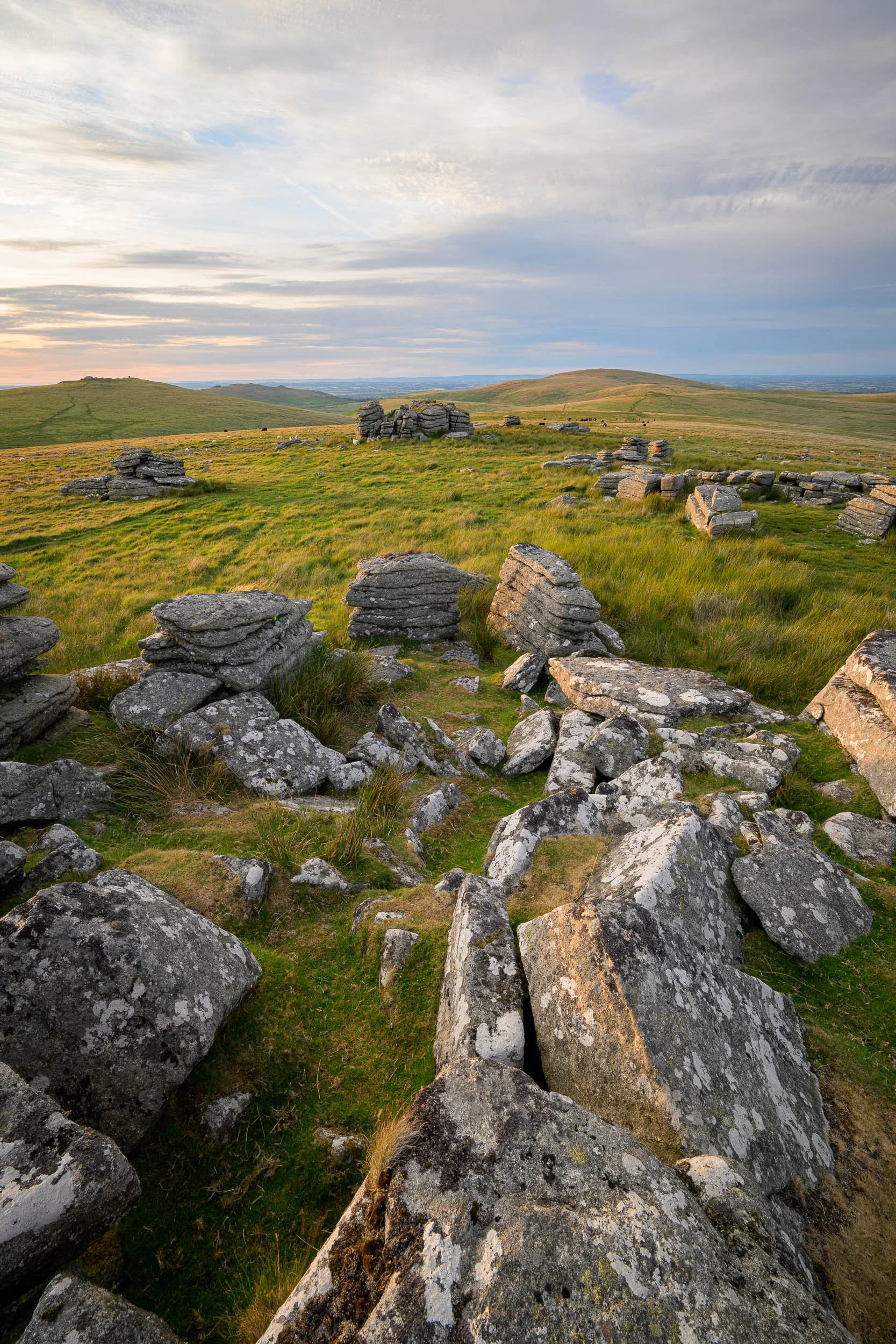
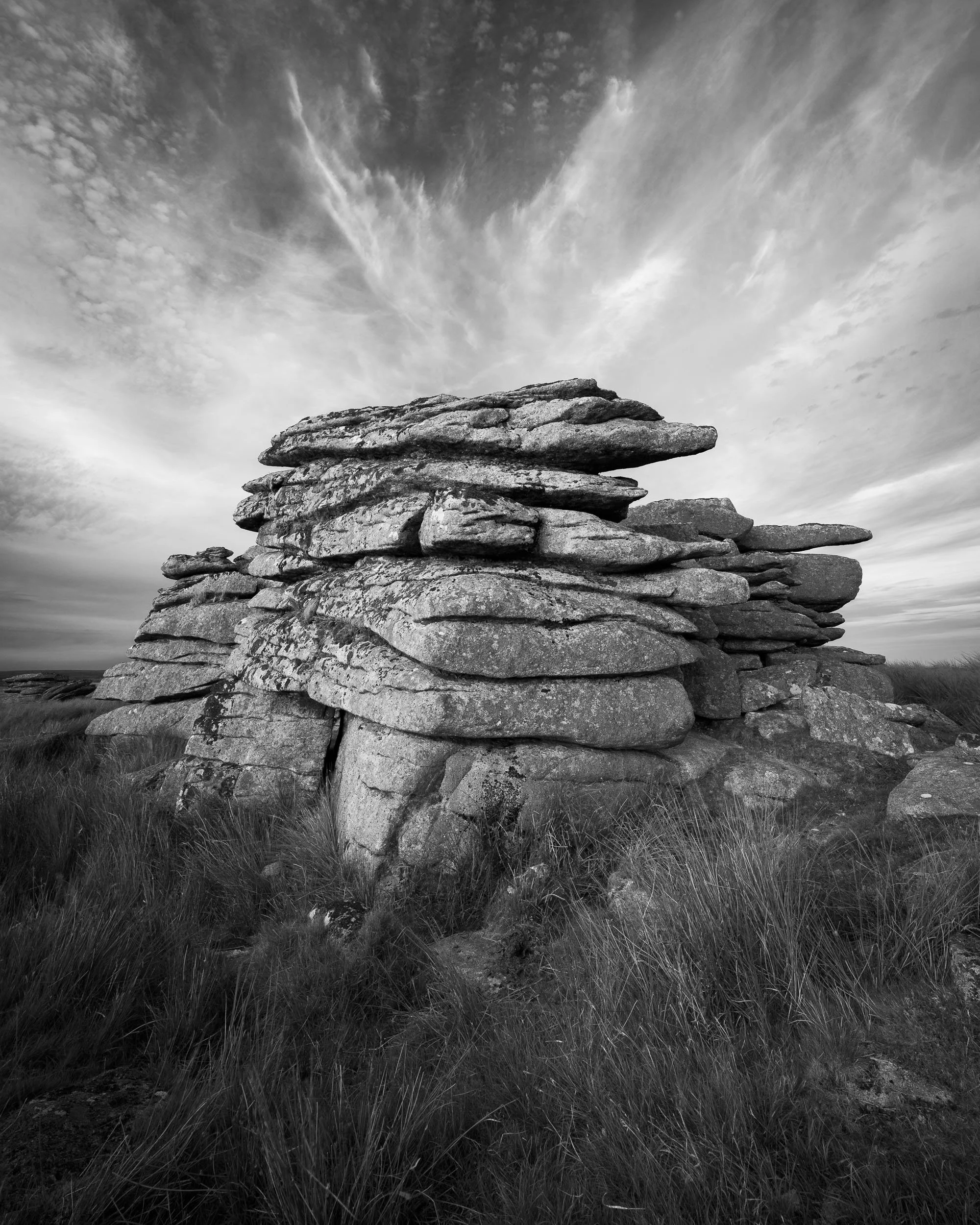
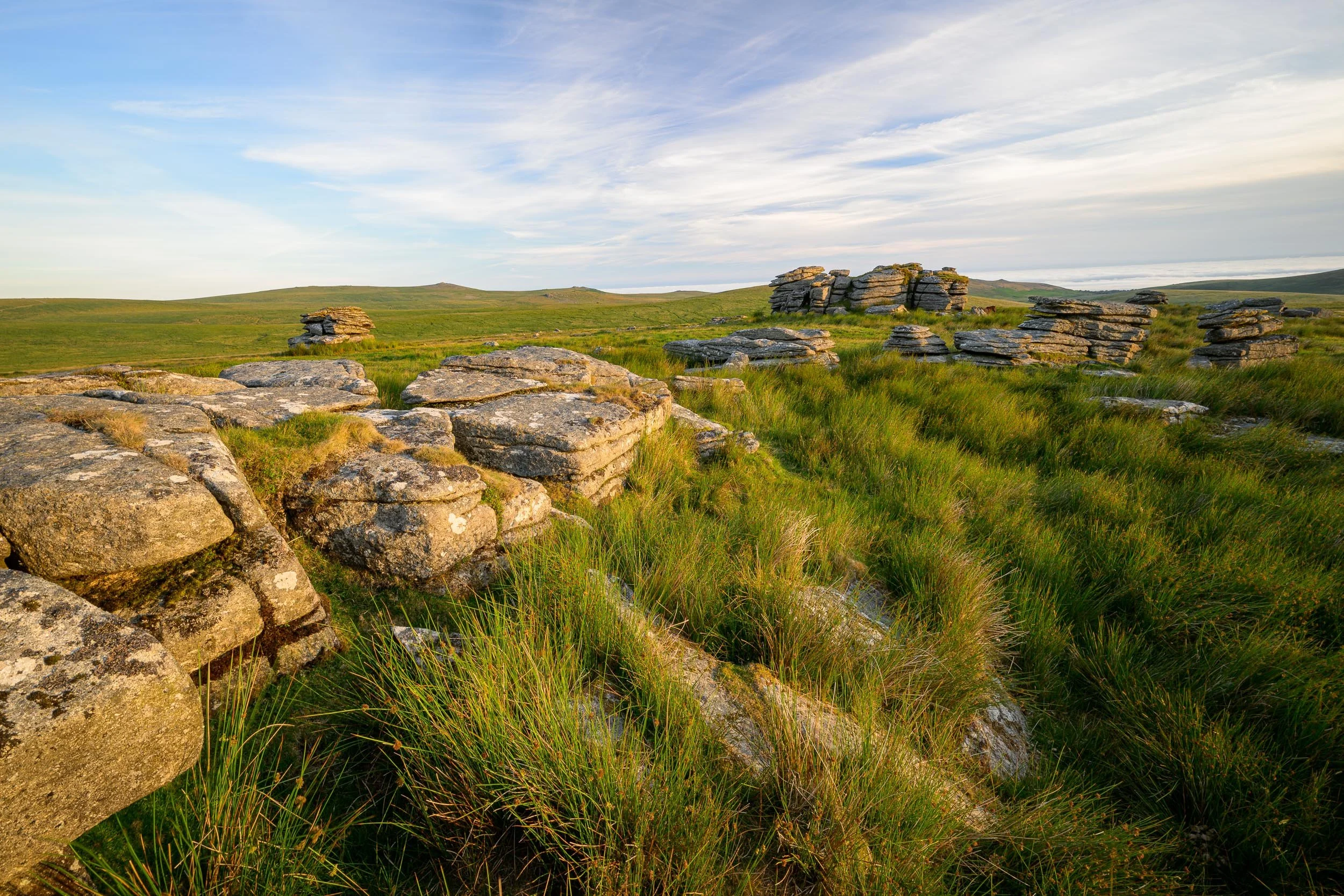
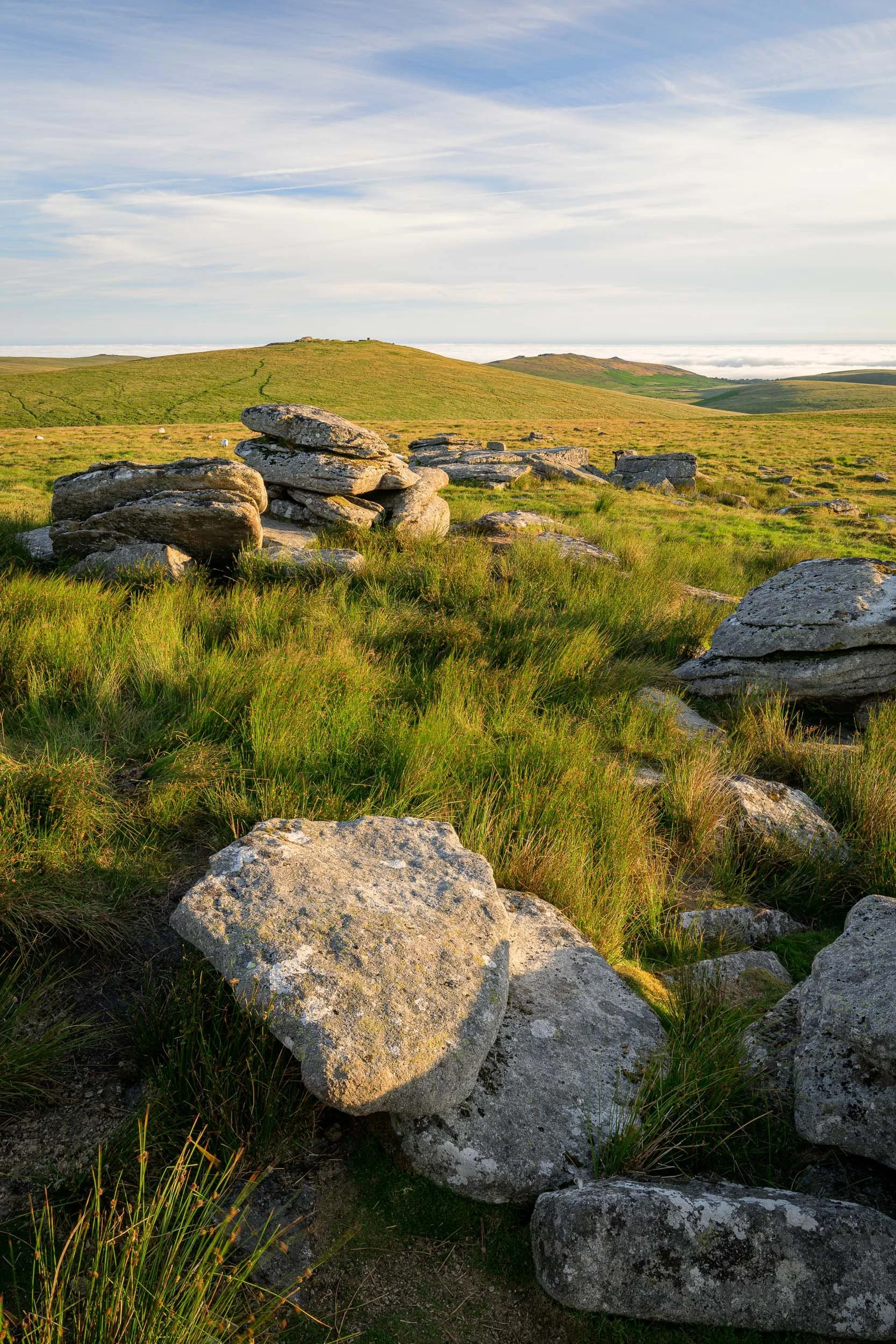
Bite-Size Blog Post #77 - Exploring Manaton
Finding the first hints of heather on Dartmoor reminded me that some evenings are more about the experience than the images I capture.
Early Signs of Heather
The area around Manaton is best known for one of Dartmoor’s most iconic tors, Bowerman’s Nose. As a landscape photographer, it’s hard not to be drawn to this glorious granite monument. It dominates the surrounding landscape and photographs beautifully throughout the year. Even though I’ve photographed Bowerman’s Nose numerous times, and I’m sure I’ll continue to do so, it’s important to remember that it isn’t the only thing that catches my eye in this part of Dartmoor.
So, on one beautiful, sunny summer evening, I decided to walk past Bowerman’s Nose and explore the plateau above it. It wasn’t the first time I’d wandered across this area, but it was the first time I’d set out with the sole intention of exploring it with my camera rather than heading for something familiar.
It can sometimes be difficult to visualise how a landscape will photograph when the light is harsh and the sky is completely cloudless, but there were enough hints of potential to keep me interested. One composition in particular really caught my attention. It’s still very much a work in progress, though, so you’ll have to stay tuned to the blog to see where that one leads.
What did surprise me was the heather. I don’t normally expect to see Dartmoor’s heather appearing until a little later in the month, but there were already patches beginning to bloom. It was only the earliest signs of colour, yet it was enough to get me excited. It immediately took me back to the wonderful evenings I spent photographing the heather across Dartmoor last year.
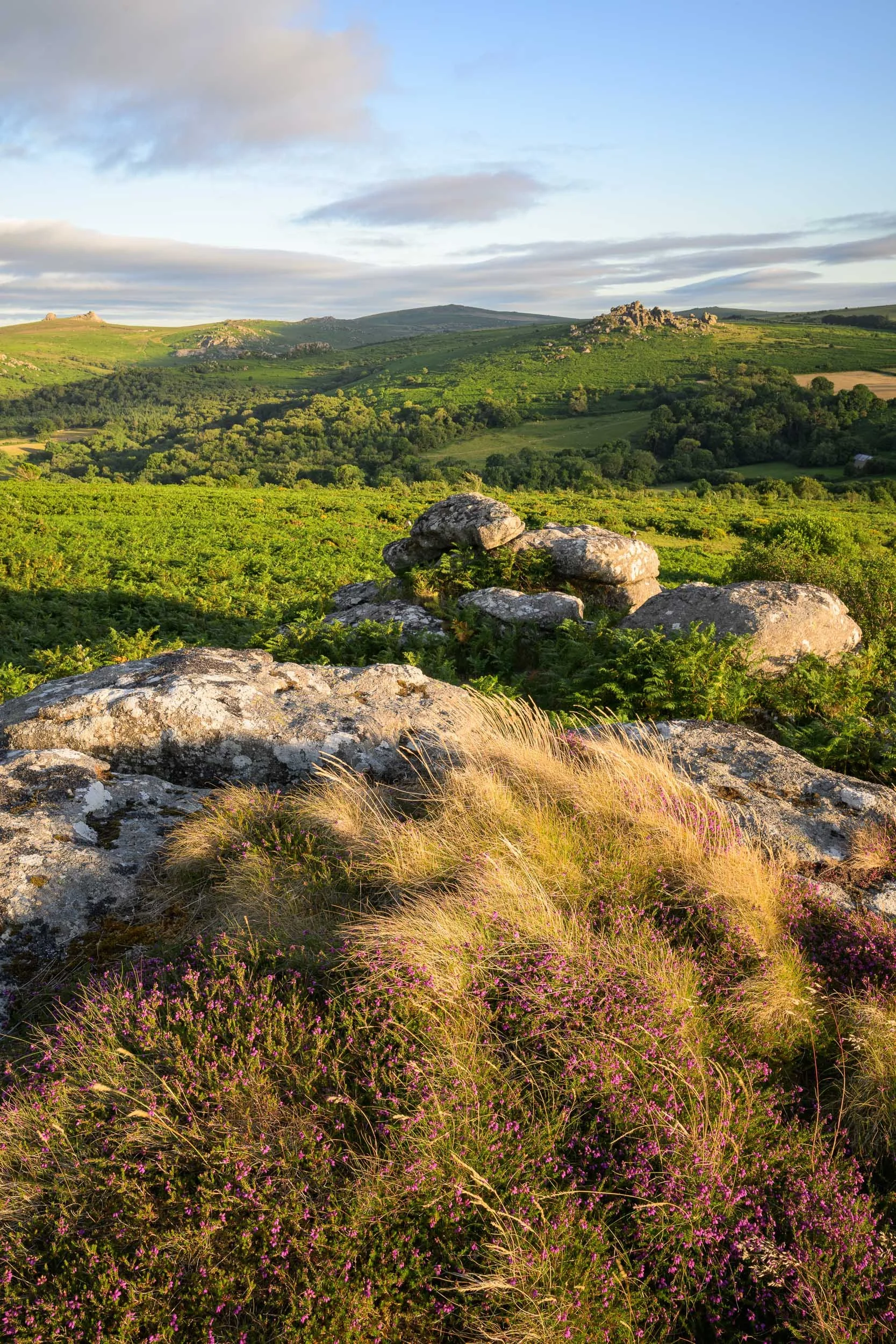
Manaton Heather, Dartmoor National Park, Devon - Nikon Z8 with Nikkor Z 14-30mm f/4 S at 24mm, f/13, 1/125 sec at ISO 800.
Sometimes it’s important to remember that landscape photography isn’t just about coming home with spectacular images. It’s about enjoying the experience of being out there. That’s exactly what this evening became: just me, my camera, and a sense of adventure. I may not have captured any portfolio-worthy photographs, but discovering new possibilities, learning more about this part of Dartmoor, and simply enjoying the walk proved to be far more rewarding.