

Summit Creative Metropolis Backpack Review
In this video I look at the Summit Creative Metropolis 16L Backpack. Learn more about this bag, how I’ve been using it, what I like, and what I disliked to see if this is a camera bag you should consider.
Small but Perfectly Formed
Camera bags come in many different shapes, sizes and price brackets! It’s also hard, if not impossible to find one camera bag to suit all your needs or one that you might consider perfect. There is always compromise to be had somewhere. So always be weary of a review that says a camera bag is perfect or it’s the “most amazing camera bag ever”.
I’ve recently identified the need to have a small camera backpack in my gear cupboard. Something that is lightweight, carries a decent amount of gear, is comfortable and can be used for more than just carrying camera gear about.
While I was at the Photography Show in London in March, I spotted a new brand of camera bag, Summit Creative. I’d never heard of them, but by being able to pick it up in person and have a proper look at it, it did at least on paper seem to fit my needs.
Fortunately for me the distributor for Summit Creative bags in the UK is Photo Specialist UK, the company behind Kase Filters UK. I am a Kase Filters partner, so I already have a working relationship with Photo Specialist UK. The team there very kindly gave me a Metropolis 16L so I could put it to good use.
Over the last 8 weeks I’ve been using the bag for all sorts of photography and non-photography related activities and I’m now ready to share my thoughts with you in this review video. I create these videos not to try and convince you to buy this bag, but because many of you ask questions about the gear I use so it helps to have a video. Enjoy!
🛒 You purchase the Summit Creative Metropolis 16L Backpack here - https://summitcreativebags.com/product/metropolis-16l-backpack/?ref=jbairdexp
🔗 Check out my review of the tripod you saw in this video - https://julianbaird.com/blog/2024/10/22/manfrotto-befree-gt-pro-carbon-tripod-review
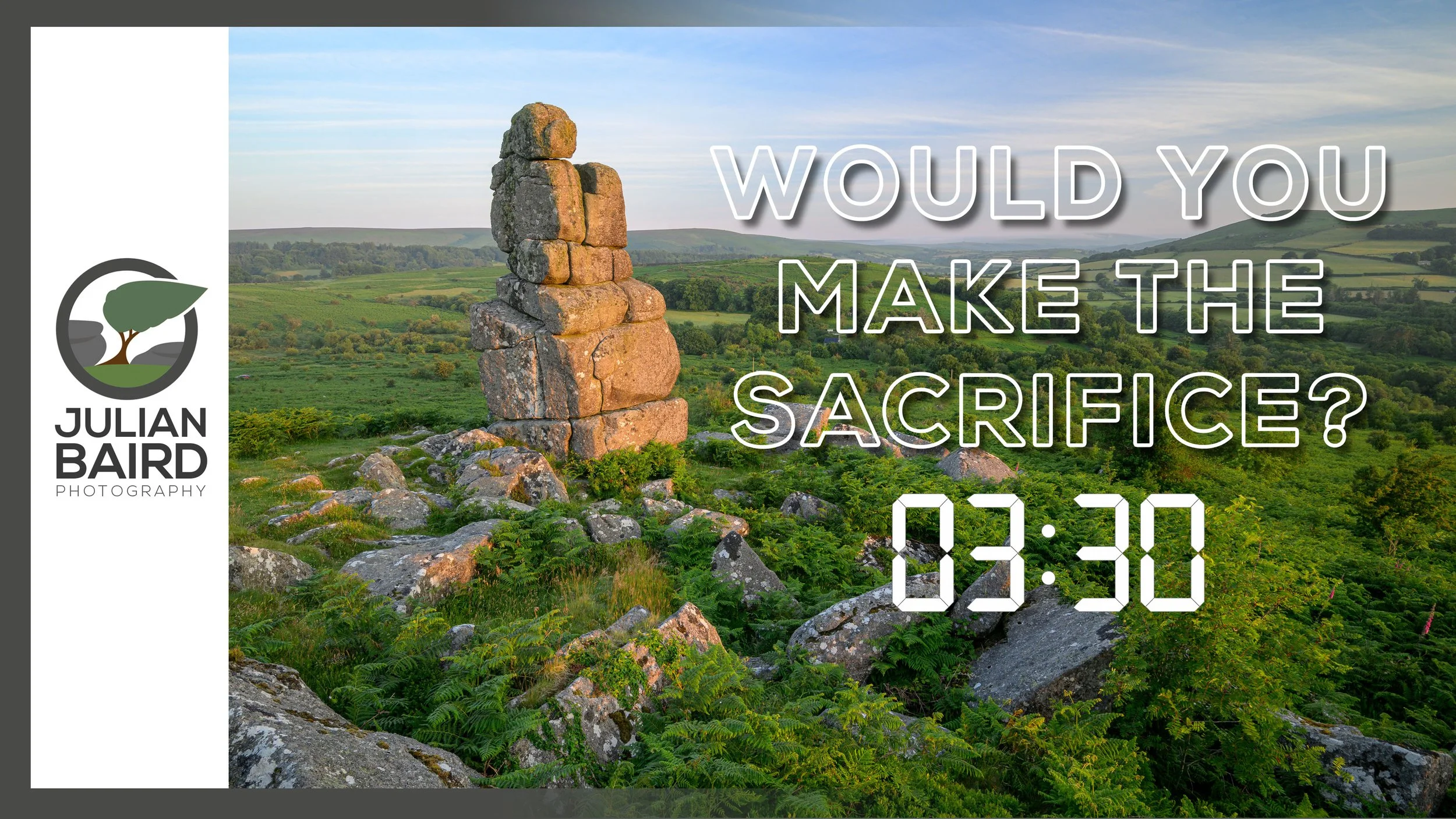
How Early Would You Get Up to Capture a Landscape Photograph?
Early morning for sunrise or late evening for sunset? Which type of landscape photographer are you? In this video I explain why I’m happy to set my alarm for 03:30 so I can see the sunrise at Bowerman’s Nose on Dartmoor.
Why Such an Early Start Just to Capture a Photo
There’s early starts, and then there are EARLY starts. Here in the south west of the UK during late spring and early summer when we approach the longest day, sunrise is as early as 5am and sunset after 9:30pm. (It’s even earlier and later in Scotland!). With those times I expect most of you are thinking that if you had the choice of sunrise or sunset photography, you would almost certainly pick a sunset shoot.
It appears I am a wired a little differently. I actually like getting up early in the morning. But 03:30? That seems a little too much effort, and in most circumstances you’d be right. It would be much easier to give up on sunrise landscape photography until late summer or early autumn.
However, there are some photographs that can only be captured at certain times of year, and sunrise at Bowerman’s Nose is one such photograph. As it’s such an beautiful location in spring, and you get a very different angle at that time of year, it’s one location I will happily set my alarm for 03:30. But, as I discuss in this video, it’s not just landscape photography that inspires me to get up that early.
Landscape Photographs of Bowerman’s Nose on Dartmoor National Park
Bowerman’s Nose at Sunrise #2, Dartmoor National Park - Nikon Z8 with Nikkor Z 14-30mm f/4 S at 20mm, f/13, 1/8 sec at ISO 800.
Bowerman’s Nose at Sunrise #3, Dartmoor National Park - Nikon Z8 with Nikkor Z 14-30mm f/4 S at 21mm, f/13, 1/8 sec at ISO 800.
Bowerman’s Nose at Sunrise #4, Dartmoor National Park - Nikon Z8 with Nikkor Z 14-30mm f/4 S at 20mm, f/13, 1/8 sec at ISO 250.

Kelp by Mark Littlejohn and Published by Kozu Books - On My Bookshelf S07E06
In this episode of On My Bookshelf I dive into Kelp by Mark Littlejohn to see if this photography book is a book for your bookshelf.
The Beauty of Seaweed?
On paper, a photography book all about seaweed doesn’t sound that appealing. However, if that seaweed is kelp, and the photographer behind the camera is Mark Littlejohn, then you have to look at the prospect of such a book with very different eyes.
In this episode of On My Bookshelf I’m taking a look at Mark’s book of kelp photographs. Is it too repetitive, or is each photograph a unique work of art that highlights the colours, contrast, complexity, and elegance of kelp? Let’s find out.
Purchase Kelp by Mark Littlejohn
🛒 You can purchase Kelp by Mark Littlejohn directly from Kozu Books at - https://www.kozubooks.com/books-new/kelp-by-mark-littlejohn
More Episodes of On My Bookshelf
🎞️ See more titles from Kozu Books in this On My Bookshelf playlist.
🎞️ Watch any of the On My Bookshelf episodes here.
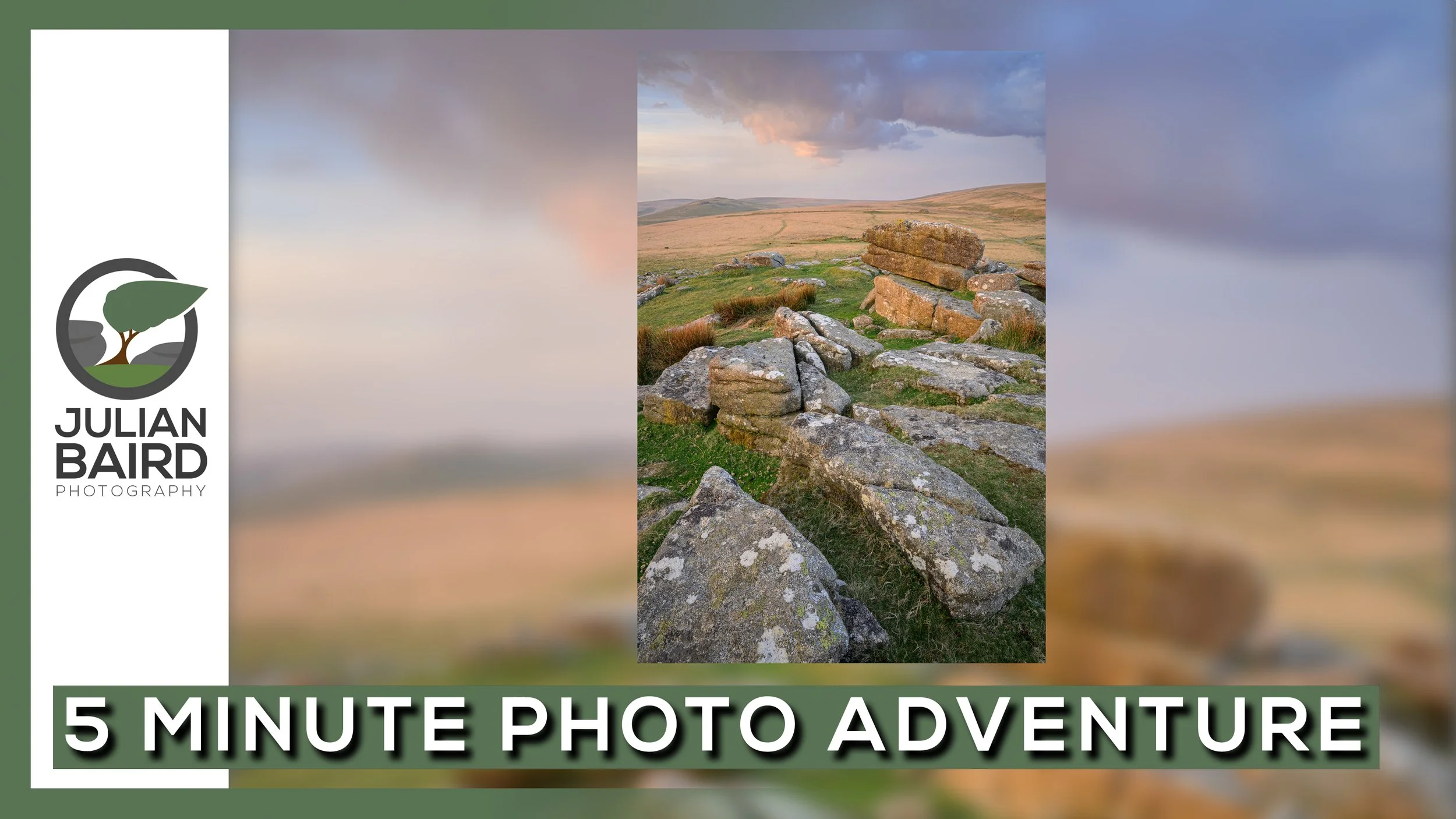
Photographing Row Tor on Dartmoor for the 1st Time - A 5 Minute Photo Adventure
There are Still Places I Haven't Photographed on Dartmoor
Over the three years that I filmed my video series Discovering Dartmoor I greatly expanded my knowledge of Dartmoor and the locations worth photographing. That combined with my 10 years of experience in capturing of landscape photographs of Dartmoor, you might think that I've photographed most of Dartmoor. Nothing could be further from the truth though, and as Dartmoor covers over 365 square miles, there is plenty left for me to photograph.
One such location is Row Tor on the northern edge of Dartmoor. I'm familiar with Row Tor as I've parked close by numerous times on my way to photograph a neighbouring tor. And this is perhaps the reason why I've not photographed it before. With so many great tors nearby such as Belstone Tor, East Mill Tor, Yes Tor, Oke Tor and West Mill Tor, poor old Row Tor didn't hold much interest for me.
But have I been missing out? Just because Row Tor is small, doesn't mean it's not worth photographing. So, let's find out if it is in my latest 5 Minute Photo Adventure.

Row Tor, Dartmoor National Park, Devon - Nikon Z8 with Nikkor Z 14-30mm f/4 at 24mm, f/13, 1/4 sec at ISO 64.
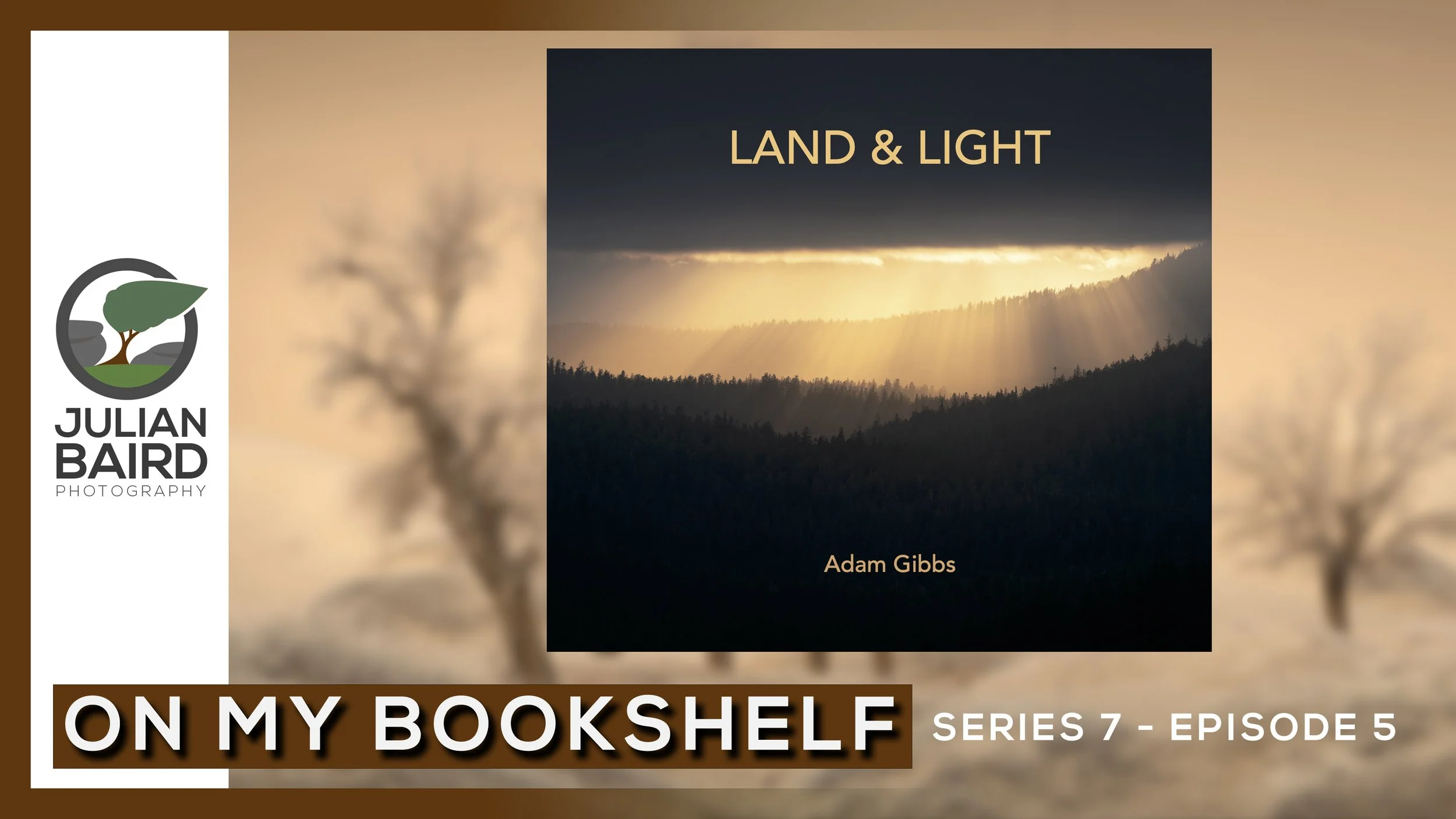
Land and Light by Adam Gibbs - Episode 50 of On My Bookshelf S07E05
In this special 50th episode of On My Bookshelf I take a look at Land and Light by Adam Gibbs. Is this career spanning collection of photographs and stories a book for your bookshelf?
50 Episodes of On My Bookshelf
I want to start this blog post by announcing that this is the 50th episode of On My Bookshelf! When I started producing episodes in 2017, I never thought for one moment that I would reach episode 50! The fact that I've got to this number of episodes is testament to my passion for photography books. It's also a reflection that you like watching the show! So, thank you for all your support, no matter if you have watched just 1 episode or you are about to watch your 50th!
Land and Light
For this special 50th edition of On My Bookshelf I'm going to look at Land and Light by Adam Gibbs. I was lucky enough to receive my copy of Light and Land from Adam in person at the Photography Show in London earlier this year and I've been looking forward to reading it ever since. Now I can finally share my thoughts on it in an episode of On My Bookshelf. Enjoy!
🛒 You can purchase a copy of Land & Light by Adam Gibbs here - https://adamgibbs.com/books/landlight

Newbiggin Crags Limestone Pavement - Cumbria - A 5 Minute Photo Adventure
Have you ever wished you could just pull of the motorway, take some landscape photographs, and then carry on with your journey? Then Newbiggin Crags Limestone Pavement just of the M6 could be the location for you!
That Was a Long Way for a 5 Minute Photo Adventure!
As many of you will know I grew up in Scotland, but I now live in Devon in the southwest of England. Even though the journey back to my homeland in the Highlands is over 500 miles, it's still a drive that I make several times a year. I go there to see family and of course to take photographs. This is why in amongst all my Dartmoor related content you'll see me post photos and videos about Glencoe and Kilchurn Castle.
It may seem bonkers, but I often make than journey in one go. I join the M5, start playing a new audiobook and drive until I get to my destination (stopping for comfort breaks of course). It takes approximately 10 hours and is frankly a little dull. The only thing that keeps me sane is the audiobook that is playing!
However, as I get older, my ability and willingness to drive for 10 hours dwindles. If I'm not stopping in Glasgow to see friends (which is still a long way), I now like to stop off overnight somewhere. This tends not to be anything flash. Just a Travelodge at a motorway service station.
Every time I stop though the photographer inside me wants to find somewhere to photograph, but I also don't want to drive miles away from the motorway. I'm not keen on adding 2 hours to an already 10 hour journey, regardless of if it is taken over two days or not. What I need are some locations near the northern end of the M6 (where I'm most likely to stop).
Fortunately, thanks my friend and fellow photographer Amy Bateman, I have been introduced to Newbiggin Crags Limestone Pavement, which is a very convenient 10 minutes from the M6. So, when I made my regular trip back to the Highlands last month I stopped off to take some photographs of the limestone pavement and I made it just as the sun was setting.
I hope you enjoyed that 5 Minute Photo Adventure. If you know of any locations close to a motorway, please do share them in the comments below.
Newbiggin Crag Limestone Pavement Photographs

Newbiggins Crag Limestone Pavement #1, Cumbria - Nikon Z8 with Nikkor Z 14-30mm f/4 S at 24mm, f/13, 1/6 sec at ISO 64.

Newbiggins Crag Limestone Pavement #2, Cumbria - Nikon Z8 with Nikkor Z 14-30mm f/4 S at 24mm, f/11, 0.5 sec at ISO 64.
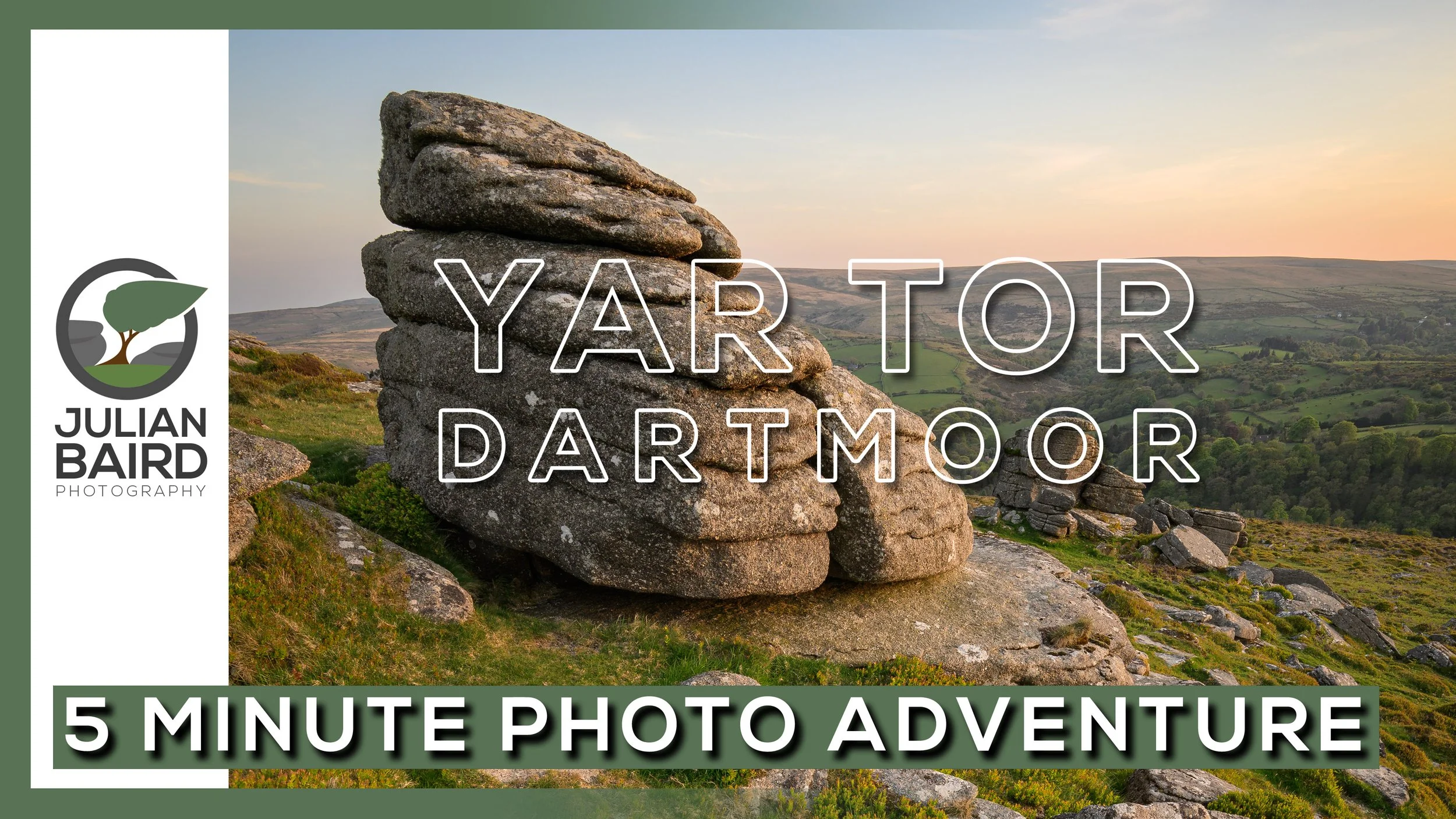
Photographing Dartmoor's Yar Tor - A 5 Minute Photo Adventure
Yar Tor - A Dartmoor Gem Just off the Road
One of the things I love most about Dartmoor is the ability to wander away from the roads and venture into heart of the national park. It's in these remote locations you can find some of Dartmoor's finest tors and, in the right conditions, they can make for some truly wonderful landscape photography subjects.
But long walks and big climbs aren't for everyone, so fortunately there are plenty of Dartmoor locations worth photographing that are close to a road. One such location is Yar Tor which is just a 15 minute and relatively flat walk from the B3357. It might not be the biggest or the grandest of Dartmoor's tors, but for those photographers willing to work for their compositions there a few photographic gems to be had.
I wrote about Yar Tor for the first time last year, but I decided to return recently so that I could film one of my 5 Minute Photo Adventures which I am delighted to be able to share with you below!
PS - Yar Tor is definitely a location I will be returning to so that I can photograph it again so don't be surprised to see another video from this location in the future. Don't want to miss it? Subscribe to my YouTube channel and/or my newsletter.
Yar Tor - Landscape Photographs of Dartmoor

Yar Tor at Sunset #1, Dartmoor National Park, Devon - Nikon Z8 with Nikkor Z 14-30m f/4 S at 18mm, f/13, 1/5 sec at ISO 64.

Yar Tor at Sunset #2, Dartmoor National Park, Devon - Nikon Z8 with Nikkor Z 14-30m f/4 S at 22mm, f/13, 1/5 sec at ISO 64.

Yar Tor at Sunset #3, Dartmoor National Park, Devon - Nikon Z8 with Nikkor Z 14-30m f/4 S at 15mm, f/13, 1/5 sec at ISO 64.

Aqua by Hans Strand and Published by Kozu Books - On My Bookshelf S07E04
Hans Strand is a world-renowned nature, environmental and landscape photographer from Sweden. In this episode of On My Bookshelf I look at his latest book from Kozu Books, titled Aqua, to see if it is a book for your bookshelf.
Beautiful Photographs, Beautifully Printed
I expect many of you will have seen the work of Swedish photographer Hans Strand. His nature, environmental and landscape photographs have a global reach, and he is recognised as a leading photographer in his field. He also loves to publish books, including Beyond Landscape, which I covered in a previous episode of On My Bookshelf.
In this episode of On My Bookshelf I’m going to take a look at his latest book, Aqua. Is Hans’ collection of photographs that documents the beauty and complexity of glaciers, wetlands, lakes and rivers, a book for your bookshelf?
Purchase Aqua by Hans Strand
🛒 You can purchase Aqua by Hans Strand directly from Kozu Books at https://www.kozubooks.com/books-new/aqua-by-hans-strand
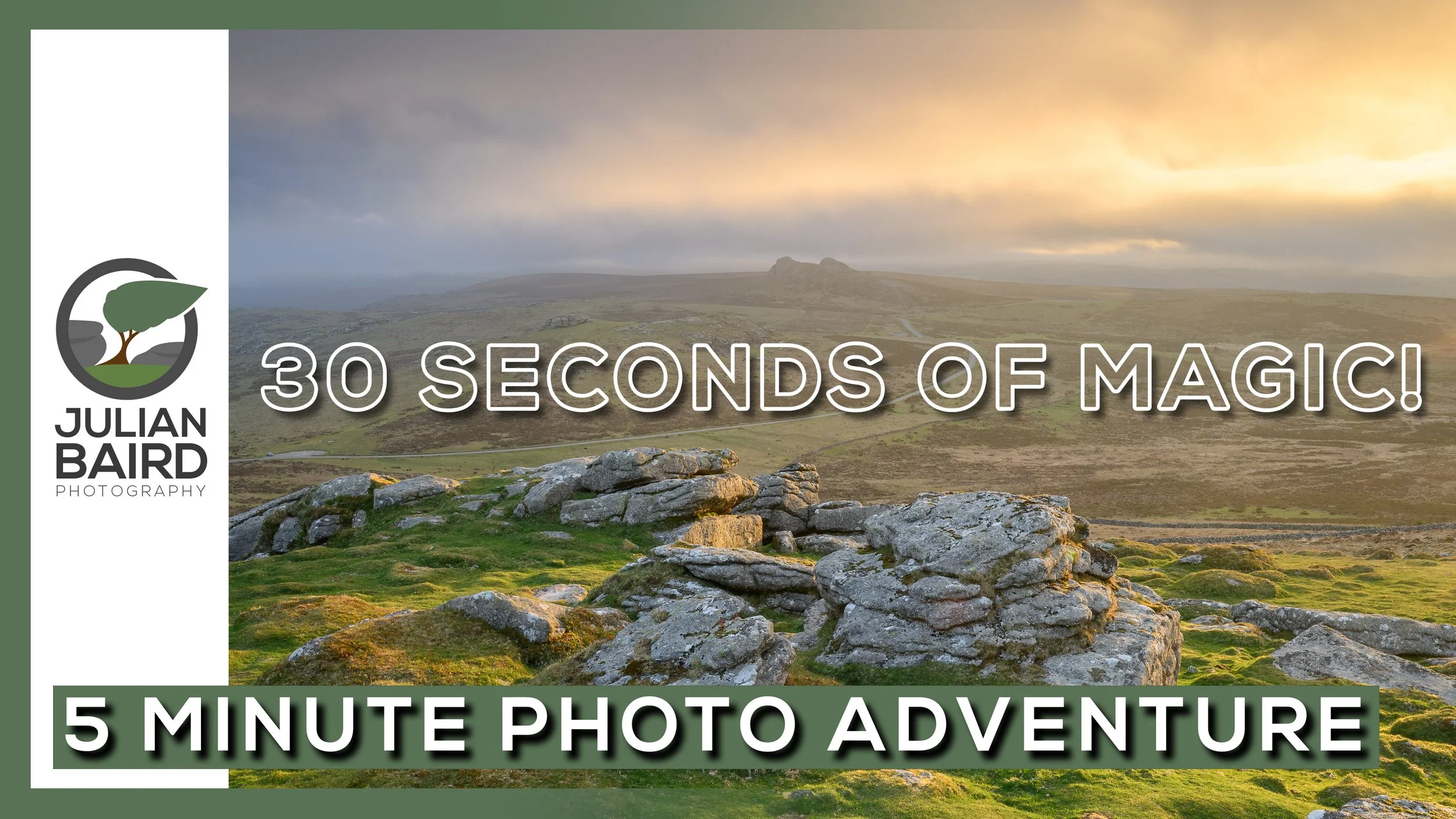
I Shouldn't Have Been Surprised - A 5 Minute Photo Adventure from Rippon Tor on Dartmoor
With little chance of capturing a compelling landscape photograph and filming a video that will likely never get published, I was ready to go home. But never right off Dartmoor. Dramatic conditions can be just a moment away.
That Was Truly Unexpected
The best time to make decision on where to photograph sunrise on Dartmoor is the night before. I like to make my choice, go to sleep, get up the following morning, grab my bag and a coffee then just go for it. Trying to make location decisions at 5am will lead to procrastination or worse, talking myself out of it and going back to bed (which is very rare).
However, sometimes it's worth just a quick scan of the weather forecast when I wake up, and the morning of this adventure, I'm glad I did. My original location on the western edge of Dartmoor had clouded over earlier than expected and so I needed a quick change of plan. The cloud was coming in from the west, so there was a chance that I might get a break in the cloud cover if I headed to the eastern edge of Dartmoor. With no time to consider a list of a possible locations I opted for one where I knew I'd stand the best chance of benefiting from a break in the cloud, and that was Rippon Tor.
As I drove along the M5 I could see it was looking a lot clearer towards the coast and I did consider making a very last minute change and heading to Dawlish Warren beach, but decided against it and thought it was best to stick to Dartmoor.
As I walked up to the summit of Rippon Tor, I thought I had made a mistake. It was very cloudy and the chances of seeing the sun looked very slim. As I was there I though, I might as well get my camera out. While the photographs I was taken were compositionally sound, they lacked the contrast and depth that the morning light would give them. They all looked a bit grey and flat.
Despite the flat light, I decided to start filming a video for YouTube. I honestly thought the video would never see the light of day, but after a 6 month break from making videos, this would at least be good practice and help me get back into the flow. What happened next was a surprise. It shouldn't have been. This is Dartmoor after all.
Unexpected Light on Rippon Tor - Dartmoor
Here’s the photo you saw me capture in the video:
Unexepected Light on Rippon Tor, Dartmoor National Park, Devon - Nikon Z8 with Nikkor Z 14-30mm f/4 S at 22mm, f/14, 1/3 sec at ISO 64.
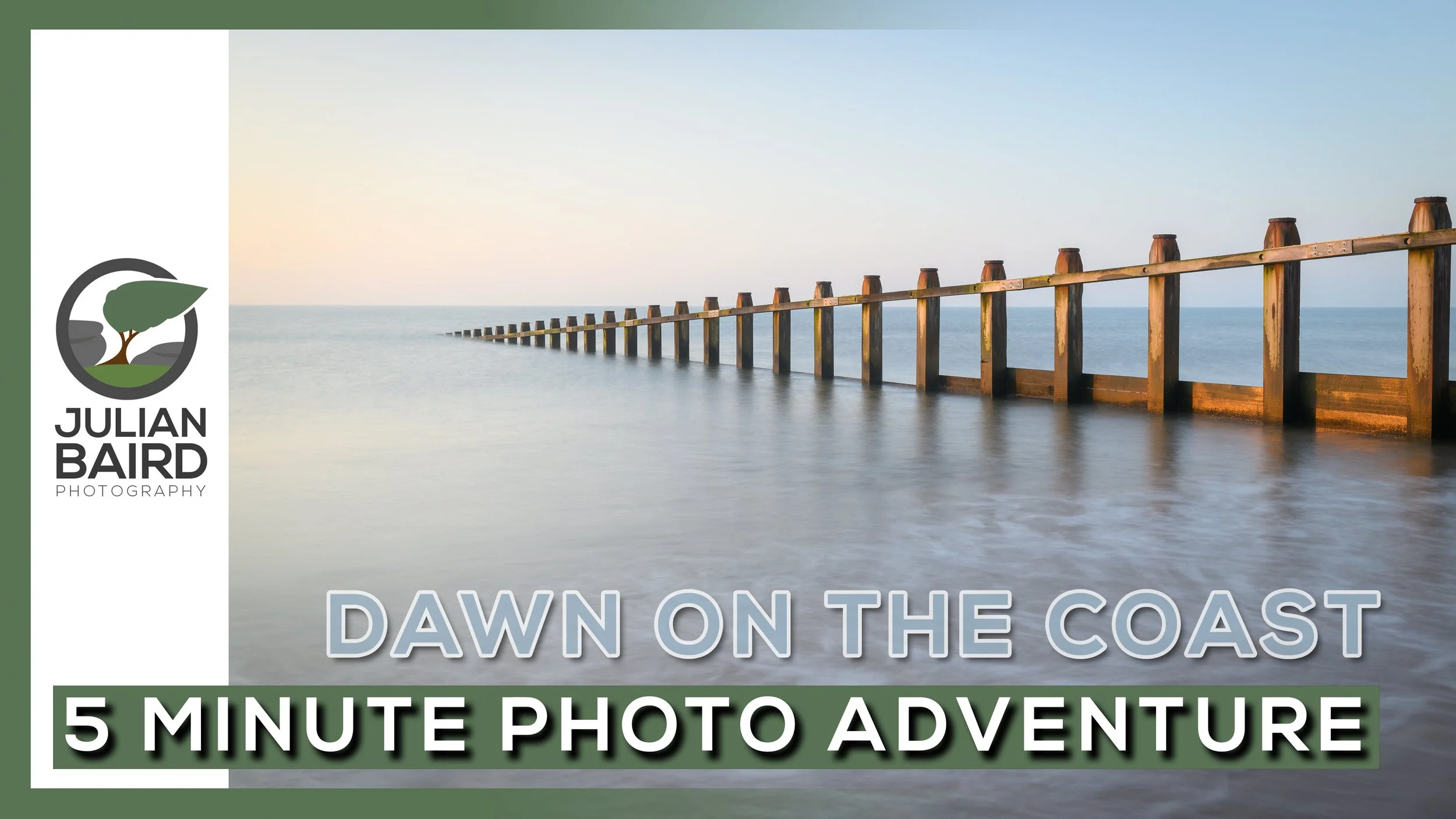
Capturing the Coastal Beauty of Dawlish Warren - A 5 Minute Photo Adventure
There are few better ways to start the day than by watching the sunrise at the beach. So, join me in my latest 5 Minute Photo Adventure as I photograph first light at Dawlish Warren beach in Devon.
The Serenity of Seascape Photography
I am very fortunate to live in Devon as it gives me easy access to the (roughly) 365 square miles of Dartmoor National Park. It’s a photography location with almost limitless opportunities to craft beautiful compositions and to create inspiring photographs.
While I spend much of my photography life wandering Dartmoor and capturing photographs there, I all too often ignore the coast along the southern edge of Devon. This is done on purpose, nor done because I dislike it, I just don’t visit it as much as I should.
During a recent spell of clear blue skies lasting days, if not well over a week, I decided I was long overdue a trip to my local beach at Dawlish Warren. While some clouds in the sky is almost always my preferred state, the beach can sometimes work when there isn’t a cloud to be seen.
So, join me in this 5 Minute Photo Adventure to see how I approached capturing some seascape photos on a clear, and very pleasant morning down at Dawlish Warren.
Dawlish Warren - Seascape Photographs from the South West Coast Path
Here are the photographs you saw me capture in the video.

Dawlish Warren, Devon - Nikon Z8, Nikkor Z 24-120mm f/4 S at 29mm, f/11, 4 secs at ISO 64, Kase Filters CPL.

Dawlish Warren, Devon - Nikon Z8, Nikkor Z 24-120mm f/4 S at 30mm, f/11, 90 secs at ISO 64, Kase Filters CPL.
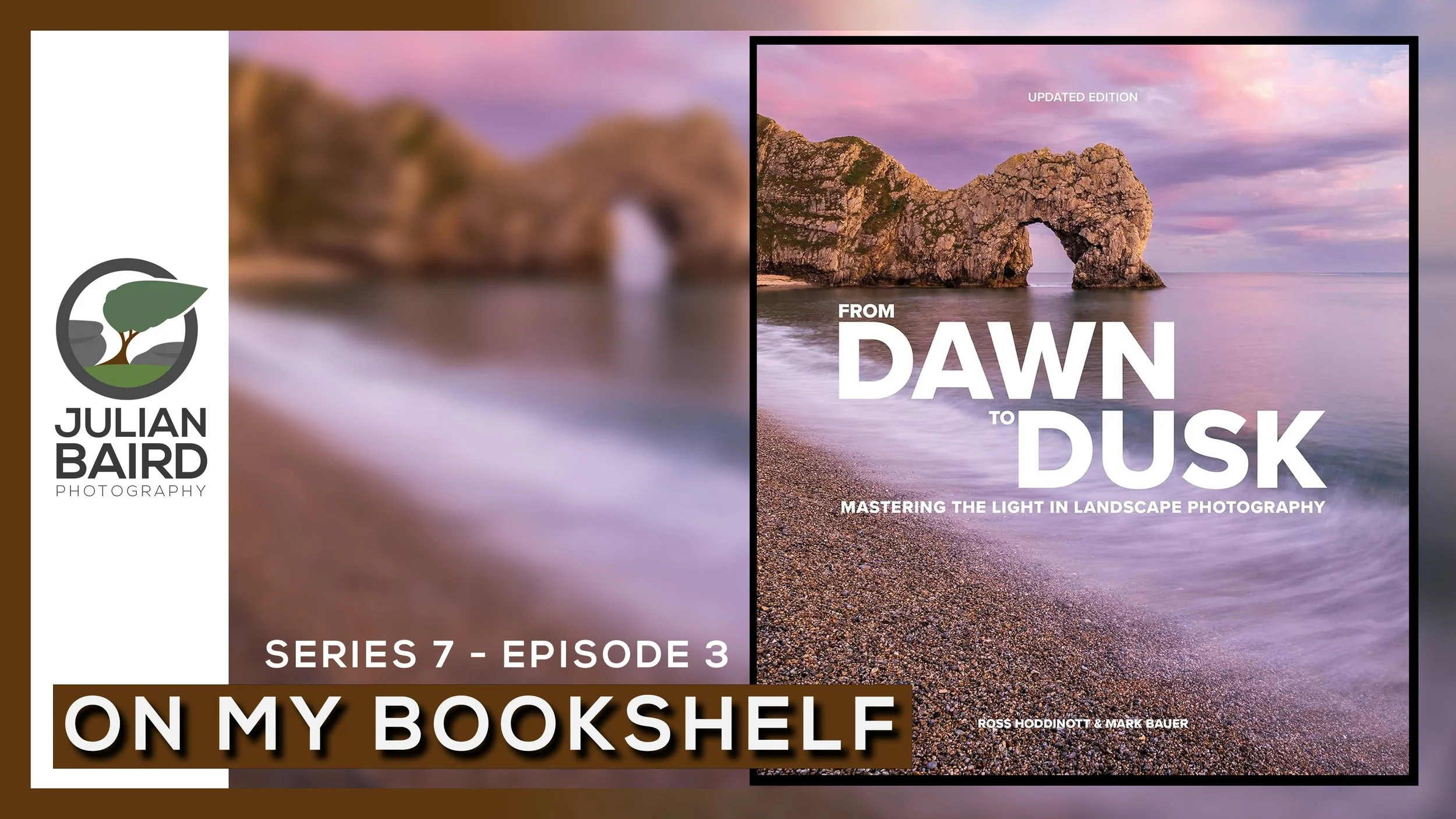
From Dawn to Dusk - Mastering the Light in Landscape Photography - On My Bookshelf S07E03
Mark Bauer and Ross Hoddinott are two of the UK's leading landscape photographers and in this episode of On My Bookshelf I look at their latest book 'From Dawn to Dusk - Mastering the Light in Landscape Photography'.
An Updated Edition by Ross and Mark
Over the last few years Ross and Mark have been publishing updated editions of their co-authored books on landscape photography technique. Now it’s the turn of ‘From Dawn to Dusk: Mastering the Light in Landscape Photography’ to get the updated edition treatment.
I’m not going to say too much more here as I cover all the book essentials in the episode of On My Bookshelf below, but needless to say, if you are looking to improve your landscape photography technique and capture photographs no matter what time of day, then this book from two of Britain’s leading landscape photographers is probably for you.
Enjoy the episode!
Purchase Ross and Mark’s Books
🛒 Purchase 'From Dawn to Dusk: Mastering the Light in Landscape Photography, by Ross Hoddinott and Mark Bauer' here - https://amzn.to/4jPF8Ib
🎞️ Watch my 2018 interview with Mark and Ross about the 1st edition of 'From Dawn to Dusk - https://www.youtube.com/watch?v=r9M-V_75604.
Check out these other great books by Mark and Ross
🛒 Purchase 'Landscape Photography Workshop (Updated Edition)' - https://amzn.to/3qBTHIW
🎞️ Watch On My Bookshelf S06E02 'The Landscape Photography Workshop by Mark Bauer and Ross Hoddinott' - https://youtu.be/TCoLXnzInxs
🛒 Purchase 'The Art of Landscape Photography (Updated Edition)' - https://amzn.to/45Z3WHn
🎞️ Watch On My Bookshelf S05E02 'The Art of Landscape Photography by Ross Hoddinott & Mark Bauer' - https://youtu.be/OMLKcikpoJw
Please note that these are affiliate links (but not paid links or ads). By buying through these links I may receive a commission for the sale. This has no effect on the price for you.
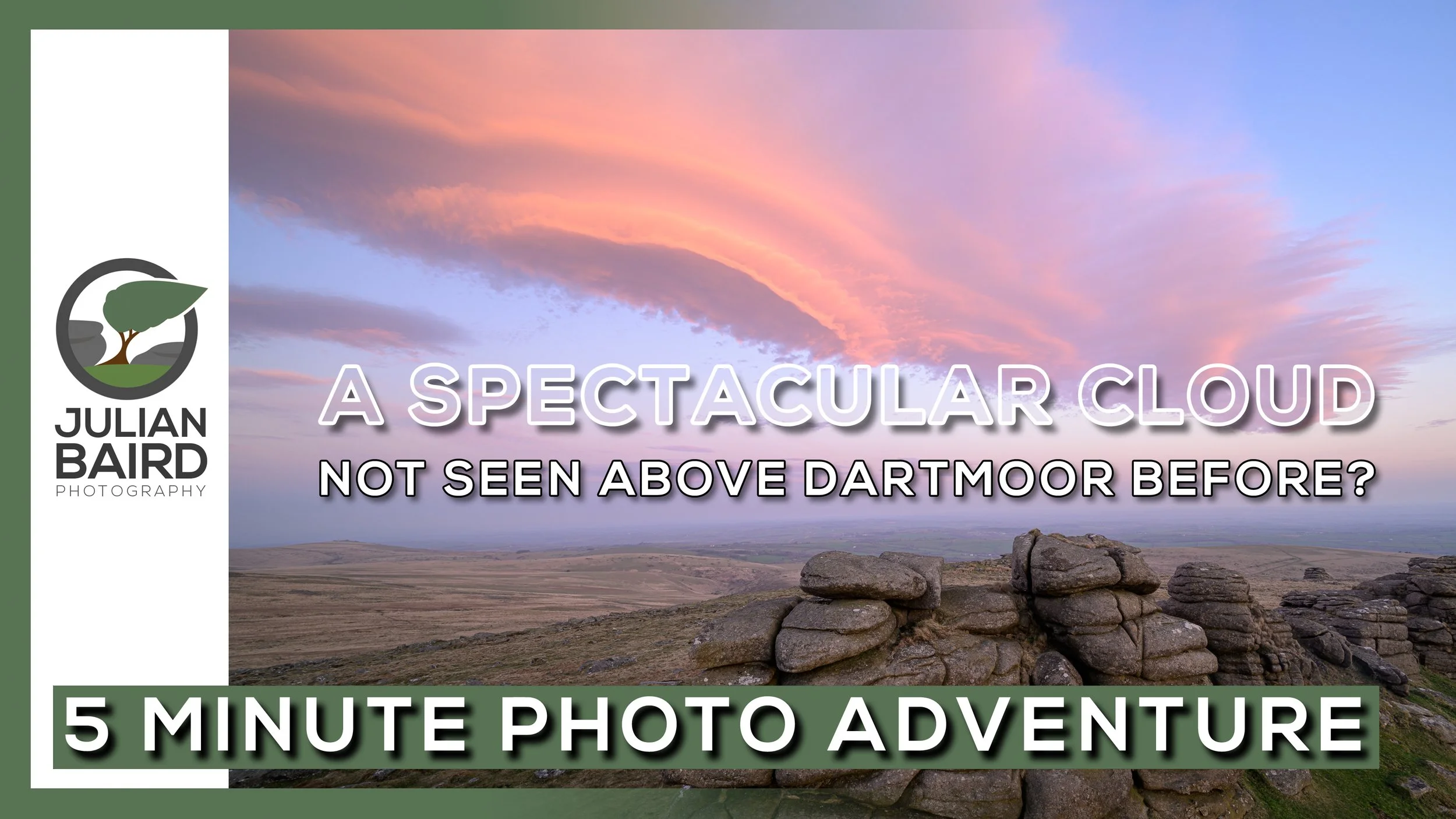
West Mill Tor on Dartmoor - A 5 Minute Photo Adventure
In this 5 Minute Photo Adventure I head to West Mill Tor where I find one of the most interesting clouds I think I’ve ever seen in the skies above Dartmoor.
Clouds - Sometimes You Only Need One
For me, the inclusion of a tor in one of my Dartmoor landscape photographs is one of the most important elements I can include in my compositions. While the foreground is critically important, it doesn't mean I dismiss what the sky is adding to my photographs. However, more often than not it's clear blue or flat grey skies on Dartmoor. Occasionally, these types of sky can be used effectively in compositions, but I much prefer a sky of broken clouds. This allows light to break through to the ground as well as providing visual interest to the composition.
A forecast of clear blue skies will normally be enough to put me off getting up very early in the morning to capture sunrise, but everyone now and again I'm willing to risk it just so I have the pleasure of getting out with my camera to watch the start of a new day.
This is exactly the attitude that got me to West Mill Tor one morning. It was forecast for blue skies and high winds, but I just wanted to get out and sometimes the conditions can be surprising and lead to interesting photographs.
When I arrived at West Mill Tor it was indeed very windy and the skies clear. Well, the skies were almost clear. There was one cloud in the sky, and it was a belter. It was the type of cloud that I don't think I've ever seen over Dartmoor before, and I therefore had to try and include it in my photographs. It was in an awkward position in the sky which limited my compositions, but I wasn't going to miss photographing it.
Was it worth sacrificing a better composition just to photograph a cloud? Judge for yourself in the 5 Minute Photo Adventure I made that morning. Enjoy!
West Mill Tor - Dartmoor Landscape Photographs
Here are the photographs of West Mill Tor that you saw in the video.


Possibly My Favourite Viewpoint for Landscape Photography in Glencoe
Join me on another 5 Minute Photo Adventure to see why the view from Beinn a' Chrùlaiste towards Buachaille Etive Mòr is probably my favourite viewpoint in Glencoe.
Glencoe - A Landscape Photographers Favourite
Ask any landscape photographer which areas in Scotland are on their must shoot list you'd be hard to find a photographer that doesn't have Glencoe on that list. You might argue that there are better areas in Scotland to photograph, or areas that have been photographed less, but Glencoe resolutely remains a go to location for those armed with anything from a mobile phone to a large format film camera.
It's close proximity to Glasgow makes it relatively easy to get to but what really attracts photographers are it's many stunning viewpoints, many of which are on or close to a road. You'll find plenty of rivers and lochans to photograph, but the main star of the show has to be the mountains which dominate the area. I don't how many times I driven up onto the plateau at Glencoe, but each and every time the view takes my breath away.
Favourite or Best Glencoe Viewpoint
I would of course never proclaim that any particular Glencoe viewpoint is the best. The term best is very subjective and will vary from photographer to photographer. Even if you ask just one photographer, the answer you will most likely get is "it depends". Time of day, time of year and weather all play role in selecting which viewpoint is best for that moment in time.
There is one viewpoint in Glencoe that I keep coming back to you. It's a viewpoint that I will make the effort to photograph on just about every visit I make to Glencoe. With the exception of a small window in the winter where the sun rises from an awkward angle, it is my go to viewpoint. The viewpoint I am referring to is the view of Buachaille Etive Mòr (Stob Dearg) from the side of Beinn a' Chrùlaiste.
Buachaille Etive Mòr Sunrise #1, Glencoe, Scotland - Nikon Z8, Nikkor Z 24-120mm f/4 S at 28mm, f/8, 1/6 sec at ISO 64, Kase Filters CPL.
It's not the easiest of viewpoints to reach. With a full camera backpack on, the all up hill walk takes me 45 minutes (on a good morning). The walk isn't particularly technical (unless its snowy or icy), but it is a bit of a lung buster (depending on your fitness). Despite the effort required, I have never stood on the side of that mountain, watching the light from the rising sun illuminate the peak of Stob Dearg regretted. Sure, I've been cold, wet and hungry sometimes, but it's never taken away from the enjoyment of that special moment.
Buachaille Etive Mòr Sunrise #2, Glencoe, Scotland - Nikon Z8, Nikkor Z 24-120mm f/4 S at 41mm, f/8, 1/6 sec at ISO 64, Kase Filters CPL.
A 5 Minute Photo Adventure in Glencoe
So it should come as no surprise that on my recent visit to Scotland and to Glencoe I did that very thing. I set the alarm (very early), drove to Glencoe, and marched myself up to what is possibly my favourite viewpoint in Glencoe. If you want to know why I did this, then grab yourself a cup of coffee and watch the 5 Minute Photo Adventure video I made that morning.
Bonus Location - Lochan na h-Achlaise
My route home that morning took past another one of Glencoe's finest locations, Lochan na h-Achlaise. Normally by this point hunger would have me driving straight home for breakfast, but when I saw the reflections on Lochan na h-Achlaise there was no way I couldn't stop to take a closer look. It was late in the morning (relatively speaking to sunrise) so I already knew I probably wouldn't get any great photographs, but I had to at least try.

Lochan na h-Achlaise Reflections #1, Glencoe, Scotland - Nikon Z8, Nikkor Z 24-120mm f/4 S at 59mm, f/11, 1/60 sec at ISO 200, Kase Filters CPL.
The most interesting thing about stopping there wasn't the stunning reflections but the fact that as I was walking along the lochan I met another photographer from Exeter! I travel all that way and I bump into someone from Devon! It's a small world for sure.

Lochan na h-Achlaise Reflections #1, Glencoe, Scotland - Nikon Z8, Nikkor Z 24-120mm f/4 S at 46mm, f/11, 1/60 sec at ISO 200, Kase Filters CPL.
I hope you enjoyed this short blog post and video. What are your favourite Glencoe locations and what you most like to shoot next you are there? What's the furthest you've travelled only to bump into someone from your local area? Let me know in the comments below.
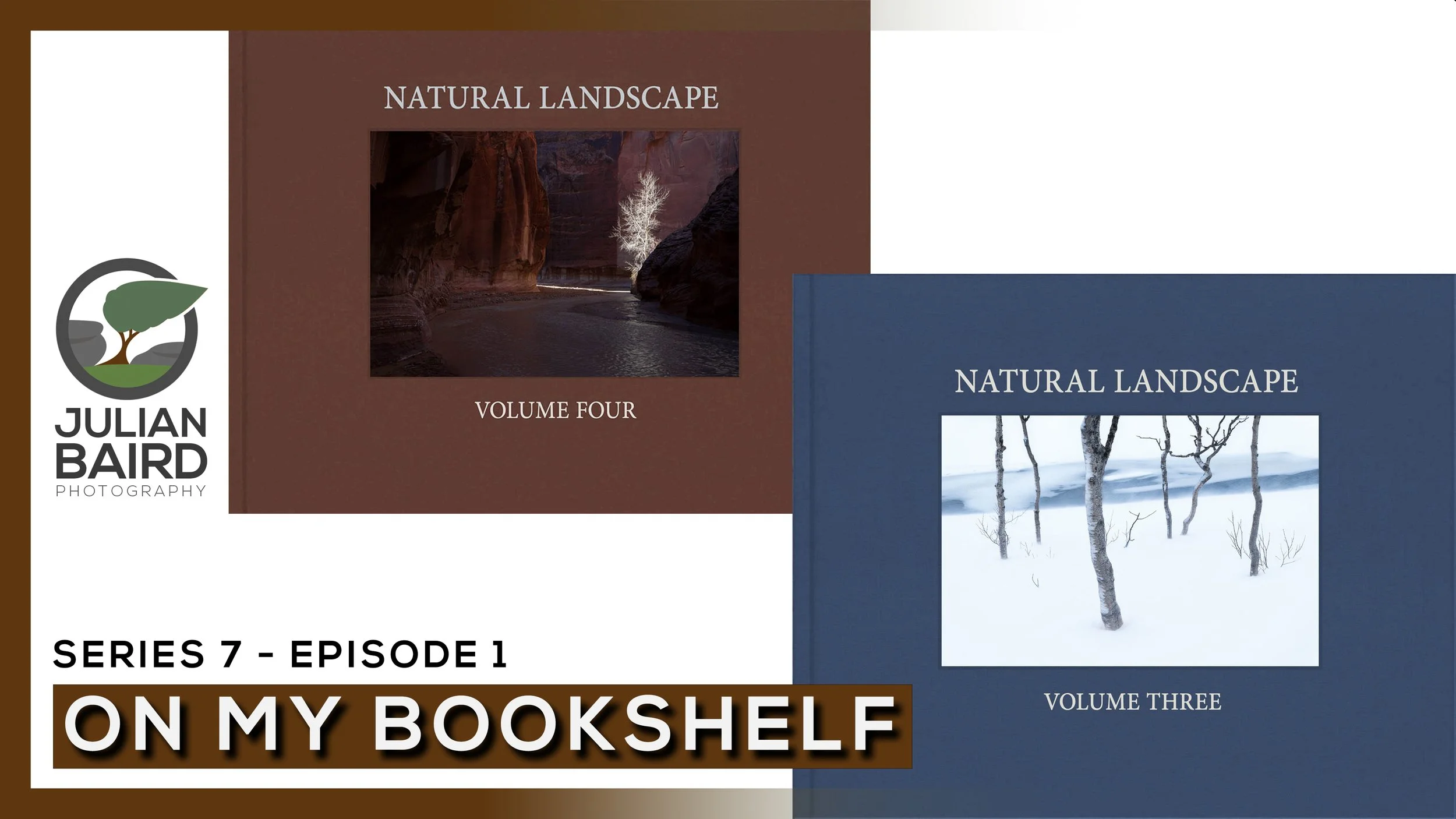
Natural Landscape Photography Awards Competition Books - On My Bookshelf S07E01
On My Bookshelf is back for a 7th series, and this first episode I look at the Natural Landscape Photography Awards competition books. Are these fine art hardback books for your bookshelf?
On My Bookshelf is Back for a 7th Series!
Photography books have always been an important part of my photography life and over the years I’ve collected enough photography books to fill numerous bookshelves! However, even with my healthy photography book obsession did I think I would have produced over 40 episodes, over 6 series, of On My Bookshelf! But here I am with the 46th episode and the start of series 7.
I’m starting the series with a category of book that I wouldn’t normally cover on On My Bookshelf, and that’s the photography competition book. But as you’ll see in the video, there’s two good reasons why I’m talking about the Natural Landscape Photography Awards books. Enjoy!
🛒 Purchase the Natural Landscape books - https://naturallandscapeawards.com/product-category/fine-art-photography-books/hardback/
✔️ Enter the Natural Landscape Photography Awards - https://naturallandscapeawards.com/

The 400th Blog Post - I'm Back on YouTube - Oke Tor, Dartmoor
That's right, I'm back on YouTube and giving my channel a reboot! In this first video of a packed schedule of upcoming videos, I visit Oke Tor on Dartmoor to capture some landscape photographs. I also talk about where I've been and more importantly, what I've got coming in the channel over the next few months.
I’m Back on YouTube!
The last time I shared a video on YouTube was back in August 2024 when I published the last episode of Discovering Dartmoor. If you are a regular visitor to my website, you know that the lack of videos didn’t mean a lack of photography though. Far from it. The Exposed Blog has been kept well up to date with all my photography adventures. So much so that I’m extremely proud to announce that this is my 400th blog post! When I started the blog back in 2016, I never thought I’d get to 400 posts but one thing I am confident of now is that I will definitely get to 500!
In my first video back, I keep things fairly simple. I head out to Oke Tor on photograph sunset over Dartmoor, and I talk a little bit about where I’ve been and more importantly what I’ve coming up in the channel over the next few months. Enjoy!
Oke Tor, Dartmoor
Here are the landscape photographs you saw me capture in the video,
Oke Tor #1, Dartmoor National Park - Nikon Z8, Nikkor Z 14-30 f/4 S at 14mm, f/13, 1/5 sec at ISO 64.
Oke Tor #2, Dartmoor National Park - Nikon Z8, Nikkor Z 14-30 f/4 S at 16mm, f/13, 1/5 sec at ISO 64.

Discovering Dartmoor - All 5 Episodes Now Available
A few years ago, I asked myself the questions, “What do I know about Dartmoor? What makes this place so unique?”.
When I couldn’t answer those questions, I made a commitment to myself to not only see more of Dartmoor, but to learn more about it.
And from that commitment, Discovering Dartmoor was born, a 5 part video series where I explore and photograph 24 of Dartmoor's finest locations and speak to some of Dartmoor's most passionate ambassadors so I could find out for myself what makes Dartmoor so special.
My Discovering Dartmoor Journey is Born
Want to quickly know more? Here is a 60 second introduction to Discovery Dartmoor!
If you are a subscriber to my newsletter or regular viewer of my YouTube channel, I expect you've already heard about my Discovering Dartmoor video series. Hopefully, you've already watched some of the four and half hours of content or even watched all of it! Either way, thank you and I hope you enjoyed it.
For those of you who aren't familiar with Discovering Dartmoor, let me tell you all about it. It was sometime in 2020 that friend of mine said "you can't claim to love a place unless you really know it". I might be paraphrasing a little but that was the general gist of it. He had moved to an area and then completely immersed himself in the culture, language, and landscape. He truly had taken his new home to heart.
Though I'd moved to Devon from Scotland over a decade ago, I couldn't say that I had done something similar with Dartmoor. Dartmoor was a place I really enjoyed photographing and I was getting to know all the best spots for landscape photography. But, when I thought about how much I actually knew about Dartmoor, I had to be honest and admit that I knew very little about Dartmoor.
I decided therefore to learn more about Dartmoor. Not only would this be beneficial to me and my photography, but if I also documented my journey to discover more about Dartmoor, others could be inspired to learn more about Dartmoor or their local area.
At first, I wasn't sure how to start or structure my journey of discovery, so I just decided to go across Dartmoor from A to Z. If I selected a Dartmoor location for each letter of the alphabet, I would surely cover a wide range of Dartmoor locations. With a "robust" plan in place, Discovering Dartmoor was born. Full of passion and excitement I thought it might take me a few weeks of hard work to get all the filming done. Maybe a few months. Six months worst case scenario.
The Culmination of Three Years of Work
I have to admit, I did somewhat underestimate how much work was required to film at 26 locations. First, I had to find 26 locations. Not as easy as you might think. For example, there aren't really any Dartmoor locations beginning with Z! Then, when you find a location, is it interesting? Is there something to learn there? Sometimes you can't be 100% sure so you have go and have a look first to see if the story of the location is worth telling. If not, you find somewhere else, and if it is, your return to film that location.
If you do that for each location, and you mix in the fact that you have other commitments (work and personal), time soon escapes you. As it turned out, it took over two years to film 24 locations.
You would then think that this is enough. Nope. Not me. What about the people who live, work and relax on Dartmoor? They all have stories and information to share. So, I decided to film some interviews as well. This took another year.
Add in all the post production (which I also underestimated) and over three and half years go by before Discovering Dartmoor was ready to release. But ready to release it was, and I sent it out into the world!
Watch Discovering Dartmoor
The production of Discovering Dartmoor was every bit as difficult as you might think making a 5 part documentary series about Dartmoor is. But now that it's out there, I am very proud of it and all that hard work and stress seems a small price to pay.
The feedback I've been getting from the people that have watched it, and from the people I interviewed has also been wonderful. There were some dark moments over those last three and half years, and I wondered if it was all worth the effort, but reading the comments people have left has made all that work feel worthwhile.
If you haven't seen Discovering Dartmoor yet and you want to find out what I produced from all that work, then all five episodes from the series are available to watch below (or directly on YouTube here). Let me know what you think in the comments below and if you want to know more about the Discovering Dartmoor book, prints or how to support the series, then just head to julianbaird.com/discoveringdartmoor.
The Discovering Dartmoor Gallery
Below you will find all 55 landscape photographs from the series. I’ve also produced a small book that features all 55 of the photographs and if you wish to purchase a copy you can do so by clicking here.


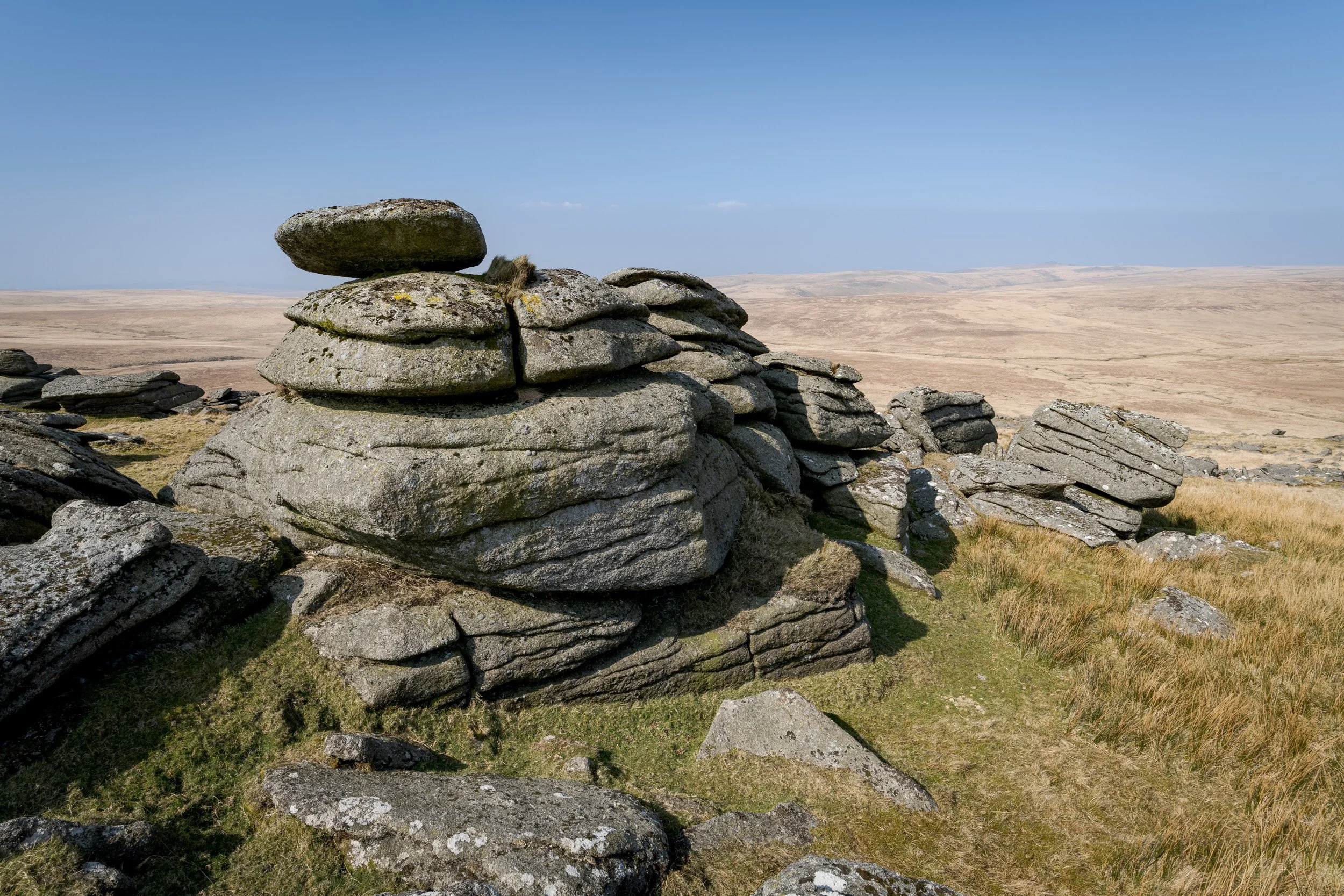


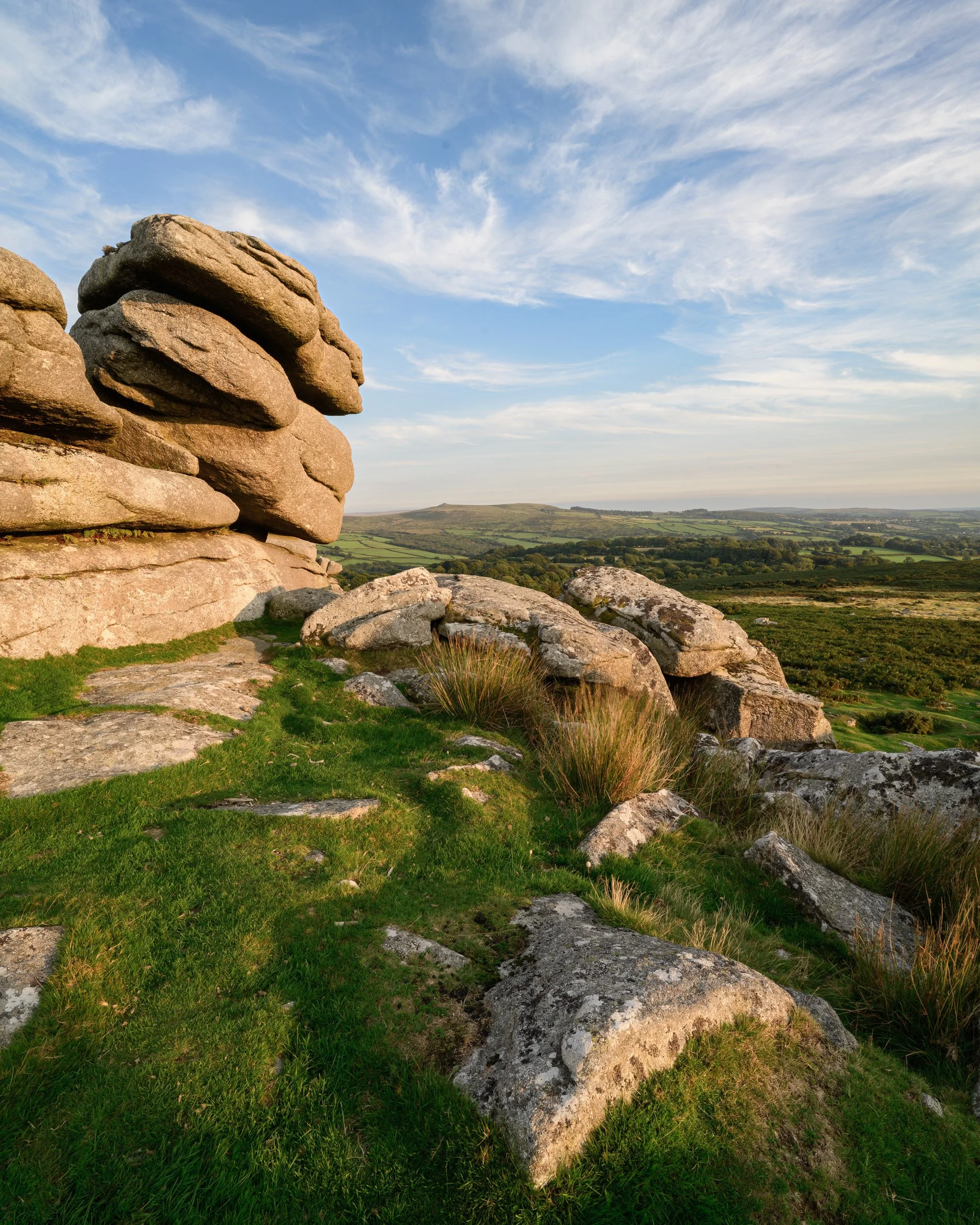


All the locations for these photographs are also featured in my Free Landscape Photography Locations Map.
Acknowledgments
The following text is extracted from the Discovering Dartmoor book, but it’s very much worth repeating here.
My journey across Dartmoor has been one of the most enriching experiences of my life. It’s been full of ups and downs (some literal, some emotional) but one of the highlights has been the people I’ve met along the way. The people that work, live, and relax on Dartmoor.
A special thanks goes to Tom Usher & Kelly Rich from the Dartmoor Preservation Association, Josephine Collingwood, Max Piper, Mark Owen, and Emma Cunis. I can’t thank you enough for giving up your time and talking to me. Without our conversations Discovering Dartmoor wouldn’t be what it is.
Thank you also to Rob Hayward for letting me read from his dad’s book Dartmoor 365 and to Julian Cartwright for giving me permission to use his photograph of a rushlight.
Finally, thanks to my dear friends Ross and Chris. Thank you for your creative support in helping me stay focused on this lengthy project. Most of all, thanks for your friendship during those difficult personal times that accompanied me on my Discovering Dartmoor journey.
All good journeys need good friends.
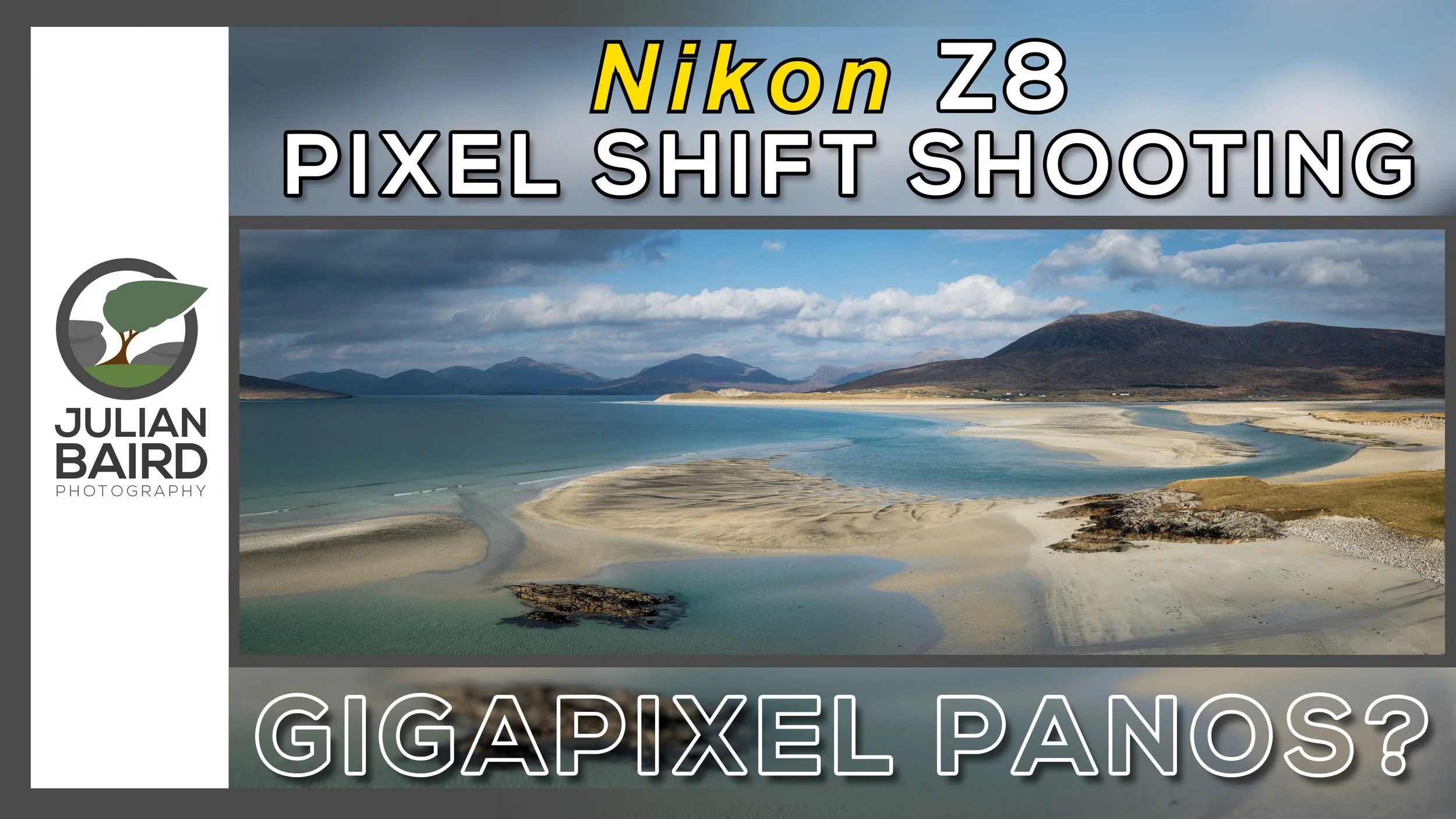
Nikon Z8 Pixel Shift Shooting for Landscape Photography
180 Megapixel raw files and reduced noise are all claims of Nikon’s Pixel Shift Shooting feature, but is it useful to the landscape photographer? In this video I show you how to shoot with Pixel Shift (on location) and how to merge the files in post-processing. I'll also look at the results to see if this is a feature that is useful to landscape photographers.
Learn How and When to Use Pixel Shift Shooting
Pixel Shift Shooting is a feature of the Nikon Z8 that was introduced in Firmware 2.0 (and it shipped with the Nikon Zf). Depending on how you configure it, Pixel Shift Shooting can generate 180-megapixel raw files with better colour reproduction and reduced noise. Sounds like a no-brainer for every shot, doesn’t it?
Well, things are rarely that easy in the world of landscape photography. With Pixel Shift Shooting there’s the risk of too much subject movement during capture (yes, the landscape does move!), there’s the additional storage space required for all the individual raw files, and there’s the additional post-processing required to create a single merged file. Even after all that, does it really make deliver you a better file to process for your landscape photograph?
I was curious to find out if this was just a headline grabbing feature or something of genuine use to the landscape photographer. So, in this rather long video I head out on location to show you how to capture a Pixel Shift sequence, then how to merge the sequence in post-processing to create a .NEFX file, and then I’ll look at the results to see if I can really notice any difference.
I hope you enjoyed this video, and you found the information useful. As I said in the video, I wouldn’t use Pixel Shift Shooting for all my landscape photographs (it has limitations), but the important thing is to know how it works and more importantly when to use it. It’s another tool at my disposal and one that I’m sure to use again in the future.
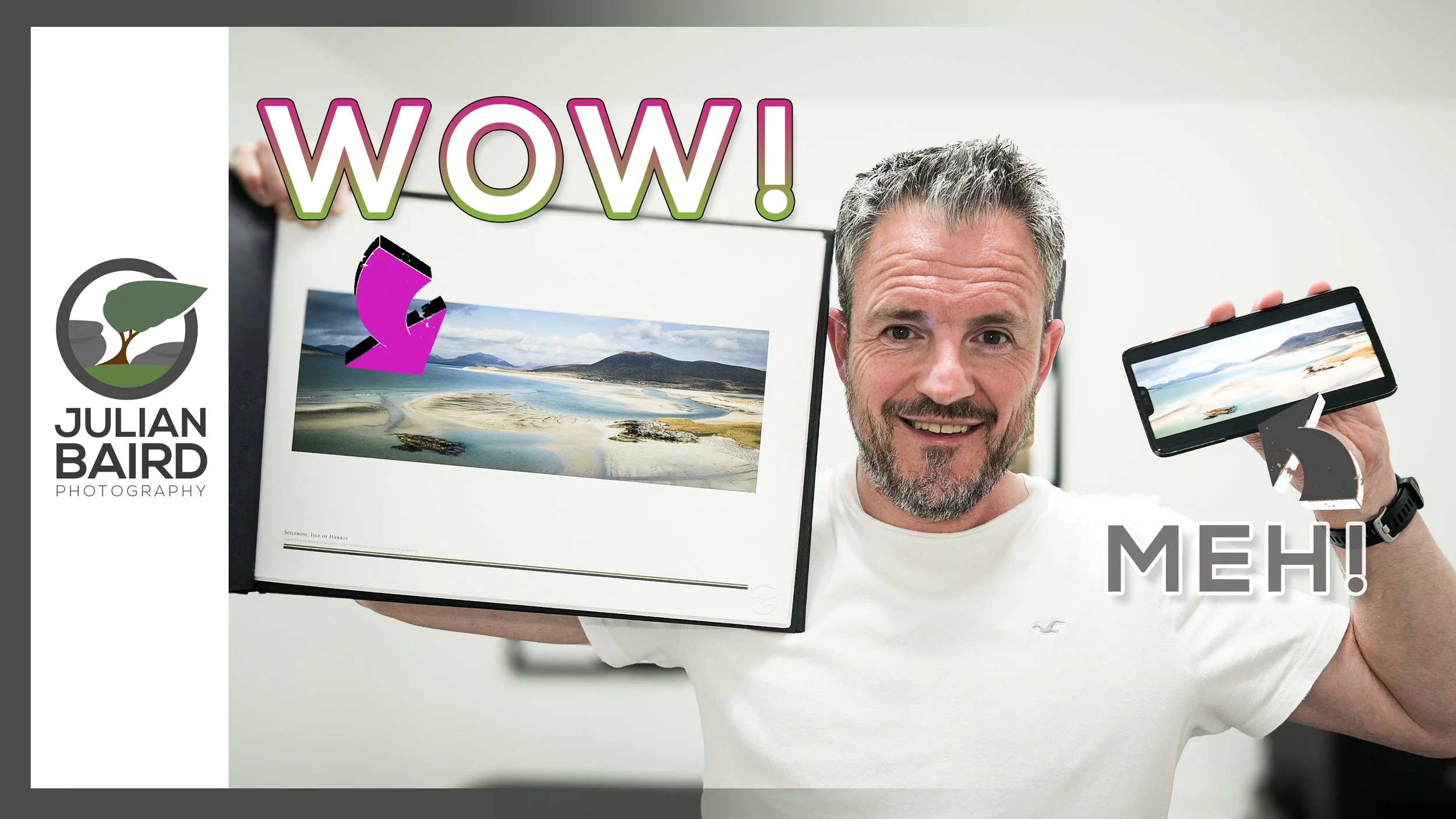
How to Showcase Your Prints with Spring Back Binders
Looking for a way to make your prints stand out? In this video I'll tell you how you can take your prints and present them in a way that will give them a WOW factor! I'll show you how I prepare my landscape photographs for print and then insert them into a Fotospeed Spring Back Binders. The result is the perfect way to showcase your photographs and make anyone looking at them go "WOW!".
Give Your Prints the WOW Factor
Over the years I’ve shared the various ways I display my landscape photography prints. The most impactful is the framed print, but for a larger body of work, a book or zine is also a great choice. Both options have pros and cons.
While I was on Harris & Lewis earlier this year a photographer showed me his portfolio of photographs displayed in a Spring Back Binder from Fotospeed. I was blown away! I thought it was such a wonderful way to view a collection of prints. Being able to look through a collection of hand-crafted prints was amazing. But the best bit, unlike a book or zine, is that you can add or remove prints anytime making it extremely versatile.
As soon as I got home, I knew I wanted to display my Harris and Lewis photographs in this way. So, I got to work editing my photos (not an easy task) and then selecting which photographs would feature in my printed collection. This time though I wasn’t going to print just the photographs, I would create a template that would add text and some of my branding to each print. Just to give it an extra bit of wow!
As I was doing this it occurred to me that I should share what I was doing with you! After all, I know a great many of you also print your photographs so having another option on how you present your prints will be of interest to you. Even if you don’t print your photographs, maybe this will inspire you to do so once you see some of the amazing things you can with them.
So let me show you how I prepare, print and present my photographs to give them the WOW factor.
I hope you enjoyed this video and if you have any questions or comments, please do let me know below.
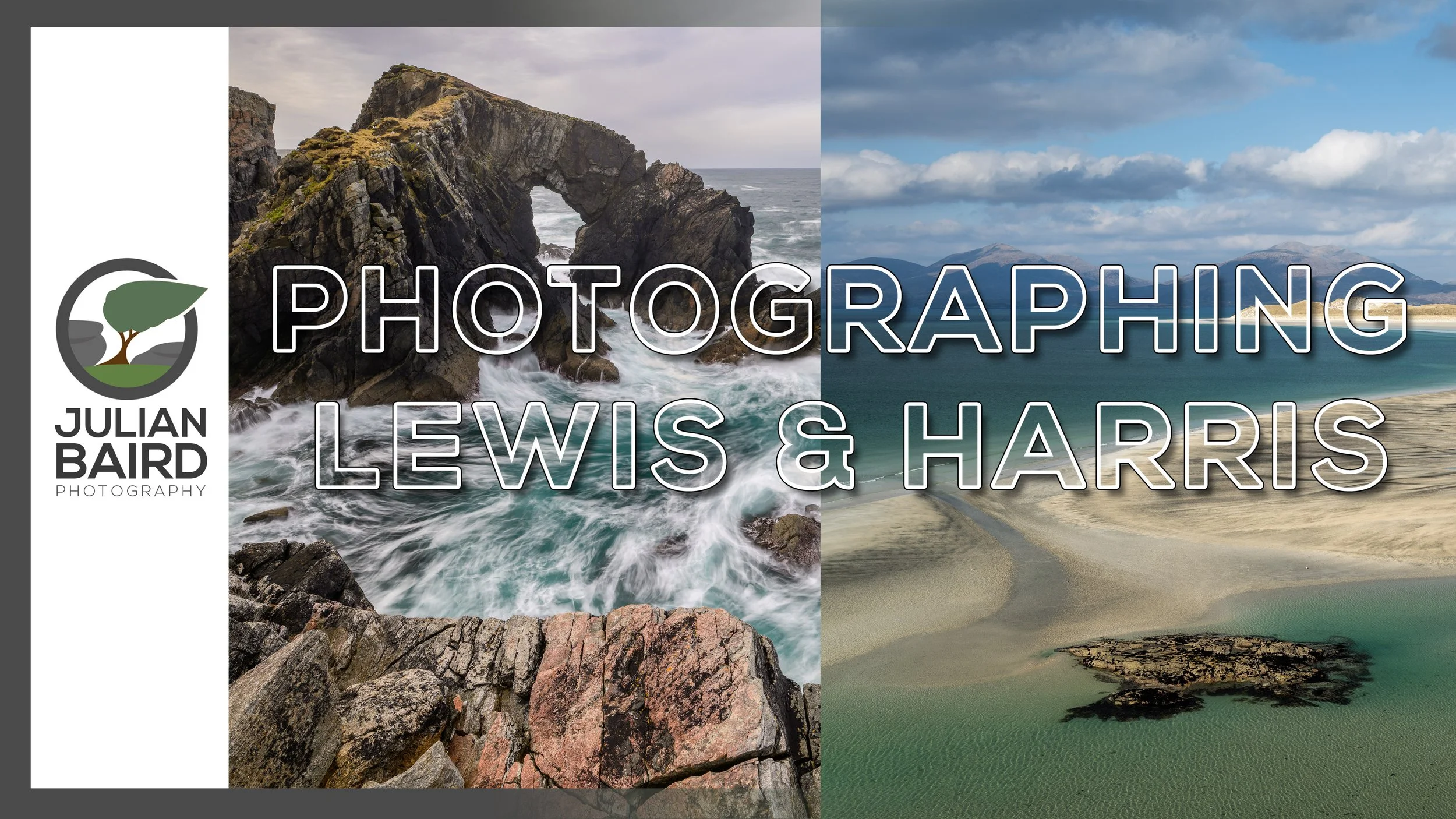
Photographing Scotland's Most EPIC Landscapes - The Isles of Harris and Lewis
What if I told you there was a photography location that has everything? Somewhere that will inspire your creativity, provide you with a sense of calm, but also excite you with a rich variety of subjects to photograph. And all this in on a small Scottish Island. Welcome to The Outer Hebrides!
A Return to the Ultimate Landscape Photography Location in the UK
Back in 2018 I made my first visit to The Outer Hebrides and the Isles of Harris and Lewis. From the moment I visited my first location and stood on the beach at Luskentyre I knew this place would capture my heart (photographically speaking). I spent the next week exploring and photographing some of the most spectacular and amazing scenery I had ever seen in the UK. As soon as I left, I wanted to go back. And go back soon.
However, as most you will know, life has a funny habit of getting in the way of such grand plans and it would be nearly 6 years before I was able to return. My memories of that amazing island didn’t fade over that time and I told anyone that would listen that they must also visit Harris & Lewis, even if they weren’t a photographer.
So, when an opportunity presented itself to return to this magical island I jumped at the chance. Not even a two-day road trip was enough to put me off reaching my Hebridean destination.
The problem with setting high expectations is that it can often lead to disappointment. Surely the Isles of Harris & Lewis wouldn’t do that to me? Though I didn’t film at every location I photographed, I hope this video will give you an idea of what it was like there. Was I disappointed or am I already thinking about going back? Enjoy!
Landscape Photographs of Harris and Lewis
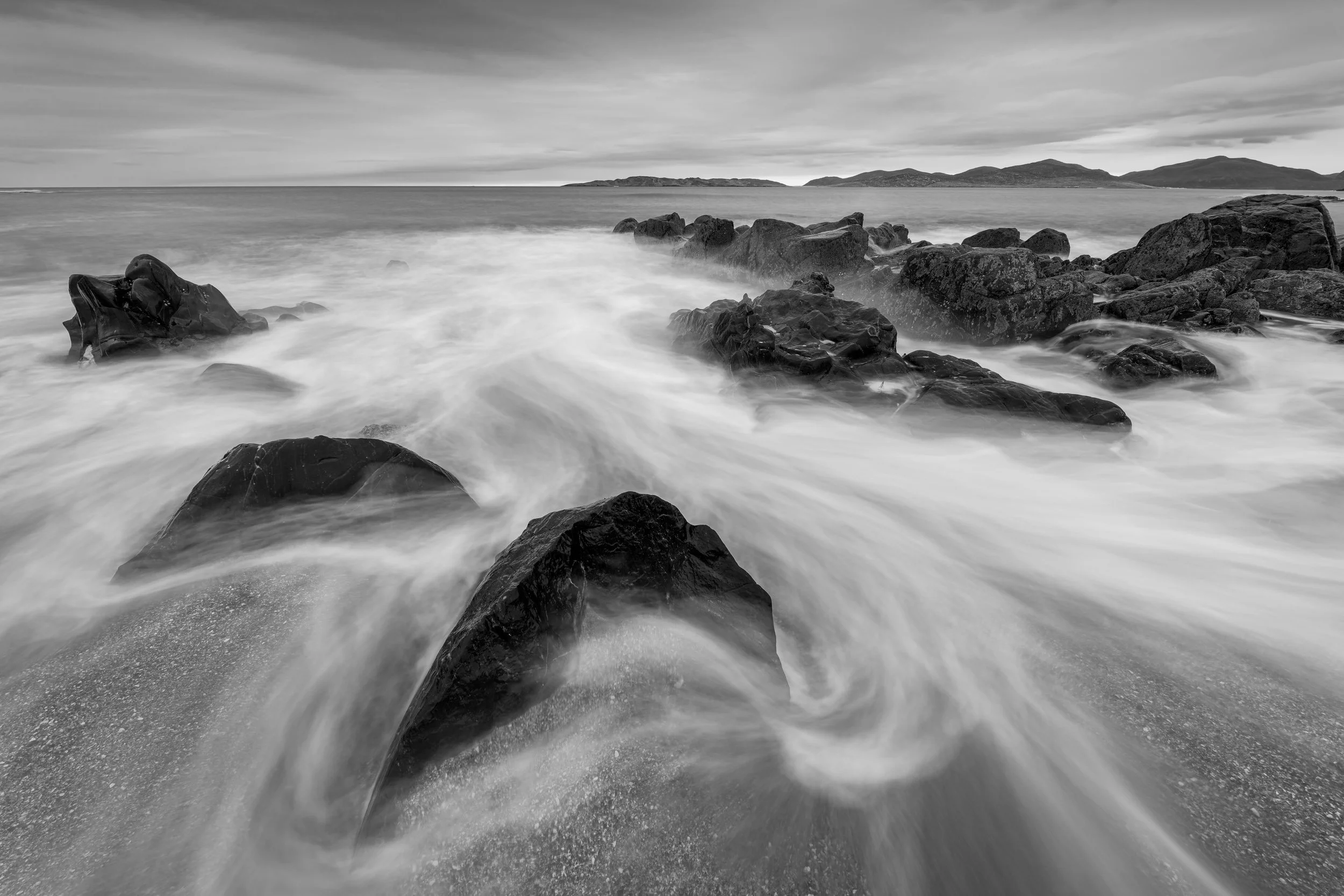
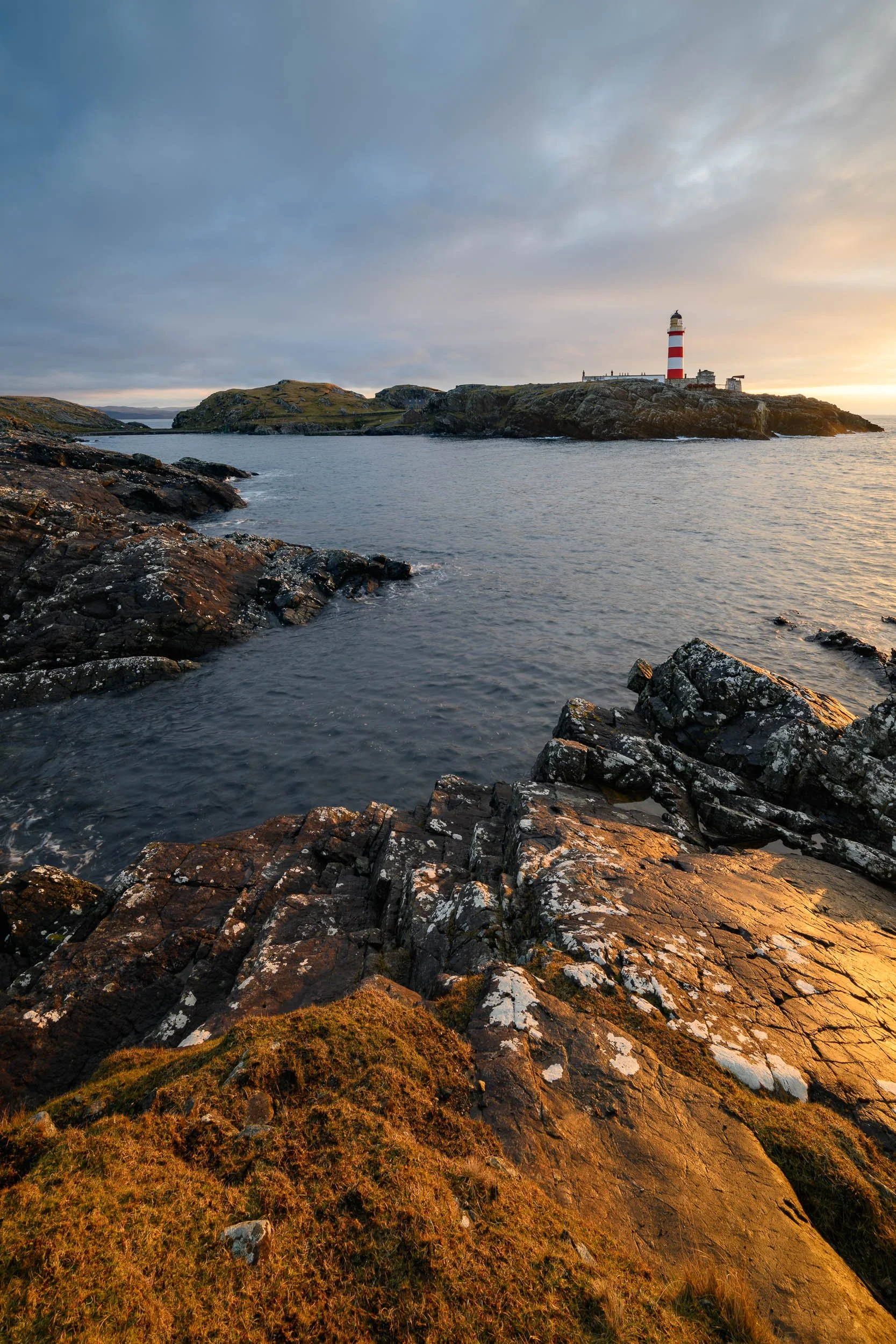
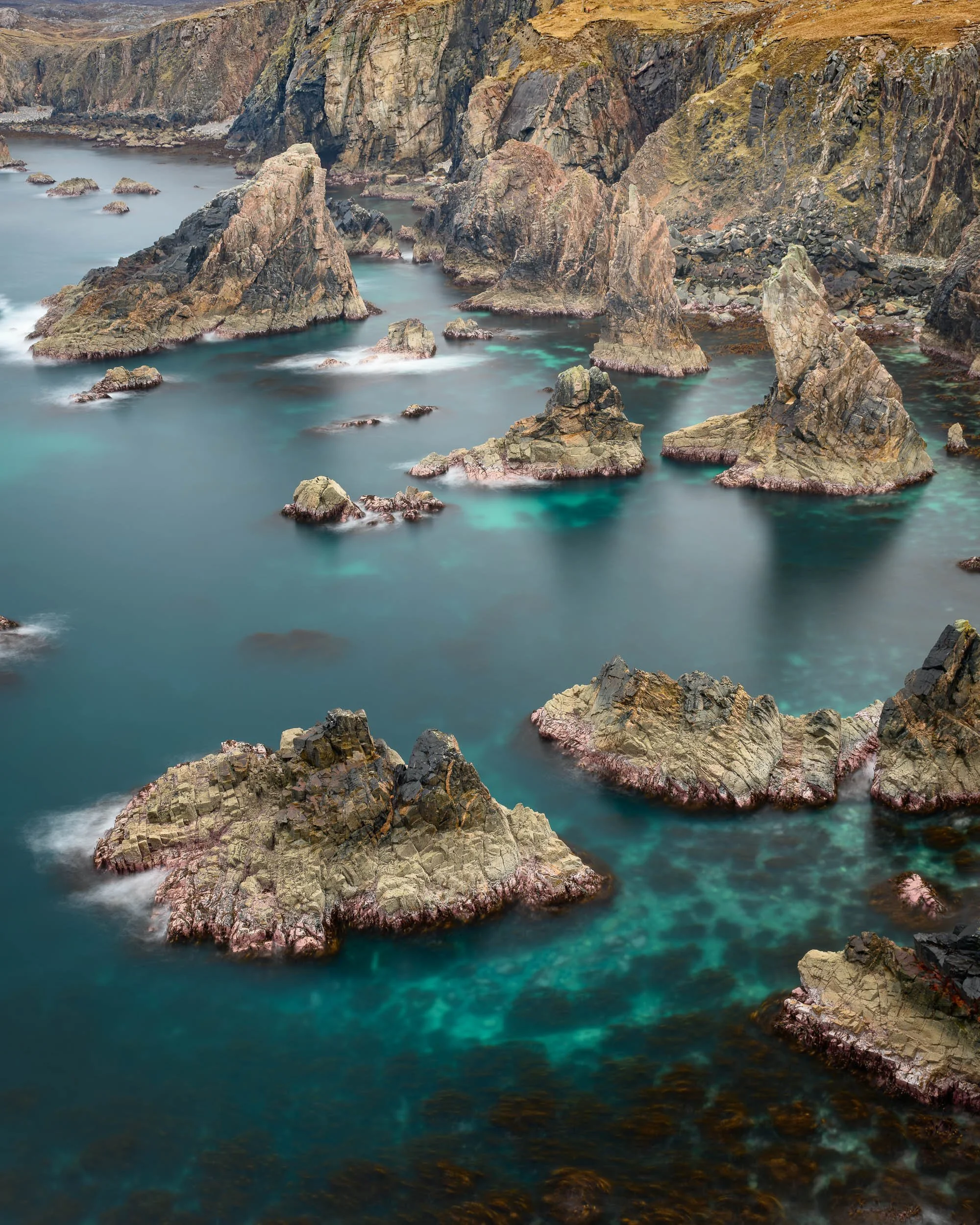
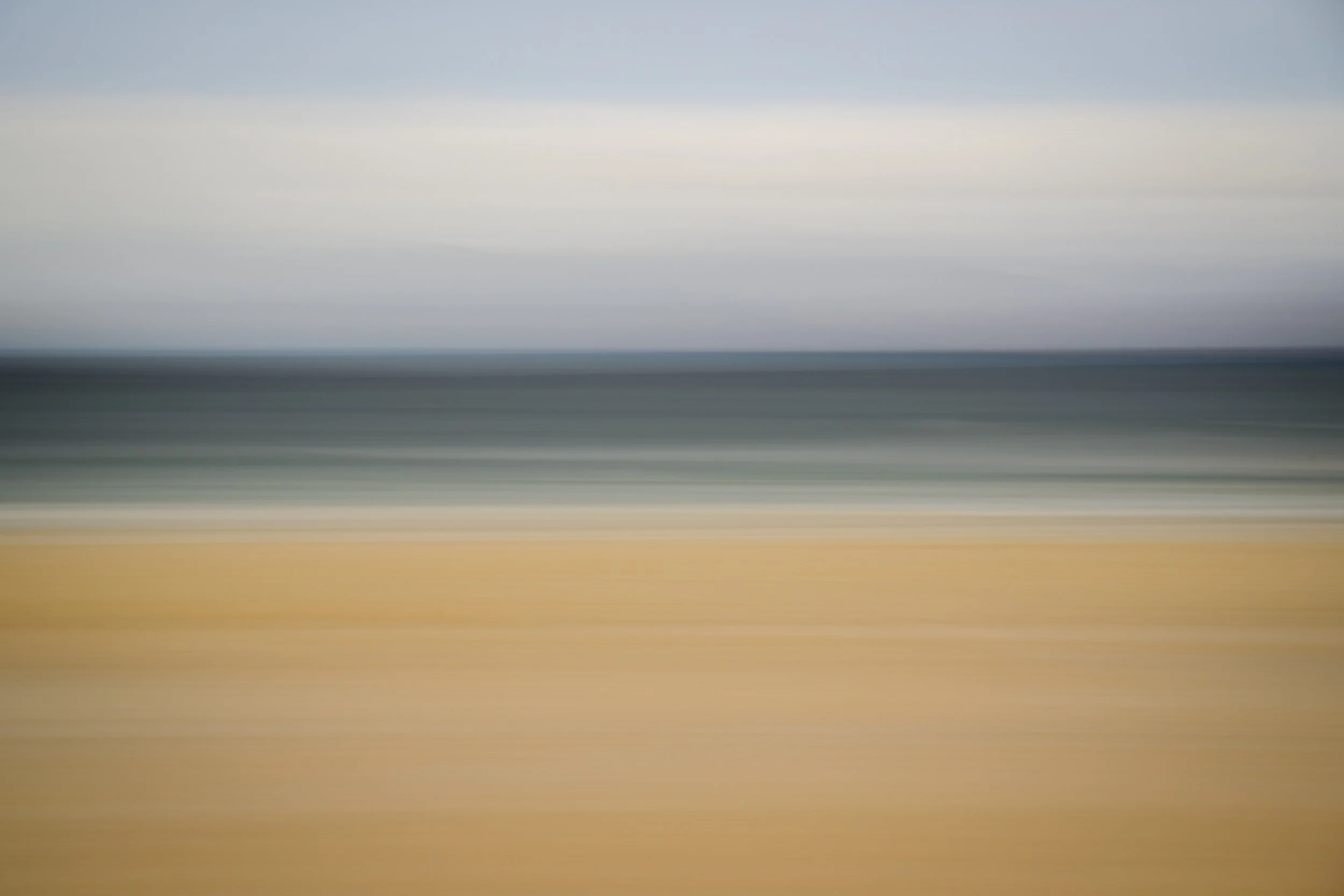
Here are the landscape photographs that you saw in the video. I captured and processed about twice as many, but I had to draw the line somewhere!


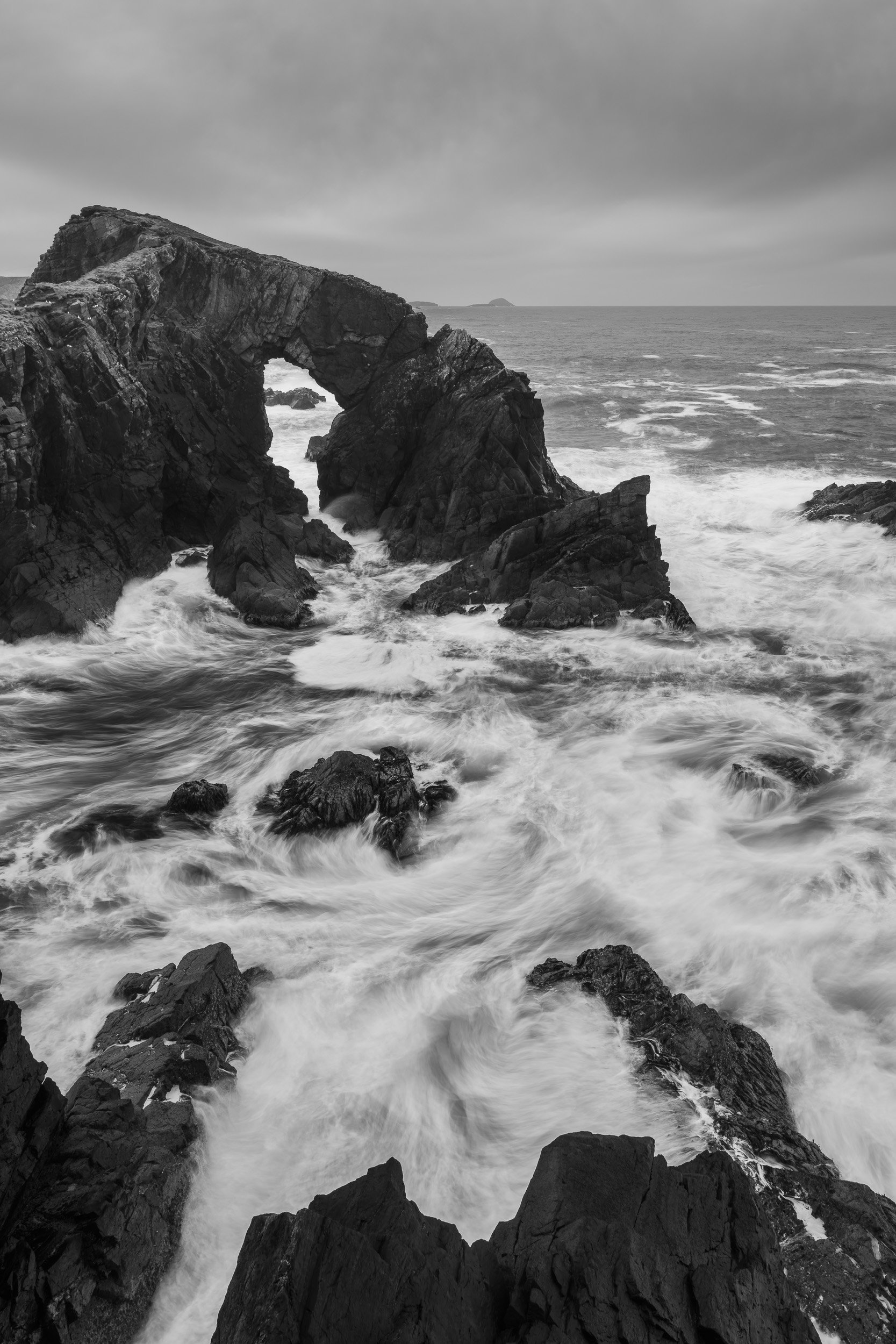










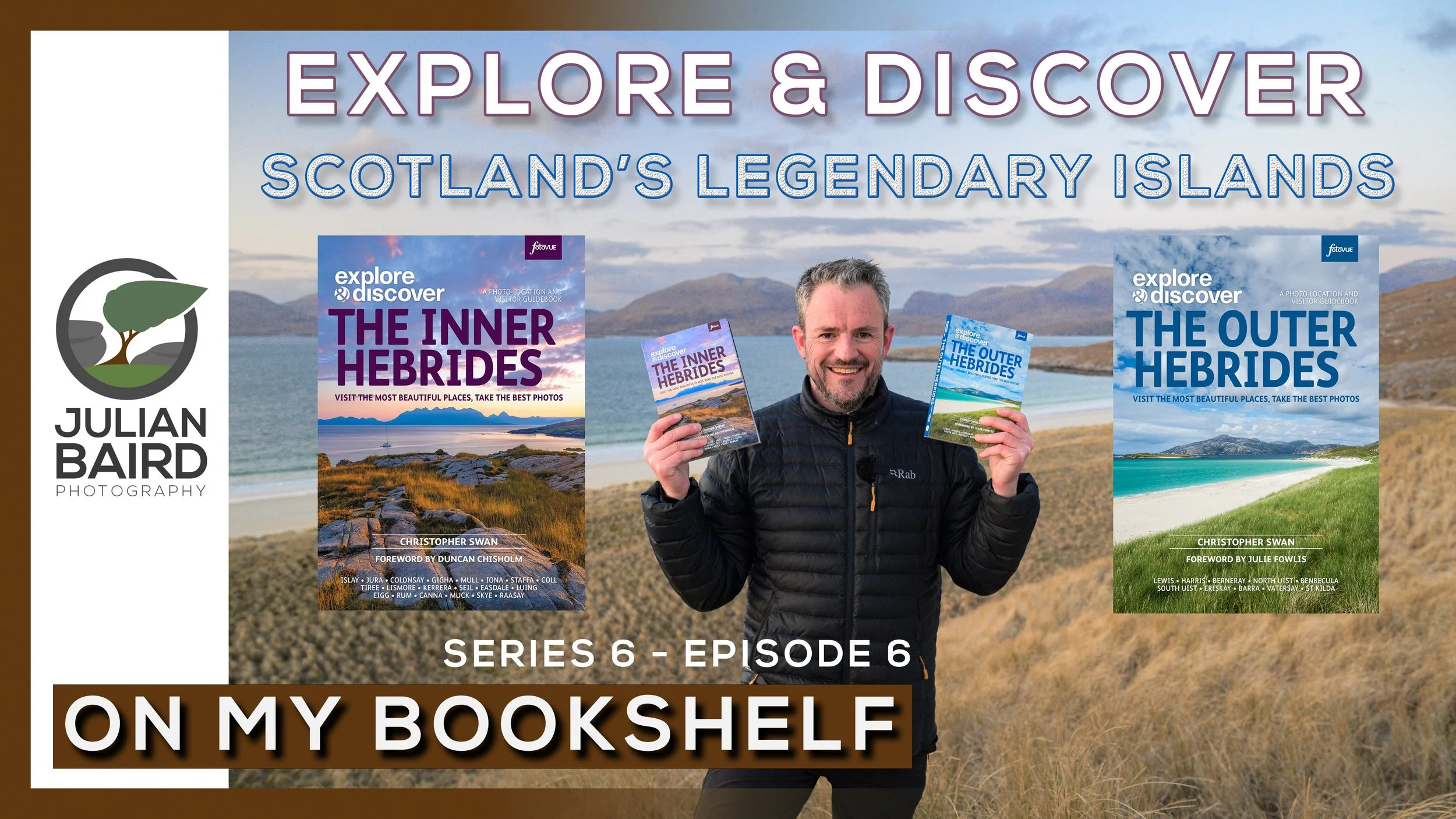
Explore & Discover the Outer and Inner Hebrides published by fotoVUE - On My Bookshelf S06E06
The Scottish Hebrides is a photographer’s paradise but with so much to see and to photograph, it can be hard to know where to start. Explore & Discover the Inner Hebrides and the Outer Hebrides by Christoper Swan and published by fotoVUE aims to transform your time in the area from random chaos to an efficient voyage of discovery and exploration.
In this special on-location edition of On My Bookshelf, I put Explore & Discover The Outer Hebrides to a real-world test to see if it can get me to a new location so I capture a photograph of the Isle of Harris.
Photographing the Best Locations in the Hebrides
I purchased my first fotoVUE title (Photographing the Lake District) in 2017 and ever since then I’ve been regulary adding these location guides to my bookshelf. Some of them I use on a regular basis, some every now and again, and there are some I have yet to utilise (though I will get those places one day!).
When I found out that fotoVUE were publishing two new titles, Explore & Discover The Inner Hebrides and Explore & Discover The Outer Hebrides, I was very excited as it couldn’t have come at a better time. The publishing of these books would be just before I headed off to the Harris & Lewis for the 2nd time. From my previous experience of using fotoVUE guidebooks I knew they would be a fantastic resource to help me discover new locations and explore further the locations I had visited last time.
As well as producing my primary video for my photography adventure on Harris & Lewis, I thought the release of these two books on the Hebrides would make for a great episode of On My Bookshelf. Best of all, as I would be on Harris and Lewis, I could produce the video on-location and show you how useful these fotoVUE guidebooks can be through a practical example!
So, sit back, relax, and see how I used the book to find a viewpoint on Harris that I had not photographed before.
Buy fotoVUE Explore & Discover Books
✔️ Use the discount code JULIAN to get 20% off all books at fotovue.com .
💳 You can purchase Explore & Discover The Outer Hebrides, The Inner Hebrides, and Scotland, here - https://fotovue.com/shop/
Please note - the discount code does not work on pre-orders or on the "both books bundle" for Inner and Outer Hebrides as the bundle is already discounted.
By using this discount code I may receive a commission for the sale. This has no effect on the price for you.
Harris Location 1, Luskentyre Beach
Here are the photographs that I captured in the video. In the book it’s viewpoint 3, Tràigh Rosamol Dunes.
Tràigh Rosamol Dunes #1, Luskentyre, Isle of Harris - Nikon Z8, Nikkor Z 24-120mm f/4 S at 48mm, f/13, 2 minutes at ISO 200, 16:9 crop.
Tràigh Rosamol Dunes #2, Luskentyre, Isle of Harris - Nikon Z8, Nikkor Z 24-120mm f/4 S at 33mm, f/14, 1.6 seconds at ISO 400.