
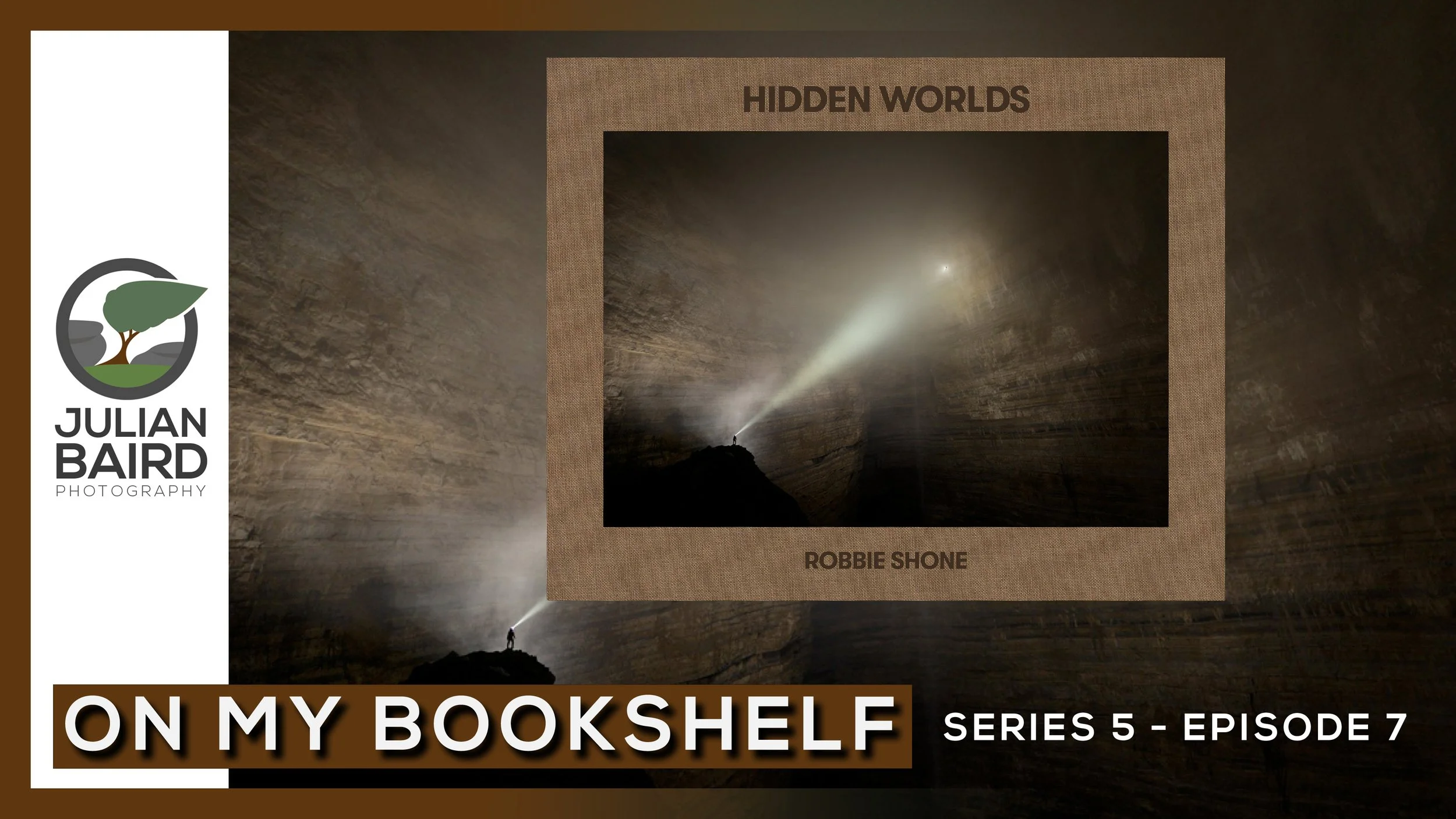
Hidden Worlds by Robbie Shone and Published by Kozu Books - On My Bookshelf S05E07
Would you be willing journey 2000m below the surface of the earth to capture a photograph? Fortunately for us there are photographers like Robbie Stone who have made the exploration of caves their life. In his book, Hidden Worlds, Robbie shares some the images he has captured over the last 20 years. Is this a book for your bookshelf?
A Journey to the Centre of the Earth
When you think about photographing the landscape you will likely think of mountains, rivers, forests, clouds sunlight. But I would imagine few of us consider photographing the landscape that is below the surface of the earth! And why would we. It’s cold, claustrophobic, dangerous and most importantly there’s no light!
For photographers like Robbie Shone though, what lies beneath our feet is a world of adventure and discovery, and a world that must be photographed. In his book, Hidden Worlds, Robbie shares some of the photographs he has captured over the last 20 years exploring the deepest, longest, and largest caves in the world.
This book offers a view into a fantastical world that most people will never see, but is it a book for your bookshelf?
You purchase a copy of Hidden Worlds by Robbie Shone directly from Kozu Books - https://www.kozubooks.com/books-new/hidden-worlds-by-robbie-shone
Photographing One of Scotland's Hidden Waterfalls
Scotland has many famous and majestic waterfalls, but for the landscape photographer willing to do a bit of exploring, there are also a few hidden gems. Join me in this 5 Minute Photo Adventure where I photograph one of those hidden gems near the coastal town of Oban in West Scotland.
A Very Wet and Challenging Photography Adventure
There’s not much Scotland doesn’t offer the adventurous landscape photographer. It has mountains, lochs, coastline, woodlands, and waterfalls. Some of those waterfalls have a lot of grandeur and are well known. There are also a few hidden gems. Not that hard to get to, but you need to know where they are.
There is one such waterfall near the town of Oban in West Scotland where I grew up. It’s been on my list of places to photograph for many years but it’s only on my most recent visit to Scotland that I’ve finally taken the chance to photograph it.
When I arrived at the waterfall though, it was in full flow, and it was raining. I shouldn’t have been surprised though. It is Scotland! With so much water in the air, it turned out to be one of the most challenging photographs I’ve ever captured. But I must admit, it was still a lot of fun!
Watch me get wet and take some photographs of this hidden gem of a waterfall in my latest 5 Minute Photo Adventure.
Landscape Photographs of Oban’s Hidden Waterfall
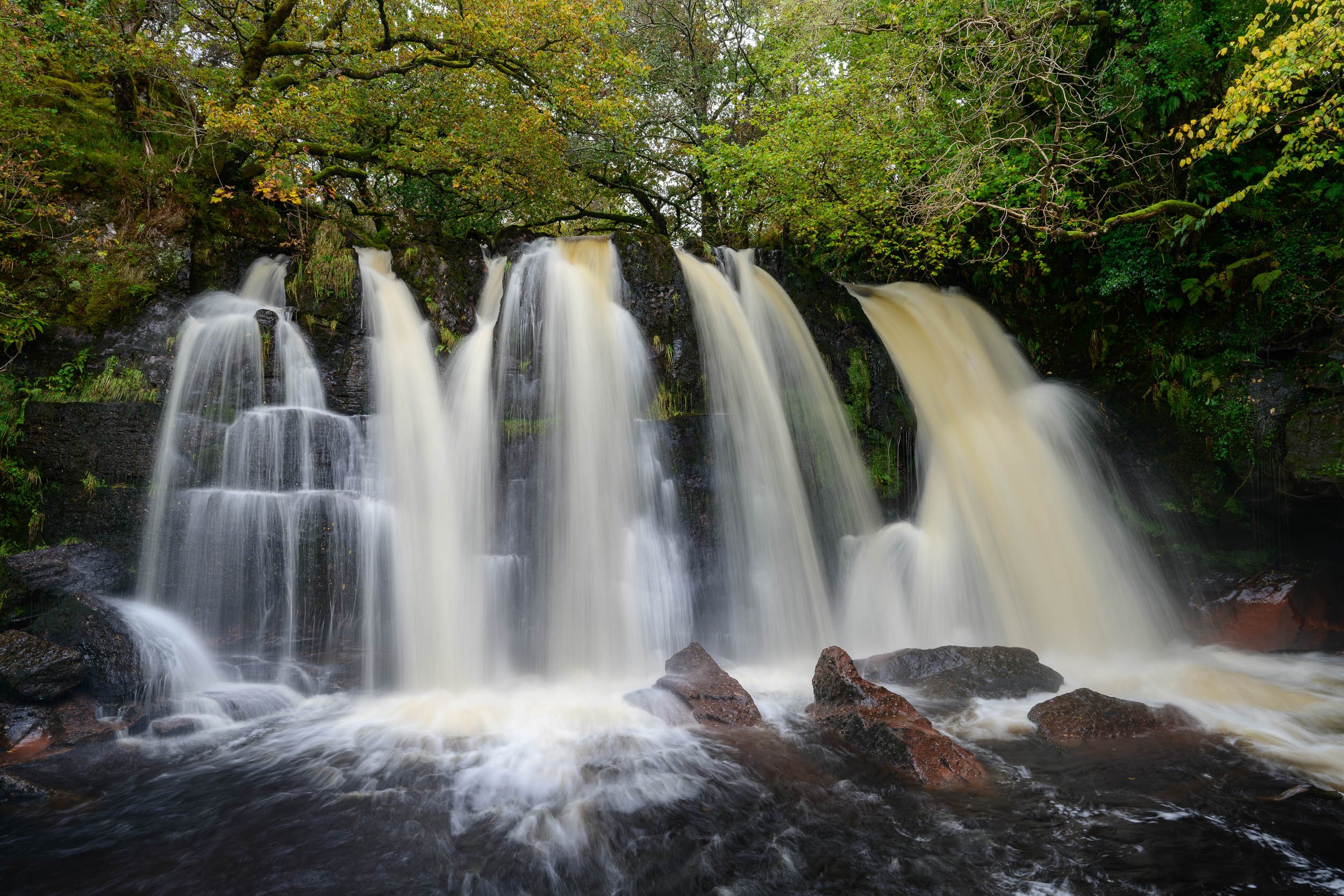
Waterfalls #1, Oban, Scotland - Nikon Z7, Nikkor 14-30mm f/4 S at 21mm, f/13, 0.4 sec at ISO 50, Kase Filters CPL.

Waterfalls #2, Oban, Scotland - Nikon Z7, Nikkor 14-30mm f/4 S at 16mm, f/13, 0.4 sec at ISO 50, Kase Filters CPL.
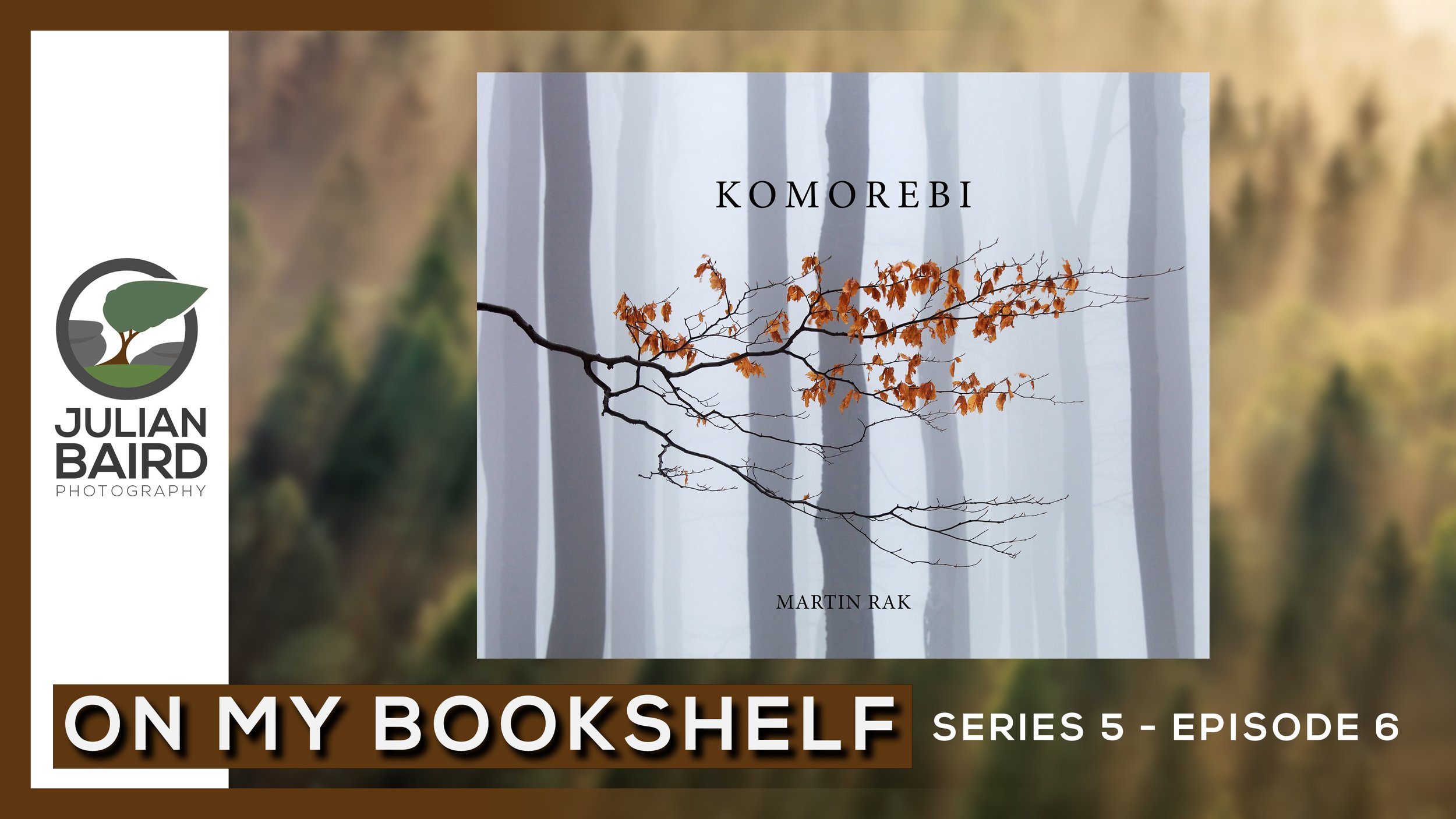
Komorebi by Martin Rak and Published by Kozu Books - On My Bookshelf S05E06
Komorebi is a book that takes you on a journey into the world of trees, forests and woodland landscapes. But is Martin Rak's book of his favourite woodland images from the last 10 years a book for your bookshelf?
Sunlight Filtering Through the Trees
The team at Kozu Books have a great track record of publishing high quality photography books from a diverse range of photographers. I’ve reviewed some of these books in previous episodes of On My Bookshelf and you can watch those in this handy playlist.
Expanding on their lengthy list of titles, they now bring us Komorebi by Martin Rak. Martin is an award-winning photographer from the Czech Republic. The book features his favourite woodland photographs from the last ten years. The book title, Komorebi, is a Japanese word which roughly translates to “sunlight filtering through trees”. While this is a great summary of the photographs in this book, there is so much more to discover as I find out in the latest episode of On My Bookshelf.
You purchase a copy of Komorebi by Martin Rak directly from Kozu Books at - https://www.kozubooks.com/books-new/komorebi-by-martinrak
Photographing Glencoe and Vallerret Base Layers
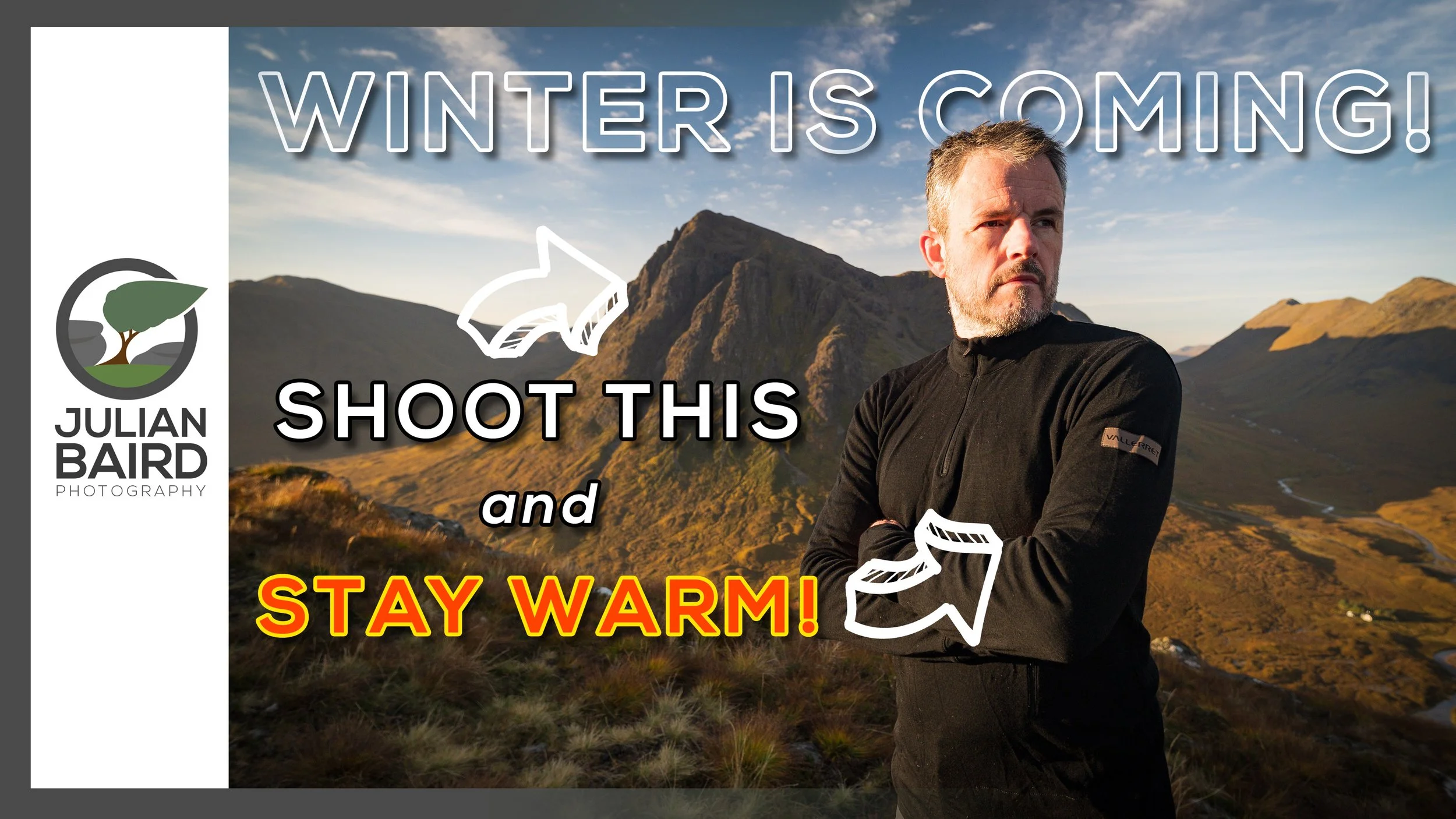
There are few better places to visit as a landscape photographer than Glencoe in Scotland. However, at this time of year, the temperatures can be low enough to make any unprepared photographer give up and go home. In this video, I will share the joy of landscape photography at one of Glencoe's most famous viewpoints and I also try out Vallerret's new range of merino wool base layers.
Scotland at Its Very Best
Photographers are attracted to Glencoe for all sorts of reasons. One of the biggest reasons is that there are so many amazing viewpoints that are easy to access. There are some great photographs to be captured from either your car or with just a short walk. However, for those photographers willing to be a little more adventurous there are almost limitless opportunities, especially if you chuck the variable weather into the mix.
One such viewpoint is an elevated view of Stob Dear (Buachaille Etive Mòr). It’s always been a favourite of mine and I find it hard not to photograph it if I’m visiting Glencoe. On my most recent visit, the forecast was predicting lots of fog, and I had high hopes of a temperature inversion, and even though this didn’t occur, it was still an amazing morning of photography.
Keeping Warm with Vallerret Base Layers
While it might have been a sunny day on Glencoe, it was far from warm. The lower temperatures did therefore give me the chance to share my thoughts on Vallerret’s new range of merino wool base layers. You will be familiar with Vallerret’s range of photography gloves, and I have previously featured them in my videos. I suffer from cold hands and for me, my photography gloves are as important as my camera. I’ve had a few trips out with the camera ruined because I’ve been cold and miserable.
With winter just around the corner, the release of these new base layers from Vallerret was good news to me and I was happy to put them through their paces during my adventures in Scotland. You can learn more about them and hear my thoughts on them in the video below.
If you’d like to purchase any of these base layers you can do so directly from Vallerret right here.
Landscape Photographs from Glencoe
Buachaille Etive Mor (Stob Dearg) at Sunrise, Glencoe, Scotland - Nikon Z7, Nikkor 14-30mm f/4 S at 21mm, f/11, 1/5 sec at ISO 64.
Glencoe Valley at Sunrise #1, Glencoe, Scotland - Nikon Z7, Nikkor 14-30mm f/4 S at 21mm, f/11, 1/5 sec at ISO 64.
Glencoe Valley at Sunrise #2, Glencoe, Scotland - Nikon Z7, Nikkor 14-30mm f/4 S at 14mm, f/11, 1/13 sec at ISO 64.
Vallerret Base Layers on Location
Those Vallerret base layers were warm enough and comfortable enough to allow me to take these on location photographs. I don’t think modelling is my strong point though. Perhaps I’ll stick to photography!

Vallerret Merino Wool Zip Jersey.

Vallerret Merino Wool Long Sleeve Tee

Dolomiti Dreamscapes by Sam Gregory - On My Bookshelf S05E05
On My Bookshelf is back and, in this episode, I'm looking at Sam Gregory's 2nd book, Dolomiti Dreamscapes. The book is a personal collection of images inspired by Sam's travels around the Dolomites. But is this book of unique photographs of the Dolomites a book for your bookshelf?
On My Bookshelf is Back!
After a short break, I’m pleased to announce that On My Bookshelf is back! Over the last month, I’ve been stocking my bookshelf with lots of exciting titles from Kozu Books and fotoVUE. However, before I share with you my thoughts on that lot, let’s talk about a very exciting book from Sam Gregory.
A Dream Within a Dream
If you’ve been watching On My Bookshelf for a while, you may remember that back in 2020, I looked at Mesozoic by Sam Gregory. It was a book I thoroughly enjoyed, so when Sam announced he was publishing a new book called Dolomiti Dreamscapes, I need no encouragement to get the credit card out and order one.
Now that I have the book, what is it like? Is it a good addition to my bookshelf? Let’s find out in the latest episode of On My Bookshelf.
I hope you enjoyed this episode of On My Bookshelf, and if you want to pick up a copy of this book, you can order one direct from Sam’s website - samgregory-photography.com/dreamscapes-book
But don’t wait too long. Production is limited to 200 copies!
Other Books to Inspire You
Check out some of the other books I have on my bookshelf.





Landscape Photography from Dartmoor - A 5 Minute Photo Adventure
I'm back!!! After taking some time to work on a photography project, I'm back producing videos for YouTube. To kick things off I head to one of my closest tors where I get some unexpected, but very welcome conditions.
An Exciting Return to YouTube
It’s been three months since I’ve shared any videos or posted anything on my blog, so it is with a natural sense of excitement that I’m sharing a new 5 Minute Photo Adventure with you! In the video, I will tell you a little bit about what I’ve been up to and what’s coming up over the next few months on my blog and channel.
Most importantly though, I share with you the experience of being on location and capturing landscape photographs of Dartmoor. This is something I’m passionate about! So, grab yourself a cup of coffee and join me on my latest 5 Minute Photo Adventure.
Landscape Photographs from Rippon Tor
Rippon Tor Sunrise Panoramic, Dartmoor, Devon - Nikon Z7, Nikkor 24-120mm f/4 S at 54mm, f/8, 1/30 sec at ISO 64, 6 image panoramic stitch.
Rippon Tor Sunrise #1, Dartmoor, Devon - Nikon Z7, Nikkor 14-30mm f/4 S at 18mm, f/13, 1/4 sec at ISO 64.
Rippon Tor Sunrise #2, Dartmoor, Devon - Nikon Z7, Nikkor 14-30mm f/4 S at 23mm, f/13, 0.4 sec at ISO 64.
Photography and Wild Camping on Dartmoor with the Lowepro PhotoSport Backpack PRO AW III
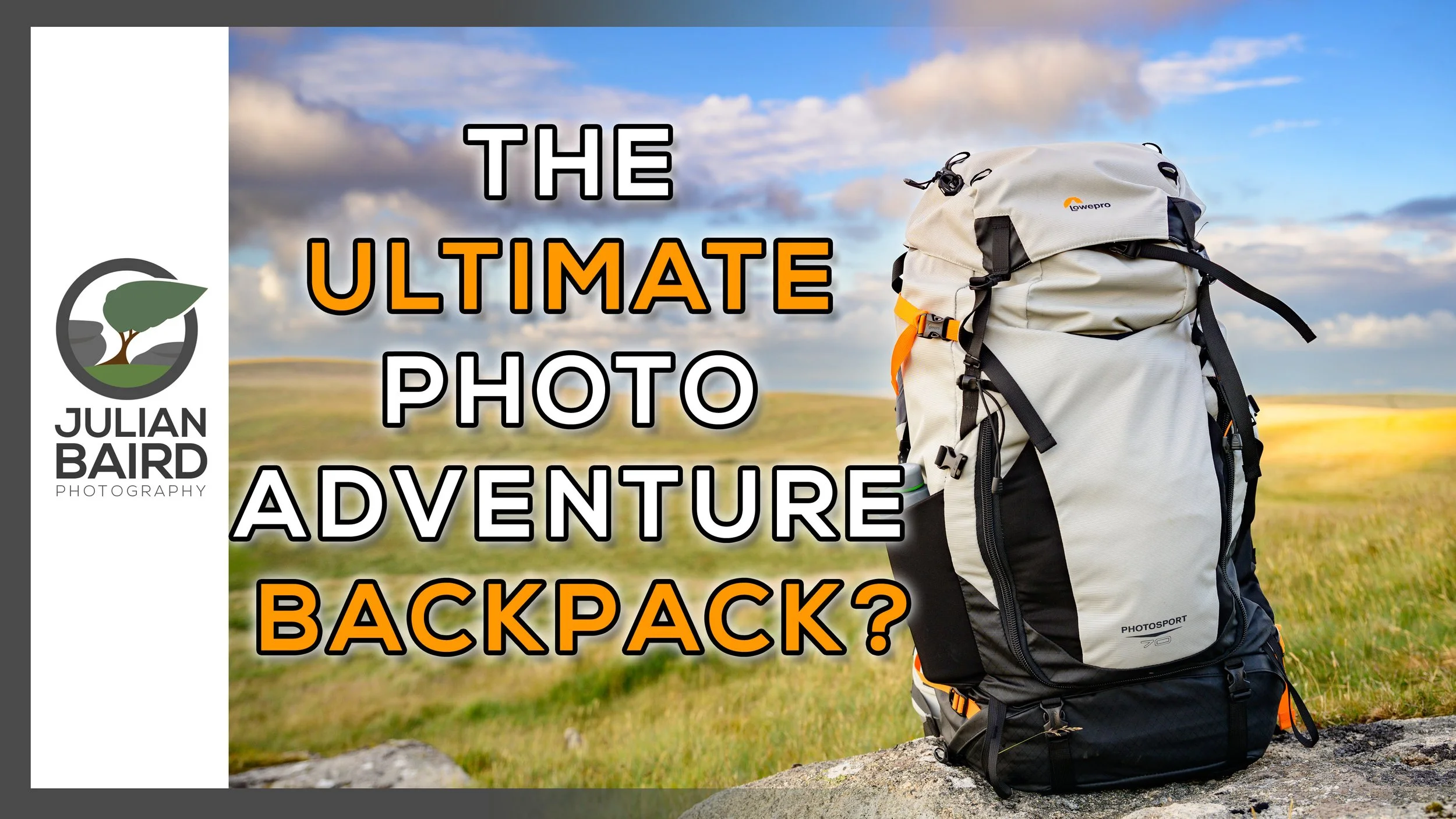
Is there a backpack designed for photographers & videographers that can also be used on multi-day hikes, adventures, and wild camping? Lowepro thinks they have one with the PhotoSport Backpack PRO AW III. In this video review, I put it to the real-world test by taking it on a landscape photography and wild camping adventure on Dartmoor.
A Bag for My Wild Camping Photography Adventures
As you may have read recently on my blog, I have taken the bold step into the world of wild camping. Not only does this change the way I can approach my photography, but it also means I need to carry a lot more gear. My dedicated camera bag doesn’t have the capacity to carry sleeping bags, tents, and overnight provisions.
In a stroke of luck, as I was having a look around the internet for possible bag options, Lowepro got in touch and asked if I wanted to test out one of their PhotoSport Backpack Pro AW III bags! If I hadn’t taken up wild camping I would have said no, but as I had a real need for a bag like this, I knew I could put it to good use and produce a video review based on real-world experience.
In the video below, you can join me as I take landscape photographs of Dartmoor, share with you the joy of wild camping and hear all my thoughts on the Lowepro bag.
If you want to purchase this bag you can do so here:
Watch this before you buy so you can see how the bag fits - https://youtu.be/fm228Mn78CY
Landscape Photographs from Dartmoor
Belstone Tor, Dartmoor - Nikon Z7, Nikkor 14-30mm f/4 at 20mm, f/11, 1/60 sec at ISO 64.
Oke Tor, Dartmoor - Nikon Z7, Nikkor 14-30mm f/4 at 17mm, f/11, 1/60 sec at ISO 64.
Steeperton Tor #1, Dartmoor - Nikon Z7, Nikkor 14-30mm f/4 at 30mm, f/11, 1/50 sec at ISO 64.
Steeperton Tor #2, Dartmoor - Nikon Z7, Nikkor 14-30mm f/4 at 24mm, f/11, 1/15 sec at ISO 64.

A Slightly Random Collection of Photos from Devon
It’s a shame to have captured a photograph and not to publish it, so I’ve gathered up a few orphan photographs to share with you on this blog post.
Here and There
I try to get out with my camera as much as possible. More often than not I go out with purpose. What I mean by that is that I’m hoping to capture a specific image or create a video. Sometimes though I just go out because I want to. I just go for a wander, with my camera, to see what I can see.
Normally these wonderings do end up forming the basis of a blog post as there is a story to tell about that photography adventure. Now and again, I come away with nothing much more than a photograph. Without a story to share on a blog post or video to produce, these photographs are processed but are then left in Lightroom.
This to me seems a real shame. If I’ve gone to the effort of capturing a photograph, and then processed it, why not share it with the world. In this blog post, I’m going to share with you a few of those orphaned images that I’ve found in my Lightroom catalogue recently.
Higher Tor
I captured this image of Higher Tor after originally photographing the location for a project that I’m working on. Despite Higher Tor just being a short distance away from Belstone Tor (a location I photograph a lot), I’d never made the effort to photograph until recently.
Higher Tor, Dartmoor - Nikon Z7, Nikkor 14-30mm f/4 at 17mm, f/11, 0.6 sec at ISO 64.
Bowerman’s Nose
Bowerman’s Nose needs no introduction being one of Dartmoor’s most unique tors. When I captured this photograph, I was out for a dog walk. I had my Nikon Z fc and kit lens, but the light was too good not to try and capture an image.
Bowerman’s Nose, Dartmoor - Nikon Z fc, Nikkor 16-50mm f/3.5-6.3 VR at 16mm, f/8, 1/80 sec at ISO 100.
Dawlish Warren
I have photographed Dawlish Warren more times than I can remember, but it can still throw something unique at you. On this occasion it was fog. Something in all my years visiting Dawlish Warren beach I’d never seen before. I completely changed the feeling of the place, and I was able to capture some unique images of the beach.
Dawlish Warren, Devon - Nikon Z7, Nikkor 14-30mm f/4 at 18mm, f/8, 3 sec at ISO 64.
Dawlish Warren, Devon - Nikon Z7, Nikkor 14-30mm f/4 at 19mm, f/8, 1/100 sec at ISO 250.
I hope you enjoyed this slightly random collection of photographs. I must have another look through my Lightroom catalogue to see if there are any other hidden gems in there.
A Landscape Photography Project to Capture the Changing Seasons
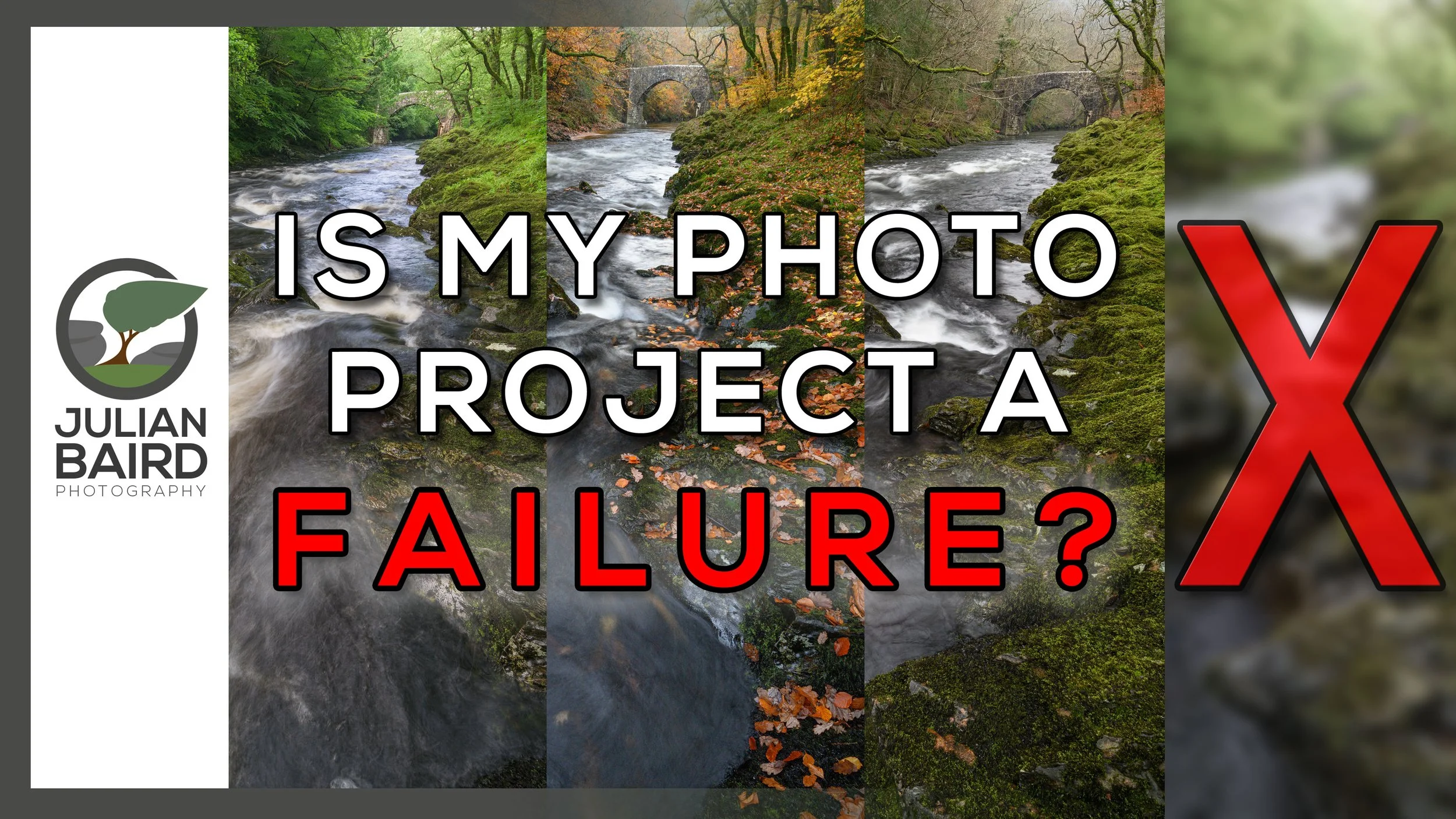
Each season offers the landscape photographer something unique and wonderful. One of the best ways to discover those changes is to photograph the same location every season. Sounds like a great idea for a photography project, doesn't it? I thought it was, so I decided to photograph Holne Bridge on Dartmoor during summer, autumn, winter and spring. However, things didn't turn out how I expected them to.
The Value of Photography Projects
Undertaking a photography project can be a big commitment. In 2019 I began a yearlong photography project to capture a photograph every month from the same location and despite the tight brief, I still found it challenging. But a photography project should be challenging, shouldn’t it? I am also in the middle of my biggest ever photography project and despite 12 months passing by, I don’t feel like I’m making any significant progress.
Despite what I’ve said, a photography project is a wonderful thing, and every photographer should undertake one. They can be incredibly rewarding and stretch your skills as a photographer. The important thing is to make sure the project is achievable. There is no point in undertaking a 365 project when you know from the outset you won’t be able to capture an image every day.
A Failed Photography Project?
On the topic of completing photography projects, I have just completed a project that I’ve been working on for the last year. Well, I say completed, but that’s that not strictly true. Yes, it’s finished, but is it complete? I’ll explain everything in the video below.
What do you think? Is that a photography project failure? Let me know in the comments below.
Lastly, if you’re interested here is a list of gear and services, I used to create the print.
Photograph printed with the Canon imagePROGRAF Pro-300 - my video review
Paper from Fotospeed
Picture frames from Picture Frames Express
Project Photographs - Holne Bridge on Dartmoor
Here are the final 4 photographs.
Holne Bridge, Dartmoor - Summer - Nikon Z7, Nikkor 14-30mm f/4 at 20mm, f/11, 0.6 sec at ISO 200, Kase CPL.
Holne Bridge, Dartmoor - Autumn - Nikon Z7, Nikkor 14-30mm f/4 at 19mm, f/11, 1 sec at ISO 800, Kase CPL.
Holne Bridge, Dartmoor - Winter - Nikon Z7, Nikkor 14-30mm f/4 at 22mm, f/11, 0.5 sec at ISO 200, Kase CPL.
Holne Bridge, Dartmoor - Spring - Nikon Z7, Nikkor 14-30mm f/4 at 18mm, f/16, 1/5 sec at ISO 64, Kase CPL.
Viltrox Ultra-Wide 13mm f/1.4 Auto-Focus for Nikon Z Review
There's only one way to review a lens like the new Viltrox 13mm f/1.4 Auto-Focus lens for Nikon Z mount crop (DX / APS-C) cameras and that is to take it out in the real world. In this video, I will be using this lens with my Nikon Z fc to capture landscape photographs from Dartmoor National Park. I've also filmed this video using the lens, so I'll also share my thoughts on how it performs with the Nikon Z fc for video capture.
Filling a Gap in My Lens Collection
I’m lucky enough to own all the lenses that I need for my Nikon Z7 for landscape photography (like the excellent Nikkor Z 24-120mm f/4 S). Anything else that I need to do something specific I will just rent. The lens line up for Nikon’s Z crop sensor family of cameras is a different matter though.
I love my Nikon Z fc, but the range of Nikon Z DX lenses is sparse, to say the least. Fortunately, companies like Viltrox have stepped up and are producing some excellent budget prime lenses for the Nikon Z mount. A firm favourite of mine is the Viltrox 23mm f/1.4 for the Nikon Z fc. I have used this lens extensively, both for creating my videos and for capturing family photographs.
However, I’ve always wanted a wide-angle version of the Viltrox 23mm. So still fast aperture, but a little wider so that video creation on location is a little easier. It would also make for a great lens for those times when I only take the Z fc out to capture landscape photographs.
When Viltrox told me about the 13mm f/1.4 AF lens for Nikon Z fc (and Z50), and they asked if I wanted to review it, I jumped at the chance. And now I’m ready to share my video review with you.
I hope you found this video useful and if you want to see the photos from the video again, you’ll find them just below.
Landscape Photographs with the Viltrox 13mm f/1.4 AF
Trevose Head, Cornwall
Trevose Head Lighthouse at Sunset #1, Cornwall - Nikon Z fc, Viltrox 13mm f/1.4 AF, f/11, 1.6 sec at ISO 320.
Trevose Head Lighthouse at Sunset #2, Cornwall - Nikon Z fc, Viltrox 13mm f/1.4 AF, f/11, 5 sec at ISO 100.
Belstone Tor and Common, Dartmoor
Belstone Sunset #1, Dartmoor - Nikon Z fc, Viltrox 13mm f/1.4 AF, f/11, 1/25 sec at ISO 100.
Belstone Sunset #2, Dartmoor - Nikon Z fc, Viltrox 13mm f/1.4 AF, f/11, 1/8 sec at ISO 100.
Belstone Sunset #3, Dartmoor - Nikon Z fc, Viltrox 13mm f/1.4 AF, f/16, 1/10 sec at ISO 100, 16:9 crop.

Irishman’s Wall Sunset #1, Dartmoor - Nikon Z fc, Viltrox 13mm f/1.4 AF, f/11, 1/8 sec at ISO 100, 16:9 crop.
Irishman’s Wall Sunset #2, Dartmoor - Nikon Z fc, Viltrox 13mm f/1.4 AF, f/11, 1/8 sec at ISO 100, 16:9 crop.
Belstone Sunrise #1, Dartmoor - Nikon Z fc, Viltrox 13mm f/1.4 AF, f/11, 1/3 sec at ISO 100.

Belstone Sunrise #2, Dartmoor - Nikon Z fc, Viltrox 13mm f/1.4 AF, f/11, 0.6 sec at ISO 100, 4:5 crop.

Belstone Sunrise #3, Dartmoor - Nikon Z fc, Viltrox 13mm f/1.4 AF, f/11, 1/4 sec at ISO 100.
Bowerman’s Nose, Dartmoor
Bowerman’s Nose Sunrise #1, Dartmoor - Nikon Z fc, Viltrox 13mm f/1.4 AF, f/11, 1/3 sec at ISO 100.
Bowerman’s Nose Sunrise #2, Dartmoor - Nikon Z fc, Viltrox 13mm f/1.4 AF, f/11, 1/5 sec at ISO 100.
Bowerman’s Nose Sunrise #3, Dartmoor - Nikon Z fc, Viltrox 13mm f/1.4 AF, f/13, 1/6 sec at ISO 100.
Bowerman’s Nose Sunrise #1, Dartmoor - Nikon Z fc, Viltrox 13mm f/1.4 AF, f/11, 1/10 sec at ISO 100.
Bowerman’s Nose #1, Dartmoor - Nikon Z fc, Viltrox 13mm f/1.4 AF, f/11, 1/100 sec at ISO 100.

Combining Landscape Photography with Wild Camping on Dartmoor
While most landscape photography locations on Dartmoor can be accessed during the day by those who don't mind a long walk, being at those locations for sunrise or sunset can be more of a challenge. Sometimes the only way to be at these remote locations for the golden hours is to wild camp.
Better Options, More Locations
Over the last couple of years, I’ve been exploring new areas on Dartmoor so that I have a wide range of locations to photograph. As I discover these locations for myself, I am finding that I need to go deeper into Dartmoor and even further away from the roads. It’s been an eye-opening experience and I have walked areas of Dartmoor which have taken my breath away.
However, accessing some of these locations now requires me to walk at least an hour, and sometimes an hour and a half or more. The distance and time to walk to these locations isn’t an issue, but to photograph them at sunrise or sunset is a little trickier. Often the best light can be found from around 30 minutes before sunrise and 30 minutes after sunset. Add that to the time taken to walk in or out of these locations and it all becomes a little more challenging. I love Dartmoor, but not even I’m that keen to spend 90 minutes walking over the moor in the dark.
A new approach would therefore be needed if I’m going to access these locations during the golden hours. For me, wild camping is a natural choice. I’m not what you would call a “tent person,” but needs must, and I’ve finally taken the plunge and bought a tent.
Before I headed out into the wilds with my tent and sleeping bag, I thought it was a good idea to try a solo wild camp at a location I know very well.
I hope you enjoyed watching my first solo wild camp. It was an enjoyable experience and a horrible reminder of how badly I sleep in a tent, but to me, the benefits outweigh and negatives. Expect to see a few more wild camping videos from me in the future!
As I said in the video, if you’ve got any wild camping tips, equipment suggestions or good locations on Dartmoor, do let me know in the comments below.
Landscape Photographs from Belstone Tor on Dartmoor
Belstone Sunset #1, Dartmoor, Devon - Nikon Z fc, Viltrox 13mm f/1.4 at f11, 1/25 at ISO 100.
Belstone Sunset #2, Dartmoor, Devon - Nikon Z fc, Viltrox 13mm f/1.4 at f11, 1/8 at ISO 100.
Belstone Sunset #3, Dartmoor, Devon - Nikon Z fc, Viltrox 13mm f/1.4 at f16, 1/10 at ISO 100.
Irishman’s Wall #1, Dartmoor, Devon - Nikon Z fc, Viltrox 13mm f/1.4 at f11, 1/8 at ISO 100, 16:9 crop.
Irishman’s Wall #1, Dartmoor, Devon - Nikon Z fc, Viltrox 13mm f/1.4 at f11, 1/8 at ISO 100, 16:9 crop.
Belstone Sunrise #1, Dartmoor, Devon - Nikon Z fc, Viltrox 13mm f/1.4 at f11, 1/3 at ISO 100.
Belstone Sunrise #2, Dartmoor, Devon - Nikon Z fc, Viltrox 13mm f/1.4 at f11, 1/3 at ISO 100.
Belstone Sunrise #3, Dartmoor, Devon - Nikon Z fc, Viltrox 13mm f/1.4 at f11, 1/4 at ISO 100.

Explore & Discover South Wales - A fotoVUE Guidebook by Drew Buckley - On My Bookshelf S05E04
A great guidebook can transform your time in an area from random chaos to an efficient voyage of discovery and exploration. Explore & Discover South Wales by Drew Buckley and published by fotoVUE aims to do that for everyone from the casual explorer with a phone camera to the serious landscape photographer.
Exploring South Wales with a fotoVUE Guidebook
You may remember that I recently published a blog post and video about my experience of using a fotoVUE guidebook to explore an area of the Lake District that I hadn’t previously visited. I had a fantastic day and much of the success of the day was due to the advanced planning I was able to do using the information in that book.
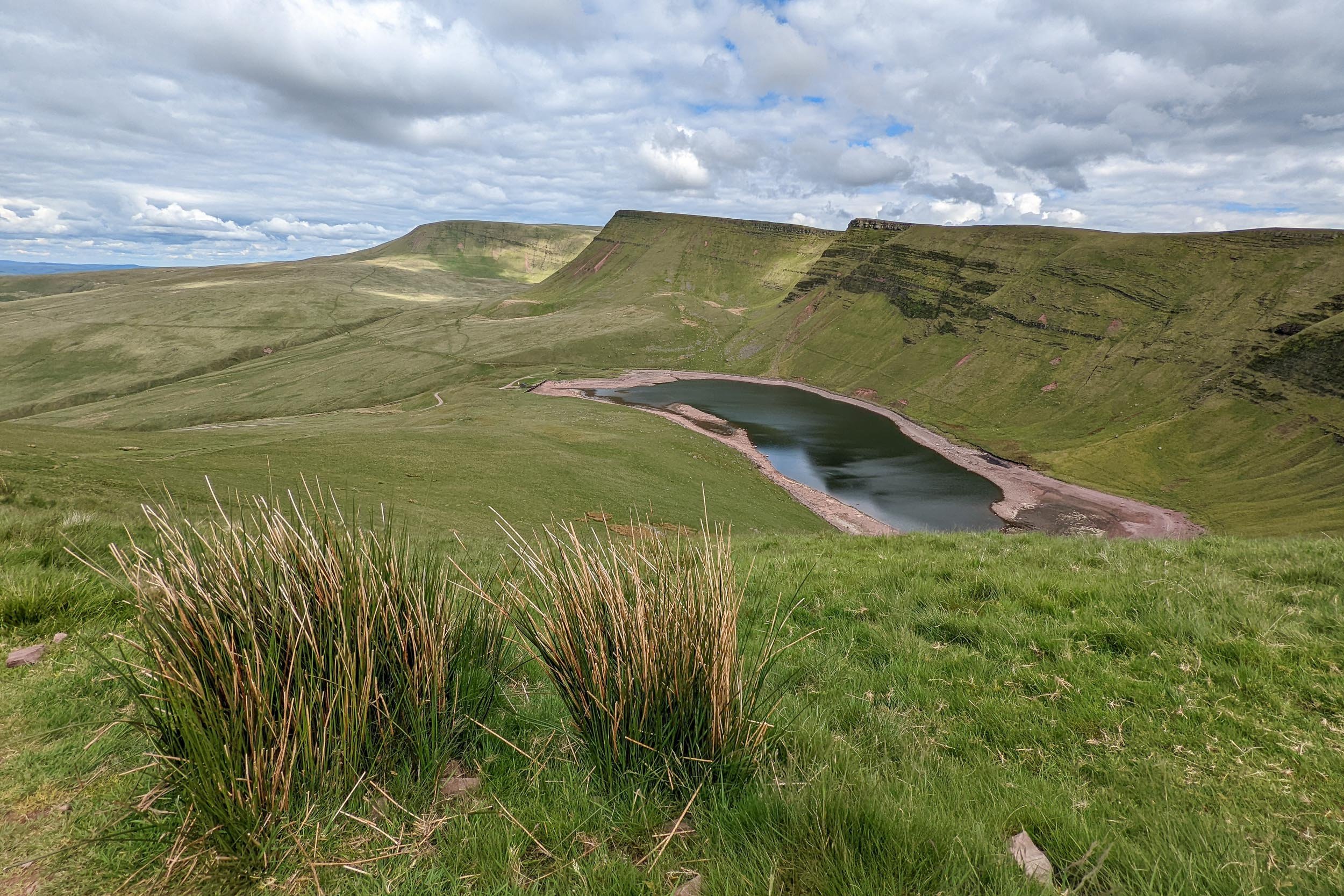
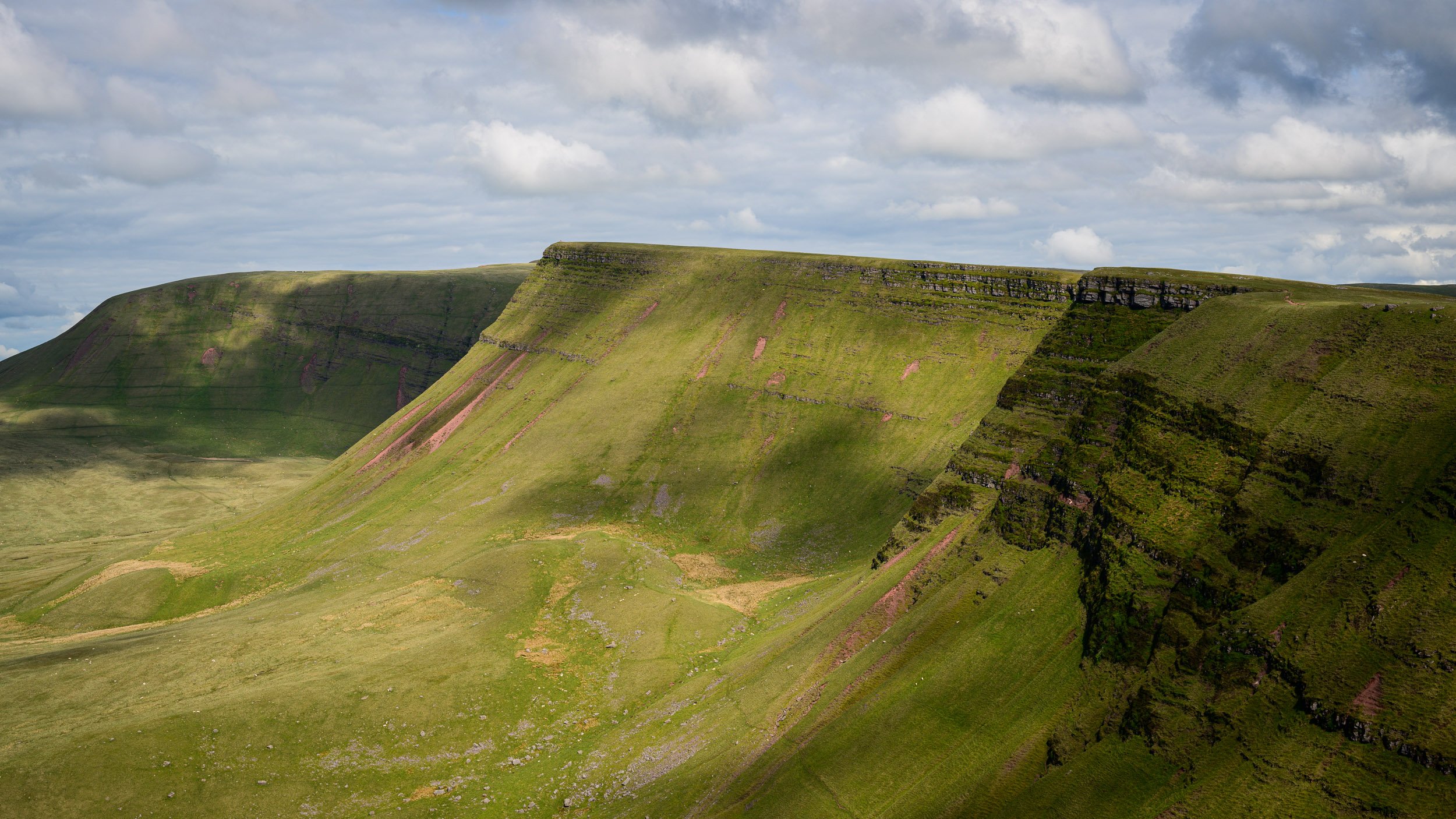
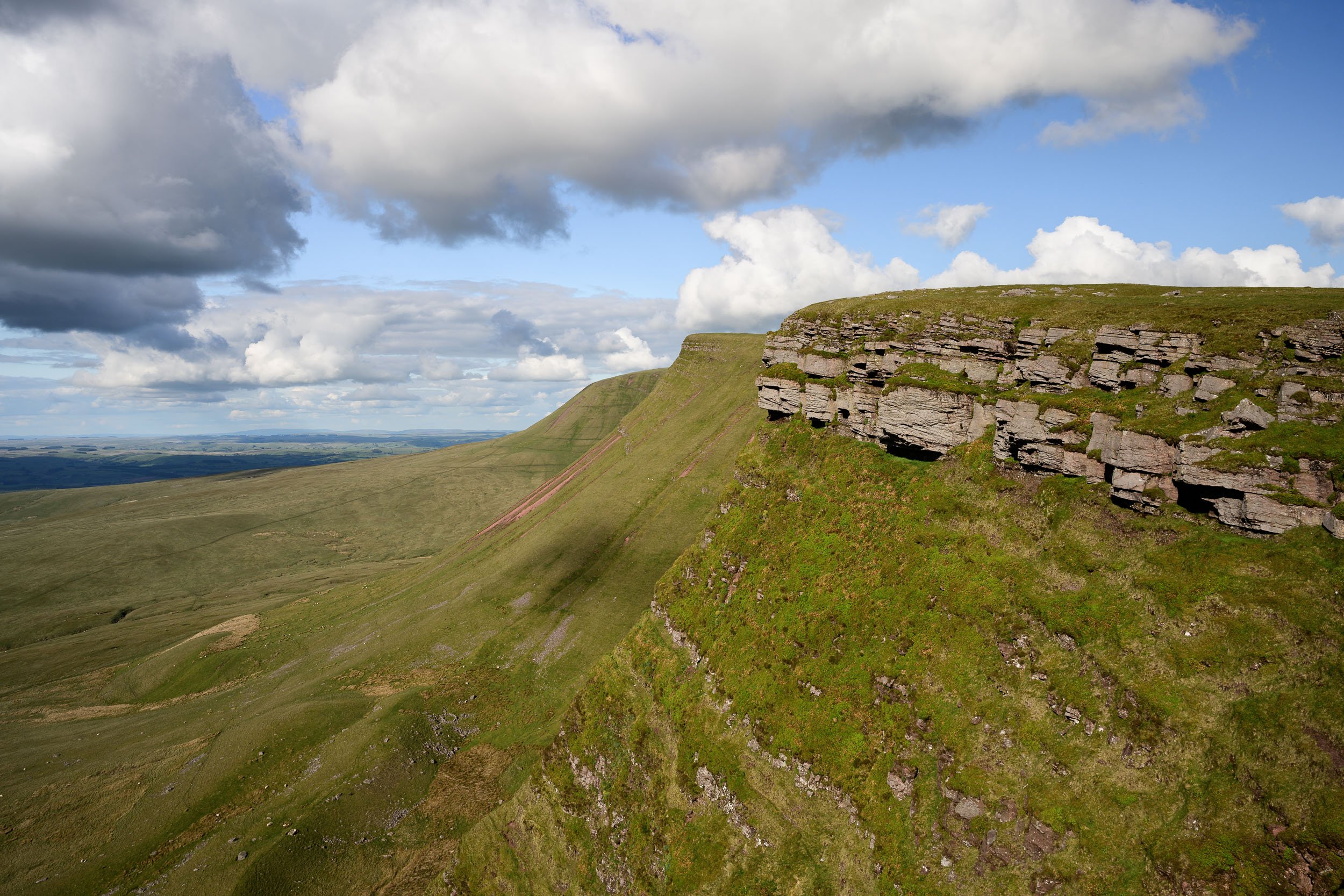
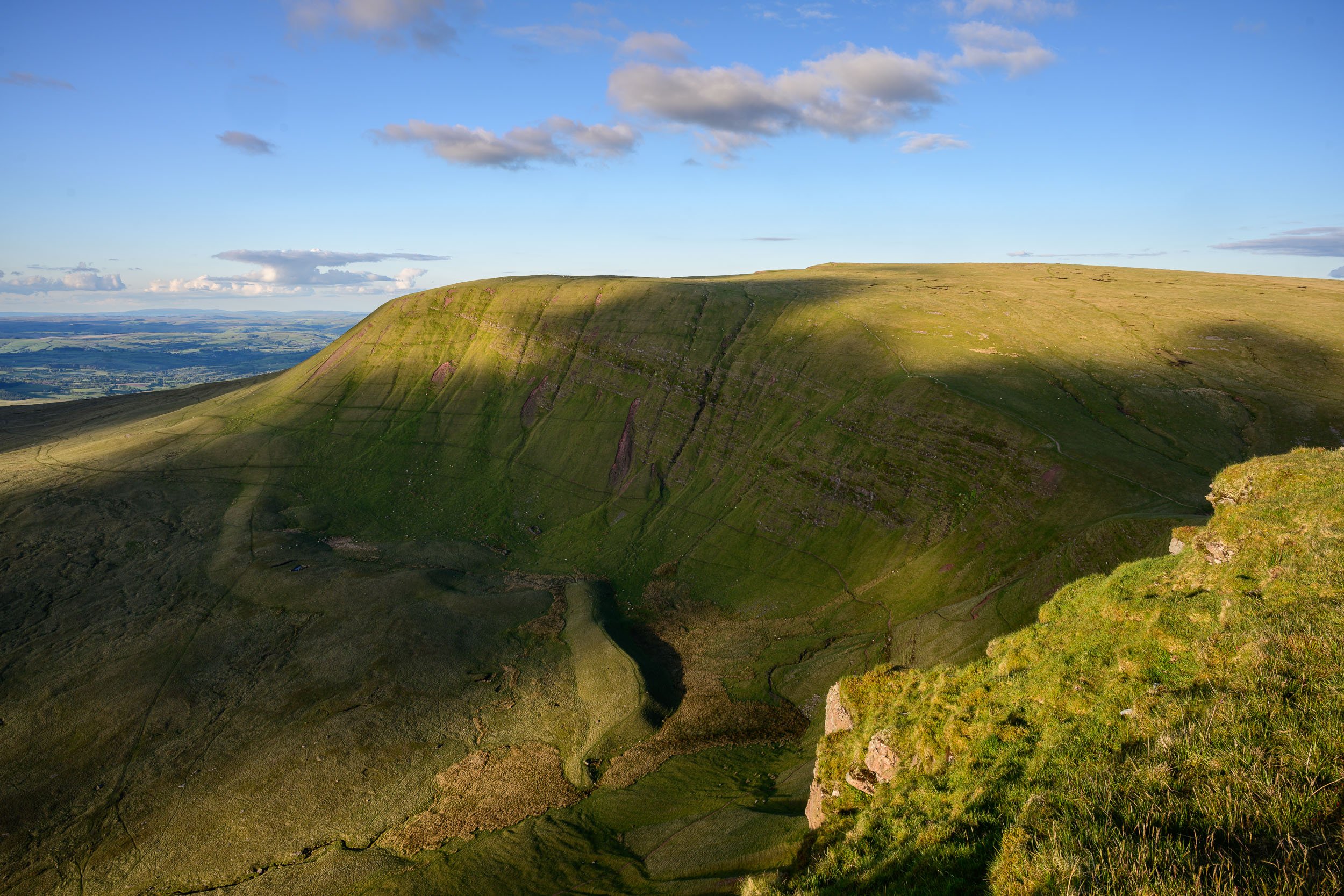
When I had the opportunity to make a flying visit to the Brecon Beacons, I decided I’d like to do the same for fotoVUE’s recently rebranded Explore & Discover South Wales (previously Photographing South Wales). However, I was short on time, and what time I was going to have in South Wales I wanted to fill with walking and photography. It’s not that I don’t like to plan and research my photography locations, it’s just sometimes I don’t have the time. For me, this is one of the best reasons for a guidebook. You can benefit from the knowledge and experience of the author.
In the video below I’ll take you with me on my Brecon Beacons walk. I’ll tell you all about Explore & Discover South Wales, why and how I use it, and of course take some landscape photographs, Enjoy!
Buy Explore & Discover South Wales
*** Use the discount code JULIAN to get 20% off all books at fotovue.com ***
If you want to add Explore and Discover South Wales to your bookshelf, you can purchase it directly from fotoVUE here - https://www.fotovue.com/shop/books/photographing-south-wales/
Landscape Photographs from the Walk
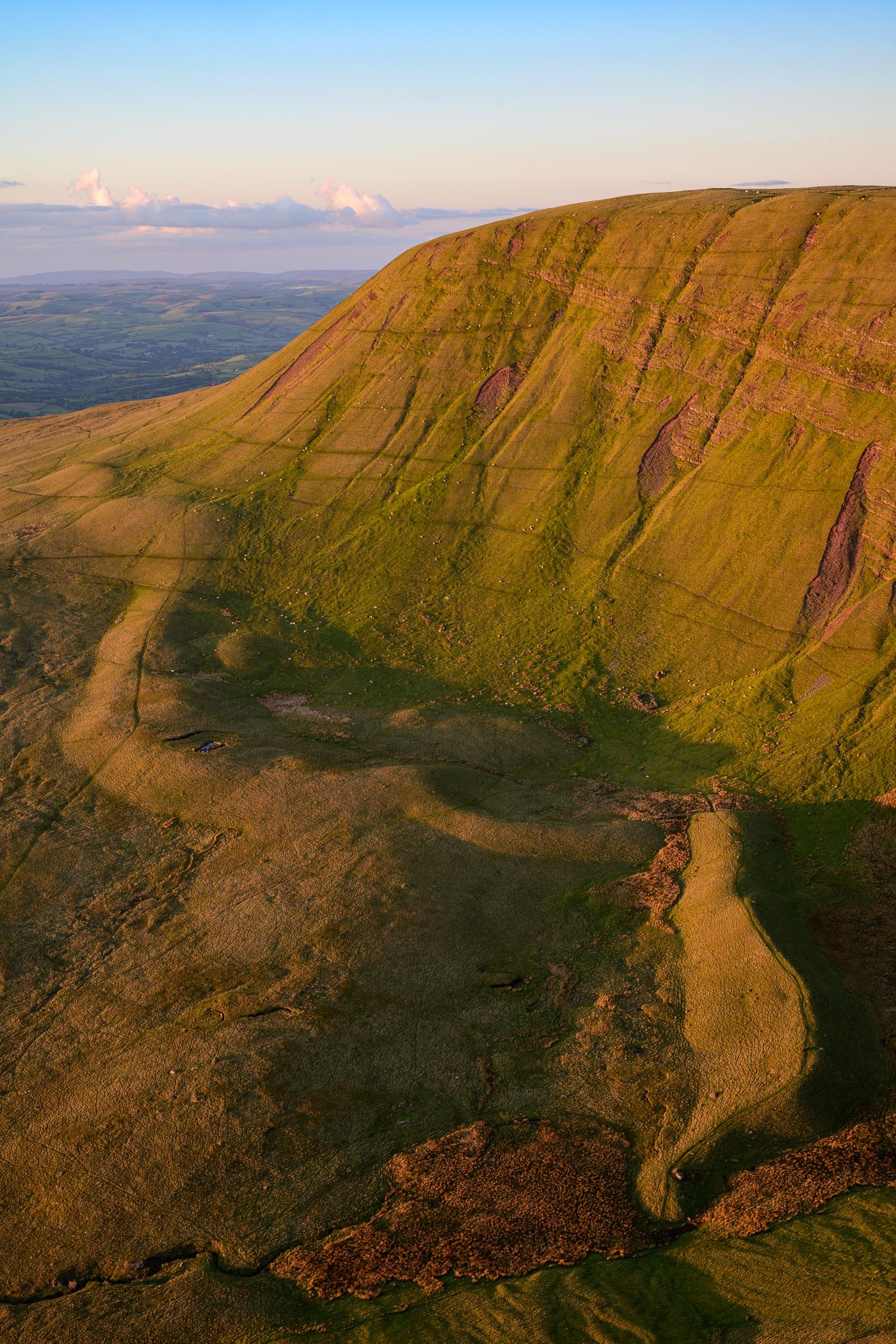
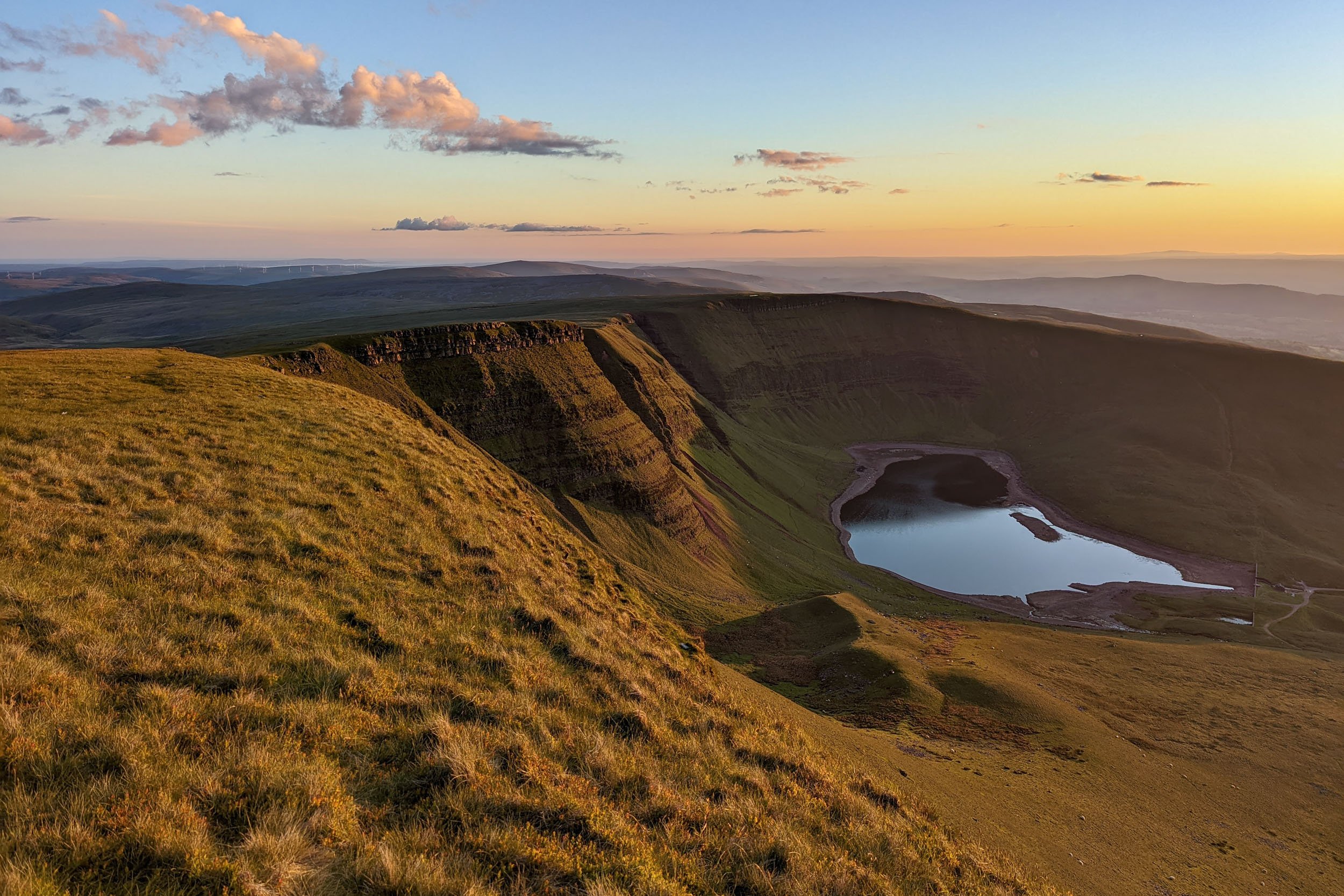
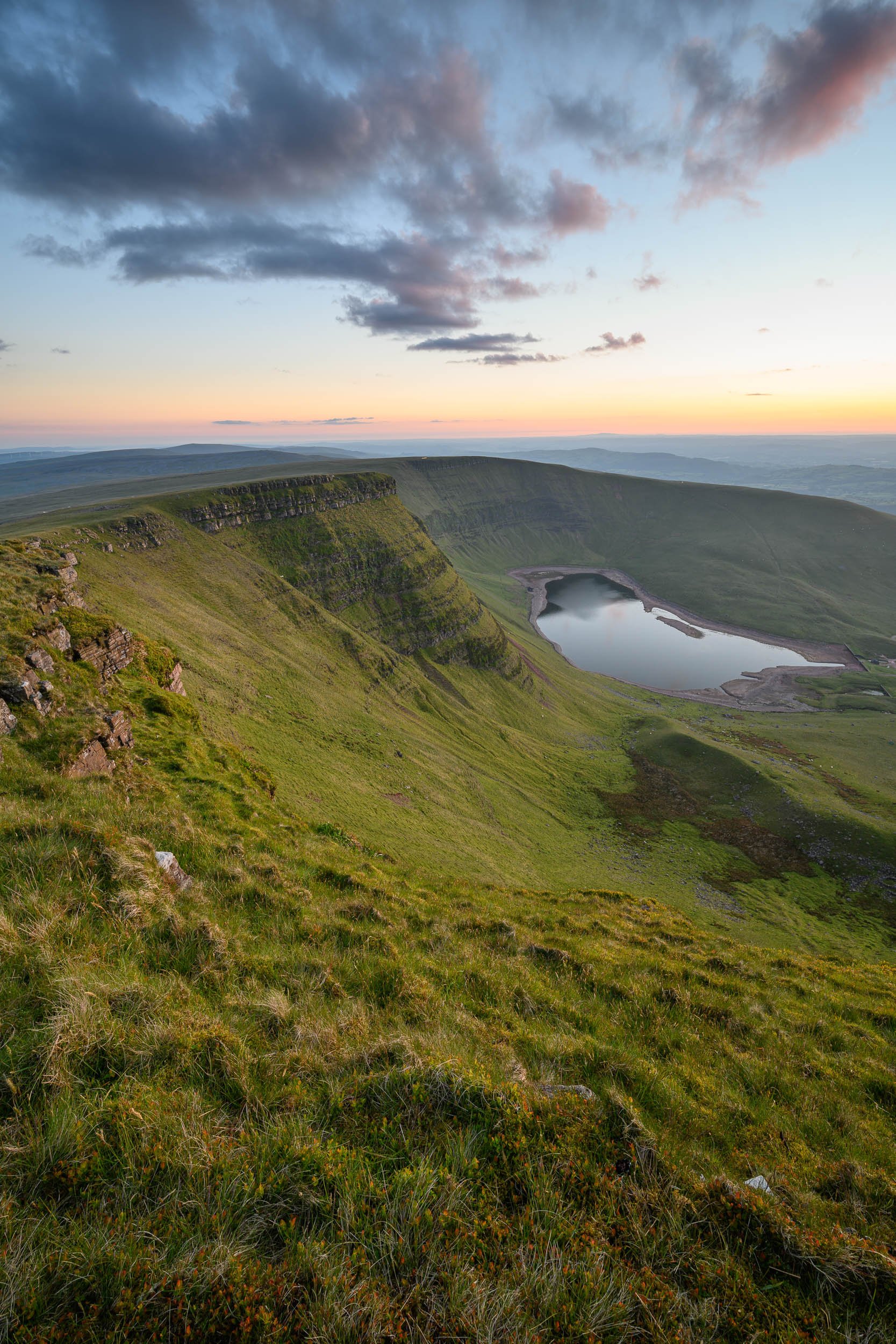
Why I PRINT My Landscape Photographs - From Capture to Print
When does a photograph become a photograph? Can a photograph be more than just a collection of ones and zeros? For me, the photographic process isn't complete until I have made a print. In this video, I share with you my passion for printing by capturing a landscape photograph on Dartmoor and then making a print of it to display on my wall.
The Print is the Photographs Rightful Inheritance
I don’t often quote people, but Charlie Waite got it right when he said, “The print is the photographs rightful inheritance”. Ever since I Discovered the Joy of Printing 5 years ago, nothing has given me more pleasure than making a big print of one of my photographs. There is something hugely satisfying about watching one of your photographs gradually feed out the printer. It’s that final stage that is the most rewarding. Holding your photograph in your hands. Seeing it on a computer monitor just isn’t the same.
Over the years I have printed hundreds of my photographs, but very few of them end up in frames and on my wall. Most are printed and displayed on my picture ledges where I not only study and learn from them, but I also enjoy them. They might stay there for a few days, even a few weeks, but at some point, they are replaced with new prints.
I have two framed photographs on my wall, both commended images from the Scottish Landscape Photographer of the Year competition. While I am immensely proud of those photographs, I’ve always been aware that I don’t have a framed photograph of Dartmoor.
A Dartmoor Connection
Dartmoor is my local area. An area that I derive an immense amount of pleasure in photographing. So, I set myself the task of not only capturing a photograph of Dartmoor, but one that I would be pleased to print, frame, and hang on my wall. I wanted to capture a photograph that would inspire me to discover and photograph Dartmoor. I wanted a photograph that captured the things that I love about photography on Dartmoor. I wanted a photograph that would allow me to reconnect to a moment experienced on Dartmoor.
Sounds easy, eh? Not exactly. If you’ve been reading this blog for any length of time you know how hard photographing Dartmoor can be. Frustrating is a better word. It’s just as well I love being outdoors as the photography isn’t always satisfying.
Patience is the key with Dartmoor and with some planning and a little luck, I was finally able to capture a photograph that I could hang on the wall. In the video below you can watch me capture the photograph, print it, frame it, and hang it on my wall. My photographs rightful inheritance. Well said Charlie, well said.
East Mill Tor, Dartmoor
A Perfect Morning at East Mill Tor, Dartmoor, Devon - Nikon Z7, Nikkor 14-30mm f/4 at 23mm, f/13, 0.6 sec at ISO 64, pre-processed in DxO PureRAW 2.
Editing and Printing
If you’d like to see how I post processed this photograph, I’ve done a whole video on that which you can view below.
Lastly, if you’re interested here is a list of gear and services, I used to create the print.
How I manage and edit my photographs - video playlist.
Photograph printed with the Canon imagePROGRAF Pro-300 - my video review
Paper from Fotospeed
Picture frames from Picture Frames Express - see how I design my frames in this video.
Will DxO PureRAW 2 IMPROVE My Images?
Over the years I've barely changed my landscape photography post processing workflow, but DxO PureRAW promises to change all that! It claims that its demosaicing, denoising, lens correction and deep learning technologies will improve sharpness, and reduce distortion, chromatic aberrations, and vignetting. Those are some bold claims, so I decided to try it out for myself. The results surprised me!
My Post Processing Workflow
I haven’t felt the need to change my post processing workflow for a long time. I’ve adapted it and leveraged new tools and capabilities from Lightroom as they’ve been released, but at a fundamental level, it hasn’t changed in at least 4 years. It can be summarised as a “light touch” approach using a combination of global and local adjustments in Lightroom. I very rarely use Photoshop for image editing, and I’ve never felt the need to add additional products to my workflow.
I’ve always been happy with my digital output but when I saw an advert or YouTube mention for a product called DxO PureRAW 2 something clicked, and I decided now was the time to try something different. I was also editing an image that I was going to print and hang on my wall, so it seemed the ideal time to try something new to see if I could squeeze even more out of my raw files.
I decided not to look at any video tutorials or marketing blurbs before trying this software for the first time. I wanted my first impressions to not only be free of bias but also genuine.
In the video below you will see me use DxO PureRAW 2 for the first time and hear my first impressions, both in terms of how the output looks digitally and in printed form. I’ll also tell you if I decided to use my own money to buy this product. (If you want to buy or try DxO PureRAW 2 then click here).
If you enjoyed this video, you might also enjoy the video I made where you can see me capture, print and frame the image I used in the video above.
I hope you enjoy both of these videos. Let me know in the comments below if you print your photographs and how you process your raw files.

The Rumps and Sandymouth - Classic Cornwall Coastal Photography Locations
In the blog this week I take you to two of Cornwall’s classic coastal locations.
Sometimes You Just Have to Go for It
Most landscape photographers will tell you that having a plan is a good way of increasing your chances of getting a good shot. I am no different. However, there are times when you just need to put things like the weather forecast to one side and just go for it.
I had been trying to schedule a meet up with a photographer friend in Cornwall but with work conflicts and rubbish weather forecasts, weeks were going by, and we weren’t any closer to meeting up. So, we decided not to worry too much about the weather and just take a chance. At the end of the day, even if the photography wasn’t that great, we will have met up, had a chat and got some chips.
The Rumps
On the first of our recent meetups for chips, chat, and photography we decided to head to a location known as The Rumps. I hadn’t shot The Rumps for a couple of years, so I was excited to be going back. The weather forecast was difficult to judge though. The tide was at a good height but the difference between a good shot and a great shot would very much depend on the light from the setting sun.
As we walked along the southwest coast path, I was reminded why I love photographing the Cornish coast and that in 2022 I should try to photograph it more. Lockdown had forced me to photograph Dartmoor more (which is no bad thing) but there is something special about Cornwall’s coastline.
We did a quick assessment of the light, and while we both felt that walking onto The Rumps themselves would provide us with some different looking photographs, the conditions very much favoured the classic viewpoint. All we needed to do was wait for the light. And wait we did. The time flew by though as we chatted away about photography and Star Wars and everything in between.
As the clouds danced across the sky, they kept tempting us with the chance of brilliant light, and just for a very brief time, it lit up the foreground. It was gone as quick as it arrived, but I was ready and captured this image.
The Rumps, Cornwall - Nikon Z7, Nikkor Z 14-30mm f/4 at 15mm, f/13, 20 sec at ISO 64, Kase Filters CPL and ND. Raw file processed using DxO PureRAW 2.
It might be the only shot from the night, but it still represents a very enjoyable evening. I’m not sure it would have been worth the drive if it hadn’t been for the chips and chat though!
Sandymouth
The following week it was the same again as we started the evening with chips and chat. Hey, why mess with a great formula! This time we decided to head up to Sandymouth where my mate had spotted a potentially good composition a few days before. Never underestimate the power of local knowledge. I was more than happy to trust his judgement so with a belly full of chips we headed up the coast to Sandymouth.
I’ve photographed Sandymouth a few times now. It’s a location that offers a surprisingly varied number of compositions. There are rows of rocks that look like mountain ranges stretching out to sea and on the other side of the beach, you can find some amazing sea pools in the sand (if you get lucky with the conditions).
What made the composition my friend had spotted interesting was the combination of sand and rocks. Of particular interest was the sand though. There were some beautiful ripples in the sand, which, if they caught the light, it could look spectacular.
As we waited for the light, we started to get a little nervous. Not for the reasons you might think. Like most beaches in Cornwall, Sandymouth is open to the public. That means people, dogs, and dragons. OK, I’m joking about the dragons, but you get the point. There is always the risk that a person, or more likely a dog, will run through the pristine sand we were hoping to photograph.
Fortunately for us, the beach was deserted so our precious sand remained untouched allowing us to make the most of the soft light from the setting sun.
Ripples of Time, Sandymouth, Cornwall - Nikon Z7, Nikkor Z 14-30mm f/4 at 15mm, f/13, 23 sec at ISO 64, Kase Filters CPL and ND. Raw file processed using DxO PureRAW 2.
As with the photo we took at The Rumps, this was the only composition we properly photographed but I think it was worth hanging out at that spot. Sometimes staying in one spot is the best thing to do.
I hope you enjoyed the photographs from these two Cornish coastal locations. If you are ever in the area, they are both well worth photographing.
Using the Nikon Z9 for Landscape Photography on Dartmoor
I've got hold of Nikon's flagship mirrorless camera, the Z9, and I'm off to Dartmoor to take landscape photographs with it!
I Have a Z9!
Yes, that’s right, I’ve been out capturing landscape photographs with Nikon’s flagship camera, the Nikon Z 9. But before you judge me as being yet another photographer showing off gear that no normal photographer could ever own, please watch the video below. I will explain all. I promise.
I hope you enjoyed that short exploration of the Z 9 or if you don’t hold much interest in gear, you at least enjoyed the locations and photographs I captured. If you’ve got any comments on the locations, the photographs or even the Z9, please do leave me a comment.
Apologies for the short blog post this week, but I’m busy putting the final touches on two big videos that I hope to be publishing very soon. I’m excited to be sharing them with you, so please do keep your eye on the blog or subscribe to my YouTube channel.
Nikon Z9 Landscape Photographs
Here are those Z9 landscape photographs that you saw me capture on Dartmoor.
Great Staple Tor
Great Staple Tor #1, Dartmoor, Devon - Nikon Z9, Nikkor 14-30mm f4 at 20mm, f/11, 1.3 sec at ISO 64.
Great Staple Tor #2, Dartmoor, Devon - Nikon Z9, Nikkor 14-30mm f4 at 18mm, f/11, 1/5 sec at ISO 64, 4:5 crop.
Brent Tor (Brentor Church)
A foggy Brentor Church #1, Dartmoor, Devon - Nikon Z9, Nikkor 14-30mm f4 at 14mm, f/11, 1/60 sec at ISO 64, 16:9 crop.
A foggy Brentor Church #2, Dartmoor, Devon - Nikon Z9, Nikkor 14-30mm f4 at 15mm, f/11, 1/200 sec at ISO 64, 4:5 crop.
Brat Tor
Brat Tor, Dartmoor, Devon - Nikon Z9, Nikkor 14-30mm f4 at 24mm, f/8, 1/250 sec at ISO 64, 16:9 crop.
Great Links Tor
Great Links Tor #1, Dartmoor, Devon - Nikon Z9, Nikkor 14-30mm f4 at 14mm, f/11, 1/40 sec at ISO 64.
Great Links Tor #3, Dartmoor, Devon - Nikon Z9, Nikkor 14-30mm f4 at 14mm, f/11, 1/25 sec at ISO 64.
Great Links Tor #4, Dartmoor, Devon - Nikon Z9, Nikkor 14-30mm f4 at 14mm, f/11, 1/10 sec at ISO 64.
Great Links Tor #5, Dartmoor, Devon - Nikon Z9, Nikkor 14-30mm f4 at 14mm, f/11, 1/5 sec at ISO 64.
Reviewing the SunwayFoto GH-PRO II + Geared Head on Location at Dartmoor
Why use a geared head? What's so good about the Sunwayfoto GH-PRO II+? What's new with the + version? Is this the best geared head for landscape photography? Join me on Dartmoor as I answer all those questions and I also capture landscape photographs in some unexpected conditions.
One Knob Makes All the Difference
When I published my video review of the Sunwayfoto GH-PRO II geared tripod head I was sure I’d found the perfect tripod for my landscape photography. So, when I heard that they had released the GH-PRO II+ I wondered how they might have improved it. What do you get in the + version that you don’t get in the previous version?
Fortunately for me, the team at Sunwayfoto were more than happy to send me out a GH-PRO II+ to review. With a new geared tripod head in hand, I set off to film my video review on Dartmoor. As always, if I am going to do a gear review video, I like to do it on location and do a little landscape photography at the same time.
While it came as no surprise that Sunwayfoto had improved my favourite geared head by simply adding just one knob, the real surprise of the evening was the beautiful, and very unexpected conditions I was able to photograph as the sunset.
In the video below you can hear all my thoughts on GH-PRO II+ geared head, why I use a geared head and you can see me capture all those wonderful images from Belstone Tor.
Landscape Photography from Belstone Tor on Dartmoor
Belstone Tor #1, Dartmoor, Devon - Nikon Z7, Nikkor 14-30mm f/4 at 15mm, f/13, 1/13 sec at ISO 64, Kase Filters CPL and pre-processed in Dxo PureRAW.
Belstone Tor #2, Dartmoor, Devon - Nikon Z7, Nikkor 14-30mm f/4 at 20mm, f/11, 1/8 sec at ISO 64, Kase Filters CPL and pre-processed in Dxo PureRAW.
Belstone Tor #3, Dartmoor, Devon - Nikon Z7, Nikkor 14-30mm f/4 at 14mm, f/11, 1/10 sec at ISO 64, pre-processed in Dxo PureRAW.
Belstone Tor #4, Dartmoor, Devon - Nikon Z7, Nikkor 14-30mm f/4 at 14mm, f/13, 0.5 sec at ISO 64, pre-processed in Dxo PureRAW.
Belstone Tor #5, Dartmoor, Devon - Nikon Z7, Nikkor 14-30mm f/4 at 14mm, f/13, 0.5 sec at ISO 64, pre-processed in Dxo PureRAW.
Belstone Tor #6, Dartmoor, Devon - Nikon Z7, Nikkor 14-30mm f/4 at 18mm, f/13, 1 sec at ISO 64, pre-processed in Dxo PureRAW.
Belstone Tor #7, Dartmoor, Devon - Nikon Z7, Nikkor 14-30mm f/4 at 17mm, f/13, 1 sec at ISO 64, pre-processed in Dxo PureRAW.
Photographing The Lake District 2nd Edition by Stuart Holmes and fotoVUE - On My Bookshelf S05E03
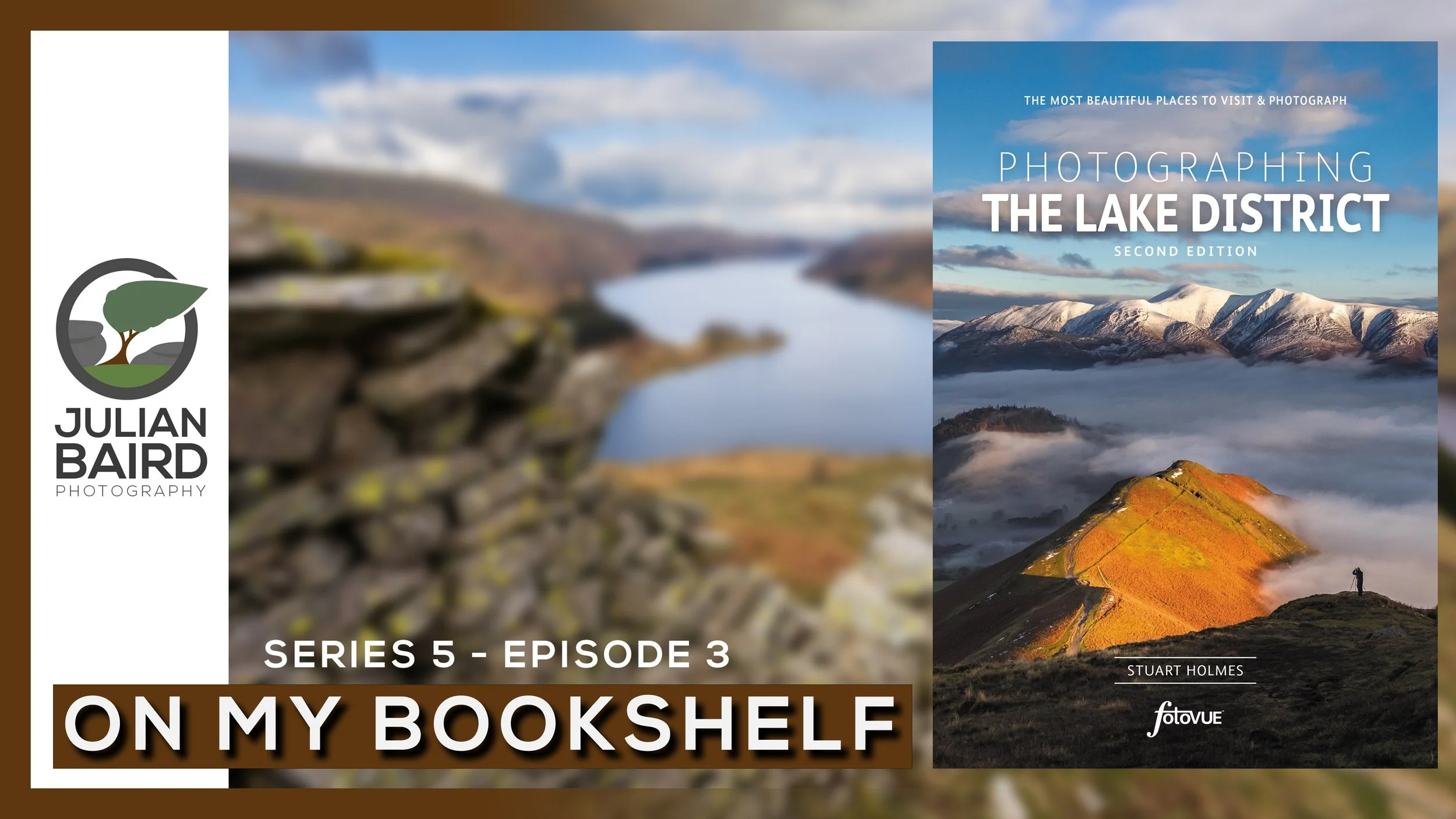
With lakes, mountains, rivers, picturesque villages and Britain's favourite view, the Lake District has it all! In this special episode of On My Bookshelf, I go on location to tell you all about the new and improved 2nd edition of Photographing The Lake District and to try one of the book's new high mountain walks.
Putting a Guidebook to Practical Use
I own more than ten fotoVUE guidebooks. While I’ve read them all, I haven’t yet had the opportunity to put all of them to practical use in the real world. Titles like Photographing Scotland, Photographing Cornwall and Devon and the first fotoVUE book that I purchased, Photographing the Lake District have all had significant use. As with any guidebook, they are a great way to get your photography adventures started in an area when you might not have a lot of time to spend researching location or you simply want a head start.
When the team at fotoVUE asked if they could send me out the new second edition of Photographing The Lake District to feature in an episode of On My Bookshelf, I not only said yes, I said I would film the episode on location in the Lake District. This was a great excuse to visit the Lake District again. Not that I needed a reason to visit the Lake District. It’s a wonderful place to go for any reason.
As well as filming the episode of On My Bookshelf in the Lake District I wanted to take advantage of some of the new and expanded information in this second edition of Photographing The Lake District. The author, Stuart Holmes, has included nine, high mountain walks and being a keen walker myself I was eager to try one of them out.
So, join me in this special episode of On My Bookshelf as I talk all about Photographing The Lake District Second Edition and highlight what’s new and all while I explore and photograph one of the many great locations in this book.
Buy Photographing The Lake District Second Edition
*** Use the discount code JULIAN to get 20% off all books at fotovue.com ***
If you want to add Photographing The Lake District Second Edition to your bookshelf, you can purchase it directly from fotoVUE here - https://www.fotovue.com/shop/books/photographing-the-lake-district-second-edition/
Lake District Photographs from the Walk
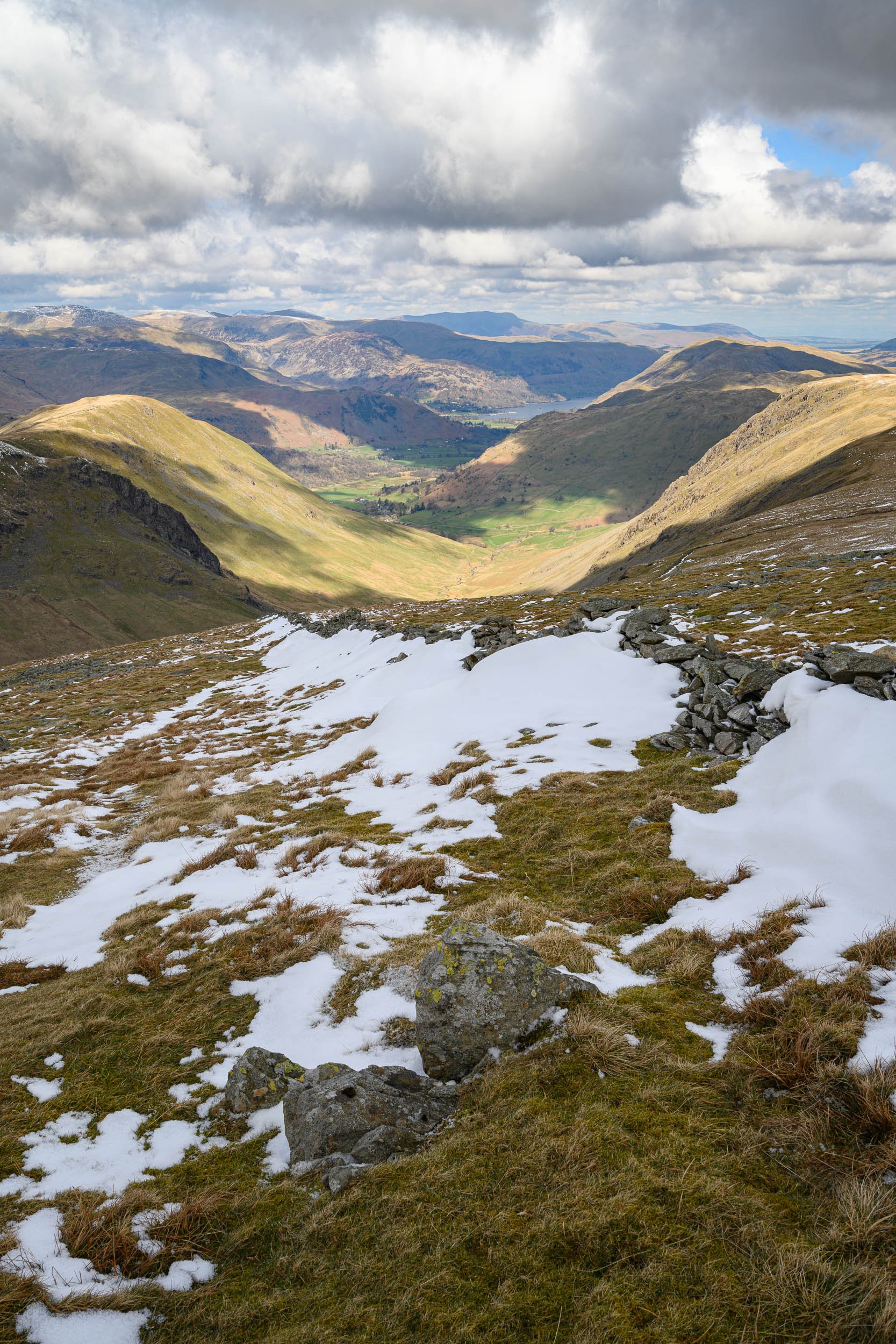
Here are the photographs from the video. I hope you enjoy looking at them in higher resolution. (Click on a thumbnail to see the camera settings.)




300th Blog Post - My Landscape Photography Adventure in Iceland
The world is full of amazing places to photograph, but few countries have captured the heart and imagination of photographers like Iceland has. In this blog post and short video, I'll show you some of the locations I visited on my trip to Iceland and the landscape photographs I was lucky enough to capture.
Iceland - Vignettes of Landscape Photography
If you are super keen to see some video and photographs from my photographic adventure to Iceland, then I’ve produced this short video. I decided not to produce and film a full video as I wanted to focus on the experience of being there and capturing landscape photographs. However, as you’ll see, the landscape was just too stunning not to capture any video!
If that has whetted your appetite for Iceland, then read on and I’ll tell you all about my photography adventure to Iceland!
Iceland Wasn’t My First Choice
Saying that Iceland wasn’t my first choice may seem an odd way to start this Icelandic photography blog post. Iceland is well known for being high up on a lot of landscape photographers' bucket lists so why wouldn’t it be on mine? Of course, Iceland is on my bucket list, it just wasn’t as high up as another location.
Every year I like to go on a big photography trip. These trips are an opportunity to completely immerse myself in landscape photography. They aren’t always in far-flung locations. They don’t need to be. For me, it’s about being able to dedicate myself to the art of landscape photography and the experience of spending extended amounts of time outdoors.
While I am more than happy to photograph the many locations across the UK, the Faroe Islands has long been at the top of my list of international locations to photograph. I had decided that 2021 was going to be the year that I was going to make that dream come true. However, the world had different plans and things were turned upside down with the pandemic. The Faroe Islands would have to wait.
As one opportunity passes you by, another one comes along. Without the Faroe Islands, what would I do for my big photo trip in 2021? Iceland of course! An epic country for landscape photography, and number 2 on my international photography bucket list. It might not be my first choice, but I would have nothing to complain about if I spent a week photographing Iceland. If I could get away to Iceland for a week, I could still count myself very, very fortunate.
Workshop or Go Solo?
I’m no stranger to a bit of international travel. I even had a “gap year” back in the early 2000s in which I independently travelled across parts of Asia, New Zealand, and Australia. The point I’m making is that I’m no stranger to arriving in a country and sorting my own travel plans and itinerary out.
So, it may seem surprising that I chose the option of going on a dedicated landscape photography workshop in Iceland. I went down this route for several reasons. This was not only my first international landscape photography trip, but it was also my first time in Iceland. More importantly though, I only had a week. If I’d had several weeks to play with, I would have felt a lot more confident as I would have had the time to get to know the country and how things work there.
I wanted to maximise my limited time there and going on a workshop would remove the pressure of decision making, route planning and scheduling. Yes, you don’t get the freedom that you would do by travelling solo, but for my first visit, going on a workshop would be an excellent introduction to Iceland.
A large part of that decision to go on a workshop was driven by the workshop company I chose. I opted to go on a Dawn to Dusk Photography workshop. I’ve been on several Dawn to Dusk workshops, and I know Ross and Mark would make their Icelandic workshop something special. I don’t think I would have had as much confidence with any other workshop provider. I know the itinerary would maximise our time there, I’d be guided to some of Iceland’s photographic highlights, and the travel, accommodation, and food would be excellent.
So, I booked the workshop, bought a new winter jacket, a new flight friendly camera bag (the Shimoda Designs Explore v2 30) and booked a flight from Bristol to Reykjavík. I just needed to keep my fingers crossed so that I didn’t catch COVID or that the travel rules got tighter!
My Icelandic Photography Adventure
Day 0 and 1 - Arrival and The Big Drive
My Icelandic journey started like any other international trip and that is with a very early morning flight. I was a little nervous as this was the first time travelling with my camera gear and even though I knew my bag was within limits I was worried someone was going to ask me to put it in the hold. I needn’t have worried, and nor should I have worried about all the additional checks and paperwork put in place because of the pandemic. I arrived in Iceland a few hours later and cleared security with no stress.
Starting my adventure in Iceland the right way. Coffee and Bushmills at Reykjavík airport .
Despite having a window seat on the plane, I didn’t see any of the Icelandic landscape because of the very low cloud. This grey and overcast weather continued for the rest of the day so I met up with some of the workshop attendees and we went out for pizza. We went to the most excellent Antons Mamma Mia. This place comes highly recommended.
The next day, the first official day of the workshop, was a day of travel. We were going to drive from Reykjavík to Höfn on the southeast coast of Iceland. It would be from there that we would snake our way back along to coast back to our start point over the next few days.
I’d like to tell you all about the beautiful scenery I saw on this long drive, but the weather had remained grey and overcast and I saw very little. What I did see looked amazing though, so I was still excited about getting started with the photography.
Just before we reached our hotel in Höfn we had time to stop at Jökulsárlón Iceberg Lagoon to capture the first images of the trip.
Jökulsárlón Iceberg Lagoon, Iceland - Nikon Z7, Nikkor 24-70mm f/4 at 28mm, f/11, 4 secs at ISO 64, Kase Filters CPL.
Day 2 - Vestrahorn and Eystrahorn
What can you say about Vestrahorn? It’s one of Iceland's most iconic views. A black sand beach with golden dune grass, the ocean, and an epic mountain range. It’s simply stunning to look at but I have to admit, I did struggle a little with picking out a composition. Perhaps I was overwhelmed by the view. Did I mention how amazing it looked?
Capturing images of Vestrahorn. Simply stunning.
I just needed to take my time. Fortunately for me, I was on holiday and had lots of time to just stand there and soak up the view. And sometimes that’s just what you need to do. Take it all in and wander about. Don’t bother with the camera straight away. Keep it in your bag for a bit. Sure enough, after a short while, I started seeing compositions and then, only when I was sure I had something to photograph, did I get my camera out. After the first shot was taken the creative floodgates opened and I was in my happy place.
After a couple of hours of happy photography, it was off to the cafe at the entrance to Vestrahorn for a hot chocolate and rum! What a morning.
Vestrahorn #2, Iceland - Nikon Z7, Nikkor 14-30mm f/4 at 15mm, f/11, 0.6 sec at ISO 64.
Vestrahorn #5, Iceland - Nikon Z7, Nikkor 14-30mm f/4 at 30mm, f/8, 1/20th sec at ISO 400, 7 image panoramic, 6:17 crop.
Vestrahorn #9, Iceland - Nikon Z7, Nikkor 14-30mm f/4 at 14mm, f/11, 1/4 sec at ISO 64, 6:17 crop.
Vestrahorn #10, Iceland - Nikon Z7, Nikkor 14-30mm f/4 at 16mm, f/11, 1/4 sec at ISO 64.
After some refreshments, we drove onto Eystrahorn. The weather had taken a turn for the worse and the interesting dawn skies had been replaced with a grey overcast sky. While the mountain range was impressive, the flat conditions meant I wasn’t connecting with the view like I had been at Vestrahorn.
It’s times like this that it’s good to think a little differently, so I took a walk over to the beach. The beach was made up of millions of jet-black pebbles which moved under the impressive white-water waves that were crashing along the beach. I wondered what this all looked like from above, so I got the drone out of my bag and sent it up. What I saw just blew me away.
The Black Sands of Eystrahorn #2, Iceland - DJI Mavic Pro, 1/100th sec.
The Black Sands of Eystrahorn #5, Iceland - DJI Mavic Pro, 1/100th sec.
From just a relatively low height the whole scene was transformed. I could see all these wonderful patterns being created by the waves and the contrast between the black beach and the white water was striking. Not only did it look great on video, but the still images I was capturing looked even better. I had let go of my preconceived idea of what I was going to photograph at Eystrahorn and found something much more rewarding!
The Black Sands of Eystrahorn #4, Iceland - DJI Mavic Pro, 1/100th sec.
The Black Sands of Eystrahorn #1, Iceland - DJI Mavic Pro, 1/100th sec.
After returning to the hotel for dinner we headed back out to Vestrahorn to see if we could capture the Northern Lights but unfortunately for us the northern lights activity level was low that evening. It wasn’t a wasted trip though as we were able to get some practice in and get some nighttime shots of Vestrahorn.
Vestrahorn at Night, Iceland - Nikon Z7, Laowa 15mm f/2, 15 secs at ISO 800.
Day 3 - A Little More Vestrahorn and The Diamond Ice Beach
That’s me photographing Vestrahorn. Photograph courtesy of Ross Hoddinott.
The following day the weather forecast for dawn was looking like it might favour another trip to Vestrahorn. One of the wonderful things about visiting Iceland in November is how late sunrise is, and how long it lasts. Sunrise is about 10 am and because the sun's ascent from the horizon is relatively slow, you get more time to make the most of the morning light compared to how it is in the UK.
We returned to Vestrahorn on what was mostly a cloudless morning but the warm glow from the rising sun illuminated the mountain range beautifully. What you can’t tell from the photographs is the strength of the wind. You had to be very careful with your camera and tripod. Not holding onto your gear was a sure-fire way to ruin your holiday. It was the gusts that could really catch you. You could see them travelling across the water. All you could do is hold your tripod and take a wide stance. It was incredibly good fun though!
Vestrahorn #14, Iceland - Nikon Z7, Nikkor 14-30mm f/4 at 14mm, f/11, 1/8 sec at ISO 64, 6:17 crop.
Vestrahorn #13, Iceland - Nikon Z7, Nikkor 14-30mm f/4 at 16mm, f/11, 1/8 sec at ISO 64, 16:9 crop.
After stopping at the Viking Cafe at the entrance of Vestrahorn for another hot chocolate and rum (another advantage of being driven around Iceland), we drove westward to the Diamond Ice Beach at Breiðamerkursandur. This beach is famous for the icebergs that float down from the Jökulsárlón Iceberg Lagoon and then break up into chunks of ice that then get washed up onto the beach.
It was late in the day by the time we got there but I still managed to get a few shots to whet my appetite for the following day.
Diamond Ice Beach #1, Iceland - Nikon Z7, Nikkor 14-30mm f/4 at 20mm, f/13, 1.3 sec at ISO 64, Kase Filters ND Grad and CPL.
Diamond Ice Beach #3, Iceland - Nikon Z7, Nikkor 14-30mm f/4 at 15mm, f/13, 2 sec at ISO 64, Kase Filters ND Grad and CPL.
Our hotel for the night was the Fosshotel Glacier Lagoon which was very wonderufl. I admit a campervan gives you more flexibility, but a bar and restaurant after a hard day of photography are very welcome!
Day 4 - The Diamond Ice Beach and Svínafellsjökull Glacier
Dancing with waves and ice! Photograph courtesy of Ross Hoddinott.
After a great night's sleep, lots of breakfast and even more coffee I was excited about returning to the Diamond Ice Beach. There was still a limited amount of ice on the beach but sometimes you can have too much choice, so it didn’t take long to identify some of the more interesting mini-icebergs.
The principal difficulty with shooting the ice is timing. To get the composition I wanted I needed to be close to the ice, but this approach also meant dealing with the incoming waves. It was a matter of waiting for a wave to recede, running out and sticking the tripod in the sand, firing off a couple of shots, and then running back before your feet got wet (or worse). An advantage of being in a group was that we could act as spotters for each other. You don’t always see the waves coming if you are focusing on your camera and so it was good to have someone shout “WAVE”! It was an exciting experience for sure.
Diamond Ice Beach #8, Iceland - Nikon Z7, Nikkor 14-30mm f/4 at 16mm, f/11, 1.6 sec at ISO 100, Kase Filters CPL.
Diamond Ice Beach #5, Iceland - Nikon Z7, Nikkor 14-30mm f/4 at 16mm, f/11, 2.0 sec at ISO 100, Kase Filters CPL.
Diamond Ice Beach #4, Iceland - Nikon Z7, Nikkor 14-30mm f/4 at 16mm, f/11, 2.0 sec at ISO 100, Kase Filters CPL.
You often see photographs from this location coupled with glorious light, but for me, the dark moody skies work just as well. My main problem when I got home was editing. I captured a lot of frames from this location. Each one had a slightly different water pattern but trying to select just a few for final processing was a challenge.
Diamond Ice Beach #13, Iceland - Nikon Z7, Nikkor 14-30mm f/4 at 20mm, f/11, 1.0 sec at ISO 64, Kase Filters CPL.
Diamond Ice Beach #14, Iceland - Nikon Z7, Nikkor 14-30mm f/4 at 21mm, f/11, 1.0 sec at ISO 64, Kase Filters CPL.
Diamond Ice Beach #11, Iceland - Nikon Z7, Nikkor 14-30mm f/4 at 18mm, f/13, 1.0 sec at ISO 64, Kase Filters CPL.
Doughnut, hot chocolate with rum and a view of some icebergs. Happy days.
After a hot chocolate and rum at the cafe, we drove on to Svínafellsjökull Glacier. It was another location with awe-inspiring views. As with Vestrahorn, I struggled initially with finding a composition. Another benefit of being on a workshop is that you can not only get inspiration from your fellow workshop attendees, but you can also lean on the expertise of your instructors. Sometimes you can’t see the compositions because the views are so big, so a little direction can be very welcome.
My favourite photographs from Svínafellsjökull Glacier, as with Eystrahorn, came from the drone. The ability to place the camera wherever I wanted provided me with compositions that simply wouldn’t have been impossible with a camera on a tripod. It's not just the ability to photograph a wider view of the glacier, but for me, it was about photographing the surface of the glacier. The drone gives you a unique viewpoint of the glacier face, and what the surface looks like. Despite these photographs being abstract, they are some of my favourites from Iceland.
Svínafellsjökull Glacier Surface #2, Iceland - DJI Mavic Pro, 1/200 sec.
Svínafellsjökull Glacier Surface #3, Iceland - DJI Mavic Pro, 1/190 sec.
The Face of Svínafellsjökull Glacier #1, Iceland - DJI Mavic Pro, 1/105 sec.
Svínafellsjökull Glacier #1, Iceland - DJI Mavic Pro, 1/560 sec.
The Mountains of Svínafellsjökull Glacier, Iceland - Nikon Z fc, Nikkor 24-200mm f/4-6.3 VR at 54mm, f/8.0, 1/60 sec at ISO 100.
Day 5 - Fjallsárlón Glacier and Reynisdrangar Beach
Taking photographs of Fjallsárlón Glacier with noctilucent clouds in the sky. Photograph courtesy of Ross Hoddinott.
Before coming to Iceland, I hadn’t considered how windy it might be. I knew it would be cold, snowy, icy, and rainy, but I didn’t realise how windy it could get there until I arrived. That first experience of the fierce winds at Vestrahorn had certainly opened my eyes as to how strong the wind could be, but the morning we went to Fjallsárlón Glacier was something else!
It was a bitterly cold morning, and I was glad to have my new down jacket on and my gloves with hand warmers inside, but nothing could protect you from the wind. It was going to make photography extremely challenging. Unlike the previous days when it had been windy, the challenge of battling with the wind had been exciting. Here it was just plain hard work.
Fjallsárlón Glacier #1, Iceland - Nikon Z fc, Nikkor Z DX 16-50 f/3.5-6.3 VR at 39mm, f/9, 1/125 sec at ISO 320, 7 image panoramic, 6:17 crop, handheld.
Fjallsárlón Glacier #1, Iceland - Nikon Z fc, Nikkor 24-70mm f/4 at 39mm, f/11, 1/60 sec at ISO 250, Kase Filters CPL.
It was almost a relief to be back on the bus to start our journey towards Vik. Though the photography was incredibly challenging, it’s always important to remember the experience of being at these locations. Places like Fjallsárlón Glacier are amazing, and I felt extremely fortunate to have seen it.
On the way to Vik, we stopped off at Fossalar Waterfalls. The conditions weren’t ideal for photography but it’s hard to drive by this roadside location and not take some photographs.

Fjallsárlón Glacier #1, Iceland - Nikon Z fc, Nikkor 14-30mm f/4 at 30mm, f/11, 0.6 sec at ISO 250, Kase Filters CPL.
Photographing Reynisdrangar Beach.
We arrived in Vik and headed down to Reynisdrangar Beach for sunset. The Reynisdrangar rock stacks are iconic in Iceland but as I found with some of the other famous locations in Iceland, I initially struggled to find a balanced composition. Fortunately, time was on my side so I had the opportunity to figure out where I might place the beach, waves, rock stacks and headland before the sun went down.
Reynisdrangar Beach #1, Iceland - Nikon Z fc, Nikkor Z DX 16-50mm f/3.5-6.3 VR at 18mm, f/7.1, 1/160 sec at ISO 100.
Reynisdrangar Beach #3, Iceland - Nikon Z7, Nikkor 24-70mm f/4 at 61mm, f/11, 30 sec at ISO 64.
After dinner, we headed out to see if we could capture images of the Northern Lights. It was forecast to be a clear night but with limited aurora activity. Sure enough, we didn’t see any aurora, but I did manage to capture this image of the milky way. Time was running out to capture photographs of the Northern Lights
Night Sky, Iceland - Nikon Z7, Laowa 15mm f/2, 20 sec at ISO 3200.
Day 6 - Reynisfjara Beach and Seljalandsfoss Waterfall
The next day was grey and overcast, and the sky was almost devoid of colour. Our first location of the day was Reynisfjara Beach where we could photograph the Reynisdrangar stacks from the west. With low light, an overcast sky and a black sandy beach, the only colour to be seen was on my fellow photographer's jackets.
Reynisfjara Beach #5, Iceland - Nikon Z7, Nikkor 24-70mm f/4 at 42mm, f/11, 25 secs at ISO 64, Kase Filters CPL.
Reynisfjara Beach #4, Iceland - Nikon Z7, Nikkor 24-70mm f/4 at 42mm, f/11, 25 secs at ISO 64, Kase Filters CPL.
There is something about the contrast of the white water against the black beaches of Iceland that really inspires my photography. Despite the flat sky conditions, I had immense fun capturing images of the beach in both an easterly and westerly direction. The simplicity of the scene captured my imagination in a way that a morning with a glorious sky can’t.
Reynisfjara Beach #8, Iceland - Nikon Z7, Nikkor 24-70mm f/4 at 39mm, f/11, 30 secs at ISO 64, Kase Filters CPL and ND.
Reynisfjara Beach #6, Iceland - Nikon Z7, Nikkor 24-70mm f/4 at 39mm, f/13, 2.5 secs at ISO 64, Kase Filters CPL.
After a rewarding morning at the beach, we moved onto another iconic Iceland location, Seljalandsfoss Waterfall. Photographing this mighty waterfall was challenging in a way that I had not yet experienced in Iceland. The conditions underfoot were extremely icy. Just as well I had purchased the recommended ice spikes for my boots as some of the viewpoints were thick with ice. Watching the other visitors dance about on the ice while wearing trainers was almost entertainment in its own right.
Seljalandsfoss Waterfall #1, Iceland - Nikon Z7, Nikkor 14-30mm f/4 at 16mm, f/11, 1/6 sec at ISO 64, Kase Filters CPL.
Seljalandsfoss Waterfall #4, Iceland - Nikon Z7, Nikkor 14-30mm f/4 at 24mm, f/13, 0.5 sec at ISO 64, Kase Filters CPL.
At Seljalandsfoss Waterfall with Ross Hoddinott and Mark Bauer of Dawn 2 Dusk Photography. Their Icelandic workshop did not disappoint.
One visitor did catch my attention. He was trying to balance his camera on a fence post so that he could take a long exposure of the waterfall. It was difficult to watch as I was sure his attempts at using the post as a tripod were going to end in tears. I couldn’t watch anymore, and I asked if he’d like to borrow my Gorillapod. I’m glad he did, both for the benefit of his photography and the lifespan of his camera.
Returning to our hotel in Vik, we had dinner and prepared to head out with the cameras again for the last chance to capture photographs of the Northern Lights. Did we succeed….

Night Sky, Iceland - Nikon Z7, Laowa 15mm f/2, 20 secs at ISO 3200.
As you can see, it was another evening of very low aurora activity. You can see a little in the photograph, but it was barely visible. So, after a week in Iceland, I didn’t see the aurora borealis. I can’t say I wasn’t disappointed but not seeing the Northern Lights was not going to define my Icelandic trip. Seeing the aurora borealis was only one part of a much bigger Icelandic experience. Besides, not seeing them has given me a great excuse to come back.
Day 7 - Home and a Memory Card Full of Icelandic Memories
Our vehicle for the week. I saw many amazing sights through those windows.
We all had flights to catch the following morning, so it was an early departure from Vik. Much of the journey was in the dark so there wasn’t an opportunity to see much more of Iceland. Unlike the first days journey where I saw nothing, the remaining time spent on the bus had been wonderful. I spent most of my time with my face planted to the window, looking at the landscape and saying things like “that’s bonkers”. Because that is what the Icelandic landscape is like. It’s bonkers! I’d never seen anything like it.
As we drove back to the airport I reflected on my week in Iceland. There was no doubt that the photography had been challenging, but I consider that a good thing. Sometimes you need to pull yourself away from what you know and photograph something completely different. And there aren’t many places more different than Iceland!
More than that though, Iceland was a holiday. A chance to get away from it all. Meet new people, try different foods, visit unique locations. Iceland will be a trip that I will never forget. And thanks to a memory card full of photographs, I’ll have some amazing images to treasure.
I’d like to say this was a once in a lifetime trip, but I barely scratched the surface of Iceland. The itch that I had to go to Iceland hasn’t gone away, it just got worse. I can’t wait to go back.
It’s been great for me to write down my experience. Along with the photos, this text will help me remember what an amazing time I had in Iceland. I hope you enjoyed reading about it and seeing my photographs.
On My Bookshelf - Photographing Iceland
If you’d like to learn more about Iceland and the locations to photograph, then check out this video review, I did of Photographing Iceland by James Rushforth. It’s an essential purchase for anyone going to Iceland and also for anyone who just enjoys a good photography book!
Photographing Dartmoor - Hound Tor - A 5 Minute Photo Adventure
Is it worth going out with your camera even when the conditions are grey and flat? I think so! In this video, I share the reasons why I went out to Dartmoor on an overcast morning to capture some landscape photographs. Grab yourself a cup of coffee because it's time for another 5 Minute Photo Adventure!
Oh No, the Weather Is Improving!
Last year I wrote about my personal challenges with photographing Hound Tor. That previous visit had inspired me to make more of an effort to get to know this grand Dartmoor location. I knew deep down I was missing out on capturing great images from this location. I just needed to put in the time.
However, as with any Dartmoor location, the weather directly impacts your ability and passion to photograph that location. Though I did check the weather forecast for Hound Tor, and there was a slim chance that it would be good, when I got there, it was grey and overcast. It was also cold, but at least it wasn’t windy.
Lacking inspiration, I wasn’t sure what I was going to do. Then I remember that anytime out with the camera can be time well spent. Why not use this time to practice my landscape photography skills and take the time to have a proper look around Hound Tor. Without the slim window of good light at sunrise, I could take my time a little more.
This is a good attitude to have because the conditions and light aren’t always good. In fact, they rarely are. So why not use what time you do have to get yourself ready for those days when the conditions are good. Photography is a skill, so why not practice it.
I thought this would be a good message to communicate. I had overcast conditions, time to make a video, and a location to explore. However, midway through making the video the weather started improving and rather than grey flat light, I started to get morning light reflecting off the tor!
I was worried that my message of what to do in flat light might be lost, but it was only a minor improvement. It did make me smile though. There I was trying to make the most of the poor weather conditions and in a rare moment on Dartmoor, the conditions improve! Dartmoor certainly keeps you on your toes!
So, grab yourself a cup of coffee, and enjoy this 5 Minute Photo Adventure for Hound Tor on Dartmoor.
Landscape Photography from Dartmoor - Hound Tor
Hound Tor #1, Dartmoor, Devon - Nikon Z7, Nikkor 14-30mm f/4 at 17mm, f/13, 1/15 sec at ISO 64.
Hound Tor #2, Dartmoor, Devon - Nikon Z7, Nikkor 14-30mm f/4 at 19mm, f/13, 1/20 sec at ISO 64.
Hound Tor #3, Dartmoor, Devon - Nikon Z7, Nikkor 14-30mm f/4 at 14mm, f/13, 1/20 sec at ISO 64.
Hound Tor #4, Dartmoor, Devon - Nikon Z7, Nikkor 14-30mm f/4 at 20mm, f/13, 1/20 sec at ISO 64.
I captured this panoramic image while making the video, but it didn’t make the cut so here it is a bonus.
Hound Tor #5, Dartmoor, Devon - Nikon Z7, Nikkor 14-30mm f/4 at 68mm, f/8, 1/125 sec at ISO 64, 5 image panoramic.